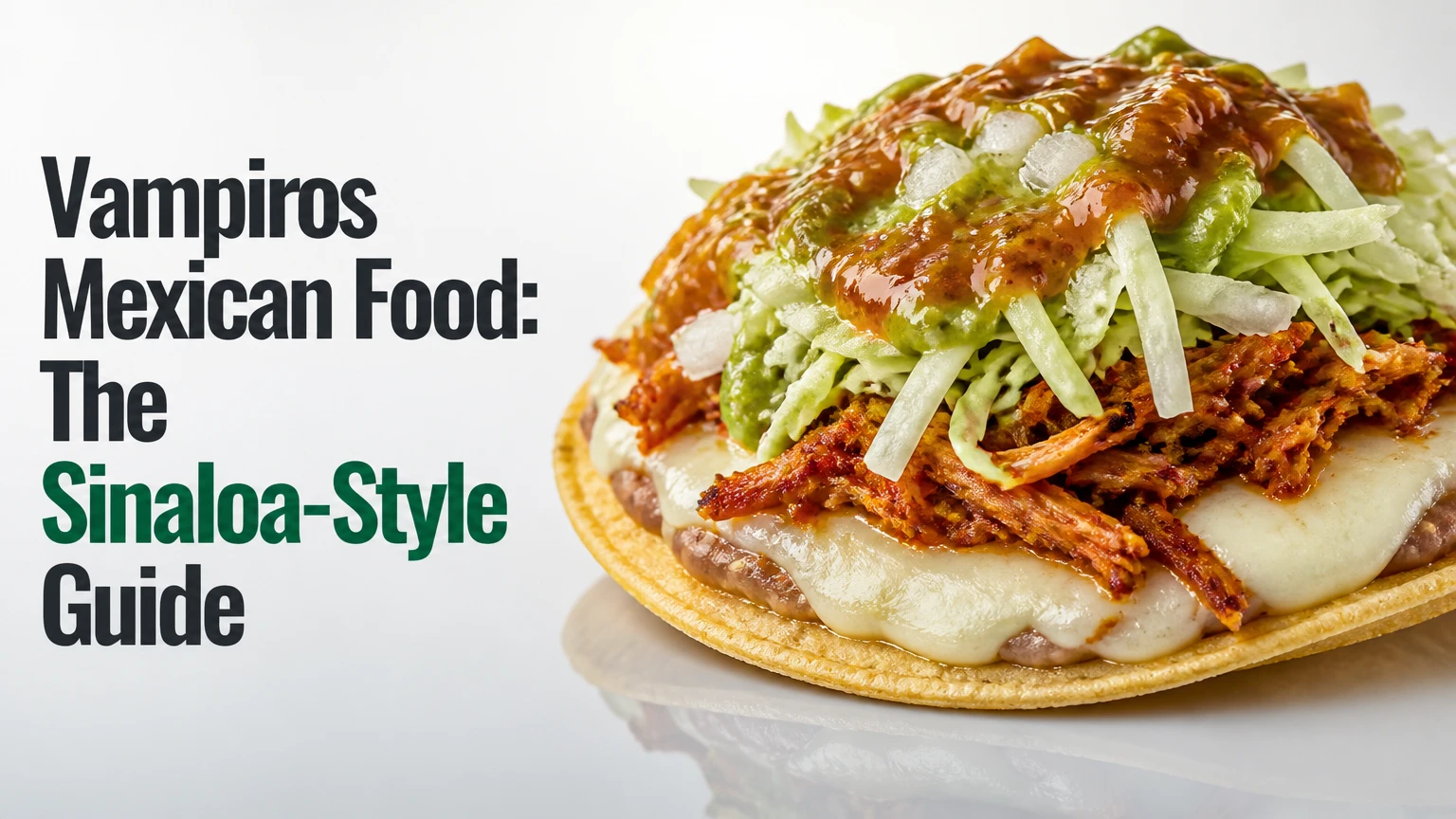
Vampiros Mexican food are crispy, open-faced Mexican street-food tortillas topped with melted cheese, grilled meat or seafood, avocado, onion, cilantro, and salsa. The tortilla is toasted on a comal rather than deep-fried, creating a crackly base that combines the structure of a tostada with the cheese and fillings associated with a taco or quesadilla.
Key Facts at a Glance
- A traditional vampiro uses a corn tortilla toasted dry on a griddle until rigid and crisp.
- Melted cheese covers the tortilla before the meat and wet toppings are added.
- Carne asada is a common filling, while shrimp versions are especially associated with Pacific Mexican cooking.
- A vampiro is usually open-faced, although some vendors add a second soft tortilla for easier handling.
- Home preparation typically takes 20-30 minutes, including meat cooking and tortilla toasting.
- Typical restaurant pricing is about $4-$8 per piece in the United States, with regional and portion differences.
What Is Vampiros Mexican Food?
A vampiro is a griddled corn tortilla with a crisp texture, melted cheese, and substantial toppings. The usual build includes chopped carne asada, avocado or guacamole, white onion, cilantro, lime, and salsa, although chicken, chorizo, shrimp, vegetables, and other fillings appear on contemporary menus.
The defining feature is the tortilla treatment. A tostada is commonly fried in oil, while a vampiro is toasted on a comal, flat-top, or grill until its moisture evaporates. The result is less oily than a fried tostada but still firm enough to carry cheese, meat, and salsa.
Taste Cooking describes the food as a “hybrid between a tostada and a taco,” a useful shorthand rather than a strict legal definition. Mexican street-food terminology varies by city, vendor, and family recipe, so one restaurant may call a similar preparation a vampiro while another uses the term volcano or lorenzas.
The anatomy of a vampiro
| Component | Typical specification | Function |
|---|---|---|
| Tortilla | 1 corn tortilla, 15-18 cm wide | Crisp structural base |
| Cheese | 25-35 g Oaxaca, Monterey Jack, or low-moisture mozzarella | Melted binding layer |
| Protein | 60-90 g cooked meat or shrimp | Main savory filling |
| Fresh toppings | 15-25 g onion, cilantro, and avocado | Acidity, freshness, and moisture |
| Salsa | 15-30 ml, usually green or smoky red | Heat and acidity |
| Lime | 1 wedge per serving | Final seasoning |
A well-made vampiro should remain rigid for the first several bites. It may crack under pressure, but the center should not collapse immediately when salsa and meat are added.
Why Is It Called a Vampiro?
The name has no single universally documented origin. The most repeated explanation connects the tortilla’s curled, crisp edges with a bat wing, while other stories refer to its late-night appeal or garlic-seasoned meat. Those explanations are culinary folklore, not established historical facts.
The name appears most strongly associated with western and northwestern Mexican food traditions, especially Sinaloa and Baja California. In practice, the recipe matters more than the legend: a dry-toasted tortilla, melted cheese, and layered toppings identify the food more reliably than the story behind its name.
Garlic is common in carne asada marinades, but garlic does not prove the origin of the word. A vendor can make a recognizable vampiro with a mild marinade, shrimp, vegetables, or no garlic at all.
How Does a Vampiro Work?
A vampiro depends on controlled dehydration and moisture management. Medium-low heat removes water from the tortilla gradually, while the cheese layer creates a fatty coating between the crisp corn surface and wetter ingredients such as salsa, avocado, and grilled meat.
The tortilla must become dry before the toppings arrive. High heat darkens the exterior quickly but leaves water trapped in the middle, producing a base that looks crisp yet bends and chews like an undercooked tortilla. A thicker tortilla usually tolerates longer heating and supports heavier toppings.
Cheese choice changes both texture and handling. Oaxaca cheese melts smoothly and pulls into strands, Monterey Jack melts readily in a home skillet, and low-moisture mozzarella gives a relatively dry, stable layer. Very wet fresh cheeses can release water and weaken the tortilla.
Heat and texture targets
| Stage | Typical surface condition | Approximate time | Success test |
|---|---|---|---|
| Meat sear | 230-260°C pan surface | 4-8 minutes | Brown edges and safe interior temperature |
| Tortilla drying | Medium-low heat | 5-10 minutes | Tortilla feels rigid after cooling briefly |
| Cheese melting | Medium heat | 60-120 seconds | Cheese is fully fused and lightly bubbling |
| Final loading | Residual pan heat | 30-60 seconds | Meat is hot without steaming the base |
| Serving | Off heat | Immediately | Base remains crisp under toppings |
The cheese barrier is useful, but it is not waterproof. A spoonful of watery pico de gallo or an oversized portion of guacamole can still soften the center within minutes.
How Do You Make Vampiros at Home?
Make two carne-asada vampiros in about 25-30 minutes with two corn tortillas, 60-90 g cooked beef per serving, 50-70 g shredded melting cheese, and drained toppings. The main success factor is patience: dry the tortillas fully before adding cheese, then serve the assembled vampiros immediately.
Before you start
| Item | Home specification | Typical amount or time |
|---|---|---|
| Servings | Main dish or substantial snack | 2 vampiros |
| Total time | Prep, cooking, and assembly | 25-30 minutes |
| Difficulty | Requires heat control and timing | Moderate |
| Tortillas | Corn, preferably 15-18 cm wide | 2 |
| Beef | Flank, skirt, or sirloin steak | 225-300 g raw |
| Cheese | Oaxaca, Jack, or low-moisture mozzarella | 50-70 g |
| Equipment | Cast-iron skillet or comal, knife, spatula | 1 each |
| Estimated home cost | Typical United States grocery cost | $10-$18 total |
Step 1: Season and cook the protein
Season 225-300 g of steak with 1 tablespoon lime juice, 1 small grated garlic clove, ½ teaspoon salt, and black pepper. Rest the seasoned meat for 10-20 minutes while the skillet heats.
Cook the steak in a lightly oiled skillet over high heat until browned on both sides. For a 2 cm thick steak, 3-5 minutes per side commonly produces a medium center, but thickness and pan material change the timing. The United States Department of Agriculture recommends 63°C followed by a three-minute rest for whole beef steaks.
Rest the steak for five minutes, then chop it into pieces about 5-8 mm wide. Smaller pieces distribute better across the tortilla and reduce the chance that one large piece will break the crisp base.
You will know it worked when: the meat has browned edges, a hot center, and enough surface seasoning to remain flavorful under cheese and salsa.
Common mistake: chopping the steak before resting it. Early cutting releases more juice, which later makes the tortilla wet.
Step 2: Toast the tortillas slowly
Reduce the skillet to medium-low. Place the tortillas directly on the dry surface and heat them for 1-2 minutes per side, turning regularly.
Continue for 5-10 minutes, depending on thickness and moisture. The tortilla should lose flexibility and become firm across the center, with toasted spots but no completely black areas.
A dry skillet is preferable for the standard method. Oil changes the preparation toward a fried tostada and can make the finished base greasy rather than crackly.
You will know it worked when: the tortilla remains flat or curls slightly at the edges, and a brief tap produces a dry, firm sound.
Common mistake: using maximum heat to shorten the process. Burned edges with a pliable center indicate uneven dehydration, not successful crisping.
Step 3: Melt the cheese onto the base
Spread 25-35 g of shredded cheese across the tortilla, leaving only a narrow uncovered edge. Return the tortilla to medium heat and cover the skillet for 60-120 seconds.
The cover traps enough heat to melt the cheese without requiring a high flame. Oaxaca cheese may need separating into thin strands, while Jack or mozzarella can be scattered directly from the package.
An advanced vendor-style technique places cheese directly on the griddle, then presses the tortilla onto it. Use nonstick, seasoned cast iron, or well-seasoned carbon steel for that method, because unseasoned stainless steel can weld melted cheese to the surface.
You will know it worked when: the cheese is fully melted, adheres to the tortilla, and has no dry patches beneath the planned protein.
Common mistake: adding cheese before the tortilla is crisp. The cheese traps steam and slows dehydration.
Step 4: Add hot protein and toppings
Scatter the chopped steak over the melted cheese while the tortilla remains on low heat. Warm the meat for 30-60 seconds, then transfer the vampiro to a plate.
Add 1-2 tablespoons of mashed avocado, 1 tablespoon finely chopped white onion, 1 teaspoon cilantro, and 1-2 tablespoons of salsa. Finish with lime at the table rather than soaking the base before serving.
Keep wet toppings concentrated over the cheese-covered center. If the salsa is thin, drain it briefly in a small strainer or use a spoon with slots.
You will know it worked when: the vampiro lifts without folding and the first bite contains crisp tortilla, melted cheese, protein, and salsa.
Common mistake: assembling several vampiros before serving. The final one often softens while waiting for the first.
Which Regional Styles Matter?
Sinaloa-style vampiros commonly emphasize garlic-seasoned grilled beef or shrimp, while Baja versions may use avocado-rich toppings and charcoal-grilled ingredients. Northern Mexican preparations sometimes use flour tortillas, and central Mexican menus may use overlapping names such as volcanes for a similar crisp, cheese-topped construction.
These labels are useful clues, not fixed national standards. A restaurant in California may use “vampiro” for a large cheese-crusted tortilla, while a vendor in Mexico may reserve the name for a particular regional topping combination.
| Style or related name | Common location | Base | Typical topping profile |
|---|---|---|---|
| Sinaloa vampiro | Sinaloa and Pacific coast | Large corn tortilla | Garlic-seasoned beef or shrimp, salsa, avocado |
| Baja-style vampiro | Baja California and border regions | Corn tortilla | Charcoal-grilled filling, avocado, lime, salsa |
| Northern variation | Sonora and Mexicali | Thin flour or corn tortilla | Grilled beef, melted cheese, roasted chile |
| Volcano | Central Mexico and mixed regional menus | Crisp corn tortilla | Cheese and meat, often al pastor-style seasoning |
| Lorenza | Sonora and northern Mexican restaurants | Very dry corn base | Melted cheese, grilled meat, onion, salsa |
| Seafood vampiro | Pacific coast and coastal restaurants | Corn tortilla | Shrimp, fish, garlic, citrus, green salsa |
Protein and topping options
Carne asada remains the clearest first order because the beef’s browned edges complement the toasted corn and cheese. Shrimp works particularly well with salsa verde, lime, and avocado, while chicken gives a milder result and benefits from a smoky chile marinade.
Vegetarian versions need a filling with low surface moisture. Grilled mushrooms, zucchini, poblano strips, beans, and roasted squash can work, but drain or cool them briefly before loading the tortilla.
| Filling | Cooking time | Best paired toppings | Main risk |
|---|---|---|---|
| Carne asada | 6-10 minutes | Onion, cilantro, red salsa | Excess meat juice |
| Shrimp | 3-5 minutes | Lime, avocado, green salsa | Overcooking and rubbery texture |
| Chicken | 8-12 minutes | Roasted chile, onion, crema-style sauce | Dry meat |
| Chorizo | 6-8 minutes | Potato, avocado, sharp salsa | Excess rendered fat |
| Mushrooms | 7-10 minutes | Poblano, beans, green salsa | High released moisture |
| Roasted squash | 20-30 minutes | Pepitas, avocado, chile salsa | Soft filling pressure |
How Is a Vampiro Different From a Tostada?
A vampiro is usually toasted dry and gains its identity from a cheese layer, whereas a tostada is commonly fried and may use beans, lettuce, crema, or shredded cheese without melting the cheese onto the shell. Both are open-faced, but their base texture and assembly sequence differ.
Vampiro versus nearby Mexican foods
| Food | Base preparation | Cheese treatment | Typical structure |
|---|---|---|---|
| Vampiro | Dry-griddled corn tortilla | Melted directly onto base | Open-faced and heavily topped |
| Tostada | Fried or baked corn shell | Optional, often sprinkled | Open-faced and crisp |
| Quesadilla | Soft tortilla griddled with filling | Melted inside folded tortilla | Folded half-moon |
| Mulita | Two tortillas with filling between | Melted between layers | Compact sandwich |
| Taco | Soft or lightly toasted tortilla | Optional, usually not structural | Folded handheld food |
| Volcan | Crisp griddled tortilla | Melted over base | Open-faced, terminology varies |
A vampiro is the better choice when you want a cheese-bound crisp base and a high topping load. A tostada is usually easier to eat with cold, fresh toppings, while a mulita travels better because its second tortilla contains loose ingredients.
Is a vampiro fried?
A traditional vampiro is not deep-fried. The corn tortilla is toasted directly on a comal, flat-top, or grill, although some restaurants brush it with fat or use a cheese-crust technique that adds surface oil.
The distinction matters because frying rapidly removes moisture and adds fat, while slow griddling develops a drier, roasted corn texture. Restaurant methods vary, so ask whether the shell is “tostada frita” or “tostada al comal” if preparation matters to you.
How Much Does a Vampiro Cost?
A typical vampiro costs $4-$8 in the United States and roughly 35-90 Mexican pesos in Mexico, although destination restaurants, protein size, and local wages create wide variation. Two homemade carne-asada vampiros commonly cost $10-$18 total, excluding pantry staples.
Street vendors often price vampiros above ordinary tacos because each serving uses a larger tortilla, a substantial amount of cheese, and more griddle time. Seafood, avocado-heavy builds, and specialty cheese can add $1-$4 per serving.
| Purchase setting | Typical price per serving | Typical wait | Portion expectation |
|---|---|---|---|
| Mexican street stand in Mexico | MX$35-MX$60 | 3-8 minutes | 1 large crisp tortilla |
| Casual taqueria in Mexico | MX$50-MX$90 | 5-12 minutes | Larger protein portion |
| United States food truck | $5-$8 | 5-15 minutes | 1 substantial vampiro |
| Full-service restaurant | $8-$14 | 10-25 minutes | Larger toppings and garnish |
| Home preparation | $5-$9 per person | 25-30 minutes | 2 servings from one batch |
Prices are typical planning ranges, not universal menu prices. Check the current menu when choosing a restaurant, especially in tourist districts and coastal areas where shrimp preparations cost more.
Why Did the Tortilla Turn Soggy?
A soggy vampiro usually results from an under-dried tortilla, an incomplete cheese layer, excess meat juice, or watery salsa. The fastest correction is to return the assembled vampiro to a medium skillet for 30-60 seconds, but heavily saturated tortillas rarely recover completely.
Troubleshooting guide
| Problem | Likely cause | Immediate fix | Prevention |
|---|---|---|---|
| Burned outside, soft center | Heat too high | Lower heat and replace base | Toast 5-10 minutes slowly |
| Soggy middle | Wet toppings or thin cheese layer | Reheat briefly on a dry skillet | Cover the tortilla completely |
| Cheese sticks to pan | Unseasoned surface | Loosen with a thin spatula | Use nonstick or seasoned cast iron |
| Tortilla cracks while lifting | Over-dried or handled cold | Add toppings while warm | Use thicker tortillas |
| Meat makes base wet | Meat was cut too soon | Drain chopped meat | Rest steak five minutes |
| Cheese stays stringy and cool | Heat too low or cheese too thick | Cover pan for 60-120 seconds | Shred cheese finely |
A counterintuitive rule is that more cheese does not always create a better vampiro. A solid but thin layer protects the tortilla; a thick mound releases steam, overwhelms the corn flavor, and makes the center difficult to crisp.
Another practitioner rule is to control salsa moisture before controlling salsa heat. A hot salsa can work on a crisp base, but a mild watery salsa can destroy the texture faster.
Which Vampiro Should You Order?
First-time diners should choose carne asada with Oaxaca or Jack cheese, avocado, onion, cilantro, and a medium salsa. Seafood fans should choose shrimp with lime and green salsa, while spice seekers should request a roasted chile salsa separately so the shell stays crisp until the first bite.
| Diner profile | Recommended build | Why it fits | Avoid |
|---|---|---|---|
| First-time diner | Carne asada, Jack, avocado, medium salsa | Familiar flavor and stable texture | Very wet pico |
| Seafood fan | Garlic shrimp, Oaxaca, lime, salsa verde | Sweet shrimp contrasts with cheese | Overcooked shrimp |
| Heat seeker | Carne asada, roasted chile salsa | Strong chile flavor and char | Adding all salsa before serving |
| Vegetarian diner | Grilled mushroom, poblano, beans | Savory filling with controlled moisture | Watery sautéed vegetables |
| Home beginner | Corn tortilla, mozzarella, cooked beef | Easy ingredients and predictable melting | Inverted cheese crust |
When ordering, ask four practical questions: Is the tortilla toasted or fried? Which cheese is used? Is the salsa served separately? What protein is available today? Those answers reveal more about the final texture than the menu label alone.
Vampiros are poor choices for long takeout trips. After 10-15 minutes under steam-producing packaging, even a properly cooked shell can soften. Request salsa and avocado on the side when transport exceeds that window.
Can You Store and Reheat Vampiros?
Vampiros are best eaten immediately, but leftovers can be refrigerated for up to three days if the toppings are stored separately. Reheat the tortilla and cheese in a dry skillet or 200°C oven for 4-7 minutes, then add fresh avocado, onion, and salsa after reheating.
Microwaving is convenient but usually softens the tortilla because steam remains trapped in the corn. An air fryer at 180°C for 3-5 minutes can restore some crispness, although the cheese may brown before the center fully dries.
Do not store cooked seafood or meat at room temperature for more than two hours. Refrigerate leftovers in shallow containers, and reheat the protein until steaming hot before assembling the restored vampiro.
Frequently Asked Questions
Are vampiros gluten-free?
Traditional vampiros made with pure corn tortillas, meat, cheese, avocado, and salsa are usually gluten-free. Cross-contact can occur on a shared griddle, especially where flour tortillas are also cooked. Ask about the tortilla ingredients and cooking surface before ordering if you have celiac disease.
What is the best cheese for a vampiro?
Oaxaca cheese is the most characteristic choice because it melts smoothly and forms strands, while Monterey Jack is easier to find and melts reliably in a home skillet. Low-moisture mozzarella works when a drier cheese layer is preferred. Avoid very wet fresh cheese for the protective base.
How do you pronounce vampiro?
Spanish pronunciation is approximately “vahm-PEE-roh,” with the stress on the middle syllable. The word means “vampire” in Spanish. In English-speaking restaurants, both the Spanish pronunciation and an anglicized version are commonly understood.
Are vampiros the same as vampire tacos?
Vampire tacos are an English menu phrase for vampiros, but the label can also describe modern taco-shop creations with a crisp tortilla and melted cheese. Confirm the construction because some restaurants use the phrase for a folded taco rather than an open-faced comal-toasted base.
How many vampiros should one person order?
One large vampiro is often enough for a light meal, while two are more appropriate for a substantial dinner. A serving with 60-90 g of cooked protein and a 15-18 cm tortilla is filling, especially when accompanied by beans, rice, or another side.
The Bottom Line
Vampiros Mexican food are open-faced, cheese-topped preparations built on corn tortillas toasted until crisp rather than deep-fried. The strongest version balances a rigid tortilla, a thin melted cheese barrier, hot chopped protein, restrained wet toppings, and immediate service. Order carne asada for the classic introduction, shrimp for a Pacific-style variation, or a low-moisture vegetable filling for a vegetarian build.