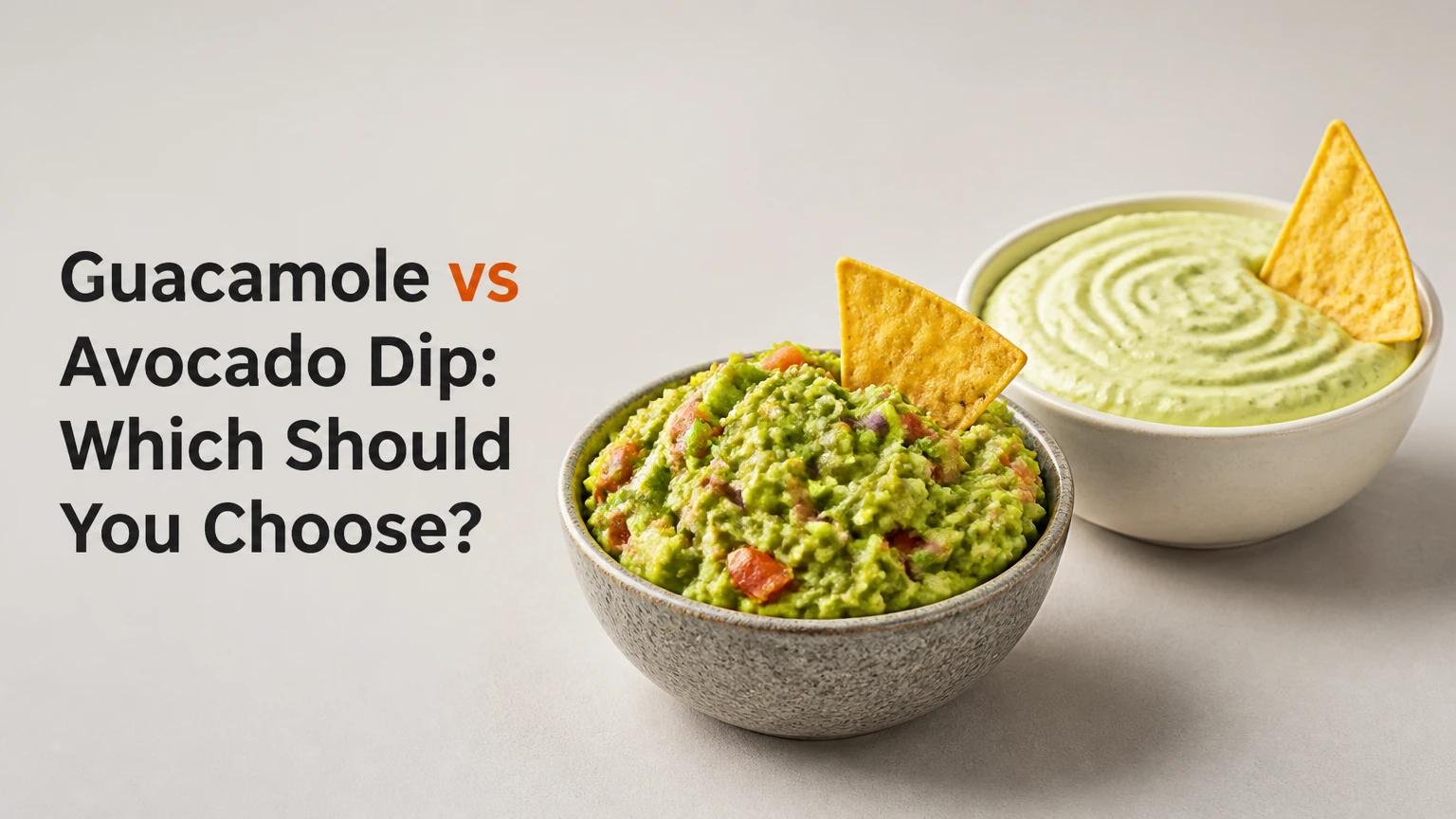
Guacamole is a specific Mexican preparation of mashed avocado with fresh ingredients such as onion, chile, cilantro, lime, and sometimes tomato. Avocado dip is a broader category that may be smooth or chunky and can include yogurt, sour cream, mayonnaise, herbs, beans, or other flavorings. Choose guacamole for fresh, textured flavor, or avocado dip for a smoother, more adaptable spread.
Key Facts at a Glance
- Guacamole is defined by its avocado-centered mash and fresh aromatic ingredients, while avocado dip has no single canonical recipe.
- Traditional guacamole is usually hand-mashed; smooth avocado dip is usually processed in a blender or food processor.
- Lime juice slows enzymatic browning, but neither lime nor dairy makes avocado dip permanently green or safe at room temperature.
- A typical batch of either preparation takes 5-15 minutes and costs about $3-$8 in the United States, depending mainly on avocado prices.
- Guacamole usually tastes fresher and more sharply herbal; avocado dip often tastes creamier, tangier, and more uniform.
- For storage, refrigerate both preparations promptly at 40°F or below and use leftovers within 1-3 days, depending on ingredients and handling.
What Is the Difference Between Guacamole and Avocado Dip?
Guacamole is a culturally specific Mexican dish, whereas avocado dip is a category name for a range of avocado-based spreads. The distinction concerns culinary identity, ingredient conventions, and preparation method rather than a strict legal or technical boundary.
The word guacamole comes from the Nahuatl word ahuacamolli, commonly translated as avocado sauce or avocado mixture. Mexican versions vary by region and household. Some contain tomato, while others use only avocado, onion, chile, cilantro, lime, and salt. A molcajete can create a coarse paste, but a bowl and fork produce a practical home version.
Avocado dip has a wider design space. A recipe may combine avocado with Greek yogurt, sour cream, lime, garlic, cumin, dill, beans, tahini, or mayonnaise. Some commercial products use stabilizers and preservatives, but a homemade avocado dip does not require an emulsifier. The name describes the use more reliably than the recipe.
Comparison at a Glance
| Criterion | Guacamole | Avocado dip |
|---|---|---|
| Culinary identity | Mexican sauce or side dish | Broad avocado-based spread category |
| Typical texture | Coarse mash with visible pieces | Smooth puree, whipped cream, or mixed spread |
| Core additions | Onion, chile, cilantro, lime, tomato | Yogurt, sour cream, herbs, beans, garlic, or spices |
| Preparation tool | Fork, masher, or molcajete | Food processor, blender, or hand masher |
| Typical flavor | Fresh, vegetal, acidic, and chile-forward | Creamy, tangy, mild, herbaceous, or savory |
| Best first use | Tortilla chips, tacos, tostadas | Vegetable sticks, wraps, sandwiches, drizzling |
| Dairy status | Usually dairy-free | May contain dairy or mayonnaise |
| Typical serving window | Best immediately or within 24 hours | Usually 1-3 days when refrigerated correctly |
How Do Texture and Flavor Differ?
Guacamole preserves more avocado structure and raw aromatic contrast, while avocado dip aims for a consistent mouthfeel. The difference comes from cell disruption: hand-mashing leaves some avocado pieces intact, while high-speed blades break the fruit into a more uniform emulsion.
Guacamole has separate flavor events. A bite may contain creamy avocado, crisp onion, chile heat, cilantro, tomato acidity, and lime. Avocado dip distributes its ingredients throughout the mixture, so every bite tastes more consistent but often less sharply contrasted.
A smooth dip can be the better engineering choice for spreading or squeezing because it does not clog a bottle or tear soft bread. That same uniformity can make it less distinctive with plain tortilla chips, where guacamole’s texture supplies much of the eating experience.
Which Is Better for Chips, Tacos, and Vegetables?
Guacamole is usually better for thick tortilla chips and tacos that need a textured topping. Smooth avocado dip is usually better for raw vegetables, sandwiches, wraps, and applications where a thin, even layer matters.
| Food or use | Better choice | Recommended texture | Reason |
|---|---|---|---|
| Thick corn tortilla chips | Guacamole | Coarse mash | Chunky avocado clings to ridges |
| Soft tacos | Guacamole | Medium chunky | Onion and chile remain noticeable |
| Fish or vegetable tacos | Avocado crema | Smooth, pourable | A squeeze bottle gives even coverage |
| Carrot and cucumber sticks | Avocado dip | Smooth and thick | Dip holds to cut surfaces |
| Sandwich spread | Avocado dip | Whipped or smooth | Spreads without tearing bread |
| Toast or crackers | Either | Medium mash | Toast supports both textures |
| Children’s lunch | Mild avocado dip | Smooth, low-chile | Removes heat and visible herb pieces |
| Party platter | Both | One chunky, one smooth | Gives guests contrasting textures |
What Goes Into Each One?
Traditional guacamole needs ripe avocado, salt, and fresh aromatics; avocado dip can use the same base but commonly adds a creamy, acidic, or protein-rich ingredient. The ingredient list determines whether the finished food remains recognizably guacamole or becomes a different avocado spread.
For four servings of a straightforward guacamole, use two large ripe Hass avocados, 30 g finely diced white onion, one small serrano or jalapeño, 15 g chopped cilantro, 1-2 tablespoons fresh lime juice, and approximately 2 g salt. Add 100 g seeded tomato only if a looser, more colorful style suits the meal.
For four servings of creamy avocado dip, blend two large avocados with 120 g plain Greek yogurt, 1 tablespoon lime juice, half a small garlic clove, 2 tablespoons chopped cilantro or dill, and 2 g salt. Replace yogurt with unsweetened plant yogurt or 2 tablespoons tahini for a dairy-free version.
| Ingredient decision | Guacamole effect | Avocado dip effect |
|---|---|---|
| White onion, 30 g | Sharp crunch and moisture | Stronger savory flavor after blending |
| Serrano chile, 1 | Fresh heat | Heat spreads evenly through the batch |
| Tomato, 100 g | Juiciness and acidity | Can make a blended dip thin |
| Greek yogurt, 120 g | Changes the dish toward crema | Adds tang, protein, and a lighter texture |
| Sour cream, 120 g | Not typical in traditional versions | Produces a rich, mild dip |
| Tahini, 30 g | Unusual but possible variation | Adds sesame depth and dairy-free body |
| Cilantro, 15 g | Fresh herbal aroma | Uniform green herb flavor after blending |
| Lime juice, 15-30 ml | Brightens and slows browning | Adds acidity and balances dairy or tahini |
Is Avocado Dip Always Made With Dairy?
Avocado dip is not always dairy-based. Yogurt and sour cream are common additions, but avocado, lime, salt, cilantro, garlic, white beans, chickpeas, or tahini can create a creamy dip without milk ingredients.
Check mayonnaise labels when serving people with egg allergies, because many mayonnaise-based avocado dips contain egg. For a vegan version, use plant yogurt, aquafaba, tahini, or white beans, then adjust lime and salt after blending.
How Do You Make Guacamole?
Make guacamole in about 10 minutes by grinding the aromatics first, then folding in ripe avocado and acidic ingredients. The main quality control is texture: mash enough to bind the mixture, but stop before the avocado becomes a fully smooth puree.
- Prepare the aromatics. Finely dice 30 g white onion and one chile. Mash them with 2 g salt and 15 g cilantro in a bowl or molcajete for 30-60 seconds.
- Add ripe avocado. Halve and pit two large Hass avocados. Scoop the flesh into the aromatic mixture.
- Mash coarsely. Use a fork or potato masher for 20-40 seconds, leaving pieces roughly 5-15 mm wide.
- Fold in additions. Add 100 g seeded tomato and 1-2 tablespoons lime juice. Fold with a spoon rather than beating.
- Taste and serve. Adjust salt and chile immediately before serving.
You will know the guacamole is ready when it holds together on a chip but still shows avocado pieces and separate onion or herb flecks. A blender is the wrong tool for this style because it introduces excess air and destroys the intended coarse structure.
How Do You Make Avocado Dip?
Make smooth avocado dip in about 5-8 minutes by blending avocado with a measured liquid or creamy base until no visible pieces remain. The most reliable formula is two parts avocado by weight to approximately one part yogurt, sour cream, or another thickening ingredient.
- Add the base. Place two large avocados, about 300 g flesh, in a food processor.
- Add liquid carefully. Pour in 120 g Greek yogurt and 15 ml lime juice. Start with less liquid because thinning is easier than thickening.
- Season. Add half a garlic clove, 2 g salt, and 1-2 tablespoons herbs or scallions.
- Process. Blend for 30-60 seconds, scrape the bowl, then process again until smooth.
- Adjust consistency. Add water one teaspoon at a time for a sauce, or another quarter avocado for a thicker dip.
- Chill briefly. Refrigerate for 20-30 minutes if a firmer texture is preferred.
The finished avocado dip should fall slowly from a spoon and leave a clean trail when spread. Excessive blending can warm the mixture, so pause if the bowl feels warm; heat and air exposure accelerate color loss.
Which Is Healthier?
Neither preparation is automatically healthier because avocado dip can range from plain avocado and lime to a mayonnaise-heavy recipe. Plain guacamole generally contains less saturated fat than a dip made with full-fat sour cream or mayonnaise, while yogurt-based dip may provide more protein per serving.
Avocado supplies mostly unsaturated fat, fiber, potassium, and folate. Added ingredients change the nutritional profile substantially. A 60 g serving of avocado contributes fewer calories than the same serving of avocado mixed with 30 g mayonnaise, but a yogurt dip may have more protein and a lower energy density.
The American Heart Association recommends replacing saturated fats with unsaturated fats, a principle that favors avocado-based recipes with modest amounts of dairy or mayonnaise. Nutrition depends on the complete ingredient list, serving size, and what the dip replaces.
| Version, 60 g serving estimate | Main added ingredient | Typical calorie range | Main trade-off |
|---|---|---|---|
| Basic guacamole | Onion, chile, lime | 90-120 kcal | Low added fat, higher sodium if heavily salted |
| Tomato guacamole | Tomato, onion, lime | 75-110 kcal | More water and lower avocado density |
| Yogurt avocado dip | 30 g Greek yogurt | 70-105 kcal | More protein, tangier flavor |
| Sour cream avocado dip | 30 g sour cream | 95-130 kcal | Richer texture, more saturated fat |
| Mayonnaise avocado dip | 25 g mayonnaise | 150-190 kcal | Very smooth, substantially more energy |
| Avocado hummus | Chickpeas and tahini | 100-150 kcal | More fiber and protein, less pure avocado flavor |
How Long Do They Last?
Homemade guacamole and avocado dip should be refrigerated at 40°F or below and are best used within 1-3 days. Browning is a quality problem caused by oxygen exposure, while bacterial growth is a separate food-safety concern that acidity does not eliminate.
The United States Department of Agriculture advises keeping perishable food out of the temperature danger zone and refrigerating it promptly. Do not leave either preparation at room temperature for more than two hours, or one hour when ambient temperatures exceed 90°F.
Press plastic wrap directly onto the surface, use an airtight container, and refrigerate promptly. A thin layer of water can limit oxygen contact during short storage, but it must be poured off before serving and does not replace refrigeration.
Why Does Avocado Brown?
Avocado browns when enzymes in damaged avocado tissue react with oxygen. Lime juice lowers the mixture’s pH and slows the reaction, but lime juice cannot create an oxygen-free surface or guarantee a fixed green color for several days.
The pit does not preserve the entire batch. It protects only the small area directly beneath it, so surface contact, plastic wrap, and a shallow container work better.
Can You Freeze Either One?
Guacamole can be frozen for about 1-2 months with acceptable texture if it contains little or no tomato, onion, or excess liquid. Smooth avocado dip also freezes more successfully than chunky guacamole because blending reduces the noticeable texture change after thawing.
Thaw both preparations overnight in the refrigerator, stir thoroughly, and add fresh lime, herbs, onion, or chile after thawing. Freezing does not improve food that was already old or mishandled.
Which Works Better for Different Foods?
Guacamole works better when fresh aromatics and texture are part of the dish, while avocado dip works better when a stable, spreadable, or pourable consistency controls the application. The right choice follows the food’s structure rather than a claim that one preparation is universally superior.
| Situation | Recommended preparation | Batch size | Best timing |
|---|---|---|---|
| Dinner for four with chips | Chunky guacamole | 400-500 g | Make 15-30 minutes before serving |
| Three-day lunch prep | Yogurt avocado dip | 450-550 g | Prepare one day ahead |
| Taco assembly for 12 people | Avocado crema | 700-900 g | Blend 1-4 hours before service |
| Dairy-free party | Lime guacamole | 500-700 g | Make shortly before guests arrive |
| Mild family snack | Avocado and yogurt dip | 400-500 g | Blend, chill, and serve cold |
| Sandwich filling | Thick avocado dip | 300-400 g | Prepare the same day |
| Low-waste use of beans | Avocado hummus | 500-600 g | Refrigerate in a shallow container |
Traditional and Modern Variations
Guacamole variations can remain chunky or become fruit-forward, whereas avocado dip variations often change the base ingredient and intended application. These names describe useful styles, not rigid universal standards.
| Variation | Defining ingredients | Texture | Best application |
|---|---|---|---|
| Oaxacan-style simple guacamole | Avocado, white onion, chile, cilantro, salt | Coarse | Tortilla chips and grilled foods |
| Tomato guacamole | Avocado, tomato, onion, lime | Chunky and juicy | Tacos and tostadas |
| Mango guacamole | Avocado, mango, chile, lime | Chunky and sweet-savory | Fish tacos and crackers |
| Avocado crema | Avocado, Mexican crema or yogurt, lime | Smooth and pourable | Tacos and roasted vegetables |
| Avocado hummus | Avocado, chickpeas, tahini, garlic | Dense and smooth | Pita, vegetables, and sandwiches |
| Avocado ranch dip | Avocado, yogurt or mayonnaise, herbs | Smooth and thick | Vegetable platters and wraps |
How Do You Fix Common Problems?
Most avocado dip problems have a direct remedy: add body to watery mixtures, add measured salt and acid to bland mixtures, and reduce oxygen contact when color fades. Texture errors are easier to correct before serving than after prolonged refrigeration.
- Watery guacamole: Drain tomato seeds and excess juice, then fold in one-quarter avocado. Avoid adding more salt until the mixture is corrected.
- Thin blended dip: Process in another quarter avocado or 1 tablespoon Greek yogurt. Chill for 20 minutes before adding more thickener.
- Bland flavor: Add salt in 0.5 g increments, then lime in 5 ml increments. Avocado’s fat can soften the perception of salt and acid.
- Excessive heat: Add avocado, yogurt, or mashed white beans. Do not dilute with water, which weakens flavor without reducing the chile proportion effectively.
- Brown surface: Scrape away only severely discolored areas, stir the remaining mixture, and cover the new surface directly.
- Bitter taste: Discard severely bitter or rancid-tasting avocado. Sugar, dairy, and extra lime cannot reliably repair spoiled fruit.
- Mushy tomato pieces: Remove seeds and pulp before dicing, then fold tomato in at the end.
A practitioner rule is to season the avocado base before adding watery vegetables. Tomato releases liquid over time, so delayed salting and late folding protect the final consistency.
Which Should You Choose?
Choose guacamole when you want a fresh Mexican-style preparation with coarse texture, raw aromatics, and a serving-time flavor peak. Choose avocado dip when you need a smooth spread, a drizzle, a mild vegetable dip, or a recipe that can incorporate yogurt, beans, herbs, or tahini.
Choose Guacamole for Fresh Serving
Guacamole is the stronger choice for tortilla chips, tacos, tostadas, and gatherings where the preparation will be eaten within a few hours. Make it close to serving time, keep tomato moderate, and use a fork instead of a blender.
Guacamole is less suitable when you need a squeeze-bottle sauce or a uniformly thin sandwich spread. Chunky ingredients can also be inconvenient for young children or anyone who prefers a completely smooth texture.
Choose Avocado Dip for Meal Prep
Avocado dip is the stronger choice for lunch boxes, vegetable platters, sandwiches, and make-ahead meals. Yogurt, tahini, or beans can provide body, and a smooth texture remains easier to portion across several servings.
Avocado dip is less suitable when the natural avocado flavor is the main attraction, especially if strong garlic, dried herbs, mayonnaise, or ranch seasoning dominates the recipe. Added ingredients also make the nutrition and allergen profile less predictable.
Choose Avocado Crema for Tacos
Avocado crema is the best choice for drizzling over tacos, roasted vegetables, and grain bowls. Its smooth consistency spreads evenly, and a 2:1 avocado-to-yogurt ratio by weight produces a thick sauce that can be loosened with water.
Avocado crema is not a substitute for traditional guacamole when diners expect visible onion, chile, tomato, or cilantro. It is a sauce, not a universal definition of guacamole.
Frequently Asked Questions
Is avocado dip the same as guacamole?
Avocado dip and guacamole overlap, but they are not identical terms. Guacamole identifies a Mexican avocado preparation with a customary family of fresh ingredients, while avocado dip includes many smooth or chunky recipes that may contain yogurt, sour cream, mayonnaise, beans, or tahini.
Can you make avocado dip without lime?
You can make avocado dip without lime, although lime adds acidity and slows browning. Lemon juice, a small amount of vinegar, or plain yogurt can provide comparable acidity. If using vinegar, begin with 1 teaspoon per two avocados because its flavor is sharper than lime.
Is guacamole always chunky?
Guacamole is not always chunky, but a coarse or rustic mash is a common defining characteristic. Some cooks create nearly smooth guacamole with a molcajete or fork. A fully whipped avocado mixture with dairy, herbs, or mayonnaise is more accurately described as avocado dip or avocado crema.
Can avocado dip replace guacamole in recipes?
Avocado dip can replace guacamole when the recipe needs avocado flavor and a creamy consistency, such as sandwiches, wraps, or vegetable platters. It may not work as well in tacos or chip service if yogurt, garlic, or herbs change the intended flavor balance.
Why does homemade guacamole taste better fresh?
Fresh guacamole retains the contrast between creamy avocado, crisp onion, raw chile, herbs, and lime. Refrigeration softens those contrasts, while oxygen gradually darkens the surface. Preparing guacamole 15-30 minutes before serving usually gives the best balance of flavor and texture.
Which option is better for a vegan diet?
Traditional guacamole is usually vegan because its core ingredients are plant-based. Avocado dip may also be vegan, but yogurt, sour cream, and mayonnaise require label checks. Use unsweetened plant yogurt, tahini, or white beans when a dairy-free and egg-free dip is needed.
The Bottom Line
Guacamole vs avocado dip is primarily a question of culinary identity and intended use. Guacamole offers fresh, chunky, chile-and-lime flavor for immediate serving, while avocado dip offers a smoother, more flexible format for spreading, drizzling, meal preparation, and ingredient customization. Use the texture, storage window, and dietary requirements to make the final choice.