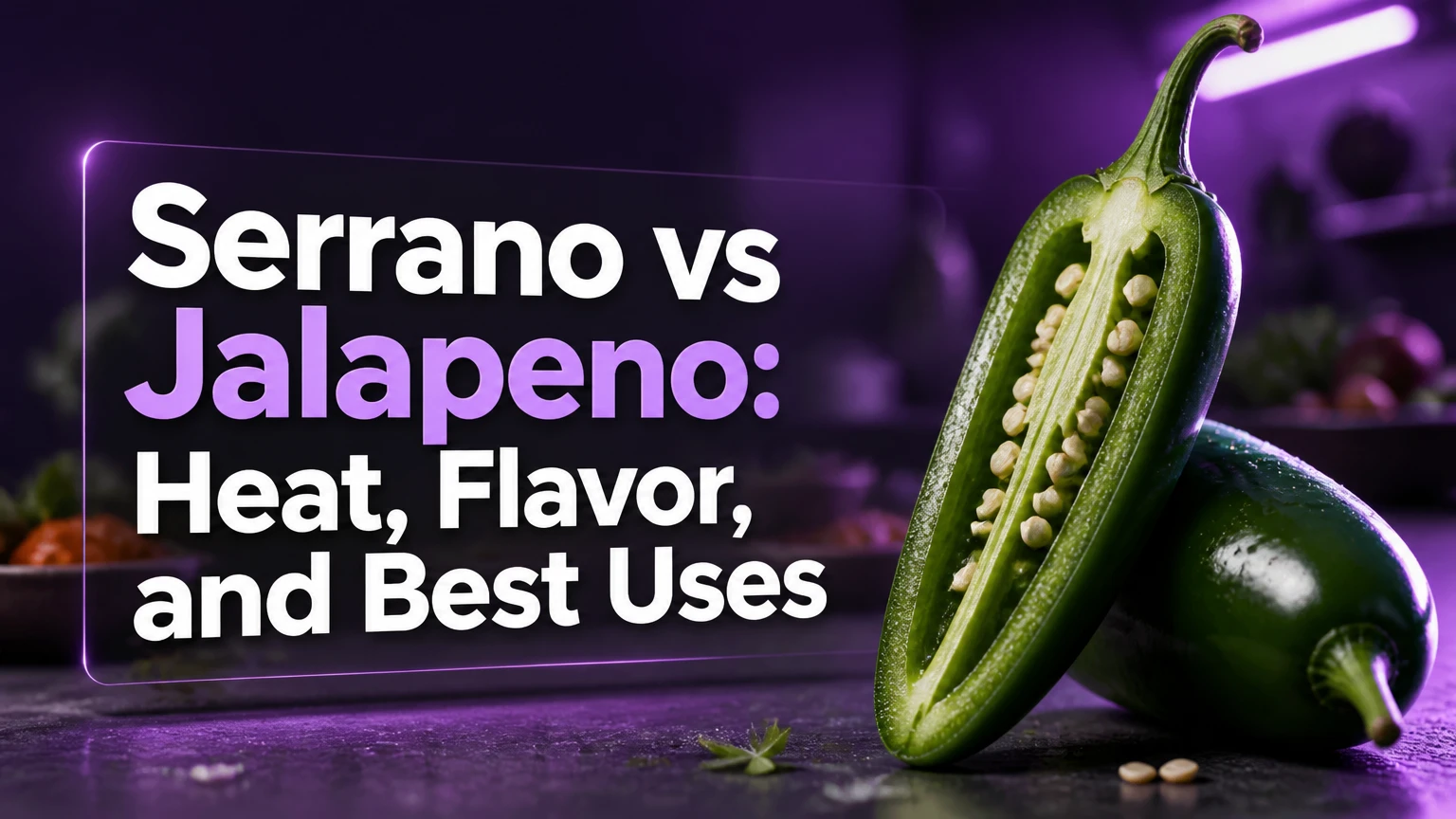
Serrano and jalapeno peppers are both Capsicum annuum, but serranos are usually smaller, thinner-walled, and about two to three times hotter than jalapeños. Jalapeños typically measure 2,500-8,000 Scoville heat units (SHU), while serranos measure about 10,000-23,000 SHU, making jalapeños better for stuffing and serranos better for intensely flavored salsas.
Key Facts at a Glance
- Jalapeños typically contain 2,500-8,000 SHU; serranos typically contain 10,000-23,000 SHU.
- Jalapeños are usually 2.5-4 inches long with thick, juicy walls; serranos are commonly 1-2.5 inches long with thin, crisp walls.
- Serranos deliver sharper heat and less bulk, while jalapeños provide a greener, softer flavor with more usable flesh.
- Removing seeds alone does not remove most pepper heat because capsaicin is concentrated mainly in the placenta and inner ribs.
- A serrano can replace a jalapeño in salsa, but start with one serrano for every two jalapeños.
- Jalapeños are the practical choice for poppers, nachos, roasting, and mild family recipes.
What Are Serrano and Jalapeño Peppers?
Serrano and jalapeño peppers belong to the same species, Capsicum annuum, but they are distinct pepper types with different proportions of flesh, placenta, and skin. Jalapeños are named for Xalapa, Veracruz, while serranos take their name from the mountainous sierras where the pepper was traditionally cultivated.
Green jalapeños have a thick wall, rounded shoulders, and a blunt tip. Green serranos are narrower, more tapered, and firmer when fresh. Both peppers turn red as they mature, although grocery stores most often sell them green because green fruit is harvested earlier and has a longer useful shelf life.
| Attribute | Jalapeño | Serrano |
|---|---|---|
| Botanical species | Capsicum annuum | Capsicum annuum |
| Common green length | 2.5-4 inches | 1-2.5 inches |
| Typical green color | Medium to dark green | Bright to dark green |
| Mature color | Red, sometimes purple-black by cultivar | Red, orange, or brown-red by cultivar |
| Wall structure | Thick and fleshy | Thin and crisp |
| Typical retail form | Fresh, canned, pickled, smoked | Fresh, dried, or blended |
| Name association | Xalapa, Mexico | Mexican mountain sierras |
The physical distinction matters during cooking. A chopped jalapeño contributes moisture and volume, whereas an equal amount of chopped serrano contributes more heat with less vegetable mass.
Which Pepper Is Hotter?
Serrano peppers are hotter than jalapeños by standard Scoville ranges, although individual peppers can overlap. The usual comparison is 2,500-8,000 SHU for jalapeños versus 10,000-23,000 SHU for serranos, so a serrano often supplies roughly two to three times the heat of a jalapeño.
The Scoville scale measures capsaicinoid concentration, not a guaranteed experience for every pepper. Growing conditions, cultivar, maturity, irrigation, temperature, and fruit position can all affect the result. A mild serrano can overlap with a hot jalapeño, but the species-level pattern remains clear: serranos are the hotter choice.
Capsaicin activates TRPV1 receptors, which normally respond to damaging heat. The brain interprets that chemical signal as burning, even though capsaicin does not raise the pepper’s physical temperature. The Chile Pepper Institute at New Mexico State University summarizes the anatomy plainly: “The seeds do not contain capsaicin.” Most capsaicin sits in the placenta, the pale internal tissue attached to the seeds, and in nearby ribs.
| Heat factor | Jalapeño effect | Serrano effect | Practical result |
|---|---|---|---|
| Green maturity | Moderate heat | Sharp, higher heat | Green serrano usually burns more |
| Red maturity | Often sweeter and rounder | Fruity and hotter-feeling | Red fruit may taste less grassy |
| Placenta retained | Maximum available heat | Maximum available heat | Use in hot sauces |
| Placenta removed | Lower perceived heat | Still commonly hot | Better for sensitive diners |
| Cultivar variation | TAM Mild can be very mild | Hybrid size and heat vary | Label matters more than appearance |
| Individual fruit | 2,500-8,000 SHU typical | 10,000-23,000 SHU typical | Taste a tiny trimmed piece first |
Water does not neutralize capsaicin. Dairy proteins, starches, and fatty foods can reduce the sensation more effectively, while scrubbing with dish detergent removes pepper oil from hands better than rinsing with water alone.
How Do Flavor and Texture Differ?
Jalapeños taste greener, more vegetal, and slightly sweet, with a thick, juicy bite that remains substantial after roasting or pickling. Serranos taste crisper, brighter, and more pointed, with a clean heat that spreads quickly because their thin walls contain less watery flesh.
Raw jalapeño works when a dish needs recognizable pepper pieces. Raw serrano works when a cook wants a stronger pepper signal without adding much bulk. In cooked dishes, jalapeños become softer and sweeter, while serranos can lose some fresh sharpness but retain significant heat.
| Preparation | Jalapeño result | Serrano result | Better choice |
|---|---|---|---|
| Raw pico de gallo | Juicy, moderate bite | Crisp, hot, fast heat | Serrano for heat |
| Guacamole | Soft green flavor | Bright, concentrated heat | Jalapeño for mildness |
| Roasting | Blistered, meaty flesh | Charred, delicate skin | Jalapeño |
| Pickling | Firm, thick slices | Thin, sharper slices | Jalapeño for texture |
| Blending | Adds body and moisture | Adds heat with less volume | Depends on target |
| Stuffing | Holds cheese and fillings | Small cavity, thin wall | Jalapeño |
| Drying | Larger yield per fruit | Efficient for small dried pods | Serrano for concentrated heat |
A useful professional rule is to choose the pepper based on the role of the fruit. Select jalapeño when the pepper is a vegetable ingredient; select serrano when the pepper is a seasoning ingredient.
Which Pepper Works Best in Common Dishes?
Jalapeños are best for stuffed applications, nachos, casseroles, roasted toppings, and recipes where moderate heat must remain accessible. Serranos are best for fresh salsa, green sauce, aguachile-style preparations, finely chopped garnishes, and dishes that need concentrated heat without extra moisture.
| Dish or application | Recommended pepper | Starting quantity | Reason |
|---|---|---|---|
| Jalapeño poppers | Jalapeño | 1 pepper per serving | Thick walls hold filling |
| Pico de gallo | Serrano | 1 per 4 servings | Crisp heat and fine texture |
| Mild guacamole | Jalapeño | 0.5 per 4 servings | Lower average heat |
| Hot green salsa | Serrano | 4-6 per 4 cups | Concentrated flavor |
| Nacho topping | Jalapeño | 1-2 per tray | Pickles and roasts well |
| Bean soup | Jalapeño | 1 per 6 cups | Adds aroma without dominating |
| Pickled pepper rings | Jalapeño | 8-10 per pint jar | Larger, meatier slices |
| Fresh garnish | Serrano | 1 finely sliced | Small amount delivers impact |
How Much Serrano Replaces a Jalapeño?
Use one serrano for every two jalapeños when substituting in a raw recipe, then adjust after tasting. For a cooked recipe, one serrano can replace one jalapeño if the dish contains enough starch, fat, or liquid to distribute the heat.
The ratio changes when the original recipe removes the jalapeño placenta. A fully seeded and deveined jalapeño may be much milder than a whole serrano, so compare the internal tissue rather than counting fruit alone. Chop both peppers uniformly and add half the replacement first.
For salsa, remove the serrano seeds only if the final mixture will be served immediately and the heat target is moderate. For a blended green sauce, retain some placenta because straining later removes texture but does not reliably remove dissolved capsaicinoids.
Can You Substitute Jalapeño for Serrano?
Jalapeños can replace serranos when a recipe needs less heat, but use about twice as much jalapeño to approach the serrano’s pepper flavor. The substitution adds more moisture and bulk, so reduce another liquid ingredient slightly in tightly balanced sauces.
A practical conversion is two jalapeños for one serrano in salsa, or one jalapeño for one serrano when heat reduction matters more than flavor intensity. Roasted jalapeño gives a sweeter result than raw serrano, so the substitution changes both heat and character.
What Are the Main Jalapeño and Serrano Varieties?
Jalapeño cultivars range from mild TAM types to large stuffing varieties, while serrano cultivars differ mainly in fruit size, maturity speed, color, and production pattern. Cultivar names provide better guidance than supermarket appearance because two green peppers of the same size can have very different heat levels.
| Cultivar or type | Pepper | Typical feature | Best use |
|---|---|---|---|
| Early Jalapeño | Jalapeño | Earlier harvest, often 1-2 weeks sooner | Short growing seasons |
| TAM Mild | Jalapeño | Bred for reduced heat | Family cooking |
| Mucho Nacho | Jalapeño | Large pods, commonly near 4 inches | Stuffing and poppers |
| Purple or Black Jalapeño | Jalapeño | Dark immature color, red maturity | Garnish and ornamental use |
| Serrano Tampico | Serrano | Traditional market type | Salsa production |
| Serrano Del Sol | Serrano | Hybrid with larger fruit | Fast harvests |
| Purple Serrano | Serrano | Purple fruit that matures red | Colorful fresh sauces |
Names and dimensions vary by seed supplier. Seed packets may list days from transplant, while garden retailers sometimes list days from seed, so those timelines should not be compared directly.
How Do Growing Requirements Compare?
Jalapeños and serranos need warm soil, full sun, consistent moisture, and a long frost-free period. Serrano plants often produce many smaller fruits on a branching plant, while jalapeño plants produce larger pods that require more space per fruit.
| Growing factor | Jalapeño | Serrano |
|---|---|---|
| Typical maturity from transplant | 70-85 days | 75-90 days |
| Preferred soil temperature | At least 65°F | At least 65°F |
| Full-sun target | 6-8 hours daily | 6-8 hours daily |
| Typical plant spacing | 18-24 inches | 18-24 inches |
| Container minimum | 3-5 gallons | 3-5 gallons |
| Harvest stage | Green or red | Green or red |
| Fruit load | Fewer, larger pods | More, smaller pods |
| Frost tolerance | None | None |
The claim that serranos are always superior for small-space gardening is too broad. Serranos can produce many fruits per plant, but jalapeños are often easier for a balcony cook because a single harvest supplies substantial flesh for several meals. Choose serrano for frequent salsa harvesting and jalapeño for larger individual fruit.
Avoid keeping soil constantly saturated. Water when the upper inch begins to dry, then soak the root zone thoroughly; deliberate drought stress is not a dependable home-gardening method for increasing heat and can reduce plant health or fruit yield.
What Do They Cost and How Should You Buy Them?
Typical United States grocery prices are about $1.50-$3.00 per pound for jalapeños and $2.00-$4.00 per pound for serranos, although region, season, package size, and supermarket type can change those figures. Seed packets for either pepper commonly cost $2.50-$4.50.
| Purchase situation | Jalapeño typical range | Serrano typical range | Buying advice |
|---|---|---|---|
| Fresh loose produce | $1.50-$3.00/lb | $2.00-$4.00/lb | Buy firm, unwrinkled pods |
| One-pound quantity | 8-14 peppers | 18-30 peppers | Count varies by size |
| Seed packet | $2.50-$4.50 | $2.50-$4.50 | Check days from transplant |
| Pickled jar | $2.00-$5.00 | $3.00-$7.00 | Compare drained weight |
| Farmers market | $3.00-$6.00/lb | $3.00-$7.00/lb | Ask about cultivar and heat |
Fresh peppers should have taut skin, firm stems, and no soft leaking spots. Fine tan lines, often called corking, are not a reliable heat meter. Corking indicates surface growth patterns and may occur on mild or hot fruit; tasting a tiny piece remains the more dependable test.
How Should You Store and Prepare Them?
Store unwashed jalapeños and serranos in a perforated produce bag in the refrigerator, where they typically remain usable for 7-14 days. Wash immediately before cutting, dry thoroughly, and freeze chopped peppers for approximately 6-12 months when texture after thawing is not important.
Wear nitrile gloves when cutting several serranos or handling the inner tissue. Use a dedicated cutting board if possible, wash the knife with detergent, and avoid touching the face during preparation.
To reduce heat, remove the placenta and inner ribs with a small knife, then rinse the cut surfaces briefly. Seeds may carry some surface capsaicin, but removing seeds alone is less effective than removing the pale internal membrane.
If pepper oil reaches the eyes, flush with clean water or sterile saline and seek medical help for persistent pain or vision changes. Do not rub the eyes, and do not apply kitchen ingredients to them.
Which Pepper Should You Choose?
The best choice depends on the required heat, texture, and cooking method rather than pepper size alone. Jalapeño is the better default for broad tolerance and substantial flesh; serrano is the better precision tool for fresh heat, thin slices, and blended sauces.
| User situation | Best choice | Starting amount | Reason |
|---|---|---|---|
| First-time chili user | Jalapeño | 0.5 pepper | Easier heat control |
| Heat-seeking salsa maker | Serrano | 1-2 per cup | High heat with low bulk |
| Stuffed appetizer cook | Jalapeño | 1 per person | Thick walls and larger cavity |
| Mild family meal | TAM Mild jalapeño | 1-2 per recipe | Reduced cultivar heat |
| Container gardener | Serrano or jalapeño | 1 plant | Choose based on harvest volume |
| Pickling project | Jalapeño | 8-10 per pint | Better ring texture |
| Fresh garnish | Serrano | 0.25-1 pepper | Small quantity has impact |
For Mild or Family Cooking
Choose jalapeño, especially a mild cultivar, because the thicker flesh spreads flavor without forcing every serving into a high heat range. Remove the placenta for further control, and add the pepper early when cooking to soften its raw edge.
For Salsa and Green Sauce
Choose serrano when the sauce should taste sharply peppery and hot. Use jalapeño when the sauce needs a thicker body, lower heat, or a sweeter roasted profile.
For Stuffing and Roasting
Choose jalapeño because the wall remains intact around cheese, vegetables, or grain fillings. Serranos are poor substitutes for poppers because their narrow cavity and thin wall provide little filling capacity.
For Container Gardening
Choose serrano for frequent small harvests and jalapeño for fewer, larger pods. Both need a container of about 3-5 gallons, six or more hours of sun, and protection from cold nights.
Common Mistakes and Better Fixes
- Using equal quantities in a substitution: Replace one serrano with two jalapeños when lowering heat matters, or begin with half that amount and taste.
- Removing only seeds: Scrape out the placenta and ribs because those tissues hold most capsaicin.
- Judging heat by wrinkles or corking: Skin marks do not predict SHU reliably; sample a tiny trimmed edge.
- Adding serrano too early to a fresh salsa: Add some at the end to preserve crisp aroma and a sharper bite.
- Washing hands with water alone: Use detergent and cool water to remove oily capsaicin from skin.
- Overwatering pepper plants: Keep soil evenly moist but not saturated; root stress can reduce vigor rather than safely increasing heat.
A practical kitchen rule is to reserve one uncut pepper until the final tasting stage. That single reserve allows you to increase heat without forcing an entire batch beyond recovery.
FAQ
Are serranos healthier than jalapeños?
Neither pepper is categorically healthier. Both provide low-calorie flavor and contain vitamin C and other plant compounds, while the nutritional difference in a normal serving is small compared with the overall meal. Serranos deliver more heat per gram, but higher capsaicin is not automatically better for digestion or health.
Do red serranos taste different from green serranos?
Red serranos usually taste riper, fruitier, and somewhat sweeter than green serranos, while green serranos taste brighter and more vegetal. Red maturity can change perceived flavor substantially, but it does not guarantee a precise heat increase because cultivar and growing conditions still control capsaicin concentration.
Can I use dried serranos instead of fresh jalapeños?
Dried serranos can replace fresh jalapeños in sauces, soups, and spice blends, but they cannot reproduce the jalapeño’s fresh crunch or thick texture. Rehydrate one dried serrano in warm water for 15-20 minutes, then start with a smaller quantity because drying concentrates flavor.
Why are some jalapeños mild and others very hot?
Jalapeño heat varies with cultivar, maturity, plant stress, temperature, irrigation, and fruit position. A typical 2,500-8,000 SHU range is broad enough to create major differences at the table, so cooks should taste a small trimmed piece instead of assuming every jalapeño is mild.
Which pepper is easier to pickle?
Jalapeños are easier to pickle when the desired result is a substantial ring with a firm bite. Serranos pickle successfully but produce narrower, hotter slices and need shorter exposure to preserve their crisp texture. Always follow a tested acidification and storage method for shelf-stable preservation.
Is serrano always the best pepper for guacamole?
Serrano is traditional in many guacamole preparations because its thin walls and bright heat blend efficiently. Jalapeño is the better choice when the guacamole must remain mild or when diners prefer larger green pepper pieces. Start with one quarter serrano per avocado, then adjust after mixing.
The Bottom Line
Serrano vs jalapeno is primarily a choice between concentrated heat and substantial, moderate pepper flavor. Choose jalapeño for stuffing, roasting, pickling, nachos, and broad household tolerance; choose serrano for fresh salsa, green sauces, sharp garnishes, and higher heat in smaller quantities. Test the individual pepper, remove the placenta when needed, and adjust substitutions gradually.