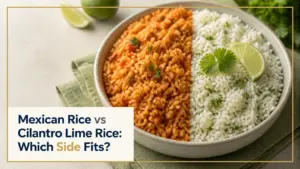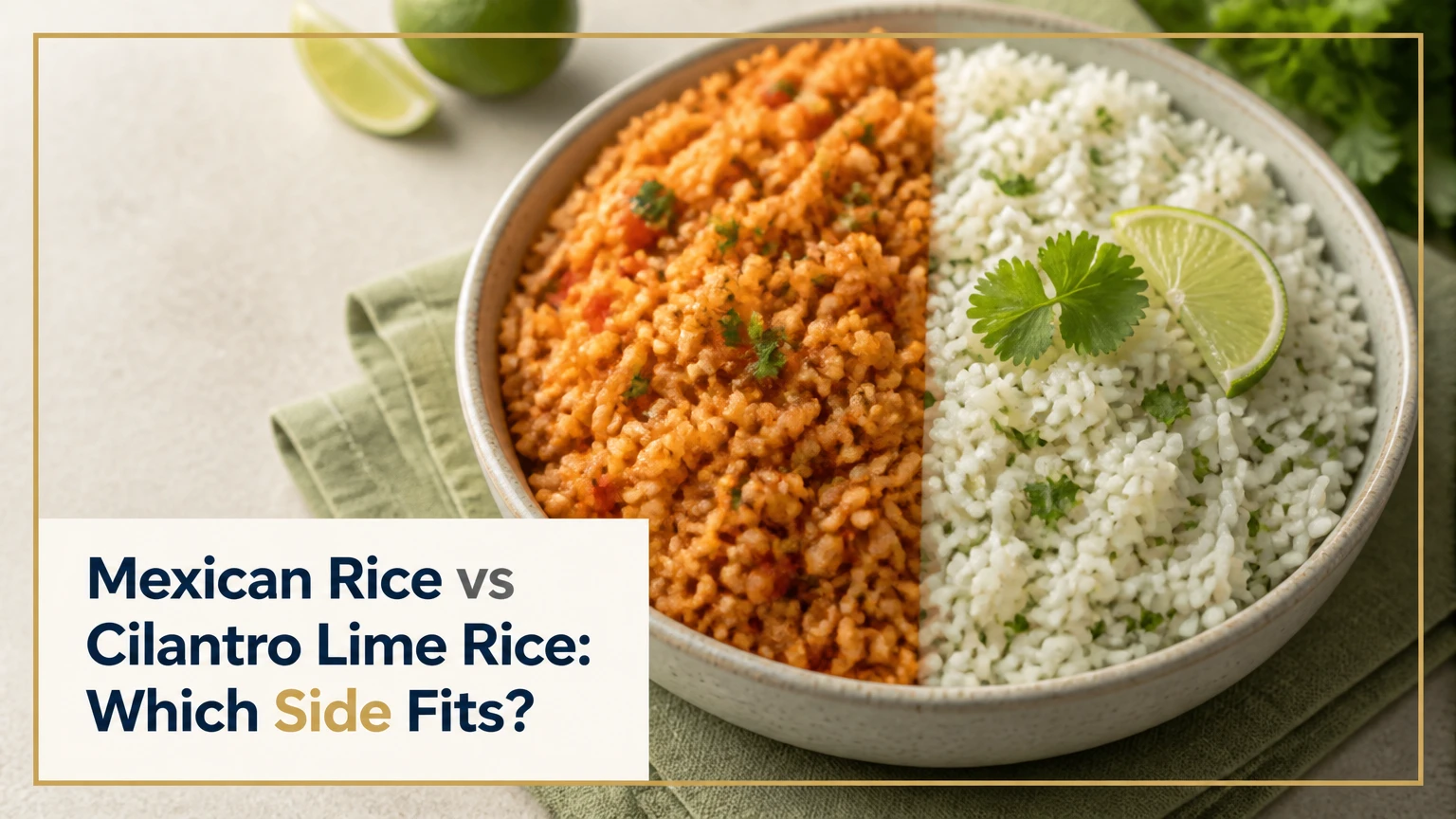
Mexican rice is the better choice for savory, saucy meals because toasted grains absorb tomato, garlic, and broth; cilantro lime rice is better for fast, fresh meals because cooked white rice receives lime and herbs at the end. Choose Mexican rice for enchiladas and beans, or cilantro lime rice for grilled meats and burrito bowls.
Key Facts at a Glance
- Mexican rice, also called arroz rojo in many preparations, cooks raw grains in tomato-seasoned broth after an oil-toasting step.
- Cilantro lime rice starts with plain steamed rice and gains most of its flavor from fresh lime and cilantro added after cooking.
- Mexican rice usually takes 30-40 minutes from prep to serving, while cilantro lime rice usually takes 25-30 minutes.
- Toasted tomato rice has a deeper, savory profile; cilantro lime rice has a sharper, greener, more acidic profile.
- Mexican rice generally handles reheating better because its seasoning is cooked into the grains.
- Cilantro lime rice is usually the stronger choice when a meal needs acidity, freshness, or a rice-cooker-friendly method.
What Are Mexican Rice and Cilantro Lime Rice?
Mexican rice is a seasoned rice preparation built around toasted long-grain rice, tomato, aromatics, and broth. The Spanish name arroz rojo means red rice, although recipes differ by region, household, rice variety, and the amount of tomato used.
Cilantro lime rice is cooked rice finished with fresh cilantro, lime juice, and often lime zest, oil, or butter. The dish is common in Tex-Mex and fast-casual restaurant cooking, while its exact seasoning varies from plain white rice to versions made with basmati, brown rice, or coconut milk.
The names describe different flavor systems. Mexican rice develops flavor during cooking, whereas cilantro lime rice develops much of its character after the rice has steamed. That distinction affects texture, timing, leftovers, and suitable main dishes.
| Attribute | Mexican rice | Cilantro lime rice | Practical consequence |
|---|---|---|---|
| Base liquid | Tomato mixture plus broth | Water or lightly salted stock | Mexican rice carries seasoning into each grain |
| Main flavor | Tomato, garlic, onion, toasted grain | Lime, cilantro, salt, optional zest | Choose depth or freshness |
| Typical color | Orange-red to brick red | White with green flecks | Color changes the visual balance of a plate |
| Finishing point | Seasoning cooks with the rice | Herbs and lime fold in afterward | Cilantro lime rice finishes faster |
| Texture target | Separate, lightly firm grains | Fluffy, separate, moist grains | Both punish excess liquid |
| Common setting | Enchiladas, beans, sauced plates | Bowls, grilled foods, fresh fillings | Pairing determines the better choice |
Mexican rice is not identical to every rice dish served in Mexico. Arroz blanco, rice with vegetables, and regional rice preparations can be pale rather than red. The comparison here concerns tomato-seasoned Mexican-style rice, the preparation most people mean by Mexican rice in a side-dish comparison.
How Do the Cooking Techniques Differ?
Mexican rice depends on pre-cooking browning and controlled simmering; cilantro lime rice depends on gentle steaming followed by cool, fresh finishing ingredients. Toasting changes the grain surface and flavor, while late addition protects cilantro aroma and keeps lime tasting clean.
Mexican Rice: Toast, Season, Steam
Start with 1 cup long-grain white rice, rinse it if the recipe calls for a cleaner, less starchy result, and drain it thoroughly. Heat 1-2 tablespoons of neutral oil in a heavy saucepan, then cook the dry rice for about 5-7 minutes.
The grains should become pale gold rather than dark brown. Add blended tomato, onion, and garlic carefully because the mixture can splatter against hot oil. Cook the puree for 1-2 minutes, add about 1 3/4 cups of warm broth or seasoned liquid, cover, and simmer on low for 15-20 minutes.
A 10-minute covered rest completes hydration. Fork-fluffing after the rest separates the grains without crushing them.
The practical mechanism is more specific than “toasting prevents mushiness.” Browning drives surface reactions that create nutty flavors and changes how the grain meets the cooking liquid. Toasting helps, but an inaccurate liquid ratio, weak lid seal, or aggressive stirring can still produce wet rice.
Cilantro Lime Rice: Steam, Rest, Fold
Cook 1 cup rinsed long-grain white rice with approximately 1 1/2-1 3/4 cups water, depending on the rice and method. Add salt before cooking, then let the rice rest covered for 5 minutes after the heat is turned off.
For a balanced batch, begin with 2-3 tablespoons lime juice, 1 teaspoon finely grated zest, and 1/3-1/2 cup chopped cilantro. Fold the ingredients into warm rice with a fork rather than stirring forcefully.
Lime juice provides acidity, while lime zest contributes aromatic citrus oil. Fresh cilantro supplies volatile herbal notes that fade when boiled for the entire cooking cycle, so adding cilantro at the end produces a cleaner flavor and greener appearance.
Rinse cilantro quickly, dry it well, and chop the leaves with tender stems. Thick stems can taste coarse, but tender stems contain useful flavor and do not need to be discarded.
Which Has Better Flavor and Texture?
Mexican rice wins for roasted, savory depth, while cilantro lime rice wins for sharp acidity and herbal freshness. Mexican rice is usually slightly more cohesive because tomato and broth season the grains during cooking; cilantro lime rice tastes lighter and more distinct from the main dish.
| Sensory factor | Mexican rice | Cilantro lime rice | Best match |
|---|---|---|---|
| First flavor | Toasted grain and tomato | Lime and fresh herb | Mexican rice for savory dishes |
| Acidity | Low to moderate | Moderate to high | Cilantro lime rice for rich foods |
| Aroma | Cooked garlic, onion, tomato | Citrus oil and cilantro | Cilantro lime rice for fresh menus |
| Texture | Fluffy with a lightly firm bite | Fluffy and clean-tasting | Tie when cooked correctly |
| Sauce tolerance | Strong, absorbs savory juices | Moderate, can be overwhelmed | Mexican rice with enchilada sauce |
| Palate effect | Adds weight and warmth | Refreshes and resets the palate | Cilantro lime rice with rich fillings |
A useful kitchen rule is to match rice intensity to the main dish. A heavily seasoned rice beside a heavily seasoned entrée can make the plate taste flat through repetition, while a bright rice can provide contrast.
Mexican rice is also more forgiving when served beside beans, roasted vegetables, or a mild protein because its tomato base supplies missing savoriness. Cilantro lime rice is more effective when the plate already has browned, grilled, or creamy components that benefit from acidity.
Which Is Faster and Less Expensive?
Cilantro lime rice is typically 5-10 minutes faster and costs about $0.20-$0.40 less per serving at home, mainly because it skips the tomato puree and separate toasting stage. Mexican rice can cost less when canned tomatoes and pantry broth are already available.
| Metric for 4 servings | Mexican rice | Cilantro lime rice | Planning note |
|---|---|---|---|
| Active prep | 10-15 minutes | 5-8 minutes | Cilantro lime rice needs late chopping |
| Total time | 30-40 minutes | 25-30 minutes | Both include covered resting |
| Typical home batch cost | $1.50-$3.00 | $1.00-$2.50 | Ingredient prices vary by region |
| Typical cost per serving | $0.38-$0.75 | $0.25-$0.63 | Oil, herbs, and lime drive variation |
| Main extra ingredient | 1/2-1 cup tomato mixture | 2 limes and cilantro | Pantry inventory changes the result |
| Equipment | Heavy saucepan and blender, optional | Saucepan or rice cooker | Cilantro lime rice suits automation |
The price ranges are practical home-cooking estimates, not national retail averages. Fresh cilantro and limes can become the expensive items in small batches, while a large tomato, onion, and broth batch lowers the per-serving cost of Mexican rice.
For a group, Mexican rice scales efficiently in a wide pot, but the liquid depth and burner strength matter. A rice cooker simplifies cilantro lime rice for 6-8 servings, although lime and cilantro should still be added after the cooking cycle.
Which Rice Fits Tacos, Enchiladas, and Bowls?
Mexican rice fits tomato-based and traditionally seasoned plates, while cilantro lime rice fits bowls and grilled foods that need a fresh acidic counterpoint. The strongest choice depends on the moisture, richness, and sauce intensity of the entire meal.
| Main dish or menu | Recommended rice | Reason | Adjustment |
|---|---|---|---|
| Cheese or vegetable enchiladas | Mexican rice | Tomato and garlic echo red sauce | Use moderate salt in the rice |
| Soft tacos with fresh salsa | Cilantro lime rice | Lime supports salsa and fresh toppings | Reduce lime if salsa is very acidic |
| Bean and rice plate | Mexican rice | Adds savory depth to mild beans | Add peas or carrots for variation |
| Grilled chicken bowl | Cilantro lime rice | Acidity offsets char and rich toppings | Add zest for more aroma |
| Saucy chile-based entrée | Mexican rice | Holds its identity beside strong sauce | Keep cumin restrained |
| Fresh vegetable bowl | Cilantro lime rice | Adds fragrance without tomato weight | Use brown rice if more chew is wanted |
Mexican rice is especially useful when the rice must function as part of the sauce structure. Its tomato broth creates a coherent bite with beans, roasted vegetables, and dishes served with red or brown sauces.
Cilantro lime rice works better when toppings remain separate. In a bowl with grilled chicken, black beans, lettuce, avocado, and salsa, lime rice creates a bright base without competing with the colors and textures above it.
Neither rice is automatically the authentic choice for every Mexican meal. Household traditions differ, and many Mexican dishes pair with plain rice, beans, tortillas, or no rice at all. The practical decision should respect the dish being served rather than treating one side as universally traditional.
Is One Rice Healthier?
Neither dish is inherently healthier because calories depend on the rice portion, oil or butter, broth, salt, and toppings. A typical 1-cup serving often lands near 170-240 calories for Mexican rice and 150-220 calories for cilantro lime rice, but recipes vary enough that labels and measured ingredients matter.
| Nutrition variable per 1-cup serving | Mexican rice, typical range | Cilantro lime rice, typical range | Main driver |
|---|---|---|---|
| Calories | 170-240 | 150-220 | Oil, butter, and serving size |
| Added fat | 3-8 grams | 0-5 grams | Toasting fat or finishing fat |
| Sodium | 250-650 milligrams | 100-500 milligrams | Broth, salt, and prepared seasoning |
| Fiber with white rice | 1-2 grams | 1-2 grams | Rice variety and additions |
| Fiber with brown rice | 3-5 grams | 3-5 grams | Whole-grain substitution |
| Added sugar | 0-3 grams | 0-1 gram | Tomato products and sweeteners |
These are labeled typical recipe ranges, not laboratory values. Cilantro lime rice is not automatically low-calorie if it contains butter, coconut milk, or a large serving, and Mexican rice can remain moderate in calories when oil and tomato quantities are measured.
For lower sodium, use unsalted broth and season after tasting. For more fiber, substitute brown rice, but expect a longer cook and a chewier grain. Cauliflower rice reduces starch and cooking time, though it produces a sautéed vegetable side rather than a true rice texture.
What Variations Change the Decision?
Mexican rice variations change richness and meal compatibility, while cilantro lime rice variations change texture, dietary profile, and preparation speed. The choice becomes less clear when brown rice, vegetables, coconut, or cauliflower replaces the standard white-rice base.
Mexican Rice Variations
Arroz rojo commonly uses tomato puree or sauce, onion, garlic, oil, and broth. A vegetable version adds peas, diced carrots, corn, or green beans after the liquid is added, allowing the vegetables to steam without turning the rice into a wet stew.
A chicken-rice version cooks seasoned chicken with the rice, but the cooking vessel must hold enough space for even heat. Chicken pieces also require a safe internal temperature, so the rice timing cannot be the only doneness test.
For deeper flavor, toast the rice until uniformly golden and use warm broth. For a lighter result, reduce oil and tomato while keeping the rice-to-liquid ratio stable.
Cilantro Lime Rice Variations
Brown cilantro lime rice requires more water and often 35-45 minutes, depending on the grain. Add cilantro and lime after the brown rice rests, because whole-grain rice still benefits from the same fresh finishing method.
Basmati creates a longer, more aromatic grain, but its flavor can shift the dish toward an Indian-influenced profile, especially when cumin seeds or clarified butter are included. Coconut rice adds sweetness and fat, which makes it less suitable beside already sweet sauces.
Cauliflower cilantro lime rice cooks in about 6-10 minutes in a skillet. It should be sautéed until tender but not soft, then seasoned with lime and cilantro away from high heat.
Who Should Choose Mexican Rice or Cilantro Lime Rice?
Busy cooks, fresh-bowl makers, and diners who dislike cilantro should choose cilantro lime rice only when they can replace the herb or accept a simpler lime rice. Meal-prep cooks, tomato-sauce lovers, and people serving beans or enchiladas should choose Mexican rice.
Choose Mexican Rice for Saucy Comfort Meals
Choose Mexican rice for enchiladas, bean plates, tomato-based dishes, and menus where the side must remain flavorful after reheating. The cooked-in seasoning gives Mexican rice enough body to stand beside strong sauces without tasting like plain filler.
Mexican rice is also a better choice when diners prefer garlic, onion, and tomato over fresh herbs. Its main drawback is process sensitivity: insufficient toasting creates bland grains, while excessive heat scorches the rice or tomato puree.
Choose Cilantro Lime Rice for Bowls and Grilled Foods
Choose cilantro lime rice for burrito bowls, grilled chicken, fresh salsa, roasted vegetables, and meals with creamy toppings. Lime cuts richness, and cilantro adds a raw herbal note that cooked tomato rice cannot reproduce.
Cilantro lime rice is less suitable when the meal already contains several sharp ingredients, such as lime-heavy salsa, pickled vegetables, and a sour dressing. The combined acidity can become harsh rather than refreshing.
Choose a Different Version for Cilantro Sensitivity
Some people experience cilantro as soapy because of genetic differences affecting odor perception, including variants near the OR6A2 olfactory receptor gene. The experience is real, but OR6A2 does not explain every dislike, and people can also reject cilantro because of aroma, texture, or unfamiliarity.
Replace cilantro with flat-leaf parsley, finely sliced green onion, or a small amount of fresh mint. Lime rice without herbs remains a valid side and usually suits the same grilled-food applications.
Can You Substitute One for the Other?
Mexican rice and cilantro lime rice are not equal one-for-one flavor substitutes because tomato rice is savory and cooked-in, while lime rice is acidic and finished fresh. Substitute based on the main dish, not on rice volume alone.
| Original side | Possible substitute | What changes | Best correction |
|---|---|---|---|
| Mexican rice with enchiladas | Plain lime rice | Less tomato depth | Add a small spoonful of salsa to the plate |
| Cilantro lime rice in a bowl | Mexican rice | More weight and tomato flavor | Reduce other tomato toppings |
| Mexican rice with beans | Brown lime rice | More chew and acidity | Add cumin-free seasoning if desired |
| Lime rice with grilled chicken | Vegetable Mexican rice | Less freshness | Serve lime wedges separately |
| Either side for meal prep | Mexican rice | Better reheating texture | Add fresh garnish after reheating |
If replacing Mexican rice with cilantro lime rice, add tomato salsa or roasted vegetables elsewhere in the meal. If replacing cilantro lime rice with Mexican rice, reduce acidic toppings so the plate does not lose balance.
What Usually Goes Wrong?
Most failures come from excess liquid, uncontrolled heat, or adding fresh ingredients at the wrong time. Mexican rice most often fails during toasting and simmering, while cilantro lime rice most often fails during seasoning and reheating.
| Problem | Likely cause | Immediate fix | Prevention |
|---|---|---|---|
| Mexican rice is mushy | Too much puree or broth | Spread uncovered for 3-5 minutes | Measure liquid and use a tight lid |
| Mexican rice is hard | Weak simmer or poor lid seal | Add 2-3 tablespoons hot water | Cook on low with the lid closed |
| Mexican rice tastes burnt | Rice or puree scorched | Transfer unburned top layer | Use medium heat and a heavy pan |
| Cilantro lime rice is sour | Excess juice or thin zest | Fold in rice or a little butter | Add juice gradually and taste |
| Cilantro lime rice is dull | Too little salt or lime zest | Add salt, zest, then juice | Season while rice is warm |
| Cilantro is dark and bitter | Herb cooked too long | Add fresh chopped cilantro | Fold it in after resting |
A practitioner rule matters here: never correct wet Mexican rice by stirring repeatedly. Stirring breaks grains and releases starch, making the texture even pastier. Remove the lid briefly only after the cooking phase, then let steam escape without aggressive mixing.
Another useful rule is to season cilantro lime rice in layers. Salt the cooking water, add zest and part of the juice after resting, then taste before adding the remaining juice. Lime strength varies significantly by fruit size and ripeness.
For tomato rice, cold liquid is not automatically disastrous, but warm broth preserves the simmer more smoothly and reduces the recovery time after the puree is added. Temperature control helps, yet liquid measurement and heat level matter more.
Which Stores and Reheats Better?
Mexican rice usually reheats better over 3-4 days because its tomato seasoning remains integrated, while cilantro lime rice loses fresh cilantro color and aroma after repeated heating. The USDA recommends refrigerating cooked leftovers within 2 hours and using refrigerated leftovers within 3-4 days.
| Storage task | Mexican rice | Cilantro lime rice | Best practice |
|---|---|---|---|
| Refrigerator window | 3-4 days | 3-4 days | Use a sealed shallow container |
| Microwave reheating | 2-3 minutes per serving | 1 1/2-2 1/2 minutes | Add 1 tablespoon water per cup |
| Freezer quality | 1-2 months for best texture | 1-2 months, herb fades | Freeze before adding fresh garnish |
| Fresh garnish recovery | Chopped onion or lime | Fresh cilantro and lime | Add garnish after reheating |
| Texture risk | Dry edges or clumping | Dryness and dull herbs | Cover while reheating |
Cool rice promptly in a shallow container rather than leaving a large hot pot at room temperature. Reheat only the portion needed, because repeated heating damages texture and makes seasoning harder to control.
For cilantro lime rice, reserve a little chopped cilantro and fresh lime for serving after reheating. For Mexican rice, a teaspoon of broth or water under a covered microwave container usually restores moisture without making the grains wet.
The Bottom Line
Mexican rice vs cilantro lime rice is a choice between cooked-in savory depth and post-cook citrus freshness. Mexican rice wins with enchiladas, beans, tomato sauces, and meal prep; cilantro lime rice wins with bowls, grilled foods, fresh toppings, and quick rice-cooker meals.
Choose Mexican rice when the rice must carry part of the meal’s seasoning. Choose cilantro lime rice when the rice should make rich or smoky ingredients taste lighter. Neither preparation is universally superior, and the main dish provides the deciding condition.
Frequently Asked Questions
Is Mexican rice spicy?
Mexican rice is not automatically spicy. Standard arroz rojo usually gets its red color and savory flavor from tomato, onion, garlic, broth, and sometimes cumin; chile, jalapeño, or hot seasoning is optional. A mild tomato puree can produce a family-friendly side, while chile-based additions create heat separately.
Does cilantro lime rice use white or brown rice?
Cilantro lime rice can use either white or brown rice, although long-grain white rice is the common fast-cooking base. Brown rice usually needs 35-45 minutes and more water, then should rest before lime juice and cilantro are folded in.
Can I make cilantro lime rice without fresh limes?
Fresh lime gives the best aroma because zest contains citrus oils, but bottled lime juice can work when fresh fruit is unavailable. Start with less bottled juice, taste after mixing, and add a small amount of lemon zest only if the flavor needs lift.
Why does Mexican rice turn orange instead of red?
Mexican rice often turns orange because the tomato puree is diluted with broth and the toasted grains tint the sauce. Tomato variety, puree quantity, cooking time, and the color of the oil all affect the final shade. Color is not a reliable measure of flavor or authenticity.
How much rice should I serve per person?
Plan on 1/2 cup cooked rice per person for a plate with beans, vegetables, and a substantial main dish, or 3/4-1 cup when rice is a major part of a bowl. One cup of uncooked long-grain rice commonly yields about 3 cups cooked, though variety and method change the yield.