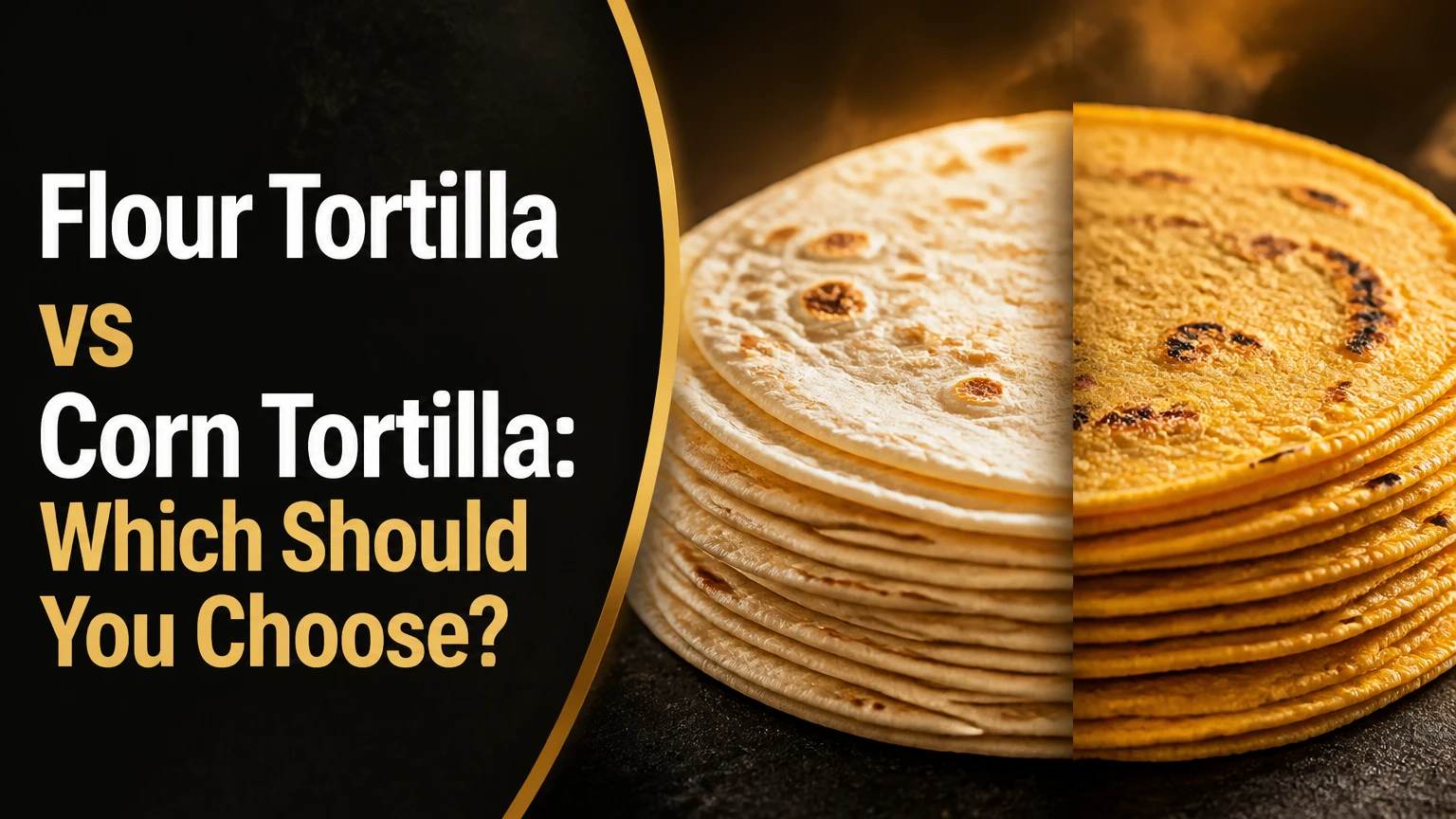
Flour tortillas are usually the better choice for large, flexible wraps and heavy fillings, while corn tortillas provide stronger corn flavor, fewer calories per typical piece, and a naturally gluten-free base. The best option depends on the dish, dietary requirements, tortilla size, filling moisture, and whether pliability or toasted masa flavor matters more.
Key Facts at a Glance
- Corn tortillas are made from nixtamalized maize masa, while flour tortillas use wheat flour and usually added fat.
- Corn tortillas are naturally gluten-free when made and packaged without wheat cross-contact.
- Flour tortillas stretch because hydrated wheat proteins form gluten; corn tortillas depend mainly on hydrated and gelatinized starch.
- A typical 6-inch corn tortilla contains about 50-70 calories, while a typical 8-inch flour tortilla contains about 140-,180 calories.
- Corn tortillas suit tacos, enchiladas, tostadas, and chips; flour tortillas suit burritos, wraps, quesadillas, and large folded dishes.
- Tortilla size and weight matter more than the corn-versus-flour label when comparing calories.
What Is the Difference Between Corn and Flour Tortillas?
The main difference is the grain and the structural system. Corn tortillas use nixtamalized maize, water, and sometimes salt; flour tortillas use wheat flour, water, salt, and fat, with baking powder or other conditioners in many commercial formulas.
Nixtamalization cooks dried maize in water containing food-grade calcium hydroxide, commonly called cal, then allows the kernels to rest before washing and grinding. The alkaline treatment loosens the outer skin, changes the flavor and texture, improves dough formation, and increases the nutritional availability of niacin. Calcium can also remain in the finished tortilla, although the amount varies by process.
Wheat tortillas do not require nixtamalization. Water hydrates wheat proteins, and kneading creates a gluten network that gives the dough elasticity. Fat coats some flour particles, tenderizes the bite, and helps the cooked tortilla remain flexible.
| Attribute | Corn tortilla | Flour tortilla |
|---|---|---|
| Primary grain | Nixtamalized maize | Wheat flour |
| Typical added fat | 0-2 g per tortilla | 2-8 g per tortilla |
| Main binder | Hydrated maize starch | Gluten and starch |
| Typical flavor | Toasted, earthy, distinctly corn-like | Mild, wheaty, buttery or savory |
| Common diameter | 4-6 inches | 6-14 inches |
| Natural gluten status | Gluten-free if uncontaminated | Contains gluten |
How Are Corn and Flour Tortillas Made?
Corn tortillas are made by converting masa into thin disks and cooking the disks quickly on a hot surface. Flour tortillas are made by mixing a wheat dough, resting individual portions, rolling them thin, and searing them until pale brown spots appear.
Traditional corn production starts with whole dried maize, water, and cal. The kernels simmer, rest for roughly 8-18 hours, and are washed before grinding. Fresh masa is portioned, pressed, and cooked on a comal, often with the tortilla flipped two or three times.
Masa harina offers a practical home alternative. The dried nixtamalized dough is rehydrated with warm water, commonly at about 1.2-1.4 parts water by weight for each part masa harina, although brands differ. Proper masa feels soft and cohesive rather than wet or crumbly.
Flour dough commonly combines flour, salt, fat, and warm water. Some recipes add baking powder for a softer, puffier texture. Portions called testales rest for about 20-45 minutes, allowing gluten to relax before rolling. A rested dough disk should roll without repeatedly shrinking.
| Production stage | Corn tortilla checkpoint | Flour tortilla checkpoint |
|---|---|---|
| Hydration | Masa holds together at 50-60% water by flour weight, approximately | Dough feels soft at about 45-60% water relative to flour |
| Portion size | 25-35 g for a 5-inch tortilla | 45-70 g for a 7-8-inch tortilla |
| Resting time | 5-15 minutes after mixing masa | 20-45 minutes after portioning |
| Cooking surface | Comal or skillet at about 400-500°F | Comal or skillet at about 425-550°F |
| Cooking time | About 45-75 seconds total | About 30-60 seconds total |
| Success signal | Soft edges, toasted spots, occasional puff | Flexible disk with scattered brown spots |
Why Do Corn Tortillas Crack?
Corn tortillas crack when the masa lacks sufficient moisture, the tortilla is too thick or thin, or the cooked pieces cool without trapped steam. A dry edge is the most common home failure, and adding warm water in small increments usually corrects it.
Fresh corn tortillas should be kept stacked and wrapped in a clean towel or cloth after cooking. Steam softens the stack. A tortilla that cracks immediately on the press needs more hydration; one that sticks badly needs slightly less water or a brief adjustment with dry masa harina.
Flour tortillas crack for a different reason. Cold dough, inadequate resting, low fat, or overcooking can make the wheat disk rigid. Flour dough often needs an additional 10-15 minutes of rest when it springs back during rolling.
Which Tortilla Is Healthier?
Neither tortilla is automatically healthier because nutrition depends on diameter, weight, ingredients, and serving size. Corn usually wins for lower calories per small tortilla and whole-grain content, while a simple flour tortilla may provide more protein but also more fat and sodium.
The USDA FoodData Central database illustrates why labels must be compared by weight rather than name alone. Commercial products vary substantially: a small corn tortilla can weigh about 24-28 g, while a burrito-size flour tortilla can exceed 80 g. Comparing one of each without matching size creates a misleading result.
Corn tortillas made from whole maize generally retain more of the grain than refined white flour tortillas. Whole-wheat flour tortillas add fiber, but they often become denser and less flexible. Ingredient lists also matter because commercial flour tortillas may contain shortening, palm oil, preservatives, gums, or sodium-based dough conditioners.
| Typical serving | Corn, 5-6 inches | Flour, 6-8 inches | Flour, 10-12 inches |
|---|---|---|---|
| Approximate weight | 24-30 g | 40-55 g | 70-100 g |
| Calories | 50-70 | 120-180 | 210-320 |
| Protein | 1-2 g | 3-5 g | 5-8 g |
| Fiber | 1-2 g | 1-3 g | 2-6 g |
| Fat | 0.5-1.5 g | 3-8 g | 6-14 g |
| Sodium | 0-120 mg | 200-450 mg | 400-800 mg |
Fiber, Calcium, and Protein
Corn tortillas can contribute calcium when the maize is traditionally nixtamalized with cal, but packaged products differ because manufacturers use different cooking and rinsing methods. Flour tortillas generally provide more protein per piece because wheat flour contains more protein and because flour tortillas are usually larger.
For blood-glucose management, the filling, total carbohydrate amount, and portion size matter more than choosing corn automatically. A 12-inch flour tortilla can contain several times the carbohydrate of a 5-inch corn tortilla, but two small corn tortillas can approach the carbohydrate of one medium flour tortilla.
Gluten and Celiac Disease
Corn tortillas are appropriate for a gluten-free diet only when the product is labeled or certified gluten-free and manufactured to control cross-contact. Pure maize contains no gluten, but shared grinders, conveyors, packaging lines, or added wheat ingredients can create a risk for people with celiac disease.
Flour tortillas contain wheat gluten and are unsuitable for celiac disease or wheat allergy unless a product uses a verified gluten-free flour blend. Gluten intolerance, wheat allergy, and celiac disease are different conditions, so medical dietary advice should follow the relevant diagnosis.
Which Tortilla Works Best for Each Dish?
Corn tortillas work best when toasted masa flavor, a compact shape, or traditional Mexican preparation matters. Flour tortillas work best when the tortilla must stretch, fold around a large volume, or resist tearing around moist and heavy fillings.
| Dish or application | Better default | Useful size | Reason |
|---|---|---|---|
| Street-style tacos | Corn | 4-5 inches | Strong masa flavor and compact bite |
| Enchiladas | Corn | 5-6 inches | Softens well after dipping and baking |
| Tostadas | Corn | 5-6 inches | Fries or bakes into a crisp, rigid base |
| Breakfast burrito | Flour | 10-12 inches | Folds around eggs, potatoes, and fillings |
| Large burrito | Flour | 12-14 inches | Higher flexibility and greater surface area |
| Quesadilla | Flour or corn | 6-10 inches | Flour folds easily; corn gives toasted flavor |
| Fajita wrap | Flour | 8-10 inches | Handles strips, vegetables, and sauces |
| Tortilla chips | Corn | 5-6 inches | Fries or bakes with a crisp maize texture |
Tacos and Enchiladas
Corn tortillas are the stronger default for tacos and enchiladas because their flavor remains distinct beside seasoned meat, beans, vegetables, or chile sauces. For very wet fillings, warming two small corn tortillas together reduces tearing and improves handling.
Flour tortillas are common in northern Mexican and Tex-Mex cooking, particularly for flour-tortilla tacos, breakfast tacos, and soft fajita-style preparations. They are not an incorrect choice; they produce a milder, softer result and usually accommodate larger fillings.
Burritos and Wraps
Flour tortillas are substantially better for burritos because gluten provides stretch and the larger format leaves enough surface area for folding. A 12-inch tortilla is a practical starting point for a filled burrito weighing approximately 400-700 g.
Corn tortillas are poor substitutes for burrito-size flour tortillas. Corn disks usually crack at the fold, split under pressure, or require multiple overlapping tortillas. Corn can still work for small tacos, enchiladas, or folded quesadillas.
What Do Tortillas Cost, and How Long Do They Last?
Typical supermarket corn tortillas cost about $0.07-$0.20 each, while flour tortillas cost about $0.25-$0.70 each, depending on package size, brand, and specialty ingredients. Homemade tortillas can cost less per piece, but labor and equipment make the total value different from the ingredient cost.
A batch of 16 homemade corn tortillas may require 250-300 g masa harina and 300-390 g water. A batch of 10 flour tortillas may use 350-450 g flour, 50-100 g fat, and 200-270 g water. Active preparation often takes 30-45 minutes for corn and 45-75 minutes for flour, including resting.
| Product or method | Typical yield | Typical ingredient cost | Active time |
|---|---|---|---|
| Packaged corn tortillas | 24-30 pieces | $2-$5 | 0 minutes |
| Packaged flour tortillas | 8-16 pieces | $3-$7 | 0 minutes |
| Homemade masa harina tortillas | 14-18 pieces | $1-$3 | 30-45 minutes |
| Homemade flour tortillas | 8-12 pieces | $2-$5 | 45-75 minutes |
| Fresh stone-ground masa | 14-18 pieces | $3-$8 | 45-90 minutes |
Unopened commercial packages may last several weeks to several months, depending on preservatives and packaging. Once opened, refrigeration commonly preserves quality for about 5-10 days. Homemade tortillas are best within 2-3 days, although freezing them in a sealed stack can preserve quality for about 2-3 months.
How Should You Store and Reheat Them?
Corn tortillas reheat best with brief high heat and trapped steam, while flour tortillas need gentler heating to prevent drying. A dry skillet, griddle, microwave, or steamer can work when the tortillas are protected from prolonged exposure to air.
For corn tortillas, heat a stack in a dry skillet for 15-30 seconds per side, or microwave five to ten tortillas inside a barely damp towel for 30-60 seconds. For flour tortillas, heat one at a time for 10-20 seconds per side or microwave a covered stack for 20-40 seconds.
Discard tortillas with visible mold, sour or chemical odors, unexplained wet patches, or slimy surfaces. Do not scrape away mold because porous flatbreads can contain hidden mold growth beneath the visible spot.
Reheating Without Cracking
The most reliable method for dry corn tortillas is to add controlled steam, not extra oil. A covered skillet, tortilla warmer, or damp towel restores flexibility without making the surface greasy.
A practitioner rule of thumb is to warm tortillas immediately before serving and return unused pieces to a covered container. Repeated heating and cooling accelerates moisture loss, especially in thin corn tortillas.
Can You Substitute One for the Other?
Corn and flour tortillas can substitute for each other in tacos, quesadillas, and some tostadas, but the substitution changes the dish’s size, texture, flavor, and structural behavior. Direct replacement is least successful when a recipe depends on a large flexible wrapper or a tortilla that absorbs sauce without splitting.
Use corn in place of flour for small tacos when gluten avoidance or toasted maize flavor matters. Use flour in place of corn for soft wraps when the filling is bulky, oily, or heavy. For enchiladas, corn remains the more reliable choice because the tortilla softens into the sauce without producing the same wheat chew.
| Recipe requirement | Recommended substitution | Adjustment |
|---|---|---|
| 12-inch burrito wrapper | No direct corn replacement | Use two or three overlapping corn tortillas |
| 5-inch taco shell | Flour can replace corn | Select a 4-6-inch flour tortilla |
| Saucy enchilada | Flour can replace corn cautiously | Lightly toast and reduce sauce exposure |
| Gluten-free quesadilla | Corn replaces flour | Use two tortillas or a smaller filling |
| Crisp chips | Corn replaces flour | Cut and fry or bake until fully dry |
| Soft breakfast wrap | Flour replaces corn | Use 10-12-inch tortilla and fold immediately |
What Problems Occur Most Often?
Most tortilla failures come from moisture, temperature, or resting time rather than from a defective recipe. Corn dough needs enough water to bend, while flour dough needs enough rest to stop gluten from contracting.
| Problem | Likely cause | Corrective action |
|---|---|---|
| Corn edges crack | Dry masa or cold tortillas | Add water gradually; warm tortillas under a towel |
| Corn sticks to plastic | Excess water or weak liner | Mix in a small amount of masa harina |
| Corn does not puff | Low heat or early flipping | Preheat longer and cook the first side undisturbed |
| Flour shrinks after rolling | Gluten has not relaxed | Rest portions another 15-20 minutes |
| Flour feels rubbery | Overkneading or low fat | Knead less and rest longer; verify fat quantity |
| Flour turns hard | Overcooking or poor storage | Cook faster at higher heat and cover immediately |
An Expert Rule About the Comal
A tortilla that cooks slowly over moderate heat often dries before its interior sets. A properly heated comal shortens the cooking window, creates toasted spots, and preserves flexibility, although the exact surface temperature depends on pan material and burner strength.
An Expert Rule About Tortilla Weight
Use weight when comparing nutrition, not diameter alone. Two tortillas with the same 6-inch diameter can differ by more than 20 g, and that difference can outweigh the expected calorie advantage of the grain itself.
An Expert Rule About Double-Layer Tacos
Two small corn tortillas are a structural strategy, not merely a restaurant habit. The second layer catches filling moisture and distributes tensile stress, making the taco less likely to split when the first tortilla is thin or heavily loaded.
Which Should You Choose?
Choose corn tortillas for tacos, enchiladas, tostadas, lower-calorie small servings, and gluten-free eating when the package is certified safe. Choose flour tortillas for burritos, wraps, large quesadillas, and fillings that require a flexible, high-capacity wrapper.
Choose Corn If You Want Traditional Masa Flavor
Corn is the better fit for a 4-6-inch taco, chile-based enchiladas, or a meal where the tortilla should contribute a toasted grain flavor. White corn tends to taste mild, yellow corn tastes more pronounced, and blue corn often has a denser, nuttier profile.
Corn is also a practical portion-control option because its common serving size is smaller. That advantage disappears if several tortillas replace one larger flour tortilla without adjusting the total meal.
Choose Flour If You Need Maximum Flexibility
Flour is the better fit for a burrito, breakfast wrap, fajita, or large quesadilla. The gluten network allows the tortilla to stretch around beans, rice, vegetables, cheese, and sauced fillings without the immediate cracking associated with corn.
Flour tortillas are not ideal for diners avoiding wheat, for recipes seeking a pronounced maize flavor, or for crisp tostadas. Whole-wheat flour improves fiber in some products but can produce a heavier bite and more noticeable wheat flavor.
Choose by Dietary Constraint
For celiac disease, choose certified gluten-free corn tortillas and check the facility statement. For lower sodium, compare labels because commercial flour tortillas can contain 200-450 mg sodium each, while some corn products contain very little added salt.
For vegetarian or plant-based diets, inspect the fat source. Traditional flour tortillas may use lard, while many commercial products use vegetable shortening or oil. Corn tortillas are often simpler, but the ingredient label remains the authority.
FAQ
Are corn tortillas more authentic than flour tortillas?
Corn tortillas are older and central to many Indigenous and Mexican food traditions, but flour tortillas have longstanding regional traditions in northern Mexico and the United States borderlands. Authenticity depends on the dish and region, not on a universal ranking. Corn is especially associated with many central and southern Mexican preparations, while flour is prominent in northern styles.
Do corn tortillas have more fiber than flour tortillas?
Corn tortillas often contain similar or more fiber per calorie when compared with refined white flour tortillas, but the result depends on the product. Whole-wheat flour tortillas can contain more fiber per piece than small corn tortillas because they are larger. Compare grams of fiber, serving weight, and ingredient lists on the package.
Why are flour tortillas larger than corn tortillas?
Wheat gluten creates an elastic dough that can be rolled into large, thin sheets without immediate cracking. Corn masa lacks that extensible protein network, so larger corn tortillas require careful hydration, pressing, and handling. Commercial corn tortillas can be larger, but 4-6 inches remains the most common practical size for tacos.
Can corn tortillas be used for a burrito?
Corn tortillas can form a small burrito-like wrap, but they are unreliable for a large burrito because they crack at the fold and provide less surface area. Use several overlapping warmed corn tortillas if a gluten-free version is necessary, or choose a certified gluten-free large wrap designed for that purpose.
Which tortilla is better for freezing?
Both types freeze well for about 2-3 months when separated with parchment or kept in an airtight bag. Corn tortillas may become slightly more fragile after thawing, while flour tortillas usually retain flexibility better. Reheat either type directly from frozen or after brief thawing, then keep the stack covered.
Are blue corn tortillas healthier than yellow or white corn tortillas?
Blue corn tortillas can contain anthocyanin pigments and often have a nuttier flavor, but color alone does not guarantee a major nutritional advantage. Brand, nixtamalization, tortilla weight, sodium, and added ingredients matter more. Choose blue corn for flavor or variety, then compare the nutrition label with other products.
Conclusion: Flour Tortilla vs Corn Tortilla
The practical answer to flour tortilla vs corn tortilla is simple: choose corn for small tacos, enchiladas, crisp applications, and certified gluten-free meals; choose flour for burritos, wraps, and large or heavy fillings. Compare tortilla weight and ingredient labels before judging calories, sodium, fiber, or overall nutrition.