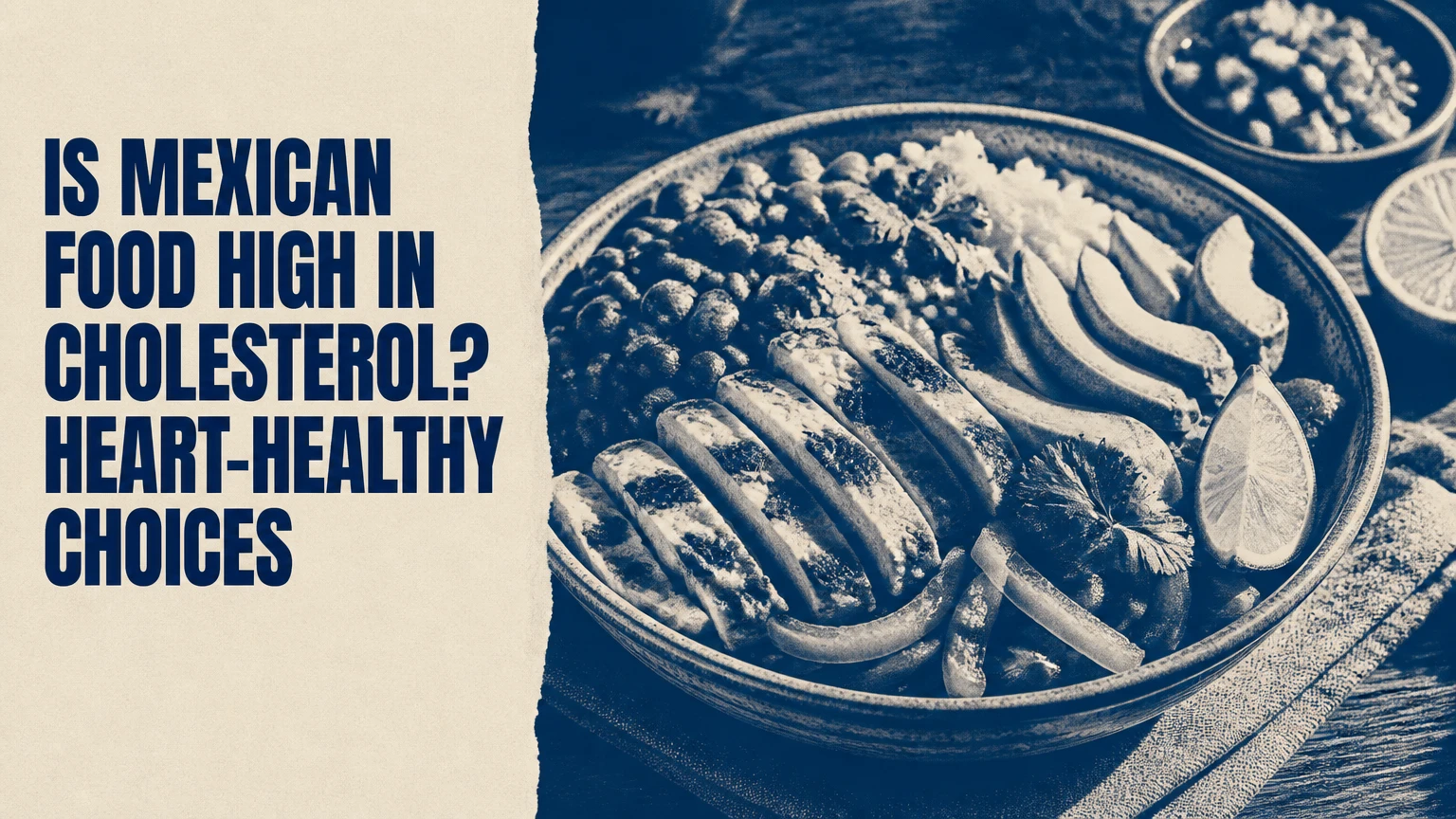
Mexican food is not inherently high in cholesterol. Traditional meals built around beans, corn, vegetables, salsa, and modest portions of lean protein can support heart health, while fried dishes, fatty meats, full-fat cheese, sour cream, and lard can raise saturated fat and LDL cholesterol.
Key Facts at a Glance
- Plant foods such as beans, corn tortillas, tomatoes, peppers, onions, and avocados contain no dietary cholesterol.
- Saturated fat usually has a larger effect on LDL cholesterol than dietary cholesterol in food.
- A restaurant meal can become high in saturated fat through frying oil, cheese, creamy sauces, and fatty meat.
- Whole black or pinto beans provide soluble fiber, which helps reduce cholesterol absorption and elimination.
- Guacamole contains no dietary cholesterol, but it is not fat-free and usually contains a small amount of saturated fat.
- The most reliable restaurant strategy is grilled protein, whole beans, corn tortillas, vegetables, salsa, and dairy toppings on the side.
Is Mexican Food High in Cholesterol?
Mexican food is high in cholesterol only when its ingredients and preparation provide substantial animal foods, saturated fat, or fried components. A bean-and-vegetable plate with corn tortillas is very different from a deep-fried entrée covered with cheese sauce and sour cream.
“Mexican food” includes regional home cooking, street food, coastal seafood dishes, and heavily modified commercial Tex-Mex meals. The cuisine label cannot predict a meal’s cholesterol content without knowing the portion, cooking fat, filling, toppings, and side dishes.
Dietary cholesterol occurs in animal-derived ingredients, including eggs, dairy, shellfish, and meat. Plant ingredients do not contain cholesterol, although some plant foods contain substantial unsaturated fat, as avocados do.
What matters most for blood cholesterol?
For most people, saturated fat is the first nutrition variable to check. Saturated fat can reduce hepatic LDL-receptor activity, leaving more LDL particles in circulation. Dietary cholesterol can also affect LDL, but the response varies considerably between individuals.
The American Heart Association recommends “limiting saturated fats to less than 6% of total daily calories.” On a 2,000-calorie diet, that equals about 13 grams daily. People with elevated LDL cholesterol may receive a lower or more individualized target from a clinician.
How Do Mexican Ingredients Affect LDL Cholesterol?
Mexican ingredients affect LDL cholesterol according to their fiber, fat type, saturated-fat content, and preparation. Beans and vegetables generally improve the meal’s lipid profile, whereas lard, butter, fatty meat, cheese, and cream increase saturated fat.
Ingredient comparison
The figures below are typical estimates for plain portions, not restaurant recipes. Brands, recipes, drainage, and serving sizes can change the values substantially.
| Ingredient and portion | Dietary cholesterol | Saturated fat | Main lipid effect |
|---|---|---|---|
| Black beans, 1 cup cooked | 0 mg | About 0.1 g | Provides about 15 g fiber |
| Corn tortillas, 3 small | 0 mg | About 0.5-1 g | Lower-fat whole-corn option |
| Avocado, one-half medium | 0 mg | About 1.5 g | Mostly monounsaturated fat |
| Cheddar-style cheese, 1 ounce | About 30 mg | About 6 g | Concentrated saturated fat |
| Sour cream, 2 tablespoons | About 8 mg | About 2 g | Adds dairy fat with little fiber |
| Chicken breast, 3 ounces cooked | About 75 mg | About 1 g | Lean animal protein |
| Shrimp, 3 ounces cooked | About 170 mg | Less than 1 g | High dietary cholesterol, low saturated fat |
| Chorizo-style sausage, 3 ounces | About 70-100 mg | Often 8-12 g | High saturated fat and sodium |
Shrimp illustrates an important distinction. Shellfish can contain considerable dietary cholesterol while remaining low in saturated fat, so a person’s overall LDL response may not match the cholesterol number on the nutrition panel.
Can beans lower cholesterol?
Beans can help lower LDL cholesterol because their soluble and fermentable fibers alter bile-acid handling in the digestive tract. The liver uses cholesterol to make replacement bile acids, and regular legume intake can increase that demand.
The National Heart, Lung, and Blood Institute’s Therapeutic Lifestyle Changes program includes soluble fiber as an LDL-lowering strategy. Oats, barley, beans, apples, citrus fruit, and psyllium are useful sources. A cup of cooked black beans commonly provides roughly 15 grams of total fiber, although the soluble portion is smaller.
Beans do not erase the saturated fat in cheese, creamy sauces, or fried meat. A bean burrito with large amounts of cheese can still be high in calories, sodium, and saturated fat.
Which Mexican Foods Are Highest in Cholesterol and Saturated Fat?
The highest-risk Mexican restaurant choices are usually deep-fried dishes, fatty meat preparations, cheese-heavy entrées, and creamy side dishes. Their LDL effect generally comes more from saturated fat and excess calories than from dietary cholesterol alone.
| Dish or component | Typical preparation | Main concern | Lower-fat modification |
|---|---|---|---|
| Chimichanga | Deep-fried filled flour tortilla | Absorbed frying fat, cheese, large portion | Choose a soft grilled burrito |
| Flautas | Rolled tortillas fried until crisp | Frying oil plus sour cream and cheese | Order baked or soft tacos |
| Chile relleno | Battered pepper with cheese, fried | Cheese, egg batter, frying fat | Request roasted pepper without batter |
| Carnitas | Slow-cooked fatty meat | Saturated fat and large portions | Choose grilled chicken or fish |
| Chorizo | Seasoned sausage | Saturated fat, sodium, processed meat | Use beans or grilled poultry |
| Queso dip | Melted cheese-based sauce | Concentrated saturated fat and sodium | Use salsa or pico de gallo |
| Enchiladas suizas | Tortillas with creamy cheese sauce | Dairy fat and large sauce quantity | Request red salsa and limited cheese |
| Nachos | Fried chips, cheese, meat, toppings | Multiple concentrated fat sources | Share a small portion and add beans |
Fried food is not automatically high in dietary cholesterol because frying oil contains no cholesterol unless it is used to cook animal ingredients. The practical problem is that deep frying increases calorie density and may add substantial fat, while restaurant toppings often add cheese, cream, and processed meat.
Are cheese, sour cream, and queso the main problem?
Cheese, sour cream, and queso can make a plant-based entrée high in saturated fat. A quarter cup of shredded cheese may provide approximately 20-30 milligrams of cholesterol and 4-6 grams of saturated fat, depending on the blend.
Portion size matters more than the word “Mexican.” A tablespoon of sour cream is a modest addition; a half-cup of queso is a different nutritional exposure. Requesting dairy toppings on the side gives the diner control without removing the dish’s primary flavors.
Which Mexican Foods Are Better for High Cholesterol?
The best Mexican meals for high cholesterol emphasize beans, vegetables, corn, salsa, avocado in a measured portion, and lean or plant-based protein. Grilling, steaming, roasting, and simmering are preferable to deep frying or cooking ingredients in large amounts of lard.
| Lower-risk choice | Typical serving | Why it helps | Watch for |
|---|---|---|---|
| Frijoles de la olla | 1/2-1 cup | Fiber, plant protein, no cholesterol | Added lard or excessive salt |
| Grilled fish tacos | 2 small tacos | Lean protein and possible omega-3 fats | Fried fish, creamy sauce |
| Chicken fajitas | 3-4 ounces chicken | Lean protein and vegetables | Butter, oil, cheese, flour tortillas |
| Ceviche | 1 cup | Seafood, vegetables, citrus, no frying | Tortilla chips and high sodium |
| Pico de gallo | 1/2 cup | Tomatoes, onion, chile, minimal fat | Salt level |
| Guacamole | 2-4 tablespoons | Monounsaturated fat and fiber | Large portions with chips |
| Vegetable enchiladas | 2 small enchiladas | Vegetables and corn tortillas | Cheese-heavy sauce |
| Bean tostada, baked | 1-2 tostadas | Beans, vegetables, fiber | Fried shell, cheese, cream |
Ceviche can be a good choice, but citrus juice does not “cook” seafood in the same food-safety sense as heat. Use a reputable restaurant, keep the dish cold, and avoid raw seafood if a physician has advised you to avoid it.
Is guacamole heart-healthy?
Guacamole is generally a heart-healthier topping because avocado supplies mostly monounsaturated fat, fiber, potassium, and no dietary cholesterol. Guacamole is not calorie-free and does contain a small amount of saturated fat, so a typical 2-4 tablespoon portion is more practical than an unlimited bowl.
The common error is treating all avocado-based dishes as automatically healthy. Restaurant guacamole may contain little harmful fat, but it is often paired with a large basket of fried corn chips. The chips can contribute more refined starch, sodium, and fat than the guacamole contributes saturated fat.
Traditional Mexican Food Versus Commercial Tex-Mex
Traditional Mexican meals and commercial Tex-Mex meals differ most in cooking fat, portion size, refined starch, dairy quantity, and vegetable-to-protein ratio. Neither label guarantees a specific nutrition profile, but the preparation pattern predicts lipid impact better than the cuisine name.
| Feature | Traditional home-style pattern | Commercial Tex-Mex pattern |
|---|---|---|
| Main starch | Corn tortillas, beans, squash | Large flour tortilla, chips, white rice |
| Cooking fat | Small amounts of vegetable oil or none | Frying oil, lard, butter, cheese sauces |
| Protein portion | About 2-4 ounces | Often 5-10 ounces |
| Vegetable volume | Salsa, peppers, onion, greens | Small garnish portion |
| Dairy topping | Optional or modest | Cheese, queso, sour cream |
| Typical sodium source | Salted beans, broth, cheese | Seasoned meat, queso, sauces, chips |
| LDL pressure | More fiber, less saturated fat | More saturated fat and calories |
| Best adjustment | Preserve beans and vegetables | Remove fried and creamy components |
Traditional food is not automatically low sodium or low calorie. Salted beans, packaged tortillas, preserved sauces, and large portions can still matter for blood pressure, diabetes, or weight management.
How Can You Order Mexican Food With High Cholesterol?
Order Mexican food for high cholesterol by controlling four variables: cooking method, protein, dairy toppings, and side dishes. Ask for grilled or steamed food, whole beans, corn tortillas, vegetables, salsa, and cheese or sour cream on the side.
A practical restaurant sequence
- Choose the cooking method. Use words such as grilled, roasted, baked, or simmered. Avoid fried, crispy, battered, and “loaded” descriptions.
- Select the protein. Prefer beans, grilled chicken, fish, or shrimp. Ask how fatty meat is prepared because names such as barbacoa can vary by restaurant.
- Control the tortilla and starch. Choose two or three small corn tortillas, or request half the rice. Flour tortillas are not necessarily high in cholesterol, but large versions can add substantial calories.
- Replace creamy toppings. Use pico de gallo, salsa verde, roasted salsa, cilantro, onion, or lime instead of queso and sour cream.
- Verify the beans. Ask whether refried beans contain lard. Substitute whole beans if the answer is yes or uncertain.
- Manage the chips. Decline the basket, share a small portion, or use raw vegetables for dipping.
- Check the portion. Pack half of a large entrée before eating if the plate contains more than one reasonable meal.
You will know the order is lipid-conscious when it contains a clear protein portion, at least one cup of vegetables or beans, limited saturated-fat toppings, and no deep-fried main component.
Best restaurant orders by dish type
| Menu item | Better order | Limit or replace | Typical reason |
|---|---|---|---|
| Tacos | Two grilled fish or chicken corn tacos | Fried shell, cheese pile | Keeps tortilla and protein portions moderate |
| Burrito | Bean and grilled chicken burrito, light cheese | Extra queso and sour cream | Large tortilla can double the starch load |
| Fajitas | Grilled vegetables with chicken or shrimp | Butter, cheese, excess oil | Vegetables increase volume and fiber |
| Enchiladas | Red-salsa chicken or bean enchiladas | Cream sauce and heavy cheese | Sauce determines much of the saturated fat |
| Bowl | Beans, vegetables, salsa, small rice portion | Queso, creamy dressing | Easy to customize ingredient by ingredient |
| Breakfast plate | Beans, corn tortillas, vegetables | Sausage, cheese, fried potatoes | Eggs and processed meats increase cholesterol exposure |
| Side dish | Whole beans or grilled vegetables | Fried rice, chips, cheese dip | Replaces concentrated fat and sodium |
How Much Mexican Food Can You Eat With High Cholesterol?
A reasonable meal target is about 10-15 grams of saturated fat or less, depending on the person’s daily calorie needs and clinical target. For someone following the AHA’s stricter 2,000-calorie recommendation, the daily limit is about 13 grams, so one cheese-heavy restaurant meal can consume most of the day’s allowance.
There is no universal “safe number” of tacos. Two grilled corn-tortilla tacos with beans and salsa differ substantially from four fried tacos with cheese and cream. Use the nutrition facts when available, especially for restaurant chains where serving data are standardized.
What does a balanced plate look like?
A practical plate contains one-half non-starchy vegetables, one-quarter beans or lean protein, and one-quarter whole-grain or corn-based starch. Guacamole can occupy a small fat portion, while salsa can add flavor with minimal fat.
For a 600-800 calorie restaurant meal, a useful pattern is 1/2 cup beans, 3-4 ounces grilled protein, 2 small corn tortillas, 1 cup vegetables, 2 tablespoons guacamole, and salsa. This is a planning example, not a prescription.
Can Spicy Mexican Food Lower Cholesterol?
Capsaicin in chili peppers may influence inflammation, appetite, blood vessels, and lipid metabolism, but current evidence does not justify using hot peppers as a cholesterol treatment. The measurable benefit of a spicy meal depends more on what the peppers replace, such as queso or creamy dressing.
Small laboratory and human studies have produced mixed findings, and culinary amounts vary widely. Jalapeños and serranos can improve flavor without adding saturated fat, but capsaicin does not neutralize fried chips, fatty meat, or cheese.
Use salsa to increase vegetable intake and reduce dependence on high-fat toppings. Continue prescribed statins or other treatment, because peppers cannot substitute for lipid-lowering therapy in established cardiovascular disease or familial hypercholesterolemia.
What Are Common Mistakes When Choosing Mexican Food?
The most common mistakes are misclassifying vegetarian food as low-fat, assuming refried beans are plain beans, and focusing on dietary cholesterol while ignoring saturated fat. Restaurant portions and side dishes can change a moderate entrée into a high-calorie, high-sodium meal.
Mistake 1: Choosing cheese enchiladas as the “vegetarian” option
A meat-free entrée may still contain several ounces of cheese, cream sauce, and fried tortillas. Choose bean or vegetable fillings, request limited cheese, and add salsa.
Mistake 2: Treating refried beans as interchangeable with whole beans
Refried beans may be prepared with lard, shortening, oil, or no added fat. Ask for frijoles de la olla when the cooking fat is unknown.
Mistake 3: Ordering grilled food without checking the pan
Fajita vegetables and lean protein may be finished with butter or several tablespoons of oil. Request minimal oil and ask for sauces separately.
Mistake 4: Assuming avocado has no fat
Avocado has mostly unsaturated fat, which is generally preferable to saturated fat, but one large serving can contribute hundreds of calories. Measure guacamole by tablespoons rather than treating it as a free condiment.
Mistake 5: Ignoring sodium
Salsa, seasoned beans, cheese, cured meats, chips, and restaurant rice can produce a high-sodium meal even when saturated fat is modest. People with hypertension, kidney disease, or heart failure need a separate sodium strategy.
Does a Mexican Diet Lower Cholesterol in Four to Six Weeks?
A diet change can produce a measurable LDL change within several weeks, but the size and timing vary. Four to six weeks is a reasonable interval for a follow-up lipid panel after a consistent dietary intervention, although clinicians may choose a different testing schedule.
LDL response depends on baseline diet, genetics, weight change, medication, fiber intake, saturated-fat reduction, and adherence. A person with familial hypercholesterolemia may need medication even after adopting a high-fiber Mexican eating pattern.
A practical home plan costs approximately $2-$5 per serving for dried beans, corn tortillas, onions, tomatoes, peppers, seasonal vegetables, and rice in many United States grocery markets. Restaurant prices vary by city, but a customized entrée commonly costs $12-$25 before tax and tip.
A simple low-saturated-fat meal plan
| Meal | Foods | Typical preparation time | Saturated-fat control |
|---|---|---|---|
| Breakfast | Beans, two corn tortillas, tomato, onion | 10-15 minutes | No sausage or cheese |
| Lunch | Bean and vegetable bowl with salsa | 15-20 minutes | Use 1/2 cup rice |
| Dinner | Grilled fish, peppers, onions, cabbage slaw | 20-30 minutes | Use 1 teaspoon oil |
| Snack | Apple with a small avocado-tomato salsa | 5 minutes | No cream-based dip |
| Batch option | Pot of beans with vegetables | 60-120 minutes | Freeze portions without added lard |
Who Needs More Caution With Mexican Food?
People with diagnosed high LDL cholesterol, familial hypercholesterolemia, diabetes, cardiovascular disease, kidney disease, or hypertension need a more individualized approach. A generally heart-conscious meal may still require limits on sodium, carbohydrate quantity, potassium, or total calories.
If you have high LDL cholesterol
Prioritize beans, vegetables, whole corn, oats or other soluble-fiber foods, and unsaturated fats. Keep cheese, creamy sauces, fried foods, and fatty processed meats occasional, and follow the saturated-fat target provided by your clinician.
If you have diabetes
Beans and vegetables can support glucose control, but large flour tortillas, rice, chips, and sweetened beverages can create a high-carbohydrate meal. Pair measured starch portions with protein and fiber, then check your personal glucose response.
If you have familial hypercholesterolemia
Food changes remain useful but are rarely sufficient alone. Familial hypercholesterolemia often produces very high LDL from inherited clearance problems, so medical evaluation and prescribed lipid-lowering treatment are important.
If you are building muscle
Choose grilled chicken, fish, shrimp, beans, or a combination of legumes and grains. Add rice or tortillas according to training demands, but avoid using queso and fried foods as the default way to increase calories.
FAQ
Are corn tortillas better than flour tortillas for cholesterol?
Corn and flour tortillas contain no dietary cholesterol when made from plant ingredients. Small corn tortillas often contain fewer calories and less total fat than large flour tortillas, while whole-grain flour tortillas can provide useful fiber. The better choice depends on size, fiber, sodium, and how many tortillas the meal includes.
Are tacos bad for high cholesterol?
Tacos are not automatically bad for high cholesterol. Two grilled tacos on small corn tortillas with beans, vegetables, and salsa can fit a heart-conscious eating pattern, while fried shells, fatty meat, cheese, sour cream, and large portions raise saturated fat and calorie content.
Is Mexican rice high in cholesterol?
Mexican rice contains no dietary cholesterol unless animal ingredients are added, because rice, tomatoes, onions, and peppers are plant foods. Restaurant rice may contain oil, broth, butter, or salty seasoning, so its main concerns are calories, saturated fat from cooking ingredients, and sodium rather than cholesterol.
Are beans from a Mexican restaurant healthy?
Whole beans are usually a strong choice because they provide plant protein and fiber without dietary cholesterol. Restaurant refried beans require verification because some recipes use lard or other solid fats. Ask for whole beans when the cooking method is unclear, and monitor added salt if sodium matters.
Can I eat cheese if I have high cholesterol?
Many people can include small portions of cheese, but cheese is concentrated in saturated fat and often adds dietary cholesterol. Use 1 tablespoon of grated cheese or about 1 ounce as a measured portion, then replace extra cheese with salsa, vegetables, beans, or herbs.
How often can I eat Mexican restaurant food?
Frequency depends on the full dietary pattern and medical goals. A grilled, bean-based meal with controlled toppings can fit regularly, while fried and cheese-heavy meals are better treated as occasional choices. Review the restaurant’s nutrition information and compare saturated fat with your daily target.
The Bottom Line
Is Mexican food high in cholesterol? Some Mexican and Tex-Mex meals are high in saturated fat and dietary cholesterol, but the cuisine itself is not. Build meals around whole beans, corn tortillas, vegetables, salsa, modest avocado, and grilled lean protein; limit deep frying, fatty meat, queso, sour cream, and lard-based beans. If LDL cholesterol remains high after consistent changes, obtain a lipid evaluation rather than relying on food substitutions alone.