Traditional Mexican food is the diverse cuisine of Mexico, built from Indigenous Mesoamerican ingredients and techniques, then reshaped by Spanish colonial exchange and later regional adaptation. Its defining features include maize, beans, chiles, tomatoes, squash, nixtamalization, stone-ground sauces, comal cooking, and recipes tied to particular communities, landscapes, celebrations, and family traditions.
Key Facts at a Glance
- Traditional Mexican cuisine combines Indigenous food systems with ingredients and techniques introduced after the 16th-century Spanish arrival.
- Nixtamalization treats dried maize with an alkaline solution, creating masa for tortillas, tamales, antojitos, and other foods.
- Mexico has no single traditional menu; cooking differs substantially among regions such as Oaxaca, Yucatán, Veracruz, Jalisco, and Sonora.
- UNESCO inscribed the traditional Mexican cuisine model on its Representative List of the Intangible Cultural Heritage of Humanity in 2010.
- A traditional dish may use modern equipment or imported ingredients while retaining its regional method, purpose, and flavor structure.
- Corn tortillas, fresh salsas, beans, chiles, and local herbs are more reliable markers than restaurant stereotypes about “authenticity.”
What Does Traditional Mexican Food Mean?
Traditional Mexican food means foodways transmitted through households, communities, markets, celebrations, and professional kitchens across Mexico. The term includes everyday dishes such as tortillas, beans, soups, rice, stews, and salsas, as well as ceremonial foods such as tamales, mole, and regional preparations for weddings, religious festivals, or national holidays.
The word “traditional” does not mean unchanged since antiquity. Mexican cooks have incorporated wheat, rice, cattle, dairy products, citrus, onions, garlic, and cooking methods associated with Europe, while Indigenous communities preserved maize agriculture, chile use, grinding, steaming, pit cooking, and other practices. UNESCO’s 2010 inscription describes a cultural model centered on communal farming, preparation, and consumption rather than a definitive list of dishes.
Anthropologist and food historian Jeffrey M. Pilcher describes Mexican food as “a cuisine of maize, beans, and chillies,” but that shorthand does not capture the country’s full range. Seafood from the Pacific and Gulf coasts, wheat traditions in the north, tropical fruits in the southeast, and Spanish-influenced dairy and meat dishes all belong to the broader picture.
How did Mexican cuisine develop?
Mexican cuisine developed through layers rather than a single origin. Indigenous civilizations cultivated maize, beans, squash, chiles, tomatoes, amaranth, cacao, and herbs; after 1521, Spanish colonization introduced wheat, rice, livestock, dairy, olive products, and new spices. African, Asian, Middle Eastern, and Caribbean exchanges later influenced coastal and urban cooking.
| Historical layer | Approximate period | Food contribution | Continuing example |
|---|---|---|---|
| Early maize agriculture | More than 7,000 years ago | Maize selection and processing | Tortillas and masa |
| Mesoamerican food systems | Before 1521 | Beans, squash, chiles, cacao, pit cooking | Tamales and atole |
| Spanish colonial exchange | From 1521 | Wheat, rice, cattle, dairy, onions, garlic | Flour tortillas and stews |
| Modern regional cooking | 19th century to present | Urban, foreign, and industrial influences | Tacos, bakeries, market foods |
How Does Traditional Mexican Food Work?
Traditional Mexican food works through transformations that build texture and layered flavor from staple ingredients. Maize becomes masa through nixtamalization, chiles gain depth through drying or toasting, tomatoes and tomatillos gain sweetness through roasting, and seeds, herbs, and spices become sauces through grinding.
The method matters as much as the ingredient. A chile blended raw produces a different sauce from one toasted briefly on a comal, soaked, and ground with roasted garlic. A tortilla made from freshly nixtamalized maize has a different aroma and resilience from one made with dehydrated masa harina. Traditional cooking is therefore a network of techniques, not a fixed ingredient checklist.
What is nixtamalization?
Nixtamalization is the process of cooking and soaking maize in water containing food-grade calcium hydroxide, commonly called cal or slaked lime. The alkaline treatment loosens the hull, changes the kernel’s structure, improves grinding, and makes nutrients such as niacin more available when the treated maize becomes part of the diet.
A typical traditional sequence takes roughly 12-18 hours, although temperature, maize variety, lime concentration, and desired masa texture change the timing.
- Cook: Simmer dried maize in an alkaline solution until the skin begins to loosen.
- Rest: Soak the cooked kernels for several hours, commonly overnight.
- Rinse: Remove loosened hull material while retaining enough surface starch for grinding.
- Grind: Process the kernels on a stone mill, metate, or suitable modern grinder.
- Hydrate: Adjust the masa with water until it presses without cracking or sticking.
Nixtamalization does not make every maize product nutritionally complete. The final value depends on the whole meal, including beans, vegetables, protein, fat, and preparation method. Commercial masa harina can also be nixtamalized, but its aroma and hydration behavior differ from freshly ground masa.
What are the main flavor-building techniques?
The principal techniques include dry-toasting, charring, grinding, simmering, steaming, pit cooking, and slow braising. Tatemado refers broadly to blistering or charring ingredients, usually on a comal, before incorporating them into a salsa or sauce.
| Technique | Typical equipment | Main effect | Common foods |
|---|---|---|---|
| Comal cooking | Clay or iron griddle | Toasts, dries, and lightly chars | Tortillas, tomatoes, chiles |
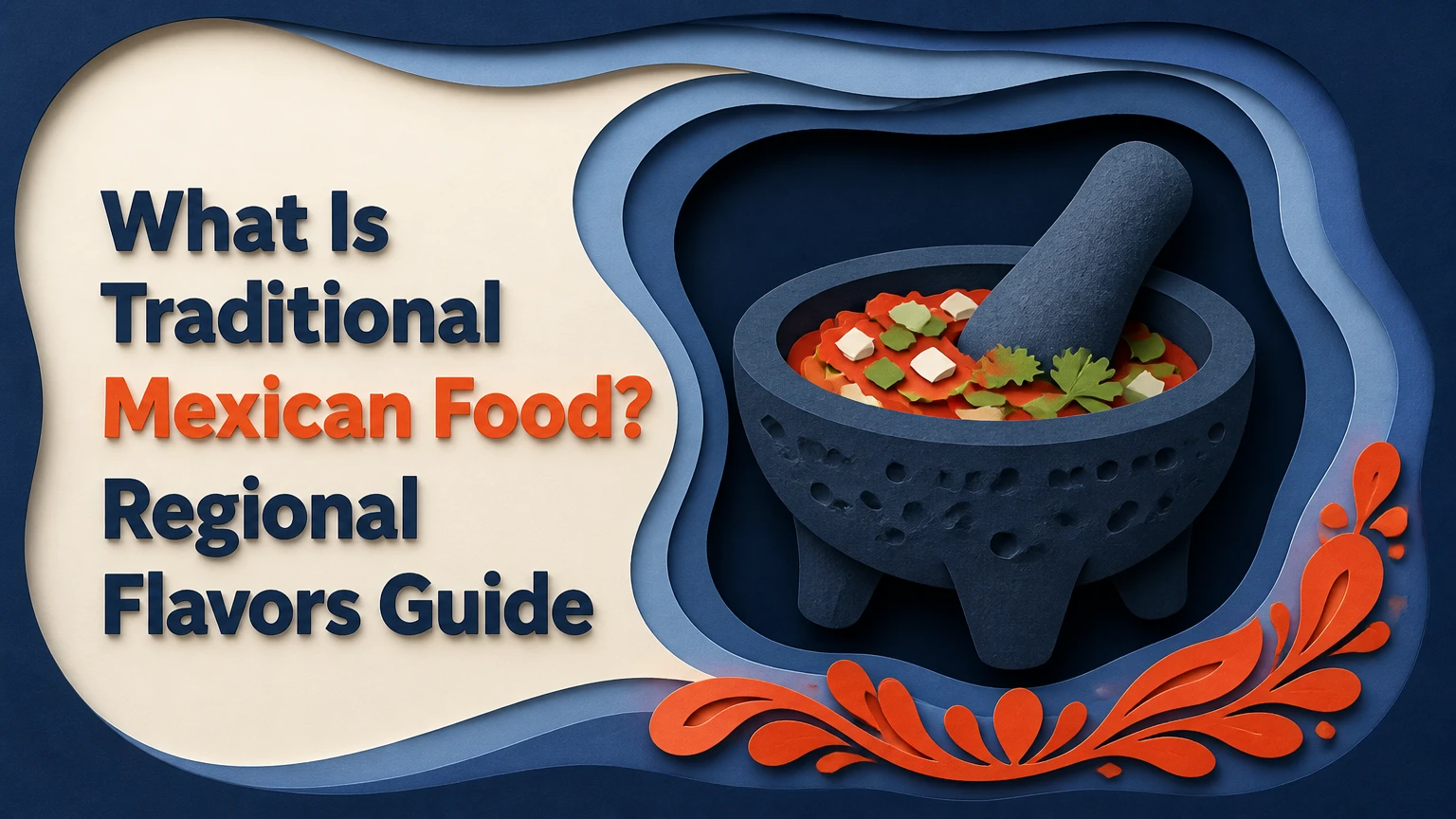
| Molcajete grinding | Basalt mortar and pestle | Releases oils and creates texture | Salsas, spice pastes |
| Steaming | Pot and rack | Moist, gentle cooking | Tamales, mixiotes |
| Pit cooking | Earth oven or covered pit | Slow smoke and tenderization | Barbacoa, pibil |
| Metate grinding | Volcanic stone slab | Fine paste development | Mole, masa, spice mixtures |
A molcajete is useful when texture matters. It does not automatically make a salsa more traditional, and a blender can produce excellent results when the cook controls roasting, liquid, and blending time. The stone tool’s practical advantage is friction and texture, not a magical flavor property.
Which Ingredients Define Traditional Mexican Cuisine?
Maize is the structural center of traditional Mexican cuisine, while beans provide a dependable plant protein and squash contributes vegetables, seeds, blossoms, and tender shoots. Chiles, tomatoes, tomatillos, herbs, seeds, cacao, local fruits, and regional animal products create the variation that the three staple crops alone cannot explain.
The “three sisters” or milpa shorthand is useful, but it can oversimplify real agriculture. A milpa may include maize, beans, squash, quelites, amaranth, chiles, and other plants selected for local soil and climate. Rural food systems differ from commercial restaurant menus.
| Ingredient group | Named examples | Culinary role | Regional expression |
|---|---|---|---|
| Maize | White, blue, red, yellow maize | Masa, tortillas, drinks, thickening | Tlaxcala, Oaxaca, central Mexico |
| Beans | Black, bayo, pinto, ayocote | Broth, filling, purée | Oaxaca, Veracruz, Bajío |
| Chiles | Ancho, guajillo, pasilla, habanero | Heat, color, aroma | Puebla, Oaxaca, Yucatán |
| Fresh produce | Tomato, tomatillo, squash, cactus | Acidity, moisture, texture | Nationwide with local varieties |
| Herbs and aromatics | Epazote, hoja santa, avocado leaf, Mexican oregano | Fragrance and seasoning | Oaxaca, central and southern regions |
| Seeds and nuts | Pumpkin seed, sesame, peanut, almond | Body and richness | Pipianes, moles, regional sauces |
A dish can remain recognizably Mexican without using every ingredient associated with a stereotype. Substituting a local bean or a different chile may change regional identity, but it does not automatically erase tradition.
Which Traditional Mexican Foods Should You Try?
The best first dishes depend on the region and the eating context. For a broad introduction, choose a fresh corn tortilla, a regional salsa, a bean preparation, one slow-cooked dish, and one antojito because those foods reveal different techniques rather than repeating the same flavor profile.
| Dish | Region or association | Main components | Typical preparation |
|---|---|---|---|
| Mole poblano | Puebla | Dried chiles, spices, seeds, cacao, masa | Toast, grind, fry, simmer |
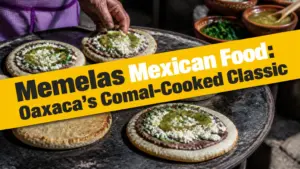
| Tlayuda | Oaxaca | Large tortilla, bean paste, asiento, quesillo, meat or vegetables | Toast on a comal |
| Cochinita pibil | Yucatán | Marinated meat, achiote, sour orange, banana leaf | Slow roast in a pib or covered oven |
| Tlacoyo | Central Mexico | Thick masa, beans or fava filling, cactus | Cook on a comal |
| Panucho | Yucatán | Fried tortilla, black beans, turkey, pickled onion | Fry and assemble |
| Pozole | Several regions | Hominy, chile broth, meat or mushrooms | Simmer for hours |
| Tamal | Nationwide variations | Masa, filling, leaf wrapper | Steam until set |
| Carne asada | Northern and western regions | Marinated beef, tortillas, salsa | Grill over high heat |
What is mole?
Mole is a family of complex Mexican sauces rather than one single recipe. Mole poblano may include several dried chiles, spices, seeds, nuts, fruit, aromatics, and a small amount of cacao, while Oaxacan moles range from dark and layered to green, yellow, red, or coloradito preparations.
Ingredient counts often become exaggerated. “More than 20 ingredients” is possible for some recipes, but complexity comes from processing order, controlled toasting, grinding, frying, and reduction rather than a magic minimum number. Mole can take several hours, and some households prepare a large batch for freezing or celebrations.
Are tacos traditional Mexican food?
Tacos are traditional Mexican food, but “taco” describes a broad format rather than one standardized dish. A taco may contain stewed meat, grilled seafood, beans, vegetables, or insects inside a soft maize tortilla, with toppings selected according to region and filling.
Street tacos often use two small tortillas because the filling may be juicy or heavy. Northern tacos may favor flour tortillas, while tacos al pastor developed through Lebanese migration and local adaptation in central Mexico. A hard fried shell, shredded yellow cheese, and ground meat represent a different restaurant tradition, often associated with Mexican-American cuisine, rather than a universal Mexican standard.
How Does Mexican Food Vary by Region?
Traditional Mexican food varies by geography because climate, Indigenous history, agriculture, migration, and trade shape available ingredients and cooking methods. Northern states use more wheat and grilled beef, Oaxaca is known for diverse moles and maize foods, and the Yucatán Peninsula uses achiote, sour orange, habanero, and methods associated with Maya cooking.
| Region | Signature ingredients | Representative foods | Distinctive method |
|---|---|---|---|
| Central Mexico | Maize, cactus, amaranth, dried chiles | Tlacoyos, barbacoa, mole poblano | Comal cooking and pit roasting |
| Oaxaca | Indigenous maize, hoja santa, cacao, local chiles | Tlayudas, mole negro, tamales | Stone grinding and leaf wrapping |
| Yucatán | Achiote, sour orange, habanero, banana leaf | Cochinita pibil, panuchos, salbutes | Pib-style covered cooking |
| Northern Mexico | Wheat, beef, dried chiles, beans | Flour tortillas, carne asada, machaca | Grilling and flour-tortilla making |
| Veracruz and Gulf | Seafood, tropical fruit, herbs | Fish in tomato sauce, rice dishes | Coastal braising and steaming |
| Michoacán | Maize, beans, chiles, fresh cheese | Corundas, uchepos, carnitas | Steaming and slow cooking |
What foods represent Central Mexico?
Central Mexican cooking includes barbacoa, tlacoyos, chilaquiles, quesadillas, tamales, pozole, and mole poblano. Barbacoa traditionally involves slow cooking meat in a covered pit, sometimes with maguey leaves and steam from an underground setup, although modern vendors may use an above-ground oven.
Mexico City adds market and street-food traditions shaped by migration. A quesadilla may contain cheese in some places and not in others, while regional preferences for fillings, salsa, and tortilla size can cause friendly disagreement without creating a single national rule.
What makes Oaxacan food distinctive?
Oaxacan food is distinctive for its regional maize varieties, mole families, hoja santa, beans, roasted chiles, tlayudas, and tamales wrapped in banana leaves in many local styles. Tlayudas are large toasted tortillas layered with bean paste and other ingredients; calling them “Mexican pizza” is convenient for visitors but loses the dish’s own identity.
Oaxaca is not one uniform cuisine. Valles Centrales, the Isthmus, the Mixteca, the Sierra, and the coast have different ingredients and dishes. A restaurant serving Oaxacan food outside Oaxaca may preserve a recipe while adapting maize, cheese, cooking fuel, or portion size.
What is characteristic of Yucatán cooking?
Yucatecan cooking uses achiote paste, sour orange, habanero, corn masa, beans, and tropical produce, with strong Maya culinary continuity. Cochinita pibil is traditionally marinated, wrapped, and slow-cooked in a pib, while panuchos and salbutes use fried tortillas with different textures and toppings.
The red color of achiote does not indicate extreme heat. Achiote contributes earthy aroma and color, whereas habanero supplies much of the chile heat. Pickled red onion and acidic citrus balance rich fillings, so they function as structural components rather than decorative garnishes.
Traditional Mexican Food Versus Tex-Mex: What Is the Difference?
Traditional Mexican cuisine and Tex-Mex are related but distinct food traditions. Mexican cuisine developed across Mexico’s regions and Indigenous communities, while Tex-Mex formed through Mexican, Tejano, United States, and borderland influences; neither category is inherently superior.
| Category | Common Mexican pattern | Common Tex-Mex pattern | Important qualification |
|---|---|---|---|
| Tortillas | Maize nationwide, wheat concentrated in north | Wheat common in burritos and fajitas | Northern Mexican food also uses flour |
| Cheese | Quesillo, queso fresco, Cotija | Cheddar, Monterey Jack, blended cheese | Mexican dishes may use aged cheese |
| Beans | Whole, mashed, or refried | Refried or seasoned side portions | Both traditions use pinto beans |
| Sauces | Fresh or dried chile, tomatillo, mole | Chili gravy, cheese sauce, tomato-based sauces | Recipes overlap along the border |
| Taco shells | Soft maize tortillas are common | Fried hard shells are common | Fried tortilla forms exist in Mexico |
| Seasoning | Oregano, epazote, herbs, toasted chiles | Cumin, chili powder, garlic blends | Cumin also appears in some Mexican regions |
A yellow cheese topping or a flour burrito does not prove that a dish is “inauthentic.” Food traditions migrate, and border cuisines develop their own legitimacy. The useful distinction is geographic and historical identity, not a purity test imposed on cooks.
Is Traditional Mexican Food Healthy and Gluten-Free?
Traditional Mexican food can be nutritious and naturally gluten-free, but the answer depends on preparation, portion, cross-contact, and the balance of the meal. Nixtamalized maize, beans, vegetables, herbs, and fresh salsas can create a high-fiber meal, while fried foods, salty broths, rich sauces, and large portions change the nutritional profile.
| Dietary question | Usually suitable choice | Main risk | Practical check |
|---|---|---|---|
| Gluten-free eating | Maize tortillas, beans, grilled vegetables | Wheat flour or shared fryer | Ask about flour cross-contact |
| Vegetarian eating | Bean tlacoyos, huitlacoche, vegetable tamales | Broth, rendered fat, hidden meat | Confirm stock and cooking fat |
| Lower-sodium eating | Fresh salsa, plain beans, grilled foods | Packaged seasonings and salty cheese | Request salt separately |
| Higher-protein eating | Beans with eggs, seafood, grilled meat | Small filling portions | Add beans or a substantial filling |
| Lower-fat eating | Steamed tamales, soups, fresh tortillas | Deep frying and rich sauces | Choose grilled or steamed methods |
Nixtamalization improves the nutritional availability of niacin and contributes calcium from the alkaline treatment, but it does not remove all dietary limitations. People with celiac disease should verify ingredients and preparation surfaces because maize tortillas can be produced beside wheat flour.
How Can You Cook Traditional Mexican Food at Home?
Home cooks can begin with fresh or quality masa, a heavy skillet, dried chiles, beans, tomatoes, tomatillos, and a reliable salsa method. The most important variable is heat control: under-roasted ingredients taste flat, while scorched chiles become bitter within seconds.
Step 1: Make or buy usable masa
Use 500 grams of prepared masa or masa harina mixed according to its package instructions. Rest the dough, covered with a damp cloth, for 20 minutes before pressing.
Success checkpoint: The masa forms a smooth ball and the pressed edge remains mostly intact.
Common mistake: Cracking edges usually indicate insufficient hydration, not a need for more pressure.
Step 2: Cook tortillas on a hot comal
Press each ball between plastic sheets to approximately 2 millimeters thick. Cook on a preheated dry skillet for about 30-45 seconds per side, then give the tortilla a final turn.
Success checkpoint: Brown speckles appear and the tortilla may puff.
Common mistake: A pale, dry tortilla usually results from low heat or excessive cooking time.
Step 3: Build a roasted salsa
Toast whole dried chiles for roughly 10-20 seconds per side, then remove them before the skins blacken. Roast tomatoes or tomatillos until softened and blistered, then grind with salt, garlic, and water.
Success checkpoint: The salsa smells roasted and tastes rounded rather than smoky-bitter.
Common mistake: Burned chile seeds and skins can ruin a sauce; discard scorched pieces instead of adding sugar to hide the damage.
Step 4: Add a regional preparation
Choose one dish that fits your equipment. A bean tlacoyo is practical on a skillet, while a slow chile stew can use a covered pot; pit-cooked barbacoa and pibil require more specialized temperature control.
Success checkpoint: The chosen dish retains its intended texture, whether soft masa, tender filling, or reduced sauce.
Common mistake: Calling a fast substitute identical to a pit-cooked dish creates false expectations about flavor.
Typical home costs range from 15-35 USD for a meal serving four, depending on chile availability, fresh masa, protein, and imported ingredients. Fresh tortillas take about 45-60 minutes including mixing, resting, pressing, and cooking; a complex mole may require 4-8 active hours spread across one or two days.
What Are Common Problems With Mexican Cooking?
The most common problems are dry tortillas, bitter salsa, dense tamales, watery beans, and sauces with disconnected flavors. Each failure usually comes from a controllable variable such as hydration, heat, grinding order, steaming, or inadequate reduction.
| Problem | Likely cause | Recovery | Prevention |
|---|---|---|---|
| Cracked tortilla edges | Masa too dry | Knead in warm water | Rest covered for 20 minutes |
| Bitter salsa | Chiles scorched | Blend fresh roasted ingredients | Toast for 10-20 seconds per side |
| Dense tamale | Masa insufficiently aerated | Steam longer if still raw | Whip prepared masa or fat thoroughly |
| Watery beans | Excess cooking liquid | Reduce uncovered | Add liquid gradually |
| Flat mole flavor | Ingredients added without frying or reduction | Simmer and adjust gradually | Toast, grind, fry, then reduce |
One counterintuitive rule matters: a darker chile is not automatically a more flavorful chile. Blackened dried chiles often add bitterness that no amount of piloncillo can fully correct.
Another practitioner rule concerns salsa texture. Blend roasted ingredients briefly, then taste after five minutes because chile heat and salt distribute as the mixture rests. Over-blending can turn fresh salsa foamy and erase the coarse texture expected from a molcajete preparation.
How Much Does Traditional Mexican Food Cost?
Typical prices vary by city, venue, season, and protein, so no national price accurately represents traditional Mexican food. In Mexico, a market breakfast may cost approximately 50-120 MXN, while a regional restaurant plate often costs 150-400 MXN; destination restaurants and labor-intensive tasting menus cost substantially more.
| Meal or preparation | Typical time | Typical price in Mexico | Main price variable |
|---|---|---|---|
| Market breakfast | 10-30 minutes | 50-120 MXN | City and portion |
| Street tacos, 3-5 pieces | 20 minutes to several hours of prep | 60-180 MXN | Filling and location |
| Regional mole plate | 3-8 hours of preparation | 150-400 MXN | Ingredients and labor |
| Barbacoa by kilogram | 8-14 hours | 400-700 MXN | Meat cut and cooking method |
| Cochinita pibil portion | 4-8 hours | 120-300 MXN | Tourist area and serving size |
These figures are typical planning ranges, not fixed national prices. A rural market, Mexico City neighborhood, resort district, and chef-led restaurant can charge very different amounts for food with similar names.
How Do You Recognize a Traditional Mexican Dish?
Identify the dish through its region, preparation, ingredient relationships, and social context rather than judging one topping. Ask where the dish comes from, which maize or chile is used, how the sauce is made, and whether the preparation belongs to an everyday, market, or ceremonial setting.
Useful questions include:
- Is the tortilla made from maize or wheat, and is that choice regional?
- Was the chile dried, roasted, smoked, soaked, or used fresh?
- Does the sauce depend on grinding, frying, steaming, or reduction?
- Is the dish associated with a named state, town, Indigenous community, or festival?
- Are substitutions explained, especially for cheese, protein, or cooking fat?
- Does the menu distinguish a local preparation from a Mexican-American adaptation?
Traditional food can be served in a contemporary restaurant. Modern plating, refrigeration, induction burners, or a food processor do not automatically remove cultural continuity. Conversely, using a clay pot or stone mortar does not make an invented dish ancient.
Frequently Asked Questions
Is Mexican food the same as Spanish food?
Mexican food is not the same as Spanish food. Mexican cuisine developed from Mesoamerican food systems and later absorbed selected Spanish ingredients and methods, whereas Spanish cuisine has its own regional history. Tomatoes, maize, cacao, and chiles traveled from the Americas to Europe, while wheat, rice, livestock, and dairy entered Mexico through colonial exchange.
What is the most traditional Mexican meal?
No single meal represents all of Mexico, but a common traditional pattern includes maize tortillas, beans, a chile-based salsa, vegetables, and a regional protein or stew. Breakfast might feature eggs and tortillas, lunch might center on soup or a cooked dish, and celebratory meals may include tamales, mole, or pozole.
Can traditional Mexican food be vegetarian?
Traditional Mexican food can be vegetarian because beans, maize, squash, mushrooms, cactus, quelites, huitlacoche, and fresh produce support many meat-free preparations. Diners should ask about broth, cooking fat, and fillings because a dish that appears vegetarian may contain animal-based stock or fat.
Is all Mexican food spicy?
Not all Mexican food is spicy. Chiles provide aroma, color, acidity, smoke, or depth as well as heat, and many dishes use mild varieties or remove the seeds and membranes. A salsa served at the table may supply most of the heat, allowing the main dish to remain relatively mild.
What should a first-time visitor order in Mexico?
A first-time visitor should order a regional dish rather than a generic plate labeled simply “Mexican.” In Oaxaca, try a tlayuda or mole; in Yucatán, choose cochinita pibil or a panucho; in the north, sample a flour tortilla with grilled beef; in central Mexico, try a tlacoyo or barbacoa.
Is traditional Mexican food always made from scratch?
Traditional Mexican food is not always made entirely from scratch. Families and restaurants may use prepared masa, canned tomatoes, commercial broth, or modern appliances because tradition adapts to time, income, and availability. The defining evidence lies in the dish’s cultural lineage and method, not in rejecting every convenience.
The Bottom Line
Traditional Mexican food is a regional, living cuisine rooted in maize, beans, chiles, squash, nixtamalization, grinding, roasting, steaming, and communal food traditions. The answer to “what is traditional Mexican food” is therefore broader than tacos or any fixed list: it includes the local ingredients, techniques, histories, and occasions that give each dish its identity.