The best Mexican food depends on the experience you want, but tacos al pastor are the strongest overall introduction because they combine seasoned meat, fresh corn tortillas, salsa, herbs, acidity, and contrasting textures. Food-focused diners should seek Oaxacan mole, while seafood lovers, vegetarians, and breakfast diners have better choices in ceviche, bean-based dishes, and chilaquiles.
Key Facts at a Glance
- Mexican cuisine developed through Indigenous maize-based cooking, regional agriculture, European influences, and local preservation techniques.
- Nixtamalization turns dried maize into masa with improved texture, flavor, and usable nutrition for tortillas and tamales.
- Tacos al pastor are the best first choice for many diners, but mole, cochinita-style dishes, ceviche, and chilaquiles suit different preferences.
- Typical street tacos in Mexico cost about 15-35 MXN each, while a casual restaurant meal commonly costs 120-250 MXN per person.
- Regional identity matters: northern Mexico favors beef and flour tortillas, Oaxaca favors moles and tamales, and coastal regions emphasize seafood.
- “Authentic” does not mean one fixed ingredient list. Mexican food changes by state, season, family tradition, and available ingredients.
What Is Mexican Food?
Mexican food is a regional cuisine built around maize, beans, chiles, squash, herbs, fruit, seafood, and meat, with techniques such as nixtamalization, grinding, roasting, steaming, braising, and grilling. Mexican cuisine is therefore a network of local food traditions rather than one standardized menu.
The United Nations Educational, Scientific and Cultural Organization recognized traditional Mexican cuisine as Intangible Cultural Heritage in 2010, describing it as a “comprehensive cultural model” built around farming, ritual, culinary techniques, and community customs. That designation supports a key distinction: a dish can be modern and still belong to Mexican culinary culture if its ingredients, technique, and regional context connect to that tradition.
Maize remains the central structural ingredient. Cooks soak dried maize in an alkaline solution, usually lime, wash it, and grind it into masa. The masa becomes tortillas, tamales, tlacoyos, sopes, and other foods whose texture cannot be reproduced fully with ordinary cornmeal.
How Does Nixtamalization Change Mexican Food?
Nixtamalization softens maize, releases its outer skin, improves dough formation, and increases the availability of niacin. The process also creates the aroma and elasticity associated with properly made masa, which is why freshly prepared tortillas taste and bend differently from shelf-stable products.
Fresh tortillas need heat, moisture, and short holding times. A tortilla that cracks when folded is usually too dry, too cold, or made from poorly hydrated masa. For tacos, that structural detail matters because the tortilla must hold the filling without overpowering it.
Beans contribute protein, fiber, and creaminess, while chiles provide aroma as well as heat. Dried ancho, guajillo, pasilla, and chipotle chiles can add fruitiness, raisin-like depth, smoke, or earthiness even when a dish is not especially hot.
What Is the Best Mexican Food for You?
Tacos al pastor are the best overall choice for first-time diners, but the best Mexican dish changes according to appetite, spice tolerance, budget, dietary needs, and interest in regional technique. The table below matches a dish with the situation it handles best.
| Dish or style | Best for | Typical serving | Typical price in Mexico | Main flavor or texture |
|---|---|---|---|---|
| Tacos al pastor | First-time diners | 3-5 tacos | 45-175 MXN | Chile-marinated, savory, acidic |
| Mole negro | Food-focused diners | 1 plated entrée | 180-600 MXN | Roasted, spiced, earthy |
| Chilaquiles | Breakfast | 1 plate | 80-180 MXN | Crisp-soft tortilla, salsa-rich |
| Ceviche | Seafood lovers | 250-350 g | 150-350 MXN | Bright, citrusy, fresh |
| Bean tlacoyos | Vegetarians | 2-3 pieces | 50-150 MXN | Maize, beans, smoky salsa |
| Cochinita-style dish | Slow-cooked meat fans | 150-250 g | 120-300 MXN | Tender, achiote-seasoned |
| Chiles en nogada | Seasonal celebrations | 1 stuffed chile | 250-650 MXN | Fruity, nutty, creamy |
| Pozole | Group meals | 500-700 ml bowl | 120-250 MXN | Brothy, hearty, maize-based |
The top overall pick is not necessarily the most elaborate dish. Tacos al pastor provide a useful test of a kitchen because the diner can evaluate tortilla freshness, marinade balance, searing, salsa quality, onion, herbs, and acidity in a small order.
How We Ranked the Best Mexican Dishes
The ranking uses six practical criteria: regional identity, ingredient contrast, technique, availability, value, and suitability for different diners. A dish earns a higher position when its flavor remains distinctive without requiring specialist knowledge or a long explanation.
Regional identity carries more weight than visual presentation. A technically attractive dish loses value if its sauce is generic, its tortilla is stale, or the preparation ignores the food’s local context. A familiar dish can still be excellent when the cook respects the masa, chile, garnish, and cooking method.
The ranking also separates “best to try” from “best to make.” Mole may deliver greater culinary complexity, but tacos, quesadillas, bean dishes, and chilaquiles are more practical for a weeknight kitchen.
1. Tacos al Pastor: Best Overall Introduction
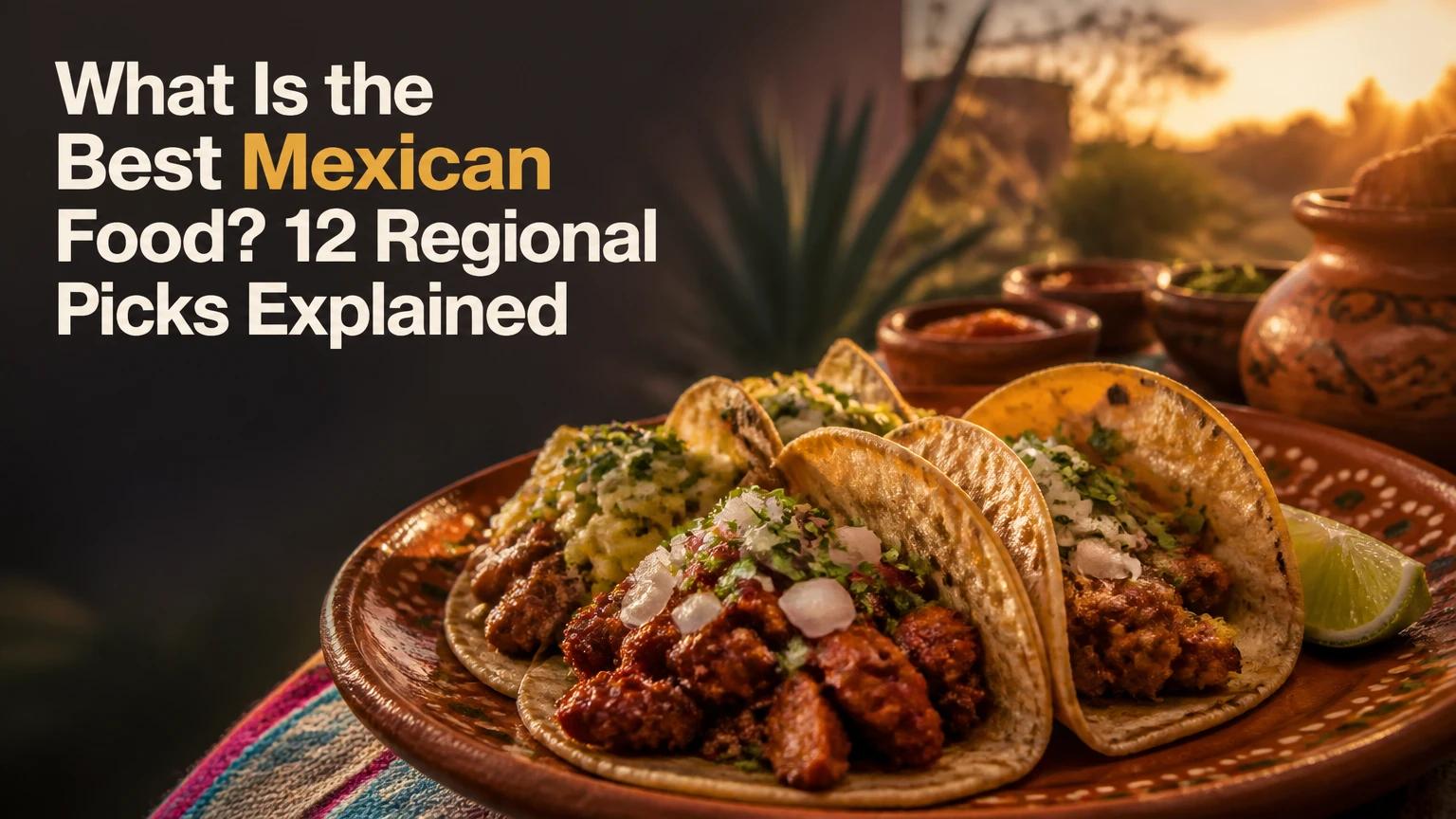
Tacos al pastor are the best overall Mexican food for many first-time diners because marinated meat, corn tortillas, pineapple, onion, herbs, and salsa create several flavor contrasts in one small serving. A good taco has browned edges, juicy interior meat, a warm tortilla, and enough acidity to prevent richness from becoming heavy.
The dish developed in central Mexico through the adaptation of vertical-spit cooking associated with Levantine immigrants, then acquired a distinctly Mexican profile through chile marinade, achiote, local tortillas, and regional garnishes. The pineapple is usually sliced from the top of the spit, although its role varies by taquería.
| Quality signal | Strong result | Warning sign | Practical consequence |
|---|---|---|---|
| Tortilla | Warm, flexible corn tortilla | Cold or cracking tortilla | Taco splits during eating |
| Outer edge | Dark brown, crisp fragments | Pale, steamed surface | Weak roasted flavor |
| Marinade | Chile, spice, acidity, mild sweetness | Salty or sugary coating | Meat tastes one-dimensional |
| Salsa | Fresh, aromatic, balanced heat | Watery or metallic flavor | Garnish cannot repair the taco |
| Pineapple | Small acidic accent | Large sweet pieces | Fruit dominates the filling |
Choose tacos al pastor when you want a quick, inexpensive meal with layered flavor. Skip them when you need a mild dish, avoid meat, or prefer a sit-down meal with a single dominant sauce.
2. Mole Negro: Best for Culinary Depth
Mole negro is the best Mexican dish for diners who want layered sauce technique rather than a quick handheld meal. The Oaxacan preparation can combine dried chiles, toasted spices, seeds, nuts, aromatics, fruit, and a small amount of chocolate, producing a dark sauce with roasted, earthy, bitter, sweet, and warm notes.
Mole is often misunderstood as a hot chocolate sauce. Chocolate supports the sauce but does not define it; the roasted chile and spice base must remain perceptible. A well-made mole has viscosity that coats food without becoming pasty, and its flavor becomes clearer after resting.
Traditional versions may require several hours or multiple preparation days because ingredients are toasted, fried, ground, blended, strained, and simmered separately or in stages. Restaurant mole offers convenience, but the price often reflects labor rather than expensive ingredients alone.
Choose mole negro for a special meal or a regional food itinerary. Skip it if you want a light, crisp dish or dislike bitter, roasted, or sweet-savory flavors.
3. Chilaquiles: Best Mexican Breakfast
Chilaquiles are the best breakfast choice because lightly fried tortilla pieces absorb salsa while retaining some crisp edges. The dish usually includes green or red salsa, onion, herbs, cream, cheese, beans, and an egg or other protein, although regional and household versions vary substantially.
Timing determines texture. Tortilla pieces should meet hot salsa shortly before serving; soaking them for ten minutes produces a soft casserole rather than a crisp-soft breakfast. Red salsa often brings dried-chile depth, while green salsa tends to taste brighter and more herbal.
| Breakfast option | Texture after serving | Typical preparation time | Typical price in Mexico | Best pairing |
|---|---|---|---|---|
| Green chilaquiles | Crisp edges, tender center | 15-25 minutes | 80-180 MXN | Egg and beans |
| Red chilaquiles | Softer, chile-forward | 15-25 minutes | 80-180 MXN | Shredded chicken |
| Huevos rancheros | Fried tortillas, separate components | 20-30 minutes | 90-200 MXN | Refried beans |
| Tamales | Soft, steamed masa | 60-120 minutes batch time | 20-50 MXN each | Morning maize drink |
| Bean tlacoyos | Chewy masa, creamy filling | 20-40 minutes | 50-150 MXN | Nopales and salsa |
Choose chilaquiles when breakfast texture and salsa matter more than portability. Skip them when ordering for delivery, because trapped steam can make the tortilla pieces uniformly soft.
4. Ceviche and Fish Tacos: Best for Coastal Flavors
Ceviche and fish tacos are the best Mexican foods for diners who prefer bright, fresh, coastal flavors. Ceviche uses raw or previously cooked seafood with citrus, chile, onion, herbs, and vegetables, while fish tacos may use grilled, battered, or fried fish with cabbage, salsa, and a creamy element.
Citrus changes the texture of seafood, but it does not reliably eliminate all pathogens. The U.S. Food and Drug Administration advises that cooking seafood thoroughly is safer than relying on marination, so diners with pregnancy, immune suppression, or other elevated risks should choose cooked seafood.
Freshness is more important than heat. Ceviche should smell clean and marine, not strongly fishy, and the seafood should remain firm rather than mushy. In coastal cities such as Ensenada, Mazatlán, Veracruz, and La Paz, local species and garnishes differ.
Choose cooked fish tacos when you want coastal flavor with a lower raw-seafood risk. Choose ceviche at a reputable, busy venue with strong cold-chain practices, and skip raw preparations when storage conditions are uncertain.
5. Cochinita-Style Dishes: Best for Slow-Cooked Flavor
Cochinita-style cooking is best for diners who enjoy tender, deeply seasoned meat with citrus and pickled onion. Yucatecan versions use achiote, sour orange or a substitute, local spices, and long cooking, often wrapped or covered to retain moisture.
The defining experience is not simply softness. Properly cooked meat should separate easily while retaining concentrated seasoning, and the pickled onion should cut through the richness. Tortillas, bread rolls, or maize-based sides can carry the filling.
Choose this style in Yucatán or at a restaurant that identifies its regional preparation. Skip it when you want a fast grilled flavor, a low-fat meal, or a vegetarian option.
6. Pozole: Best for Groups
Pozole is a hearty maize stew suited to group dining and long meals. Hominy is simmered until the kernels bloom, then combined with a seasoned broth and a meat or vegetable base; diners finish the bowl with lettuce or cabbage, onion, herbs, lime, and chile.
The red, green, and white versions are not interchangeable. Red pozole commonly uses dried chiles, green versions may use fresh herbs and green ingredients, and white pozole emphasizes broth and garnish. Serving garnishes separately lets each person adjust acidity, heat, and crunch.
A typical bowl contains 500-700 milliliters and costs 120-250 MXN in a casual restaurant. Choose pozole when you want a filling communal meal. Skip it when you need a fast, dry, handheld dish.
7. Enchiladas: Best for Sauce Comparison
Enchiladas are rolled or folded corn tortillas covered with sauce and filled or topped with ingredients such as cheese, vegetables, beans, or meat. The best versions keep the tortilla supple without allowing the sauce to erase its toasted maize flavor.
Green, red, mole, and other regional sauces create different results. Some cooks briefly fry the tortilla before filling it, which adds flavor and prevents immediate disintegration. Excess sauce, cold tortillas, or low-quality cheese can make the plate heavy and wet.
Choose enchiladas when you want to compare sauces in a full meal. Skip them if you dislike soft textures or want to taste a filling without a dominant topping.
8. Chiles en Nogada: Best for Seasonal Celebrations
Chiles en nogada are stuffed poblano chiles covered with walnut-based cream sauce and pomegranate seeds. The white sauce, green chile, and red fruit are commonly associated with the Mexican flag, although the patriotic symbolism should not overshadow the dish’s seasonal ingredients and preparation.
The dish is often associated with late summer and early autumn, when walnuts, pomegranate, and local produce are available. The filling combines savory and fruity notes, while the sauce adds richness and a mild nut flavor.
Choose chiles en nogada for a seasonal sit-down meal. Skip them when you want street-food value, strong chile heat, or a short preparation.
Regional Guide: Which Mexican Food Comes From Each Area?
Mexican regional cuisine differs through climate, agriculture, Indigenous traditions, migration, and preservation methods. Northern states emphasize grilling, wheat flour, and beef; central states specialize in maize dishes and market foods; Oaxaca and the south are associated with moles, tamales, and varied chiles; coastal areas prioritize seafood and tropical acidity.
| Region | Signature dishes | Core ingredients | Typical dining context |
|---|---|---|---|
| Northern Mexico | Carne asada, flour-tortilla tacos | Beef, wheat flour, grilled chiles | Parrillas and family gatherings |
| Central Mexico | Al pastor, pozole, chilaquiles | Maize, dried chiles, herbs | Taquerías and markets |
| Oaxaca | Mole negro, tlayudas, tamales | Multiple chiles, masa, beans | Festive meals and markets |
| Yucatán | Cochinita-style dishes, sopa de lima | Achiote, citrus, maize | Regional restaurants |
| Veracruz and Pacific coast | Ceviche, fish tacos, seafood stews | Fish, shellfish, citrus, herbs | Coastal markets and seafood restaurants |
| Puebla | Chiles en nogada, mole poblano | Poblano chile, walnut, spices | Seasonal and celebratory meals |
| Michoacán | Carnitas-style dishes, uchepos | Maize, slow-cooked meat, fresh cheese | Markets and family kitchens |
No region owns the single definition of Mexican authenticity. A northern flour tortilla is not less Mexican than an Oaxacan corn tortilla; each belongs to a different food environment.
Tacos Versus Burritos: Which Is Better?
Tacos are better for sampling several fillings and regional styles, while burritos are better for one portable, high-calorie meal. Burritos use a large flour tortilla and commonly include rice, beans, filling, cheese, and salsa, whereas tacos usually use smaller tortillas with fewer components.
| Feature | Tacos | Burritos | Best choice |
|---|---|---|---|
| Tortilla | 12-16 cm corn or flour | 25-35 cm flour | Tacos for maize flavor |
| Typical filling | 40-80 g | 150-300 g | Burrito for a large meal |
| Eating time | 10-20 minutes | 15-30 minutes | Tacos for variety |
| Portability | Moderate, often leaks | High when tightly wrapped | Burrito for travel |
| Regional association | Nationwide Mexican forms | Strong northern and border presence | Depends on destination |
| Typical casual price | 15-35 MXN each | 100-250 MXN | Tacos for low entry cost |
Neither format automatically proves authenticity. The ingredients, preparation, and regional context matter more than the shape.
How Much Does the Best Mexican Food Cost?
Typical prices range from 15-35 MXN per street taco, 80-120 MXN for a market meal, 120-250 MXN for a casual restaurant plate, and 400-4,000 MXN or more for fine dining. Mexico City, resort areas, airports, and destination restaurants can exceed these ranges substantially.
| Dining format | Typical Mexico price | Approximate USD | Typical time | Suitable order |
|---|---|---|---|---|
| Street taco stand | 15-35 MXN each | $0.85-$2.00 | 5-15 minutes | 3-5 tacos |
| Public market | 80-120 MXN | $4.50-$6.50 | 20-45 minutes | Soup, stew, or plate |
| Casual restaurant | 120-250 MXN | $7-$15 | 30-75 minutes | Main dish and sides |
| Regional specialty restaurant | 250-650 MXN | $15-$38 | 45-100 minutes | Mole or festive dish |
| Fine-dining tasting menu | 400-4,000+ MXN | $20-$230+ | 90-180 minutes | Multiple courses |
Currency conversions are approximate and change with exchange rates. Street-food prices also vary by city, protein, portion size, and tourist demand.
How Long Do Mexican Dishes Take to Prepare?
Street tacos and quesadillas usually take 5-15 minutes to assemble, chilaquiles take 15-25 minutes, pozole commonly requires 3-8 hours of simmering, and a scratch mole can take one or more days when roasting, grinding, straining, and resting are included.
| Dish | Active work | Total typical time | Main time driver |
|---|---|---|---|
| Tacos al pastor at service | 5-10 minutes | Same day marinade plus service | Marinating and spit cooking |
| Chilaquiles | 15-25 minutes | 15-25 minutes | Salsa and tortilla timing |
| Tamales | 60-120 minutes | 3-6 hours | Filling, wrapping, steaming |
| Pozole | 45-75 minutes | 3-8 hours | Hominy and broth tenderness |
| Mole negro | 3-6 hours | 1-3 days | Toasting, grinding, simmering |
| Ceviche | 15-25 minutes | 20-45 minutes | Chilling and seafood preparation |
For home cooks, the practical rule is to prepare salsa, beans, and braised fillings ahead of time, then heat tortillas and assemble shortly before eating.
What Makes Mexican Food Authentic?
Authentic Mexican food reflects a recognizable ingredient system, technique, regional history, and eating context rather than a universal checklist. Fresh masa, properly toasted chiles, regional salsas, local garnishes, and appropriate cooking times usually matter more than whether a restaurant uses a particular cheese.
Tex-Mex is a related but distinct tradition. Large flour tortillas, yellow cheese, seasoned ground meat, and rice-heavy fillings can be legitimate Tex-Mex food, but they should not be presented as representative of every Mexican regional cuisine.
A common practitioner rule is to identify the dish’s origin before judging its ingredients. Flour tortillas are expected in parts of northern Mexico, cream and cheese vary by region, and some dishes have multiple accepted methods. Authenticity is contextual.
Common Mistakes and How to Fix Them
Mexican food fails most often through poor temperature control, burned chiles, excessive liquid, and unbalanced seasoning. The following corrections apply both in restaurants and home kitchens.
- Serving tortillas cold: Heat tortillas on a dry skillet for about 20-40 seconds per side, then hold them wrapped so steam keeps them flexible.
- Burning dried chiles: Toast chiles for roughly 10-30 seconds per side until aromatic, then remove them before black spots develop.
- Adding all the chile at once: Blend part of the chile first, taste after simmering, and increase heat gradually because bitterness cannot be removed easily.
- Skipping salsa straining: Strain blended chile sauces when a smooth texture is intended; coarse skins and seeds can create unpleasant grit.
- Making chilaquiles too early: Add salsa immediately before serving so the tortilla pieces retain contrasting crisp and soft areas.
- Using too much garnish: Onion, herbs, lime, and cream should sharpen the main dish, not conceal stale tortillas or an over-salted filling.
One counterintuitive truth is that more chile does not necessarily create more flavor. Toasting, soaking, straining, and balancing chiles with acidity often matter more than increasing their quantity.
Best Choices for Different Diners
Beginners should start with tacos al pastor, quesadillas, or mild enchiladas because those dishes offer familiar formats while revealing masa, salsa, and regional seasoning. Diners who dislike heat can request salsa separately, but they should distinguish chile aroma from capsaicin intensity.
Vegetarians should look for bean tlacoyos, huitlacoche preparations, squash-blossom quesadillas, mushroom tacos, nopales, and vegetable tamales. Cheese and cream are not required for a satisfying meal, and beans plus maize create a more substantial plate than a garnish-only vegetable filling.
Health-conscious diners should prioritize grilled fish, bean-based dishes, vegetable-heavy soups, nopales, salsa, and corn tortillas while moderating fried toppings, cream, cheese, and salty sauces. Mexican food itself is not inherently unhealthy; preparation method and portion size determine much of the nutritional difference.
Families should order a spread rather than one large dish: tacos for customization, beans for children, a mild soup, and separate salsas. People with maize, dairy, nut, seafood, or gluten allergies should ask about shared griddles, stock, sauces, and cross-contact before ordering.
How Do You Order Mexican Food Without Choosing Badly?
Order one dish that reveals the kitchen’s core technique, then add a regional specialty if the first plate is fresh and balanced. At a taquería, inspect tortilla warmth, turnover, salsa freshness, and whether fillings are cooked to order; at a sit-down restaurant, ask which dish reflects the local region.
Use this sequence:
- Identify the regional style or city.
- Choose the cooking method you prefer, such as grilled, steamed, braised, or fresh.
- Order salsa separately when spice tolerance is uncertain.
- Ask whether tortillas are made in-house or delivered.
- Match the portion to the occasion rather than ordering every famous dish.
- For seafood, select a busy venue with visible refrigeration and rapid turnover.
A crowded market stall can indicate freshness, but popularity alone does not guarantee quality. Clean handling, hot cooked food, cold seafood, and rapid service remain better signals.
The Bottom Line
The best Mexican food is tacos al pastor for the strongest overall introduction, mole negro for complex regional technique, chilaquiles for breakfast, ceviche or fish tacos for coastal flavor, and bean-based masa dishes for vegetarians. Choose by region, texture, budget, spice tolerance, and preparation method rather than treating one dish as universally superior.
Mexican food rewards comparison. Try a fresh tortilla, a chile-based salsa, a slow-cooked specialty, and a regional dish during the same food journey. That approach gives a more accurate answer to “what is the best mexican food” than any single ranked list.
Frequently Asked Questions
Is Mexican food always spicy?
Mexican food is not always spicy. Many dishes use chiles for aroma, color, acidity, or depth without producing intense heat, and diners can often control heat by adding salsa at the table. Mole, pozole, beans, tortillas, and many seafood dishes can be flavorful while remaining mild.
What is the most popular Mexican street food?
Tacos are among the most widespread Mexican street foods, with regional fillings such as al pastor, grilled beef, stewed vegetables, fish, and beans. Other common street foods include tamales, elote, quesadillas, tlacoyos, and tortas, although availability varies by city and time of day.
What is the best Mexican food for a picky eater?
Quesadillas, mild chicken enchiladas, bean tacos, grilled chicken tacos, and chilaquiles with salsa on the side are practical choices for picky eaters. Ordering components separately allows the diner to control chile heat, onion, herbs, cheese, cream, and texture.
Is Mexican food good for vegetarians?
Mexican cuisine offers substantial vegetarian options because beans, maize, squash, mushrooms, cactus, amaranth, and vegetables appear in traditional regional cooking. Ask whether beans are prepared with animal fat and whether sauces contain stock, then choose tlacoyos, nopales, squash-blossom quesadillas, or vegetable tamales.
What should I try in Mexico City?
Start with tacos al pastor, chilaquiles, quesadillas, pozole, and market-made tamales in Mexico City. The city also offers regional food from across Mexico, so a restaurant specializing in Oaxaca, Yucatán, Veracruz, or Puebla may provide a more focused experience than a generic Mexican menu.
What is the hardest Mexican dish to make?
Scratch mole is among the most demanding Mexican dishes because it requires many ingredients, careful chile toasting, grinding, straining, seasoning, and extended simmering. Tamales are also labor-intensive because the masa, filling, wrapping, and steaming must all be coordinated for consistent texture.