Volcanes Mexican food are open-faced corn tortillas toasted on a comal until crisp, then covered with melted cheese, chopped meat, onion, cilantro, and salsa. The tortilla stays flat or slightly cupped, while the cheese binds the toppings to the crunchy base. Unlike a folded quesadilla, a volcán is eaten as a crisp, assembled tortilla.
Key Facts at a Glance
- A Mexican volcán is an open-faced, cheese-topped corn tortilla with a crisp foundation.
- The tortilla usually measures about 12-15 centimeters, although taquerías use different sizes.
- Queso Oaxaca, asadero, Chihuahua, and Monterey Jack melt more evenly than low-moisture cheddar.
- A home batch typically takes 20-30 minutes, including meat preparation and tortilla crisping.
- Common toppings include grilled beef, seasoned meat, chorizo, mushrooms, nopales, white onion, cilantro, and salsa.
- A volcán is best eaten immediately because steam from packaging softens the tortilla.
What Are Volcanes in Mexican Food?
A volcán is a crisp corn tortilla topped with melted cheese and a savory filling, usually chopped grilled beef or another taquería protein. The tortilla is toasted directly on a comal, rather than assembled from a pre-fried shell, so its flavor includes roasted corn and sometimes a trace of cooking fat.
The name means “volcano.” The raised cheese, meat, and salsa can resemble a volcanic mound, especially when the tortilla bends slightly at the edges. The image explains the name, but the dish does not require a dramatic cone shape. Some volcanes are nearly flat, while others curl as the tortilla dries.
The category also has regional variation. A stand may use a thin tortilla, a thicker handmade tortilla, a cheese crust, or a preparation close to a vampiro. Menu names are not perfectly standardized across Mexico, the United States, or other countries.
Mexican culinary tradition adds useful context. UNESCO described traditional Mexican cuisine in 2010 as “a comprehensive cultural model” involving farming, ritual, knowledge, and community customs. A restaurant menu item called a volcán belongs to that wider tortilla, corn, salsa, and comal system, but its exact formula depends on the cook.
How Does a Volcán Get Its Crunch?
A volcán becomes crisp when the tortilla loses enough water before the cheese and wet toppings arrive. Medium-low heat, repeated turning, and a brief rest on a rack produce a firmer base than high heat, which browns the outside before the center dries.
The most important control is moisture. A fresh tortilla contains enough water to steam and soften; a stale tortilla can crack before it becomes evenly crisp. The best working range is a fresh, thin tortilla dried gradually over approximately 4-7 minutes, depending on thickness and comal temperature.
Cheese creates a partial barrier between the tortilla and the filling. Melted cheese also adds fat, salt, and elasticity, but it cannot permanently protect a tortilla from watery salsa or steam. A generous spoonful of salsa applied immediately before eating gives better texture than salsa added inside a sealed container.
The Maillard reaction contributes roasted aromas when proteins and sugars brown on a hot cooking surface. Corn tortillas do not brown in exactly the same way as meat, yet dry heat still deepens their toasted corn flavor. Rendered cooking fat can add flavor, but excess grease makes the base fragile rather than crisp.
What Does the Name Volcán Mean?
The Spanish word volcán means volcano, and the culinary name refers to the dish’s mound-like topping and bubbling cheese. The name is descriptive rather than a guarantee of one national recipe, so a volcán in one city may resemble a crisp cheese tostada while another resembles a lightly cupped vampiro.
What Goes on a Mexican Volcán?
The standard build combines one crisp tortilla, approximately 30-50 grams of melting cheese, 45-75 grams of cooked filling, and small amounts of onion, cilantro, and salsa. The filling should be finely chopped because large pieces slide from the open surface.
Main Volcán Varieties
| Style | Typical filling | Typical portion | Best pairing |
|---|---|---|---|
| Asada | Chopped grilled beef | 45-75 g | Salsa verde and white onion |
| Pastor | Marinated spit-roasted meat | 45-70 g | Pineapple, cilantro, chile salsa |
| Chorizo | Crumbled seasoned sausage | 35-60 g | Oaxaca cheese and salsa roja |
| Campechano | Beef mixed with sausage | 50-80 g | Salsa negra and pickled onion |
| Pollo | Chopped grilled chicken | 45-75 g | Avocado salsa and cilantro |
| Hongos | Sautéed mushrooms | 40-70 g | Epazote, green salsa, Oaxaca cheese |
| Nopales | Grilled cactus strips | 45-70 g | Onion, queso fresco, tomatillo salsa |
A volcán de asada is the clearest starting point because grilled beef supplies char, salt, and a firm bite without adding much moisture. The mushroom and nopal versions work well for vegetarian diners, although the cook should drain excess mushroom liquid before adding the filling.
The term “campechano” can vary by region. It usually indicates a combination of fillings, often grilled beef with sausage, but individual taquerías may add other cooked ingredients. Ask what the stand combines before ordering if the menu does not specify.
Which Cheese Is Best for Volcanes?
Queso Oaxaca is the strongest all-purpose choice because it melts smoothly, stretches well, and adheres to the tortilla without separating quickly. Queso asadero, Chihuahua, and low-moisture Monterey Jack also work, while dry pre-shredded cheddar tends to release oil and form uneven patches.
| Cheese | Melting behavior | Amount per volcán | Practical result |
|---|---|---|---|
| Queso Oaxaca | Smooth, elastic melt | 35-50 g | Stretchy, cohesive topping |
| Queso asadero | Soft, fast melt | 35-50 g | Mild flavor and even coverage |
| Chihuahua | Creamy, moderately elastic | 35-50 g | Rich melt with light browning |
| Monterey Jack | Reliable substitute | 30-45 g | Mild, accessible, cohesive |
| Queso fresco | Crumbles, limited melting | 20-30 g | Salty garnish, not the main melt |
| Cheddar | Oil separation at high heat | 30-40 g | Sharper flavor, less uniform texture |
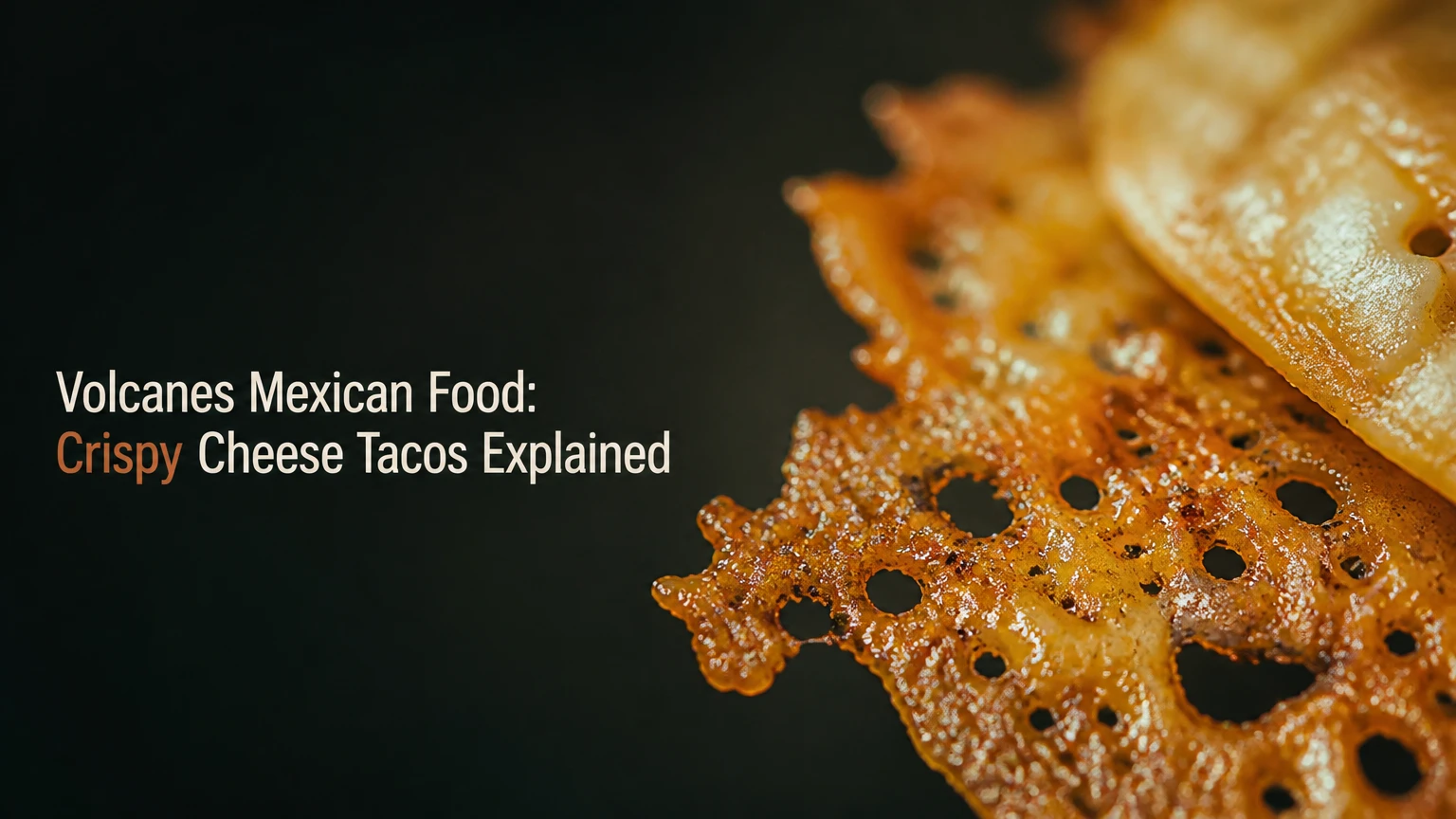
A costra de queso is different from ordinary melted cheese. The cook places cheese directly on the hot comal, lets it brown into a lace-like crust, then lays the tortilla over or beneath it. The result has a toasted cheese exterior and a stronger roasted flavor, but the costra can become brittle if overheated.
A useful practitioner rule is to shred cheese finely and cover the tortilla in a thin, continuous layer. A mountain of cheese melts slowly and leaks grease; an even layer melts before the tortilla darkens.
How Do You Make Volcanes at Home?
Make volcanes by crisping tortillas slowly, melting cheese over the dry base, adding hot chopped filling, and garnishing after removing the tortilla from direct heat. Six volcanes generally take 20-30 minutes, cost approximately $12-$25 in ingredients, and require a comal or skillet, tongs, a knife, and a cooling rack.
Before You Start
| Requirement | Typical home specification |
|---|---|
| Yield | 6 volcanes |
| Total time | 20-30 minutes |
| Active cooking | 15-22 minutes |
| Difficulty | Moderate, mainly because of heat control |
| Tortillas | 6 thin corn tortillas, 12-15 cm |
| Cheese | 210-300 g Oaxaca or Monterey Jack |
| Filling | 300-450 g cooked meat, mushrooms, or nopales |
| Cooking surface | 25-30 cm cast-iron skillet or comal |
| Garnishes | 60 g onion, 20 g cilantro, 120 ml salsa |
Step 1: Prepare the Filling
Chop 300-450 grams of cooked filling into pieces no larger than 1 centimeter. Reheat the pieces in a skillet for 2-4 minutes until steaming, then move them to a warm plate so the tortilla can remain on the comal.
You will know this step worked when the filling is hot but not wet. Common mistakes include adding cold meat to the melting cheese or leaving rendered fat pooled in the pan.
Step 2: Crisp the Tortilla
Place one tortilla on a lightly oiled comal over medium-low heat. Turn it every 30-45 seconds for 4-7 minutes, pressing the center briefly with a spatula so the middle dries evenly.
You will know the tortilla is ready when it feels rigid at the center and produces a dry tapping sound against the spatula. If the rim burns before the center hardens, lower the heat and use a second, cooler cooking zone.
Step 3: Add and Melt the Cheese
Spread 35-50 grams of shredded cheese over the tortilla, leaving a 5-millimeter border. Cover the skillet for 45-90 seconds, or until the cheese softens and connects across the surface.
You will know the cheese is ready when no dry strands remain and the surface moves as one layer. A lid melts faster than additional heat, which protects the tortilla from scorching.
Step 4: Add the Hot Filling
Scatter 45-75 grams of chopped filling over the melted cheese. Keep the layer level rather than piling it into a tall mound, because a high topping slides from an open-faced tortilla.
You will know the balance is right when each bite contains tortilla, cheese, and filling. Excess filling is the most common cause of broken edges and messy eating.
Step 5: Garnish Off Heat
Transfer the volcán to a plate or rack, then add 1-2 teaspoons of diced white onion, 1 teaspoon of cilantro, and 1-2 teaspoons of salsa. Garnishing off heat preserves the fresh aroma and prevents salsa from boiling into the cheese.
You will know the garnish is correctly portioned when it seasons the filling without covering the cheese. Watery salsa should be spooned lightly or served at the side.
Step 6: Serve Immediately
Eat the volcán within 2-4 minutes of assembly. A wire rack is better than a flat plate for short holding because escaping steam cannot condense beneath the tortilla.
How Much Do Volcanes Cost?
A typical Mexican street-stand price is approximately 35-65 Mexican pesos per piece, while restaurants outside Mexico may charge about $4.50-$7.50 per piece. Prices vary with meat cost, city, tortilla size, cheese quantity, table service, and whether the item uses a cheese crust.
| Setting | Typical price per piece | Typical size | Likely service |
|---|---|---|---|
| Mexican street stand | MX$35-65 | 12-15 cm | Immediate comal service |
| Casual taquería | MX$45-85 | 12-16 cm | Plate, salsa station |
| Tourist district | MX$70-120 | 13-18 cm | Larger filling, table service |
| United States taquería | US$4.50-$7.50 | 12-15 cm | Takeout or plate service |
| Home preparation | US$2.00-$4.20 | 12-15 cm | Six-piece ingredient batch |
These are typical market ranges, not fixed prices. A home cost estimate includes cheese, tortillas, filling, salsa, and garnishes, while restaurant pricing also covers labor, rent, fuel, and service.
Are Volcanes Tostadas, Tacos, or Quesadillas?
Volcanes occupy a middle category: they use a tortilla like a tostada, contain cheese like a quesadilla, and often carry the meat and garnishes associated with tacos. The defining feature is the open-faced, comal-crisped tortilla with cheese attached directly to its surface.
| Feature | Volcán | Tostada | Quesadilla | Vampiro |
|---|---|---|---|---|
| Tortilla state | Comal-crisped to order | Fried or baked shell | Soft or folded crisp tortilla | Toasted tortilla, often covered |
| Form | Open-faced | Open-faced | Folded or enclosed | Often topped or layered |
| Cheese position | Directly over tortilla | Optional topping | Inside or on top | Usually with meat and cheese |
| Typical size | 12-15 cm | 12-15 cm | 15-20 cm | 12-15 cm |
| Moisture tolerance | Low | Moderate | Moderate | Low to moderate |
| Best eating time | Within 2-4 minutes | Within 10 minutes | Within 5-10 minutes | Within 2-5 minutes |
A tostada usually begins with a shell that was fried or baked separately, whereas a volcán is commonly toasted during service. A quesadilla protects its cheese inside a folded tortilla. A vampiro is the closest comparison, but its construction and name vary substantially among taquerías.
The distinction matters when ordering. Ask whether the tortilla is “bien dorada” or very crisp if you want a firm base, and ask for salsa on the side if the item must travel.
What Are the Nutrition and Portion Considerations?
A typical volcán contains approximately 250-450 calories before high-calorie sauces or extra filling, with cheese, cooking fat, and the chosen protein producing most of the variation. The 250-350 calorie estimate often quoted for a small piece is plausible, but larger tortillas and generous cheese portions can exceed it.
| Component | Typical amount | Estimated energy range | Main variable |
|---|---|---|---|
| Corn tortilla | 25-35 g | 50-80 kcal | Diameter and thickness |
| Melting cheese | 35-50 g | 110-190 kcal | Fat percentage |
| Grilled beef | 45-75 g | 90-180 kcal | Cut and cooking fat |
| Sausage filling | 35-60 g | 130-240 kcal | Fat content |
| Mushrooms or nopales | 40-70 g | 15-45 kcal | Oil used in cooking |
| Salsa and garnishes | 15-35 g | 5-35 kcal | Oil, avocado, sugar |
These are ingredient estimates rather than laboratory measurements. A diner seeking a lighter option can request 25-30 grams of cheese, choose mushrooms or nopales, and keep salsa served separately. The tortilla still contributes carbohydrates, so “lighter” does not mean carbohydrate-free.
What Problems Affect Volcán Texture?
Soggy centers usually result from adding cheese before the tortilla has dried, while scorched bottoms indicate excessive direct heat. Volcanes also fail when wet fillings, oversized toppings, or sealed packaging trap steam against the crisp corn base.
| Failure | Likely cause | Recovery | Prevention |
|---|---|---|---|
| Soft center | Cheese added after 2-3 minutes | Return tortilla to low heat for 1-2 minutes | Crisp until rigid first |
| Burned underside | Heat above medium-high | Move to a cool pan and finish covered | Use medium-low heat |
| Greasy cheese | Excess oil or fatty filling | Blot filling before assembly | Use 35-50 g cheese |
| Cracked tortilla | Old or over-dried tortilla | Use two smaller pieces as a snack | Start with fresh tortillas |
| Wet toppings | Salsa or mushrooms release water | Drain and garnish at the table | Use thick salsa sparingly |
| Cold filling | Meat added straight from refrigeration | Reheat 2-4 minutes separately | Keep filling warm |
The counterintuitive rule is that more heat does not produce a better volcán. High heat creates a brown underside while the center retains steam, so the tortilla looks finished but collapses under the cheese.
Another practitioner rule is to avoid stacking finished volcanes. Two hot tortillas placed together create a humid chamber, and the lower tortilla softens within minutes.
How Should You Order Volcanes at a Taquería?
Order a volcán de asada with Oaxaca cheese for the most direct introduction, then specify a firm tortilla and request salsa after assembly. A cheese-crust version suits diners who prefer browned, nutty cheese, while a mushroom or nopal volcán offers a vegetarian alternative.
Use these ordering phrases:
- “¿Me lo puede dejar bien crujiente?” Ask for the tortilla to be very crisp.
- “La salsa aparte, por favor.” Request salsa on the side for takeout.
- “¿Qué queso usan?” Confirm whether the cheese melts smoothly.
- “¿Qué lleva el campechano?” Ask which fillings are combined.
- “¿Lo sirven recién hecho?” Check whether the tortilla is crisped to order.
A busy stand with a hot comal often produces better texture than a venue that prepares shells in advance. Watch for tortillas being turned repeatedly, cheese melting immediately before service, and fillings held hot without liquid pooling beneath them.
Volcanes are poor candidates for long delivery journeys. If travel exceeds 10 minutes, request salsa separately, keep the container vented when safe, and re-crisp the tortilla in a dry skillet for 1-2 minutes at home.
What Variations Work for Vegetarians?
Mushrooms, nopales, roasted poblano strips, beans, and grilled onions can replace meat, provided the filling is drained before assembly. Mushrooms need the most attention because they release water during cooking; sauté them until their pan liquid has evaporated.
A vegetarian build can use 45-60 grams of mushrooms or nopales, 35-40 grams of Oaxaca cheese, diced onion, cilantro, and a tomatillo salsa. Refried beans add body but also introduce moisture, so use a thin 15-20 gram layer beneath the cheese rather than a thick spread.
Vegan volcanes require a plant-based melting topping and a tortilla cooked without animal-derived fat. The texture will differ because many plant-based cheeses soften without forming the same elastic layer as Oaxaca or asadero.
FAQ About Volcanes Mexican Food
Are volcanes spicy?
Volcanes are not inherently spicy because the tortilla, cheese, and filling can be mild. Heat usually comes from the salsa, chile marinade, or sausage seasoning. Ask for salsa separately and choose tomatillo, dried-chile, or avocado-based sauces according to the desired heat level.
Can you make volcanes with flour tortillas?
You can make them with flour tortillas, but corn provides the characteristic toasted flavor and rigid structure. Flour tortillas brown faster, remain more flexible, and may blister before drying evenly. Use a smaller flour tortilla, medium-low heat, and less cheese if substituting.
Can volcanes be prepared ahead of time?
Prepare the filling, cheese, garnishes, and salsa ahead, but crisp and assemble the tortilla immediately before eating. A finished volcán usually loses its crunch within 5-15 minutes in a closed container because trapped steam rehydrates the corn.
What salsa pairs best with a volcán?
Salsa verde gives acidic contrast to rich cheese and grilled beef, while a roasted red chile salsa adds deeper smoke. For sausage or cheese-crust volcanes, a sharp tomatillo salsa or lightly acidic pickled garnish prevents the bite from tasting overly heavy.
Are volcanes gluten-free?
A volcán made with pure corn tortillas, meat, cheese, and salsa is generally gluten-free, but cross-contact can occur on shared griddles and preparation surfaces. Diners with celiac disease should confirm the tortilla ingredients, seasoning blends, and cooking procedures with the restaurant.
Why does my volcán fall apart?
A volcán usually falls apart because the tortilla is too thin, the filling is chopped too coarsely, or the topping is too wet or tall. Crisp the tortilla completely, use a continuous cheese layer, drain the filling, and keep the finished mound below the tortilla’s rim.
The Bottom Line
Volcanes Mexican food are crisp, open-faced corn tortillas fused to melted cheese and finished with hot fillings, fresh garnishes, and salsa. The decisive technique is gradual tortilla dehydration before the cheese arrives, not maximum heat. Choose asada and Oaxaca for a classic starting point, costra for browned cheese, or mushrooms and nopales for a vegetarian version. Serve immediately, because no container can preserve the original crunch indefinitely.