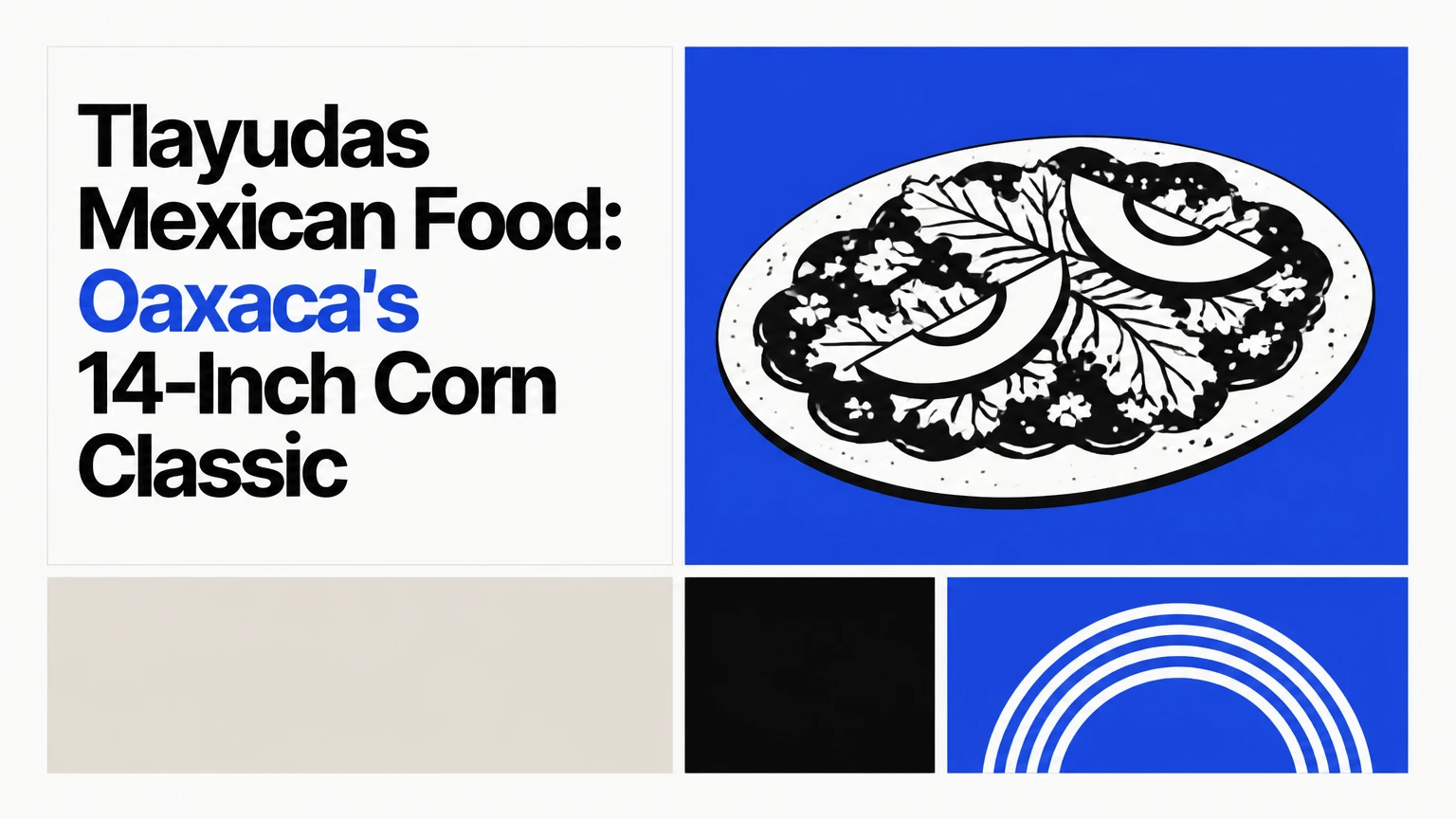
Tlayudas are large Oaxacan corn tortillas cooked until firm, spread with seasoned black beans and asiento, covered with quesillo and selected toppings, then finished over a comal, grill, or hot coals. A typical tlayuda measures 30-40 centimeters across and can feed one hungry person or two lighter eaters.
Key Facts at a Glance
- A tlayuda is a large Oaxacan antojito, usually 30-40 centimeters in diameter.
- The base is drier and more durable than a standard corn tortilla, with a leathery-crisp texture.
- Traditional layers include asiento, refried black beans, quesillo, meat or vegetables, cabbage, and salsa.
- Abierta means open-faced; doblada means folded before or during final heating.
- Oaxaca street-market portions typically cost MX$40-MX$70, while restaurant portions often cost MX$80-MX$150.
- A home tlayuda usually takes 25-35 minutes, including preparation and final cooking.
What Is a Tlayuda?
A tlayuda is a large, partially toasted tortilla from Oaxaca, Mexico, built as a complete meal rather than a small tortilla snack. The name is commonly pronounced “clay-OO-dah,” although pronunciation varies by Spanish accent and local speech.
The tortilla begins with nixtamalized maize masa. Cooks shape it into a broad, thin disc and dry it on a comal until the surface sets and much of the moisture leaves. That preparation gives the base enough strength to carry beans, melted cheese, grilled meat, and fresh garnishes without collapsing immediately.
Tlayudas belong to the Oaxacan antojito tradition, which includes substantial hand-prepared foods sold in markets, homes, and street stands. Oaxaca’s food culture is strongly connected to maize, beans, chiles, local herbs, and wood-fired cooking. The tlayuda combines all of those elements in one large format.
The “Mexican pizza” comparison helps newcomers visualize the shape, but the comparison has limits. Tlayudas use a corn tortilla, black beans, and Mexican cheeses, and they rely on dry-toasting and smoke rather than wheat dough and tomato sauce.
How Does a Tlayuda Differ From a Tostada?
A tlayuda has a larger, more flexible, leathery base, while a tostada is usually smaller, fully crisp, and more brittle. A tostada is designed for a crisp bite with lighter toppings; a tlayuda is designed to carry a meal-sized layer of beans, cheese, protein, and vegetables.
| Feature | Tlayuda | Tostada | Taco |
|---|---|---|---|
| Typical diameter | 30-40 cm | 12-18 cm | 12-15 cm |
| Base texture | Leathery-crisp | Fully crisp | Soft or lightly toasted |
| Typical format | Open or folded | Open | Folded |
| Meal capacity | 1 large serving | 1-3 small servings | 2-4 tacos |
| Main structural need | Moisture resistance | Crunch | Flexibility |
How Does a Tlayuda Work?
A tlayuda depends on moisture control. The large tortilla is dried first, the bean paste is kept thick, and the fat layer helps separate the base from wet ingredients.
The Base Controls Texture
A regular fresh tortilla contains too much moisture for a heavily topped tlayuda. When beans and salsa are added to a soft base, steam becomes trapped between the layers and produces a limp center.
A proper tlayuda tortilla is cooked until it feels firm but still bends without snapping. The target is not cracker-like dryness. The tortilla should resist bending, show light toasted marks, and remain flexible enough to fold.
Asiento Adds Flavor and Protection
Asiento is a seasoned, unrefined animal-fat spread containing fine cooked solids. Cooks apply a thin layer before the beans, usually about 1-2 tablespoons for a 35-centimeter tortilla.
Asiento contributes savory flavor and helps slow the movement of moisture into the tortilla. The layer should be thin and even. Too little can leave dry patches, while too much creates greasy edges and masks the taste of the maize.
Vegetarian cooks can replace asiento with a small amount of avocado oil, olive oil, or a bean-based spread. The result is different, but the structural goal remains the same: keep the bean layer thick and the tortilla relatively dry.
Black Beans Create the Savory Middle
Refried black beans should have a paste-like consistency. Loose beans, watery purée, or beans straight from a thin broth produce a soggy center.
For one 35-centimeter tlayuda, use approximately 120-180 grams of thick refried black beans. Seasoning commonly includes salt, roasted chile, garlic, or epazote, depending on the cook and region.
Quesillo Forms the Melted Layer
Quesillo, also called Oaxaca cheese, is a mild string cheese made from stretched curd. Its long fibers melt smoothly when separated into thin strands.
Unroll or pull the cheese by hand instead of cutting it into thick cubes. A 90-120 gram portion is typical for a large tlayuda. Spread the strands across the beans so the cheese melts evenly instead of forming one dense, rubbery mass.
What Goes on a Traditional Tlayuda?
Traditional toppings combine a rich base, a melting cheese, a grilled filling, fresh vegetables, and salsa. The exact combination varies by household, market stand, and customer preference.
Common Protein and Vegetarian Options
Tasajo is thinly sliced, salted beef that cooks quickly over a hot grill. Cecina enchilada is thinly sliced meat coated in a chile marinade before grilling. Oaxacan chorizo is a loose, seasoned sausage that is usually browned separately so excess fat does not soak the tortilla.
Chapulines are toasted grasshoppers seasoned with salt, lime, garlic, or chile. They add a dry, crisp texture and an earthy savory flavor. First-time diners often prefer chapulines as a small garnish rather than the main filling.
A sencilla contains the basic spread and cheese without a substantial meat topping. It is a useful choice for vegetarians, people trying tlayudas for the first time, or diners who want the maize and quesillo to dominate.
| Topping | Typical amount | Preparation | Flavor and texture |
|---|---|---|---|
| Tasajo | 90-120 g | Grill 2-4 minutes | Salty, lean, chewy |
| Cecina enchilada | 90-120 g | Grill 3-5 minutes | Chile-forward, tender |
| Chorizo | 75-100 g | Brown 5-7 minutes | Rich, crumbly, spiced |
| Chapulines | 15-30 g | Toast or warm 1-2 minutes | Crisp, earthy, acidic |
| Mushrooms | 120-160 g | Sauté 6-8 minutes | Moist, savory, vegetarian |
| Sencilla cheese portion | 90-120 g | Melt over beans | Mild, stretchy, simple |
Fresh toppings usually include shredded cabbage or lettuce, avocado, tomato, radish, and herbs such as epazote or chepiche. Add these after heating whenever possible. Raw vegetables retain their crunch and prevent the tortilla from absorbing unnecessary water during cooking.
Salsa may be roasted red chile salsa, green tomatillo salsa, or a smoky local chile mixture. Apply salsa at the table if the tlayuda will sit for more than a few minutes.
How Do You Make a Tlayuda at Home?
A home tlayuda takes about 25-35 minutes and requires a large tortilla, thick beans, quesillo or a close substitute, prepared toppings, and high but controlled heat. The most important factor is drying the tortilla without burning it.
Before You Start
| Requirement | Typical specification |
|---|---|
| Total time | 25-35 minutes |
| Active preparation | 15-20 minutes |
| Final heating | 3-6 minutes |
| Difficulty | Moderate |
| Base | 30-35 cm tlayuda tortilla |
| Beans | 120-180 g thick refried black beans |
| Cheese | 90-120 g quesillo |
| Cooking surface | Comal, cast-iron pan, grill, or pizza stone |
| Typical home cost | US$12-US$25 for 2 portions |
Step 1: Prepare the Toppings
Cook the selected filling before assembling the tortilla. Grill tasajo or cecina until just cooked, brown chorizo until no raw center remains, or sauté sliced mushrooms until their surface loses excess moisture.
Chop cabbage, avocado, tomato, radish, and herbs separately. Warm the beans until spreadable, then reduce them if they appear loose.
You will know this step worked when the protein is ready to eat and the beans hold a ridge when dragged across a spoon. The common mistake is assembling while the beans are watery or the filling is still releasing liquid.
Step 2: Dry the Tortilla
Heat a comal or heavy skillet over medium heat. Cook the tortilla for 2-4 minutes per side, turning it as needed, until the surface is firm and lightly marked.
Do not leave the tortilla unattended. A thin base can go from leathery to bitter within one minute over excessive heat.
The success checkpoint is flexibility with resistance. If the tortilla bends like a fresh taco tortilla, keep drying it. If it cracks when lifted, reduce heat and cover it briefly with a clean cloth.
Step 3: Spread Asiento and Beans
Brush or spread 1-2 tablespoons of asiento across the warm tortilla, leaving a 1-centimeter border. Add 120-180 grams of thick black beans and spread them in a thin layer.
The bean layer should cover most of the surface without becoming a mound. A thick center stays wet while the edge burns.
You will know the layer is correct when the tortilla remains visible through the beans in a few thin areas. The common mistake is treating the tlayuda like a deep-dish base and adding too much filling before the cheese.
Step 4: Add Quesillo and the Main Filling
Pull 90-120 grams of quesillo into thin strands and distribute it evenly. Add 90-120 grams of grilled filling, keeping heavier pieces toward the center.
For a vegetarian version, use mushrooms, roasted chile de agua, squash, or additional beans. Avoid wet vegetables such as raw tomato at this stage.
The assembly is ready when every section has some cheese and no large pile exceeds about 2 centimeters in height. The common mistake is using cold, thick cheese pieces that remain firm while the tortilla overcooks.
Step 5: Finish Over Controlled Heat
Place the assembled tlayuda on a grill rack, comal, or preheated pizza stone. Heat it for 3-6 minutes, turning or rotating once if the base colors unevenly.
For an oven, use a 230-260°C setting and finish under the broiler for 1-3 minutes, watching continuously. For charcoal, use glowing coals rather than active flames, with the tortilla elevated above direct fire.
The tlayuda is ready when the cheese is soft, the base has toasted spots, and the edge remains edible rather than blackened. The common mistake is placing the tortilla over flames, which creates bitter carbon before the cheese melts.
Step 6: Add Fresh Toppings and Salsa
Finish with cabbage, avocado, tomato, radish, herbs, and salsa. Serve immediately on a broad plate or folded in paper.
A successful tlayuda has contrast: crisp or leathery maize, creamy beans, melted cheese, grilled filling, fresh vegetables, and acidic salsa. If the finished surface looks wet, serve salsa separately next time.
Which Tlayuda Style Should You Choose?
The abierta style is best for sharing and fresh toppings, while the doblada style is better for portability, heat retention, and a concentrated melted-cheese texture. Neither format is universally superior because each changes how the tortilla, filling, and garnishes behave.
| Decision factor | Abierta | Doblada |
|---|---|---|
| Shape | 30-40 cm open disc | 15-20 cm folded half-moon |
| Eating method | Plate, wedges, or hands | Wrapped paper or hands |
| Cheese texture | Evenly melted surface | Steamy, concentrated interior |
| Fresh toppings | 60-100 g after heating | 30-60 g inside or on top |
| Cooling rate | About 8-15 minutes to cool | About 15-25 minutes to cool |
| Best setting | Shared table meal | Market walk or quick meal |
| Main drawback | Toppings can slide | Interior can steam-soften |
Abierta: Best for Freshness
An abierta tlayuda stays open during the final heating stage and receives fresh garnishes afterward. The format exposes more surface area, so cabbage, avocado, salsa, and radish remain distinct rather than becoming trapped in steam.
Choose abierta when ordering for a table, comparing toppings, or sharing one large portion. The exposed base cools sooner, and a very heavily loaded surface can become difficult to cut.
Doblada: Best for Portability
A doblada tlayuda is folded over its filling, either before final heating or as soon as the cheese begins to melt. The enclosed shape retains heat and makes the portion easier to carry.
Choose doblada for a street-side meal or when the filling includes grilled meat and cheese. Add watery garnishes sparingly because trapped steam softens the inner tortilla.
How Much Does a Tlayuda Cost?
A tlayuda typically costs MX$40-MX$70 at an Oaxaca market stand, MX$80-MX$150 at a casual restaurant, and MX$180-MX$250 or more at a premium restaurant. United States prices commonly range from US$13-US$28.50, depending on location, size, and toppings.
| Buying context | Typical price | Portion expectation | Typical wait |
|---|---|---|---|
| Oaxaca market stand | MX$40-MX$70 | 1 large tlayuda | 5-10 minutes |
| Oaxaca casual restaurant | MX$80-MX$150 | 1 plated portion | 10-20 minutes |
| Oaxaca premium restaurant | MX$180-MX$250+ | 1 composed portion | 15-30 minutes |
| United States casual restaurant | US$13-US$20 | 1 large portion | 15-25 minutes |
| United States specialty restaurant | US$21-US$28.50 | Premium filling and garnish | 20-35 minutes |
| Home preparation | US$6-US$12 per portion | 1 large homemade serving | 25-35 minutes |
Prices change with meat quantity, imported cheese, rent, tourism, and whether the tlayuda is made to order. A market price usually reflects a simpler build, while a restaurant version may include larger protein portions and more elaborate garnishes.
Are Tlayudas Healthy?
A tlayuda can provide maize-based carbohydrates, beans, protein, and vegetables, but calorie and sodium levels vary sharply with the fat, cheese, and filling. The tortilla alone may contain roughly 120-180 calories, while a complete large serving can reach approximately 600-1,000 calories.
These figures are practical estimates, not universal laboratory values. A sencilla with moderate cheese and vegetables will usually be lighter than a version with a generous fat spread, cheese, and seasoned meat.
| Component | Typical portion | Approximate energy | Main variable |
|---|---|---|---|
| Large tortilla | 1, 120-180 g | 120-220 kcal | Diameter and moisture |
| Asiento or oil | 15-30 g | 120-270 kcal | Fat type and quantity |
| Black beans | 120-180 g | 140-240 kcal | Added fat |
| Quesillo | 90-120 g | 250-380 kcal | Moisture and fat content |
| Grilled filling | 90-120 g | 150-350 kcal | Cut and seasoning |
| Fresh vegetables | 60-120 g | 20-80 kcal | Avocado amount |
For a lighter order, request less asiento, moderate cheese, extra cabbage, and a vegetable filling. The dish is less suitable for diners needing low-sodium food because salted meat, cheese, beans, and salsa can all contribute substantial sodium.
What Are the Best Ingredient Substitutions?
The best substitute for a tlayuda tortilla is a large corn tortilla dried slowly until firm, while the best substitute for quesillo is unaged braided string cheese. Substitutions work when they preserve structure and melting behavior, not when they merely imitate appearance.
| Traditional ingredient | Practical substitute | Use amount | Main trade-off |
|---|---|---|---|
| Tlayuda tortilla | 25-30 cm corn tortilla, dried | 1 base | Smaller and less durable |
| Quesillo | Unaged string cheese | 90-120 g | Similar melt, less flavor |
| Quesillo | Low-moisture mozzarella and Muenster | 90-120 g total | Less stringy, saltier |
| Asiento | Avocado oil | 10-15 ml | Cleaner flavor, less savory |
| Black beans | Thick pinto bean paste | 120-180 g | Softer flavor, similar structure |
| Chepiche | Cilantro and epazote | 5-10 g | Different herbal profile |
Avoid flour tortillas because they brown and soften differently. Avoid fresh salsa beneath the cheese because its water content creates a wet layer between the beans and tortilla.
What Commonly Goes Wrong?
Soggy Center
A soggy tlayuda usually results from a soft tortilla, loose beans, excessive salsa, or too much fat. Dry the base longer, reduce the beans until thick, and add salsa after cooking.
If the center is already soft, return the tlayuda to a dry hot surface for 1-2 minutes. This may restore the edge but cannot fully reverse a heavily saturated middle.
Rubbery Cheese
Rubbery cheese usually comes from thick pieces, low-moisture cheese, or insufficient top heat. Pull quesillo into fine strands and use a grill, broiler, or covered pan to heat the cheese faster.
Do not compensate by increasing the bottom heat. That burns the tortilla while the cheese remains dense.
Burned Border
A burned border indicates direct flame, an overheated pan, or an assembly that is too large for the available heating time. Use gray, glowing coals, a raised rack, or medium heat on a heavy pan.
Trim only truly black sections after cooking. Brown spots and small char marks contribute flavor; acrid black areas do not.
Cracked Tortilla
A cracked tortilla was usually dried too far or handled while cold. Warm it briefly before spreading, and avoid folding until the base has regained flexibility.
For a damaged tortilla, use the abierta format and support it with a plate. A fold places stress directly on the weakened center.
How Should You Store and Reheat a Tlayuda?
A finished tlayuda is best eaten immediately, but leftovers can be refrigerated for up to 2 days in a covered container. Remove wet garnishes before storage and reheat the base in a dry skillet or 200°C oven for 5-8 minutes.
Microwaving softens the tortilla because steam remains trapped in the container. If microwave reheating is the only option, heat for 45-60 seconds, then crisp the base in a dry pan.
Unassembled components store better. Keep beans, cooked filling, cheese, tortilla, vegetables, and salsa in separate containers, then assemble only the portion needed.
Where Should You Try One in Oaxaca?
Oaxaca City markets and late-night food stands are the clearest places to experience a traditional tlayuda, especially locations where the tortilla is finished over charcoal and the fillings are cooked to order. Mercado 20 de Noviembre is widely associated with Oaxacan food stalls, while stands near central neighborhoods often operate later in the evening.
Ordering vocabulary helps. Ask for “una tlayuda” and specify “abierta” or “doblada,” then choose a filling such as tasajo, cecina, chorizo, chapulines, or sencilla. Ask whether the base is cooked over charcoal if smoke flavor matters.
A market stall may offer a faster, simpler portion than a restaurant. Restaurants often provide more controlled cooking, seated service, and larger garnish selections, but the price commonly rises to MX$80-MX$150 or more.
Frequently Asked Questions
Is a Tlayuda Gluten-Free?
A traditional tlayuda made entirely from maize, beans, cheese, vegetables, and unbreaded fillings is generally gluten-free. Cross-contact can occur when a kitchen shares surfaces, utensils, or fryers with wheat products, so people with celiac disease should confirm preparation practices before ordering.
Can You Make a Tlayuda Without Animal Fat?
You can make a tlayuda without animal fat by using avocado oil, olive oil, or a thick bean spread. The texture will be slightly less rich, but the tortilla will still work if the base is dry and the beans remain paste-like.
Why Are Tlayuda Tortillas So Large?
Tlayuda tortillas are large because the format evolved as a substantial maize-based meal capable of carrying beans, cheese, grilled fillings, and vegetables. The 30-40 centimeter surface also makes the tortilla practical for sharing or folding around a complete portion.
Can You Use a Pizza Oven?
A pizza oven can cook a tlayuda if the tortilla is placed on a stone or metal surface away from direct flame. Use a moderate 230-260°C environment and check after 2 minutes, because intense overhead heat can burn cheese and edges before the beans warm.
Which Filling Is Best for a First Tlayuda?
Tasajo is a practical first choice because its salted beef flavor is familiar and its thin slices cook quickly. A sencilla is better for diners who want to understand the maize, beans, and quesillo before adding a strongly seasoned filling.
Conclusion
Tlayudas Mexican food refers to Oaxaca’s large, durable corn-tortilla meals layered with beans, asiento, quesillo, grilled fillings, fresh vegetables, and salsa. Choose abierta for fresh toppings and shared plates, or doblada for portability and concentrated heat. At home, dry the tortilla, keep the beans thick, separate the cheese into strands, and finish with controlled heat.