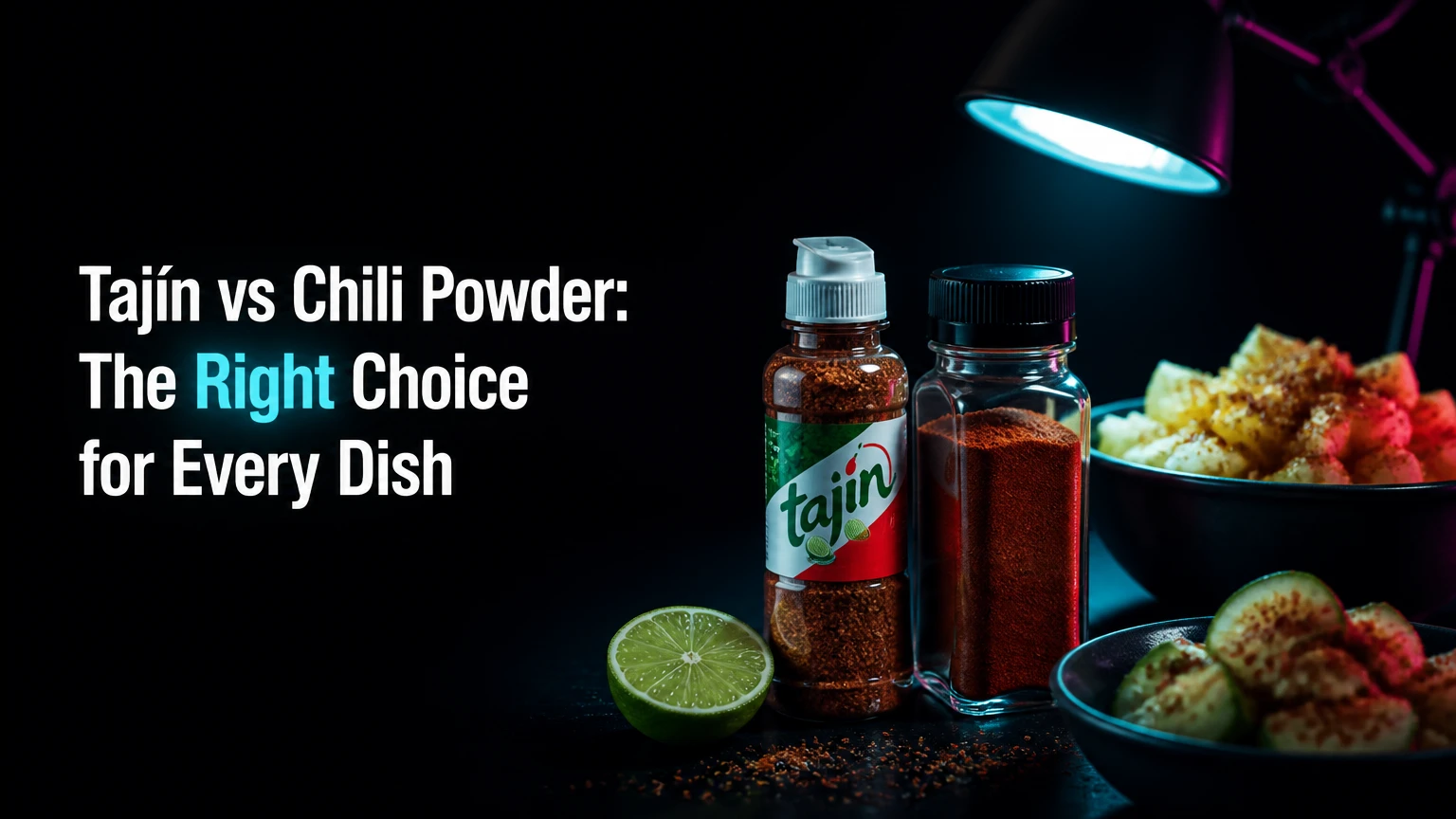
Tajín and chili powder are different seasonings with different jobs. Tajín is a branded chile, lime, and salt seasoning designed primarily to finish food, while chili powder may mean a pure ground chile or a savory blend containing cumin, garlic, oregano, and other spices. Choose Tajín for tangy, salty brightness and chili powder for chile depth, heat, smokiness, or cooked-dish complexity.
Key Facts at a Glance
Tajín Clásico combines dried chile, dehydrated lime, and salt, so it adds acidity and sodium as well as mild heat.
American-style chili powder is usually a blend of ground chile, cumin, garlic, and oregano; pure chile powder contains only one dried pepper.
Tajín works best as a finishing seasoning for fruit, vegetables, corn, snacks, and fresh garnishes.
Chili powder works best in cooked foods, spice rubs, bean dishes, soups, sauces, and meat or vegetable marinades.
Tajín generally contributes more salt and acidity per shake than unsalted pure chile powder.
Neither name guarantees a fixed heat level, because brands, pepper varieties, and formulas differ.
What Is the Difference Between Tajín and Chili Powder?
Tajín is a specific Mexican seasoning brand, while chili powder is a broad product category. Tajín Clásico is built around three sensory elements: chile warmth, lime acidity, and saltiness. Chili powder may provide only pepper flavor, or it may combine chile with cumin, garlic, oregano, salt, and other ingredients.
The distinction matters because the seasonings behave differently in recipes. Tajín is usually sprinkled over food after cooking, when its lime aroma and crunchy texture remain noticeable. Chili powder is often incorporated earlier, allowing pepper and toasted spice flavors to disperse through oil, broth, tomato, beans, or rendered cooking juices.
Tajín’s official product information and package labeling should control when ingredients, allergens, sodium, or dietary suitability matter. Formulas vary by country and product line, so a bottle of Clásico should not be treated as interchangeable with Habanero or reduced-sodium versions.
| Attribute | Tajín Clásico | American-style chili powder | Pure chile powder | Key consequence |
|---|---|---|---|---|
| Product status | Branded seasoning | Category and blend | Single-ingredient spice | Names do not describe equivalent products |
| Core ingredients | Chile, lime, salt | Chile, cumin, garlic, oregano | One dried chile | Flavor complexity varies |
| Acidity | Dehydrated lime | Usually none | None | Tajín brightens fresh food |
| Salt | Usually substantial | Brand-dependent | Usually 0 mg | Read the nutrition panel |
| Texture | Coarse or granular | Fine powder | Fine powder | Tajín remains visible as a finish |
| Typical timing | After cooking | During cooking or finishing | During cooking or finishing | Technique changes the result |
How Do the Flavor and Heat Profiles Work?
Tajín delivers sourness and salt before it delivers substantial heat. Lime acid sharpens fruit and vegetables, while salt increases perceived sweetness and reduces some bitter impressions. The chile component adds aroma and mild warmth, but Tajín Clásico is not formulated as a high-heat pepper powder.
Chili powder delivers a different sequence. Capsaicin activates heat-sensitive TRPV1 receptors in the mouth, while dried pepper compounds contribute color, fruitiness, earthiness, smokiness, or bitterness. In a blended powder, cumin and garlic create savory depth that lime seasoning does not provide.
Fat changes the result. Briefly cooking chili powder in oil helps disperse fat-soluble aroma compounds, but scorching it can create harsh bitterness. Tajín can be added to cooked food, yet prolonged boiling reduces the freshness of its lime character and distributes its salt throughout the dish.
A useful practitioner rule is simple: use Tajín to raise contrast, and use chili powder to build a base. Contrast means acidity, salt, and a finishing spark. Base means pepper flavor integrated with other ingredients.
| Seasoning | Dominant flavor | Typical heat range | Acidity | Best sensory role |
|---|---|---|---|---|
| Tajín Clásico | Lime, salt, mild chile | Mild and brand-dependent | High relative to chili powder | Bright finishing layer |
| Ancho powder | Raisin-like, earthy, mild | Low | None | Sweet chile depth |
| Chipotle powder | Smoke, dried pepper, moderate heat | Medium | None | Smoky cooked flavor |
| Cayenne powder | Direct pepper heat | High | None | Controlled heat increase |
| Chili powder blend | Chile, cumin, garlic, oregano | Low to medium | Usually none | Savory seasoning base |
| Habanero seasoning | Lime or other acid, strong pepper heat | High relative to Clásico | Product-dependent | Hot finishing seasoning |
Which One Is Hotter?
Pure cayenne or habanero powder is usually far hotter than Tajín Clásico. Standard blended chili powder may be similar to Tajín in perceived heat, but its cumin, garlic, and other spices make the comparison unreliable.
Scoville Heat Units are especially limited here. Manufacturers do not consistently publish a verified SHU value for finished seasoning blends, and pepper harvest, processing, serving size, and dilution change perceived heat. Treat label language such as mild, medium, or habanero as a product clue, not a laboratory-equivalent ranking.
The exact pepper type matters more than the word “chili.” Ancho powder is generally mild and aromatic, cayenne is sharply hot, and chipotle is smoky with moderate heat. Tajín Habanero is a different decision from Tajín Clásico because the pepper profile changes the seasoning’s purpose.
What Are the Main Types and Ingredients?
Tajín products differ by formula, while chili powders differ by both formula and naming convention. Tajín Clásico normally contains dried chile, dehydrated lime juice, and salt. Tajín Habanero adds a substantially hotter pepper profile, and reduced-sodium products change the salt contribution without turning into pure chile powder.
American chili powder is commonly a premixed seasoning for dishes such as chili, tacos, beans, and stews. Pure chile powders are single-pepper products, including ancho, guajillo, pasilla, chipotle, and cayenne. Some packages use “chile powder” for pure ground pepper and “chili powder” for a blend, but English-language labeling is inconsistent.
Always inspect the ingredient list. A blend with salt behaves differently from an unsalted powder even when both packages say “chili powder.” The ingredient order also indicates which flavors dominate.
| Product type | Typical ingredient profile | Approximate heat tendency | Salt expectation | Strong applications |
|---|---|---|---|---|
| Tajín Clásico | Chile, lime, salt | Mild | High | Mango, cucumber, corn, snacks |
| Tajín Habanero | Chile, habanero, lime, salt | Medium-high to high | Product-dependent | Hot fresh toppings |
| Reduced-sodium Tajín | Chile, lime, reduced salt | Mild | Lower than Clásico | Fruit and vegetables |
| Chili powder blend | Chile, cumin, garlic, oregano | Low to medium | 0-25 mg or more | Soups, tacos, beans |
| Ancho powder | 100% dried poblano | Mild | Usually 0 mg | Rubs, sauces, vegetables |
| Chipotle powder | 100% smoked dried jalapeño | Medium | Usually 0 mg | Barbecue-style rubs and sauces |
| Cayenne powder | 100% ground cayenne | High | Usually 0 mg | Heat adjustment |
Which Seasoning Works Best for Common Foods?
Tajín is usually better for foods that need immediate acidity and a visible finishing layer. Sprinkle it over mango, watermelon, pineapple, cucumber, tomato, avocado, roasted corn, popcorn, fries, or sliced radishes. The lime component prevents sweet produce from tasting dull, while salt makes watery vegetables taste fuller.
Chili powder is usually better for foods that need integrated savory flavor. Add it to bean soup, tomato sauce, taco filling, roasted vegetables, lentils, meatless chili, or a dry rub. Pure ancho gives color and mellow pepper flavor, whereas chipotle adds smoke and cayenne increases heat without adding much complexity.
Corn illustrates the distinction clearly. Tajín added after cooking gives lime, salt, and a dry chile coating. Chili powder mixed into butter or oil creates a deeper, warmer coating but lacks the same acidity unless lime juice or another acid is added separately.
| Food or recipe | Better default | Starting quantity | When to add | Why |
|---|---|---|---|---|
| 1 cup diced mango | Tajín | 1/8 tsp | After cutting | Lime and salt sharpen sweetness |
| 2 cups cucumber | Tajín | 1/4 tsp | Immediately before serving | Prevents wet seasoning from dissolving early |
| 4 servings bean soup | Chili powder blend | 1-2 tsp | With aromatics or broth | Builds savory depth |
| 1 lb roasted vegetables | Ancho powder | 1-2 tsp | Before roasting | Pepper flavor coats the surface |
| 1 lb protein or vegetable rub | Chili powder blend | 1 tbsp | Before cooking | Integrates with oil and browning |
| 4 servings cooked corn | Tajín or blend | 1/2-1 tsp | After cooking | Choose brightness or savory depth |
Is Tajín Good on Fruit and Vegetables?
Tajín is the stronger choice for fresh fruit and crisp vegetables because lime and salt complement watery, sweet, or mild produce. Start with 1/8 teaspoon per cup of fruit, toss, taste after 30 seconds, and add more only if the produce remains under-seasoned.
Chili powder can work on fruit, but pure ancho or a very small amount of cayenne is more suitable than a cumin-heavy blend. A full tablespoon of American-style chili powder can taste dusty and savory on mango because the blend lacks the acidity that makes Tajín effective.
For vegetables, choose according to the cooking stage. Tajín suits cucumber, tomato, avocado, and finished corn. Chili powder suits roasted cauliflower, sweet potato, beans, and sautéed peppers, particularly when bloomed in oil first.
Can You Substitute Tajín for Chili Powder?
Tajín can replace a small portion of chili powder when the recipe benefits from lime and salt, but it is not a direct 1:1 substitute. For a cooked dish calling for 1 teaspoon of chili powder, begin with 1/4 teaspoon Tajín, reduce any added salt, and add lime only after tasting.
The substitution changes three variables at once. Tajín adds acidity, salt, and mild chile, while chili powder may add cumin, garlic, oregano, or stronger pepper depth. A soup or stew made entirely with Tajín may taste bright but thin, salty, or sour.
A better conversion uses layers. Replace one-quarter of the chili powder with Tajín, retain a pure chile powder for depth, and omit part of the recipe’s salt. If the dish contains dairy, beans, tomato, or sweet vegetables, the lime note usually integrates more comfortably than it would in a delicate cream sauce.
Can Chili Powder Replace Tajín?
Chili powder can replace Tajín only when you separately restore the missing acidity and account for salt. For 1 teaspoon Tajín, use approximately 1/8 teaspoon mild chile powder plus a few drops of lime juice, then add salt according to taste.
This replacement works best on cooked corn, roasted vegetables, beans, and savory snacks. It is less convincing on fresh mango or cucumber because liquid lime juice wets the surface and a fine chili powder can feel dusty.
Pure ancho is the best mild substitute for the chile component. Cayenne is suitable only when heat is the priority. A cumin-heavy blend is a poor replacement for fruit because its savory aromatics can overpower sweetness.
| Original seasoning | Practical substitute | Starting ratio | Add separately | Main adjustment |
|---|---|---|---|---|
| 1 tsp Tajín | Mild chile powder | 1/8 tsp | Lime juice and salt | Rebuild acid and sodium |
| 1 tsp chili powder blend | Tajín | 1/4 tsp | Cumin and garlic if needed | Reduce added salt |
| 1 tsp ancho powder | Tajín plus unsalted chile | 1/4 tsp Tajín | Additional ancho if needed | Prevent excessive salt |
| 1/4 tsp Tajín on fruit | Ancho powder | 1/8 tsp | Lime juice, tiny pinch salt | Keep the fruit clean-tasting |
| 1 tsp cayenne | Tajín Habanero | Start at 1/4 tsp | Additional heat only if needed | Expect lower heat |
How Should You Cook With Each Seasoning?
Use Tajín as a finishing seasoning and chili powder as either a cooking spice or a finishing spice. The most reliable Tajín method is to apply it after moisture-heavy cooking, when the lime remains aromatic and the salt stays on the food’s surface.
For chili powder, bloom the powder in oil with aromatics for about 20-30 seconds over medium heat. Add liquid before the powder darkens sharply. This method distributes flavor and reduces the raw, dusty impression that can occur when dry powder is stirred directly into broth.
A layered approach produces better control than a single large dose. Season the cooking base with pure chile or a blend, adjust salt separately, then finish with a small amount of Tajín or lime at the table.
| Cooking goal | Recommended seasoning | Technique | Typical amount | Checkpoint |
|---|---|---|---|---|
| Add fresh acidity | Tajín Clásico | Sprinkle after cooking | 1/8-1/4 tsp per cup | Food tastes brighter, not sour |
| Build chile depth | Ancho or guajillo powder | Bloom in oil | 1-2 tsp per 4 servings | Oil becomes fragrant, not burnt |
| Add smoke | Chipotle powder | Add during sautéing | 1/4-1 tsp per 4 servings | Smoke supports, rather than dominates |
| Increase heat | Cayenne | Add in small increments | 1/16-1/4 tsp | Heat rises without changing salt |
| Season a fresh snack | Tajín | Apply immediately before eating | 1/8 tsp per cup | Coating remains dry and even |
| Correct a flat soup | Chili blend plus acid | Cook spice, finish with lime | 1 tsp blend plus acid to taste | Depth and brightness separate clearly |
How Much Sodium and Flavor Does Each Add?
Tajín usually adds substantially more sodium than unsalted pure chile powder because salt is a core ingredient. A product label for Tajín Clásico lists approximately 190 milligrams of sodium per 1/4 teaspoon in some markets, but package nutrition panels can vary by formula and country.
Pure ancho, chipotle, guajillo, and cayenne powders generally contain little or no added sodium. Blended chili powders range widely, so a low-sodium claim cannot be inferred from the product name. The USDA FoodData Central database is useful for generic ingredient comparisons, but the package label is more precise for a branded blend.
Portion size is the practical issue. A light sprinkle over one serving may be modest, while repeated shaking over fruit, corn, and snacks can add up. People following sodium restrictions should choose unsalted chile powder, add acid separately, and measure Tajín rather than shaking freely.
| Seasoning | Added salt status | Typical sodium pattern | Best low-sodium approach | Label priority |
|---|---|---|---|---|
| Tajín Clásico | Salt included | About 190 mg per 1/4 tsp in some labels | Measure 1/8 tsp or choose reduced sodium | Sodium per serving |
| Reduced-sodium Tajín | Salt reduced | Lower than Clásico, formula-specific | Confirm the current label | Serving size |
| Unsalted ancho | No added salt | Usually 0 mg added sodium | Pair with fresh lime and measured salt | Single ingredient |
| Unsalted chipotle | No added salt | Usually 0 mg added sodium | Add smoke without sodium | Single ingredient |
| Chili powder blend | Brand-dependent | 0-25 mg or more per serving | Select an unsalted blend | Ingredient order |
| Cayenne | No added salt | Usually negligible added sodium | Control heat independently | Pepper identity |
What Does Each Product Cost and How Long Does It Last?
A standard retail bottle of Tajín or chili powder commonly costs about $2-$5, although imported products, specialty peppers, larger containers, and regional availability can raise the price. Price per ounce is more useful than shelf price because Tajín bottles and spice jars often use different package sizes.
Tajín typically remains usable for roughly 12-18 months after opening when kept dry, while chili powder often retains acceptable aroma for about 2-3 years. These are practical quality windows, not safety deadlines. Dried spices usually lose aroma before they become unsafe, provided they remain dry and uncontaminated.
Replace either product when the aroma is faint, the color has faded dramatically, or the powder smells stale. A caked Tajín bottle usually indicates moisture exposure rather than spoilage, but any wetness, mold, unusual odor, or contamination warrants disposal.
| Product | Typical retail price | Practical quality window | Main failure mode | Storage |
|---|---|---|---|---|
| Tajín Clásico, 5 oz | $3-$6 | 12-18 months | Lime crystals cake | Cool, dry cupboard |
| Tajín reduced sodium, 5 oz | $3-$7 | 12-18 months | Moisture and fading aroma | Tightly closed |
| Ancho powder, 2-3 oz | $4-$9 | 18-30 months | Aroma fades | Dark, dry cupboard |
| Chipotle powder, 2-3 oz | $4-$10 | 18-30 months | Smoke aroma fades | Airtight jar |
| Chili powder blend, 2-4 oz | $2-$6 | 18-30 months | Cumin and garlic flatten | Away from stove steam |
| Cayenne powder, 1.5-3 oz | $2-$6 | 18-30 months | Heat and color decline | Airtight, dark storage |
What Problems Occur With Tajín and Chili Powder?
The most common Tajín mistake is treating it like unsalted chile powder. Adding a full teaspoon to a small pot can introduce more salt and lime than expected, especially when the recipe already contains broth, cheese, pickled ingredients, or salted snacks.
The most common chili powder mistake is treating every package as pure pepper. A cumin-heavy blend can make a fruit topping taste savory, while pure cayenne can make a soup hot without adding the rounded flavor expected from a blend.
Steam is another practical hazard. Do not shake Tajín directly over a steaming pan or pot, because moisture can migrate into the bottle and harden the lime-salt mixture. Use a dry spoon or shake it over food away from the cooking vessel.
| Problem | Likely cause | Immediate fix | Prevention |
|---|---|---|---|
| Tajín tastes too salty | Large portion or salty base | Dilute with unsalted food | Measure before adding |
| Tajín tastes too sour | Excess lime seasoning | Add more neutral produce or starch | Start with 1/8 tsp per cup |
| Chili powder tastes dusty | Added dry to liquid | Bloom briefly in oil | Cook with aromatics |
| Chili powder tastes bitter | Powder scorched or is old | Dilute and add fresh ingredients | Use medium heat |
| Tajín forms a hard block | Steam entered bottle | Break apart only if fully dry | Keep bottle away from steam |
| Dish lacks chile depth | Tajín used as sole chile source | Add ancho, guajillo, or chipotle | Layer finishing and base spices |
How Do You Fix Caked Tajín?
Dry, caked Tajín can often be broken apart with a clean, completely dry skewer or butter knife. Remove any visibly wet or contaminated material, and avoid adding rice or another food to the bottle because foreign material can introduce contamination and complicate storage.
If the seasoning smells normal and the clumps crumble into dry granules, the issue is usually texture rather than spoilage. Transfer the product to a clean airtight container if the original shaker repeatedly admits moisture.
How Do You Fix Bitter Chili Powder?
Bitter chili powder should be removed from heat immediately and diluted with unsalted ingredients, fat, broth, beans, or vegetables. A small amount of acid can balance some bitterness, but lime will not repair powder that has been badly scorched.
Freshness matters. Ground spices lose volatile aroma compounds over time, so a jar can remain dry yet taste flat or harsh. Buy smaller quantities, date the container, and bloom new powder briefly rather than frying it aggressively.
Which Should You Choose?
Tajín is the better choice for fresh produce, salty snacks, corn, avocado, and finishing applications where acidity matters. Chili powder is the better choice for soups, stews, beans, sauces, rubs, and recipes that need integrated chile or savory spice flavor.
Choose Tajín for Fresh Snack Preparation
Choose Tajín Clásico when the food is ready to eat and needs lime, salt, and mild chile in one shake. A measured 1/8 teaspoon per cup is a sensible starting point for mango, cucumber, watermelon, or tomato.
Reduced-sodium Tajín suits users who want the same general flavor direction with less sodium. Tajín Habanero suits people who want a hotter finishing seasoning, but it should be dosed more cautiously than Clásico.
Choose Chili Powder for Weeknight Cooking
Choose an American-style blend for chili, tacos, beans, tomato sauces, and roasted vegetables when cumin and garlic belong in the flavor profile. Use approximately 1-2 teaspoons per four servings, then adjust after simmering.
Choose pure chile powder when you want control. Ancho provides mild depth, chipotle supplies smoke, guajillo contributes a fruity pepper note, and cayenne raises heat with minimal extra flavor.
Choose Both for Layered Flavor
Using both seasonings can produce a more complete result than choosing one. Build the dish with unsalted ancho or a chili powder blend, then finish with a small amount of Tajín and adjust salt separately.
This approach separates foundation from brightness. The cooked spice supplies body, while the finishing seasoning preserves lime aroma and surface contrast.
FAQ
Is Tajín the Same as Mexican chili powder?
No. Tajín is a branded chile-lime-salt seasoning, while Mexican chile powders may contain one dried pepper or a regional spice mixture. Some Mexican products labeled chile en polvo include salt, lime, or other spices, so the ingredient list is necessary for an exact comparison.
Does Tajín contain cumin?
Tajín Clásico is generally identified by chile, dehydrated lime, and salt rather than cumin. Chili powder blends commonly contain cumin. Check the current package label because formulas, market versions, and product lines can differ.
Can I use Tajín in a soup?
Yes, but use Tajín as a finishing accent rather than the only chile seasoning. Add 1/4 teaspoon to four servings after cooking, taste for salt and acidity, and retain a pure chile powder or blend for deeper cooked flavor.
Is chili powder healthier than Tajín?
Neither is automatically healthier. Tajín usually contains more sodium because salt is a core ingredient, while unsalted chile powder can provide pepper flavor with negligible added sodium. Serving size, the rest of the meal, and individual dietary needs determine the better choice.
Does Tajín expire?
Tajín can lose aroma and develop hard clumps over time, with practical quality often lasting about 12-18 months after opening when stored dry. Discard it if the product becomes wet, moldy, contaminated, or develops an unusual smell.
What can I use instead of Tajín without lime?
Use mild ancho or guajillo powder with a small amount of fresh lime juice and a measured pinch of salt. For a dry alternative, combine unsalted chile powder with dried lime powder if available, then add salt separately.
The Bottom Line
Tajín vs chili powder is a choice between finishing brightness and integrated chile flavor. Select Tajín for lime, salt, mild warmth, and fresh foods; select chili powder for cooked dishes, spice blends, smoke, or controllable heat. For the widest flavor control, cook with an unsalted or low-sodium chile powder and finish with a measured amount of Tajín.