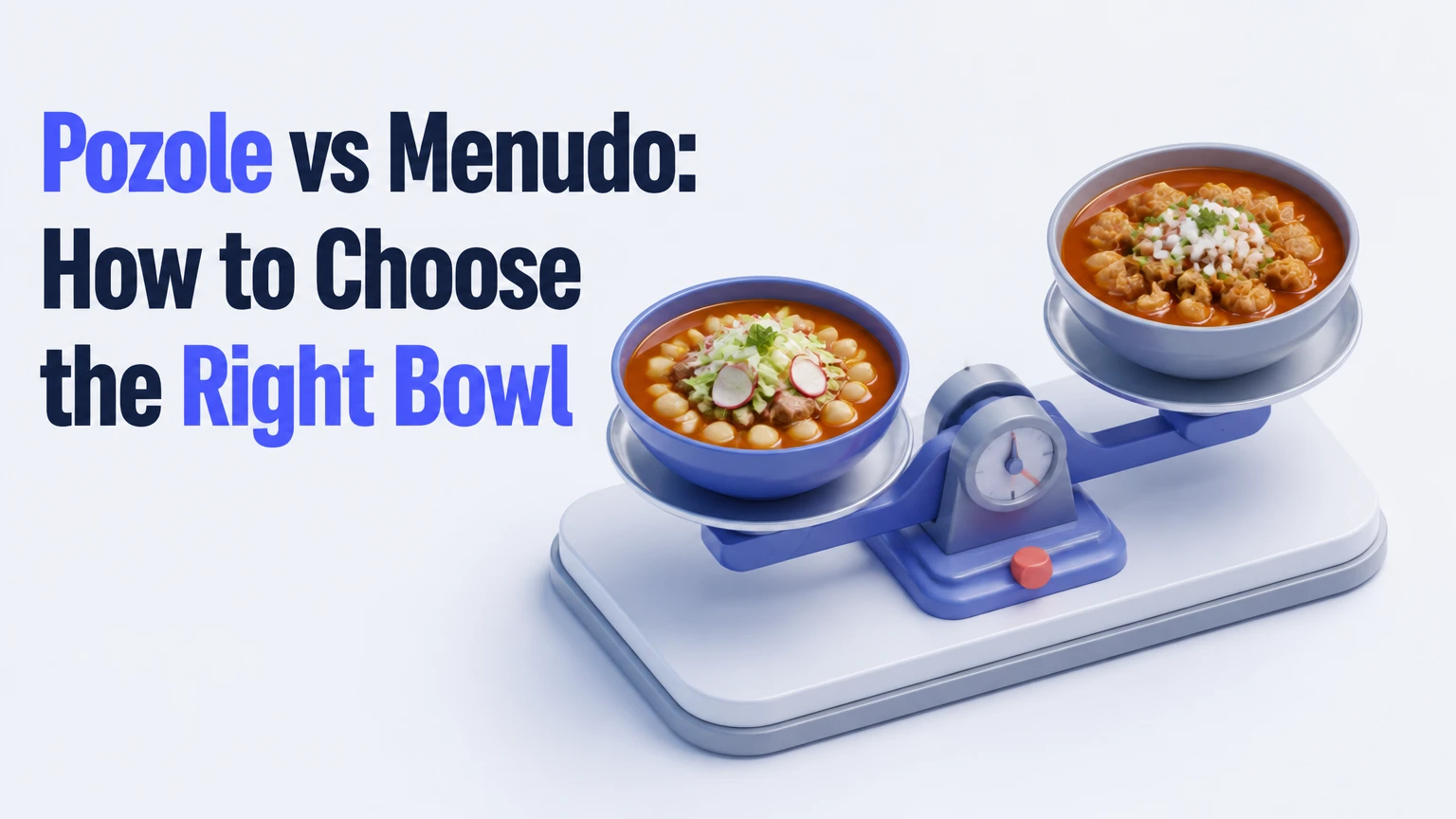
Pozole and menudo are Mexican soups separated by their defining ingredient: pozole is built around nixtamalized corn kernels called hominy, while menudo is built around tender beef tripe. Pozole usually offers a milder, chewy corn texture and customizable chile broth; menudo delivers a deeper, gelatinous broth with a distinctly savory tripe texture.
Key Facts at a Glance
Pozole’s defining ingredient is expanded nixtamalized corn, while menudo’s defining ingredient is beef stomach.
Pozole commonly uses chicken or other meat, whereas menudo traditionally depends on tripe and sometimes calf foot.
Pozole rojo, blanco, and verde differ mainly in their chile, herb, and tomatillo bases.
Menudo rojo and blanco differ mainly in whether dried red chiles enter the broth.
Canned hominy lets pozole reach the table in about 2-3 hours; menudo commonly requires 4-7 hours.
Neither soup has a fixed national recipe, so region, family practice, and restaurant tradition change the details.
What Is the Difference Between Pozole and Menudo?
Pozole is a hominy-and-meat soup whose flavor comes from nixtamalized maize, aromatics, chiles, and table garnishes. Menudo is a tripe soup whose flavor comes from beef stomach, a seasoned broth, and a long simmer that softens connective tissue.
The distinction is more than a protein swap. Hominy gives pozole large, soft-chewy kernels that release starch into the broth, while tripe gives menudo a springy, layered bite. A bowl of pozole can feel like a substantial corn stew with broth; a bowl of menudo feels more like a collagen-rich offal soup.
Both dishes are associated with weekends, family gatherings, celebrations, and regional Mexican cooking. Their names can also overlap with local terminology. In some places, related tripe soups are called pancita or mondongo, and some menudo recipes include hominy, especially in northern regions. Those additions do not erase the central distinction.
Master Comparison
| Attribute | Pozole | Menudo |
|---|---|---|
| Defining ingredient | Nixtamalized hominy | Beef tripe |
| Common protein or body | Chicken, shoulder, shank, or bones | Honeycomb tripe, blanket tripe, calf foot |
| Typical broth colors | White, red, or green | Red or white |
| Core texture | Tender meat plus chewy corn | Springy tripe plus gelatinous broth |
| Typical stovetop time | 2-4 hours with canned hominy | 4-7 hours, including tenderizing |
| Typical large-bowl price in the United States | $12-$18 | $14-$22 |
| Main table toppings | Cabbage, radish, onion, lime | Onion, cilantro, oregano, lime |
| Best first impression | Familiar, customizable comfort food | Traditional nose-to-tail experience |
What Makes Pozole Different?
Pozole gets its identity from hominy, not merely from its chile sauce or meat. Nixtamalization treats dried maize with an alkaline substance such as calcium hydroxide, loosening the hull and changing the kernel’s texture, flavor, and nutritional availability.
The process also allows the kernel to swell and split, a stage cooks often describe as blooming or opening. Commercial canned hominy has already completed that transformation, so the home cook mainly rinses it and heats it until tender. Dried pozole corn requires soaking and a longer simmer, often adding several hours.
Pozole broth can be light and clear in blanco, chile-rich in rojo, or tart and herbaceous in verde. The soup usually arrives with raw toppings because cabbage or lettuce, radish, onion, lime, oregano, and chile provide contrast to the warm, soft broth.
A practical rule is to judge pozole by kernel quality first. Properly cooked hominy should be tender enough to bite easily, but it should retain its shape rather than dissolve into porridge.
Pozole Styles by Region
| Style | Common regional association | Broth ingredients | Typical flavor and texture |
|---|---|---|---|
| Pozole blanco | Guerrero | Meat stock, garlic, onion, hominy | Clean, savory, corn-forward |
| Pozole rojo | Jalisco, Sinaloa, central and western Mexico | Guajillo, ancho, garlic, spices | Earthy, chile-fragrant, moderately rich |
| Pozole verde | Guerrero, Michoacán | Tomatillo, herbs, green chiles, pepitas in some recipes | Tart, herbal, nutty, fresh |
| Chicken pozole | Home kitchens across Mexico and the United States | Chicken thighs, stock, hominy, regional chile base | Lighter body with familiar poultry flavor |
| Vegetarian pozole | Contemporary home cooking | Mushrooms, beans, vegetables, hominy | Corn-led, lighter, dependent on stock quality |
What Makes Menudo Different?
Menudo gets its identity from beef tripe, the muscular lining of a cow’s stomach. Different cuts, including honeycomb, blanket, and book tripe, produce different surfaces and chew, while calf foot or marrow bones can add body to the broth.
Tripe begins firm and elastic. Low, prolonged cooking softens collagen and makes the pieces pleasantly tender, although properly cooked tripe usually retains more bite than shredded poultry or soft hominy. If the texture is rubbery, the pot generally needs more time rather than higher heat.
Cleaning practices vary. Many cooks parboil the tripe, discard the first water, rinse it, and begin again with fresh aromatics. Modern commercially cleaned tripe may require less work, but a short blanch still helps control odor and removes surface residue.
Menudo’s aroma is part of its character, not a defect that every diner must accept. A strong barnlike smell after cleaning and blanching usually signals poor preparation, excessive fat, or insufficient rinsing.
Menudo Styles by Region
| Style or name | Regional association | Defining additions | Broth profile |
|---|---|---|---|
| Menudo rojo | Northern Mexico and the American Southwest | Guajillo or New Mexico chile, oregano, garlic | Red, earthy, chile-scented |
| Menudo blanco | Sinaloa and Sonora | Garlic, onion, oregano, fresh chile at table | Clear, savory, direct |
| Pancita | Central and southern Mexico | Tripe, tomato or chile, regional spices | Concentrated, variable, often red |
| Mondongo | Southern Mexico and other Latin American regions | Tripe, vegetables, sometimes chickpeas | Hearty, thicker, regionally distinct |
| Menudo con pata | Multiple Mexican regions | Calf foot with tripe | More gelatinous and rich |
Which Soup Has the Stronger Texture?
Menudo has the more assertive texture because tripe remains springy after cooking, while pozole has a softer, more familiar bite from hominy and shredded meat. Diners who dislike chewy or organ-meat textures usually find pozole easier to approach.
Pozole still has substantial texture. Large hominy kernels pop slightly between the teeth, and bone-in cuts can add strands of meat and soft connective tissue. The experience is variable because canned hominy, dried hominy, chicken, and different meat cuts all behave differently.
Menudo rewards slow cooking but punishes haste. A piece that bends without tearing is often close to ready; a piece that feels like elastic should continue simmering. Cutting tripe into roughly 2.5-centimeter squares creates a manageable bite and reduces the impression of toughness.
Texture verdict: Choose pozole for tender corn and shredded meat; choose menudo for springy tripe and gelatinous broth.
Which Soup Is More Flavorful or Spicy?
Neither soup is automatically spicier. Pozole rojo and menudo rojo can both use dried red chiles, but chile quantity, seed removal, chile variety, and table salsa determine the actual heat.
Pozole blanco often tastes the most transparent because the broth foregrounds stock, garlic, onion, and maize. Pozole verde adds acidity and herbs through tomatillo, cilantro, epazote, serrano, or jalapeño. Menudo blanco similarly emphasizes broth and aromatics, while menudo rojo has a darker, more concentrated chile flavor.
Dried guajillo contributes color and fruit-like earthiness with modest heat. Árbol chile raises heat more sharply. Mexican oregano added at the table keeps its aroma brighter than oregano simmered for several hours.
Flavor verdict: Choose pozole for corn sweetness and broader chile variation; choose menudo for a more savory, mineral, and offal-centered profile.
How Long Do Pozole and Menudo Take to Cook?
Pozole usually takes 2-4 hours on the stovetop with canned hominy, while menudo generally takes 4-7 hours because tripe must become tender. Pressure cooking can shorten both timelines, but it does not remove the need to clean tripe or build a properly seasoned broth.
The most important timing difference concerns ingredient order. Canned hominy is already cooked, so adding it during the final 30-60 minutes preserves its shape. Dried hominy needs soaking and a much longer boil, and the meat may need separate attention.
Menudo benefits from a first blanch, fresh cooking water, and a low simmer. Boiling hard can tighten tripe, cloud the broth, and make fat emulsify unevenly. A steady simmer is slower but produces more consistent tenderness.
Typical Home-Cooking Timelines
| Preparation | Prep time | Simmer or pressure time | Total typical time |
|---|---|---|---|
| Pozole with canned hominy | 20-35 minutes | 2-3 hours | 2.5-3.5 hours |
| Pozole with dried hominy | 30-45 minutes plus soaking | 4-6 hours | 5-8 hours |
| Menudo with cleaned tripe | 30-60 minutes | 4-6 hours | 5-7 hours |
| Menudo after blanching | 45-75 minutes | 3.5-5 hours | 4.5-6.5 hours |
| Pressure-cooker pozole | 25-35 minutes | 45-70 minutes under pressure | 1.5-2 hours |
| Pressure-cooker menudo | 45-75 minutes | 75-110 minutes under pressure | 2.5-3.5 hours |
How Are Pozole and Menudo Served?
Pozole and menudo are served hot with raw garnishes that supply acid, crunch, freshness, and adjustable heat. Pozole commonly receives shredded cabbage or lettuce, radish, onion, lime, oregano, chile, and tostadas; menudo commonly receives onion, cilantro, oregano, lime, chile flakes, and tortillas.
The toppings are functional rather than decorative. Lime cuts through fat, onion adds sharpness, radish supplies crisp wateriness, and oregano releases aroma when rubbed between the palms. Tostadas or tortillas also turn a broth-based meal into a more filling one.
Restaurants may bring toppings separately, allowing diners to build the bowl. Add lime shortly before eating because prolonged acid exposure can dull fresh herbs and soften crisp vegetables.
Garnish Comparison
| Garnish | Pozole use | Menudo use | Culinary function |
|---|---|---|---|
| Lime wedge | Common | Common | Acid and fat balance |
| White onion | Common | Very common | Sharpness and crunch |
| Mexican oregano | Common | Common | Herbal aroma |
| Shredded cabbage or lettuce | Very common | Less common | Cool crunch and bulk |
| Radish | Very common | Occasional | Crisp, peppery contrast |
| Cilantro | Common in verde | Very common | Fresh herbal note |
| Tostada or tortilla | Tostada especially common | Tortilla or bolillo common | Starch and broth absorption |
Which Soup Is Healthier?
Pozole and menudo have different nutritional profiles, but neither is universally healthier because portion size, meat cut, added fat, salt, hominy quantity, and garnishes change the meal. Pozole generally supplies more carbohydrate from hominy, while menudo usually supplies less starch and more collagen-rich connective tissue.
Typical restaurant bowls can vary widely, so calorie numbers should be treated as estimates rather than fixed properties. Menudo is not automatically a superior source of “gut-healing” nutrition, and no reliable clinical evidence supports calling it a hangover cure. Its broth can provide fluid and sodium, but those features do not make it medical treatment.
People managing sodium intake should ask whether the broth is salted during cooking and avoid assuming that a clear broth is low in sodium. People monitoring carbohydrate intake should count hominy, tostadas, tortillas, and other starches together.
Typical Serving Profile
| Measure per large bowl | Pozole | Menudo | Main variable |
|---|---|---|---|
| Approximate energy | 350-650 calories | 300-600 calories | Meat, fat, portion size |
| Approximate protein | 25-45 grams | 25-40 grams | Meat and tripe quantity |
| Main starch source | 30-60 grams from hominy and sides | 5-30 grams if hominy is included | Regional recipe |
| Sodium | 900-1,800 milligrams | 900-2,000 milligrams | Stock, salt, restaurant practice |
| Fiber | 4-9 grams with hominy and vegetables | 1-5 grams without many vegetables | Garnishes and sides |
Which Is Easier for a Home Cook?
Pozole is easier for most home cooks because canned hominy needs rinsing rather than extensive cleaning, and chicken or common meat cuts are easier to assess for doneness than tripe. Menudo becomes manageable with a pressure cooker, a reliable butcher, and enough time for the tripe to soften.
A practical pozole workflow is straightforward:
- Simmer bone-in chicken or another flavorful meat with onion and garlic.
- Blend and strain the red or green seasoning base, if using one.
- Add rinsed hominy during the final 30-60 minutes.
- Shred the meat, adjust salt, and prepare garnishes.
A practical menudo workflow requires more control:
- Rinse and blanch the tripe, then discard the first water.
- Cut it into bite-sized pieces and simmer with aromatics.
- Check tenderness after three hours, not after the first hour.
- Add strained chile sauce during the later stage.
- Add calf foot earlier if a thicker broth is desired.
An expert kitchen rule is to season the base gradually. Salt added before a long reduction can become excessive, especially when commercial stock, chile paste, and table toppings also contain sodium.
What Does Each Soup Cost?
Pozole usually costs less to prepare because canned hominy, chicken, and common aromatics are widely available. Menudo can cost more when cleaned tripe, calf foot, specialty chiles, and a long cooking time are included, although tripe itself may be inexpensive at a Mexican butcher.
Restaurant prices depend more on city, portion size, and meal format than on national tradition. The following figures are typical United States ranges for a large bowl, not a universal price list.
Typical Cost Comparison
| Cost factor | Pozole | Menudo | Typical range or condition |
|---|---|---|---|
| Main protein per home batch | $8-$20 | $10-$25 | Approximately 6-8 servings |
| Hominy or tripe | $2-$6 canned hominy | $5-$15 cleaned tripe | Store and region dependent |
| Dried chiles and herbs | $3-$8 | $3-$8 | Usually enough for multiple batches |
| Restaurant bowl | $12-$18 | $14-$22 | United States casual dining |
| Garnishes and sides | $5-$12 per batch | $4-$10 per batch | Lime, onion, herbs, tortillas |
| Batch cooking energy and time | 2-4 hours | 4-7 hours | Stovetop typical |
Which Should You Choose?
Choose pozole if familiar ingredients, flexible protein, and customizable texture matter most. Choose menudo if you enjoy tripe, want a deeper connective-tissue broth, and accept a longer preparation or a more polarizing aroma.
Choose Pozole If You Are a First-Timer
Pozole rojo with chicken or a tender, bone-in cut is the safest introduction. Hominy resembles a substantial grain or bean in the bowl, and the toppings let each diner control acidity, heat, and crunch.
Pozole is also the better choice for mixed groups. A cook can make a mild blanco base, provide red chile sauce separately, and accommodate diners who want less heat without preparing a second soup.
Choose Menudo If You Enjoy Offal
Menudo is the better selection for diners who actively appreciate tripe and slow-cooked connective tissue. Order menudo rojo with calf foot when you want the richest body, or choose menudo blanco when you want to taste the tripe and stock more directly.
Menudo is not a good choice for someone who dislikes springy textures or expects shredded meat. The broth can be excellent while the tripe remains unacceptable to that diner.
Choose Pozole for a Faster Weekend Meal
Pozole wins when dinner must be ready in roughly three hours. Canned hominy removes the soaking stage, and a pressure cooker can reduce the active cooking window further.
Pozole is not ideal when the desired experience is a highly gelatinous, offal-based broth. Substituting chicken creates a delicious soup, but it moves the dish farther from traditional menudo.
Choose Menudo for a Traditional Post-Party Meal
Menudo has a longstanding reputation as a morning or post-party meal because it is hot, salty, filling, and often served with lime and chile. The reputation is cultural, not a medical guarantee.
Hydration, rest, and food may help someone feel better after a late night, but menudo does not neutralize harmful substances or prevent their effects. Anyone with persistent vomiting, confusion, breathing problems, or severe pain needs medical attention rather than soup.
What Are the Most Common Mistakes?
The most common pozole mistake is adding canned hominy too early, while the most common menudo mistake is stopping the tripe before it becomes tender. Both errors are recoverable when the cook controls heat, checks texture, and seasons near the end.
Troubleshooting Table
| Problem | Likely cause | Recovery action | Prevention |
|---|---|---|---|
| Mushy hominy | Canned kernels cooked for several hours | Add fresh hominy and simmer 20-30 minutes | Add canned hominy in the final hour |
| Thin pozole broth | Lean meat and plain water | Reduce uncovered or add stronger stock | Use bone-in cuts and aromatics |
| Rubberlike tripe | Insufficient simmering time | Continue at a low simmer for 45-90 minutes | Test texture before seasoning fully |
| Strong tripe odor | Incomplete blanching or rinsing | Blanch again and restart with fresh water | Buy cleaned tripe and discard first water |
| Bitter chile broth | Burned dried chiles | Dilute with unsalted stock and rebalance | Toast briefly without blackening |
| Excessively salty soup | Salt added before reduction | Dilute with unsalted liquid and add fresh ingredients | Season in stages |
Food safety matters with both soups. Refrigerate leftovers in shallow containers within two hours, keep them at 4°C or colder, and use refrigerated portions within 3-4 days. Freeze soup without fresh garnishes for approximately 2-3 months for best quality.
Can Pozole and Menudo Use the Same Ingredients?
Pozole and menudo can share garlic, onion, Mexican oregano, dried chiles, lime, and slow-cooked stock, but their defining ingredients remain different. Regional menudo may include hominy, and some contemporary pozole may include tripe, yet those versions are exceptions or adaptations rather than the standard comparison.
Hominy in menudo is especially associated with northern formulas and some restaurant interpretations. Beans, chickpeas, vegetables, or different cuts of stomach may also appear in regional tripe soups. Recipe names therefore need local context.
Vegetarian pozole is a more practical adaptation than vegetarian menudo because hominy remains central to the dish while the meat can be replaced with mushrooms, beans, jackfruit, or vegetables. A vegetarian tripe substitute can imitate texture, but it no longer reproduces the defining ingredient.
Expert Rules for Better Results
- Keep hominy separate until late: Canned kernels need heat, not prolonged cooking. Adding them during the last 30-60 minutes preserves their shape and prevents a starchy, cloudy broth.
- Use texture as the doneness test: Tripe timing depends on cut thickness, age, blanching, and heat. A timer can suggest readiness, but a bite test determines whether menudo is actually done.
- Build contrast at the table: The best bowl is rarely the richest broth alone. Lime, raw onion, herbs, radish, and chile prevent the fat, starch, or gelatin from becoming monotonous.
- Strain chile sauces: Removing chile skins and seeds produces a smoother broth and prevents tough fragments from dominating each bite.
- Separate broth from garnishes for storage: Cabbage, radish, herbs, and lime degrade quickly in hot liquid, while the soup itself often tastes better after one night of refrigeration.
FAQ
Is Pozole Gluten-Free?
Traditional pozole is generally gluten-free because its main ingredients are maize, meat, water, chiles, herbs, and vegetables. Cross-contact can occur through packaged stock, seasoning blends, tostadas, or a shared restaurant kitchen, so diners with celiac disease should verify labels and preparation practices.
Can Menudo Contain Hominy?
Menudo can contain hominy in some northern Mexican and American Southwest versions, although tripe remains its defining ingredient. A bowl containing both hominy and tripe is still menudo when the broth and regional recipe identify it that way.
Is Pozole Spicier Than Menudo?
Pozole is not inherently spicier than menudo. Both red versions can use guajillo, ancho, or hotter árbol chiles, while blanco versions may rely on table salsa. Ask whether the chile base is mild, medium, or hot because color alone does not predict heat.
Can You Freeze Pozole and Menudo?
Both soups freeze well when cooled promptly and stored without fresh garnishes. Freeze portions in airtight containers for about 2-3 months, thaw them in the refrigerator, reheat until steaming, and add lime, onion, herbs, and cabbage after reheating.
Why Is Menudo Often Eaten in the Morning?
Menudo is often served in the morning because Mexican restaurants and family kitchens commonly prepare it as a weekend meal, and its hot broth, salt, chile, and substantial texture suit a filling early meal. The custom explains its reputation, but it does not make menudo a medically proven remedy.
Which Soup Is Better for Children?
Pozole is usually easier for children because hominy and chicken offer familiar textures, and the chile can remain mild. Menudo may work for children who already enjoy chewy foods and offal, but tripe’s springiness and aroma make it a less predictable first choice.
The Bottom Line
Pozole vs menudo is fundamentally a choice between hominy and tripe. Pick pozole for a more approachable, customizable soup that can be ready in about 2-4 hours; pick menudo for a slow-cooked, savory bowl with springy tripe, gelatinous body, and a stronger traditional offal profile. Both are regional Mexican dishes, so the best choice depends on texture, time, heat preference, and dining occasion.