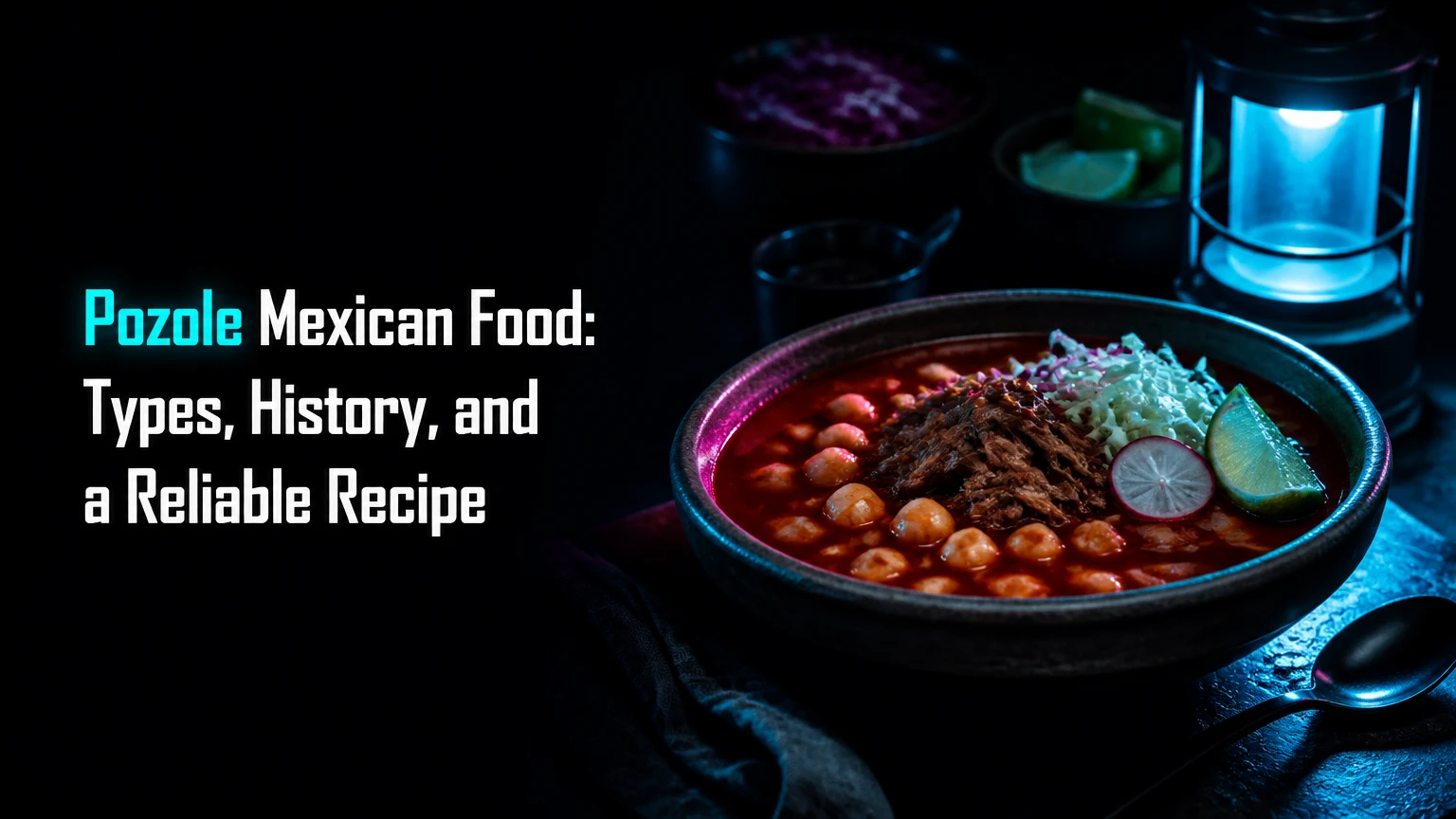
Pozole Mexican food is a traditional Mexican soup made from nixtamalized corn, a seasoned broth, and meat or plant-based ingredients. Its main styles are pozole blanco, rojo, and verde, named for the broth color and flavor base. The dish combines chewy, opened corn kernels with garnishes added at the table.
What Makes Pozole Mexican Food?
Pozole is a brothy Mexican corn dish built around large kernels of nixtamalized maize, commonly called hominy in English. Traditional versions use a long-simmered meat broth, while modern recipes also use chicken, seafood, mushrooms, beans, or vegetables.
The name is linked to the Nahuatl word pozolli, commonly translated as “foamy” or associated with a bubbling corn preparation. Cacahuazintle is a large-kernel Mexican maize variety often used for pozole, but the name should not be treated as a simple translation of that corn variety. That distinction matters because pozole describes a prepared dish, not one mandatory grain.
Pozole is usually thinner than a heavily reduced stew. The broth carries chile, garlic, onion, herbs, and meat flavor, while the hominy provides bulk and a pleasantly chewy bite. Radish, cabbage, lime, onion, oregano, and tostadas finish the bowl after cooking rather than disappearing into the pot.
Key Facts at a Glance
- Pozole contains nixtamalized maize, which gives the kernels their expanded shape and chewy texture.
- Pozole blanco has a clear or lightly seasoned broth, pozole rojo uses dried red chiles, and pozole verde uses green ingredients such as tomatillo and herbs.
- Canned hominy produces pozole in about 2.5-4 hours; dried maize can require soaking, cooking, and additional simmering over 24 hours.
- Bone-in meat contributes gelatin and body, but chicken, seafood, mushrooms, and beans can produce successful alternatives.
- Mexican oregano, lime, radish, cabbage, onion, and tostadas are finishing components, not merely decorative toppings.
- A typical home batch feeds 8-10 people and costs approximately $25-$45 in US grocery ingredients, depending on protein and chile prices.
Where Did Pozole Come From?
Pozole originated in the maize-based food culture of Mesoamerica and later developed into the regional Mexican dish known today. Indigenous communities used nixtamalized maize long before Spanish colonization, while present-day recipes incorporate ingredients and cooking practices introduced or expanded during the colonial period.
Historical accounts connect pozole with ceremonial meals, but popular retellings often present disputed details as settled fact. Claims that the dish universally contained human flesh before colonization are not supported consistently across the historical record, so a responsible explanation separates documented ritual use from later accounts and folklore.
The National Institute of Anthropology and History in Mexico, known as INAH, documents the central role of maize in Indigenous foodways and ritual life. The Food and Agriculture Organization’s 1992 and later technical discussions of nixtamalization explain why alkaline processing improved the nutritional usability of maize, especially its niacin availability.
Pozole became strongly associated with regional celebrations, family gatherings, national holidays, and neighborhood pozolerías. Its social role comes partly from scale: one pot can feed many people, and the garnishes allow each diner to adjust acidity, heat, crunch, and herbs.
How Do the Corn and Broth Work?
Nixtamalization changes dried maize chemically and physically by cooking it in an alkaline solution, traditionally limewater made with calcium hydroxide. The process loosens the hull, softens the kernel, improves handling, increases calcium content, and makes niacin more available for absorption.
Nixtamalization Options
| Corn option | Preparation time | Final texture | Best use |
|---|---|---|---|
| Canned white hominy | 5 minutes rinsing | Soft, moderately chewy | Weeknight pozole |
| Dried prepared hominy | 8-12 hours soaking plus 2-3 hours cooking | Firm, springy, corn-forward | Traditional weekend batch |
| Fresh nixtamal | 1-2 hours simmering | Tender with pronounced corn aroma | Mexican market preparation |
| Unprocessed dried field corn | 12-24 hours alkaline treatment plus rinsing | Variable unless carefully processed | Experienced cooks with food-grade lime |
Use food-grade calcium hydroxide only. Garden lime, construction lime, and unidentified alkaline powders are not safe substitutes. Rinse treated corn repeatedly until the water runs mostly clear, because excess alkaline residue creates a harsh flavor and slippery surface.
Broth quality depends on extraction as much as seasoning. Cuts containing skin, joints, neck, or other connective tissue release collagen during a gentle simmer, and that collagen becomes gelatin as the liquid cools. Lean boneless meat cooks faster but produces a lighter broth.
What Texture Should Pozole Have?
Pozole should have a fluid broth, tender meat, and hominy that has opened into a flower-like shape without collapsing. A properly cooked kernel remains substantial when bitten, rather than resembling mashed corn or a firm bean.
The broth should coat the spoon lightly, especially when connective tissue is present. A thick, gravy-like consistency usually indicates excessive reduction or blended vegetables, not a required standard. Salt should taste complete before garnishes are added, but the broth should retain enough freshness for lime to make a noticeable difference.
What Are the Main Types of Pozole?
The three best-known styles are blanco, rojo, and verde. Their names describe the dominant visual and flavor base, although regional recipes vary in chile selection, protein, thickness, garnish, and cooking sequence.
| Style | Primary ingredients | Flavor profile | Typical regional associations | Best for |
|---|---|---|---|---|
| Blanco | Maize, garlic, onion, herbs, clear broth | Clean, savory, corn-forward | Guerrero, Sinaloa, Nayarit | First-time cooks and mild servings |
| Rojo | Guajillo, ancho, garlic, onion, oregano | Earthy, mildly sweet, chile-rich | Jalisco, Michoacán, Zacatecas | Classic red-broth presentation |
| Verde | Tomatillo, pumpkin seeds, herbs, green chiles | Tangy, herbal, fresh, savory | Guerrero and central Mexico | Bright flavor and moderate heat |
| Mariscos | Seafood, maize, tomato or chile broth | Briny, lighter, aromatic | Pacific and coastal regions | Fast cooking and warm climates |
| Vegetarian | Mushrooms, beans, vegetables, maize | Earthy, hearty, variable | Contemporary and regional adaptations | Meat-free meals |
Which Pozole Is Mildest?
Pozole blanco is usually the mildest because its broth contains no dried chile purée, although fresh chiles may accompany it at the table. Pozole verde can also remain mild when made with tomatillo, herbs, and a small amount of poblano instead of hot green chiles.
Pozole rojo is not automatically very hot. Guajillo and ancho chiles contribute color, fruitiness, and earthiness more than aggressive heat. Remove stems and most seeds, taste the chiles before blending, and add arbol chile separately if a hotter bowl is wanted.
What Can Replace the Traditional Meat?
Chicken thighs provide the most forgiving substitution because they remain moist during a long simmer. Mushrooms and beans need different timing: mushrooms should enter during the final 20-30 minutes, while cooked beans should enter during the final 15 minutes to prevent breakup.
Seafood requires the shortest cooking time. Add firm fish or peeled shrimp during the final 5-8 minutes, and add octopus only after it has been separately tenderized. Seafood pozole should not simmer for hours, because delicate proteins become dry or rubbery.
How Do You Make Red Pozole?
Red pozole requires four stages: cook the broth protein, prepare and strain the chile base, combine the hominy with the broth, and season the finished pot. A canned-hominy batch takes approximately 2.5-4 hours, yields 8-10 servings, and succeeds when the meat becomes fork-tender before the final seasoning.
Before You Start
| Item | Typical requirement | Practical specification |
|---|---|---|
| Yield | 8-10 bowls | 1.5-2 cups per serving |
| Active preparation | 35-50 minutes | Chopping, chile work, shredding |
| Cooking time | 2.5-4 hours | Gentle stovetop simmer |
| Main protein | 3-4 pounds | Bone-in meat, chicken, or mixed cuts |
| Hominy | 50-60 ounces canned | Two 25-30 ounce cans, rinsed |
| Equipment | 1 large pot plus blender | Minimum 8-quart capacity |
| Typical US ingredient cost | $25-$45 | Varies by protein and market |
Step 1: Build the Broth
Place 3-4 pounds of bone-in meat or chicken in an 8-12-quart pot with 5-6 quarts of water. Add one halved white onion, one halved garlic head, two bay leaves, and 1 tablespoon of salt.
Bring the liquid to a boil, then lower the heat until only small bubbles rise. Skim gray foam during the first 20 minutes. Cook meat for 1.5-2.5 hours, depending on the cut, until a fork enters without resistance.
You will know the step worked when the broth smells savory and the meat separates easily. A rolling boil is the common mistake here because aggressive bubbling clouds the broth and tightens exterior meat fibers.
Step 2: Prepare the Red Chile Purée
Remove the stems and most seeds from five guajillo chiles and three ancho chiles. Toast the pods in a dry skillet for 20-40 seconds per side, then soak them in boiled water for 15-20 minutes.
Blend the softened chiles with four garlic cloves, half an onion, 1 tablespoon Mexican oregano, a small pinch of cumin, and 1.5 cups of hot broth. Strain the mixture through a fine sieve before adding it to the pot.
You will know the purée is ready when it flows smoothly and contains no leathery skin fragments. Burning the chiles is the main error; blackened patches create bitterness that extra salt cannot remove.
Step 3: Combine Hominy and Meat
Lift the cooked meat from the pot and remove bones, excessive fat, and any tough connective pieces. Strain the broth if you want a cleaner finish, then return the liquid to the pot.
Add the strained chile purée and two rinsed cans of hominy. Return shredded meat to the pot and simmer for 30-45 minutes so the kernels absorb the chile flavor.
You will know the combination is complete when the hominy has opened further and the broth tastes integrated rather than like separate chile and stock. Add water in 1-cup increments if the pot becomes too concentrated.
Step 4: Correct the Seasoning
Taste the broth after the final simmer, then adjust salt in 1/2-teaspoon increments. Add lime only to individual bowls or immediately before serving, because prolonged cooking removes its fresh acidity.
You will know the seasoning is balanced when the broth tastes savory before toppings and brighter after lime. Adding a large amount of salt at once is the usual mistake, since hominy absorbs seasoning gradually and the broth becomes difficult to correct.
Step 5: Assemble Each Bowl
Ladle 1.5-2 cups of pozole into each bowl. Offer shredded cabbage, sliced radish, diced white onion, chopped cilantro, Mexican oregano, lime wedges, and tostadas separately.
| Garnish | Suggested amount per bowl | Function |
|---|---|---|
| Cabbage | 1/4 cup shredded | Crunch and freshness |
| Radish | 3-5 thin slices | Peppery texture |
| White onion | 1 tablespoon diced | Sharp aromatic flavor |
| Cilantro | 1 teaspoon chopped | Herbal lift |
| Mexican oregano | 1/4 teaspoon | Citrus-like herbal note |
| Lime | 1-2 wedges | Acidity and fat balance |
| Tostada | 1-2 pieces | Crisp contrast |
Which Pozole Method Should You Use?
The stovetop method produces the clearest control over texture, the pressure cooker shortens protein cooking, and the shortcut method prioritizes speed over broth depth. Choose based on whether the meal needs traditional corn texture, a one-hour schedule, or efficient use of cooked leftovers.
| Method | Total time | Equipment | Strength | Limitation |
|---|---|---|---|---|
| Stovetop with canned hominy | 2.5-4 hours | 8-12 quart pot | Best broth control | Requires attention during simmering |
| Pressure cooker | 75-100 minutes | 6-8 quart cooker | Fast tender meat | Hominy can over-soften under pressure |
| Shortcut with cooked chicken | 30-45 minutes | Medium pot and blender | Fastest complete bowl | Lighter broth and less gelatin |
| Dried hominy traditional method | 24-36 hours elapsed | Large pot, lime, strainer | Strongest corn texture | Requires soaking and repeated rinsing |
For a pressure cooker, cook the protein, water, onion, and garlic under high pressure for about 25-35 minutes, depending on cut size. Release pressure safely, remove and shred the meat, then add the chile purée and canned hominy during a 10-minute uncovered simmer.
Do not pressure-cook canned hominy for the entire cycle. The kernels are already cooked, so extended pressure turns them soft and causes the broth to become starchy.
How Much Does Pozole Cost and How Long Does It Take?
A typical US home batch costs $25-$45 and takes 2.5-4 hours with canned hominy. Restaurant bowls commonly range from $12-$20 at casual Mexican restaurants, while regional tasting menus and premium restaurants may exceed $25; local prices vary substantially by city and protein.
| Version | Typical servings | Active time | Total time | Typical US home cost |
|---|---|---|---|---|
| Chicken blanco | 6-8 | 25-35 minutes | 1.5-2.5 hours | $18-$30 |
| Red pozole with bone-in meat | 8-10 | 35-50 minutes | 2.5-4 hours | $25-$45 |
| Vegetarian pozole verde | 6-8 | 30-40 minutes | 60-90 minutes | $18-$32 |
| Dried-maize traditional batch | 8-10 | 60-90 minutes | 24-36 hours elapsed | $28-$50 |
| Restaurant serving | 1 bowl | Not applicable | 10-20 minutes after ordering | $12-$25+ |
Ingredient cost rises when specialty chiles, fresh seafood, or prepared nixtamal are purchased from small markets. Canned hominy lowers labor and usually reduces the risk of undercooked kernels, but it does not reproduce the aroma of freshly nixtamalized maize.
Is Pozole Healthy and Gluten-Free?
Pozole can fit a balanced meal because maize, broth, protein, herbs, cabbage, radish, and lime provide different nutrients, but sodium and portion size vary widely. Pozole made from pure maize is naturally gluten-free, although packaged broth, seasoning blends, and shared restaurant equipment require label and cross-contact checks.
The nutritional profile depends on preparation. A bowl with lean chicken, abundant cabbage, and moderate broth fat differs substantially from a bowl with fatty meat, salty stock, and multiple tostadas.
| Dietary concern | Usually suitable? | Check or adjustment |
|---|---|---|
| Gluten-free diet | Yes, when ingredients are uncontaminated | Verify broth, bouillon, chile products, and tostadas |
| Lower-sodium diet | Sometimes | Use unsalted stock and season by tasting |
| Vegetarian diet | Yes | Use mushrooms, beans, squash, and vegetable broth |
| Higher-protein meal | Yes | Add chicken, beans, seafood, or extra lean meat |
| Lower-fat meal | Sometimes | Chill broth, remove surface fat, choose lean protein |
| Dairy-free diet | Usually | Avoid creamy garnishes and check packaged toppings |
The Harvard T.H. Chan School of Public Health describes maize nixtamalization as a process that improves the nutritional quality of maize by increasing niacin availability and calcium content. That benefit does not make every bowl nutritionally identical, because sodium, fat, and serving size remain decisive.
What Are Common Pozole Problems?
Most pozole failures come from burned chiles, insufficient simmering, poor salt timing, or overcooked hominy. Correct the underlying process rather than masking a damaged broth with sugar, excess lime, or additional spices.
| Problem | Likely cause | Fix | Prevention |
|---|---|---|---|
| Bitter broth | Burned chile skins or excessive toasted chile | Dilute with unsalted broth; replace purée if strongly bitter | Toast briefly and discard blackened pods |
| Tough meat | Insufficient time or overly aggressive heat | Simmer 30-60 minutes longer at low heat | Keep bubbles small and test with a fork |
| Bland flavor | Under-seasoned broth or weak stock | Add salt gradually and finish with lime | Taste after each cooking stage |
| Thin broth | Lean protein, excess water, short reduction | Simmer uncovered 15-30 minutes | Start with measured liquid |
| Mushy hominy | Canned kernels pressure-cooked too long | Add fresh hominy late and avoid further pressure | Simmer canned hominy only 30-45 minutes |
| Cloudy broth | Rolling boil or unskimmed foam | Strain through a fine sieve | Begin gently and skim early |
A bitter chile purée is not reliably repaired by brown sugar. Mild bitterness can be diluted with more unsalted broth and balanced with salt, but severe bitterness usually requires making a new chile base.
Overly salty pozole can be corrected by adding unsalted broth, water, more hominy, or unseasoned cooked protein. A raw potato rarely removes salt selectively; it absorbs liquid and starch along with sodium, so dilution works more predictably.
How Should You Store and Reheat Pozole?
Cool pozole in shallow containers and refrigerate it within two hours, or within one hour when the room temperature exceeds 90°F. Refrigerated pozole keeps for 3-4 days, while frozen portions maintain useful quality for approximately 2-3 months.
| Storage method | Maximum practical period | Container | Reheating method |
|---|---|---|---|
| Refrigerator | 3-4 days | Covered shallow container | Pot to 165°F |
| Freezer, broth and meat | 2-3 months | Airtight freezer container | Thaw overnight, then simmer |
| Frozen with hominy | 1-2 months for best texture | Freezer bag or container | Reheat gently |
| Garnishes | 1-3 days | Separate sealed containers | Serve cold and fresh |
The US Department of Agriculture recommends reheating leftovers to 165°F. Store garnishes separately because cabbage, radish, cilantro, and tostadas lose texture in the broth.
Freeze broth and meat separately from hominy when texture matters most. Add freshly rinsed canned hominy during reheating to restore a firmer bite.
Frequently Asked Questions
Is pozole the same as menudo?
Pozole and menudo are different Mexican soups. Pozole centers on nixtamalized maize and commonly uses chicken or other meat, while menudo is built around tripe and a chile-seasoned broth. Both may include onion, lime, oregano, and other toppings, but their signature ingredients and textures are distinct.
Can I make pozole without dried chiles?
You can make pozole without dried chiles by preparing blanco, or by using tomatillo and herbs for a green version. For a quick red broth, use a measured chile powder blend, but check its salt and spice content before seasoning the pot. Fresh chile substitutes produce a different flavor from guajillo and ancho.
Why is my hominy still hard?
Hard hominy usually needs more cooking time, especially when using dried maize or an underprocessed product. Simmer dried kernels in fresh water until the center is tender, which can take 2-3 hours after soaking. Canned hominy should already be soft; a firm canned batch may simply need rinsing and a longer final simmer.
Can I make pozole one day ahead?
Pozole often tastes more integrated after resting overnight because the broth, chile, and meat flavors redistribute. Refrigerate the cooked pot promptly in shallow containers, remove excess surface fat after chilling if desired, and reheat gently. Add lime, cabbage, radish, cilantro, and tostadas only when serving.
What should I order at a Mexican restaurant?
Order pozole blanco for a mild, corn-forward bowl, rojo for a chile-rich and earthy broth, or verde for tangy, herbal flavor. Ask whether the restaurant uses chicken or another protein, how spicy the broth is, and which garnishes come separately. A pozolería may offer regional styles unavailable elsewhere.
Can I use beans or mushrooms instead of meat?
Beans and mushrooms can replace meat, but they contribute different broth qualities. Add cooked beans during the final 15 minutes and mushrooms during the final 20-30 minutes; begin with vegetable stock, roasted onion, garlic, and dried chiles to build savory depth without relying on collagen.
The Bottom Line
Pozole Mexican food is defined by nixtamalized maize, a seasoned broth, and flexible regional preparation. Choose blanco for a clean and mild bowl, rojo for dried-chile depth, or verde for tomatillo and herbal brightness. With canned hominy, a carefully strained chile base, gentle simmering, and separate garnishes, a dependable 8-10 serving batch takes 2.5-4 hours.