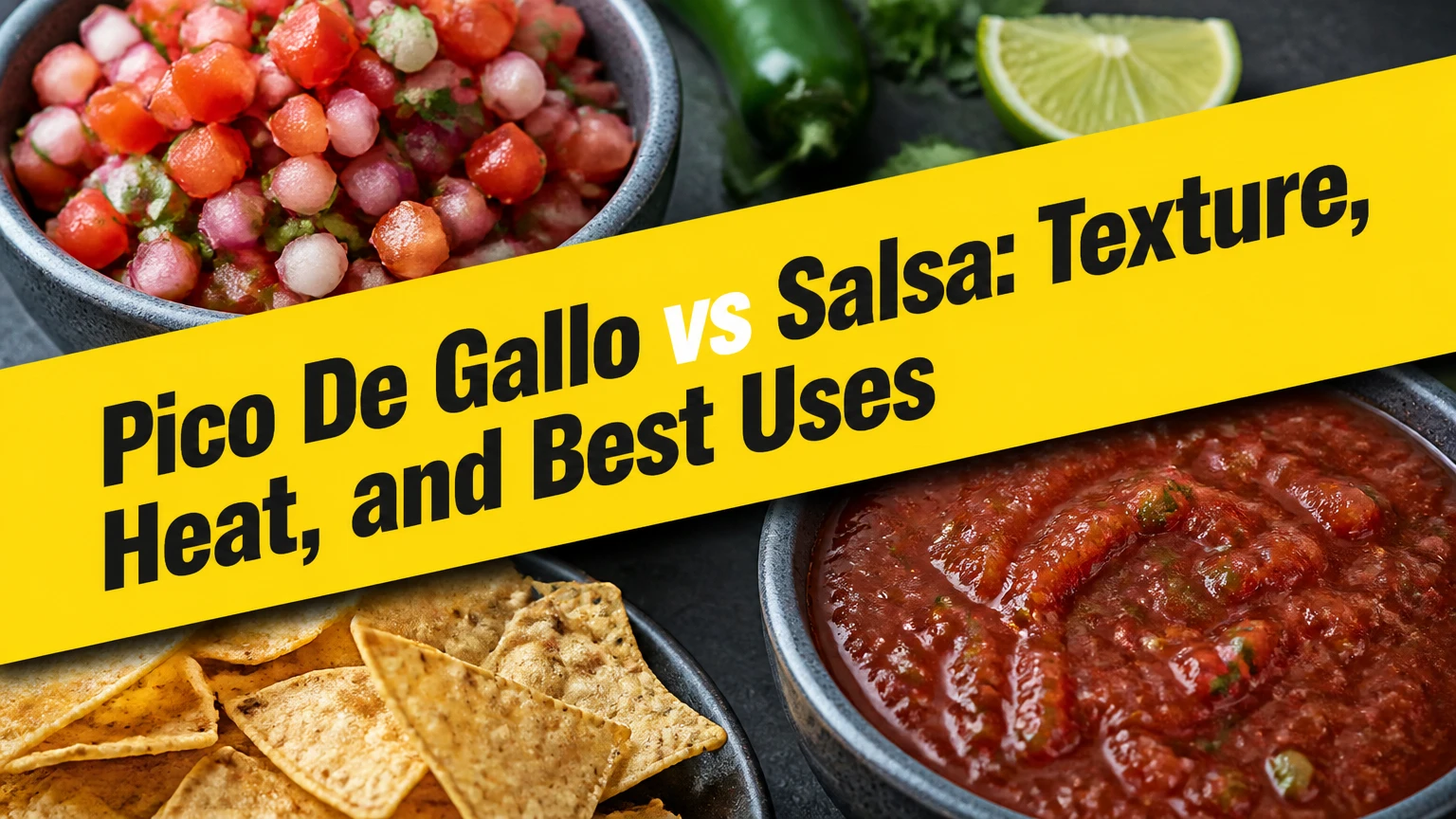
Pico de gallo is a fresh, chunky salsa made from chopped tomatoes, onion, chile, cilantro, lime, and salt. Salsa is the broader category, including raw, roasted, boiled, blended, smooth, chunky, mild, and hot preparations. Pico de gallo is therefore a type of salsa, distinguished mainly by its raw ingredients, hand-cut texture, and limited free liquid.
Key Facts at a Glance
- Pico de gallo is a raw, chopped salsa; salsa is the larger family of Mexican-style sauces.
- Pico de gallo usually takes 15-25 minutes to prepare and needs no cooking or blender.
- Salsa may be raw or cooked, but roasted and simmered versions usually have softer texture and deeper flavor.
- Pico de gallo contains some tomato juice; “completely dry” is inaccurate because salting and resting release liquid.
- Fresh pico is best within 1-2 days, while cooked homemade salsa generally keeps 4-7 days under refrigeration.
- Pico de gallo suits tacos, grilled foods, and fresh toppings; cooked salsa works better for eggs, enchiladas, rice, and braised dishes.
Pico de Gallo vs Salsa: What Is the Difference?
The defining difference between pico de gallo and salsa is not whether one contains tomatoes or chiles. The difference is category and construction: pico de gallo is one specific fresh, chopped salsa, while salsa includes many textures and cooking methods. A roasted salsa roja and a bowl of pico can share tomatoes, onion, lime, and chile while eating completely differently.
| Criterion | Pico de gallo | Fresh raw salsa | Roasted or cooked salsa |
|---|---|---|---|
| Category | Specific salsa style | Broad preparation style | Broad preparation style |
| Texture | Hand-cut, chunky | Chunky to blended | Smooth, coarse, or blended |
| Cooking | 0 minutes | 0 minutes | Typically 10-30 minutes |
| Free liquid | Low to moderate | Moderate to high | Moderate to high |
| Main flavor | Crisp, acidic, raw | Fresh, blended, sharp | Smoky, sweet, savory |
| Equipment | Chef’s knife, bowl | Knife or blender | Pan, comal, broiler, or blender |
| Best use | Taco topping, grilled food | Chips, bowls, seafood | Eggs, enchiladas, rice, braises |
| Typical fridge life | 1-2 days | 2-4 days | 4-7 days |
Pico de gallo is often called salsa fresca or salsa mexicana. Regional recipes vary, so no single dice size, onion color, or chile choice defines every authentic version.
Is Pico de Gallo a Salsa?
Yes. Pico de gallo is a salsa, specifically a fresh, uncooked, chopped preparation. The Spanish word salsa means sauce, so using “salsa” for pico de gallo is accurate, although calling every salsa pico de gallo is not.
The name pico de gallo is commonly translated as “rooster’s beak.” The origin of that name is uncertain, and explanations vary by region and source. The name does not establish a mandatory heat level or a universal ingredient ratio.
What Is Pico de Gallo?
Pico de gallo is a raw Mexican salsa built from small pieces of tomato, white onion, fresh chile, cilantro, lime juice, and salt. Roma tomatoes are practical because their firm flesh holds its shape, but ripe plum, beefsteak, or heirloom tomatoes can work when their excess juice is controlled.
A useful household ratio for about 2 cups is 450 g tomatoes, 75 g white onion, 1 jalapeño, 15 g cilantro, 1-2 tablespoons lime juice, and 3-4 g kosher salt. The ratio is adjustable. Tomatoes determine moisture, chile determines heat, and lime changes perceived freshness rather than supplying the entire flavor.
Why Does Pico Stay Chunky and Fresh?
Pico de gallo stays chunky because a knife cuts ingredients into discrete pieces instead of breaking them into a continuous puree. Sharp cuts also reduce crushing, which limits immediate juice release from tomato and onion tissue.
Salt then draws water from tomato cells through osmosis. Resting for 10-20 minutes improves seasoning but also creates more liquid, so draining is a texture choice rather than a sign of failure. Lime juice softens raw onion sharpness and adds acidity, but it does not preserve pico safely at room temperature.
A 6 mm, or roughly 1/4-inch, dice gives a balanced bite for tacos and chips. A 3 mm mince creates a spoonable condiment, while pieces larger than 12 mm make each ingredient taste separate.
What Is Salsa?
Salsa is a broad family of seasoned sauces or condiments that may contain fresh tomatoes, tomatillos, dried chiles, fresh chiles, onion, garlic, herbs, fruit, spices, and stock. Salsa can be raw, boiled, roasted, fried, blended, ground in a molcajete, smooth, or coarse.
The word does not specify viscosity, color, chile intensity, or cooking method. Store-bought jarred salsa is one commercial format, not the definition of salsa itself.
| Salsa style | Typical base | Texture | Typical method | Best application |
|---|---|---|---|---|
| Salsa roja | Red tomato, chile, onion, garlic | Smooth to coarse | Roast, blend, simmer | Eggs, tacos, enchiladas |
| Salsa verde | Tomatillo, green chile, onion | Pourable to coarse | Boil or roast, blend | Chicken, chilaquiles, tacos |
| Salsa taquera | Tomato or tomatillo, chile | Smooth and thin | Blend, sometimes fry | Tacos with rich fillings |
| Salsa de molcajete | Roasted tomato, chile, aromatics | Coarse and rustic | Grind by hand | Table condiment |
| Salsa negra | Dried or smoked chile, garlic, oil | Dark and smooth | Fry, blend, strain | Grilled meats and tacos |
| Fruit salsa | Mango, pineapple, peach, or tomato | Chopped and juicy | Cut and combine | Fish, grilled foods, chips |
Why Does Salsa Taste Deeper?
Cooked salsa tastes deeper because heat softens plant cell walls, concentrates water-soluble flavors, and develops roasted aromas. Surface charring on tomatoes, onions, garlic, or chiles creates browned compounds associated with smoky and savory flavor, although blackened ingredients can taste bitter when heavily burned.
Blending changes the eating experience by dispersing pulp, chile particles, and aromatic oils throughout the liquid. Frying a blended salsa in a small amount of oil for 3-8 minutes can round the flavor and reduce raw tomato sharpness.
A raw salsa can still be excellent, and a cooked salsa can still taste bright. Cooking method predicts flavor and texture more reliably than the generic word “salsa.”
How Do Texture and Moisture Differ?
Pico de gallo usually has low free liquid but is not dry, while most blended or cooked salsas are pourable because their water, pulp, and seasonings form a continuous mixture. Exact moisture percentages are not universal and depend on tomato variety, draining, blending time, and recipe ratios.
| Measurement | Pico de gallo | Chunky fresh salsa | Blended salsa | Jarred salsa |
|---|---|---|---|---|
| Typical preparation time | 15-25 min | 10-20 min | 15-30 min | 0 min |
| Rest before serving | 10-20 min | 10-15 min | 5-10 min | 0 min |
| Texture range | 3-12 mm pieces | 3 mm to 15 mm pieces | Mostly under 2 mm | 1-8 mm pieces |
| Free liquid after 20 min | 5-20% by volume | 15-35% | 40-70% | 35-65% |
| Typical serving size | 60 g | 60 g | 60 g | 60 g |
| Useful serving temperature | 10-22°C | 10-22°C | 10-22°C | 10-22°C |
These are practical kitchen ranges, not regulatory classifications. Pico de gallo can become watery after several hours, especially when made with seeded, very ripe tomatoes and heavily salted before serving.
Which Is Better for Nutrition?
Neither preparation is automatically healthier; nutrition depends on serving size, added oil, sodium, sugar, and the ingredients served with it. A fresh pico generally contains no cooking oil, while some salsa recipes include oil during frying, and commercial products vary substantially in sodium.
| Typical 60 g portion | Pico de gallo | Homemade salsa roja | Homemade salsa verde | Jarred salsa |
|---|---|---|---|---|
| Energy, approximate | 15-25 kcal | 20-60 kcal | 15-45 kcal | 15-50 kcal |
| Added oil | 0 tsp | 0-1 tsp | 0-1 tsp | 0-0.5 tsp |
| Sodium before added salt | 5-20 mg | 10-40 mg | 10-40 mg | 180-350 mg |
| Main vegetable base | Tomato | Tomato | Tomatillo | Tomato or tomatillo |
| Fresh herb retention | High | Moderate | Moderate | Low to moderate |
The figures are typical recipe estimates, not laboratory analyses. Read the nutrition panel on packaged salsa, because a 2-tablespoon serving may contain 100-200 mg of sodium and many people eat four times that amount with chips.
Which Should You Choose?
Pico de gallo is the better choice for crisp toppings and fresh contrast, while salsa is the better choice when you need a pourable condiment, a cooking liquid, or longer refrigerated storage. The best option depends on the food’s texture, richness, required heat, and whether cooking is part of the dish.
Choose Pico for Tacos and Grilled Foods
Pico de gallo works best with tacos, grilled vegetables, roasted fish, quesadillas, and rich fillings that benefit from acid and crunch. Add 1-2 tablespoons per taco immediately before eating so the tortilla does not absorb excessive tomato liquid.
Pico is also effective beside grilled chicken because the raw onion, lime, and chile cut through browned flavors. Pico is less effective as a marinade because chopped pieces do not coat food evenly and lime juice can make delicate seafood mushy if left too long.
Choose Salsa for Chips and Dipping
A blended or finely chopped salsa gives chips a consistent coating and enough liquid to cling to irregular surfaces. For dipping, a medium-thick salsa with particles under 5 mm is usually easier to scoop than large pico pieces.
Salsa verde supplies a sharper, greener profile from tomatillos, while salsa roja offers tomato sweetness and roasted chile depth. Mild versions are easier to share because diners can add a separate hot sauce.
Choose Cooked Salsa for Eggs and Main Dishes
Cooked salsa is better for huevos rancheros, chilaquiles, enchiladas, rice, beans, and dishes that need a sauce during heating. Simmering for 5-10 minutes reduces raw acidity and lets the salsa coat food without releasing as much watery juice.
Pico can be added after cooking as a finishing garnish. That combination provides both a warm sauce and a cool, crisp element.
Quick Verdict by User
| User or meal | Recommended choice | Reason | Typical quantity |
|---|---|---|---|
| Taco host | Pico de gallo | Crunch and acidity | 30-45 g per person |
| Chip dipper | Chunky or blended salsa | Better scoop and coating | 60-120 g per person |
| Weeknight meal prep | Cooked salsa roja or verde | Reheats and stores better | 120-180 g per meal |
| No-blender cook | Pico de gallo | Knife and bowl are sufficient | 2 cups per batch |
| Heat-sensitive group | Mild salsa with chile separated | Easier portion control | 1-2 tbsp per serving |
| Grilled-food cook | Pico plus salsa | Fresh contrast and sauce options | 30 g each per person |
How to Make Pico de Gallo
Make pico de gallo in about 20 minutes, including a 10-minute drain and a 10-minute rest. The most important success factor is controlling tomato water without removing the ripe tomato flavor.
Before You Start
| Requirement | Typical specification |
|---|---|
| Yield | About 2 cups, 450-500 g |
| Active time | 10-15 minutes |
| Resting time | 10-20 minutes |
| Tools | Chef’s knife, cutting board, bowl, colander |
| Ingredients | 450 g tomato, 75 g onion, 1 jalapeño, 15 g cilantro, 15-30 ml lime juice, 3-4 g salt |
| Cost | Typically $3-$6, depending on season and location |
| Difficulty | Basic knife skills |
Step 1: Cut and Drain the Tomatoes
Core 450 g of tomatoes and remove only the loose seed gel if the tomatoes are especially watery. Dice the flesh into 6 mm pieces, toss it with half the salt, and drain it in a colander for 10 minutes.
You will know the step worked when the tomatoes remain bright and firm, with liquid collecting below rather than in the mixing bowl. Do not squeeze the tomatoes, because pressure removes flavorful pulp as well as water.
Step 2: Dice the Aromatics
Dice 75 g white onion and 1 jalapeño into pieces close to the tomato size. Remove chile seeds and inner ribs for a milder result, or retain some ribs when the salsa needs more heat.
Uniform cuts distribute flavor across each bite. A blunt knife crushes onion cells and releases more sulfur compounds, which can make the mixture taste harsh.
Step 3: Chop Cilantro and Combine
Chop 15 g cilantro, including tender stems, and combine it with the drained tomato, onion, jalapeño, lime juice, and remaining salt. Start with 1 tablespoon lime juice and add more after tasting.
The mixture should taste fresh, lightly salty, and acidic without leaving a large puddle. If it tastes flat, add salt before adding more lime.
Step 4: Rest and Adjust
Rest pico de gallo for 10-20 minutes at room temperature, then taste and adjust salt, lime, and chile. Refrigerate leftovers promptly in a shallow, covered container.
The finished pico should release a small amount of juice but remain spoonable. If the bowl fills with liquid, drain once more and add fresh tomato only when you are ready to serve.
How to Make Salsa Roja
Make a basic salsa roja in 25-35 minutes by roasting tomatoes, onion, garlic, and chile, blending them, and optionally simmering the mixture in oil. Roasting supplies the strongest flavor improvement, while blending controls the final texture.
Step 1: Roast the Ingredients
Place 500 g tomatoes, 75 g onion, 2 garlic cloves, and 1-2 jalapeños or serranos on a hot skillet, comal, or broiler tray. Roast for 8-15 minutes, turning as needed, until the skins blister and several surfaces develop dark brown spots.
Aim for browned patches, not a completely carbonized surface. Excess black char adds bitterness and can overwhelm the chile flavor.
Step 2: Blend in Short Pulses
Add the roasted ingredients to a blender with 60-120 ml water and 3-4 g salt. Pulse 5-10 times for a coarse salsa or blend for 20-40 seconds for a smooth sauce.
Short pulses prevent excessive aeration and preserve control over thickness. Add liquid gradually, because thinning a salsa is easier than repairing one that is too watery.
Step 3: Simmer and Season
Warm 1 teaspoon oil in a saucepan, add the blended salsa, and simmer uncovered for 5-8 minutes. Taste after simmering, then adjust salt and add 1-2 teaspoons lime juice if the sauce needs brightness.
Simmering reduces raw garlic and tomato notes. Cool the salsa before sealing it for storage, but do not leave it at room temperature for extended periods.
How Should You Store Them?
Store pico de gallo and homemade salsa in covered containers at 4°C or below, and use clean utensils for every serving. Pico is best within 1-2 days, while cooked salsa usually keeps 4-7 days when cooled quickly and refrigerated.
| Storage situation | Pico de gallo | Homemade cooked salsa | Commercial jarred salsa |
|---|---|---|---|
| Refrigerator temperature | 4°C or below | 4°C or below | 4°C or below |
| Best quality window | 24-48 hours | 4-7 days | Label guidance, often 5-14 days after opening |
| Room-temperature limit | 2 hours | 2 hours | 2 hours after serving |
| Freezing result | Soft, watery texture | Acceptable with texture change | Follow package instructions |
| Best container | Shallow airtight tub | Airtight glass or plastic jar | Original jar with clean lid |
| Discard trigger | Sour smell, slime, mold | Mold, gas, off odor | Bulging lid, mold, off odor |
The USDA Food Safety and Inspection Service advises, “Refrigerate perishable food within two hours,” with one hour used when ambient temperatures exceed 32°C. Lime juice does not make uncooked salsa shelf-stable.
Freezing pico is usually a poor choice because tomato cell walls rupture during freezing and thawing. Frozen cooked salsa performs better, although it may separate and need stirring after thawing.
What Are the Best Alternatives?
Use a finely minced salsa fresca when pico is too chunky, salsa verde when you want tomatillo acidity, or a mild jarred salsa when speed and predictable storage matter more than fresh texture. Ingredient substitutions change the style, but they do not make the result invalid.
| Need | Best alternative | Substitution | Result |
|---|---|---|---|
| No fresh tomatoes | Canned fire-roasted tomatoes | Use 400 g drained tomatoes | Cooked salsa roja |
| No cilantro | Flat-leaf parsley or omit | Replace 15 g cilantro | Cleaner, less herbal profile |
| Low heat | Remove chile ribs and seeds | Use 1/2 jalapeño | Mild pico |
| More heat | Serrano or habanero | Replace jalapeño by weight | Hotter salsa |
| No lime | Lemon juice or mild vinegar | Use 10-15 ml | Sharper, less traditional acidity |
| No blender | Knife or mortar | Finely mince or grind | Chunky salsa |
| Less tomato water | Firm Roma tomatoes | Drain 10 minutes | Better taco topping |
Pico de Gallo Variations
Classic pico uses tomato, white onion, jalapeño, cilantro, lime, and salt. Pico de muñeca is generally more finely minced, while fruit versions replace part of the tomato with mango, pineapple, peach, or watermelon.
Fruit pico needs less lime when the fruit is already tart and benefits from a chile with enough heat to balance sweetness. Keep fruit pieces firm and add them immediately before serving to prevent collapse.
Common Mistakes and How to Fix Them
Watery Pico
Watery pico usually results from overripe tomatoes, retained seed gel, early salting, or a long resting period. Drain the mixture through a fine sieve for 2-3 minutes, taste again, and correct seasoning with a small pinch of salt or a teaspoon of lime juice.
Do not add raw flour, cornstarch, or baking soda. Those additions alter flavor and create an unpleasant texture.
Bitter or Excessively Tart Salsa
Bitter salsa usually comes from burned garlic, excessive chile membrane, or heavily blackened skins. Remove visibly carbonized pieces and dilute the batch with another roasted tomato or tomatillo before adjusting salt.
For excessive acidity, add a small amount of cooked tomato, onion, or water. Sugar can mask sourness, but it does not correct the underlying balance.
Pale, Foamy Salsa
Pale foam forms when a blender incorporates air into a thin salsa. Let the salsa stand for 5-10 minutes, skim surface foam, or simmer it uncovered for several minutes.
Blend at low speed and use pulses for the final texture. High-speed blending is unnecessary for most table salsas.
Salsa That Is Too Hot
Capsaicin cannot be removed by adding water. Dilute excessive heat by increasing the non-chile ingredients, especially tomato, tomatillo, onion, or avocado when the recipe allows.
Add the dilution in stages, tasting after each addition. A large batch can lose definition if the heat is corrected with too much liquid.
Pico That Tastes Flat
Flat pico usually needs salt before additional lime. Salt increases perceived tomato sweetness and makes onion and cilantro more distinct.
If the tomatoes are underripe, a 10-minute rest and a little extra lime can improve the result, but no seasoning can fully replace ripe tomato flavor.
Expert Rules That Prevent Most Failures
- Salt tomatoes separately before combining them when water control matters; salting the whole bowl early pulls moisture from onion and herbs as well.
- Add cilantro near the end for the clearest herbal flavor, especially when pico will sit longer than 20 minutes.
- Roast chiles and tomatoes separately when their cooking times differ, because garlic burns before a large tomato softens.
- Use a spoon for tasting rather than a chip when calibrating salt; chips can hide excessive sodium and distort the final judgment.
- Keep pico cold for storage but serve it slightly cool rather than ice-cold, because refrigeration suppresses tomato aroma.
- For tacos with wet fillings, drain pico more aggressively; for grilled foods, retain more juice so the topping supplies acidity and moisture.
Frequently Asked Questions
Does pico de gallo have to contain tomatoes?
Traditional pico de gallo usually contains tomato, but the style can be adapted with fruit, cucumber, or other produce. A tomato-free chopped mixture may still function as a fresh salsa, although some cooks would describe it as a salsa fresca rather than classic pico de gallo.
Is salsa hotter than pico de gallo?
Salsa is not inherently hotter than pico de gallo. Heat depends on the chile variety, quantity, seeds and ribs retained, and dilution from tomatoes or tomatillos. A serrano pico can be hotter than a mild roasted salsa roja, while a habanero salsa can exceed both.
Can you use pico de gallo instead of salsa?
You can substitute pico de gallo for salsa when a dish needs a chunky, fresh topping rather than a pourable sauce. Pico is a poor replacement for salsa in enchiladas, chilaquiles, braises, or recipes that require liquid coverage because chopped tomatoes do not distribute evenly.
Is fresh salsa the same as pico de gallo?
Fresh salsa and pico de gallo overlap but are not always identical. Pico de gallo normally has hand-cut pieces and limited liquid, while fresh salsa may be finely chopped or blended and can contain substantially more juice.
Should pico de gallo be served cold?
Pico de gallo should be refrigerated for safety but can be served cool or briefly brought toward room temperature before eating. A 10-minute tempering period improves tomato aroma without leaving the mixture out long enough to create a food-safety concern.
Can you make salsa without cooking it?
Yes. Raw salsa can be made by chopping or blending fresh tomatoes, tomatillos, onion, chiles, herbs, lime, and salt. Pico de gallo is the most recognizable chunky raw example, while a blended salsa cruda has a smoother, more liquid consistency.
The Bottom Line
Pico de gallo vs salsa is not a contest between unrelated foods: pico de gallo is one particular type of salsa. Choose pico for raw crunch, bright acidity, and fresh taco or grilled-food toppings; choose blended or cooked salsa for dipping, eggs, enchiladas, meal preparation, and recipes that need a pourable sauce.