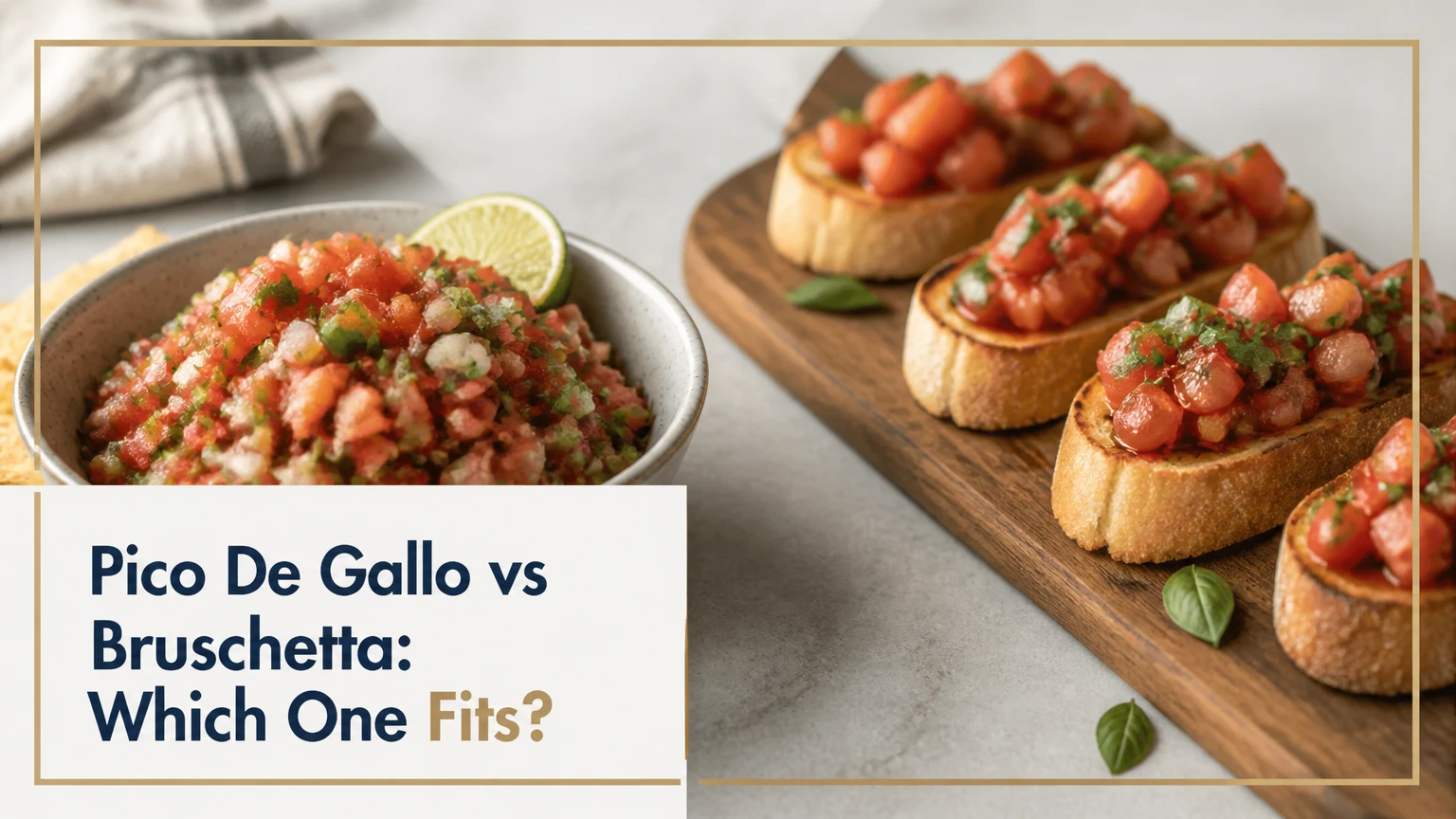
Pico de gallo is a raw Mexican salsa made from chopped tomatoes, onion, chile, cilantro, lime, and salt, while bruschetta is an Italian toasted-bread preparation traditionally finished with garlic, olive oil, salt, and a topping. They may share tomatoes and herbs, but pico de gallo is the condiment and bruschetta is the assembled antipasto.
Key Facts at a Glance
- Pico de gallo is a fresh salsa; bruschetta is grilled or toasted bread with a topping.
- Pico de gallo usually uses lime, chile, cilantro, and onion; tomato bruschetta usually uses basil, garlic, olive oil, and black pepper.
- Pico de gallo requires no cooking and typically takes 10-15 minutes to prepare.
- Bruschetta requires toasted bread and should be assembled within 5-15 minutes of serving.
- Pico de gallo is usually lower in calories because it contains little or no added fat.
- Tomato bruschetta cannot be made correctly by placing tomato salad on untoasted sandwich bread.
Pico de Gallo vs Bruschetta: Core Differences
Pico de gallo and bruschetta differ first by structure, then by flavor. Pico de gallo is a spoonable raw mixture designed to accompany tacos, grilled foods, eggs, beans, or chips; bruschetta is a bread-based appetizer in which toasted bread remains an essential component.
| Criterion | Pico de gallo | Tomato bruschetta |
|---|---|---|
| Culinary tradition | Mexican | Central Italian |
| Primary category | Raw salsa or condiment | Antipasto or appetizer |
| Structural base | Chopped produce | Grilled rustic bread |
| Typical acid | Fresh lime juice | Tomato juices, sometimes vinegar |
| Main herb | Cilantro | Basil |
| Typical heat | Jalapeño or serrano | Usually 0 chile heat |
| Added fat | 0-1 teaspoon per cup, often none | 1-2 teaspoons olive oil per slice |
| Best texture | Crisp, juicy, chunky | Crisp crust with juicy topping |
The distinction matters when planning a meal. Pico de gallo adds acidity, heat, and freshness to another food, whereas bruschetta contributes carbohydrates, crunch, toasted flavor, and enough substance to function as a first course.
Is bruschetta the same as tomato topping?
Bruschetta is not synonymous with tomato topping. The Italian term identifies the toasted bread preparation, while tomato, basil, and garlic describe one especially common topping known as bruschetta al pomodoro.
A bowl of marinated tomatoes is a tomato salad or topping. The same mixture spooned over garlic-rubbed grilled bread becomes tomato bruschetta. A slice of grilled bread topped with white beans, mushrooms, or anchovies is also bruschetta, even without tomatoes.
The name comes from the Roman dialect verb bruscare, commonly translated as “to roast over coals.” Merriam-Webster and Italian culinary references connect the word with roasting or charring bread, which explains why the bread treatment is more defining than the topping.
Is pico de gallo a salsa?
Pico de gallo is a type of salsa, specifically a fresh, uncooked, chunky salsa. In Mexico, it is also called salsa fresca or salsa bandera, although regional recipes and names vary.
Traditional pico de gallo emphasizes knife-cut pieces rather than a blended texture. The common visual combination of red tomato, white onion, and green chile or cilantro also explains the salsa bandera name, which refers to the colors of the Mexican flag.
Pico de gallo is not required to follow one universal formula. Some versions include avocado, fruit, cucumber, radish, or a different chile. The defining pattern is raw, chopped ingredients combined shortly before serving, rather than a cooked or puréed sauce.
How the Ingredients Create Different Results
Pico de gallo relies on raw vegetable cells, salt, lime, and chewing. Bruschetta relies on heat, toasted starch, garlic abrasion, olive oil, and moisture management.
| Ingredient or technique | Pico de gallo function | Bruschetta function | Practical effect |
|---|---|---|---|
| Tomato | Juicy central ingredient | Acidic topping component | Pico remains produce-forward; bruschetta gains bread contrast |
| Onion | Sharp crunch | Usually absent or finely limited | Onion defines pico aroma and bite |
| Chile | Heat and green aroma | Optional, nontraditional accent | Pico usually tastes hotter |
| Cilantro or basil | Cilantro gives citrusy herbal notes | Basil gives sweet anise-like notes | Herbs signal different cuisines |
| Lime or tomato acid | Brightens and macerates vegetables | Moistens and seasons topping | Acid must be controlled on bread |
| Olive oil | Optional, usually minimal | Finishes bread and carries aroma | Bruschetta feels richer |
| Salt | Draws out tomato juice | Seasons bread and topping | Timing changes moisture |
| Toasted bread | Not required | Structural foundation | Bruschetta needs crunch at service |
Salt does not magically create a dressing from every tomato. Salted tomatoes release water through osmosis, but tomato variety, ripeness, cut size, and resting time determine the final liquid. Pico de gallo needs enough juice to bind the ingredients, yet excessive liquid makes chips break and tacos leak.
Toasting changes bread through browning reactions and moisture loss. The result is a crisp exterior, a resilient crumb, and deeper roasted aromas. Rubbing a raw garlic clove over hot bread deposits a thin layer of garlic oils without turning the surface into a paste.
What Goes Into Each Preparation?
A classic batch of pico de gallo uses approximately 500 grams of firm ripe tomatoes, 100 grams of white onion, one jalapeño or two serrano chiles, 15 grams of cilantro, 30 milliliters of lime juice, and 4 grams of salt. Tomato bruschetta for four people commonly uses eight bread slices, 400 grams of tomatoes, 15 grams of basil, one garlic clove, 30 milliliters of extra virgin olive oil, and 3 grams of salt.
| Component | Classic pico quantity | Tomato bruschetta quantity | Useful alternative |
|---|---|---|---|
| Tomatoes | 500 g | 400 g | Roma, plum, or firm heirloom |
| Onion | 100 g white onion | 0-30 g red onion | Shallot for milder flavor |
| Chile | 1 jalapeño or 2 serranos | 0-1 mild chile | Fresno chile for moderate heat |
| Fresh herb | 15 g cilantro | 15 g basil | Parsley changes the flavor profile |
| Acid | 30 ml lime juice | 15 ml lemon juice if needed | Tomato juices can provide most acid |
| Oil | 0-5 ml optional | 30 ml extra virgin olive oil | Use 15 ml for a lighter version |
| Bread | 0 g required | 8 slices, 2 cm thick | Sourdough, ciabatta, or pane casereccio |
| Salt | 4 g | 3 g | Adjust for olives, cheese, or anchovies |
Which tomatoes work best?
Firm Roma or plum tomatoes work well for both preparations because their flesh holds shape and contains less free water than many soft slicing tomatoes. Ripe heirloom tomatoes produce better flavor when eaten raw, but they often need draining before either pico de gallo or bruschetta.
Tomato seeds are optional, not a universal defect. Removing the gel helps when tomatoes are exceptionally watery or when bruschetta must remain crisp, while keeping some seed gel preserves flavor and juice in a ripe, well-drained tomato.
Which bread works best for bruschetta?
Rustic sourdough, ciabatta, and Italian country loaves work best because their crust and open crumb resist moisture for several minutes. Slice bread approximately 1.5-2 centimeters thick, since thinner slices soften quickly and thicker slices can dominate the topping.
Soft sandwich bread, pre-sliced white bread, and highly airy supermarket rolls usually fail because they lack structural strength. Day-old artisan bread is often preferable to fresh bread because slightly reduced moisture improves toasting and topping resistance.
How Do You Prepare Each One?
Pico de gallo takes 10-15 minutes and needs a knife, cutting board, bowl, and citrus juicer. Tomato bruschetta takes 20-30 minutes when the topping rests for flavor, with the bread toasted immediately before assembly; the decisive factor is controlling moisture at the bread surface.
Pico de gallo workflow
- Wash and inspect the produce. Use 500 grams of firm ripe tomatoes, one cleaned jalapeño, 100 grams of onion, and 15 grams of cilantro. Discard bruised sections because raw preparations do not receive a cooking step.
- Dice uniformly. Cut tomatoes and onion into approximately 6-millimeter pieces. Mince chile more finely so heat spreads through the bowl instead of concentrating in one bite.
- Drain only when needed. Place watery diced tomatoes in a colander for 5-10 minutes. Do not remove all gel from naturally meaty tomatoes unless the finished salsa will sit for several hours.
- Combine and season. Add lime juice and salt after the vegetables are cut. Mix gently to avoid crushing tomato walls.
- Rest briefly. Wait 10-15 minutes at room temperature, then taste for salt, acid, and heat. Serve within two hours for the best crunch.
The correct endpoint is a moist mixture with visible cubes, not a red liquid. A dull knife bruises cilantro and onion, while aggressive stirring breaks tomatoes and accelerates water release.
Tomato bruschetta workflow
- Prepare the topping. Dice 400 grams of tomatoes, then mix with torn basil, 15 milliliters of olive oil, salt, pepper, and optional minced garlic. Drain excess liquid if the tomatoes are watery.
- Cut the bread. Slice eight pieces from a dense rustic loaf, each approximately 1.5-2 centimeters thick.
- Toast the surface. Grill or pan-toast at high heat for about 2-4 minutes per side, until the edges are browned and the center remains firm.
- Rub with garlic. Halve one raw garlic clove and rub it lightly over the hot rough surface. A few passes provide aroma without leaving bitter chunks.
- Add finishing oil. Drizzle about 15 milliliters of olive oil over the bread, or divide the oil between the bread and tomato mixture.
- Assemble immediately. Spoon the topping onto the warm slices 5-15 minutes before eating. Serve extra topping separately if guests will eat slowly.
The correct endpoint is a slice that bends slightly without collapsing. If the bread feels soft before the topping arrives, it was either under-toasted, too thin, or exposed to steam.
Which Is Healthier, Cheaper, or More Filling?
Pico de gallo is usually lower in calories and fat, while bruschetta is more filling because bread and olive oil add carbohydrates and energy. Exact nutrition depends on serving size, oil quantity, bread density, salt, and toppings, so the figures below are typical kitchen estimates rather than fixed food-label values.
| Typical serving | Pico de gallo | Tomato bruschetta | Main variable |
|---|---|---|---|
| Serving size | 60 g, about 1/4 cup | 1 slice, 55-75 g | Bread thickness |
| Energy | 15-30 kcal | 120-220 kcal | Oil and bread |
| Carbohydrate | 3-6 g | 18-32 g | Loaf type |
| Fat | 0-1 g | 4-14 g | Olive oil amount |
| Sodium before adjustment | 120-250 mg | 100-250 mg | Salt quantity |
| Typical batch cost | $3-$6 | $6-$12 | Bread and oil quality |
| Prep time | 10-15 minutes | 20-30 minutes | Topping rest and toasting |
| Best service window | 30 minutes-2 hours | 5-15 minutes assembled | Moisture transfer |
Pico de gallo fits low-fat meals, gluten-free menus, and high-volume vegetable sides. It does not provide substantial protein or many calories, so pairing it with beans, eggs, fish, poultry, tofu, or another protein creates a more complete meal.
Bruschetta fits a more substantial appetizer course, especially when topped with white beans, mushrooms, soft cheese, or vegetables. It is less suitable when the meal already contains large portions of bread or when guests need a clean, one-bite snack.
Which option costs less?
Pico de gallo generally costs less because it needs no bread, cooking fuel, or finishing oil. A typical four-cup batch costs approximately $3-$6 in North American grocery pricing, while eight tomato bruschetta slices cost approximately $6-$12 when made with artisan bread and extra virgin olive oil.
Seasonal pricing changes the comparison. Out-of-season tomatoes and imported limes can make pico more expensive, while a day-old local loaf can reduce bruschetta costs substantially.
Can Pico de Gallo Replace Bruschetta?
Pico de gallo can replace the tomato topping on bruschetta, but pico de gallo alone cannot replace the full dish because bruschetta requires toasted bread. The hybrid works when the pico is drained lightly, the bread is well toasted, and the lime-cilantro profile suits the rest of the meal.
| Intended use | Better choice | Reason | Required adjustment |
|---|---|---|---|
| Taco topping | Pico de gallo | Lime, chile, and cilantro match tortillas | Keep pieces 6 mm |
| Italian first course | Tomato bruschetta | Basil, garlic, oil, and bread fit the format | Toast bread immediately |
| Gluten-free table | Pico de gallo | No grain is required | Use certified ingredients if needed |
| Grilled chicken | Pico de gallo | Acid and heat cut richness | Add avocado for body |
| Slow buffet service | Pico de gallo | Bread will not become soggy | Serve with chips or vegetables |
| Interactive appetizer | Bruschetta components | Guests control assembly time | Keep topping separate |
| Mild child-friendly side | Tomato bruschetta | Omit chile and reduce garlic | Use small toasted slices |
| Leftover bread | Bruschetta | Toasting gives stale bread a new use | Slice thicker and toast firmly |
The strongest hybrid is Mexican-inspired tomato toast rather than a claim that traditional cuisines are interchangeable. Use lime, cilantro, and jalapeño on grilled bread if that flavor is intended, but label the result according to its ingredients and context.
What Variations Are Worth Making?
Pico de gallo variations change the produce, chile, or acid while preserving a raw chopped structure. Bruschetta variations change the topping while preserving the toasted bread, garlic, and olive oil foundation.
| Variation | Main ingredients | Flavor direction | Best pairing |
|---|---|---|---|
| Salsa bandera | Tomato, white onion, cilantro, green chile | Sharp and fresh | Tacos, eggs, beans |
| Fruit pico | Mango or pineapple, chile, lime, onion | Sweet, acidic, hot | Grilled fish or chicken |
| Xni-Pec | Red onion, habanero, sour orange | Fiery and aromatic | Yucatecan-style dishes |
| Avocado pico | Tomato, avocado, onion, cilantro | Creamy and fresh | Tortillas and grilled vegetables |
| Bruschetta al pomodoro | Tomato, basil, garlic, olive oil | Juicy and herbal | Italian first course |
| Mushroom bruschetta | Sautéed mushrooms, thyme, cheese | Savory and earthy | Soup or salad |
| Bean bruschetta | Cannellini beans, rosemary, olive oil | Creamy and filling | Vegetable soup |
| Kale crostini | Tuscan kale, garlic, pecorino | Bitter, salty, rich | Roasted vegetables |
Fruit pico should use firm fruit cut to the same size as the tomato. Overripe mango collapses quickly under lime and salt, so it is best mixed 10-20 minutes before service.
Mushroom and bean toppings should cool to warm rather than hot before reaching the bread. Steam trapped beneath a hot topping softens the toast faster than a room-temperature tomato mixture.
Common Failure Modes and Their Fixes
Pico de gallo and bruschetta fail for different reasons: pico loses structure through excess liquid, while bruschetta loses structure when liquid reaches the bread too early.
| Failure | Likely cause | Immediate fix | Prevention |
|---|---|---|---|
| Watery pico | Soft tomatoes or long resting | Drain through a fine colander | Use firm tomatoes and mix close to service |
| Bland pico | Salt added before tasting | Add 0.5 g salt at a time | Taste after a 10-minute rest |
| Harsh onion | Large raw pieces | Rinse briefly in cold water | Dice to 4-6 mm |
| Bruised cilantro | Repeated chopping | Replace damaged leaves | Use a sharp knife and one pass |
| Soggy bruschetta | Topping added early | Serve bread and topping separately | Assemble 5-15 minutes before eating |
| Burnt garlic flavor | Garlic over-rubbed | Scrape lightly, add fresh oil | Use two or three gentle passes |
| Tough bread center | Slices too thick or heat too high | Cover briefly after toasting | Use 1.5-2 cm slices |
| Weak toast | Soft bread or low heat | Toast again before topping | Use dense day-old bread |
A counterintuitive kitchen rule is that draining tomatoes can improve flavor as well as texture. Removing excess water concentrates the tomato, allowing salt, acid, herb, and oil aromas to remain perceptible instead of being diluted.
Another practitioner rule is to season the topping and bread separately. Salt in the tomato mixture controls vegetable flavor, while a small amount on the warm bread prevents the crust from tasting flat after moisture is added.
How long can each preparation be stored?
Pico de gallo keeps its best texture for roughly 12-24 hours when refrigerated in a covered container, although a safe storage limit depends on ingredient handling and refrigerator temperature. Bruschetta topping can remain refrigerated for about 24 hours, but assembled slices usually lose their crispness within 10-15 minutes.
| Storage format | Typical quality window | Storage temperature | Service advice |
|---|---|---|---|
| Unseasoned diced pico components | 24-48 hours | 4°C or below | Mix lime and salt later |
| Seasoned pico de gallo | 12-24 hours | 4°C or below | Drain before serving |
| Tomato bruschetta topping | About 24 hours | 4°C or below | Stir and drain juices |
| Untopped toasted bread | 2-4 hours | Room temperature | Re-crisp briefly |
| Assembled bruschetta | 10-15 minutes | Room temperature | Serve in small batches |
| Fruit pico | 4-12 hours | 4°C or below | Add delicate fruit late |
Refrigeration slows texture loss but does not restore crunch. For food safety, refrigerate cut produce promptly, use clean utensils, and follow local guidance for perishable foods rather than relying on appearance alone.
Which Should You Choose?
Choose pico de gallo for a fresh condiment, lower-calorie meal, gluten-free menu, hot-weather side, or buffet where food must remain spoonable. Choose bruschetta for a structured appetizer, an artisan-bread presentation, a first course, or a meal that benefits from toasted starch and olive oil.
For a low-calorie or gluten-free meal
Pico de gallo is the better choice because a typical 60-gram serving contains approximately 15-30 calories and requires no bread. Spoon it over beans, grilled vegetables, eggs, tofu, or lean protein to add acidity and texture without a large fat or carbohydrate increase.
For a dinner party
Bruschetta is better when served as a deconstructed platter. Provide eight toasted bread slices beside a bowl of tomato-basil topping and one or two alternatives, then let guests assemble portions as they eat.
For meal preparation
Pico de gallo is more practical, but store tomatoes, onion, chile, and herbs separately from salt and lime when possible. Prepare the final mixture no more than two hours before serving if crisp texture matters.
For leftover artisan bread
Bruschetta is the clear choice. Thick slices of day-old sourdough or country bread can be toasted, rubbed with garlic, and topped with whatever is available, including beans, mushrooms, cooked greens, or tomatoes.
For a mild and familiar appetizer
Tomato bruschetta usually needs fewer heat-sensitive ingredients. Omit chile, use a restrained amount of garlic, and cut the bread into 1.5-centimeter pieces for easier eating.
Expert Rules for Better Results
- Treat liquid as a seasoning carrier, not a defect. Pico de gallo needs some tomato juice to connect the ingredients, while bruschetta needs that liquid kept above the bread until the last moment.
- Choose cut size according to the serving vehicle. Use 4-6-millimeter pieces for tacos and chips, but 6-10-millimeter tomato pieces for bread so the topping remains recognizable and does not turn into puree.
- Use acid timing strategically. Lime added early gives pico a more integrated flavor but softens vegetables faster; lemon or tomato acid added to bruschetta should be balanced after draining because bread magnifies sharpness.
- Do not confuse richness with authenticity. Extra oil can make bruschetta satisfying, yet the defining technique remains toasted bread with garlic and seasoning, not a fixed oil quantity.
- Keep herbs intact. Tear basil shortly before mixing to reduce bruising, and chop cilantro with a sharp blade rather than crushing it through repeated cuts.
Frequently Asked Questions
Can I make pico de gallo without cilantro?
Yes, pico de gallo can be made without cilantro, although the flavor becomes less herbaceous and less recognizably traditional for many diners. Substitute flat-leaf parsley, a small amount of fresh mint, or no herb at all, then increase lime zest or green onion to restore aromatic lift.
Should tomatoes for bruschetta be refrigerated?
Fully ripe tomatoes generally taste better at room temperature, but diced tomato topping should be refrigerated if it will wait more than two hours. Remove it shortly before service, drain accumulated liquid, and avoid placing cold, wet topping on bread long before guests eat.
Is pico de gallo a dip or a topping?
Pico de gallo can function as both a dip and a topping, but its chunky structure makes it less scoopable than blended salsa. It works best with sturdy tortilla chips, tacos, grilled foods, eggs, rice, beans, and dishes that benefit from fresh acid and chile heat.
Can I use dried basil in bruschetta?
Dried basil can flavor the tomato mixture, but fresh basil produces a cleaner aroma and better texture in classic bruschetta. If dried basil is the only option, use approximately one-third of the fresh-basil quantity and add it to the tomatoes 10 minutes before serving.
Why is my bruschetta bitter?
Bruschetta becomes bitter when garlic is burned, olive oil is stale or overly harsh, bread is charred beyond the crust, or basil is bruised. Use fresh extra virgin olive oil, rub garlic lightly on hot bread, and remove any blackened surface before adding the topping.
The Bottom Line
Pico de gallo vs bruschetta is not a contest between two identical tomato dishes. Pico de gallo is the better choice for raw freshness, chile heat, low-calorie meals, gluten-free serving, and advance preparation; bruschetta is the better choice for toasted bread, richer appetizers, artisan-loaf leftovers, and immediate entertaining. Choose according to the role you need the food to play.