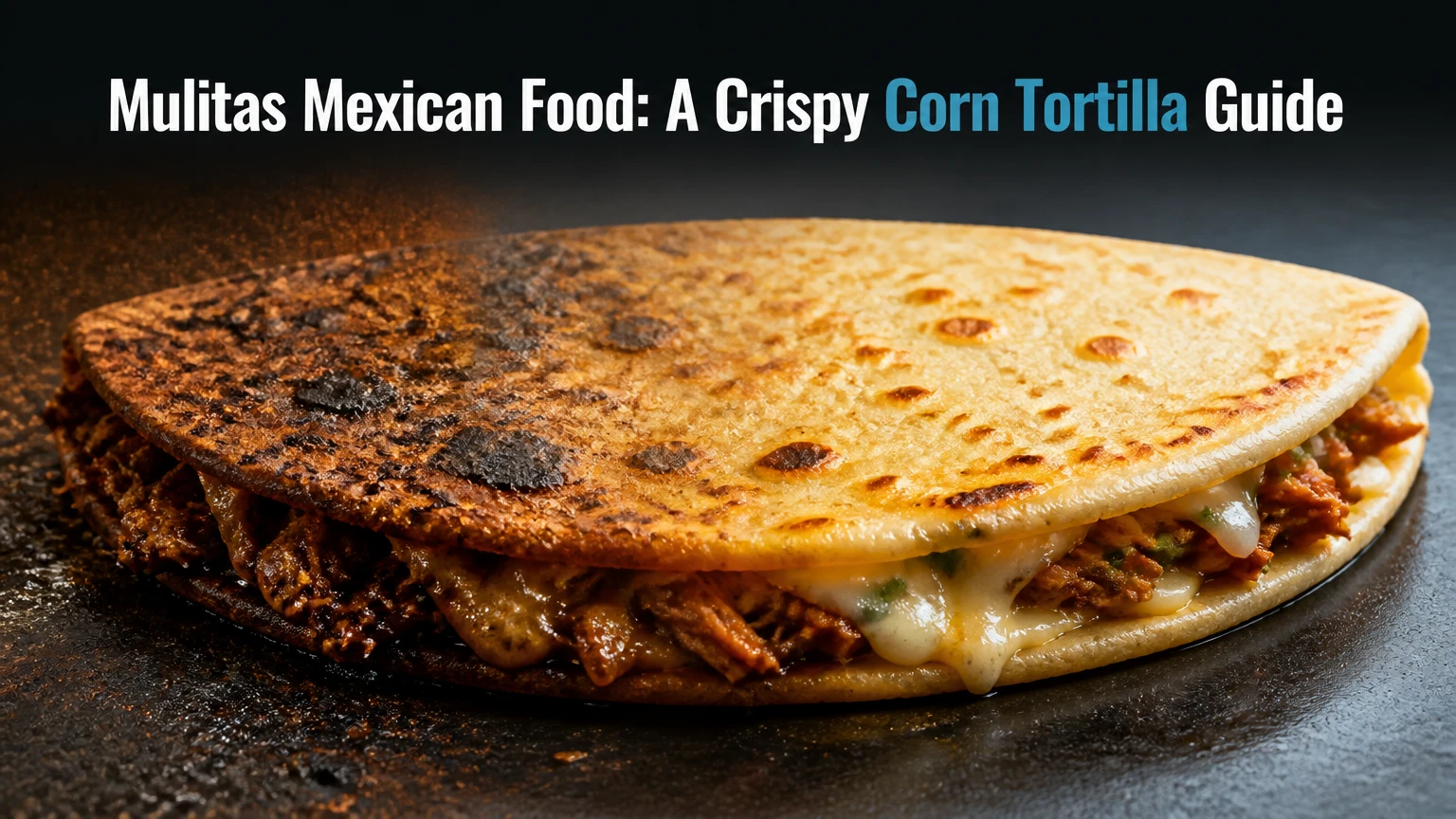
Mulitas are Mexican street food made with two corn tortillas, melted cheese, seasoned grilled filling, and toppings such as onion, cilantro, guacamole, and salsa. The tortillas form a compact, crisp sandwich rather than a folded taco, giving mulitas a crunchy exterior, a melted center, and excellent portability.
Key Facts at a Glance
- A mulita uses two separate corn tortillas as its top and bottom layers.
- Melting cheese binds the tortillas to the filling while the exterior crisps on a comal or skillet.
- Common fillings include carne asada, al pastor, chicken, birria, nopales, beans, and poblano peppers.
- A typical homemade mulita takes 15-20 minutes and yields one substantial serving.
- Oaxaca, asadero, queso Chihuahua, and Monterey Jack melt more evenly than aged cheddar.
- Regional recipes vary, so a flour tortilla or different topping does not automatically make a preparation inauthentic.
What Is a Mulita?
A mulita is a two-tortilla Mexican preparation that sandwiches melted cheese around chopped meat or vegetables. The name is often translated as “little mule,” but the food itself is defined more reliably by its stacked corn tortillas and grilled cheese structure than by a single national recipe.
The simplest construction places cheese on two tortillas, adds a thin layer of cooked filling to one side, and joins the tortillas on a hot cooking surface. Onion, cilantro, avocado, guacamole, lime, radish, and salsa usually arrive inside, on top, or alongside the finished piece.
The phrase “taco sandwich” helps first-time diners understand the shape, but it has limits. A mulita is not merely two tacos pressed together because the cheese is structural: it melts against the tortillas and creates a unified crust. A quesadilla may also contain cheese and filling, yet its defining form is usually one tortilla folded over itself, whereas a mulita uses two distinct tortilla rounds.
| Feature | Typical mulita | Practical value |
|---|---|---|
| Tortilla count | 2 corn tortillas | Creates a top and bottom crust |
| Tortilla diameter | 5-6 inches | Balances filling with hand portability |
| Cheese amount | 30-45 g | Binds layers without excessive leakage |
| Cooked filling | 50-75 g | Provides a substantial but flat center |
| Active cooking | 5-7 minutes | Allows browning without drying the filling |
| Finished texture | Crisp outside, soft center | Separates it from a soft taco |
Why Is Cheese So Important?
Cheese is the binding layer in a mulita, not a decorative topping. Fat from the cheese and cooking surface encourages browning, while melted proteins help attach each tortilla to the filling; using too little cheese produces a loose stack that separates during the flip.
The best results come from cheese that melts smoothly at moderate heat. Oaxaca cheese pulls into strands, asadero becomes supple, queso Chihuahua melts into a cohesive layer, and Monterey Jack offers a widely available substitute. Aged cheeses can taste strong but often release oil before they create a flexible bond.
Where Did Mulitas Come From?
Mulitas are associated with Mexican street-taco traditions and became especially visible in Southern California taquerias and taco trucks. Their exact origin is difficult to assign to one city because the name and construction vary across regions, vendors, and family recipes.
In contemporary Southern California, a mulita commonly means a cheese-filled pair of corn tortillas with taco-shop meat, often cooked beside carne asada or al pastor on a flat-top grill. In Mexico, related preparations may differ in tortilla size, cheese use, fillings, and whether the tortilla is crisped before assembly.
That variation matters when judging authenticity. Mexican street food often changes according to local ingredients and cooking equipment, so a vendor using a different melting cheese or a regional salsa is not necessarily departing from tradition. The stable culinary idea is a grilled, stacked tortilla preparation with a melted component and a savory filling.
How Are Mulitas Cooked?
A home cook can make two medium mulitas in about 15-20 minutes, including preparation, with a cast-iron skillet, comal, or flat griddle set around medium to medium-high heat. Success depends more on a flat filling and controlled moisture than on high heat alone.
Ingredients for Two Mulitas
| Ingredient | Quantity for 2 | Preparation detail |
|---|---|---|
| Corn tortillas | 4, 5-6 inches | Fresh, flexible, and preferably warm |
| Cooked filling | 120-150 g | Finely chopped or shredded |
| Melting cheese | 70-90 g | Grated or pulled into small pieces |
| White onion | 30 g | Finely diced |
| Cilantro | 10 g | Chopped immediately before serving |
| Guacamole | 60 g | Thick rather than watery |
| Cooking fat | 5-10 ml | Oil, lard, or rendered meat fat |
| Lime | 1 | Cut into wedges |
Step 1: Prepare a Dry, Flat Filling
Chop grilled meat into pieces no larger than 1 centimeter, or press beans and vegetables into a shallow layer. Remove excess broth, marinade, or liquid salsa before assembly because free moisture softens the tortillas and prevents the cheese from setting.
For birria, use drained shredded beef or goat and reserve the consommé for dipping. For vegetables, cook nopales, mushrooms, or poblano strips until their surface moisture has evaporated. You will know the filling is ready when it forms a compact layer rather than releasing liquid onto a plate.
Common mistake: adding hot, wet stew directly from the pot.
Fix: drain the filling for 1-2 minutes and use consommé at the table.
Step 2: Heat the Cooking Surface
Preheat a cast-iron skillet or comal for 3-5 minutes over medium to medium-high heat. A surface temperature near 175-190°C, or 350-375°F, usually browns the tortillas before the cheese burns.
Brush the surface with only a thin film of fat. Excess oil makes the bottom tortilla fry unevenly and can leave the center greasy. A drop of water should sizzle and disappear quickly, but the pan should not smoke continuously.
Common mistake: starting in a lukewarm pan.
Fix: wait until the tortilla begins to sizzle on contact.
Step 3: Warm and Cheese the Tortillas
Place two tortillas on the hot surface and distribute approximately 15-20 grams of cheese over each one, keeping a narrow uncovered rim around the edge. Warm the tortillas for 30-45 seconds before adding the filling so they bend slightly without cracking.
Cheese on both tortillas creates two adhesive surfaces. A small amount that reaches the edge can form a crisp cheese skirt, but a thick pile at the perimeter burns before the center melts.
Common mistake: using refrigerator-cold tortillas.
Fix: warm them briefly or steam them for a few seconds before grilling.
Step 4: Add the Filling and Assemble
Place 60-75 grams of filling on one tortilla in a layer no thicker than 1.5 centimeters. Add onion and cilantro sparingly, then place the second tortilla cheese-side down over the filling.
Keep guacamole and liquid salsa out of the center if the sandwich must travel. Thick guacamole can work inside, but watery avocado salsa belongs on the finished mulita or in a separate cup.
Common mistake: building a tall center mound.
Fix: spread the filling almost to the tortilla’s middle and press it level.
Step 5: Crisp Both Sides
Cook the assembled mulita for 1.5-2.5 minutes on the first side, then turn it with a broad spatula. Press gently for 10-15 seconds so the layers contact one another, and cook the second side for another 1.5-2.5 minutes.
The finished mulita should feel rigid at the edges, show toasted brown patches, and release from the pan without tearing. If the tortillas darken before the cheese melts, reduce the heat and cover the skillet for 30 seconds.
Common mistake: flipping repeatedly.
Fix: make one deliberate flip after the first side has formed a stable crust.
Step 6: Finish and Serve Immediately
Rest the mulita for 30-60 seconds, then cut it in half or serve it whole with lime, salsa, radishes, and extra cilantro. Add wet toppings after cooking so the crust stays crisp.
A mulita is at its best within several minutes of leaving the comal. The contrast between brittle tortilla edges and a soft cheese center fades as steam migrates into the crust.
Which Cheese Works Best?
Oaxaca, asadero, queso Chihuahua, and Monterey Jack are the most practical melting cheeses for mulitas because they soften evenly and remain cohesive between the tortillas. Oaxaca gives the longest strands, while Monterey Jack is easier to find in ordinary supermarkets.
| Cheese | Melt behavior | Flavor | Best use |
|---|---|---|---|
| Oaxaca | Stretchy, cohesive | Mild and milky | Classic stringy center |
| Asadero | Soft and fluid | Mild, buttery | Even coverage on a griddle |
| Queso Chihuahua | Smooth, rich | Moderately savory | Hearty beef fillings |
| Monterey Jack | Reliable and soft | Mild | Accessible home substitute |
| Low-moisture mozzarella | Stringy but less creamy | Mild | Emergency substitute |
| Aged cheddar | Oil separates sooner | Sharp | Small accent, not the main cheese |
Pre-shredded cheese may contain anti-caking agents that slow melting and create a grainier texture. Grating a block or pulling Oaxaca into short strands improves contact with the tortillas.
Which Mulita Fillings Are Common?
Carne asada is the most recognizable choice for many taco-shop mulitas, but al pastor, chicken, birria, beans, nopales, mushrooms, and poblano strips all work when the filling is cooked dry enough to remain stable. The best filling depends on whether you want char, tenderness, spice, or a meat-free option.
| Filling | Typical portion | Flavor profile | Texture result |
|---|---|---|---|
| Carne asada | 60-75 g | Charred, citrusy, savory | Firm chopped pieces |
| Al pastor | 60-75 g | Chile-seasoned, sweet, smoky | Tender, finely sliced meat |
| Chicken thigh | 60-75 g | Mild, roasted, adaptable | Juicy chopped pieces |
| Birria | 50-65 g | Deep chile and broth flavor | Tender shredded filling |
| Nopales and beans | 70-90 g | Earthy, vegetal, savory | Soft with moderate bite |
| Rajas and mushrooms | 70-90 g | Roasted pepper, umami | Moist unless browned well |
Carne asada suits a first order because its grilled flavor remains clear beneath the cheese. Al pastor adds sweetness and spice, while birria produces the richest result when the tortillas receive a light coating of consommé fat before grilling.
Vegetarian versions need a texture strategy. Refried beans provide adhesion, nopales add chew, and browned mushrooms contribute savoriness; combining all three can make a dense sandwich, so use smaller portions and keep the vegetable mixture dry.
How Do Mulitas Compare With Tacos and Quesadillas?
Mulitas are the most enclosed and structurally stable of the three preparations, while tacos offer the lightest tortilla-to-filling ratio and quesadillas provide the simplest cheese-focused format. Vampiros occupy a different category because they use a single toasted tortilla as an open-faced base.
| Food | Tortilla structure | Cheese role | Eating style | Typical texture |
|---|---|---|---|---|
| Mulita | 2 separate corn tortillas | Structural adhesive | Handheld sandwich | Crisp outside, soft center |
| Taco | 1 folded or curved tortilla | Optional topping | Open handheld fold | Soft or lightly toasted |
| Quesadilla | 1 folded tortilla or 2 flat halves | Main filling bond | Folded or cut wedge | Soft to crisp |
| Vampiro | 1 toasted corn tortilla | Usually melted on top | Open-faced | Hard, cracker-like base |
A taco is better when you want several fillings and maximum salsa control. A quesadilla is better when cheese should dominate and the filling remains modest. A mulita is better for diners who want a compact meal with a toasted exterior and enough structure to hold chopped filling.
The comparison changes at different vendors. Some taquerias use two tortillas for quesadillas, while some call an open, cheese-topped tostada a vampiro. Ask how the shop defines each item when regional terminology matters.
How Much Does a Mulita Cost?
A typical United States taco-truck mulita costs about $4.50-$7.50, while a sit-down restaurant commonly charges $8-$12. Prices rise with birria, larger tortillas, premium cuts, extra cheese, avocado, local labor costs, and the number of side items included.
| Setting | Typical price per mulita | Common portion | Typical wait |
|---|---|---|---|
| Mexican street truck | $4.50-$7.50 | 5-6 inches | 5-12 minutes |
| Counter-service taqueria | $6-$10 | 6-7 inches | 8-15 minutes |
| Sit-down restaurant | $8-$12 | 6-8 inches | 15-25 minutes |
| Homemade, standard filling | $1.75-$3.50 | 5-6 inches | 15-20 minutes |
One mulita is usually a substantial snack or a light meal. Two pieces may suit a larger appetite, especially when the filling is lean and the restaurant uses small tortillas.
Calorie totals vary substantially, so a precise number requires a weighed recipe. A typical homemade mulita with two 6-inch corn tortillas, 35-45 grams of cheese, and 60 grams of grilled filling often falls around 400-650 calories before additional guacamole or oily salsa.
Can Mulitas Be Vegetarian?
Vegetarian mulitas work especially well with refried beans, grilled nopales, rajas, mushrooms, roasted squash, or cheese alone. The preparation remains recognizable when two corn tortillas and melted cheese form the grilled structure, even without meat.
Use approximately 70-90 grams of cooked vegetables or beans per mulita. Brown mushrooms and squash until their visible moisture disappears, pat nopales dry after cooking, and spread beans thinly so the center does not become pasty.
Vegan versions require a plant-based melting cheese or a different binder. Some vegan cheeses melt into a sauce rather than a crust, so cook at moderate heat and use a thin layer; mashed beans can provide additional adhesion.
Why Do Mulitas Fall Apart?
Mulitas fall apart when the filling is too wet, the cheese is insufficient, the tortillas are cold or brittle, or the sandwich is flipped before the first side sets. The most reliable correction is a thin, dry filling combined with enough evenly distributed melting cheese.
| Failure | Likely cause | Immediate fix | Prevention |
|---|---|---|---|
| Splitting during flip | Tall or loose filling | Press edges together gently | Limit center to 1.5 cm |
| Soggy tortilla | Wet salsa or broth inside | Recrisp uncovered on low heat | Serve wet toppings separately |
| Burnt cheese | Heat above 190°C | Lower heat and wipe pan | Use medium-high, not maximum |
| Greasy surface | Too much fat or fatty filling | Drain on a rack briefly | Brush only a thin oil film |
| Dry center | Overcooking after cheese melts | Remove immediately | Prepare filling before grilling |
| Cracked tortilla | Old, cold tortilla | Replace or steam briefly | Keep tortillas covered and warm |
A counterintuitive rule is that pressing harder does not always improve adhesion. Heavy pressure can squeeze cheese and moisture out of the center, leaving a dry filling and a greasy rim; brief, moderate pressure is more effective.
Another practitioner rule is to add salsa after browning. Salsa contributes flavor, but its water content changes the thermal environment and can soften a crisp tortilla within minutes.
How Should You Order a Mulita?
Order a carne asada mulita with the salsa on the side when trying one for the first time, because the simple filling lets you judge the tortilla, cheese, browning, and meat together. Request guacamole inside only if the shop uses a thick preparation rather than a watery avocado sauce.
| Preference | Recommended order | Reason |
|---|---|---|
| First-time diner | Asada, mild salsa on side | Clear grilled flavor and texture |
| Sweet-spicy preference | Al pastor, lime, red salsa | Seasoning offsets rich cheese |
| Rich, braised flavor | Birria with consommé | Tender filling and dipping contrast |
| Lower-meat preference | Chicken with green salsa | Mild base supports sharper salsa |
| Vegetarian order | Beans, nopales, and rajas | Contrasting soft and firm textures |
| Maximum crunch | Ask for well-toasted tortillas | Extends crust life during eating |
Specify whether you want onion and cilantro inside or on top. If ordering birria, ask whether the tortillas are dipped in consommé before grilling; that step produces a red, intensely savory crust but also increases the risk of sogginess if the dip is excessive.
Mulitas are portable, but they are not ideal for long transport. For a drive longer than 15 minutes, keep salsa, guacamole, and consommé separate and vent the container slightly so trapped steam does not soften the tortillas.
How Do You Store and Reheat Mulitas?
Store cooked mulitas in a shallow airtight container for up to three days, then reheat them in a dry skillet or toaster oven rather than a microwave. A skillet restores the tortilla’s surface texture, while microwave heat softens the crust and can make the cheese greasy.
| Reheating method | Temperature | Time | Expected result |
|---|---|---|---|
| Dry skillet | Medium-low | 2-3 minutes per side | Best crust recovery |
| Toaster oven | 190°C / 375°F | 6-10 minutes | Even reheating |
| Air fryer | 175°C / 350°F | 4-6 minutes | Crisp, fast exterior |
| Microwave | High | 45-90 seconds | Soft tortilla, quick center |
Cool leftovers before sealing them, but do not leave them at room temperature for extended periods. Refrigerate within two hours, or within one hour when the surrounding temperature exceeds 32°C, following standard food-safety guidance from the United States Department of Agriculture.
Reheat only the portion you plan to eat. Repeated heating dries the filling and makes the tortillas progressively tougher.
Frequently Asked Questions
Are mulitas made with corn or flour tortillas?
Traditional street-style mulitas most commonly use corn tortillas, usually 5-6 inches across. Some restaurants use flour tortillas or larger handmade tortillas, particularly for regional or contemporary versions, but the corn tortilla provides the characteristic toasted aroma and firmer exterior associated with the widely recognized form.
Are mulitas gluten-free?
Mulitas made with certified gluten-free corn tortillas, unseasoned meat, cheese, vegetables, and gluten-free salsa can fit a gluten-free diet. Cross-contact is common on shared griddles, and some commercial marinades or tortillas contain wheat, so diners with celiac disease should ask about ingredients and cooking surfaces.
What is the difference between a mulita and a sincronizada?
A mulita generally uses corn tortillas and a taco-style filling, while a sincronizada commonly uses flour tortillas with cheese and sliced ham between them. Names vary by region, but the tortilla type and filling tradition usually distinguish the two preparations more reliably than the stacked shape alone.
Should guacamole go inside a mulita?
Thick guacamole can go inside a mulita in a small amount, but watery guacamole or avocado salsa is better served afterward. Wet fillings soften the corn tortillas and weaken the cheese bond, especially when the mulita must sit for more than five minutes before eating.
Can I make a mulita without a comal?
A cast-iron skillet, stainless-steel pan, electric griddle, or flat barbecue surface can replace a comal. Use medium to medium-high heat, a thin film of oil, and a broad spatula; the goal is even contact and gradual browning rather than a specialized piece of equipment.
Is a birria mulita dipped in broth?
A birria mulita may be made by lightly coating the tortillas with the fat from birria consommé before grilling, then serving extra broth for dipping. The practice varies by restaurant, and a heavy broth dip can soften the tortillas before the cheese has time to create a stable crust.
The Bottom Line
Mulitas Mexican food is best understood as a grilled, two-corn-tortilla sandwich bound by melted cheese and filled with seasoned meat, beans, or vegetables. Carne asada offers the clearest introduction, Oaxaca or Monterey Jack gives dependable melt, and salsa served after cooking protects the crisp exterior. A well-made mulita should be compact, browned, cheese-bound, and eaten soon after it leaves the comal.