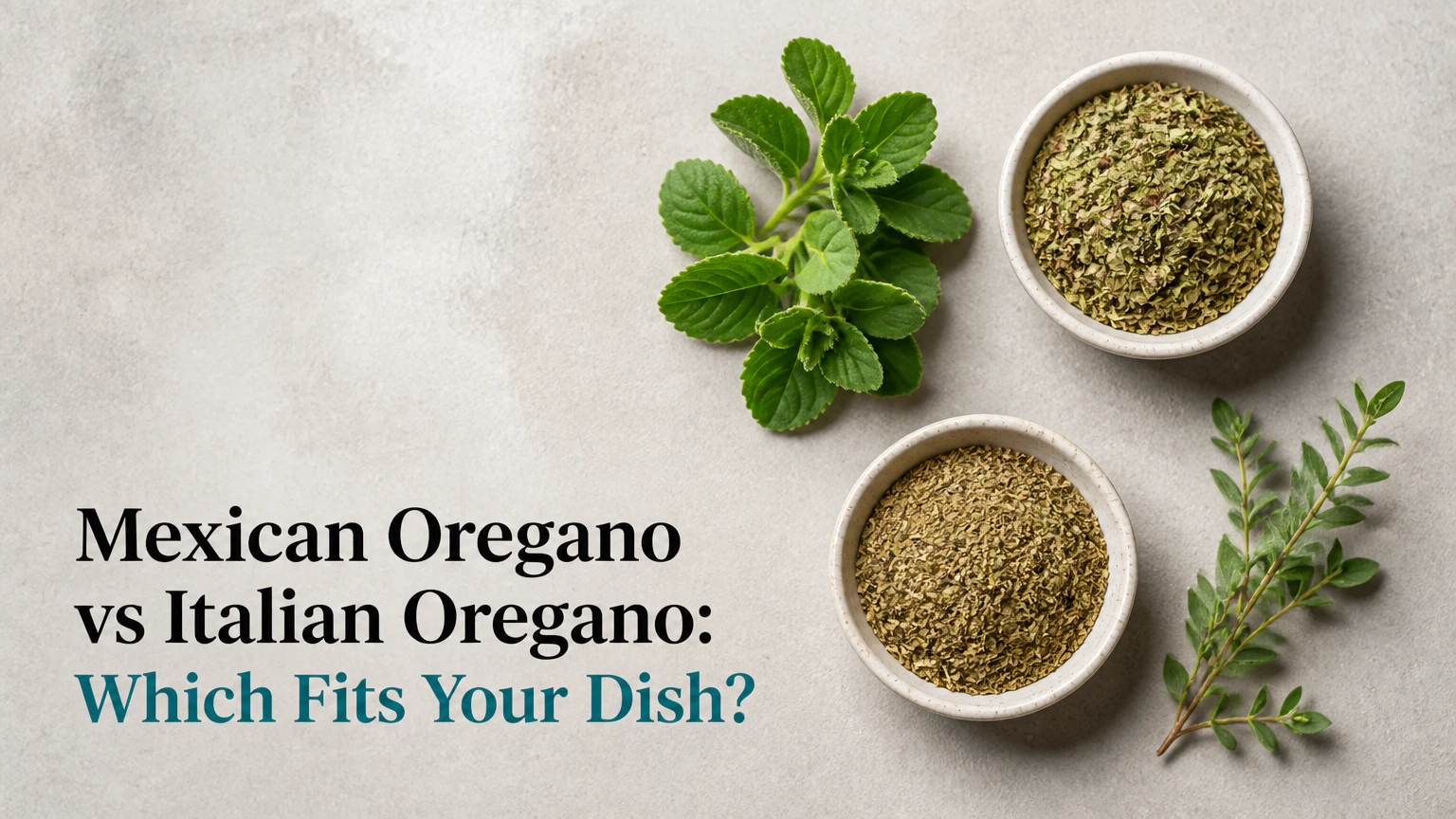
Mexican oregano and Italian oregano are different herbs, not regional versions of the same plant. Mexican oregano usually means Lippia graveolens from the verbena family, with citrus, earthy, and lightly anise-like notes; Italian oregano is a culinary label for Mediterranean Origanum herbs, usually milder, sweeter, and more floral.
Key Facts at a Glance
- Mexican oregano usually comes from Lippia graveolens, a woody verbena-family shrub native to Mexico and Central America.
- Italian oregano is not one universally defined species; retail products may contain Origanum vulgare, Origanum × majoricum, or a regional blend.
- Mexican oregano fits chili, beans, grilled meats, stews, adobo, and salsa because its sharper citrus and earth notes cut through rich seasoning.
- Italian oregano fits tomato sauce, pizza, vegetables, olive oil, fish, and salads because its softer floral and peppery profile integrates easily.
- Dried Mexican oregano generally benefits from crushing between the palms before cooking, while fresh Italian oregano is often best added near the end.
- Typical substitution starts at one-half to three-quarters of the original amount, followed by tasting and adjustment.
Mexican Oregano vs Italian Oregano: The Core Difference
The core difference is botanical identity and culinary context. Mexican oregano usually refers to Lippia graveolens, while Italian oregano describes one or more Mediterranean Origanum herbs, so the two products differ in aroma, intensity, and best cooking applications.
| Comparison point | Mexican oregano | Italian oregano |
|---|---|---|
| Common botanical name | Lippia graveolens | Usually Origanum vulgare or O. × majoricum |
| Plant family | Verbenaceae, the verbena family | Lamiaceae, the mint family |
| Native growing region | Mexico, Central America, southern Texas | Italy and the wider Mediterranean region |
| Plant form | Woody shrub | Herbaceous perennial |
| Typical aroma | Citrus, camphor, earth, mild anise | Sweet marjoram, pine, pepper, flowers |
| Strongest culinary fit | Chili, beans, adobo, stews | Tomato sauce, pizza, vegetables |
| Common retail form | Crumbled whole leaves | Flakes, rubbed leaves, or fresh sprigs |
| Label reliability | Usually clearer when labeled Lippia | Variable because “Italian” is not a strict species name |
The word “oregano” creates the confusion. Taxonomically, many plants receive that common name because they share pungency, not because they are close relatives. A jar labeled Italian oregano may therefore require more scrutiny than a jar labeled Mexican oregano.
What Is Mexican Oregano Botanically?
Mexican oregano is primarily Lippia graveolens, a drought-tolerant shrub in the Verbenaceae family. The species is related to lemon verbena rather than to Mediterranean oregano, and its small dried leaves commonly appear gray-green, brittle, and irregularly crumbled.
Regional products complicate the name. Oaxacan oregano may refer to Poliomintha longiflora or another locally traded plant, depending on the producer and region. A package that names the botanical species gives a more dependable identity than the country name alone.
What Does Italian Oregano Mean?
Italian oregano is a market and culinary term rather than a guaranteed species designation. Italian-grown or Italian-style products may use Origanum vulgare, a hybrid such as Origanum × majoricum, Greek-type oregano, or a blend that includes marjoram.
The label “Italian” often predicts culinary use better than taxonomy. It suggests an oregano intended for tomato, olive oil, garlic, cheese, vegetables, and grilled Mediterranean foods, but the actual intensity depends on species, harvest, drying, and storage.
How Do Their Flavors Differ?
Mexican oregano tastes brighter, earthier, and more assertive, with citrus, camphor, pepper, and occasional anise notes. Italian oregano tastes rounder and sweeter, with marjoram-like floral notes, mild pine, and a cleaner peppery finish.
| Flavor attribute | Mexican oregano | Italian oregano | Practical consequence |
|---|---|---|---|
| First aroma | Citrus and camphor | Sweet herb and floral notes | Mexican oregano announces itself faster |
| Mid-palate | Earth, pepper, mild anise | Pine, marjoram, soft pepper | Italian oregano blends more quietly |
| Finish | Firm, slightly bitter, warm | Gentle, savory, sometimes minty | Mexican oregano needs careful dosing |
| Acidity pairing | Lime, tomatillo, vinegar | Tomato, lemon, wine vinegar | Each reinforces different acid profiles |
| Fat pairing | Rendered cooking fat, avocado oil | Olive oil, butter, cheese | Fat carries both herbs but changes emphasis |
| Fresh use | Potent and less common in stores | Practical on salads and finished dishes | Italian oregano is easier to use raw |
Rick Bayless has described Mexican oregano as “bright, citrusy, a little wild,” a useful sensory shorthand for the herb’s difference from Mediterranean oregano. The phrase describes flavor, not a fixed chemical specification, because growing region and drying method alter the final jar.
Why Do the Herbs Smell Different?
Essential oils create much of the difference, but published chemical profiles vary substantially by species, harvest location, plant part, and analytical method. Carvacrol, thymol, limonene, p-cymene, and terpinene can all contribute to oregano aroma, yet no universal percentage applies to every Mexican or Italian product.
Carvacrol contributes warm, sharp oregano pungency. Thymol can add medicinal, minty, or earthy character, while limonene contributes citrus brightness. The practical lesson is more reliable than a fixed oil chart: Mexican oregano often has a more citrus-earth balance, and Mediterranean oregano often has a sweeter, marjoram-led balance.
A common claim says Mexican oregano always withstands long cooking better and Italian oregano becomes bitter after prolonged boiling. That claim is too absolute. Both dried herbs can survive simmering, but high heat, low liquid, excessive quantity, and an old product can make either herb harsh. Italian oregano often loses its fresh top notes sooner, while Mexican oregano usually retains a stronger savory presence.
Which Oregano Fits Each Dish?
Mexican oregano is the stronger choice for chili, bean pots, menudo, birria seasoning, adobo, salsa roja, enchilada sauce, and grilled or braised foods with chile, garlic, onion, and acidic ingredients. Italian oregano is the stronger choice for pizza, marinara, Greek salad, roasted vegetables, fish, focaccia, and herb-forward olive-oil sauces.
| Dish or food pattern | Recommended herb | Starting amount for 4 servings | Best timing | Reason |
|---|---|---|---|---|
| Texas-style chili | Mexican oregano | 1-2 teaspoons dried | Add during simmering | Citrus-earth notes balance chile and beef |
| Bean stew | Mexican oregano | 1 teaspoon dried | Add with aromatics or broth | Holds a distinct herbal edge |
| Salsa roja | Mexican oregano | 1/4-1/2 teaspoon dried | Crush and add after blending | Adds rustic aroma without long boiling |
| Tomato pasta sauce | Italian oregano | 1 teaspoon dried | Add during the middle of cooking | Integrates with tomato and garlic |
| Pizza | Italian or Greek oregano | 1/2-1 teaspoon dried | Add before baking or after | Works with cheese and olive oil |
| Greek-style salad | Greek or Italian oregano | 1/2 teaspoon dried | Add to dressing | Floral pepper supports vinegar and olives |
| Delicate white fish | Italian oregano | 1/4-1/2 teaspoon dried | Add near the end | Lower intensity protects the fish |
| Long braised stew | Mexican oregano | 1-1 1/2 teaspoons dried | Add early, then retaste | Its firm profile remains noticeable |
Mexican oregano is not automatically “more authentic” in every Latin American recipe, and Italian oregano is not the only acceptable herb for Mediterranean cooking. Regional recipes vary, and cooks sometimes use whichever herb is available. Authenticity becomes most relevant when a dish depends on a recognizable regional aroma.
Which Oregano Works Better in Chili?
Mexican oregano works better in most chili because its citrus and earthy notes reinforce dried chiles, cumin, garlic, and tomatoes without disappearing behind them. Use 1 teaspoon per 4 servings as a starting point, crush the leaves, and add enough cooking time for the flavor to round out.
Italian oregano can work in chili when the recipe is tomato-forward and mild. The result will taste softer and more marjoram-like, so a small amount of lime zest or extra chile may restore brightness without copying Mexican oregano exactly.
Which Oregano Works Better on Pizza?
Italian or Greek oregano usually works better on pizza because its floral, peppery profile complements tomato, mozzarella, olive oil, and garlic. Use dried leaves before baking for a deeper flavor, or add a small pinch after baking when you want a more aromatic finish.
Mexican oregano can be used on pizza, especially with roasted chile, corn, beans, or strongly seasoned vegetables. Its camphor and citrus notes may dominate a simple cheese pizza, so start with one-half the amount normally called for.
How Should You Cook With Each Herb?
Dried Mexican oregano should be crumbled between clean palms and added during the middle or early part of cooking, especially in a stew, chili, or bean dish. Dried Italian oregano can also be bloomed in oil, while fresh Italian oregano usually belongs in the final 2-5 minutes or on the finished dish.
- Inspect the leaves. Remove thick stems and discard dusty brown material. Fresh fragrance is a better quality signal than color alone.
- Measure conservatively. Start with 1 teaspoon dried Mexican oregano or 1 teaspoon dried Italian oregano per 4 servings, then adjust after 10-15 minutes.
- Crush dried leaves. Rub them between your palms immediately before adding them. Crushing breaks leaf tissue and releases trapped volatile compounds.
- Match the cooking stage. Add Mexican oregano early enough to merge with broth, chile, or beans. Add fresh Italian oregano late so its lighter aroma remains detectable.
- Taste after reduction. Salt, acid, and evaporation change perceived intensity. Taste the dish after its liquid has reduced, not only at the beginning.
- Correct excess carefully. If Mexican oregano tastes medicinal, dilute with unsalted liquid and add tomato or fat. If Italian oregano tastes weak, add a small fresh portion at the end.
The palm-rubbing technique is especially useful with Mexican oregano because commercial leaves are often whole or coarsely broken. Grinding the herb into powder is less useful for storage because fine particles lose aroma faster and distribute intensity unevenly.
Can You Substitute One for the Other?
Mexican oregano and Italian oregano can substitute for one another, but a direct 1:1 exchange is unreliable. Use one-half to three-quarters as much Mexican oregano in a Mediterranean dish, while Italian oregano may require up to 1.25 times the amount in a mild stew if the original recipe expects Mexican oregano’s stronger presence.
| Original recipe herb | Substitute | Starting conversion | Additions that may help | Best use case |
|---|---|---|---|---|
| Mexican oregano | Italian oregano | 1 1/4 teaspoons per 1 teaspoon | Lemon zest, chile, or extra pepper | Chili with a tomato base |
| Mexican oregano | Greek oregano | 3/4 teaspoon per 1 teaspoon | Marjoram only if needed | Beans, grilled vegetables |
| Italian oregano | Mexican oregano | 1/2 teaspoon per 1 teaspoon | Extra tomato or olive oil | Robust pasta sauce |
| Italian oregano | Sweet marjoram | 1 1/4 teaspoons per 1 teaspoon | Black pepper or thyme | Delicate tomato dishes |
| Italian oregano | Thyme | 1 teaspoon per 1 teaspoon | Lemon and garlic | Fish and roasted vegetables |
| Mexican oregano | No oregano | Omit and rebalance | Cumin, chile, lime zest | Emergency substitution |
For Italian oregano replacing Mexican oregano, grated lemon zest can supply brightness but cannot reproduce the herb’s full earthy and camphor character. For Mexican oregano replacing Italian oregano, reducing the amount and adding sweet marjoram can soften the result.
A substitution is most likely to fail when the herb is added to a delicate sauce without tasting. Medicinal flavor usually means too much Mexican oregano, an old oxidized jar, or a mismatch between a forceful herb and a low-flavor dish.
What Are Greek, Oaxacan, and Syrian Oregano?
Greek oregano is usually a pungent Origanum vulgare subspecies, Oaxacan oregano is a regional Mexican product with variable botanical identity, and Syrian oregano commonly refers to Origanum syriacum. These herbs overlap with Italian and Mexican oregano in trade, but they are not interchangeable flavor labels.
| Common name | Typical species | Flavor profile | Common applications |
|---|---|---|---|
| Greek oregano | Origanum vulgare subsp. hirtum | Sharp, peppery, carvacrol-rich | Grilled foods, salad, tomato |
| Oaxacan oregano | Often Poliomintha longiflora | Citrus, anise, floral | Beans, salsa, regional Mexican dishes |
| Syrian oregano | Origanum syriacum | Thyme, marjoram, oregano | Za’atar blends, flatbread, lamb |
| Sweet marjoram | Origanum majorana | Soft, sweet, floral | Poultry, vegetables, mild sauces |
| Italian oregano | Variable Origanum product | Balanced, sweet, peppery | Pizza, pasta, tomato dishes |
The most useful purchasing rule is to read both the common and botanical names when available. “Mediterranean oregano” often indicates a mint-family Origanum, while “Mexican oregano” should be checked for Lippia graveolens when precise flavor matters.
How Much Do They Cost and How Long Do They Last?
Typical retail prices range from $1.25-$3.00 per ounce for Mexican oregano and $2.00-$5.00 per ounce for Italian oregano, although package size, organic certification, origin, and specialty sourcing can change the comparison. Whole or coarse leaves usually retain aroma longer than powder.
| Product format | Typical price | Best quality window | Storage method | Discard signal |
|---|---|---|---|---|
| Mexican oregano, whole leaf | $1.25-$3.00 per ounce | 12-18 months | Airtight jar, dark cupboard | Little aroma after crushing |
| Italian oregano, dried flakes | $2.00-$5.00 per ounce | 9-15 months | Airtight jar, away from stove | Dusty scent or brown leaves |
| Fresh Italian oregano | $2-$4 per bunch | 5-10 days | Wrapped, refrigerated | Slimy leaves or dark stems |
| Ground oregano | $1.00-$3.50 per ounce | 6-12 months | Small airtight container | Flat, dusty, bitter aroma |
| Frozen fresh leaves | Ingredient-dependent | 2-3 months | Sealed freezer bag | Freezer burn or faded scent |
Dates are not guarantees. Crush a leaf and smell it; if the aroma is faint before cooking, doubling the quantity usually adds bitterness more readily than freshness.
What Are the Most Common Mistakes?
The most common mistake is treating “oregano” as a single standardized spice. A second mistake is trusting a fixed chemical percentage or harvest window, because essential-oil composition changes with genetics, climate, maturity, drying, and storage.
- Using Mexican oregano 1:1 in a mild marinara: Reduce the amount by half and add it with tomato, not as a raw finishing herb.
- Adding fresh Italian oregano too early: Reserve some leaves for the final 2-5 minutes or the plate.
- Buying only by color: Gray-green Mexican leaves and olive-green Mediterranean leaves can both be old. Aroma is the better test.
- Using powder in a long-stored jar: Replace it with whole or coarse leaves and crush each portion before cooking.
- Adding more herb when a dish tastes flat: Check salt and acid first. Oregano cannot correct an under-seasoned sauce by itself.
- Using essential oil as a food substitute: Culinary dried leaves are not equivalent to concentrated oregano oil. Essential oils can irritate skin, mouth, and digestion and require separate safety guidance.
Mexican oregano is also a poor choice for subtle cream sauces, lightly seasoned fish, and desserts unless the recipe specifically balances its intensity. Italian oregano is a poor choice when a long-cooked chile dish needs a distinct rustic herbal backbone.
Which Oregano Should You Choose?
The best choice depends on the dish, desired intensity, and how often the herb will be used. Italian oregano is the more practical single jar for cooks who make tomato, vegetable, pizza, and salad recipes, while Mexican oregano is the better specialist purchase for Latin American and chile-based cooking.
For the Everyday Mediterranean Cook
Choose Italian oregano if tomato sauce, pizza, roasted vegetables, salad dressing, and olive-oil marinades make up most of your cooking. A 0.75-1.5 ounce jar of dried leaves covers many recipes, and a fresh plant can supply leaves for finishing.
For the Chili and Bean Cook
Choose Mexican oregano if you regularly cook chili, beans, salsa, adobo, or long-simmered stews. Buy whole leaves from a Mexican grocery or a spice retailer that identifies Lippia graveolens, then store the opened package in an airtight jar.
For the Minimalist Pantry
Choose Italian oregano for broader cross-cuisine utility, but buy Mexican oregano in a small package when a favorite recipe depends on it. The two jars occupy little space, and their different profiles are difficult to reproduce with a single substitute.
For the Gardener
Grow Mediterranean oregano when you want a hardy perennial for repeated fresh harvests in a sunny, well-drained bed. Mexican oregano requires warmer conditions and behaves more like a woody shrub, so indoor overwintering may be necessary in cold regions.
Frequently Asked Questions
Is Mexican oregano hotter than Italian oregano?
Mexican oregano is usually more intense in aroma, but “hotter” is not a precise measurement because oregano does not provide chile-like capsaicin heat. Mexican oregano often tastes sharper and more medicinal at high doses, while Italian oregano can taste pungent when it is Greek-type or freshly dried.
Can I use Mexican oregano in spaghetti sauce?
You can use Mexican oregano in spaghetti sauce, but begin with one-half the amount of Italian oregano specified. Add tomato, olive oil, and a little lemon zest if the sauce needs brightness, then taste after simmering before adding more.
Is Greek oregano the same as Italian oregano?
Greek oregano and Italian oregano are related Mediterranean herbs, but they are not necessarily the same product. Greek oregano is commonly a pungent Origanum vulgare type, whereas Italian oregano may be Origanum vulgare, a hybrid, or a commercial blend with a softer marjoram character.
Should Mexican oregano be refrigerated?
Mexican oregano does not need refrigeration when stored dry in an airtight container away from heat and sunlight. Freezing can help preserve a larger supply for several months, but condensation must be prevented by returning the herb to a sealed package before it warms.
Does dried oregano need to be washed?
Commercially packaged dried oregano usually does not need washing, and adding water can reduce aroma and encourage clumping. Inspect loose or home-dried leaves for stems and debris, then crush the usable leaves immediately before cooking.
Is oregano oil the same as dried oregano?
Oregano oil is a concentrated essential-oil product, not a stronger culinary version of dried oregano. Its chemical concentration, dosage, and safety profile differ substantially, so oregano oil should not be measured into food as a direct teaspoon-for-teaspoon replacement.
The Bottom Line
Mexican oregano and Italian oregano are separate culinary ingredients with different plant families, aromas, and best uses. Choose Mexican oregano for chili, beans, salsa, adobo, and robust braises; choose Italian oregano for pizza, pasta, tomato, vegetables, and olive-oil dishes. If you are comparing mexican oregano vs italian oregano for one recipe, match the herb to the dish before adjusting the quantity.