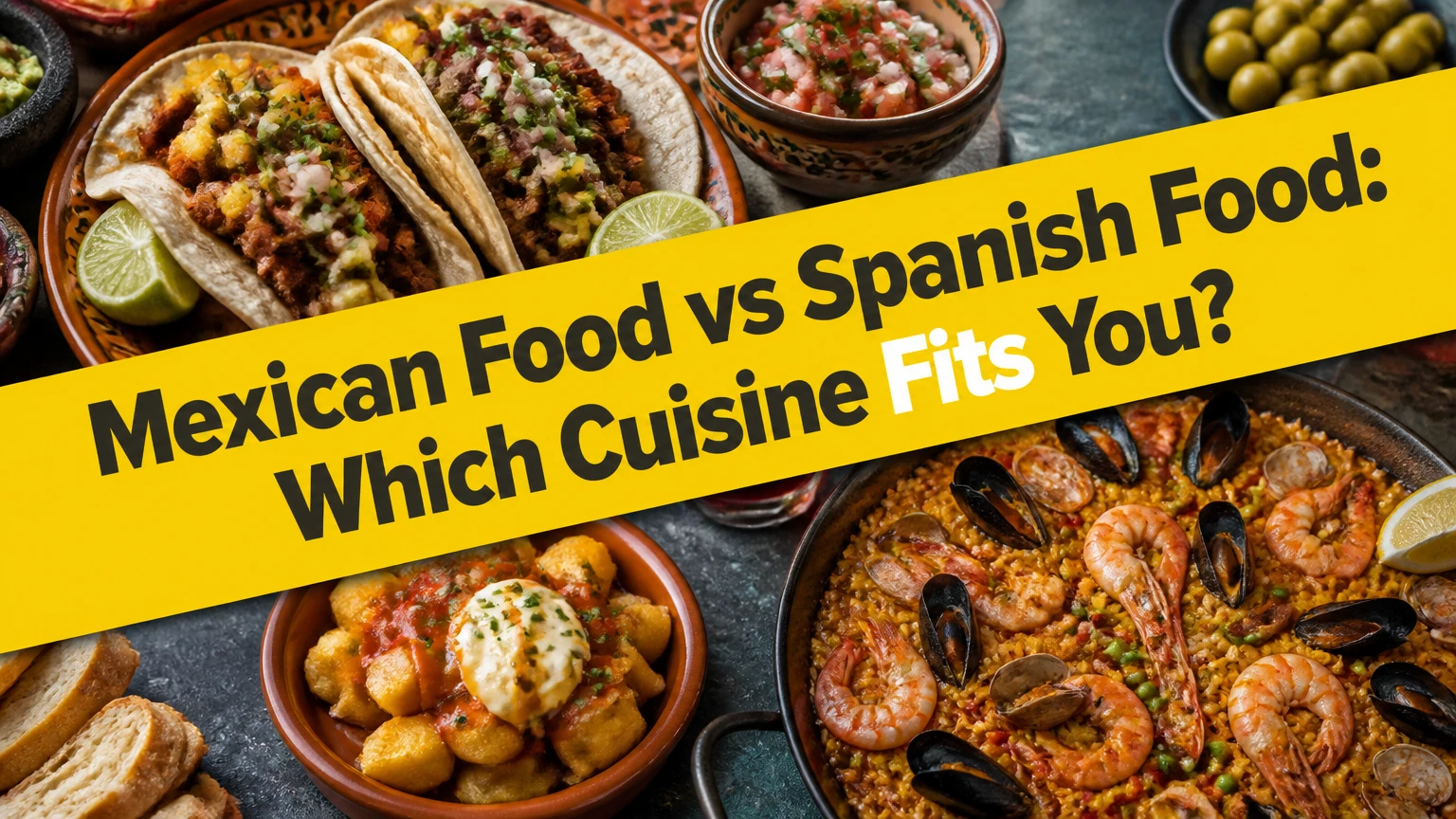
Mexican food is generally chile-driven, corn-centered, and built through layered salsas, toasted spices, and contrasting acidity. Spanish food is generally ingredient-led, olive-oil-based, and shaped by garlic, pimentón, rice, legumes, seafood, cured meats, and slow cooking. Mexican food usually delivers more heat and sauce variation, while Spanish food emphasizes the original flavor and texture of each ingredient.
Key Facts at a Glance
- Mexican cuisine uses nixtamalized corn to make masa for tortillas, tamales, tostadas, and other dishes.
- Spanish cuisine commonly builds savory dishes with olive oil, garlic, onion, tomato, and regional paprika.
- Mexican chile use adds aroma, fruitiness, smokiness, or bitterness as well as heat.
- Spanish cuisine is not uniformly mild because pimentón, black pepper, garlic, and preserved ingredients can create intensity without fresh chile heat.
- Mexican and Spanish cuisines share ingredients such as rice, beans, wheat, tomatoes, onions, and peppers, but they use those ingredients through different culinary systems.
- Typical home-cooked Mexican dishes range from 20 minutes for simple tacos to more than 12 hours for some stews, while Spanish dishes range from 30 minutes for tortilla de patatas to several hours for braises.
Mexican Food vs Spanish Food: Core Differences
Mexican food and Spanish food differ most in their structural base, flavor-building sequence, and relationship with heat. Mexican cooking often begins with corn masa, beans, chiles, herbs, and a salsa or adobo, whereas Spanish cooking often begins with olive oil, aromatics, vegetables, stock, rice, legumes, or a carefully prepared protein.
The historical relationship is important but does not erase the distinction. Spain introduced wheat, rice, livestock, onions, garlic, and some cooking practices to Mexico after the sixteenth century, while Mexico and the wider Americas supplied tomatoes, cacao, maize, vanilla, and chile peppers to global kitchens. Mexican cuisine became a distinct regional tradition rather than a Spanish variation.
UNESCO recognized traditional Mexican cuisine in 2010 as “a comprehensive cultural model” involving farming, ritual, culinary techniques, and community identity. That description helps explain why Mexican food cannot be reduced to tacos or restaurant-style sauces. Spanish food also contains multiple regional systems, from Basque pintxos and Galician seafood to Valencian rice dishes and Andalusian cold soups.
| Criterion | Mexican cuisine | Spanish cuisine | Practical result |
|---|---|---|---|
| Structural staple | Corn masa, beans, rice | Wheat bread, rice, potatoes, legumes | Mexican meals often use tortillas; Spanish meals often use bread, potatoes, or rice |
| Main flavor builders | Chiles, tomatillos, toasted spices, lime, herbs | Olive oil, garlic, onion, tomato, pimentón | Mexican dishes tend toward layered contrast; Spanish dishes tend toward ingredient clarity |
| Typical heat | Mild to very hot, depending on chile | Usually low fresh-chile heat, with paprika and pepper | Mexican menus require more heat selection |
| Signature cooking base | Salsa, adobo, recado, mole | Sofrito, stock, garlic oil, paprika base | Sauces play different structural roles |
| Common texture contrast | Crisp tortilla, creamy beans, fresh salsa | Crisp potatoes, tender rice, silky soups | Both value contrast, but through different vehicles |
| Everyday meal format | Tacos, antojitos, soups, stews | Small plates, rice dishes, omelets, stews | Mexican food is often assembled per bite; Spanish food is often served in shared plates |
| Typical home cost | $2-$6 per serving for beans, tacos, or enchiladas | $3-$8 per serving for tortilla, beans, rice, or soup | Ingredient availability determines the final price |
| Complex preparation | 4-12 hours for stock, barbacoa-style dishes, or mole | 2-5 hours for braises, stock-based rice, or legume stews | Mexican complexity often sits in sauces; Spanish complexity often sits in timing and reduction |
How Do the Flavor Systems Work?
Mexican cuisine builds flavor through sequence: toast or roast ingredients, soften or rehydrate chiles, grind them with aromatics, adjust acidity, and add the resulting salsa or adobo to the main food. Spanish cuisine more often develops flavor by gently cooking aromatics in olive oil, reducing moisture, concentrating stock, and protecting the taste of the principal ingredient.
Mexican cooks may use a single chile in several forms. A poblano can be roasted and stuffed, a dried ancho can add raisin-like depth, and a smoky chipotle can contribute heat and aroma. The heat level depends on chile variety, seed and membrane removal, quantity, and cooking method, not on the label “Mexican” alone.
Spanish pimentón is dried, ground pepper that can be sweet, bittersweet, or hot. Pimentón adds color and smoke, but it does not function exactly like a fresh serrano, jalapeño, or habanero. Adding paprika to oil for too long can create bitterness, so experienced cooks either lower the heat or add liquid quickly.
Which Cuisine Is Spicier?
Mexican cuisine is usually spicier because fresh and dried chiles are central flavor ingredients, while Spanish cuisine more often uses pimentón and black pepper without building the dish around capsaicin. The exception is regional or modern Spanish cooking that uses hot paprika, guindilla peppers, or imported chile varieties.
Heat is not the same as complexity. A mole may contain several chiles whose combined effect is earthy, fruity, smoky, and bitter, while a mild salsa verde can taste sharp and herbal without being aggressively hot. Diners who dislike heat can order carnitas-style tacos without salsa, bean tamales, quesadillas, tortilla de patatas, gazpacho, or chickpea stew.
Why Is Masa More Important in Mexico?
Masa is important because nixtamalization changes corn chemically and physically, making the grain more suitable for grinding, shaping, and cooking. In a typical process, corn is simmered in water with calcium hydroxide for about 15-45 minutes, rested for 8-16 hours, washed, and ground into dough.
The alkaline treatment loosens the hull, improves dough behavior, and increases the availability of niacin. A fresh tortilla made from properly hydrated masa has a flexible texture and a distinct corn aroma that wheat flour cannot reproduce. Packaged corn flour can produce useful tortillas, but the final result depends on hydration, resting time, pressing thickness, and griddle temperature.
Spanish cuisine uses corn, especially in some regional contexts, but corn masa does not organize everyday Spanish food in the way it organizes Mexican food. Bread, potatoes, rice, wheat flour, and legumes fill that structural role more often.
Which Ingredients Define Each Cuisine?
Mexican and Spanish cuisines overlap in tomatoes, onions, garlic, rice, beans, peppers, and herbs, but the ingredient combinations and preparation methods create different results. Mexican cooking gives greater structural importance to corn, beans, chiles, tomatillos, squash, cacao, and epazote, while Spanish cooking gives greater emphasis to olive oil, wheat bread, potatoes, paprika, saffron, legumes, seafood, and cured meats.
The table below describes common patterns rather than rigid rules. Northern Mexico uses more wheat flour and grilled beef than southern Mexico, while coastal Spain uses more seafood than inland Castile.
| Ingredient or category | Common Mexican use | Common Spanish use | Distinguishing detail |
|---|---|---|---|
| Corn | Tortillas, tamales, pozole, tostadas | Side dishes, flour, some regional preparations | Mexican masa is nixtamalized and shaped |
| Wheat | Northern flour tortillas, pan dulce | Bread, pastries, pasta-like doughs | Wheat is more structurally dominant in Spain |
| Beans | Refried, stewed, mashed, soup base | Fabada-style stews, chickpea dishes, lentil soups | Mexican beans often accompany masa; Spanish beans often become a stew |
| Tomato | Salsa roja, adobo, soups, braises | Sofrito, gazpacho, pan con tomate | Spanish tomato often cooks into an aromatic base or cold soup |
| Chile or pepper | Fresh, dried, smoked, roasted, pickled | Pimentón, piquillo, guindilla, sweet peppers | Mexican chile diversity is broader in everyday cooking |
| Fat | Lard, neutral oil, avocado oil, vegetable oil | Extra-virgin olive oil, olive oil, rendered fats | Fat choice changes aroma and mouthfeel |
| Herb | Cilantro, epazote, hoja santa, oregano | Parsley, rosemary, thyme, bay leaf | Fresh herbs are often added at different stages |
| Acid | Lime, tomatillo, vinegar, sour orange | Sherry vinegar alternatives, lemon, tomato acidity | Mexican dishes often finish with a bright acidic adjustment |
| Preserved food | Pickled onions, dried chiles, salted ingredients | Cured ham, salted fish, olives, conserves | Preservation responds to climate, geography, and local supply |
How Do Regional Traditions Change the Comparison?
Regional Mexican and Spanish cuisines are internally diverse, so national comparisons work best at the level of broad patterns. A flour tortilla from Sonora and a Yucatecan corn tortilla belong to the same national cuisine but support different meals, just as a Valencian rice dish and a Galician seafood stew represent different Spanish food cultures.
| Region | Representative dishes | Dominant ingredients | Typical technique |
|---|---|---|---|
| Northern Mexico | Carne asada, flour tortillas, machaca-style preparations | Wheat, beef, aged cheese, beans | Grilling, drying, skillet cooking |
| Central Mexico | Tacos al pastor, pozole, carnitas, tamales | Corn, chiles, herbs, slow-cooked meats | Griddling, steaming, braising |
| Oaxaca and Chiapas | Mole, tlayudas, tamales in leaves | Cacao, dried chiles, masa, beans | Grinding, roasting, steaming |
| Yucatán and southeast Mexico | Cochinita-style dishes, panuchos, recados | Achiote, sour orange, habanero, banana leaves | Marinating, pit-style cooking, steaming |
| Mexican coasts | Ceviche, aguachile, fried fish | Lime, seafood, chile, herbs | Curing, frying, grilling |
| Northern Spain | Pintxos, bean stews, seafood soups | Fish, shellfish, beans, dairy, peppers | Braising, preserving, small-plate assembly |
| Valencia and Catalonia | Paella, fideuà, suquet, tomato bread | Rice, noodles, seafood, vegetables, saffron | Wide-pan cooking, simmering, reduction |
| Castile and inland Spain | Roasts, lentil stews, garlic soups | Lamb, legumes, bread, root vegetables | Roasting, slow simmering |
| Andalusia | Gazpacho, salmorejo, fried fish, chickpea dishes | Tomato, olive oil, garlic, sherry vinegar alternatives | Blending, frying, slow cooking |
A common mistake is treating Tex-Mex food as a direct representative of all Mexican cuisine. Cheddar-heavy nachos, oversized flour burritos, and hard-shell tacos reflect a distinct borderland and restaurant tradition, while regional Mexican food may use blue corn, hoja santa, fresh masa, huitlacoche, or highly specific chile varieties.
What Cooking Techniques Separate the Cuisines?
Mexican cooking often depends on roasting, toasting, grinding, nixtamalizing, and balancing a finished dish with salsa. Spanish cooking often depends on low-temperature sofrito, olive-oil frying, stock reduction, roasting, curing, and controlled rice cooking.
| Technique | Mexican application | Spanish application | Typical duration or condition |
|---|---|---|---|
| Nixtamalization | Corn for tortillas and tamales | Limited everyday role | 8-16 hours including rest |
| Chile toasting | Dried ancho, guajillo, pasilla | Less common as a national foundation | 10-30 seconds per side |
| Salsa grinding | Molcajete or blender sauces | Less central to daily meal structure | 5-15 minutes after roasting |
| Sofrito | Some Mexican stews use cooked aromatics | Rice dishes, sauces, legumes | 25-45 minutes on low heat |
| Wide-pan rice cooking | Regional rice dishes | Paella and related preparations | 18-25 minutes after simmer begins |
| Dry griddle cooking | Tortillas, quesadillas, tostadas | Flatbreads and some regional breads | 30-90 seconds per tortilla |
| Slow braising | Barbacoa-style dishes, adobos, birria-style stews | Legume stews, meat braises, vegetable dishes | 2-8 hours |
| Deep frying | Churros, tostadas, some antojitos | Potatoes, croquettes, fish | 160-190°C oil temperature |
Spanish sofrito and Mexican salsa are not interchangeable. Sofrito is usually a cooked aromatic foundation incorporated early, whereas salsa may be cooked or raw and is often added during assembly or at the table. Replacing salsa with sofrito can remove the acidity, freshness, and chile aroma that give a Mexican dish its final balance.
What Does an Authentic Preparation Require?
Authenticity requires the correct culinary logic more than an exotic ingredient list. A Mexican dish can use locally available beans and still be coherent if the cook preserves the role of masa, chile, acid, and regional seasoning; a Spanish dish can work outside Spain if olive oil, timing, texture, and ingredient hierarchy remain intact.
A practical rule is to identify the dish’s non-negotiable structure. For tortillas, that structure is hydrated masa and sufficient heat. For paella, it is a broad cooking surface, measured liquid, unagitated rice, and a controlled finish. For mole, it is layered toasted ingredients and careful dilution rather than a single bottled sauce.
Which Cuisine Is Healthier?
Neither cuisine is automatically healthier because nutrition depends on portion size, cooking fat, sodium, added sugar, protein choice, and the proportion of vegetables and legumes. Spanish food may make unsaturated olive oil more prominent, while Mexican food can provide substantial fiber through beans, corn, squash, nopales, and vegetables.
A typical home portion illustrates the difference more accurately than national labels. One cup of cooked black beans supplies roughly 15 grams of fiber, according to USDA FoodData Central entries, while fried fillings, salty cheese, processed sauces, or large portions can increase energy and sodium quickly. Spanish bean stews, fried potatoes, cured meats, and oil-rich sauces have the same portion-related limitations.
| Meal pattern | Typical serving size | Main nutritional strength | Main watchpoint |
|---|---|---|---|
| Bean tacos with salsa | 3 small tacos, 150-220 g filling | Fiber, plant protein, whole-corn structure | Sodium in cheese and prepared beans |
| Chicken pozole | 350-500 ml bowl | Broth, corn, protein, cabbage garnish | Sodium in stock and toppings |
| Vegetable enchiladas | 2 enchiladas, 300-400 g | Vegetables, masa, moderate protein | Cheese and sauce quantity |
| Tortilla de patatas | 150-220 g slice | Eggs, potatoes, satiety | Oil absorption and portion size |
| Chickpea and spinach stew | 300-400 g bowl | Fiber, legumes, leafy greens | Salt and oil concentration |
| Gazpacho | 250-350 ml bowl | Hydration and raw vegetables | Bread and oil can change calories |
For gluten-free diners, corn tortillas, tamales, rice, beans, and many Mexican stews are suitable when the kitchen avoids wheat cross-contact. Spanish rice, potatoes, legumes, seafood, and egg dishes can also be gluten-free, but breaded foods, croquettes, sauces, and shared fryers require verification.
Which Cuisine Is Easier and Cheaper to Cook?
Mexican food is usually cheaper for a filling meal when beans, masa, rice, and seasonal vegetables form the foundation. Spanish food can be equally economical with potatoes, lentils, chickpeas, eggs, cabbage, and canned fish, but premium olive oil, saffron, seafood, and specialty cured products raise the budget.
The following are typical North American home-cooking estimates for two to four servings, excluding labor and pantry staples. Local prices vary substantially.
| Dish | Active time | Total time | Typical ingredient cost | Skill pressure point |
|---|---|---|---|---|
| Bean and vegetable tacos | 20 minutes | 30 minutes | $6-$12 | Tortilla heating and seasoning |
| Chicken enchiladas | 45 minutes | 75 minutes | $14-$24 | Sauce thickness and tortilla rolling |
| Mole with prepared stock | 90 minutes | 3-5 hours | $25-$45 | Bitter, burnt, or unbalanced sauce |
| Tortilla de patatas | 25 minutes | 40 minutes | $7-$14 | Turning and oil control |
| Chickpea and spinach stew | 20 minutes | 50-70 minutes | $8-$16 | Preventing a watery or salty broth |
| Vegetable paella-style rice | 35 minutes | 60 minutes | $12-$22 | Liquid ratio and rice distribution |
| Gazpacho | 15 minutes | 30 minutes chilled | $6-$12 | Acidity and texture balance |
For beginners, bean tacos and tortilla de patatas offer the best learning curve. For a project meal, mole and paella-style rice teach more advanced skills but punish poor heat control, inaccurate liquid measurement, and rushed preparation.
Which Cuisine Should You Choose?
Mexican food is the stronger choice for diners who want adjustable heat, corn-based meals, fresh salsa, grilled fillings, or a low-cost group meal. Spanish food is the stronger choice for diners who prefer mild seasoning, olive-oil aroma, potatoes, rice, legumes, seafood, eggs, and small shared plates.
Choose Mexican Food If You Want Adjustable Heat
Order tacos, quesadillas, tamales, or bean dishes with salsa served separately. This lets each person control capsaicin while keeping the underlying dish flavorful. Fresh lime, onion, cilantro, avocado, and pickled vegetables add contrast without requiring more heat.
Mexican food is also practical for mixed groups because tortillas, beans, rice, and grilled vegetables support vegetarian, gluten-free, and meat-based variations from the same table setup.
Choose Spanish Food If You Prefer Mild, Ingredient-Led Dishes
Start with tortilla de patatas, gazpacho, pan con tomate, chickpea stew, grilled vegetables, or a simple rice dish. These foods rely on cooking precision, olive oil, garlic, stock, and produce quality rather than a strong chile burn.
Spanish food is not ideal when the goal is a fast, highly customized handheld meal. Many dishes are designed for shared serving, and some restaurant portions require more waiting because the kitchen cooks rice, potatoes, or braises to order.
Choose Mexican Food for a Budget Group Meal
A practical menu for four people can combine 16-20 small corn tortillas, 500-700 grams of beans or shredded chicken, cabbage, onions, salsa, and rice for roughly $18-$35 in typical grocery conditions. The exact cost depends on protein and regional ingredient prices.
Choose Spanish Food for a Gentle Beginner Menu
A two-person meal of tortilla de patatas, tomato bread, and chickpea salad typically takes 45-70 minutes and costs $10-$20 with ordinary supermarket ingredients. The menu teaches oil temperature, egg setting, knife work, and acidity without requiring specialty chiles or long simmering.
What Mistakes Most Often Ruin These Dishes?
The most damaging Mexican cooking error is treating chile heat as the whole flavor system; the most damaging Spanish cooking error is treating olive oil and paprika as substitutes for temperature control. Both cuisines need correct sequencing, because a technically sound ingredient list cannot repair burned spices, dry masa, or overcooked rice.
- Mexican tortillas crack during assembly. Add warm water to dry masa one tablespoon at a time, knead for two minutes, and rest the dough for 15-20 minutes. Proper masa should feel soft and pliable, not wet or crumbly.
- Dried chiles taste harsh. Remove stems and excess seeds, toast each chile for 10-20 seconds per side, then soak in hot water for 15-25 minutes. Burnt chiles cannot be repaired by adding sugar.
- Salsa tastes flat. Add acid gradually, usually lime juice or vinegar, then adjust salt after the salsa reaches the desired brightness. Water dilutes flavor without correcting imbalance.
- Paella-style rice becomes creamy. Stop stirring after the rice is evenly distributed and maintain a controlled simmer. Stirring releases starch and changes the intended texture.
- Pimentón tastes bitter. Add it over moderate heat with stock, tomato, or another liquid nearby. Paprika exposed to very hot oil can scorch within seconds.
- Spanish potatoes absorb excessive oil. Maintain oil near 170-180°C, avoid overcrowding, and drain immediately on a rack or absorbent paper. A crowded pan lowers temperature and produces greasy surfaces.
An expert rule of thumb is to season Mexican sauces in layers, before and after blending. A second is to taste Spanish sofrito by aroma and texture: translucent onion is not enough if the mixture still tastes raw or watery. A third is to judge rice by liquid absorption and grain structure, not by stirring it repeatedly to inspect the pan.
Can the Cuisines Be Combined?
Mexican and Spanish ingredients can be combined, but a successful fusion needs a clear dominant structure. Corn tortillas with Spanish-style potato and egg filling can work because the tortilla remains the serving vehicle; adding random paprika, olives, cream, and hot sauce to a dish without deciding its base usually produces competing flavors.
Useful combinations include roasted pepper with tomatillo, chickpeas with Mexican dried chile, rice with saffron-style aromatics and fresh lime, or potato omelet served with a restrained salsa verde. The cook should preserve one cuisine’s texture logic and use the other cuisine’s ingredients as accents.
The historical connection also explains some shared foods without making them identical. Rice, wheat, onions, garlic, livestock, and cooking fats traveled through colonial exchange, while maize, tomatoes, cacao, vanilla, and chiles transformed food traditions in Europe and beyond.
FAQ
Is Mexican Food or Spanish Food More Similar to Italian Food?
Spanish food is generally more similar to Italian food in its Mediterranean use of olive oil, tomatoes, garlic, wheat, legumes, and regional vegetables. Mexican food shares tomatoes, beans, peppers, and rice with Italian cooking, but its nixtamalized corn, chile systems, salsas, and indigenous ingredients create a different culinary structure.
Are Spanish and Mexican Rice Dishes the Same?
Spanish and Mexican rice dishes are not the same, although both may use tomato, onion, garlic, stock, and long-grain rice. Spanish paella traditionally depends on a broad pan and controlled liquid absorption, while Mexican red rice is commonly cooked with a blended tomato base and served as a side dish.
Which Cuisine Has More Vegetarian Options?
Both cuisines offer substantial vegetarian options. Mexican food provides beans, masa, squash, mushrooms, nopales, chile-based sauces, and vegetable tamales, while Spanish food provides tortilla de patatas, chickpea stews, lentils, gazpacho, vegetable rice, and roasted peppers. Restaurant preparation determines whether stock, cheese, or shared cooking equipment creates restrictions.
Is Mexican Food Always Hot?
Mexican food is not always hot. Many dishes are mild until salsa or fresh chile is added, and diners can choose bean tamales, quesadillas, pozole, or meat tacos without hot sauce. Chiles also provide fruit, smoke, earthiness, and color, so removing every chile can remove more than heat.
Why Does Spanish Food Use More Olive Oil?
Spanish food uses olive oil because olive cultivation is deeply established across Mediterranean regions, and olive oil functions as a cooking medium, finishing ingredient, preservation tool, and flavor carrier. Mexican cooking uses several fats, including vegetable oils and rendered fats, because regional agriculture and indigenous cooking traditions developed differently.
Which Cuisine Is Better for a First-Time Cook?
Mexican food is better for a first-time cook who wants flexible assembly and adjustable seasoning, especially with bean tacos or quesadillas. Spanish food is better for a beginner who prefers a short ingredient list and mild flavors, with tortilla de patatas or chickpea stew offering clear cooking checkpoints.
The Bottom Line
Mexican food vs Spanish food is not a contest between one superior cuisine and another. Mexican food is the better fit for chile complexity, corn masa, salsa customization, and affordable shared meals; Spanish food is the better fit for olive oil, garlic, rice, potatoes, legumes, and ingredient-led cooking. Choose according to heat tolerance, budget, dietary needs, cooking time, and the texture you want on the plate.