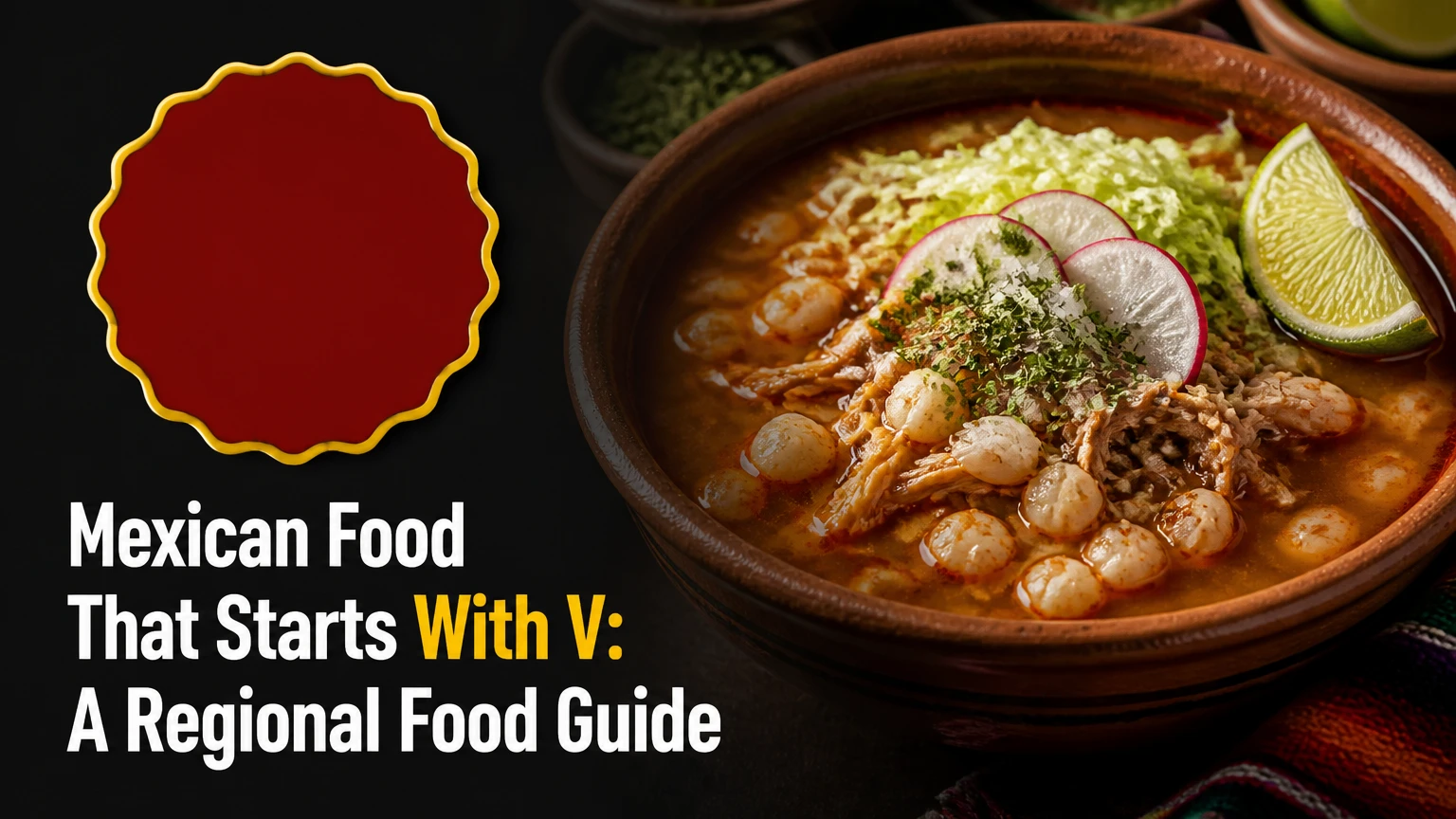
The best-known Mexican food that starts with V is Vuelve a la Vida, a chilled mixed-seafood cocktail made with ingredients such as shrimp, octopus, oysters, tomato, onion, chile, lime, and a seasoned tomato-based broth. Other important V entries include pescado a la Veracruzana, verdolagas, and Vainilla de Papantla, although the latter two are ingredients rather than standalone dishes.
Key Facts at a Glance
- Vuelve a la Vida means “come back to life” or “return to life” in Spanish.
- Vuelve a la Vida is a cold seafood preparation associated with Mexican coastal regions, including Veracruz, Campeche, and Acapulco.
- The dish commonly combines cooked shrimp with octopus, crab, squid, oysters, or fresh fish.
- Citrus adds acidity and flavor, but lime juice does not reliably eliminate seafood pathogens.
- A home preparation using cooked seafood takes about 25-35 minutes, including 20 minutes of chilling.
- Veracruzana, verdolagas, and Vainilla de Papantla are valid V-related Mexican culinary terms, but they describe different food categories.
What Mexican Food Starts With V?
Vuelve a la Vida is the strongest single answer to “mexican food that starts with v.” The name refers to a chilled seafood cocktail rather than one fixed national recipe, so the seafood, broth, acidity, chile level, and garnishes change between coastal cities and individual marisquerías.
The dish is usually served in a glass, bowl, or large seafood cup with crackers, tostadas, avocado, lime wedges, and bottled hot sauce. Some versions resemble a thick tomato cocktail, while others are closer to a soupy ceviche containing raw or citrus-cured fish.
The name is often associated with a reviving meal after a late night. That cultural association does not prove that the dish medically reverses fatigue or dehydration. Its practical strengths are more specific: cold liquid, sodium, carbohydrates from the sauce or crackers, protein, and strong acidity can make a substantial meal appealing when appetite is low.
Is Vuelve a la Vida one exact recipe?
No. Vuelve a la Vida is a dish category with a recognizable format, not a nationally standardized formula. One restaurant may emphasize shrimp and octopus, while another uses oysters, crab, squid, or locally available fish.
Recipes also differ in the liquid base. Ketchup, tomato juice, Clamato-style broth, lime juice, orange juice, Worcestershire-style seasoning, Maggi seasoning, and chile sauce may appear in different proportions. Calling one version the only authentic recipe oversimplifies Mexico’s regional seafood traditions.
How Does Vuelve a la Vida Work as a Dish?
Vuelve a la Vida works through contrast: briny seafood, acidic citrus, sweet tomato, fresh aromatics, chile heat, and a cold, spoonable broth. The sauce carries flavor between several seafood textures, while chilling keeps the preparation firm and refreshing.
A typical bowl contains 300-450 grams of total seafood for two generous servings. The seafood may include 200 grams of cooked shrimp, 100 grams of cooked octopus, and smaller portions of crab, squid, oysters, or fish. A practical liquid volume is 350-500 milliliters, depending on whether the result should be a cocktail or a soupier preparation.
The acidity is culinary, not sterilizing. The U.S. Food and Drug Administration advises that consumers who want to reduce the risk from raw seafood should choose thoroughly cooked seafood, because citrus curing does not reliably destroy all harmful organisms. That point matters especially for pregnant people, older adults, young children, and people with weakened immune systems.
What does the sauce contain?
| Sauce component | Typical amount for 2 servings | Function | Practical substitute |
|---|---|---|---|
| Tomato juice or Clamato-style broth | 250 ml | Salty, savory liquid base | Low-sodium tomato juice |
| Ketchup | 60-90 ml | Sweetness, body, tomato flavor | 30 ml tomato paste plus 30 ml juice |
| Lime juice | 45-60 ml | Acidity and freshness | Lemon juice, 30-45 ml |
| Orange juice | 30-60 ml | Rounded citrus sweetness | Extra tomato juice |
| Worcestershire-style sauce | 5-10 ml | Savory depth | 5 ml soy sauce |
| Maggi seasoning | 2-5 ml | Concentrated salt and umami | Additional soy sauce |
What seafood belongs in the mixture?
| Seafood | Cooked portion | Texture | Preparation |
|---|---|---|---|
| Shrimp | 200 g | Firm and springy | Poach 2-3 minutes, then chill |
| Octopus | 100-150 g | Dense and tender | Simmer 35-60 minutes, then slice |
| Squid | 100 g | Tender when briefly cooked | Blanch 45-60 seconds |
| Crabmeat | 100 g | Soft and flaky | Use pasteurized or freshly cooked meat |
| Oysters | 6-8 pieces | Soft and briny | Use only from a reputable supplier |
| White fish | 150 g | Firm and delicate | Cook, or use a controlled raw preparation |
Equal portions are not mandatory. Shrimp usually provides the structural base because it is widely available and easy to cook, while octopus and oysters add stronger maritime flavors.
How Do You Make Vuelve a la Vida Safely?
A reliable home method takes 25-35 minutes with cooked seafood, plus 20 minutes of chilling. Cook each seafood type according to its texture, cool it rapidly, mix the sauce separately, and keep the finished cocktail at 4°C or colder until serving.
Before You Start
| Requirement | Typical specification |
|---|---|
| Yield | 2 large servings or 4 small cups |
| Active time | 15 minutes with prepared seafood |
| Chilling time | 20 minutes |
| Total time | 25-35 minutes |
| Seafood quantity | 400-500 g total |
| Sauce quantity | 350-500 ml |
| Equipment | Saucepan, knife, cutting board, mixing bowl |
| Serving temperature | 0-4°C |
Step 1: Cook and chill the seafood
Poach shrimp until opaque and curled, usually 2-3 minutes depending on size. Simmer octopus until a knife enters the thickest section with limited resistance, which commonly takes 35-60 minutes for a small cleaned tentacle or portion.
Cool cooked seafood quickly in a shallow container or over ice, then refrigerate it. You will know this step worked when the seafood is cold throughout and has no warm center. The common mistake is mixing warm seafood into the sauce, which thins the broth and increases the time spent in an unsafe temperature range.
Step 2: Build the tomato-citrus broth
Whisk together 250 ml tomato juice, 60 ml ketchup, 45 ml lime juice, 30 ml orange juice, 5 ml Worcestershire-style sauce, and 2 ml Maggi seasoning. Taste before adding salt because the bottled seasonings can supply most of the sodium.
The mixture should taste brighter than the final dish because seafood and ice-cold ingredients mute acidity. If the broth tastes overly sweet, add lime in 5 ml increments. If it tastes too sharp, add tomato juice rather than more ketchup.
Step 3: Add the fresh aromatics
Fold in 120 grams of diced tomato, 60 grams of finely chopped red onion, one minced serrano chile, 30 grams of chopped cilantro, and 100 grams of diced cucumber if using a Pacific-style variation.
Keep the dice small, approximately 5 millimeters, so every spoonful receives aromatic ingredients. Large onion pieces overwhelm oysters and make the cocktail difficult to eat from a narrow glass.
Step 4: Combine and chill
Cut the chilled seafood into bite-sized pieces and fold it gently into the broth. Refrigerate the mixture for 20 minutes, covered, so the aromatics distribute without turning the seafood soft.
A 20-minute rest is enough for flavor integration. A two-hour rest can make onion sharper, cucumber watery, and delicate seafood mushier, particularly when raw fish or oysters are present.
Step 5: Serve with controlled garnishes
Spoon the mixture into chilled glasses or bowls and add avocado, lime, cilantro, crackers, or toasted corn tortillas. Serve immediately and return leftovers to refrigeration within two hours, or within one hour when the surrounding temperature exceeds 32°C.
Do not store a mixed cocktail for several days. For best texture, consume it the same day, and discard any portion that has remained warm or developed an unpleasant odor.
Which Regional Styles Should You Know?
Veracruz, Campeche, and Pacific coastal versions differ mainly in seafood selection, sweetness, acidity, and liquid consistency. The names describe broad regional tendencies rather than legally fixed recipes, and restaurants frequently combine techniques from multiple coastal traditions.
| Regional association | Common seafood | Liquid profile | Typical garnish |
|---|---|---|---|
| Veracruz | Shrimp, crab, oysters | Tomato-rich with citrus | Avocado, cilantro, crackers |
| Campeche | Shrimp, crab, squid | Salty, savory, sometimes lightly sweet | Lime, onion, chile |
| Acapulco | Shrimp, octopus, fish | Bright tomato-citrus broth | Cucumber, avocado, tostadas |
| Nayarit and Pacific coast | Shrimp, fish, octopus | Brighter, hotter, less sweet | Cucumber, red onion, chile |
| Restaurant fusion style | Mixed shellfish | Clamato-style, ketchup-based | Hot sauce, avocado, citrus |
What is the Gulf Coast style?
Gulf Coast preparations commonly emphasize shrimp, crab, oysters, tomato, citrus, onion, and a savory broth. Veracruz and Campeche have access to different local seafood supplies, so the exact combination changes with season, port, and restaurant.
Some recipes include a sweet beverage or fruit note, but that practice is not universal. A cook seeking a balanced Gulf-style profile should begin with tomato, lime, orange, chile, and seafood stock, then adjust sweetness carefully.
What is the Pacific style?
Pacific versions often taste brighter and hotter, with more lime, cucumber, fresh chile, and locally available fish or shrimp. The broth may contain less ketchup, allowing the seafood and citrus to dominate.
Raw fish sometimes appears in Pacific preparations, but the phrase “cooked by lime” describes a texture and flavor change, not heat-based cooking. Safe sourcing and cold storage remain necessary.
Vuelve a la Vida Versus Ceviche and Campechana
Vuelve a la Vida is usually wetter and more varied than ceviche, while campechana overlaps with both and may be used as a menu synonym. The clearest distinction comes from the liquid ratio, seafood mix, and preparation method rather than from one universal ingredient.
| Feature | Vuelve a la Vida | Mexican ceviche | Campechana | Seafood cocktail |
|---|---|---|---|---|
| Main liquid | 350-500 ml broth per 400 g seafood | 60-150 ml citrus per 400 g seafood | Tomato-citrus broth | Tomato or clam broth |
| Seafood mix | 2-5 types | Often 1-2 types | Usually mixed seafood | Usually shrimp-led |
| Texture | Soupy and layered | Firm, acidic, relatively dry | Brothy and chunky | Smooth or chunky |
| Typical preparation | Cooked plus optional raw elements | Raw or cooked, citrus-marinated | Cooked seafood common | Mostly cooked |
| Chilling period | 20-30 minutes | 15-45 minutes | 10-20 minutes | 10-20 minutes |
| Typical serving | Bowl or tall glass | Tostada or bowl | Cocktail glass | Glass or cup |
When should you choose ceviche instead?
Choose ceviche when you want a sharper, lighter preparation with less sauce and fewer seafood types. Ceviche can be easier to portion, but the raw seafood component demands careful sourcing and immediate cold storage.
Choose Vuelve a la Vida when you want a substantial bowl with several textures, a spoonable broth, and flexible use of cooked seafood. The trade-off is higher sodium and more preparation complexity.
Is campechana the same dish?
Campechana is closely related but not always identical. In many Mexican seafood restaurants, campechana means a mixed seafood cocktail with tomato broth, while Vuelve a la Vida may indicate a larger or more elaborate combination that includes oysters, octopus, crab, or fish.
Menu terminology varies by region and restaurant. Ask which seafood is included, whether it is fully cooked, and how much broth comes with the serving.
What Other Mexican Foods Start With V?
The most useful additional V terms are Veracruzana, verdolagas, and Vainilla de Papantla. They should not be presented as interchangeable dishes because Veracruzana describes a preparation style, verdolagas name a leafy ingredient, and Vainilla de Papantla identifies a protected-origin vanilla product.
| V term | Food category | Main ingredients or identity | Typical use |
|---|---|---|---|
| Vuelve a la Vida | Seafood cocktail | Shrimp, seafood, tomato, citrus | Chilled coastal meal |
| Veracruzana | Fish preparation | Tomato, olives, capers, chile | Sauce for fish |
| Verdolagas | Leafy green | Purslane with tart flavor | Stews and green sauces |
| Vainilla de Papantla | Regional ingredient | Mexican vanilla from Veracruz | Desserts and beverages |
| Vegetales en escabeche | Pickled vegetable preparation | Carrot, onion, chile, vinegar | Taco and plate garnish |
What is pescado a la Veracruzana?
Pescado a la Veracruzana is fish served with a tomato-based sauce containing ingredients such as green olives, capers, onion, garlic, herbs, and pickled chiles. The combination reflects Spanish ingredients adapted through Mexican coastal cooking.
The sauce is cooked, warm, and spooned over fish. It is therefore a different preparation from the cold seafood cocktail, even though both may contain tomato and coastal ingredients.
What are verdolagas?
Verdolagas are purslane greens with a pleasantly tart, lemony flavor and succulent leaves. Mexican cooks simmer them in sauces and stews, often with tomatillo, chile, onion, and a savory protein.
Fresh verdolagas should have firm stems and unwilted leaves. Wash them thoroughly because the plants grow close to soil, then remove overly thick stems before cooking.
What is Vainilla de Papantla?
Vainilla de Papantla is a Mexican vanilla product associated with Papantla and Veracruz. Its name identifies a regional culinary ingredient used in sweets, creams, baked goods, and flavored sauces.
Vanilla is not a prepared meal, but it is a legitimate answer when a word game or food list accepts ingredients. A precise list should label it as an ingredient rather than calling it a dish.
How Much Does Vuelve a la Vida Cost?
A typical restaurant serving costs about 180-350 Mexican pesos in Mexico and $18-$32 in the United States, with coastal location, seafood quantity, and premium shellfish creating the largest price differences. Home preparation commonly costs $12-$28 for two servings when using shrimp, squid, and canned or pasteurized crab.
| Setting | Typical price | Serving size | Main price variable |
|---|---|---|---|
| Mexican coastal market | 180-280 MXN | 400-600 g | Daily catch and port |
| Mexico City seafood restaurant | 220-350 MXN | 350-500 g | Transport and restaurant tier |
| U.S. casual marisquería | $18-$26 | 350-500 g | Crab, oyster, and octopus content |
| U.S. premium seafood restaurant | $27-$45 | 400-600 g | Lobster, fresh oysters, imported seafood |
| Home preparation | $12-$28 | 2 servings | Seafood source and shellfish selection |
These are typical planning ranges, not fixed national prices. A serving with several oysters or premium crab can exceed the table, while a shrimp-only version generally costs less.
What Are the Best Substitutions and Dietary Options?
Cooked shrimp, squid, and firm white fish provide the most practical substitutions when oysters, octopus, or crab are unavailable. Substitutions should preserve contrasting textures and should not introduce raw seafood to a recipe intended for a safer, fully cooked meal.
| Need | Replace | Use instead | Result |
|---|---|---|---|
| No oysters | Raw oysters | Extra shrimp plus 30 ml clam broth | Milder briny flavor |
| No octopus | Cooked octopus | Squid or firm white fish | Softer, lighter texture |
| Lower sugar | Ketchup | Tomato paste and unsweetened juice | Less sweetness |
| Lower sodium | Clamato and Maggi | Tomato juice, lime, herbs | Cleaner flavor |
| Shellfish avoidance | Shrimp, crab, oysters | Cooked white fish or mushrooms | Different but still substantial |
| Vegetarian version | Seafood | Hearts of palm, cucumber, avocado | Cold, acidic vegetable cocktail |
For a low-sugar version, use 30 ml tomato paste, 250 ml unsweetened tomato juice, and extra lime. For a shellfish-free version, cook white fish to an internal temperature of 63°C, cool it promptly, and avoid cross-contamination from cutting boards or utensils.
Vuelve a la Vida is not ideal for people who need a very low-sodium meal unless the broth and seasoning sauces are substantially modified. It is also a poor choice for extended buffet service because cold seafood quality declines quickly outside reliable refrigeration.
What Common Mistakes Ruin the Dish?
The most common failures are excessive sweetness, warm seafood, over-marination, and unsafe handling of raw shellfish. Each problem has a practical correction that preserves the dish’s intended balance without requiring a new recipe.
- Too much ketchup: Begin with 60 ml for two servings, then add more only after tasting. Excess ketchup hides shellfish flavor.
- Warm cooked seafood: Chill seafood before mixing. Warm ingredients dilute the broth and create a food-safety risk.
- Overly sour broth: Add tomato juice in 15 ml increments instead of adding sugar immediately.
- Mushy fish: Do not leave raw fish in citrus for hours. Use a short marination and serve promptly.
- Oversalted sauce: Delay Maggi, Worcestershire-style sauce, and table salt until after the seafood is incorporated.
- Large vegetable cuts: Dice tomato, onion, and cucumber to about 5 millimeters for balanced spoonfuls.
A practitioner rule is to season the broth before adding seafood, then retaste after chilling. Cold temperatures suppress perceived salt and acidity, so a sauce that tastes perfect at room temperature may taste flat when served cold.
Frequently Asked Questions
Is Vuelve a la Vida eaten hot or cold?
Vuelve a la Vida is served cold or thoroughly chilled. The seafood may be cooked warm initially, but it should cool before entering the tomato-citrus broth. A warm seafood cocktail has a different texture and is not the standard serving style.
Does lime juice cook seafood?
Lime juice changes seafood proteins and makes raw fish appear opaque, but it does not cook seafood through heat or reliably eliminate all pathogens. Use fully cooked seafood when serving high-risk diners or when seafood freshness and refrigeration cannot be verified.
Where can you find Vuelve a la Vida?
Vuelve a la Vida is most associated with Mexican coastal seafood restaurants, including marisquerías in Veracruz, Campeche, Acapulco, and other Pacific communities. Restaurants in inland cities may serve it with transported seafood and regional sauce adaptations.
Can Vuelve a la Vida be made without tomato?
Yes. A lighter version can use lime juice, orange juice, cucumber, onion, cilantro, chile, and a small amount of seafood broth. The result moves toward a bright seafood salad or ceviche-style preparation rather than the classic tomato-based cocktail.
What should you serve with Vuelve a la Vida?
Serve Vuelve a la Vida with saltine crackers, toasted corn tortillas, tostadas, avocado, lime wedges, cucumber, and bottled chile sauce. Crackers add starch and salt, while avocado contributes richness that balances the acidic broth.
What is the simplest V food to prepare at home?
Vainilla de Papantla requires the least cooking because it is an ingredient rather than a prepared dish. Among savory dishes, pescado a la Veracruzana is simpler than Vuelve a la Vida when using one cooked fish fillet and a single tomato, olive, and caper sauce.
The Bottom Line
Vuelve a la Vida is the clearest answer to Mexican food that starts with V, but a complete food vocabulary list should also include Veracruzana, verdolagas, and Vainilla de Papantla. Choose Vuelve a la Vida for a chilled, brothy seafood meal; choose Veracruzana for warm fish in tomato sauce; and treat verdolagas and Vainilla de Papantla as distinctive Mexican ingredients rather than equivalent dishes.