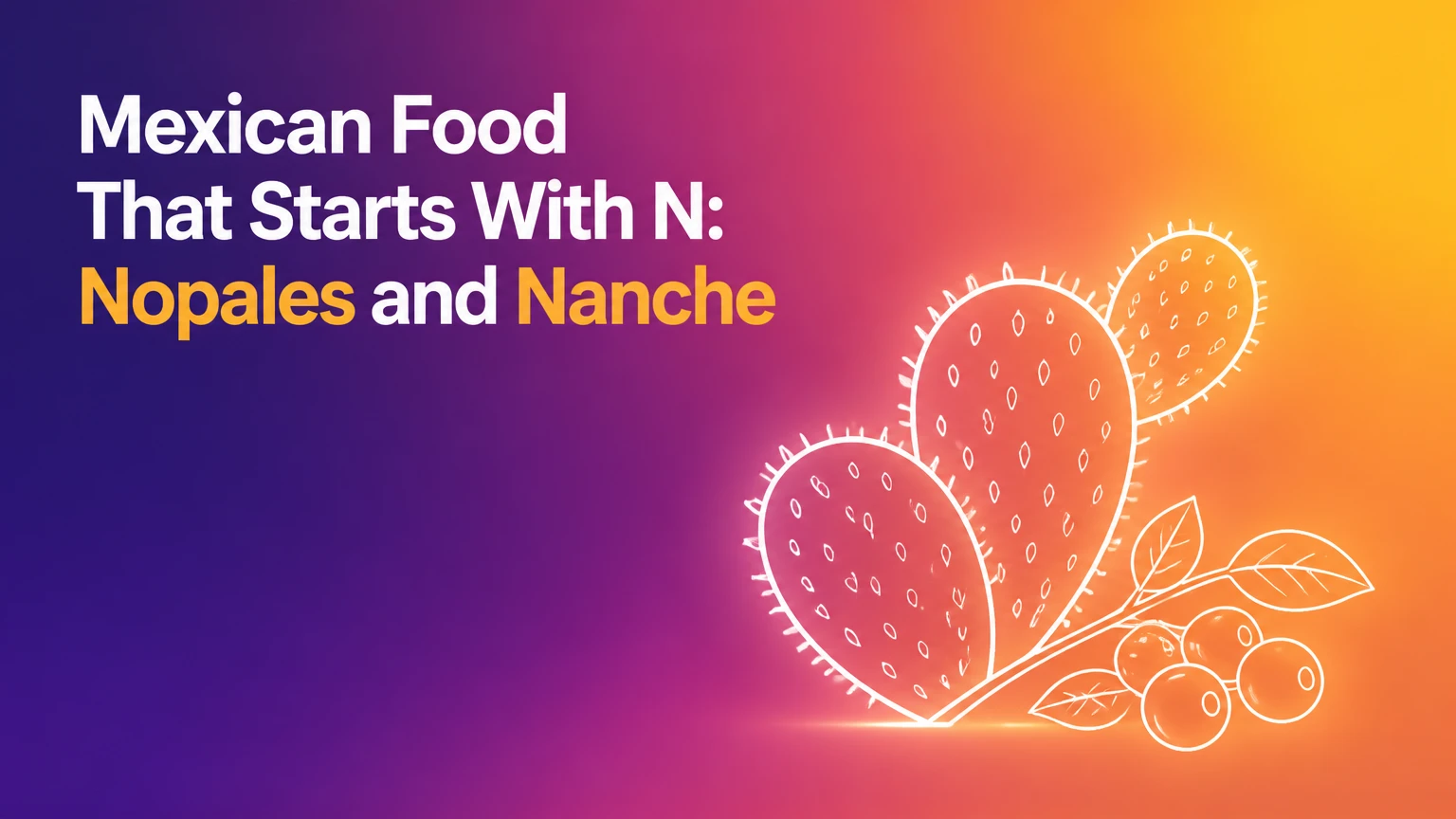
The two best-known Mexican foods that start with N are Nopales, the edible pads of prickly pear cactus, and Nanche, a small yellow tropical fruit with a sweet-tart, aromatic flavor. Nopales are cooked as a vegetable in salads, soups, tacos, and eggs, while Nanche is eaten fresh, preserved, or simmered into sauces and sweets.
Key Facts at a Glance
- Nopales are young prickly pear cactus pads from the Opuntia genus, commonly sliced into Nopalitos.
- Nopales taste mildly tart and vegetal, with a texture between green beans and cooked okra.
- Nanche is a yellow, marble-sized fruit with a strong aroma and sweet, acidic flavor.
- Fresh cactus pads usually require 10-15 minutes for trimming and slicing, followed by 8-15 minutes of cooking.
- Typical US Hispanic-market prices range from $1.50-$3.00 per pound for fresh Nopales and $2.00-$4.00 for a 32-ounce jar.
- A glycemic index of exactly 7 is not a dependable universal value for Nopales because testing methods, preparation, and serving composition vary.
What Mexican Foods Start With N?
The most useful answer to “mexican food that starts with n” is Nopales and Nanche, although several named dishes and ingredients also qualify. Nopales are a staple cactus vegetable, while Nanche is a fruit ingredient associated with southern and coastal regions of Mexico.
| Food or dish | Spanish name | Main ingredient | Typical role |
|---|---|---|---|
| Cactus pads | Nopales | Opuntia pads | Vegetable, filling, side dish |
| Cut cactus | Nopalitos | Sliced Nopales | Salad, soup, eggs |
| Yellow fruit | Nanche or Nance | Byrsonima crassifolia fruit | Fresh fruit, preserve, syrup |
| Cactus soup | Nopales Navegantes | Nopalitos, tomato, eggs | Brothy main dish |
| Cactus salad | Ensalada de Nopales | Nopalitos, tomato, onion | Cold side dish |
| Grilled cactus | Nopales Asados | Whole cactus pads | Taco filling or side |
The word Nopales is plural. A single pad is a Nopal, and small sliced pieces are called Nopalitos. In English, menus may use “cactus salad,” “cactus paddles,” or “prickly pear cactus,” but those labels refer to the same edible plant material when the pads come from a food-grade source.
Is Nanche the Same as Nopal?
Nanche and Nopal are different foods from different plants. Nanche is the fruit of Byrsonima crassifolia, a small tropical tree, whereas Nopal is the flattened stem pad of an Opuntia cactus.
Nanche may also appear as Nance, nance fruit, or yellow cherry in English-language markets. Its skin changes from green to yellow or orange as it ripens. The fruit has a firm pit, so eating it requires either spitting out the seed or removing the flesh from it.
Nanche flavor is difficult to compare with common supermarket fruit. It combines tropical sweetness, acidity, and a pronounced fermented or resinous aroma. Ripe fruit can be eaten raw, soaked in water with sugar, cooked into preserves, or used in regional fruit preparations. It is not a substitute for Nopales in savory cactus recipes.
What Do Nopales Taste and Feel Like?
Nopales taste mildly sour, green, and vegetal, with flavor comparisons ranging from asparagus to green beans and fresh citrus. Their defining texture is a combination of crisp plant fiber and mucilage, the slippery substance also associated with okra and aloe.
Raw Nopales contain more structural firmness than cooked Nopalitos. Heat softens the pad, while dry grilling creates browned edges and a denser bite. Young pads are generally more tender than large, mature pads, which can have tougher fibers and a stronger vegetal flavor.
Mucilage is not spoilage. It is a naturally occurring soluble plant material that becomes more visible after cutting and heating. Some cooks remove most of it for a clean salad texture, while others leave part of it in soups because it thickens the broth slightly.
| Nopal characteristic | Typical value or description | Cooking consequence |
|---|---|---|
| Raw pad thickness | 0.25-0.75 inch | Thin pads cook faster |
| Raw flavor | Tart, green, mildly acidic | Pairs with tomato and lime |
| Cooked texture | Tender, lightly crisp | Best after 8-15 minutes |
| Mucilage level | Low to high by pad and method | Determines rinsing needs |
| Mature-pad fiber | Noticeably firm | Requires longer cooking |
| Grilled surface | Brown to black blistering | Adds roasted flavor |
A practical rule is to choose bright green pads with no soft brown patches. Pads that bend easily without collapsing usually have better texture than dehydrated or rubbery specimens.
How Do You Clean and Cook Nopales?
Cleaning Nopales requires removing glochids, trimming the edges, slicing the pad, and controlling mucilage with heat or rinsing. A typical home preparation takes 10-15 minutes to clean and 8-15 minutes to cook, with gloves and a sharp knife providing the most important safety controls.
Step 1: Remove the Glochids
Wear thick kitchen gloves and hold the pad by its thicker base. Scrape both flat surfaces with a knife held nearly parallel to the pad, then cut away the outer rim and the narrow stem end.
Glochids are tiny hair-like spines that can detach from the visible thorn clusters. They are easy to miss and can remain in skin after the large spines appear gone. Do not rub an uncleaned pad with bare fingers or place it directly on a cutting board used for ready-to-eat food.
You will know the pad is ready when no raised thorn nodes remain and the surface feels uniformly smooth under the knife edge. Wipe the pad with a damp disposable towel rather than rinsing loose glochids into a sink full of dishes.
Step 2: Slice the Pad
Cut the cleaned Nopal into strips, dice, or long pieces according to the dish. Nopalitos for salad are commonly cut into pieces around 0.25-0.5 inch wide, while grilling usually requires leaving the pad whole.
| Preparation style | Cut size | Cooking time | Best use |
|---|---|---|---|
| Nopalitos dice | 0.25-0.5 inch | 8-12 minutes | Salad and eggs |
| Thin strips | 0.25 inch wide | 6-10 minutes | Soup and tacos |
| Thick strips | 0.5-0.75 inch wide | 10-15 minutes | Stews |
| Whole pad | 0.25-0.75 inch thick | 8-12 minutes per side | Grilling |
| Small cubes | 0.25 inch | 5-8 minutes | Salsa and filling |
Step 3: Choose a Mucilage Method
Use boiling and rinsing when you want a cleaner, firmer result. Use dry cooking when you want concentrated flavor, and retain some mucilage when preparing a broth that benefits from gentle thickening.
Boiling method: Place sliced Nopalitos in boiling water for 8-12 minutes. Drain immediately, then rinse under cold running water while tossing the pieces until the surface feels less slippery. This method is predictable and beginner-friendly.
Dry-skillet method: Cook sliced Nopalitos in a wide, ungreased skillet over medium heat for 8-12 minutes. Stir periodically so released moisture evaporates rather than steams the pieces. A crowded pan produces softer cactus and more visible mucilage.
Salt method: Toss sliced Nopalitos with approximately 1 teaspoon of kosher salt per pound and rest for 20-30 minutes. Rinse thoroughly before cooking. This technique draws out liquid, but it can increase sodium if the rinse is incomplete.
Baking soda can soften plant fibers, but excessive amounts produce a dull flavor and mushy texture. Use no more than a small pinch per quart of cooking water when a softer result is specifically desired. The claim that copper pennies are required for successful cactus preparation lacks a reliable culinary or food-safety basis, so pennies should not be treated as a necessary ingredient.
Which Nopal Dishes Should You Try?
The best first Nopal dish is Ensalada de Nopales because boiling, cooling, and rinsing make the texture easy to evaluate. Nopales con Huevo is the fastest hot preparation, while Nopales Asados gives whole pads a roasted exterior and a firmer, meatier bite.
Ensalada de Nopales
Ensalada de Nopales combines cooked cactus with diced tomato, white onion, cilantro, jalapeño, lime juice, and queso fresco. For a four-serving bowl, use approximately 1 pound of sliced Nopalitos, 2 medium tomatoes, half an onion, 0.25 cup cilantro, and 2 tablespoons lime juice.
Cool the cactus completely before adding fresh ingredients. Warm Nopalitos can wilt the tomato and dilute the lime dressing. The salad works beside grilled foods, inside tostadas, or as a chilled filling for soft corn tortillas.
Nopales con Huevo
Nopales con Huevo is a practical breakfast made with cooked cactus and scrambled eggs. Sauté half a cup of onion with 1 cup of prepared Nopalitos for 3-5 minutes, add two beaten eggs, and cook until the eggs reach a firm but moist consistency.
Jarred Nopalitos shorten the preparation because the cactus is already cooked. Rinse the pieces first, since brine can add substantial salt and a metallic flavor if poured directly into the skillet.
Nopales Asados
Nopales Asados are whole cactus pads grilled after cleaning and scoring. Make shallow diagonal cuts about 0.5 inch apart, brush with oil, and grill over medium-high heat for approximately 4-6 minutes per side.
The pad is ready when it has browned patches, softened edges, and no raw translucent center. Serve it whole with lime and salt, slice it for tacos, or layer it with beans and fresh salsa. Grilling does not remove every trace of mucilage, so a lightly slippery center is normal.
Nopales Navegantes
Nopales Navegantes is a tomato-based soup in which cactus strips cook with eggs and seasoned broth. The name refers to ingredients appearing to float or navigate through the liquid, although recipes vary by household and region.
A typical version uses tomato, onion, garlic, dried chile, broth, Nopalitos, and poached eggs. Add the cactus after the broth develops its flavor, then poach the eggs near the end so they remain intact. The dish is better suited to partially de-slimed Nopalitos than to heavily rinsed cactus with no remaining body.
How Is Nanche Used in Mexican Food?
Nanche is used as a fresh fruit, sweet preserve, syrup ingredient, and regional flavoring. The fruit is usually eaten when yellow and aromatic, while green Nanche is firmer, more acidic, and better suited to cooking or pickling.
| Nanche form | Appearance | Typical preparation time | Common use |
|---|---|---|---|
| Green fruit | Green-yellow skin | 5 minutes to wash | Tart cooked preparation |
| Ripe fruit | Yellow-orange skin | 5 minutes to wash | Fresh eating |
| Seeded pulp | Golden flesh | 10-20 minutes | Preserve or sauce |
| Sweetened fruit | Soft yellow pieces | 30-60 minutes | Dessert preparation |
| Dried Nanche | Dark golden to brown | 0 minutes | Snack or rehydration |
| Bottled pulp | Yellow-orange puree | 5-10 minutes | Syrup or dessert |
Wash Nanche under cool running water and discard fruit with leaking skin, mold, or a sour odor that differs from its normal strong aroma. The pit is hard and should not be chewed. Because the fruit has an assertive flavor, small quantities often provide more character than a full cup of milder fruit.
Nanche is a useful answer for shoppers who want a fruit beginning with N, but it does not have the broad savory versatility of Nopales. Availability is also more seasonal and regionally dependent, especially outside Mexico and Central America.
Fresh or Jarred Nopales: Which Is Better?
Fresh Nopales are better for grilling and maximum firmness, while jarred Nopales are better for quick eggs, soup, and weekday cooking. The decision depends mainly on texture, preparation time, sodium tolerance, and whether whole pads are needed.
| Criterion | Fresh Nopales | Jarred Nopales | Practical winner |
|---|---|---|---|
| Purchase price | $1.50-$3.00 per pound | $2.00-$4.00 per 32-ounce jar | Fresh for small amounts |
| Preparation time | 10-15 minutes | 2-5 minutes to rinse | Jarred |
| Shelf life unopened | 3-7 days refrigerated | 12-24 months typical | Jarred |
| Texture | Firm, crisp-tender | Soft, uniformly cooked | Fresh |
| Sodium | Naturally low before seasoning | Often elevated by brine | Fresh |
| Whole-pad grilling | Available | Usually unavailable | Fresh |
| Soup and eggs | Requires cooking | Ready after rinsing | Jarred |
Fresh pads require more labor and create a glochid risk before cleaning. Jarred cactus eliminates that trimming step, but the pieces can be soft and may need two rinses to remove excess brine.
What Can Replace Nopales?
Green beans, asparagus, or sliced zucchini can replace Nopales when the goal is a green vegetable with a firm bite. None reproduces the cactus flavor or mucilage exactly, so the substitution should match the dish rather than pretend to be identical.
| Substitute | Amount for 1 pound Nopales | Texture after cooking | Best replacement |
|---|---|---|---|
| Green beans | 12-16 ounces | Crisp-tender | Salad or skillet |
| Asparagus | 12 ounces | Firm, fibrous | Grill or roast |
| Zucchini | 16 ounces | Soft, juicy | Eggs or stew |
| Green bell pepper | 10-12 ounces | Crisp, aromatic | Taco filling |
| Okra | 12 ounces | More mucilaginous | Thick soup |
Green beans are the closest everyday substitute for a clean, vegetal bite. Okra is the closest texture substitute when the recipe intentionally uses a thickened broth, although its flavor is different.
What Nutrition and Safety Issues Matter?
Nopales provide dietary fiber and plant nutrients, but no single glycemic-index number should be used as a universal medical claim. A meal containing Nopalitos has a different blood-glucose effect from plain tested cactus because tortillas, eggs, cheese, sauces, serving size, and cooking method change the total carbohydrate load.
USDA FoodData Central is the appropriate reference for nutrient values because entries vary by raw, boiled, canned, and drained forms. People managing diabetes should use their clinician’s advice and consider the complete meal rather than treating Nopales as a blood-sugar treatment.
The main physical hazard is the glochid. Rinsing does not reliably remove every embedded spine from skin, so tape, tweezers, and medical advice may be appropriate if a spine remains painful or causes swelling. Discard fresh cactus with a sour, rotten odor or slimy decomposition that persists after cooking.
Jarred Nopales should be refrigerated after opening and used according to the package directions, commonly within several days. Do not use a bulging, leaking, spurting, or foul-smelling container.
What Are the Most Common Cooking Mistakes?
The most common Nopal mistakes are leaving glochids behind, overcrowding the pan, rinsing too briefly, and overcooking the pieces. Each mistake changes either safety, texture, or flavor, so the recovery method depends on the stage at which the problem appears.
- Invisible spines remain: Stop handling the pad, put on gloves, and scrape the surface again with a knife. Tape can help lift loose glochids from skin, but persistent pain or swelling needs medical attention.
- The cactus stays slimy: Drain immediately, rinse under cold water, and spread the Nopalitos in a wide skillet. Evaporating surface moisture is more effective than adding more salt.
- The pieces turn mushy: Reduce the next cooking time by 3-5 minutes and use a wider pan. Over-soft Nopalitos cannot regain their original firmness.
- The flavor tastes metallic: Rinse jarred cactus twice and drain it well. The taste usually comes from brine or the container, not from fresh Nopales.
- The pad remains tough: Use a younger, thinner pad or extend cooking by 5 minutes. Large mature pads may need trimming of especially fibrous sections.
- The salad becomes watery: Cool and drain the cactus fully before mixing tomatoes and lime. Warm Nopalitos release liquid into the dressing.
A practitioner rule is to judge cactus by surface moisture, not by a fixed recipe time. Two pads of identical weight can release different amounts of mucilage because age, thickness, variety, and storage conditions differ.
How Should You Buy and Store These Foods?
Choose fresh Nopales that are green, intact, and firm, and choose Nanche that matches the intended use. Fresh Nopales are best used within 3-7 days, while ripe Nanche is usually most useful within several days of purchase.
| Food | Selection signal | Storage temperature | Typical usable period |
|---|---|---|---|
| Fresh Nopal | Firm green pad, no soft spots | 35-40°F | 3-7 days |
| Cleaned Nopalitos | Dry surface, sealed container | 35-40°F | 2-4 days |
| Jarred Nopales | Intact lid, clear brine | Pantry unopened | 12-24 months |
| Opened jarred cactus | No off odor, covered in brine | 35-40°F | 3-7 days |
| Ripe Nanche | Yellow-orange, aromatic skin | 40-45°F | 2-5 days |
| Green Nanche | Firm green-yellow fruit | 40-45°F | 4-7 days |
Farmers markets and Mexican grocery stores often sell Nopales already cleaned, but pre-cleaned does not always mean glochid-free. Inspect the surface under strong light and handle the pads with gloves until they are confirmed safe.
Nanche availability varies more than cactus availability. Frozen pulp may be easier to find than fresh fruit outside its growing regions, but frozen pulp cannot provide the same firm, pit-containing texture as fresh Nanche.
The Bottom Line
For the query “mexican food that starts with n,” start with Nopales and Nanche. Nopales are the versatile savory choice: prepare them as Nopalitos for salad, eggs, soup, or tacos, and choose fresh pads for grilling or jarred cactus for speed. Nanche is the distinctive fruit choice, valued for its yellow color, aromatic sweetness, and tart tropical flavor.
Nopales reward careful cleaning and controlled moisture. Nanche rewards restrained seasoning because its natural aroma is unusually strong. Together, these foods cover the two main interpretations of the search, a Mexican ingredient or dish beginning with N and a fruit beginning with N.
Frequently Asked Questions
Are Nopales vegetables or fruit?
Nopales are botanically modified cactus stems, but cooks use them as vegetables. The edible pads come from Opuntia species and are commonly sliced into Nopalitos before boiling, grilling, sautéing, or adding to soup.
Can you eat Nopales raw?
You can eat very young, thoroughly cleaned Nopales raw, but most preparations cook them first. Raw pads are firmer, more acidic, and more mucilaginous, while brief boiling or grilling produces a milder flavor and softer texture.
Are Nopales suitable for a vegetarian meal?
Nopales are suitable for vegetarian and vegan meals when cooked with plant-based ingredients. Grilled cactus works in tacos, while Nopalitos combine with beans, corn, tomato, onion, and avocado for a filling meal.
Where are Nopales most commonly eaten in Mexico?
Nopales are eaten throughout Mexico, with especially strong associations with central Mexican cooking and regions where prickly pear cactus grows widely. Recipes differ by household, but salads, eggs, soups, stews, and grilled pads are common formats.
Does Nanche have a pit?
Nanche has a hard central pit. The flesh can be eaten around the pit, or the fruit can be cooked and strained when a smooth preserve, pulp, or sauce is preferred.
Can children eat Nopales and Nanche?
Children can eat properly prepared Nopales and ripe Nanche when the foods are served in age-appropriate pieces. Remove every visible cactus spine, remove the hard Nanche pit, and introduce unfamiliar foods in small portions while watching for an adverse reaction.