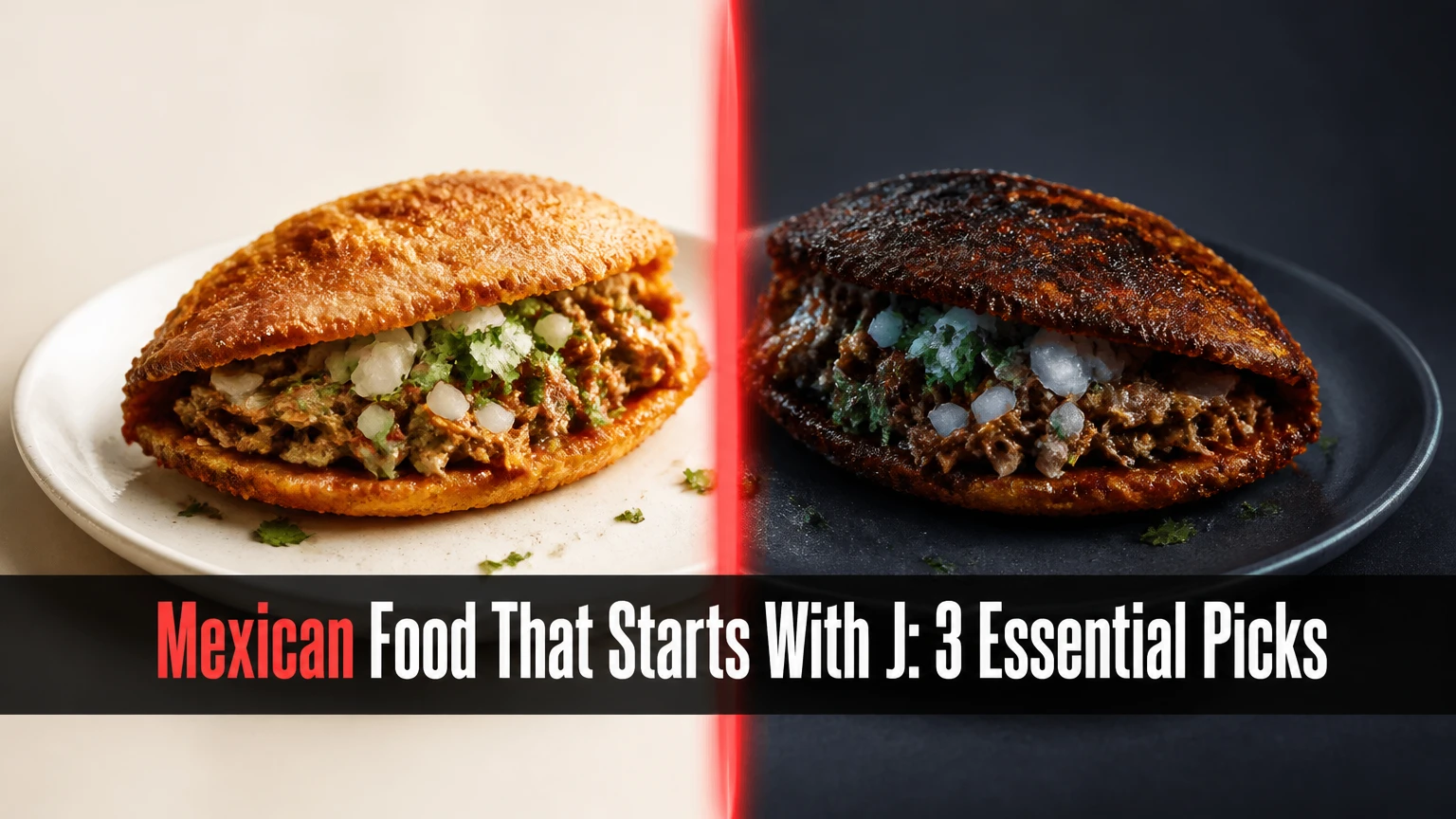
The best-known Mexican foods that start with J are jalapeño preparations, Jericalla, and jícama con chile y limón. Jalapeños provide fresh, pickled, stuffed, or smoked heat; Jericalla is a Guadalajara-style baked custard; and jícama is a crisp root vegetable commonly served with lime, salt, and chile.
Key Facts at a Glance
- Jalapeño peppers are Capsicum annuum chiles that typically measure 2,500-8,000 Scoville Heat Units.
- Jalapeños en escabeche are preserved in an acidic vinegar brine with vegetables such as carrot and onion.
- Jericalla is a gently baked milk-and-egg custard associated with Guadalajara, Jalisco, especially the San Juan de Dios area.
- Jícama con chile y limón combines cold jícama with lime juice, salt, and chile powder for a crunchy street snack.
- A typical home preparation takes 5 minutes for seasoned jícama, 20-30 minutes for quick pickles, or about 5 hours including chilling for Jericalla.
- The safest general storage rule is to refrigerate homemade pickled jalapeños and use them within 2-3 weeks, unless a tested canning recipe specifies otherwise.
What Counts as Mexican Food Beginning With J?
Mexican food beginning with J includes both named dishes and important ingredients used in Mexican cooking. The letter J produces fewer universally recognized dish names than letters such as T or E, so a useful answer must distinguish a pepper, a preparation, a dessert, and a snack.
| Name | Category | Typical form | Main flavor or texture |
|---|---|---|---|
| Jalapeño | Chile ingredient | Fresh, roasted, pickled, stuffed | Green, grassy, moderately hot |
| Jalapeños en escabeche | Pickled preparation | Rings or whole peppers with vegetables | Acidic, spicy, crunchy |
| Jericalla | Baked dessert | Individual milk custard | Creamy with a browned top |
| Jícama | Root vegetable | Raw sticks, cups, salads | Juicy, crisp, mildly sweet |
| Jícama con chile y limón | Street snack | Seasoned jícama batons | Cool, sour, salty, spicy |
The spelling also creates confusion. Jalapeño refers to the chile, while jalapeños en escabeche describes the pickled preparation. Jícama is the vegetable, and the street-food name becomes more specific when seasonings are included.
Is Jalapeño a Dish or an Ingredient?
Jalapeño is primarily an ingredient, not a single finished dish. Mexican cooks use the green chile in salsas, soups, stews, fillings, marinades, and pickles, while ripe jalapeños become chipotles after smoking and drying.
The name connects the pepper with Xalapa, Veracruz, although the crop is now grown widely in Mexico and elsewhere. Heat concentrates around the placenta and internal membranes, but removing those parts does not guarantee a mild pepper because growing conditions and maturity also affect capsaicin levels.
Which Mexican Foods Start With J?
The three strongest answers are jalapeño preparations, Jericalla, and jícama con chile y limón. They cover savory food, dessert, and street-snack categories, making the list useful whether the searcher needs a menu item, a school assignment answer, or a dish to prepare.
Jalapeño Preparations
Fresh jalapeño adds green aroma and moderate heat to pico de gallo, guacamole, bean dishes, and cooked sauces. Roasting softens the flesh and adds a lightly smoky flavor, while pickling introduces vinegar that cuts through rich fillings and fried foods.
Common preparations include:
- Jalapeños en escabeche: vinegar-pickled chiles with carrot, onion, garlic, oregano, and bay leaf.
- Jalapeños rellenos: stuffed jalapeños, often filled with cheese, vegetables, or a seasoned protein.
- Rajas de jalapeño: sliced chile cooked with onion or creamy sauce.
- Salsa de jalapeño: blended green chile sauce, sometimes combined with tomatillo, cilantro, or avocado.
- Chipotle: a fully mature red jalapeño that has been smoke-dried, often sold in a tangy sauce.
Jericalla
Jericalla is a set milk custard with eggs, sugar, cinnamon, and vanilla, finished with a browned or deliberately darkened surface. The dessert is strongly associated with Guadalajara, Jalisco, and its origin is often linked to the San Juan de Dios neighborhood, although popular origin stories differ.
Jericalla resembles flan in its ingredients but differs in texture and finish. Flan commonly includes a separate caramel layer and a smoother, more trembly set, whereas Jericalla usually has a rustic baked top and a softer custard beneath it.
Jícama con Chile y Limón
Jícama con chile y limón is peeled jícama cut into sticks or rounds, then seasoned with lime juice, salt, and chile powder. Mexican street vendors commonly serve it in cups, on skewers, or alongside cucumber, mango, and other fresh produce.
The white flesh contains more than 90 percent water by weight in typical raw jícama, and its crispness comes from tightly structured plant cells rather than starchiness. Jícama also contains inulin, a prebiotic fiber that some people tolerate poorly in large portions because it can cause gas or bloating.
How Do These J Foods Differ?
Jalapeño preparations are savory and heat-driven, Jericalla is a chilled baked dessert, and jícama is a raw, hydrating snack. The choice depends mainly on whether the meal needs spice, sweetness, crunch, cooking, or a fast no-cook option.
| Food | Flavor profile | Texture | Preparation time | Typical home cost |
|---|---|---|---|---|
| Fresh jalapeño salsa | Green, sharp, hot | Crisp and juicy | 10-15 minutes | $3-$7 |
| Jalapeños en escabeche | Sour, salty, spicy | Firm to soft-crisp | 20-30 minutes plus 24 hours | $4-$9 |
| Jericalla | Milky, sweet, cinnamon-scented | Soft, set custard | 60 minutes plus 4 hours chilling | $7-$14 |
| Jícama con chile y limón | Cool, sour, salty, spicy | Very crisp and watery | 5-10 minutes | $2-$5 |
| Chipotle preparation | Smoky, earthy, moderately hot | Soft and saucy | 5-15 minutes to add | $3-$6 per can or jar |
How Hot Is a Jalapeño?
A jalapeño typically measures 2,500-8,000 SHU on the Scoville scale, placing it below many hotter Mexican chiles but above a mild bell pepper. Individual peppers vary, so a recipe that requires consistent heat should taste a small trimmed piece before adding the full amount.
| Jalapeño form | Typical heat experience | Texture | Best use | Heat-control method |
|---|---|---|---|---|
| Young green pepper | Moderate, fresh heat | Firm and juicy | Salsa, garnish | Remove membranes |
| Mature green pepper | Moderate to moderately hot | Firmer walls | Grilling, stuffing | Use fewer peppers |
| Pickled rings | Softer, sharp heat | Crunchy to tender | Tacos, sandwiches | Rinse briefly |
| Roasted pepper | Rounded heat | Soft and silky | Sauces, fillings | Char and peel |
| Chipotle | Medium heat with smoke | Soft and dense | Marinades, braises | Use 1-2 teaspoons sauce |
A practical rule is to control quantity first, then membranes and seeds. Seeds themselves do not produce most of the heat, but they carry spicy oils from contact with the inner membrane.
How Do You Make Jalapeños en Escabeche?
Make jalapeños en escabeche by briefly softening sliced jalapeños, carrot, onion, and garlic, then covering them with a hot vinegar brine and refrigerating the mixture for at least 24 hours. The key success factor is stopping the cooking early enough to preserve a firm bite.
Ingredients and Equipment
| Item | Typical quantity | Function | Substitute |
|---|---|---|---|
| Fresh jalapeños | 8-10 | Main chile | Serrano, for more heat |
| White vinegar | 1 cup | Acidity and preservation | Cider vinegar, with flavor change |
| Water | 1 cup | Dilutes brine | Use the recipe’s tested ratio |
| Carrot | 1 medium | Sweetness and crunch | Extra onion |
| White onion | 1 medium | Aroma and texture | Shallot |
| Garlic | 3-4 cloves | Savory depth | Omit |
| Mexican oregano | 1 teaspoon | Herbal flavor | Dried oregano |
| Salt | 1 tablespoon | Seasoning | Measure by weight when possible |
Step-by-Step Pickling Method
- Prepare the vegetables. Wear food-safe gloves, slice the jalapeños into rings, cut the carrot into thin coins, and slice the onion. You will know the vegetables are ready when pieces are similar in thickness.
- Cook the aromatics. Warm about 2 tablespoons of neutral cooking oil and soften onion, carrot, and garlic for 3-5 minutes. Avoid browning the garlic because bitterness can spread through the brine.
- Add the jalapeños. Cook the chile slices for 2-3 minutes, stopping when they turn olive green but still resist a fork. Overcooking creates a limp pickle.
- Add the brine. Pour in 1 cup vinegar and 1 cup water, then add salt, oregano, and bay leaf. Bring the liquid to a simmer rather than boiling it aggressively.
- Cool and refrigerate. Transfer the vegetables and liquid to a clean heat-resistant container, cool briefly, cover, and refrigerate. The flavor becomes more integrated after 24 hours.
Homemade refrigerator escabeche is not automatically shelf-stable. USDA guidance for home food preservation emphasizes using tested recipes and correct acidity for canned foods; an improvised vinegar mixture should remain refrigerated.
What Makes Pickled Jalapeños Crunchy?
Short cooking, thin but not paper-thin slices, and rapid cooling preserve the best crunch in pickled jalapeños. A 2-3 minute heat exposure softens the skin without fully collapsing the pepper wall, while prolonged simmering produces a softer taquería-style texture.
What Is the Difference Between a Jalapeño and a Chipotle?
A chipotle is a mature red jalapeño that has been smoke-dried, so the two names describe different stages and treatments of the same chile type. Fresh jalapeño tastes grassy and crisp, while chipotle tastes smoky, earthy, fruity, and more concentrated.
| Attribute | Fresh jalapeño | Pickled jalapeño | Chipotle |
|---|---|---|---|
| Maturity | Green, usually immature | Usually green | Fully mature red |
| Preservation | None | Vinegar brine | Smoke-drying |
| Texture | Crisp | Firm or tender | Dried, softened when rehydrated |
| Dominant flavor | Green vegetal notes | Sour and salty | Smoke and dried-fruit notes |
| Typical quantity | 1-3 peppers | 2-6 rings | 1 pepper or 1-2 teaspoons sauce |
| Best application | Fresh salsa | Tacos and sandwiches | Sauces and braised dishes |
Chipotle is not a separate species. Canned chipotles in sauce also contain a prepared sauce, so the flavor of the can should not be treated as identical to plain smoke-dried chile.
How Do You Bake Jericalla?
Bake Jericalla by infusing warm milk with cinnamon and vanilla, tempering the milk into beaten eggs, and cooking the strained custard in a water bath at approximately 175-180°C, or 350-356°F. The custard should set around the edges while the center retains a slight wobble.
Jericalla Ingredients
| Ingredient | Typical amount | Purpose | Temperature or timing |
|---|---|---|---|
| Whole milk | 4 cups | Custard base | Warm, not boiling |
| Sugar | ¾-1 cup | Sweetness and browning | Dissolve during infusion |
| Eggs | 6 yolks plus 2 whole eggs | Set and richness | Room temperature helps |
| Cinnamon stick | 1 | Aroma | Infuse 10-15 minutes |
| Vanilla | 1-2 teaspoons | Fragrance | Add during infusion |
| Water | Enough for pan | Gentle heat | Reach halfway up ramekins |
Step-by-Step Jericalla Method
- Infuse the milk. Heat milk, sugar, cinnamon, and vanilla until steaming, then hold it below a boil for about 10-15 minutes. Remove the cinnamon before mixing.
- Beat the eggs. Whisk the yolks and whole eggs until combined, but do not whip them into a foamy mixture. Excess foam can leave bubbles across the custard surface.
- Temper gradually. Add warm milk to the eggs one ladle at a time while whisking. The mixture is properly tempered when the eggs feel warm but remain liquid and smooth.
- Strain the custard. Pour the mixture through a fine sieve into 4-6 ramekins. Straining removes chalaza strands and any small cooked egg particles.
- Bake in a water bath. Place the ramekins in a deep pan and add hot water halfway up their sides. Bake for roughly 40-55 minutes, depending on ramekin depth.
- Brown the top. Broil for 1-4 minutes while watching continuously. A browned, uneven surface is characteristic; a bitter, fully black layer means the broiling went too far.
- Chill thoroughly. Cool, cover, and refrigerate for at least 4 hours. Serve cold, when the custard has finished setting.
Food thermometers provide a more reliable check than timing alone. A custard center near 79-82°C, or 174-180°F, is generally set while still tender, although carryover cooking and container depth affect the final texture.
Why Does Jericalla Curdle?
Jericalla curdles when egg proteins receive excessive heat, especially if boiling milk is poured directly into the eggs or if the water bath runs dry. Tempering, straining, and moderate oven heat reduce the risk, while a sieve can rescue a lightly lumpy mixture before baking.
Jericalla is not ideal for rushed service. The dessert requires cooling time, and serving it warm gives a looser texture that differs from the chilled version commonly sold in Guadalajara.
How Do You Prepare Jícama con Chile y Limón?
Prepare jícama con chile y limón by peeling the thick brown skin, cutting the white root into sticks, and seasoning it with lime juice, salt, and chile powder. The snack takes about 5 minutes, needs no cooking, and depends on dry, cold jícama for maximum crunch.
- Cut away the top and bottom ends so the root sits flat.
- Remove all brown skin and fibrous outer tissue with a sharp knife.
- Cut the flesh into batons about 1-2 centimeters thick.
- Chill the pieces for 15-30 minutes if the jícama is not already cold.
- Add lime juice shortly before serving, then finish with salt and chile powder.
The skin, leaves, stems, and seeds of jícama are not edible. Only the peeled root is used in food, and the root should feel heavy for its size with firm, unblemished skin.
| Jícama format | Cutting size | Serving setting | Typical holding time |
|---|---|---|---|
| Street cup | 1-2 cm sticks | Market or snack stand | Best within 2 hours |
| Party platter | 1 cm sticks | Shared appetizer | 4-6 hours chilled |
| Skewer | 2-3 cm chunks | Outdoor gathering | 2-4 hours chilled |
| Salad matchsticks | 3-5 mm strips | Lunch or side dish | 1 day refrigerated |
| Lime-seasoned cup | 1-2 cm sticks | Immediate snack | Best within 30 minutes |
Lime juice can soften the surface over time, and excess liquid makes the pieces slippery. Drain briefly before serving if the jícama has released water.
Where Can You Find These Foods in Mexico?
Find Jericalla most reliably in Guadalajara bakeries, traditional dessert shops, markets, and some paleterías. Find jícama with chile and lime at street produce stands, markets, school-area snack vendors, and fruit-cup counters, while jalapeño preparations appear throughout Mexico in taquerías, restaurants, homes, and packaged-food aisles.
| Food | Likely place to find it | Menu or vendor wording | Typical price range |
|---|---|---|---|
| Jericalla | Guadalajara dessert shop | Jericalla de Guadalajara | MXN 25-70 |
| Jícama snack | Market or street cart | Jícama con chile y limón | MXN 25-60 |
| Pickled jalapeño | Taquería or grocery store | Jalapeños en escabeche | MXN 20-60 |
| Stuffed jalapeño | Restaurant or home kitchen | Jalapeño relleno | MXN 40-120 |
| Chipotle dish | Restaurant or packaged-food aisle | Chile chipotle en adobo | MXN 25-90 |
Prices vary by city, portion size, tourism level, and whether the item is handmade. U.S. grocery estimates of $1.50-$3 per pound for fresh jalapeños and $1.20-$2.50 for packaged pickled peppers are typical retail ranges, not fixed national prices.
Which J Food Should You Choose?
Choose jícama for the fastest, mildest, and least expensive introduction; choose pickled jalapeño for tacos and rich savory foods; and choose Jericalla when you want a traditional regional dessert. A decision based on heat tolerance, available time, and serving temperature is more useful than ranking one item universally first.
| Situation | Best choice | Why | Main limitation |
|---|---|---|---|
| No-cook snack in 5 minutes | Jícama con chile y limón | Requires cutting and seasoning only | Jícama alone is mild |
| Low heat preference | Plain jícama | Naturally non-spicy | Needs lime and seasoning for flavor |
| Taco topping | Jalapeños en escabeche | Acidity balances rich fillings | Vinegar can dominate |
| Smoke-forward sauce | Chipotle | Adds concentrated smoke and depth | No fresh crunch |
| Traditional Guadalajara dessert | Jericalla | Distinct baked custard profile | Requires several hours to chill |
| Beginner cooking project | Jícama snack | Few ingredients and no heat | Knife safety still matters |
Best for a Spice-Sensitive Diner
Jícama is the safest choice for a spice-sensitive diner, especially when the chile powder is omitted or served separately. A small amount of lime and salt supplies flavor without relying on capsaicin, and cucumber can be added for another mild, crisp component.
Best for a Taco or Sandwich
Pickled jalapeños are the most useful choice for tacos and sandwiches because vinegar acidity cuts through fatty fillings and creamy sauces. Rinse the rings briefly when the brine tastes too sharp, then add them immediately before serving so the bread or tortilla does not become wet.
Best for a Dessert Menu
Jericalla is the strongest dessert choice because its browned top distinguishes it from ordinary custard. Order it chilled when possible, and expect a softer, less uniformly caramelized surface than a restaurant-style crème brûlée.
What Are the Best Substitutes?
Use cucumber, green apple, or water chestnut as jícama substitutes when the priority is crispness, but none reproduces jícama’s exact neutral flavor. For jalapeño, use serrano for more heat, Anaheim for less heat, or a mild green chile for a broader pepper flavor.
| Original | Substitute | Quantity adjustment | Result |
|---|---|---|---|
| Jícama | Cucumber | 1:1 by volume | More watery and less firm |
| Jícama | Green apple | 1:1 by volume | Sweeter and more aromatic |
| Fresh jalapeño | Serrano | Use ½-⅔ quantity | Sharper, hotter flavor |
| Fresh jalapeño | Anaheim | Use 1.5-2 times quantity | Milder and larger pieces |
| Mexican oregano | Standard oregano | 1:1 | Similar herb note, less citrus |
| Whole milk in Jericalla | Evaporated milk plus water | 1:1 liquid volume | Slightly denser custard |
Do not substitute canned green chiles for fresh jalapeños when crisp texture matters. Canned chiles are softer, less bright, and often contain enough salt to change the seasoning of the finished dish.
What Common Mistakes Affect These Foods?
The most common failures are overcooked pickled peppers, curdled Jericalla, watery jícama, and uncontrolled chile heat. Each problem has a practical correction, but prevention is easier because texture changes cannot always be reversed.
- Mushy escabeche: The peppers simmered too long. Next time, add the jalapeños after the carrot and onion have softened, and remove the pan from heat within 2-3 minutes.
- Unsafe pickle storage: An improvised brine was stored at room temperature. Refrigerate homemade escabeche and discard it if it develops mold, gas, an unpleasant odor, or a slimy texture.
- Lumpy Jericalla: The milk was too hot or the eggs were not tempered. Strain before baking, then reduce heat and avoid a dry water bath.
- Jericalla with bubbles: The egg mixture was whisked aggressively. Stir steadily and skim foam before filling the ramekins.
- Soft jícama: Cut pieces sat in liquid or at room temperature. Drain them, chill them uncovered briefly, and add lime immediately before serving.
- Unexpectedly hot jalapeños: The peppers varied in maturity or growing conditions. Taste a small piece first and add half the planned quantity before adjusting.
A practitioner rule of thumb is to preserve the pepper’s structure and the custard’s temperature. Those two controls determine whether these J foods feel deliberate or poorly handled.
Frequently Asked Questions
Are these Mexican J foods vegetarian?
Jícama con chile y limón and most jalapeño preparations are vegetarian, while Jericalla contains milk and eggs. Stuffed jalapeños require ingredient checks because fillings can include meat, seafood, or animal-derived sauces. Restaurant recipes vary, so ask about the filling and cooking fat when dietary restrictions are important.
Are jalapeños en escabeche the same as nacho jalapeños?
Nacho jalapeños are usually a commercial style of sliced pickled jalapeño, while jalapeños en escabeche traditionally include a more aromatic mixture of vinegar, vegetables, garlic, herbs, and spices. The terms overlap in casual use, but escabeche generally describes the preparation method rather than one standardized product.
Can you eat jícama raw?
Jícama is normally eaten raw after the brown skin and any fibrous outer layer are completely removed. The peeled root can be cut into sticks, matchsticks, or salad pieces, then kept cold. Do not eat the leaves, stems, seeds, or unpeeled outer parts.
Is Jericalla the same as flan?
Jericalla and flan are related milk-and-egg desserts, but they are not identical. Jericalla is typically baked in individual portions and finished with a browned top, while flan usually has a distinct caramel layer and a smoother, more uniformly set texture.
Which J food is easiest to make at home?
Jícama con chile y limón is the easiest J food to make because it requires only peeling, cutting, and seasoning. Fresh jalapeño salsa is the next simplest option, while escabeche requires careful heat control and Jericalla requires tempering, a water bath, baking, and chilling.
How should you pronounce Jericalla and jícama?
Jericalla is commonly pronounced approximately “heh-ree-KAH-yah,” while jícama is approximately “HEE-kah-mah.” Spanish pronunciation varies by region, but the initial j in both words has an English h-like sound rather than the sound in the English word “jam.”
The Bottom Line
The strongest answer to mexican food that starts with j is a set of three culturally useful categories: jalapeño preparations for savory heat, Jericalla for Guadalajara-style custard, and jícama con chile y limón for a crisp street snack. Pick jícama for speed, escabeche for tacos, chipotle for smoky sauces, and Jericalla for a chilled regional dessert.