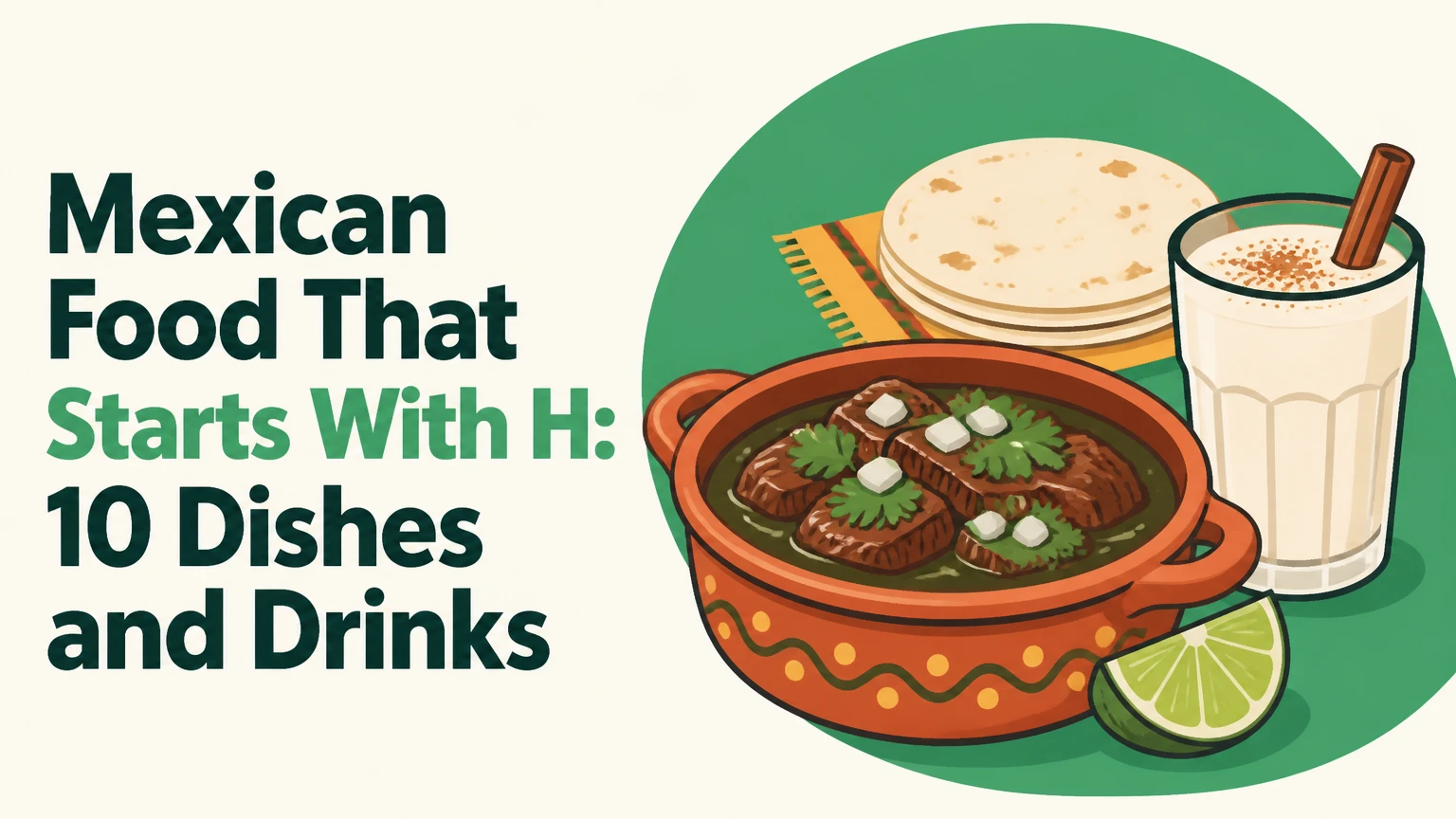
Mexican food that starts with H includes huaraches, huevos rancheros, huevos a la Mexicana, huitlacoche, huachinango, horchata, huauzontle, habas, hoja santa, and hongos. These names cover complete meals, corn-based ingredients, edible plants, mushrooms, and beverages. In Mexican Spanish, the initial H is silent, so huarache sounds roughly like “wah-RAH-cheh.”
Key Facts at a Glance
- Huaraches are elongated masa cakes named for their resemblance to Mexican leather sandals.
- Huevos rancheros use eggs and tortillas covered with warm tomato-chile salsa, while huevos a la Mexicana are scrambled with tomato, onion, and chile.
- Huitlacoche is the edible fungus Ustilago maydis, which grows on corn and develops a dark, earthy flavor when cooked.
- Huachinango is the Mexican Spanish name for red snapper, commonly prepared whole or in Veracruz-style tomato sauce.
- Mexican horchata is usually made from soaked rice and cinnamon, unlike Spanish horchata, which traditionally uses tiger nuts.
- Huauzontle, habas, hoja santa, and hongos expand the list beyond the five internationally familiar H foods.
Why Is the H Silent in Mexican Food Names?
The H is silent because modern Spanish inherited a written H from earlier forms of the language without retaining its sound. In Mexican food vocabulary, the spelling often also preserves names borrowed from Indigenous languages, including Nahuatl and other regional languages.
Pronunciation still varies by region and speaker. Huachinango is commonly pronounced “wah-chee-NAHN-goh,” huitlacoche is often “weet-lah-KOH-cheh,” and huauzontle is frequently rendered “wah-zont-leh.” English-language menus may simplify these sounds, but the written H remains part of the name.
The letter does not indicate a separate cooking method. It simply identifies a word whose pronunciation can surprise English speakers.
What Mexican Foods Start With H?
The most useful way to understand Mexican H foods is to divide them into finished dishes, ingredients, plants, and drinks. The table below includes the foods most likely to appear on a Mexican menu or in a Mexican market.
| Food or drink | Category | Main ingredient | Typical use |
|---|---|---|---|
| Huarache | Masa dish | Corn masa and beans | Lunch, street food |
| Huevos rancheros | Breakfast | Eggs, tortillas, salsa | Morning meal |
| Huevos a la Mexicana | Egg dish | Eggs, tomato, onion, chile | Breakfast or light supper |
| Huitlacoche | Corn fungus | Ustilago maydis | Quesadillas, soups, stews |
| Huachinango | Fish | Red snapper | Coastal main course |
| Horchata | Agua fresca | Rice and cinnamon | Beverage with spicy food |
| Huauzontle | Edible greens | Chenopodium berlandieri | Batter-fried or stewed |
| Habas | Legume | Fava beans | Soup, snack, stew |
| Hoja santa | Herb or leaf | Piper auritum | Tamales, fish, sauces |
| Hongos | Mushrooms | Wild or cultivated fungi | Tacos, quesadillas, soups |
What Is a Huarache?
A huarache is an elongated, oval-shaped corn masa cake that is usually filled or topped with beans, salsa, cheese, vegetables, or meat. The name refers to the shape of a traditional huarache sandal, and the Mexico City version is generally thicker and longer than a tortilla.
A cook forms masa harina dough into a narrow oval, sometimes encloses a layer of refried beans, and cooks the base on a comal. The finished masa should have a lightly crisp exterior and a tender, flexible interior. Common toppings include bistec, chicken, chorizo, nopales, onion, cilantro, queso fresco, and red or green salsa.
How Is a Huarache Prepared?
A typical home batch uses 2 cups of masa harina, approximately 1.5-2 cups of warm water, and 1/2 teaspoon of salt. Water absorption varies by brand, humidity, and grind, so the final texture matters more than the exact volume.
- Knead the masa until smooth and pliable.
- Form a cylinder about 15-18 centimeters long.
- Add 1-2 tablespoons of thick refried beans if making a stuffed version.
- Seal the dough and flatten it to approximately 3-6 millimeters thick.
- Cook it on a medium-hot comal for 2-3 minutes per side.
- Add toppings and return the huarache briefly to the pan if the cheese needs melting.
A flash fry is optional rather than mandatory. It creates a crisper shell but also adds fat and can make the masa harder if the oil is too hot.
Huarache Types and Practical Choices
| Version | Typical topping | Texture | Typical United States price |
|---|---|---|---|
| Huarache sencillo | Salsa, beans, onion, cheese | Soft and lightly crisp | $4-$7 |
| Huarache con carne | Bistec or chicken | Hearty and chewy | $7-$14 |
| Huarache con nopales | Grilled cactus and cheese | Tender with slight bite | $5-$10 |
| Huarache de chorizo | Spiced sausage and salsa | Rich and strongly seasoned | $7-$13 |
| Bean-stuffed huarache | Refried beans inside masa | Dense and filling | $5-$9 |
For a first order, choose a bean-stuffed huarache with nopales if you want a vegetarian meal, or bistec if you want the most substantial version. A huarache is less suitable for travel because toppings quickly soften the masa.
How Do Huevos Rancheros Differ From Huevos a la Mexicana?
Huevos rancheros are fried eggs served on tortillas with warm tomato-chile salsa, while huevos a la Mexicana are scrambled eggs cooked together with tomato, onion, and green chile. The former preserves separate egg and salsa layers; the latter integrates the vegetables into the curds.
| Feature | Huevos rancheros | Huevos a la Mexicana |
|---|---|---|
| Egg style | Sunny-side-up or over-easy | Scrambled |
| Salsa treatment | Cooked separately and spooned over eggs | Vegetables cook inside egg mixture |
| Tortilla role | Usually fried or warmed underneath | Served alongside |
| Main flavor | Tomato salsa with chile | Fresh tomato, onion, and chile |
| Typical cooking time | 12-18 minutes | 10-15 minutes |
| Typical diner price | $8-$15 | $7-$13 |
Huevos rancheros are better when you want runny yolks and a stronger salsa presence. Huevos a la Mexicana are easier to prepare in one skillet and work better for meal preparation because scrambled eggs retain their structure longer.
How Are Huevos a la Mexicana Cooked?
Use four eggs, one medium tomato, one-quarter white onion, one serrano or jalapeño, 1 tablespoon of cooking oil, and salt. Dice the vegetables into small pieces so they soften before the eggs overcook.
- Cook onion and chile over medium heat for 2-3 minutes.
- Add tomato and cook until its liquid reduces, usually 3-4 minutes.
- Add beaten, salted eggs.
- Fold slowly over medium-low heat until moist curds form.
- Serve with beans and warm corn tortillas.
The most common failure is watery eggs. Reduce the tomato mixture before adding the eggs, especially when using very ripe tomatoes.
What Is Huitlacoche?
Huitlacoche is an edible fungus, scientifically called Ustilago maydis, that grows on corn kernels and forms swollen gray-black galls. Its cooked flavor combines earthy mushroom notes, sweet corn, mineral depth, and savory umami.
Fresh huitlacoche is most associated with the rainy season in central Mexico, often from July through September, although canned and frozen products extend availability. The dark color is natural and becomes more pronounced during cooking.
Huitlacoche is not a spoiled corn product when harvested and handled as food. Buy fresh huitlacoche from a reputable seller, or use a commercially packaged frozen or canned product with intact labeling and a normal aroma.
How Is Huitlacoche Used?
The standard preparation sautés huitlacoche with onion, garlic, serrano chile, and epazote. Cooks then use the mixture in quesadillas, tacos, tamales, omelets, soups, and creamy sauces.
| Huitlacoche preparation | Supporting ingredients | Cooking time | Typical price |
|---|---|---|---|
| Quesadilla | Corn tortilla, quesillo, epazote | 8-12 minutes | $3-$7 |
| Guisado | Onion, garlic, chile | 12-20 minutes | $8-$16 |
| Cream soup | Stock, milk or cream, onion | 25-35 minutes | $10-$18 |
| Taco filling | Tortilla, salsa, herbs | 10-15 minutes | $2-$5 |
| Omelet filling | Eggs, cheese, huitlacoche | 10-15 minutes | $9-$16 |
Huitlacoche is a poor substitute for a mild button mushroom because its flavor is more concentrated and its texture can become soft. Use oyster mushrooms or shiitakes when the recipe needs an earthy replacement, then add a small amount of corn for sweetness.
What Is Huachinango?
Huachinango is the Mexican Spanish name for red snapper, a firm-fleshed fish commonly cooked whole, filleted, grilled, pan-fried, or simmered in sauce. Whole preparations often retain the skin, head, and tail because those parts help protect the flesh and contribute flavor during cooking.
Huachinango a la Veracruzana combines fish with tomato, onion, garlic, olives, capers, and pickled jalapeños. Huachinango al mojo de ajo uses abundant garlic with a hot fat-based sauce, while zarandeado preparation commonly involves a split fish, chile marinade, and grilling.
A typical whole serving weighs 1.2-1.5 pounds and feeds one hungry diner or two lighter eaters when served with rice and vegetables. Restaurant prices commonly range from $18-$35, depending on location, fish size, and whether the fish is sold by weight.
How Can You Judge Fresh Huachinango?
Fresh red snapper should have clear eyes, firm flesh, moist skin, and a clean marine smell. Avoid fish with cloudy eyes, soft depressions, dried edges, or a sharp ammonia odor.
| Preparation | Main seasoning | Cooking method | Typical time |
|---|---|---|---|
| Veracruzana | Tomato, olives, capers | Simmer or bake | 25-35 minutes |
| Mojo de ajo | Garlic and oil | Pan-fry or bake | 20-30 minutes |
| Zarandeado | Chile and achiote marinade | Grill in basket | 20-30 minutes |
| Whole fried | Salt, flour or starch | Deep-fry or shallow-fry | 15-25 minutes |
| Grilled fillet | Lime, chile, herbs | Direct grilling | 8-12 minutes |
The practical limitation is bones. Order fillets when serving children or guests who do not want to inspect a whole fish, but choose whole huachinango when presentation and skin texture matter most.
What Is Mexican Horchata?
Mexican horchata, usually called agua de horchata, is a sweet rice-and-cinnamon beverage served cold as an agua fresca. Rice is soaked, blended with water, strained, and sweetened; some recipes add vanilla, evaporated milk, or another dairy ingredient.
Mexican horchata differs from Spanish horchata de chufa, which is traditionally prepared with tiger nuts. Latin American versions also vary: some use almonds, sesame seeds, coconut, or melon seeds alongside or instead of rice.
How Is Horchata Made?
Soak 1 cup of uncooked white rice and 1 cinnamon stick in 4 cups of water for at least 4 hours, preferably overnight. Blend the softened rice mixture, strain it through a fine sieve, and dilute the liquid with 2-4 additional cups of water.
Add sugar gradually, beginning with 1/3 cup per liter, then adjust after chilling. Whole milk, evaporated milk, or condensed milk creates a fuller drink, while oat milk provides a dairy-free alternative.
Refrigerate horchata promptly and use it within 3-4 days. Stir before serving because rice solids settle at the bottom.
Which Other Mexican Foods Start With H?
Several less internationally familiar Mexican foods begin with H. These items matter because the query asks about food broadly, not only famous restaurant entrées.
| H food | What it is | Common preparation | Flavor or texture |
|---|---|---|---|
| Huauzontle | Native green seed-bearing plant | Batter-fried with cheese | Herbal, slightly bitter |
| Habas | Fava beans | Soup, stew, toasted snack | Creamy and earthy |
| Hoja santa | Aromatic leaf | Tamales, fish, cheese | Anise-like and peppery |
| Hongos | Mushrooms | Tacos, quesadillas, soup | Earthy and meaty |
| Harina | Flour or meal | Tortillas, breads, batters | Depends on grain |
| Helado | Ice cream | Frozen dessert | Sweet and creamy |
Huauzontle
Huauzontle is a leafy plant related to quinoa and amaranth. A common preparation removes tough stems, bundles the tender parts around cheese, coats them in egg batter, fries them, and serves them with tomato or chile sauce.
Habas
Habas are fava beans used fresh, dried, or toasted. Dried habas appear in soups and stews, while toasted beans can become a crunchy snack seasoned with salt and chile.
Hoja Santa
Hoja santa is a large aromatic leaf used to wrap fish, cheese, tamales, and other fillings. Its flavor is herbal, peppery, and faintly reminiscent of anise. The leaf is generally a seasoning wrapper rather than a salad green.
Hongos
Hongos means mushrooms. Mexican cooks use cultivated mushrooms and wild varieties in quesadillas, soups, tacos, and stews, with the exact species changing by region and season.
How Do Mexican H Foods Compare?
The best choice depends on whether the diner wants a filling meal, an unusual ingredient, a fast breakfast, seafood, or a sweet drink. Huaraches and huauzontle provide the strongest savory meal options for vegetarians, while horchata is the simplest introduction for someone avoiding heat.
| Food | Meal role | Heat level | Vegetarian status | Skill level |
|---|---|---|---|---|
| Huarache | Main course | 1-4/5 | Yes, without meat | Intermediate |
| Huevos rancheros | Breakfast | 2-4/5 | Yes | Beginner |
| Huitlacoche quesadilla | Light meal | 2-3/5 | Yes | Intermediate |
| Huachinango | Main course | 1-3/5 | No | Intermediate |
| Horchata | Beverage | 0/5 | Usually yes | Beginner |
| Huauzontle | Vegetable main | 2-4/5 | Usually yes | Advanced |
Choose huevos a la Mexicana for a 15-minute home breakfast, huaraches for a substantial street-food meal, huitlacoche for a mushroom-like Indigenous ingredient, and huachinango for a coastal dinner.
What Do Mexican H Foods Cost and How Long Do They Take?
Typical prices vary by country, city, restaurant type, ingredient availability, and fish weight. The ranges below are practical United States restaurant and home-cooking estimates, not fixed national prices.
| Item | Home preparation time | Typical restaurant price | Main cost variable |
|---|---|---|---|
| Huarache | 35-50 minutes | $5-$14 | Meat and handmade masa |
| Huevos rancheros | 15-20 minutes | $8-$15 | Eggs and restaurant location |
| Huitlacoche quesadilla | 15-25 minutes | $3-$7 | Fresh versus canned fungus |
| Huachinango | 25-40 minutes | $18-$35 | Fish weight and season |
| Horchata | 10 minutes active, 4-12 hours soaking | $3-$6 | Dairy and serving size |
| Huauzontle | 30-45 minutes | $10-$18 | Seasonal availability |
Common Problems When Cooking H Foods
| Problem | Likely cause | Correction | Prevention |
|---|---|---|---|
| Cracked huarache edges | Dry masa | Add water 1 teaspoon at a time | Keep dough covered |
| Beans leak from masa | Watery filling | Cook beans until paste-thick | Cool filling before stuffing |
| Huarache turns hard | Excessive heat or cooking | Reduce heat and shorten final sear | Cover cooked bases briefly |
| Watery scrambled eggs | Tomato releases excess liquid | Reduce vegetables before eggs | Dice tomato finely |
| Soggy fried fish skin | Wet fish or cool oil | Dry fish and heat oil thoroughly | Use a thermometer near 375°F |
| Grainy horchata | Poor straining | Pass liquid through fine mesh twice | Blend soaked rice completely |
| Bitter hoja santa | Too much leaf | Use one small leaf per dish | Remove after infusing |
One practitioner rule matters across masa dishes: hydration should be adjusted by feel, not by blindly following a cup measurement. Masa that cracks is too dry, while masa that clings heavily to the press is too wet.
A second rule applies to huitlacoche. Cook the filling until excess moisture leaves before adding cheese or enclosing it in a tortilla. Otherwise, the quesadilla steams instead of browning.
A third rule applies to horchata. Sweetness becomes less obvious after chilling, so season the liquid slightly before refrigeration, then taste again over ice.
Which H Food Should You Try First?
For a beginner, choose huevos a la Mexicana with beans and tortillas because the ingredients are familiar and the cooking time is under 20 minutes. For a vegetarian seeking a substantial meal, order a bean-stuffed huarache with nopales or try a huauzontle dish.
Food-focused diners should seek a huitlacoche quesadilla from a restaurant that uses epazote and fresh masa. Seafood diners should order huachinango Veracruzana when the restaurant can identify the fish’s size and freshness.
Horchata is the safest choice for guests who avoid chile heat or strong earthy flavors. The drink also pairs well with spicy tacos, grilled meats, and fried masa dishes, although its sugar content can be substantial.
Frequently Asked Questions
Is Huitlacoche Safe to Eat?
Commercially sold huitlacoche is safe when handled according to the package instructions and cooked thoroughly. Fresh huitlacoche should come from a reliable producer because wild plant fungi require accurate identification. Canned and frozen forms are practical substitutes when fresh product is unavailable.
Are Huaraches the Same as Sopes?
Huaraches and sopes are related masa dishes but have different shapes and typical proportions. A huarache is long and oval, often 15-18 centimeters in length, while a sope is usually smaller, round, thicker, and pinched around the edge to hold toppings.
Is Horchata Always Made With Milk?
Horchata is not always made with milk. Rice, water, cinnamon, and sugar form the basic Mexican preparation, while milk or evaporated milk creates a creamier version. Dairy-free horchata can use water alone or a plant milk such as oat milk.
What Does Huauzontle Taste Like?
Huauzontle tastes herbal, green, and mildly bitter, with a texture similar to tender leafy vegetables and small seeds. Egg batter, cheese, tomato sauce, or a chile-based sauce balances its bitterness in traditional preparations.
Can I Replace Huachinango With Another Fish?
You can replace huachinango with another firm white fish, but the result will not be identical. Snapper, sea bass, or branzino can work in baked or grilled recipes; adjust cooking time according to fillet thickness and avoid overcooking lean flesh.
How Do You Say Huitlacoche?
Huitlacoche is commonly pronounced “weet-lah-KOH-cheh,” although English speakers may hear regional variations. The initial H is silent, as it is in many Spanish words beginning with H.
The Bottom Line
Mexican food that starts with H ranges from the masa-based huarache and two classic egg breakfasts to huitlacoche, huachinango, horchata, huauzontle, habas, hoja santa, and hongos. Choose according to the eating occasion: huevos for speed, huarache for fullness, huitlacoche for earthy depth, huachinango for seafood, and horchata for a cooling drink.