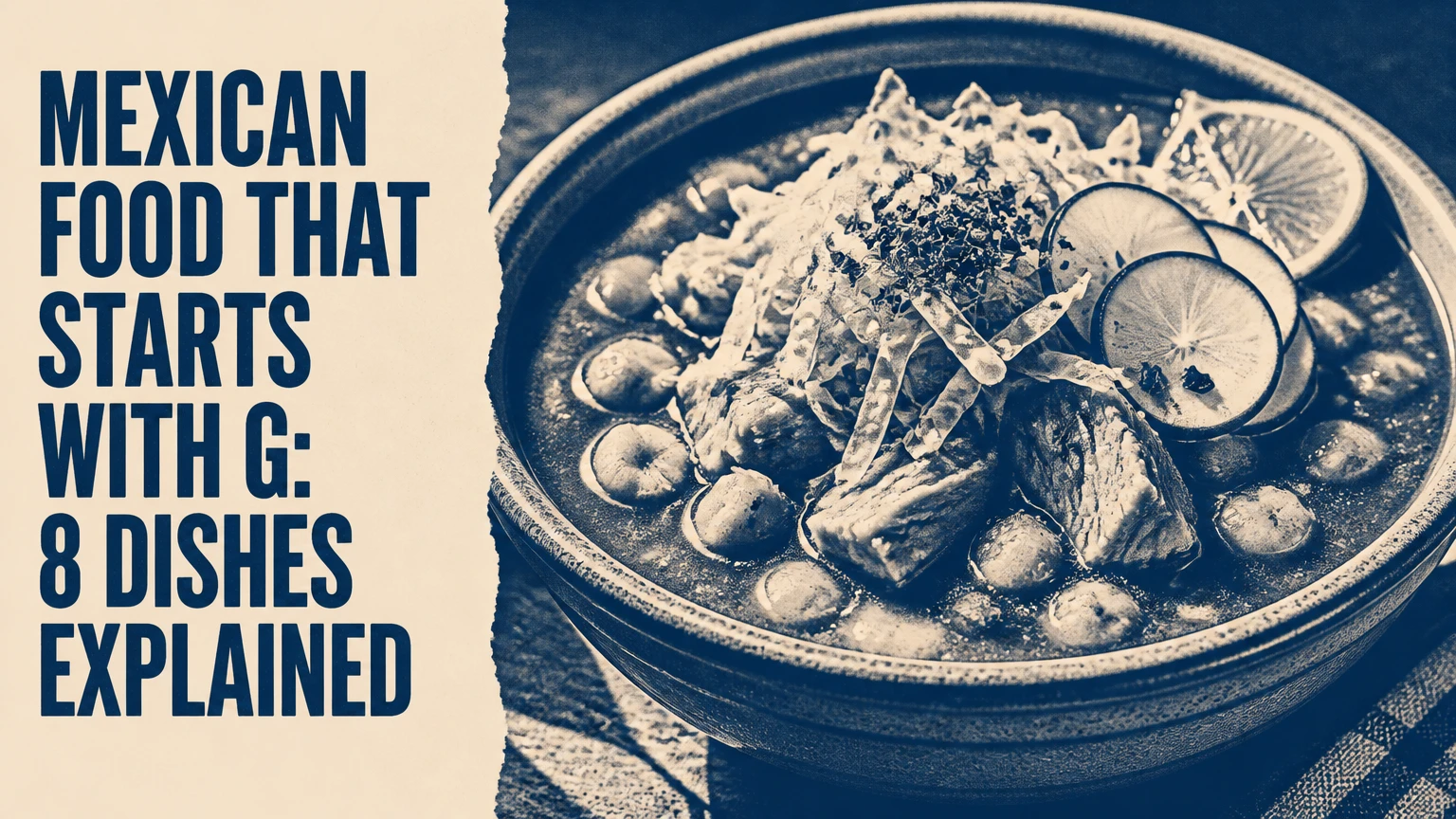
Mexican food that starts with G includes guacamole, gorditas, gringas, guaxmole, garnachas, garnachas istmeñas, green salsa, and guaje-based preparations. The four most widely recognized dish names are guacamole, gorditas, gringas, and guaxmole, while garnachas and guaje explain important regional and ingredient vocabulary.
Key Facts at a Glance
- Guacamole is a fresh avocado preparation used as a dip, topping, spread, or taco accompaniment.
- Gorditas are thick corn or flour cakes that may be split and filled, topped, or served open-faced.
- Gringas are usually flour-tortilla tacos or folded sandwiches with al pastor-style meat, melted cheese, and pineapple.
- Guaxmole, also written huaxmole, is a regional stew thickened and flavored with roasted guaje seeds.
- Garnachas are small masa-based antojitos whose toppings and cooking methods vary by region.
- Typical preparation ranges from 10 minutes for guacamole to 2 hours for guaxmole, excluding soaking or shopping time.
What Mexican Food Starts With G?
The most useful answer is a list of dishes, antojitos, sauces, and ingredients rather than a list restricted only to plated entrées. Mexican culinary vocabulary includes names that vary by state, spelling system, and local pronunciation, so G produces both nationally familiar foods and regional terms.
| Name | Category | Main ingredients or structure |
|---|---|---|
| Guacamole | Fresh preparation | Avocado, lime, onion, chile, cilantro |
| Gorditas | Masa antojito | Thick corn or flour dough, savory filling |
| Gringas | Taco variation | Flour tortilla, melted cheese, seasoned meat, pineapple |
| Guaxmole | Regional stew | Guaje seeds, chiles, tomato or tomatillo, broth |
| Garnachas | Fried masa snack | Small masa rounds, sauce, meat or vegetables |
| Garnachas istmeñas | Oaxacan antojito | Fried masa, cabbage, queso fresco, topping |
| Salsa verde | Sauce | Tomatillo, green chile, onion, cilantro |
| Guaje | Ingredient | Seed or pod used in regional sauces and stews |
The spelling guaxmole is especially important. Many references use huaxmole, while local usage may produce guasmole or related forms. Searchers should try both guaxmole and huaxmole when looking for menus, recipes, or regional food histories.
How Is Guacamole Made?
Guacamole is made by mashing ripe avocado with lime, salt, onion, chile, and cilantro, then adding optional tomato or other regional ingredients. A practical classic ratio is two large avocados, 2 tablespoons of diced white onion, one minced serrano chile, 1 tablespoon of cilantro, 1-2 tablespoons of lime juice, and salt to taste.
The method is simple, but ingredient handling determines the result. Cut the avocado into chunks, mash it coarsely, and fold in the aromatics rather than pulverizing the mixture. Coarse mashing preserves separate pockets of fat, acidity, chile, and onion, which gives guacamole a more defined texture.
A molcajete can first grind salt, chile, and onion into a rough paste. That technique distributes flavor more evenly than adding large raw pieces at the end. Tomato belongs in a tomato variation, but watery seeds can thin the mixture, so deseed firm tomatoes before dicing.
Which Guacamole Ingredients Matter Most?
Avocado ripeness matters more than garnish. A ripe avocado yields slightly under gentle pressure near the stem end, while a hard avocado produces a fibrous mash and an overripe avocado contributes dark fibers and fermented flavors.
| Variable | Recommended value | Result |
|---|---|---|
| Avocados | 2 large, ripe Hass | Approximately 2 cups mashed flesh |
| Lime juice | 15-30 milliliters | Brightness and slower oxidation |
| White onion | 30 grams, finely diced | Sharp aromatic flavor |
| Serrano chile | 1 small, minced | Mild to medium heat |
| Resting time | 5-10 minutes | Better flavor integration |
| Refrigerated life | Best within 24 hours | Lower browning and water separation |
Guacamole is not improved automatically by adding sour cream, mayonnaise, or large quantities of cumin. Those additions may create a different dip, but they obscure the avocado’s flavor and alter the traditional fresh texture.
How Long Does Guacamole Last?
Guacamole is best within 24 hours and usually remains usable for up to 48 hours when refrigerated in an airtight container with minimal air exposure. Lime juice slows browning, but it does not prevent oxidation indefinitely.
Press plastic wrap directly against the surface or use a container filled nearly to the lid. A brown surface layer is usually an oxidation issue rather than immediate spoilage; remove the discolored layer and check aroma, texture, and refrigeration history before serving.
What Are Gorditas?
Gorditas are thick corn or flour dough preparations that are cooked on a comal, griddle, or frying surface and then filled or topped. Corn gorditas are associated with many central and northern Mexican regions, while flour gorditas have a particularly strong connection with northern Mexico.
The name means “little fat ones,” referring to the thickness rather than requiring a particular filling. A corn gordita often measures about 10-12 centimeters across and 6-10 millimeters thick before cooking. The cooked interior should be tender and structured, not wet or gummy.
Gorditas differ from ordinary tortillas because the dough remains substantially thicker. Some puff enough to split into a pocket, while others are opened with a knife or served as a thick base. Fillings include chicharrón prensado, beans, shredded chicken, cheese, squash, mushrooms, or stewed vegetables.
What Is the Best Way to Cook Gorditas?
Mix masa harina with warm water and salt, rest the dough for 10 minutes, form thick discs, and cook them on a hot comal before opening and filling. A comal temperature around 200-205°C, or approximately 400°F, generally cooks the exterior without leaving the center raw.
| Stage | Typical specification | Success checkpoint |
|---|---|---|
| Dough hydration | 120-140 milliliters water per 100 grams masa harina | Dough feels soft, not sticky |
| Disc size | 10-12 centimeters wide | Even thickness across center |
| Disc thickness | 6-10 millimeters | Center remains sturdy |
| First cook | 2-3 minutes per side | Dry spots and light browning appear |
| Optional frying | 1-2 minutes per side | Exterior becomes crisp |
| Filling | 60-100 grams | Pocket closes without tearing |
Cook the gordita until the surface develops dry patches and the edges feel set. If a pocket forms, make a slit through one edge while the cake is still warm. Cold gorditas are more likely to crack, while excessively hot ones can collapse if opened too aggressively.
Are Gorditas Gluten-Free?
Corn gorditas made exclusively with masa harina, water, and salt are naturally gluten-free, but cross-contact can occur on shared griddles or in fillings. Flour gorditas contain wheat and are unsuitable for people avoiding gluten.
Check prepared fillings as well. Seasoning mixes, breaded ingredients, and commercial sauces may introduce wheat even when the shell is made from corn. For a strict gluten-free meal, use certified masa harina and a dedicated cooking surface.
What Are Gringas?
Gringas are flour-tortilla tacos or folded tortilla preparations with melted cheese and seasoned meat, most commonly al pastor-style meat, often finished with pineapple. The preparation is cooked on a flat griddle until the tortilla is lightly crisp and the cheese binds the filling.
Gringas are strongly associated with taquería culture in northern and central Mexico, especially Monterrey in common origin accounts, although exact origin stories vary. The name is sometimes explained through the use of flour tortillas and the influence of customers from the United States, but the historical details are not settled enough to treat one story as definitive.
A gringa normally uses two small flour tortillas or one larger tortilla folded over. Oaxaca cheese, Chihuahua cheese, and manchego-style Mexican cheeses melt more evenly than dry aged cheeses. The filling should be thin enough for the cheese to melt before the tortilla burns.
How Do Gringas Differ From Quesadillas and Tacos?
Gringas combine the folded structure of a quesadilla with the flavor profile and taquería service of al pastor tacos. The defining combination is not merely cheese in a tortilla; seasoned meat, flour tortillas, and melted cheese create the recognizable format.
| Food | Tortilla | Cheese role | Typical filling | Cooking texture |
|---|---|---|---|---|
| Gringa | Flour, 2 small or 1 folded | Structural binder | Al pastor-style meat, pineapple | Crisp edge, melted center |
| Quesadilla | Corn or flour | Primary filling | Cheese, vegetables, mushrooms | Soft or crisp fold |
| Al pastor taco | Corn, 1 small | Optional topping | Spit-roasted seasoned meat | Soft tortilla |
| Costra | Usually corn or cheese crust | Crisp outer layer | Griddled meat | Firm, lacy crust |
| Sincronizada | Flour, 2 flat tortillas | Interior layer | Ham-style sliced meat, cheese | Toasted sandwich |
A gringa is richer than a standard taco because the cheese and flour tortilla add fat and starch. Pineapple provides acidity and sweetness, but it is not universally included in every restaurant version. Removing it creates a different balance rather than an inedible dish.
What Is Guaxmole or Huaxmole?
Guaxmole, also spelled huaxmole, is a regional Mexican stew or mole-style preparation that uses roasted guaje seeds with chiles, tomato or tomatillo, broth, and a primary ingredient such as goat or another meat. Guaje seeds provide a distinctive nutty, garlicky, and slightly bitter flavor.
Guaxmole is linked particularly with Puebla, Morelos, and Oaxaca, although recipes differ between communities. Red versions use tomato and dried red chiles, while green versions use tomatillo and fresh green chiles. The sauce may be smooth or textured, depending on how finely the seeds are ground.
The seeds should be toasted carefully. Excessive heat creates bitterness, and under-roasted seeds can leave a raw, astringent taste. A practical method is to toast the seeds briefly in a dry pan, remove them when aromatic, and blend them with roasted aromatics and warm broth.
What Does Guaje Taste Like?
Guaje tastes nutty, savory, and faintly garlicky, with a bitterness that becomes more pronounced when the seeds are scorched. The flavor is unlike pumpkin seed mole or peanut sauce, so substitutions change the identity of the dish.
| Guaxmole style | Sauce base | Common chile direction | Texture | Typical region association |
|---|---|---|---|---|
| Rojo | Tomato and broth | Guajillo or ancho | Smooth, brick-red | Puebla and Morelos |
| Verde | Tomatillo and broth | Serrano or jalapeño | Bright, green, medium-thick | Oaxaca and neighboring areas |
| Rustic | Roasted tomato, seeds | Local dried chile | Coarse and spoon-thick | Market and home variations |
| Vegetable version | Squash, beans, or mushrooms | Fresh green chile | Thick stew | Contemporary adaptation |
A guaxmole sauce often needs 90-120 minutes of simmering when cooked with a tough cut. The long cooking time integrates the roasted seed flavor and softens the main ingredient. A vegetarian version can use mushrooms, squash, or beans and usually requires only 25-40 minutes.
Which G Foods Are Regional Rather Than National?
Garnachas and garnachas istmeñas are more regionally specific than guacamole, gorditas, or gringas. In Oaxaca’s Isthmus of Tehuantepec, garnachas are commonly small fried masa rounds topped with seasoned meat, cabbage or pickled vegetables, and fresh cheese, although household recipes differ.
The word garnacha can also function as a broad term for a fried or griddled masa snack. Its meaning changes by location. A visitor should ask what a restaurant means by garnacha instead of assuming it refers to one standardized recipe.
Green salsa is also relevant because salsa verde is a major Mexican sauce category, although the English phrase “green salsa” does not itself begin with G in Spanish. Guaje belongs on the list as an ingredient because it explains the central flavor and thickening function of guaxmole.
| Regional item | Where it is especially associated | Serving format | Typical preparation time |
|---|---|---|---|
| Garnachas istmeñas | Isthmus of Tehuantepec, Oaxaca | Small fried masa rounds | 30-45 minutes |
| Guaxmole verde | Oaxaca and nearby areas | Stew with green sauce | 60-120 minutes |
| Flour gorditas | Northern Mexico | Filled thick bread-like cake | 30-45 minutes |
| Corn gorditas | Central and northern Mexico | Filled masa pocket | 30-45 minutes |
| Guaje sauces | Central and southern Mexico | Ground-seed sauce | 30-60 minutes |
How Do These Mexican G Foods Compare?
Guacamole is the fastest and most accessible choice, while guaxmole requires the most specialized ingredient and longest cooking time. Gorditas offer the broadest filling flexibility, and gringas provide the richest griddled option because they combine flour, cheese, and seasoned filling.
| Dish | Typical home cost | Preparation time | Texture | Skill level |
|---|---|---|---|---|
| Guacamole | $4-$8 per bowl | 10-15 minutes | Creamy and chunky | Easy |
| Gorditas | $8-$16 for 6 | 30-45 minutes | Chewy, crisp exterior | Moderate |
| Gringas | $10-$18 for 4 | 15-25 minutes | Crisp and cheesy | Easy to moderate |
| Guaxmole | $18-$35 for 4-6 servings | 90-120 minutes | Thick and stew-like | Advanced |
| Garnachas | $8-$15 for 8-10 | 30-45 minutes | Crisp masa base | Moderate |
Restaurant prices vary by city, protein, portion size, and service style. The listed figures are typical planning ranges in the United States, not fixed national prices. A Mexican market or neighborhood taquería in Mexico may charge substantially less than a full-service restaurant abroad.
Which G Food Is Best for Each Situation?
Choose guacamole for a 10-minute appetizer, gorditas for a customizable meal, gringas for a fast griddle dinner, guaxmole for a traditional slow-cooked dish, and garnachas for a regional street-food experience. The best choice depends on time, equipment, dietary limits, and desired texture.
| Situation | Best choice | Why | Main limitation |
|---|---|---|---|
| No-cook appetizer | Guacamole | Uses one bowl and no stove | Must be served fresh |
| Portable lunch | Gorditas | Holds substantial filling | Masa needs correct hydration |
| Quick comfort meal | Gringas | Cooks in one skillet | Usually contains wheat and dairy |
| Weekend traditional meal | Guaxmole | Deep regional flavor | Guaje can be difficult to source |
| Vegetarian snack | Gordita or garnacha | Beans, squash, or mushrooms work well | Fried versions are heavier |
| Gluten-free meal | Corn gordita or guacamole | No wheat required | Cross-contact must be checked |
What Usually Goes Wrong?
The most common failures are overripe avocado, dry masa, insufficient griddle heat, burned gringa tortillas, and scorched guaje seeds. Each problem has a practical correction, but prevention is easier because texture changes quickly during cooking.
- Guacamole turns watery. Drain tomato seeds, use firm diced tomato, and add lime shortly before serving.
- Guacamole becomes brown. Reduce air exposure with surface-contact covering and refrigerate immediately.
- Gordita dough cracks. Knead in water 5 milliliters at a time until the edges become smooth.
- Gordita centers remain raw. Reduce thickness or lower the heat so the interior cooks before the exterior darkens.
- Gorditas do not puff. Use evenly hydrated dough and a properly heated comal; dry dough cannot create enough steam.
- Gringas burn before the cheese melts. Lower the heat to medium and cover the pan for 30-60 seconds.
- Guaxmole tastes bitter. Toast guaje seeds briefly, discard scorched seeds, and balance the sauce with more roasted tomato or broth.
One practitioner rule matters across all three cooked preparations: control surface temperature before changing the recipe. A hotter pan does not automatically produce better browning, because masa and flour tortillas can darken before their centers finish cooking.
What Are the Best Substitutions?
Guacamole has the fewest substitution problems. Gorditas can use beans, mushrooms, squash, or shredded chicken instead of a traditional filling, while gringas can use grilled vegetables or seasoned mushrooms when a meat-free option is needed.
Guaxmole is less forgiving. Pumpkin seeds can create a flavorful sauce, but they do not reproduce guaje’s characteristic taste. A substitute should be labeled as a seed-based mole rather than presented as an identical guaxmole.
| Original component | Practical substitute | Texture change | Flavor change |
|---|---|---|---|
| Guaje seeds | Pumpkin seeds | Smoother, creamier | Less garlicky, less bitter |
| Oaxaca cheese | Chihuahua cheese | Similar melt | Slightly richer |
| Serrano chile | Jalapeño | Comparable body | Lower heat |
| Masa harina | Fresh masa | Softer dough | More pronounced corn flavor |
| Pineapple in gringas | Pickled onion | Less sweetness | More acidity |
| Meat filling | Mushrooms or beans | Softer or denser | More earthy, less savory |
These substitutions are useful for availability and dietary needs, not for historical equivalence. Mexican regional foods carry local ingredient identities, and changing the seed, tortilla, or cooking method can move a dish into a different category.
What Should Beginners Make First?
Beginners should start with guacamole, then try gringas, followed by gorditas and guaxmole. Guacamole teaches seasoning and texture, gringas teach heat control and cheese melting, gorditas require dough judgment, and guaxmole adds roasting, blending, and long simmering.
A first guacamole needs only a knife, bowl, fork, ripe avocados, lime, salt, onion, and one fresh chile. A first gringa needs a skillet, flour tortillas, melting cheese, cooked seasoned filling, and pineapple. Gorditas become easier after the cook can recognize properly hydrated masa.
Guaxmole is best approached after locating reliable guaje seeds and confirming the recipe’s regional style. The ingredient may be sold as guaje, huaje, or under a regional market name. Ask the vendor whether the seeds are intended for cooking, because pods and seeds may be sold separately.
Frequently Asked Questions
What Is the Healthiest Mexican Food That Starts With G?
Guacamole is usually the most nutrient-dense option because avocado supplies unsaturated fat and fiber without requiring frying. Portion size still matters: a typical half-cup serving may contain roughly 180-250 calories, depending on avocado size and added ingredients. Gorditas and gringas become more calorie-dense when fried or heavily filled.
What Mexican G Food Is Easiest to Pronounce?
Guacamole is generally pronounced “gwah-kah-MOH-leh,” gorditas as “gor-DEE-tas,” and gringas as “GREE-ngas.” Guaxmole is less consistent because Spanish pronunciation and regional spelling differ; “wahsh-MOH-leh” is a useful approximation, but local speakers may pronounce the initial spelling differently.
Can I Prepare Gorditas in Advance?
Gorditas can be cooked several hours ahead and refrigerated for up to three days in a sealed container. Reheat them on a dry skillet for 2-3 minutes per side, then open and fill them. Microwave reheating is faster, but it softens the exterior and can make the masa chewy.
Do Gringas Always Contain Pineapple?
Gringas commonly contain pineapple, especially when the filling follows an al pastor flavor profile, but pineapple is not present in every regional or restaurant version. The defining elements are usually flour tortillas, melted cheese, and a seasoned filling. Without pineapple, the dish remains recognizable but loses its sweet-acid contrast.
Is Guaxmole the Same as Guacamole?
Guaxmole is not the same as guacamole. Guacamole is a fresh avocado preparation, whereas guaxmole is a cooked, sauce-based stew centered on roasted guaje seeds. The names sound similar because both begin with “gua,” but they describe different ingredients, techniques, textures, and regional traditions.
Where Can I Find Guaje Seeds?
Look for guaje or huaje seeds at Mexican mercados, specialty Latin American grocers, and online ingredient sellers that identify the product for culinary use. Availability is strongest in regions with central or southern Mexican food communities. Store dry seeds in an airtight container and discard any that smell rancid or show moisture damage.
The Bottom Line
Mexican food that starts with G spans fresh preparations, masa snacks, griddled tacos, regional stews, sauces, and specialty ingredients. Choose guacamole for speed, gorditas for flexibility, gringas for melted-cheese comfort, guaxmole for regional depth, and garnachas for a distinctly local antojito experience.