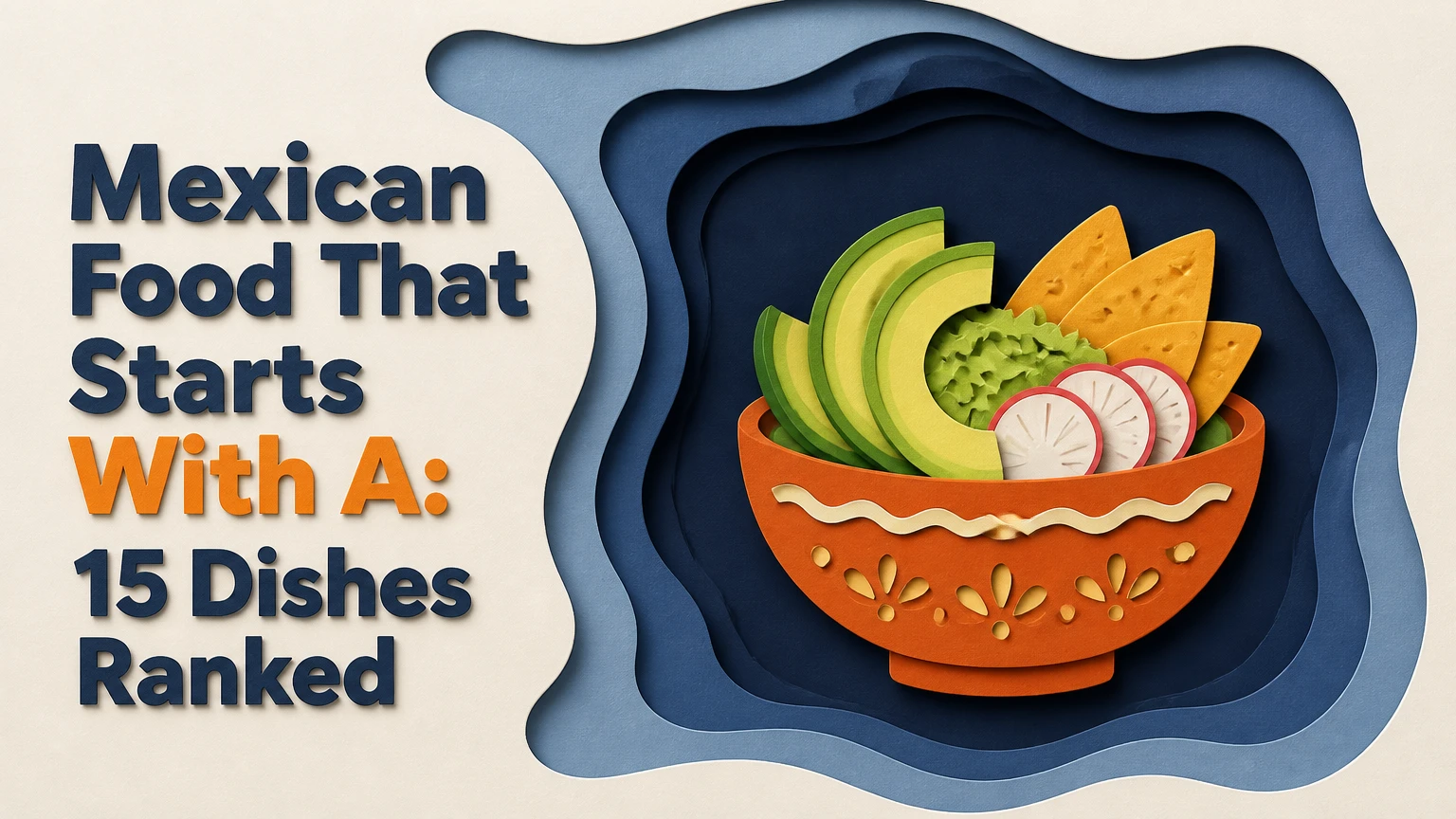
Mexican food that starts with A includes aguachile, al pastor, arrachera, aguas frescas, aguacate, achiote, adobo, arroz a la mexicana, albóndigas, and several regional dishes and ingredients. The best-known finished foods are aguachile for fresh seafood, tacos al pastor for street food, arrachera for grilled beef, and aguas frescas for nonalcoholic refreshments.
Key Facts at a Glance
- Aguachile is a Sinaloan seafood preparation served shortly after raw shrimp is covered with lime, chile, cilantro, and salt.
- Al pastor traditionally uses thinly sliced, achiote-seasoned meat cooked on a rotating vertical spit called a trompo.
- Arrachera is the Mexican menu term most commonly associated with marinated skirt steak cooked over high heat.
- Aguas frescas are nonalcoholic drinks made from water, sugar, fruit, grains, seeds, or flowers.
- Achiote is a red-orange seasoning paste or spice ingredient, while aguacate means avocado.
- Typical casual restaurant prices range from $2-$6 for a taco, $3-$7 for an agua fresca, and $12-$35 for a full grilled-meat or seafood entrée, depending on location.
What Mexican Food Starts With A?
Mexican foods beginning with A span complete dishes, beverages, sauces, staple ingredients, and cooking styles rather than one single category. The letter includes street foods such as al pastor tacos, regional seafood such as aguachile, grilled meats such as arrachera, and pantry terms such as adobo, achiote, and aguacate.
Mexican cuisine is regional. Aguachile is strongly associated with the Pacific coast, while al pastor developed as a central Mexican urban street-food tradition. Aguas frescas appear across the country, and dishes such as arroz a la mexicana and albóndigas are common home-cooking formats with many local variations.
UNESCO added traditional Mexican cuisine to its Representative List of the Intangible Cultural Heritage of Humanity in 2010. The designation describes cuisine as a cultural model built around farming, preparation, ritual, and community knowledge, which explains why a simple alphabetical list can include both a drink and a seasoning system.
Ranked List of 15 Mexican Foods Beginning With A
| Rank | Food or ingredient | Category | Typical flavor or use |
|---|---|---|---|
| 1 | Aguachile | Seafood dish | Lime, chile, cilantro, fresh shrimp |
| 2 | Al pastor | Spit-roasted meat | Achiote, chile, savory char, pineapple |
| 3 | Arrachera | Grilled beef | Beefy, smoky, citrus-seasoned |
| 4 | Aguas frescas | Beverage family | Sweet, fruity, floral, or spiced |
| 5 | Aguacate | Ingredient | Creamy, vegetal, buttery |
| 6 | Achiote | Spice and paste | Earthy, peppery, red-orange color |
| 7 | Adobo | Sauce or marinade | Chile, vinegar, garlic, herbs |
| 8 | Arroz a la mexicana | Rice dish | Tomato, onion, garlic, chicken stock |
| 9 | Albóndigas | Meatball dish | Savory meatballs in broth or sauce |
| 10 | Alambre | Skillet dish | Meat, peppers, onion, melted cheese |
| 11 | Antojitos | Snack-food category | Masa, fillings, salsa, varied textures |
| 12 | Alegrías | Amaranth sweet | Toasted amaranth, honey or syrup |
| 13 | Ate | Fruit paste sweet | Dense guava or quince confection |
| 14 | Atole | Thick masa beverage | Corn, cinnamon, fruit, or vanilla |
| 15 | Aguamiel | Agave sap drink | Mildly sweet, fresh agave flavor |
Which Four A Foods Are Most Iconic?
The four most recognizable choices are aguachile, al pastor, arrachera, and aguas frescas because they represent seafood, street food, grilling, and beverages. They also cover four contrasting sensory experiences: sharp acidity, roasted spice, charcoal flavor, and cooling sweetness.
| Food | Regional association | Main ingredient | Typical serving format | Typical restaurant price |
|---|---|---|---|---|
| Aguachile | Sinaloa and Pacific coast | Raw shrimp or other seafood | Plate with tostadas | $14-$28 |
| Al pastor | Central Mexico and Mexico City | Thinly sliced marinated meat | Small corn-tortilla tacos | $2-$6 per taco |
| Arrachera | Northern Mexico and border regions | Skirt steak | Plate, taco, or fajita-style serving | $18-$35 |
| Aguas frescas | Nationwide | Fruit, grain, seed, or flower | Chilled glass or jar | $3-$7 |
1. Aguachile: Best for Fresh, Spicy Seafood
Aguachile is raw seafood covered with a highly acidic chile mixture and served quickly, usually before the lime has fully changed the shrimp from translucent to opaque. The classic green version combines lime juice, serrano chile, cilantro, salt, cucumber, and red onion.
A practical home ratio is approximately 450 grams of very fresh, previously frozen or legally approved raw shrimp, 120 milliliters of lime juice, two serrano chiles, 15 grams of cilantro, half a cucumber, and one-quarter red onion. Butterfly the shrimp, arrange it cold on a plate, blend the lime, chile, cilantro, and salt, then pour the mixture over the shrimp.
Five to ten minutes creates a soft exterior and a firm center. Fifteen to twenty minutes produces a more opaque, ceviche-like texture and can make lean shrimp feel dry. Raw seafood requires reliable refrigeration, clean utensils, and a trusted supplier; lime juice does not eliminate every foodborne hazard.
| Aguachile style | Chile base | Color | Flavor profile | Typical curing window |
|---|---|---|---|---|
| Verde | Serrano, cilantro | Green | Herbal, sharp, fresh | 5-10 minutes |
| Rojo | Árbol chile or chiltepín | Red | Dry heat, concentrated chile | 5-10 minutes |
| Negro | Charred chile, savory seasonings | Dark brown | Smoky, salty, earthy | 5-10 minutes |
| Mango or fruit variation | Fresh fruit plus chile | Orange or yellow | Sweet, sour, hot | 5-10 minutes |
Aguachile is a poor choice for diners who dislike raw seafood, intense acidity, or immediate chile heat. Order it when the restaurant keeps seafood cold and prepares each plate to order.
2. Al Pastor: Best for Street-Style Tacos
Al pastor is a central Mexican spit-roasted preparation made from thin slices of meat marinated with achiote, dried chiles, vinegar, garlic, and herbs. The slices are stacked on a vertical spit called a trompo, where the outer layer browns before being shaved into tortillas.
The rotating spit creates a repeating cycle of browning and moisture retention. A pineapple placed at the top contributes juice and sweetness, while small pieces are commonly added to the finished taco. The taco usually includes a corn tortilla, onion, cilantro, lime, and salsa.
Authentic taquería texture depends on thin shaving from a hot trompo. A home skillet can reproduce the marinade and caramelized edges, but it cannot fully reproduce the continuous roasting pattern unless the cook uses a vertical oven or stacked meat technique.
| Al pastor format | Tortilla or base | Additional ingredients | Texture | Typical price |
|---|---|---|---|---|
| Taco al pastor | Small corn tortilla | Onion, cilantro, lime, salsa | Crisp edges, tender center | $2-$6 |
| Gringa | Flour tortilla | Melted Oaxaca-style cheese | Crisp, rich, chewy | $6-$12 |
| Alambre al pastor | Plate or tortilla filling | Peppers, onion, bacon, cheese | Sautéed, soft, rich | $10-$18 |
| Quesadilla al pastor | Corn or flour tortilla | Cheese, salsa, meat | Griddled and stretchy | $5-$12 |
The commonly repeated account connecting al pastor to Lebanese immigrants is useful but incomplete. Vertical spit roasting resembles shawarma, yet the Mexican preparation developed through local ingredients, corn tortillas, chiles, achiote, pineapple, and taquería practice rather than remaining a direct copy.
3. Arrachera: Best for Fast Charcoal-Grilled Beef
Arrachera is a Mexican menu term associated with marinated skirt steak, a thin, strongly flavored cut that cooks quickly over high heat. The defining eating quality comes less from the marinade than from hot searing, correct doneness, resting, and slicing across the muscle fibers.
Typical marinades contain citrus, garlic, salt, black pepper, cumin, soy sauce, or regional seasoning. Marinate for four to twelve hours. Very acidic mixtures left overnight can soften the surface excessively, producing a mushy exterior while the center remains fibrous.
Heat a grill or cast-iron pan to approximately 232-260°C. A 1.5-centimeter steak often needs three to four minutes per side for medium-rare, but thickness and starting temperature matter more than the clock. A food thermometer provides a safer doneness check than color alone; rest the steak for five minutes, then slice perpendicular to the visible grain.
| Arrachera variable | Typical range | Effect on result | Practical rule |
|---|---|---|---|
| Marinating time | 4-12 hours | More seasoning and surface tenderness | Refrigerate throughout |
| Cooking surface | 232-260°C | Faster browning and crust | Preheat fully |
| Cooking time | 3-4 minutes per side | Medium-rare for thin steak | Adjust for thickness |
| Resting time | 5 minutes | Better juice retention | Tent loosely |
| Serving size | 170-280 grams | One entrée portion | Slice after resting |
Arrachera is the strongest beginner option among the four headline foods because it needs a pan, grill, or broiler rather than a trompo or raw-seafood handling. Its main failure mode is overcooking, followed closely by slicing with the grain.
4. Aguas Frescas: Best for Cooling Spicy Meals
Aguas frescas are chilled, nonalcoholic Mexican drinks made by combining water with fruit, grains, seeds, flowers, or sugar. The drink family includes horchata, jamaica, tamarindo, limón, and seasonal fruit waters.
Agua de jamaica is an infusion of dried hibiscus flowers with a cranberry-like tartness and deep red color. Horchata commonly uses soaked rice, cinnamon, sugar, and sometimes almonds or milk. Tamarind water requires softened tamarind pulp to be strained from seeds and fibers before sweetening.
| Drink | Core ingredient | Preparation time | Flavor | Typical sugar range per liter |
|---|---|---|---|---|
| Horchata | Rice and cinnamon | 1-2 hours | Creamy, sweet, spiced | 80-140 g |
| Jamaica | Dried hibiscus | 20-30 minutes | Tart, floral, berry-like | 60-120 g |
| Tamarindo | Tamarind pods or pulp | 30-45 minutes | Sour, fruity, earthy | 80-140 g |
| Limón | Lime juice | 10 minutes | Bright, acidic, refreshing | 60-110 g |
| Melón | Cantaloupe or other melon | 10-15 minutes | Fragrant, soft, sweet | 50-100 g |
Aguas frescas are not automatically low-sugar drinks. A restaurant serving may contain 250-400 milliliters and vary widely in sweetness, so request less sugar when the beverage is paired with rich or heavily seasoned food.
What Are Achiote, Aguacate, Adobo, and Other A Ingredients?
Achiote is a seasoning made from annatto seeds, often ground with chiles, garlic, vinegar, and spices into a paste. Aguacate is avocado. Adobo describes a seasoned sauce or marinade whose ingredients vary by region, while antojitos is a broad term for small masa-based snacks.
These words matter because menus often list ingredients rather than complete dishes. Achiote may season al pastor or regional marinades, aguacate may appear as a topping, and adobo can refer to either a preparation method or the sauce itself.
| Term | Meaning | Common ingredients or form | Common use |
|---|---|---|---|
| Achiote | Annatto seasoning | Annatto, chile, garlic, vinegar | Marinades and rubs |
| Aguacate | Avocado | Fresh avocado flesh | Tacos, salsas, salads |
| Adobo | Seasoned sauce or marinade | Chiles, vinegar, garlic, herbs | Meat, vegetables, stews |
| Antojitos | Small Mexican snacks | Masa, beans, cheese, fillings | Street-food meals |
| Atole | Thick corn beverage | Masa, water or milk, cinnamon | Breakfast or festivals |
| Aguamiel | Agave sap | Fresh maguey sap | Traditional regional beverage |
Achiote contributes color and earthy spice but usually does not provide the primary heat in a dish. The chiles, pepper, and salsa determine heat more directly.
How Do These Foods Compare for Home Cooks?
Arrachera is the easiest main dish to reproduce at home, aguas frescas are the lowest-risk project, aguachile demands the strictest ingredient handling, and al pastor requires the most specialized equipment for restaurant-style results. The best choice depends on skill, available time, and tolerance for raw seafood or strong spice.
| Option | Home difficulty | Active time | Waiting time | Equipment | Typical home cost |
|---|---|---|---|---|---|
| Aguachile | High | 20 minutes | 5-10 minutes | Knife, blender, refrigerator | $18-$35 |
| Skillet al pastor | Medium | 45 minutes | 8-24 hours | Pan, blender, container | $15-$30 |
| Arrachera | Low | 15 minutes | 4-12 hours | Grill or cast-iron pan | $18-$35 |
| Aguas frescas | Low | 10-30 minutes | 30-120 minutes | Blender, strainer, pitcher | $4-$12 |
Which A Food Is Best for Each Diner?
- Beginner cook: Arrachera, because the method teaches high-heat searing and grain-aware slicing.
- Vegetarian diner: Agua de jamaica, aguacate-based antojitos, arroz a la mexicana, or alegrías.
- Seafood enthusiast: Aguachile verde, provided the seafood source and cold chain are dependable.
- Budget-conscious diner: Tacos al pastor or a small agua fresca, which generally cost less than a full steak or seafood plate.
- Dessert seeker: Alegrías for toasted amaranth or ate for dense fruit paste.
- Family meal planner: Aguas frescas and arroz a la mexicana, since both scale efficiently for several servings.
What Commonly Goes Wrong?
The most common failures are over-curing aguachile, overcooking arrachera, using weak heat for al pastor, and leaving sediment in horchata. Each problem has a practical correction, but prevention is easier than repair.
| Failure | Likely cause | Result | Correction |
|---|---|---|---|
| Aguachile becomes chalky | Lime contact exceeds 20 minutes | Dry, opaque shrimp | Add liquid immediately before serving |
| Arrachera turns chewy | Overcooking or grain-direction slicing | Firm, stringy beef | Cook briefly and cut across fibers |
| Home al pastor lacks browned edges | Crowded pan or low heat | Steamed, pale meat | Cook in batches over high heat |
| Horchata feels gritty | Coarse rice particles remain | Sediment and rough texture | Blend longer and strain twice |
| Jamaica tastes harsh | Hibiscus boiled too long | Bitter, medicinal flavor | Steep briefly, then dilute |
| Adobo tastes flat | Salt or acid added only at the end | Dull, disconnected flavor | Season marinade and finish with acid |
An important practitioner rule is to separate surface tenderness from internal tenderness. Citrus, vinegar, and salt affect the outer layer first, so a longer marinade cannot transform a thick, fibrous cut into a tender one.
Another rule concerns aguachile: lime juice is a flavor and texture tool, not a substitute for safe seafood handling. Keep shrimp below 4°C, avoid cross-contamination, and serve immediately after curing.
Horchata also benefits from a staged process. Blend soaked rice with cinnamon, strain the mixture, then adjust sweetness after dilution; adding sugar before straining can hide an overly concentrated base.
What Should You Order at a Mexican Restaurant?
Order tacos al pastor when a restaurant displays a working trompo and shaves meat to order. Choose aguachile when the menu describes the seafood, preparation time is short, and the plate arrives cold with crisp cucumber and onion.
Choose arrachera when you want a substantial grilled dish with predictable cooking equipment. Add agua de jamaica for tartness, horchata for creamy sweetness, or tamarindo for a stronger sweet-sour profile.
| Dining situation | Recommended order | Why it fits | Check before ordering |
|---|---|---|---|
| First Mexican meal | Al pastor tacos and jamaica | Familiar format with contrasting flavors | Ask about chile heat |
| Raw seafood lunch | Aguachile verde | Fresh, acidic, fast-serving dish | Confirm seafood freshness |
| High-protein dinner | Arrachera plate | Grilled beef and adjustable sides | Request desired doneness |
| Mild family meal | Horchata and arroz a la mexicana | Soft texture and moderate seasoning | Request salsa separately |
| Vegetarian snack | Aguacate antojito or alegría | Plant-based or grain-based option | Confirm fillings and cooking fat |
| Dessert course | Ate or alegría | Compact traditional sweets | Ask about fruit and syrup content |
A menu description alone cannot prove authenticity. Regional names travel, recipes change, and home-style versions may be as culturally meaningful as restaurant versions. Use preparation cues and ingredient clarity, not rigid policing of one “correct” recipe.
Frequently Asked Questions
Is aguachile the same as ceviche?
Aguachile and ceviche are related but not identical. Aguachile usually receives its lime, chile, and herb liquid immediately before serving, leaving seafood relatively translucent and firm. Ceviche commonly cures seafood for longer, often with additional vegetables and a more opaque texture.
Which Mexican food beginning with A is healthiest?
No single dish is universally healthiest because portion size, sugar, cooking fat, and preparation determine the result. Aguachile is often lean but can contain considerable sodium, while aguas frescas may contain substantial added sugar. A grilled arrachera portion with vegetables can be more balanced than a large sweet beverage and fried side.
Can I make al pastor without a trompo?
You can make a convincing home version without a trompo by marinating thin slices, stacking or layering them tightly, chilling the stack, and searing it in batches. The flavor can be close, but the rotating spit produces more consistent browned edges and thinner shaved pieces.
What is the mildest food on this list?
Aguas frescas, arroz a la mexicana, ate, and many versions of aguacate-based antojitos are usually milder than aguachile or chile-heavy adobo. Al pastor can also be mild when served without hot salsa, although the marinade remains savory and spiced.
What is the difference between achiote and adobo?
Achiote is a specific annatto-based seasoning associated with red color and earthy flavor. Adobo is a broader preparation term for a seasoned sauce or marinade, and its recipe may include several chiles, vinegar, garlic, herbs, or spices without achiote.
What should I serve with arrachera?
Serve arrachera with warm tortillas, grilled onions, salsa, beans, rice, or avocado. Acidic accompaniments such as lime and tomatillo salsa cut through the beef’s richness, while a chilled agua de jamaica provides contrast without adding additional heaviness.
The Bottom Line
Mexican food that starts with A covers far more than four famous entries. Choose aguachile for rapidly cured Pacific-style seafood, al pastor for trompo-roasted tacos, arrachera for fast high-heat grilling, and aguas frescas for a cooling drink. For broader exploration, add achiote, aguacate, adobo, arroz a la mexicana, albóndigas, antojitos, atole, ate, alegrías, and aguamiel to your search or menu.