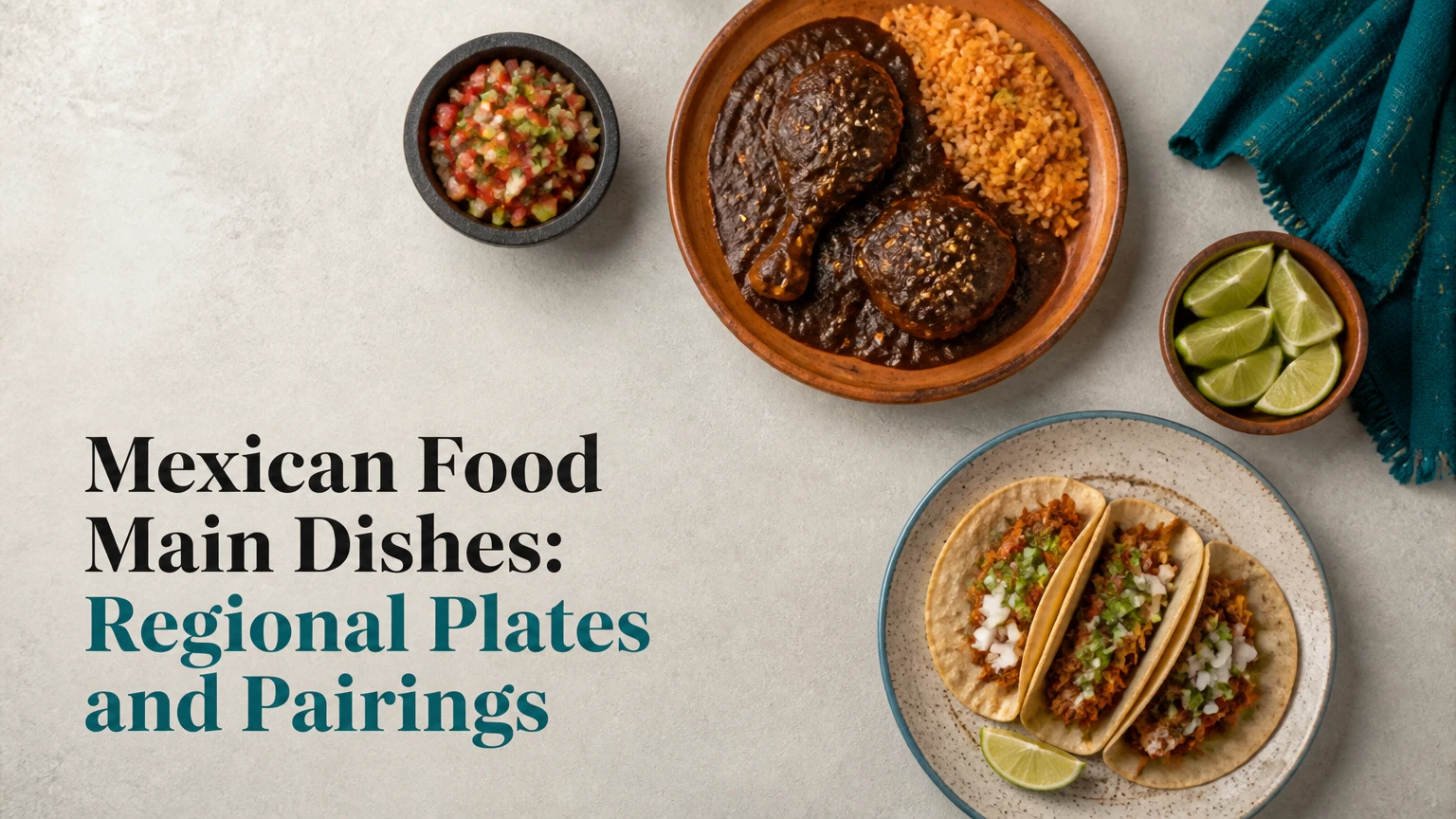
Mexican food main dishes, or platos fuertes, include sauced meats, hominy stews, stuffed chiles, antojitos served as meals, and vegetable-centered plates shaped by regional ingredients. The strongest examples balance corn, beans, chiles, acidity, herbs, and slow-developed savory flavor, while tortillas, rice, or garnishes create the final bite.
Key Facts at a Glance
- Mexican main dishes vary substantially by region, with mole associated strongly with Puebla and Oaxaca, pibil with Yucatán, and birria with Jalisco.
- A dried chile contributes color, aroma, body, and mild bitterness, not only heat.
- Corn tortillas are commonly made from nixtamalized maize, a process that improves flavor, handling, and mineral availability.
- Traditional cooking time ranges from 30 minutes for some skillet dishes to 6 hours for large braises.
- A typical restaurant entrée costs about $8-$25 in the United States, while regional prices in Mexico vary by city and venue.
- Garnishes such as lime, onion, cabbage, radish, herbs, and pickled vegetables are functional flavor components, not decoration.
What Counts as a Mexican Main Dish?
A Mexican main dish is a substantial regional preparation built around a central filling, sauce, stew, or masa-based component and served with complementary starches or garnishes. The category includes festive dishes such as mole and chiles en nogada, everyday meals such as tinga, and portable foods such as tacos and enchiladas.
Mexican cuisine cannot be reduced to one formula. Northern cooking uses flour tortillas, grilled meats, and wheat more often, while Yucatán cooking relies on achiote, sour citrus, and banana leaves. Oaxaca is known for multiple mole traditions, Veracruz for seafood and tomato-chile preparations, and Michoacán for distinctive slow-cooked meat dishes.
UNESCO’s 2010 inscription describes traditional Mexican cuisine as “a comprehensive cultural model” built around farming, ritual, craft, and community knowledge. That description explains why an authentic dish involves more than a spice list. The maize variety, grinding method, cooking vessel, regional chile, serving occasion, and accompanying salsa all affect identity.
How Is a Main Dish Usually Structured?
Mexican platos fuertes often combine a central preparation with a vehicle and a counterpoint. The vehicle may be a tortilla, rice, hominy, or beans; the counterpoint may be acid, fresh herbs, raw onion, crisp cabbage, or a chile condiment.
| Component | Common examples | Primary function | Typical serving |
|---|---|---|---|
| Main filling | Chicken, beef, goat, fish, mushrooms | Provides protein and savory depth | 120-200 g per diner |
| Sauce or broth | Mole, adobo, salsa verde, consomé | Adds moisture, aroma, and chile character | 120-250 ml |
| Vehicle | Corn tortilla, rice, hominy, masa | Carries sauce and balances intensity | 3-5 tortillas or 150 g rice |
| Counterpoint | Lime, radish, pickled onion, cabbage | Adds acid, freshness, or crunch | 15-60 g |
How Do Mexican Main Dishes Build Flavor?
Mexican main dishes build flavor through layered contrast rather than heat alone. Toasted chiles provide aroma and color, roasted vegetables add sweetness, acids sharpen rich sauces, and corn, beans, or rice absorb concentrated seasoning.
A practical sauce sequence is to lightly toast dried chiles, remove stems and unwanted seeds, soften them in hot water, blend them with aromatics, and strain the mixture before simmering. Chiles should smell fragrant and leathery after toasting. A blackened chile usually contributes harsh bitterness that sugar cannot fully repair.
Searing meat before braising develops browned surface compounds, but searing is not mandatory for every dish. In pibil, the marinade and enclosed roasting environment matter more than a crust. In pozole, the broth and hominy carry the dish. Treating one technique as universal produces less accurate results.
How Are Dried Chiles Used?
Different chiles create different sauce profiles. Ancho chiles supply raisin-like sweetness, guajillo chiles provide red color and moderate fruitiness, pasilla chiles add dark berry notes, and chipotle contributes smoke. Heat varies by harvest and storage, so tasting the blended sauce matters more than trusting a label.
| Chile | Typical heat | Main flavor | Common dishes |
|---|---|---|---|
| Ancho | 1,000-2,000 SHU | Dried fruit, cocoa, mild earth | Mole, enchilada sauce |
| Guajillo | 2,500-5,000 SHU | Red fruit, tea, gentle acidity | Birria, adobo |
| Pasilla | 1,000-2,500 SHU | Berry, raisin, dark earth | Mole, noodle soups |
| Chipotle | 2,500-8,000 SHU | Smoke, tomato, moderate heat | Tinga, marinades |
Practitioner rule: toast chiles for roughly 10-20 seconds per side over medium heat. The correct endpoint is aromatic and pliable, never blistered black. Blend with some soaking liquid, then add more gradually because excess water weakens both flavor and texture.
Which Regional Mexican Main Dishes Should You Know?
The most useful way to understand Mexican main dishes is by region and cooking method. Mole represents labor-intensive sauce building, pibil represents enclosed roasting, birria represents chile-based braising, and pozole represents a communal hominy stew.
What Are the Best-Known Braised and Brothy Dishes?
Birria is a highly seasoned braise traditionally associated with Jalisco and historically prepared with goat, although beef versions are now widespread. The meat is cooked with chiles, spices, aromatics, and an acidic element, then served with its strained cooking broth, called consomé.
Barbacoa is a separate tradition with its own regional histories and methods. It may involve lamb, goat, or beef cooked slowly in an earth oven, steamer, or covered vessel. Birria and barbacoa can both be tender and brothy, but they should not be treated as interchangeable names.
Pozole is a hominy-based soup-stew commonly prepared with chicken or meat and served with cabbage, radish, onion, oregano, lime, and tostadas. Red pozole uses dried red chiles, green pozole often uses tomatillo and green herbs, and white pozole leaves the broth relatively chile-free.
Which Mole Styles Are Most Distinctive?
Mole is a family of sauces rather than one recipe. Mole poblano commonly combines dried chiles, spices, seeds, nuts, fruit, aromatics, and a small amount of chocolate, while Oaxacan mole negro is darker and more intensely layered.
A correction matters here: mole negro does not require intentionally burned chile seeds. Some ingredients may be deeply toasted, and dark color can result from roasted chiles, spices, bread, fruit, and careful reduction, but uncontrolled burning produces bitterness rather than authenticity.
Pipian belongs in the same broad conversation but uses ground seeds, often pumpkin seeds, as a defining thickener. Green pipian typically includes green herbs, tomatillo, or green chiles, creating a fresher profile than a dark mole.
| Dish | Regional association | Sauce or broth profile | Typical centerpiece |
|---|---|---|---|
| Mole poblano | Puebla | Dark, spiced, mildly sweet | Turkey or chicken |
| Mole negro | Oaxaca | Roasted, earthy, bittersweet | Chicken or turkey |
| Pipian verde | Central and southern Mexico | Seed-thickened, herbal | Chicken or vegetables |
| Birria | Jalisco | Chile-rich, aromatic broth | Goat or beef |
What Makes Yucatán Dishes Different?
Cochinita pibil uses marinated meat, achiote, sour orange, garlic, and spices, traditionally cooked in a covered pit or enclosed vessel with banana leaves. The banana leaf helps retain moisture and contributes a subtle vegetal aroma, but it does not replace the acid or achiote marinade.
When sour orange is unavailable, a mixture of orange juice and lime juice approximates the needed sweet-acid balance more effectively than orange juice alone. Pickled red onion adds a sharp counterpoint, while habanero offers heat at the table rather than forcing every serving to the same level.
Which Stuffed and Skillet Dishes Work as Full Meals?
Chiles en nogada consists of roasted poblano chiles filled with a fruit-and-savory mixture, covered with walnut sauce, and finished with pomegranate and parsley. The dish is strongly associated with late summer and early autumn celebrations because fresh pomegranate, walnuts, and suitable fruit are seasonal.
Tinga de pollo uses shredded chicken cooked with tomato, onion, garlic, and smoky chipotle. It is faster than mole or birria and works in tostadas, tacos, or rice plates. Chile relleno typically contains cheese or a savory filling inside a battered poblano, then receives tomato sauce.
What Are the Main Mexican Food Main Dishes for Vegetarians?
Vegetarian Mexican main dishes include chile relleno with cheese, enfrijoladas filled with vegetables, huitlacoche quesadillas, squash blossom quesadillas, mushroom tacos, and enchiladas filled with beans or roasted vegetables. A diner should verify that beans, rice, and sauces were not prepared with animal fat or meat broth.
Nopales, or cactus paddles, have a tart, green flavor and firm texture when grilled or simmered. Huitlacoche, a corn fungus prized in central Mexican cooking, tastes earthy and mushroom-like. These ingredients provide regional character that substitutions such as generic bell pepper cannot fully reproduce.
| Vegetarian dish | Main ingredient | Typical sauce | Approximate preparation |
|---|---|---|---|
| Enfrijoladas | Tortillas, beans, cheese | Black bean sauce | 25-40 minutes |
| Huitlacoche quesadillas | Corn tortillas, huitlacoche | Green salsa | 20-30 minutes |
| Chile relleno | Poblano, cheese or vegetables | Tomato sauce | 45-60 minutes |
| Nopal plate | Grilled cactus, beans, cheese | Salsa verde | 25-35 minutes |
How Do the Main Cooking Styles Compare?
Braises provide the deepest meat tenderness but need time, while griddled dishes deliver faster service and clearer individual ingredient flavor. Sauced dishes reward careful blending and seasoning, whereas hominy stews are easier to scale for gatherings.
| Cooking style | Typical time | Signature texture | Best examples |
|---|---|---|---|
| Chile braise | 2-5 hours | Shreddable, sauce-coated | Birria, adobo |
| Enclosed roast | 3-6 hours | Moist, pull-apart | Pibil, barbacoa |
| Griddle cooking | 15-45 minutes | Crisp edges, fresh filling | Tacos, quesadillas |
| Hominy simmer | 1.5-3 hours | Tender kernels, brothy base | Pozole, menudo-style stews |
Is Mole Better Than Birria or Pibil?
Mole is the best choice for layered sauce complexity, birria is the best choice for tender meat and dipping broth, and pibil is the best choice for citrusy, aromatic shredded filling. The right selection depends on whether sauce depth, broth, or acidity matters most.
| Priority | Best choice | Why | Main limitation |
|---|---|---|---|
| Deep sauce complexity | Mole poblano | Multiple roasted ingredients and spices | Often requires 2-4 hours |
| Dipping and tenderness | Birria | Meat and consomé come from one braise | Broth can be rich |
| Bright citrus flavor | Cochinita pibil | Achiote and sour citrus marinade | Requires planning |
| Fast meal | Tinga | Finished in about 35-50 minutes | Less textural variety |
How Much Time and Money Do These Dishes Require?
Home preparation typically takes 30 minutes to 6 hours, depending on whether the dish involves a quick filling, a blended sauce, or a large braise. Restaurant prices commonly range from $8-$15 at casual venues and $15-$30 at full-service restaurants in the United States, with local costs varying by city.
| Dish | Typical home time | Typical U.S. entrée price | Servings from 1 kg centerpiece |
|---|---|---|---|
| Tinga | 35-50 minutes | $9-$16 | 6-8 |
| Pozole | 2-3 hours | $12-$22 | 6-8 |
| Birria | 3-5 hours, or 75-100 minutes under pressure | $15-$28 | 6-8 |
| Mole chicken | 2-4 hours | $16-$30 | 6-8 |
Dried chiles are usually measured by count or weight rather than a fixed meat ratio. A typical home batch uses 40-80 g of dried chiles for 1 kg of meat, but the number changes with chile size, desired thickness, and whether tomatoes, seeds, nuts, or bread also contribute body.
Restaurant prices in Mexico can be much lower at markets and fondas than at destination restaurants. A menu price also may exclude tortillas, service charges, drinks, or premium regional ingredients, so compare the complete plate rather than the headline number.
How Should You Order Mexican Main Dishes?
Order by desired texture and flavor rather than by heat alone. Choose birria for a soft, brothy meal; mole for a dark sauce over rice or tortillas; pibil for citrus and pickled onion; pozole for a customizable bowl; and chile relleno for a crisp exterior with a soft filling.
Ask whether the dish contains a particular chile, whether the sauce is hot or merely smoky, and whether the beans or rice use animal fat. At a traditional restaurant, plato fuerte usually identifies the substantial course, while tacos, enchiladas, or tostadas may function as either a full meal or a lighter order depending on portion size.
A useful order includes one rich element and one acidic or fresh element. Lime, pickled onion, cabbage, radish, and raw herbs prevent a heavily seasoned dish from tasting flat after several bites.
What Commonly Goes Wrong When Cooking These Dishes?
The most common failures are burnt chiles, thin sauce, tough meat, oversalted broth, and tortillas that crack. Each problem has a specific cause, so adding more seasoning rarely fixes the underlying technique.
- Bitter sauce: The chiles or spices were scorched. Start again if the bitterness dominates; small additions of tomato, stock, or a little piloncillo can soften mild bitterness but cannot erase burning.
- Tough braised meat: The cooking temperature was too high or the process ended early. Cover the pot, lower the heat, and continue until a fork enters with little resistance.
- Gritty mole or salsa: Chile skins, seeds, or spices were not fully processed. Blend longer and pass the sauce through a fine sieve before frying or simmering.
- Watery sauce: Too much soaking liquid entered the blender. Reduce the strained sauce uncovered, then season after concentration.
- Flat pozole: The broth lacks salt, acid, or aromatic contrast. Adjust salt first, then serve lime, oregano, onion, and chile separately.
- Cracked tortillas: The tortillas are cold or dry. Heat them on a comal and hold them in a covered cloth so steam restores flexibility.
Food safety also matters during long cooking. Refrigerate leftovers within 2 hours, divide large batches into shallow containers, and reheat soups and braises until steaming throughout. Do not leave a large pot cooling slowly on the counter.
Can These Dishes Be Made Ahead?
Mole, birria, pozole, and pibil generally improve after several hours because their sauces and broths settle, although tortillas and crisp garnishes should be prepared close to serving. Cool cooked food quickly, refrigerate it for up to 3-4 days, or freeze suitable portions for longer storage.
Mole may thicken overnight and need warm stock during reheating. Birria fat may solidify on top, which makes skimming easy and gives the broth a cleaner finish. Store cabbage, radish, pickled onion, lime, and herbs separately so their textures remain sharp.
Which Dish Fits Your Situation?
Choose cochinita pibil for a forgiving weekend roast, tinga for a fast weeknight filling, pozole for a group meal, and mushroom or bean enfrijoladas for a vegetarian table. Equipment, available ingredients, and desired serving style matter more than the label “authentic.”
| Situation | Recommended dish | Equipment | Planning requirement |
|---|---|---|---|
| Beginner cook | Tinga | Skillet or Dutch oven | 35-50 minutes |
| Weekend gathering | Pozole | Large stockpot | 2-3 hours |
| Pressure cooker owner | Birria | Electric pressure cooker | 75-100 minutes |
| Vegetarian dinner | Enfrijoladas | Blender and skillet | 25-40 minutes |
| Adventurous project | Mole poblano | Comal, blender, sieve | 2-4 hours |
What Is the Healthier Choice?
Pozole verde with lean chicken, beans with vegetables, and grilled nopal plates can be lighter choices than cream-based or heavily fried preparations. Health depends on portion size, cooking fat, toppings, and the balance of broth, filling, tortillas, rice, and beans.
No Mexican main dish is automatically healthy or unhealthy. A bowl of pozole can become substantially heavier with large amounts of fried toppings, while a small serving of mole can fit a balanced meal when paired with vegetables and modest starch. Ask how the kitchen prepares the beans and rice if fat content matters.
The Bottom Line
Mexican food main dishes range from 35-minute tinga to six-hour pibil, mole, and birria, so no single plate represents the cuisine. Choose mole for layered sauce, birria for tender meat and consomé, pibil for citrus and achiote, pozole for communal customization, and enfrijoladas or nopal dishes for vegetarian meals. Regional method matters more than a generic “Mexican” label.
Frequently Asked Questions
Are tacos considered Mexican main dishes?
Tacos can function as Mexican main dishes when the portion provides a complete meal, especially with several tacos, beans, or a side of rice. Tacos al pastor, fish tacos, barbacoa tacos, and tacos de canasta represent different regional and serving traditions, so the filling and preparation determine the style.
What Mexican dish is easiest to make at home?
Tinga is one of the easiest Mexican main dishes for home cooks because shredded chicken simmers in a tomato, onion, garlic, and chipotle sauce in about 35-50 minutes. Enfrijoladas are another practical option because blended beans create a sauce without a long chile-toasting process.
What is the difference between enchiladas and enfrijoladas?
Enchiladas are tortillas dipped in or covered with chile-based sauce, while enfrijoladas use a blended bean sauce. Both may contain cheese, chicken, vegetables, or other fillings, but enfrijoladas are usually milder, creamier, and more earthy because beans provide the sauce base.
Which Mexican main dish is best for a large group?
Pozole is usually the most practical choice for a large group because a single pot produces 6-8 servings or more and guests customize each bowl with cabbage, radish, lime, onion, oregano, and tostadas. The toppings can be prepared separately while the hominy stew stays hot.
Can Mexican main dishes be made without specialty ingredients?
Many Mexican main dishes can be adapted with ordinary ingredients, but substitutions change flavor. Fresh lime can support sour orange in pibil, common dried red chiles can approximate a regional blend, and canned hominy can replace dried hominy when time is limited. The method should remain consistent even when ingredients change.
What should I serve with a rich Mexican main dish?
Serve a rich Mexican main dish with a fresh or acidic counterpoint, such as pickled onion, cabbage, radish, lime, or a bright salsa. Plain rice, beans, and warm corn tortillas provide structure, while fresh herbs prevent a dark sauce or fatty braise from overwhelming the meal.