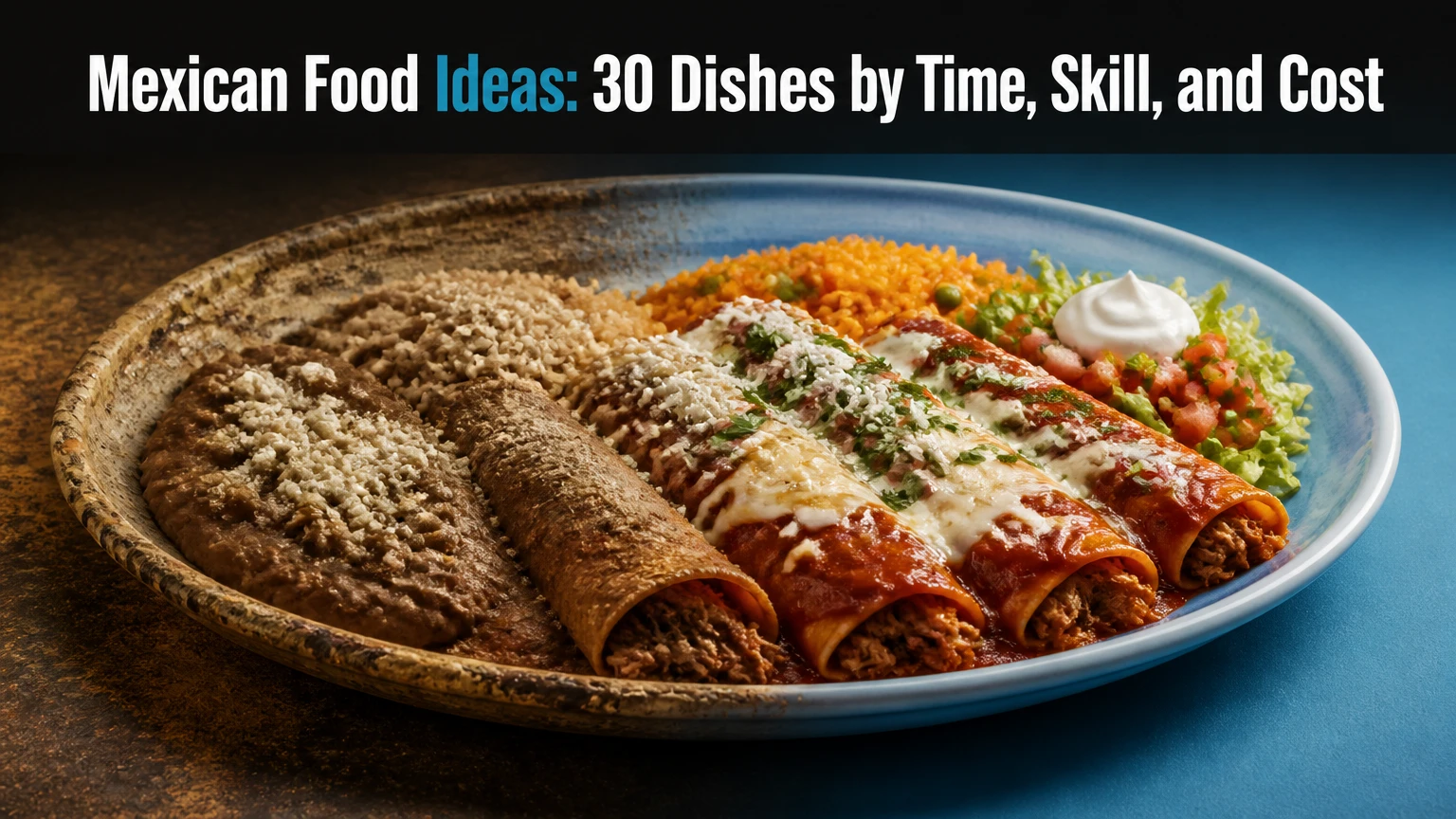
Mexican food ideas range from quick tacos and quesadillas to slow-cooked birria, tamales, and regional mole. The cuisine is built around nixtamalized corn, beans, chilies, herbs, fresh produce, and layered cooking techniques, so the best dish depends on available time, cooking skill, budget, dietary needs, and desired region.
Key Facts at a Glance
- Mexican cuisine combines Indigenous ingredients and techniques with Spanish influences that developed after the sixteenth century.
- Corn, beans, and chilies form a useful foundation, but rice, squash, tomatoes, cacao, seafood, herbs, and many fruits also shape Mexican cooking.
- Nixtamalization cooks dried corn with an alkaline solution, improving masa texture and increasing the bioavailability of niacin.
- Corn tortillas are the usual base for tacos, tostadas, enchiladas, and chilaquiles, while flour tortillas are especially associated with northern Mexico.
- A simple Mexican plate usually balances a main filling with tortillas or rice, beans, salsa, acidity, and a fresh garnish.
- Typical home-cooked dishes take 15-30 minutes for tacos or quesadillas and 2-5 hours for braises, depending on the cut and method.
What Defines Mexican Cuisine?
Mexican cuisine is a regional food system rather than a single standardized menu. Indigenous crops such as maize, beans, squash, tomatoes, chilies, and cacao combine with Spanish-introduced ingredients including wheat, rice, dairy, citrus, and many domesticated animals.
UNESCO added traditional Mexican cuisine to its Representative List of the Intangible Cultural Heritage of Humanity in 2010. UNESCO describes it as “a comprehensive cultural model” involving farming, ritual practices, culinary skills, and community customs. That recognition matters because Mexican food includes agricultural knowledge and social practice, not only finished recipes.
The central technique is often the layering of flavor. A cook may toast dried chilies, soften them in water, blend them with aromatics, fry the sauce, and then simmer it with a filling. Fresh lime, raw onion, cilantro, radish, avocado, or a sharp salsa can then supply contrast.
What Is Nixtamalization?
Nixtamalization is the treatment of dried corn with water and calcium hydroxide, commonly called food-grade lime. The corn is heated and rested, then washed and ground into masa for tortillas, tamales, gorditas, and other foods.
The process softens the kernel, loosens the hull, improves dough formation, and makes niacin more available for absorption. Home cooks can use prepared masa harina, but the flour must be rehydrated correctly. A typical starting ratio is 1 cup masa harina to about ⅔ cup warm water, adjusted until the dough feels soft and pliable rather than sticky.
Which Ingredients Build the Flavor?
Mexican flavor usually comes from contrast rather than maximum heat. Toasted chilies provide depth, tomatoes add sweetness and acidity, onion and garlic add aroma, herbs add freshness, and lime or vinegar sharpens rich fillings.
| Ingredient group | Named examples | Main role | Typical home quantity |
|---|---|---|---|
| Corn products | Corn tortilla, masa harina, hominy | Structure and starch | 2-4 tortillas per person |
| Beans | Pinto, black, bayo, peruano | Protein and creaminess | ½-¾ cup cooked per person |
| Fresh aromatics | White onion, garlic, cilantro | Savory and herbal lift | ¼ onion plus 1 garlic clove |
| Acidic ingredients | Lime, tomatillo, vinegar | Brightness and balance | 1-2 tablespoons per serving |
| Chilies | Jalapeño, ancho, guajillo, habanero | Heat, fruit, smoke, depth | 1 fresh chile or 1-3 dried chilies |
| Dairy and seeds | Queso fresco, crema, pumpkin seeds | Salt, richness, texture | 1-2 tablespoons per serving |
Which Mexican Food Ideas Work for Beginners?
The best beginner choices are quesadillas, bean tacos, chicken tinga, chilaquiles, and roasted vegetable tostadas because each uses forgiving techniques and allows heat, salt, and acidity to be adjusted at the end.
Quesadillas teach tortilla heating and cheese melting without requiring a complex sauce. Bean tacos teach seasoning and texture. Chilaquiles use prepared tortilla chips and salsa, making timing more important than knife precision. Chicken tinga introduces a tomato and chile braise that can be made in one pan.
Avoid starting with tamales or a complex mole if the goal is a fast first success. Both dishes reward practice, but their textures depend on multiple variables, including masa hydration, steaming, chile preparation, and cooking duration.
30 Mexican Food Ideas by Dish Type
The following options cover breakfast, snacks, weeknight dinners, special occasions, vegetarian meals, and seafood. Costs are typical United States grocery estimates for four servings, excluding pantry staples, and restaurant prices vary substantially by city.
| Dish | Core components | Typical home time | Typical grocery cost |
|---|---|---|---|
| Bean tacos | Corn tortillas, seasoned beans, salsa | 20 minutes | $8-$14 |
| Chicken tacos | Chicken, tortillas, onion, salsa | 30 minutes | $14-$22 |
| Vegetable quesadillas | Tortillas, cheese, squash or mushrooms | 20 minutes | $10-$18 |
| Chilaquiles | Chips, red or green salsa, eggs | 25 minutes | $10-$18 |
| Chicken tinga | Chicken, tomato, onion, chipotle | 45 minutes | $15-$24 |
| Enchiladas verdes | Tortillas, tomatillo salsa, filling | 50 minutes | $14-$24 |
| Birria | Beef or goat, dried chilies, aromatics | 3.5-5 hours | $28-$48 |
| Tamales | Masa, filling, corn husks | 3-5 hours | $20-$38 |
| Elotes | Corn, crema or mayonnaise, cheese, lime | 25 minutes | $8-$16 |
| Tostadas | Fried or baked tortillas, beans, toppings | 25 minutes | $10-$20 |
| Ceviche | Fresh fish or shrimp, lime, onion, herbs | 30 minutes | $20-$38 |
| Mole with chicken | Chile sauce, spices, seeds, chicken | 2-4 hours | $25-$45 |
What Are Good Mexican Breakfast Ideas?
Chilaquiles, huevos rancheros, breakfast tacos, molletes, and enfrijoladas are practical Mexican breakfast ideas. Chilaquiles use tortilla chips simmered briefly in salsa, while enfrijoladas dip tortillas in a bean sauce and fold them around cheese, eggs, or vegetables.
For two people, use 4 cups tortilla chips, 1½ cups salsa, 4 eggs, and ½ cup crumbled cheese. Heat the salsa first, add the chips for 30-60 seconds, and plate immediately. Longer simmering produces a softer dish, but it can erase the contrast between crisp chips and saucy centers.
Molletes use toasted bread spread with refried beans and melted cheese, then finished with pico de gallo. They are especially useful when tortillas are unavailable.
Which Dishes Suit a Weeknight?
Bean tacos, chicken tinga, quesadillas, shrimp tacos, and skillet enchiladas fit a 20-45 minute weeknight window. The main time-saving strategy is to prepare one concentrated salsa and one cooked filling that can serve several meals.
| Time available | Best options | Main technique | Skill level |
|---|---|---|---|
| 15-20 minutes | Quesadillas, bean tacos, avocado tostadas | Heat and assemble | Beginner |
| 25-35 minutes | Chilaquiles, shrimp tacos, elotes | Simmer or sear | Beginner to intermediate |
| 40-60 minutes | Chicken tinga, enchiladas, pozole shortcut | Braise or bake | Intermediate |
| 2-3 hours | Cochinita-style chicken, birria shortcut | Covered slow cooking | Intermediate |
| 3-5 hours | Tamales, traditional birria, complex mole | Steam or layered braise | Advanced |
How Should a Mexican Meal Be Structured?
A balanced Mexican meal commonly pairs a seasoned main dish with a starch, a bean preparation, a fresh or acidic element, and a salsa. For a taco dinner, plan 3-4 small tortillas and 4-6 ounces of filling per adult, then add beans, vegetables, and toppings.
A practical plate formula is:
- Main filling: chicken, fish, beef, mushrooms, squash, beans, or eggs.
- Starch: 3 tortillas, ½-¾ cup rice, or 2 tostadas per person.
- Fresh contrast: cabbage, onion, cilantro, radish, avocado, or tomato.
- Acid and heat: lime wedges plus a mild, medium, or hot salsa.
- Optional richness: queso fresco, crema, avocado, or toasted seeds.
This structure prevents the common mistake of making every component rich and soft. If the filling is braised, add raw cabbage or onion. If the salsa is hot, use a cooling element such as avocado or crema.
How Do You Assemble Better Tacos?
Warm corn tortillas on a dry comal or skillet for 20-30 seconds per side, stack them in a towel, and use two tortillas for wet or heavily filled tacos. Add approximately 2 ounces of filling, then finish with onion, cilantro, salsa, and lime.
The filling should be hot, but the tortilla should remain flexible. A cold tortilla cracks and leaks; an overcooked tortilla becomes brittle. Do not overload the taco with cheese, lettuce, meat, and salsa simultaneously because excessive moisture destroys its structure.
You will know the tortilla is ready when small toasted spots appear and the surface bends without splitting. Keep the stack covered while assembling.
Which Chilies Should a Home Cook Buy?
Ancho, guajillo, and árbol chilies are the most useful starter dried chilies because they cover fruity depth, mild red-sauce flavor, and direct heat. Fresh jalapeños, serranos, poblanos, and habaneros provide different heat and aroma profiles.
| Chile | Form | Typical heat range | Best use |
|---|---|---|---|
| Ancho | Dried poblano | 1,000-2,000 SHU | Mole, enchilada sauce |
| Guajillo | Dried | 2,500-5,000 SHU | Birria-style broth, marinades |
| Árbol | Dried | 15,000-30,000 SHU | Hot salsa and chile oil |
| Jalapeño | Fresh | 2,500-8,000 SHU | Pico de gallo, nachos, tacos |
| Serrano | Fresh | 10,000-25,000 SHU | Green salsa and garnishes |
| Poblano | Fresh | 1,000-2,000 SHU | Rajas, stuffing, roasting |
| Habanero | Fresh | 100,000-350,000 SHU | Yucatán-style sauces |
Scoville Heat Units are approximate because growing conditions and individual peppers change the result. Remove seeds and inner membranes for a milder sauce, but remember that much of a chile’s aroma comes from the outer flesh.
What Are the Major Regional Styles?
Mexican regional cooking changes with climate, agriculture, coastline, local history, and available fuel. Northern states favor grilled beef, flour tortillas, and wheat products, while Oaxaca is known for varied moles, tlayudas, masa foods, and distinctive cheeses.
| Region | Representative dishes | Signature ingredients | Typical cooking identity |
|---|---|---|---|
| Northern Mexico | Carne asada, flour-tortilla tacos | Beef, wheat flour, dried chilies | Grilling and flour tortillas |
| Oaxaca | Mole negro, tlayuda, memelas | Cacao, chilies, masa, herbs | Toasting, grinding, long sauces |
| Puebla | Mole poblano, cemitas, chiles en nogada | Chilies, spices, nuts, fruit | Layered sauces and filled breads |
| Yucatán | Cochinita-style dishes, papadzules | Achiote, sour orange, habanero | Citrus marinades and earth ovens |
| Veracruz | Seafood with tomato, olives, and herbs | Fish, tomatoes, capers, herbs | Coastal stews and baking |
| Jalisco | Birria, tortas ahogadas | Dried chilies, beef, regional breads | Braising and chile broths |
| Michoacán | Carnitas-style preparations, uchepos | Corn, herbs, slow-cooked meats | Masa dishes and long cooking |
Regional labels should be used carefully. A dish may have many local versions, and a restaurant adaptation can preserve the name while changing the technique.
How Does Mexican Food Compare With Tex-Mex?
Mexican food and Tex-Mex overlap through ingredients such as tortillas, beans, chilies, beef, and cheese, but they developed in different geographic and historical contexts. Mexican cooking more often emphasizes regional salsas and corn masa, while Tex-Mex commonly uses flour tortillas, yellow cheese, seasoned ground beef, and combination plates.
| Feature | Mexican regional cooking | Tex-Mex cooking |
|---|---|---|
| Common tortilla | Corn in central and southern regions | Flour common in burritos and fajitas |
| Frequent cheese | Queso fresco, Oaxaca, cotija | Cheddar, Monterey Jack, processed blends |
| Typical taco format | Small soft tortilla with focused filling | Crisp shell or larger flour tortilla |
| Common protein style | Braised, grilled, marinated, seafood | Ground beef, grilled beef, combination meats |
| Sauce pattern | Fresh or dried chile sauces | Chili gravy, cheese sauce, tomato-based sauces |
| Geography | Mexico, with major regional variation | Texas and neighboring United States |
Neither category is automatically more legitimate. The useful distinction is culinary origin and technique, not a simple authentic versus inauthentic ranking.
What Is the Best Cooking Process for Birria-Style Tacos?
Birria-style tacos require a seasoned chile broth, a tender braised filling, and tortillas dipped lightly in the cooking fat before griddling. A typical batch takes 30-45 minutes of active preparation plus 3-4 hours of covered cooking.
Step 1: Build the Chile Sauce
Toast 4 guajillo chilies and 1 ancho chile for 20-30 seconds per side, keeping the heat moderate so they do not become bitter. Soak them for 15 minutes, then blend with 2 tomatoes, ½ onion, 3 garlic cloves, 1 teaspoon cumin, 1 teaspoon oregano, and 2 cups broth.
Strain the sauce if the blender leaves tough chile skin. The sauce should taste rounded rather than sharply burnt.
Step 2: Brown and Braise the Filling
Brown 3-4 pounds of beef chuck or another suitable braising cut in batches. Add the sauce and enough broth to cover about two-thirds of the meat, then cover and cook at 325°F in an oven or at a very low simmer on the stove.
Cook until the meat reaches at least 195°F and separates easily with a fork. FoodSafety.gov recommends 145°F for whole beef cuts and 165°F for poultry, but collagen-rich braising cuts need a higher final temperature for tenderness.
Step 3: Fry the Tacos
Skim some seasoned fat from the broth, dip each tortilla briefly, and cook on a hot skillet. Add meat, fold, and cook 1-2 minutes per side until crisp.
Serve with broth for dipping, but cool leftovers quickly in shallow containers. Refrigerate within two hours and use within 3-4 days.
Which Mexican Food Ideas Fit Different Diets?
Vegetarian, vegan, gluten-free, dairy-free, and lower-sodium Mexican meals are straightforward when the cook treats beans, masa, vegetables, and salsas as complete flavor systems rather than as substitutions for meat.
| Dietary need | Strong options | Check or change | Useful replacement |
|---|---|---|---|
| Vegetarian | Bean tacos, enchiladas, rajas | Use vegetable stock | Mushrooms, squash, lentils |
| Vegan | Tostadas, salsa verde tacos, enfrijoladas | Omit dairy and animal fat | Avocado, pumpkin seeds, cashew crema |
| Gluten-free | Corn tacos, tamales, ceviche | Verify packaged stock and seasoning | Certified corn tortillas |
| Dairy-free | Ceviche, bean bowls, chicken tacos | Skip crema and cheese | Avocado, toasted seeds, cabbage |
| Lower sodium | Fresh salsa, grilled vegetables, beans from dry | Limit packaged broth and chips | Lime, garlic, roasted chilies |
Ceviche and aguachile can be light choices, but lime does not reliably eliminate pathogens in raw seafood. Use seafood intended for raw consumption, keep it below 40°F, and follow local food-safety guidance. Pregnant people, young children, older adults, and immunocompromised diners should avoid raw or undercooked seafood.
Common Mistakes and How Do You Fix Them?
Why Does Mexican Food Taste Bland?
Bland Mexican food usually lacks one of four elements: toasted flavor, salt, acidity, or chile aroma. Add salt gradually, then lime or vinegar, instead of adding more ground chile, which increases heat without creating depth.
Why Do Corn Tortillas Crack?
Corn tortillas crack when they are cold, dry, or underhydrated. Reheat them on a dry skillet, stack them under a damp towel, and use a second tortilla for fillings with broth or salsa.
Why Does Salsa Taste Bitter?
Bitter salsa usually results from burnt dried chilies, excessive char, or too many seeds from a very hot pepper. Remove blackened pieces, dilute with tomato or tomatillo, and restore balance with salt and a small amount of lime.
Why Do Chilaquiles Become Soggy?
Chilaquiles become soggy when chips simmer too long or the salsa is too thin. Use thick salsa, heat it separately, add chips for 30-60 seconds, and plate immediately.
Why Is Mole Too Sharp or Too Sweet?
Mole can taste harsh when chilies are scorched or insufficiently cooked. Simmer the blended sauce for 20-40 minutes, then adjust with salt, a small amount of stock, toasted seeds, or unsweetened cacao rather than adding large quantities of sugar.
How Much Does Mexican Food Cost?
Typical home-cooked Mexican meals cost $2-$12 per person, while casual restaurant entrées commonly cost $10-$25 in the United States. The largest variables are protein, seafood, cheese, local produce prices, restaurant location, and whether the dish requires several dried chilies or specialty ingredients.
| Eating situation | Typical price per person | Typical time | Example |
|---|---|---|---|
| Pantry bean tacos | $2-$4 | 20 minutes | Beans, tortillas, salsa |
| Family weeknight meal | $4-$8 | 30-60 minutes | Chicken tinga and rice |
| Seafood dinner at home | $7-$12 | 30-45 minutes | Shrimp tacos or ceviche |
| Casual restaurant meal | $10-$25 | 20-45 minutes | Enchiladas or taco plate |
| Special-occasion braise | $8-$15 | 3-5 hours | Birria or mole with chicken |
Restaurant prices in Mexico differ by city and venue. A small neighborhood taco stand, a market comedor, and a destination restaurant cannot be compared using one national price.
How Should You Choose a Dish?
Choose quesadillas or bean tacos for a first attempt, chilaquiles for a fast brunch, chicken tinga or enchiladas for a family dinner, tostadas or aguachile for a fresh meal, and mole or tamales when the cooking process itself is part of the occasion.
- For absolute beginners: Start with quesadillas, then make a fresh salsa and seasoned beans.
- For a 30-minute dinner: Choose chicken tacos, vegetable tostadas, or shrimp tacos.
- For vegetarian guests: Serve bean enfrijoladas, rajas, mushroom tacos, and avocado.
- For a group: Prepare one braised filling, two salsas, warm tortillas, beans, and fresh toppings.
- For regional exploration: Try Oaxaca-style mole, Yucatán-style achiote preparations, Veracruz seafood, or Jalisco birria.
- For lighter eating: Choose grilled fish tacos, ceviche prepared with appropriate food safety, bean bowls, or vegetable tostadas.
- For advanced cooks: Make tamales, nixtamalized tortillas, or a multi-chile mole.
Mexican food is not automatically healthy or unhealthy. A meal of fried chips, rich cheese, and creamy toppings has a different nutritional profile from grilled vegetables, beans, fresh salsa, and corn tortillas.
Frequently Asked Questions
Are Mexican food ideas always spicy?
Mexican food ideas are not always spicy. Many dishes use chilies for aroma, color, or depth while keeping heat moderate, and diners can control intensity through salsa choice. Remove chile membranes, use ancho or poblano peppers, and serve a hotter salsa separately when cooking for mixed preferences.
What is the easiest Mexican dish to make at home?
The easiest Mexican dish to make at home is a bean quesadilla or taco. Warm 6 tortillas, season 2 cups cooked beans with onion and cumin, add cheese if desired, and finish with salsa and lime. The meal takes approximately 20 minutes and requires one skillet.
Can Mexican food be made without corn?
Mexican food can be made without corn, but many traditional dishes depend on masa or tortillas. Use rice bowls, wheat flour tortillas, roasted vegetables, beans, or salads when necessary. For strict gluten avoidance, verify that packaged sauces, stocks, spice blends, and processed tortilla products are certified gluten-free.
What should I serve with tacos?
Serve tacos with one bean dish, one fresh topping, one acidic garnish, and a salsa. For four people, prepare 24 small tortillas, 1½-2 pounds filling, 3 cups beans, 2 cups shredded cabbage or vegetables, 2 limes, and 1-2 cups salsa.
Are flour tortillas authentic Mexican food?
Flour tortillas are authentic to several northern Mexican food traditions, where wheat grows more readily and flour tortillas became established regional staples. Corn tortillas are more common in many central and southern preparations, so the appropriate tortilla depends on the dish and region rather than a universal authenticity rule.
What makes a Mexican meal taste more authentic?
A Mexican meal gains regional accuracy from using the appropriate tortilla, chile, cooking method, and garnish rather than adding more heat. Toast dried chilies carefully, season beans and fillings independently, use fresh lime at the end, and identify the regional style before substituting ingredients.
The Bottom Line
The best Mexican food ideas match the occasion: tacos and quesadillas for speed, chilaquiles for breakfast, enchiladas and tinga for family meals, tostadas and seafood for freshness, and birria, tamales, or mole for long cooking. Build each meal around masa or another starch, a seasoned filling, beans or vegetables, fresh contrast, and a salsa. With that framework, Mexican food ideas become a flexible system for choosing, cooking, and adapting dishes without losing their regional character.