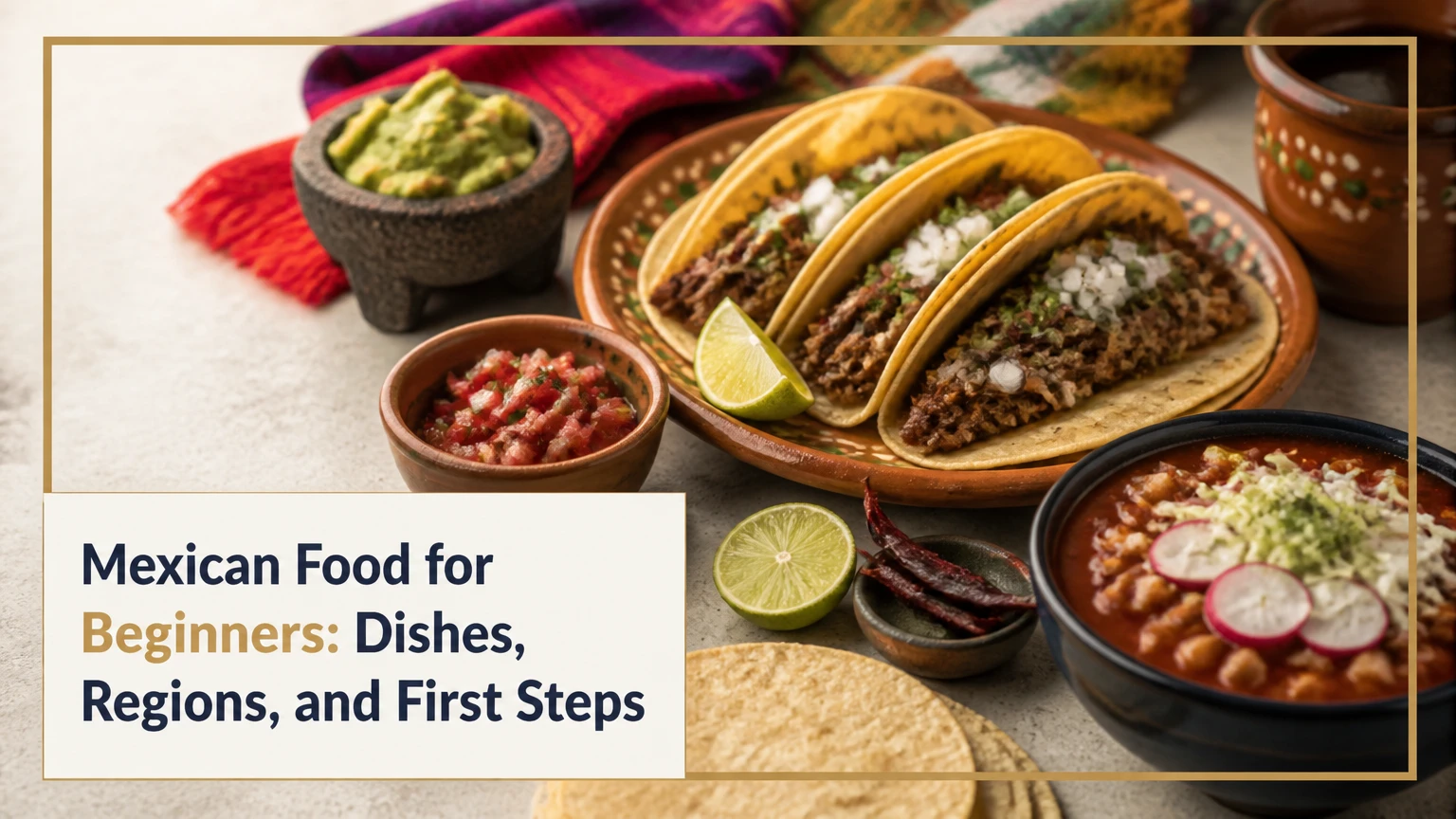
Mexican food for beginners is best understood as a cuisine built around maize, beans, chilies, herbs, slow cooking, and regional technique rather than one fixed flavor profile. Start with quesadillas, tacos, beans, or chilaquiles, then explore tamales, pozole, mole, and coastal or regional dishes as your palate develops.
Key Facts at a Glance
Mexican cuisine combines Indigenous foodways with Spanish ingredients and techniques developed after the sixteenth century.
Maize, beans, and chilies form the everyday foundation, while lime, onion, cilantro, tomato, squash, and avocado provide contrast.
Nixtamalization changes maize into masa with improved handling, aroma, and nutritional availability.
Corn tortillas are the default in much of Mexico; flour tortillas are especially associated with northern regions.
Typical casual meals in Mexico often cost about 80-150 Mexican pesos, but location, portion, and tourism can change the price substantially.
A beginner can prepare bean tacos or quesadillas in 15-25 minutes, while tamales and mole require substantially longer preparation.
What Is Mexican Food?
Mexican food is a collection of regional cuisines from Mexico, shaped by Indigenous civilizations including the Maya, Mexica, and other communities, plus Spanish livestock, wheat, dairy, rice, and cooking practices. UNESCO added traditional Mexican cuisine to its Representative List of the Intangible Cultural Heritage of Humanity in 2010 and described it as “a comprehensive cultural model.”
The definition matters because a taco stand in Mexico City, a seafood kitchen in Veracruz, and a corn-based meal in Oaxaca may use different ingredients and techniques. Mexican cuisine includes everyday home food, market snacks, festival dishes, coastal cooking, pastoral traditions, and sophisticated sauces.
The three-staple summary is useful but incomplete. Maize supplies tortillas and masa, beans add protein and body, and chilies contribute aroma, color, and heat. Fresh herbs, acidic fruit, seeds, tomatoes, squash, mushrooms, seafood, poultry, and many other ingredients complete the culinary system.
How Does Mexican Cuisine Build Flavor?
Mexican cooking usually layers flavor through browning, toasting, grinding, simmering, and garnishing. A sauce may begin with toasted chilies, roasted tomato, onion, garlic, and spices, then gain freshness from lime or herbs at the table.
Heat is only one attribute of a chili. Ancho chilies taste raisiny and mild, guajillos provide red-fruit notes, poblanos bring green depth, and habaneros deliver intense heat with tropical aroma. Removing seeds can reduce some heat, but the inner membranes and the individual chili also affect the result.
Which Mexican Dishes Should Beginners Try First?
The best first dishes are quesadillas for familiarity, tacos for learning the tortilla-and-filling format, chilaquiles for texture, and bean-based dishes for a mild, inexpensive introduction. Beginners who prefer soup should choose pozole, while diners seeking a more involved experience can try tamales or mole.
| Dish | Main structure | Typical spice | Beginner difficulty | Best first situation |
|---|---|---|---|---|
| Quesadilla | Heated tortilla with melted cheese and optional filling | 0-2/5 | 1/5 | Familiar, fast meal |
| Tacos | Small tortilla with filling, salsa, onion, and herbs | 1-4/5 | 1/5 | Sampling several flavors |
| Chilaquiles | Fried tortilla pieces softened in sauce | 1-3/5 | 2/5 | Breakfast or brunch |
| Burrito | Large flour tortilla with rice, beans, filling, and salsa | 0-3/5 | 1/5 | Portable, filling meal |
| Enchiladas | Rolled tortillas covered with chili or tomato sauce | 1-4/5 | 3/5 | Saucy baked dish |
| Tostadas | Crisp tortilla base with beans, protein, and toppings | 1-3/5 | 2/5 | Crunchy meal |
| Pozole | Hominy and meat or vegetables in broth | 0-3/5 | 2/5 | Soup and garnish lovers |
| Tamales | Masa filled and steamed in a husk or leaf | 0-4/5 | 4/5 | Festival or special meal |
What Do Tacos Taste Like?
Tacos taste different according to the filling, tortilla, salsa, and garnish, so tacos are the most efficient introduction to Mexican food. A typical taco uses a warm corn tortilla, a modest portion of filling, chopped onion, cilantro, and salsa, allowing the diner to adjust acidity and heat bite by bite.
Carne asada has grilled, savory notes. Al pastor traditionally uses seasoned spit-roasted meat, while carnitas uses tender, slowly cooked meat. For a beginner, grilled chicken, fish, mushrooms, beans, or cheese provide approachable alternatives.
Order two or three varieties rather than one large serving. A small taco often contains about 25-40 grams of filling, so several tacos reveal more of a kitchen’s range without committing to one unfamiliar flavor.
Are Quesadillas Mild?
Quesadillas are usually among the mildest Mexican dishes because melted cheese and a warm tortilla soften sharper flavors. The filling may include mushrooms, squash blossoms, beans, chicken, or other ingredients, and the salsa is often served separately.
A quesadilla is not automatically identical across Mexico. In Mexico City, the word can refer to a folded masa item that may or may not contain cheese, depending on local usage. In many restaurants outside Mexico, cheese is treated as mandatory. Ask if the item includes cheese and request salsa on the side when spice is uncertain.
What Are Chilaquiles and Enchiladas?
Chilaquiles are tortilla pieces simmered briefly in salsa, usually topped with crema, cheese, onion, and sometimes eggs. Enchiladas are filled tortillas covered with sauce, then heated until the tortilla and filling become integrated.
The texture separates the two dishes. Chilaquiles should retain some crisp edges, whereas enchiladas are softer and more structured. Green salsa often tastes sharper and herbaceous, while red salsa may taste deeper or smokier, although color does not reliably predict heat.
What Ingredients Should a Beginner Know?
A beginner’s Mexican pantry needs masa or tortillas, dried or canned beans, a few fresh aromatics, one or two chilies, lime, and a cooking fat. The most important skill is balancing salt, fat, acidity, aroma, and heat instead of adding large quantities of chili powder.
| Ingredient | Function | Typical beginner quantity | Practical substitute |
|---|---|---|---|
| Corn tortillas | Base, wrapper, utensil | 8-12 tortillas | Flour tortillas |
| Masa harina | Dough for tortillas and tamales | 2 cups | Store-bought tortillas |
| Pinto or black beans | Protein, filling, side | 2 cups cooked | Canned beans, rinsed |
| Dried guajillo chili | Color and mild fruitiness | 1-2 pods | Mild red chili powder |
| Poblano chili | Green aroma and moderate heat | 1-2 peppers | Green bell pepper plus jalapeño |
| Tomato or tomatillo | Sauce acidity and body | 4-6 pieces | Canned tomatoes |
| Lime | Brightness and balance | 2-4 limes | Mild vinegar |
| Cilantro and onion | Fresh garnish | 1 small bunch, 1 onion | Parsley and scallion |
Why Is Nixtamalization Important?
Nixtamalization cooks maize with an alkaline substance, traditionally limewater, then washes and grinds it into masa. The process improves dough properties and increases the availability of niacin, which is one reason tortillas are more than a neutral wrapper.
Commercial masa harina is practical for beginners, but products differ in aroma and hydration. A typical starting point is about 1.5 cups of warm water for 2 cups of masa harina, adjusted until the dough feels soft and holds together without sticking heavily.
How Hot Is Mexican Food?
Mexican food ranges from nearly heat-free to extremely hot, and dish names alone do not predict the result. Ask which chili is used, whether the salsa is mixed into the dish, and whether a milder version is available.
| Chili or salsa style | Approximate heat impression | Main flavor | Beginner use |
|---|---|---|---|
| Bell pepper | 0/5 | Sweet, vegetal | Substitute for heat |
| Poblano | 1-2/5 | Green, earthy | Roasted filling |
| Ancho | 1-2/5 | Dried fruit, cocoa-like | Sauce and stew |
| Jalapeño | 2-3/5 | Fresh, grassy | Salsa and garnish |
| Serrano | 3-4/5 | Bright, sharp | Fresh green salsa |
| Habanero | 5/5 | Tropical, floral | Small amounts only |
Taste salsa separately before pouring it over food. Dairy, beans, rice, tortillas, and avocado can moderate the sensation, but they do not remove capsaicin from the mouth as effectively as a dairy product containing casein.
Which Mexican Regions Are Easiest to Explore?
Central Mexican food offers the broadest beginner pathway because markets and restaurants commonly provide tacos, quesadillas, tamales, soups, and maize-based antojitos. Northern cuisine is a practical entry for flour tortillas and grilled meats, while coastal cooking suits diners who prefer seafood and citrus.
| Region | Defining ingredients or methods | Beginner-friendly examples | Distinctive taste |
|---|---|---|---|
| Central Mexico | Maize, fresh salsas, masa snacks | Tacos, quesadillas, chilaquiles | Toasted, fresh, varied |
| Oaxaca | Multiple moles, masa, herbs | Tlayudas, memelas, mole | Roasted, earthy, layered |
| Yucatán | Achiote, citrus, sour orange, habanero | Cochinita-style dishes, sopa de lima | Tangy, aromatic, intense |
| Northern Mexico | Flour tortillas, grilled beef, wheat | Burritos, flour tacos, grilled dishes | Savory, smoky, substantial |
| Veracruz and Gulf Coast | Seafood, tomato, herbs, citrus | Fish preparations, seafood soups | Bright, briny, acidic |
| Jalisco | Birria traditions, maize, chile sauces | Birria, tostadas, pozole styles | Rich, spiced, brothy |
Regional labels describe tendencies, not rigid rules. Migration has spread dishes across the country, and a restaurant may combine techniques from several states. A menu with one style does not invalidate another.
How Does Mexican Food Compare With Tex-Mex?
Mexican cuisine and Tex-Mex overlap but are distinct culinary traditions. Mexican food generally gives greater prominence to regional maize preparations, fresh or dried chilies, herbs, and local cheeses, while Tex-Mex commonly uses flour tortillas, yellow cheese, seasoned ground beef, rice, and large combination plates.
| Feature | Mexican cuisine | Tex-Mex cuisine |
|---|---|---|
| Common tortilla | Corn in many regions | Flour is widely used |
| Cheese tradition | Queso fresco, Oaxaca cheese, cotija | Cheddar or processed cheese blends |
| Common filling | Beans, grilled meats, vegetables, seafood | Seasoned ground beef, beans, cheese |
| Typical serving style | Separate tacos, garnishes, salsa | Combination plates and large portions |
| Flavor emphasis | Chili variety, herbs, acidity | Chili seasoning, cumin, melted cheese |
| Representative dishes | Tamales, mole, pozole, tlayudas | Chili con carne, nachos, hard-shell tacos |
Calling Tex-Mex “fake Mexican food” is inaccurate. Tex-Mex developed through Mexican and United States borderland foodways and has its own history. The useful distinction is culinary identity, not a simplistic authenticity ranking.
How Should You Order Mexican Food for the First Time?
Order one familiar item, one regional or unfamiliar item, and salsa separately when dining at a Mexican restaurant for the first time. Ask about tortilla type, filling, spice level, portion size, and whether the dish arrives with rice, beans, or garnishes.
Use these practical phrases and questions:
- Ask, “Is the salsa mild, medium, or hot?”
- Request corn tortillas if you want a traditional maize flavor, or flour tortillas if you prefer a soft, wheat-based wrapper.
- Order two tacos before ordering a large platter.
- Treat lime, onion, cilantro, and salsa as adjustable components.
- Ask whether beans contain animal fat if you follow a vegetarian diet.
- Confirm whether a dish contains dairy, wheat, nuts, or seafood if allergies are involved.
| Dining situation | First order | Typical portion | Typical Mexico price |
|---|---|---|---|
| Street taco stand | 2-3 tacos with separate salsa | 2-3 small tacos | 40-120 pesos |
| Casual comedor | Quesadillas or chilaquiles | 1 main plate | 80-180 pesos |
| Regional restaurant | Pozole or enchiladas | 1 bowl or plate | 120-280 pesos |
| Tourist-area restaurant | Tasting plate or entrée | 1 large plate | 200-500 pesos |
| Home cooking | Bean tacos and salsa | 2-4 servings | 40-100 pesos per serving |
Prices are typical working ranges, not fixed national rates. Mexico City, resort areas, airports, and upscale neighborhoods can cost several times more than local markets, while exchange rates make dollar conversions unstable.
What Is the Easiest Mexican Meal to Cook at Home?
Bean tacos with fresh salsa are the easiest complete Mexican meal for a beginner because the ingredients are inexpensive, the workflow has few failure points, and the cook can control heat independently. Plan on 15-25 minutes, 8-12 tortillas, 2 cups of cooked beans, and one lime.
Step 1: Prepare the Bean Filling
Warm 2 cups of cooked black or pinto beans with 2 tablespoons of water, a pinch of salt, and 1 teaspoon of cooking fat. Mash one-third of the beans while leaving the rest whole, then cook for 5-7 minutes until thick but spreadable.
You will know the filling is ready when a spoon leaves a brief trail across the pan. A dry filling cracks the tortilla; a watery filling leaks.
Step 2: Make a Mild Salsa
Blend or finely chop 2 tomatoes, one-quarter onion, a small amount of cilantro, lime juice, and salt. Add one-quarter of a jalapeño only after tasting the base.
Fresh salsa should taste bright rather than aggressively acidic. If it tastes flat, add salt before adding more chili.
Step 3: Heat the Tortillas
Heat each corn tortilla on a dry skillet for 20-30 seconds per side, then hold the tortillas in a clean towel. Warm tortillas bend without splitting and develop a mild toasted aroma.
Cold tortillas are a frequent beginner failure. Microwaving stacked tortillas under a damp towel for 30-45 seconds also works, although a skillet gives better surface texture.
Step 4: Assemble and Taste
Add 2-3 tablespoons of beans, then finish with salsa, onion, cilantro, and lime. Eat one taco before adjusting the entire batch.
The final taco should have a pliable tortilla, creamy beans, fresh acidity, and controlled heat. Add avocado for richness or crumbled fresh cheese for a softer, salty finish.
What Common Mistakes Should Beginners Avoid?
The most common beginner mistakes are overheating dried chilies, serving cold tortillas, oversalting canned beans, and confusing a dish’s chili flavor with its heat level. Each mistake has a recoverable fix when the cook tastes at every stage.
| Problem | Likely cause | Recovery | Prevention |
|---|---|---|---|
| Bitter salsa | Dried chilies were blackened | Dilute with tomato, stock, or another mild chili | Toast 10-20 seconds per side |
| Cracked tortillas | Tortillas were cold or dry | Steam briefly and use two tortillas | Hold warm in a towel |
| Grainy sauce | Chilies were not softened or blended | Soak 15-20 minutes and strain | Blend with enough liquid |
| Bland beans | Low salt or no aromatic base | Add salt, onion, garlic, and cooking liquid | Season in two stages |
| Soggy chilaquiles | Tortillas sat too long in sauce | Add fresh crisp tortilla pieces | Sauce immediately before serving |
| Excessive heat | All chili was added at once | Increase the non-spicy base and add dairy if suitable | Add chili in small increments |
A practitioner rule is to toast dried chilies until fragrant and flexible, never until black. Another is to reserve at least one-third of the salsa until the end, because dilution is easier than removing heat.
Mexican food is not automatically fried, heavy, or extremely spicy. Grilled fish, bean soups, steamed masa dishes, fresh salsas, roasted vegetables, and broth-based meals can be lighter choices, although restaurant sodium and portion size still matter.
Which Choices Fit Different Dietary Needs?
Vegetarian beginners can start with bean tacos, quesadillas with mushrooms or squash blossoms, enfrijoladas, and vegetable tamales. Gluten-free diners should choose corn tortillas and verify preparation surfaces, because flour tortillas, shared fryers, and packaged seasonings can introduce wheat.
| Need | Suitable choices | Check before ordering | Useful adjustment |
|---|---|---|---|
| Low spice | Quesadillas, bean tacos, mild enchiladas | Salsa mixed into the dish | Salsa on the side |
| Vegetarian | Bean tacos, vegetable quesadillas, enfrijoladas | Cooking fat and broth | Request vegetable preparation |
| Gluten-free | Corn tacos, tostadas, pozole | Flour contamination and shared fryers | Confirm 100% corn tortillas |
| Higher fiber | Beans, lentils, vegetable tacos, hominy soups | Fried toppings and portion balance | Add cabbage or fresh vegetables |
| Lower fat | Grilled fillings, broth soups, fresh salsa | Cream, cheese, fried tortillas | Skip chips and request less crema |
| Dairy-free | Bean tacos, many salsas, vegetable stews | Cheese, crema, hidden butter | Request no dairy separately |
No dish is automatically healthy because it contains vegetables or beans. Fried tostadas, heavy cream, cheese, large portions of rice, and salty sauces can change the nutritional profile quickly.
What Should You Try After the Basics?
After tacos and quesadillas, move to pozole, tamales, mole, tlayudas, and regional seafood or vegetable dishes. These foods reveal techniques that a simple taco cannot, especially nixtamalized hominy, steamed masa, toasted sauces, and long-simmered broths.
Mole is a sauce family rather than one standardized recipe. Some versions combine dried chilies, seeds, nuts, spices, fruit, herbs, and chocolate-like bitterness, and a traditional preparation may take several hours. Mole is rewarding but not the best first home project.
Tamales teach the texture of seasoned masa and the effect of steaming. Pozole introduces hominy, a form of nixtamalized maize, with cabbage, radish, onion, lime, and chili added at the table. Tostadas provide a crisp contrast but can become messy quickly.
How Much Time and Money Should Beginners Plan?
A first Mexican meal at home usually takes 20-45 minutes and costs about $2-$6 per serving in the United States, depending on fresh produce, cheese, and protein. A restaurant meal in Mexico commonly ranges from 80-500 pesos, with street food at the low end and tourist or upscale dining at the high end.
| Project | Active time | Total time | Typical home cost |
|---|---|---|---|
| Bean tacos | 15-25 minutes | 15-25 minutes | $2-$4 per serving |
| Quesadillas and salsa | 10-20 minutes | 10-20 minutes | $2-$5 per serving |
| Chilaquiles | 25-40 minutes | 25-40 minutes | $3-$7 per serving |
| Pozole using prepared hominy | 30-45 minutes | 60-90 minutes | $4-$9 per serving |
| Fresh masa tamales | 90-150 minutes | 3-5 hours | $3-$8 per serving |
| Mole from a prepared paste | 30-45 minutes | 45-75 minutes | $5-$12 per serving |
Prepared ingredients can reduce time without eliminating culinary value. Store-bought tortillas, canned beans, prepared masa, and a reputable mole paste let beginners practice seasoning and assembly before attempting longer processes.
Frequently Asked Questions
Is Mexican food always spicy?
Mexican food is not always spicy. Many dishes contain chilies for aroma and color while remaining mild, including quesadillas, some tamales, bean dishes, and broths. Heat varies by recipe, region, restaurant, and salsa, so ask for the chili level and request sauces separately when ordering.
What is the best Mexican breakfast for a beginner?
Chilaquiles are a strong first Mexican breakfast because fried tortilla pieces, salsa, crema, cheese, and eggs combine familiar textures with adjustable heat. Choose a mild red or green sauce, ask for the tortilla pieces lightly softened, and add protein or beans if you need a more filling plate.
Are corn tortillas healthier than flour tortillas?
Corn and flour tortillas have different nutritional profiles, so neither is universally healthier. A typical corn tortilla is smaller and often contains fewer calories per piece, while flour tortillas may contain more fat and sodium but provide a softer, larger wrapper. Portion size and filling usually matter more than tortilla choice.
What is a good Mexican dish for children?
Quesadillas, mild bean tacos, rice and beans, and simple chicken tacos are practical choices for children. Serve salsa, lime, onion, and chili separately so each child controls the flavor. Check fillings for hidden heat and ask whether beans or rice contain ingredients that conflict with dietary needs.
What should I buy for a first Mexican grocery trip?
Buy corn tortillas, cooked black or pinto beans, tomatoes, onion, cilantro, limes, cheese if desired, and one mild chili such as poblano. Add masa harina only if you plan to make tortillas or tamales. This small list supports tacos, quesadillas, salsa, beans, and several variations.
Can I make Mexican food without specialized equipment?
You can make many Mexican dishes with a skillet, saucepan, blender, knife, and clean towel. A tortilla press improves homemade tortillas but is not required, and a fine-mesh strainer helps produce smoother sauces. A heavy pot becomes useful for pozole, beans, and long-simmered regional dishes.
The Bottom Line
Mexican food for beginners starts with a warm tortilla, a balanced filling, controlled salsa, and an understanding that regional cuisines differ. Begin with quesadillas, bean tacos, chilaquiles, or pozole, then compare corn and flour tortillas, explore chili flavors gradually, and use regional dishes to move beyond a single restaurant-style definition.