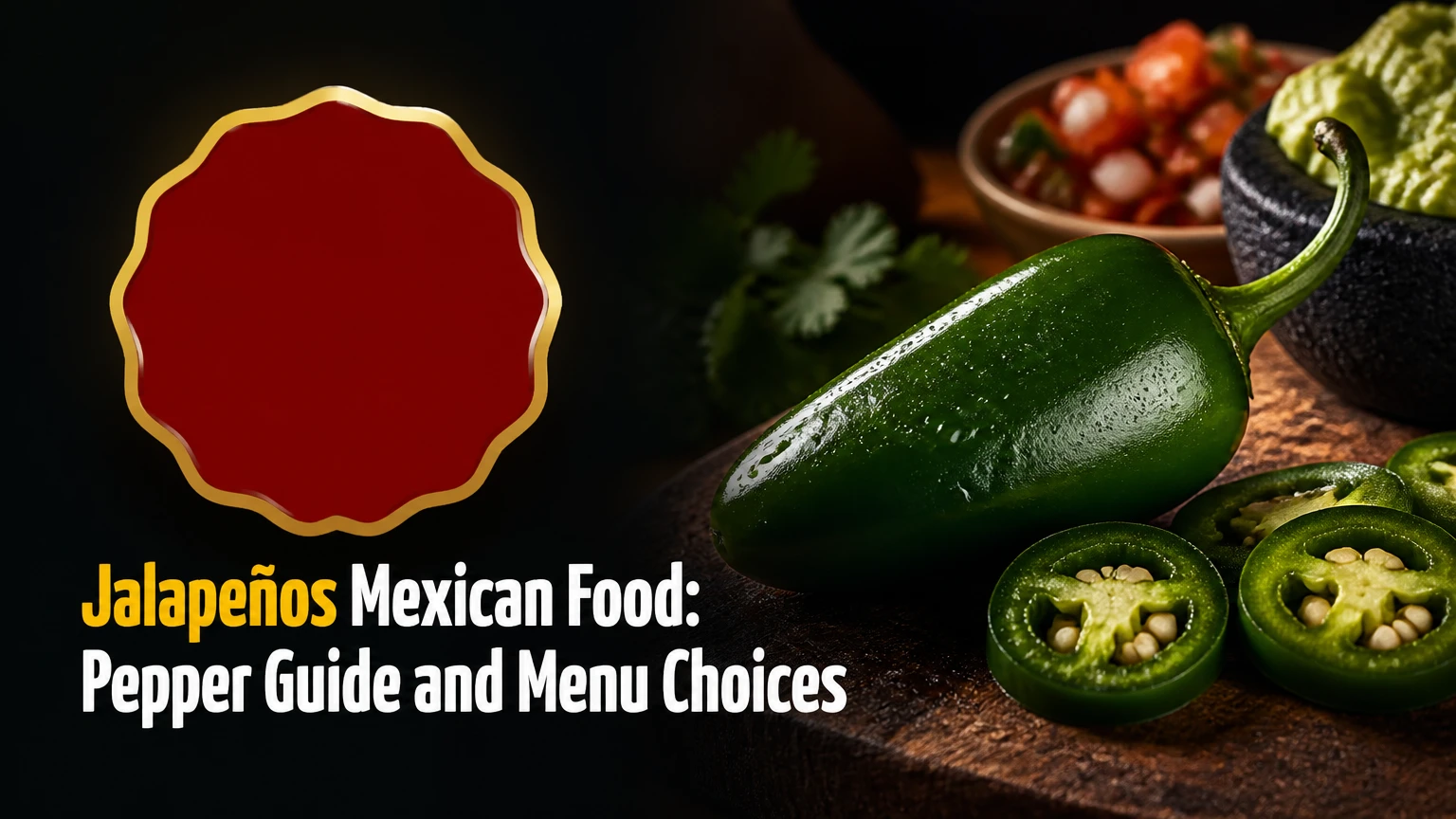
Jalapeños Mexican food refers to two related searches: jalapeño peppers used in Mexican cooking and restaurants named Jalapeños Mexican Food or a similar variation. The pepper is a medium-hot Mexican chile used fresh, roasted, pickled, or smoked, while the restaurant name requires local menu and location verification.
Key Facts at a Glance
- A jalapeño is the fruit of Capsicum annuum, and its typical heat measures 2,500-8,000 Scoville Heat Units.
- Capsaicin is concentrated mainly in the pale internal placenta and ribs, not in the seeds themselves.
- Green jalapeños are less ripe, while red jalapeños are riper, sweeter, and often more developed in flavor.
- Chipotle is a ripe red jalapeño that has been smoke-dried, usually producing a deeper flavor than a fresh green pepper.
- Pickled jalapeños in escabeche add vinegar acidity, salt, and a crisp-soft texture to tacos, sandwiches, nachos, and rice dishes.
- Restaurant names vary by owner and city, so hours, prices, ingredients, and menu availability must be confirmed with the specific location.
What Does Jalapeños Mexican Food Mean?
“Jalapeños Mexican Food” has an ingredient meaning and a commercial meaning. In culinary writing, it describes Mexican dishes containing fresh, roasted, pickled, or smoked jalapeño peppers; in local search, it may identify an independent restaurant, chain, food truck, or delivery listing.
The pepper takes its English name from Xalapa, also written Jalapa, in Veracruz, Mexico. The botanical name is Capsicum annuum, the same species that includes bell peppers and several other chile varieties. Botanically, a chile is a fruit, although cooks use it as a savory vegetable.
A restaurant with “Jalapeños” in its name does not necessarily specialize in unusually spicy dishes. Many such menus include tacos, burritos, enchiladas, rice plates, fajitas, quesadillas, and house salsas, with jalapeño appearing as a garnish or optional topping rather than the central ingredient.
How can you tell which meaning applies?
Search terms containing a city, address, delivery platform, hours, or “menu” usually indicate a restaurant search. Queries containing “recipe,” “pepper,” “how hot,” “pickled,” or “substitute” usually indicate an ingredient search. The distinction matters because a pepper guide cannot confirm a local restaurant’s current hours or prices.
How Hot Is a Jalapeño?
A jalapeño usually measures 2,500-8,000 SHU, although cultivar, maturity, irrigation, temperature, and growing stress can move individual peppers outside the expected range. A jalapeño is generally milder than a serrano and far milder than a habanero.
| Chile | Typical heat | Flavor profile | Practical use |
|---|---|---|---|
| Bell pepper | 0 SHU | Sweet, grassy | Stuffing, fajitas, mild salsa |
| Jalapeño | 2,500-8,000 SHU | Green, crisp, moderately hot | Pico de gallo, nachos, sauces |
| Serrano | 10,000-23,000 SHU | Bright, sharp, grassy | Salsa, aguachile-style preparations |
| Cayenne | 30,000-50,000 SHU | Dry, direct heat | Ground chile, seasoning blends |
| Habanero | 100,000-350,000 SHU | Fruity, floral, intense | Hot sauces and controlled marinades |
The Scoville scale measures dilution-based pungency, and modern laboratory testing commonly uses high-performance liquid chromatography before converting results to Scoville values. The American Spice Trade Association uses this type of measurement framework for chile pungency, but retail peppers are rarely tested individually.
What part of a jalapeño makes it hot?
The pale placenta, often called the membrane or rib, contains the highest concentration of capsaicin. Seeds can carry capsaicin transferred from nearby tissue, but seeds are not the primary source of heat.
Capsaicin activates TRPV1 receptors associated with heat and pain. Water does not dissolve the compound effectively because capsaicin is fat-soluble. Milk, yogurt, sour cream, cheese, and other dairy products can provide relief because the milk protein casein helps remove capsaicin from the mouth; rice, tortillas, and other starches can also reduce the sensation by absorbing residue.
Which Jalapeño Form Should You Choose?
Fresh green, fresh red, pickled, and smoked jalapeños suit different dishes. Fresh green peppers provide the cleanest crunch, pickled slices add acidity, and chipotle supplies smoke and concentrated savory depth.
| Form | Typical flavor | Texture | Storage guidance | Best application |
|---|---|---|---|---|
| Fresh green | Grassy and crisp | Firm, juicy | Refrigerate 5-7 days | Pico de gallo and salsa |
| Fresh red | Sweeter and earthier | Softer when ripe | Refrigerate 4-7 days | Roasted salsa and chile paste |
| Pickled escabeche | Tangy, salty, aromatic | Crisp-soft | Refrigerate after opening, follow label | Tacos, nachos, sandwiches |
| Chipotle in adobo | Smoky, sweet-savory, concentrated | Soft and saucy | Refrigerate opened can 5-7 days or freeze portions | Marinades, beans, creamy sauces |
| Dried jalapeño | Smoky or vegetal, depending on product | Rehydratable | Airtight pantry storage for several months | Blended sauces and seasoning |
“Chiles toreados” are whole jalapeños or similar chiles blistered in a hot pan, commonly with oil, salt, onion, or citrus. They are typically served as a side accompaniment, and their intact structure makes them harder to judge for heat before eating.
Chipotle is not a separate pepper species. It is a jalapeño allowed to ripen red and then smoke-dried, traditionally over wood. Canned chipotles in adobo combine the smoked chile with a seasoned sauce, so one pepper can flavor several servings.
How Should You Prepare Jalapeños?
The safest basic method is to wash the pepper, protect your hands, remove the placenta if desired, and choose raw, roasted, or pickled preparation according to the dish. Preparation normally takes 5-20 minutes, excluding longer pickling or cooling time.
| Preparation | Temperature or method | Typical time | Result |
|---|---|---|---|
| Raw mince | Chef’s knife, no heat | 5-8 minutes | Crisp heat and fresh aroma |
| Dry blister | Comal or skillet, medium-high | 6-10 minutes | Charred skin and softened flesh |
| Oven roast | 400°F or 200°C | 12-18 minutes | Even softening and browning |
| Air-fryer roast | 400°F or 200°C | 8-15 minutes | Fast blistering with less pan work |
| Quick pickle | Hot vinegar brine | 20-30 minutes | Tangy slices with partial crunch |
Step 1: Wash and protect your hands
Rinse the peppers, dry them, and wear nitrile or disposable gloves before cutting. Avoid touching your eyes, lips, contact lenses, or face until the gloves are removed and your hands are washed with soap.
Step 2: Cut and control the heat
Slice the jalapeño lengthwise for maximum control. Scrape out the pale placenta and attached seeds with a small spoon when a milder result is needed, then rinse only if the recipe permits a small loss of surface flavor.
Removing the ribs reduces heat more reliably than removing seeds alone. A completely deseeded pepper can still taste hot if the internal placenta remains attached.
Step 3: Choose raw or roasted preparation
Use raw minced jalapeño for pico de gallo, guacamole, ceviche-style vegetable mixtures, and fresh salsa. Use roasting when you want softer texture, light bitterness, and charred aroma.
For a dry blister, place whole peppers in a hot comal or skillet and turn them every 1-2 minutes. For oven or air-fryer roasting, use 400°F or 200°C until the skin blisters and darkens, commonly within 8-18 minutes depending on equipment and pepper size.
Step 4: Steam, peel, and portion
Place roasted peppers in a covered bowl for about 5 minutes. Steam loosens the skin, although peeling is optional because the skin carries roasted flavor and fiber.
Chop the flesh for salsa, fold it into beans, or preserve whole peppers for chiles rellenos-style preparations. Cool cooked peppers promptly before refrigeration.
Step 5: Pickle slices safely
For a quick refrigerator pickle, combine equal parts vinegar and water with salt, sliced onion, carrot, and a small amount of oregano. Heat the brine, pour it over sliced jalapeños in a clean heat-safe jar, cool briefly, and refrigerate.
Quick refrigerator pickles are not shelf-stable canned goods. Keep them cold and follow the vinegar product’s label guidance; discard them if the smell, texture, or appearance changes unexpectedly.
Which Mexican Dishes Use Jalapeños?
Jalapeños contribute fresh heat, char, acidity, or smoke to Mexican and Mexican-influenced dishes. The pepper may be mixed into a preparation, cooked into a sauce, or placed whole on the plate as a condiment.
| Dish or use | Jalapeño form | Typical quantity | Flavor function |
|---|---|---|---|
| Pico de gallo | Raw minced | 1 pepper per 2 cups | Fresh heat and crunch |
| Salsa verde | Raw or roasted | 1-3 peppers per 2 cups | Heat and green aroma |
| Guacamole | Raw minced | 1/2-1 pepper per 2 avocados | Brightness and moderate heat |
| Escabeche topping | Pickled slices | 1/4 cup per serving | Vinegar acidity and crunch |
| Chiles toreados | Whole blistered | 1 pepper per diner | Char and direct heat |
| Chipotle sauce | Smoked in adobo | 1/2-1 pepper per cup | Smoke and concentrated chile flavor |
| Quesadilla or nachos | Pickled or fresh | 2-4 tablespoons | Pungency and contrast |
Jalapeño is not mandatory in every Mexican salsa. Regional recipes may use serrano, dried chiles, chile de árbol, poblano, or no chile at all. A dish remains Mexican through its culinary context, ingredients, technique, and regional tradition, not through a single pepper.
What Should You Order at a Jalapeños Mexican Food Restaurant?
Choose a dish based on heat tolerance, texture preference, portion size, and whether the restaurant prepares its salsa or toppings in-house. A mild diner should request salsa on the side, while a heat-seeking diner can ask for chiles toreados or the house hot salsa after confirming the level.
| Order type | Typical price in North America | Typical serving time | Jalapeño-related choice |
|---|---|---|---|
| Street-style taco | $3-$6 each | 5-12 minutes | Add fresh or pickled slices |
| Quesadilla | $9-$17 | 8-15 minutes | Request roasted jalapeño or salsa |
| Enchilada plate | $13-$24 | 12-20 minutes | Choose green sauce and salsa side |
| Burrito | $12-$24 | 8-15 minutes | Add pickled jalapeños for acidity |
| Fajita plate | $18-$34 | 15-25 minutes | Request whole blistered chiles |
| Stuffed jalapeño appetizer | $9-$18 | 10-20 minutes | Confirm filling and breading |
| Family platter | $35-$75 | 20-35 minutes | Order sauces separately |
Prices are typical menu ranges, not a universal price list. City, portion size, service model, delivery fees, tax, and restaurant positioning can change the final amount substantially.
A restaurant named Jalapeños Mexican Food may offer traditional regional dishes, Mexican-American combinations, or a hybrid menu. Names such as “California burrito,” “wet burrito,” and cheese-heavy combo plates describe common North American restaurant formats, not a single national Mexican standard.
How do you verify a specific restaurant?
Check the restaurant’s official website or current phone listing for the address, opening hours, menu, ordering method, and allergy information. Delivery apps can show prices and availability, but they may display outdated menus, different prices, or items unavailable during slower service periods.
Ask four direct questions before ordering:
- Is the salsa mild, medium, or hot?
- Are the jalapeños fresh, pickled, or roasted?
- Can the kitchen keep chile and dairy separate?
- Does the listed price include sides, toppings, and delivery charges?
Fresh, Pickled, or Smoked: Which Is Better?
Fresh jalapeños are the best choice for crisp, clean heat; pickled jalapeños are better when acidity and convenience matter; chipotle is better when smoke and depth matter more than fresh texture. No form is universally superior.
| Decision factor | Fresh green | Pickled | Chipotle |
|---|---|---|---|
| Heat perception | Immediate, variable | Moderate, softened by acid | Concentrated, lingering |
| Acidity | Low, natural | High, vinegar-based | Medium, sauce-dependent |
| Texture | Crisp and juicy | Crisp-soft | Soft |
| Preparation time | 5-8 minutes | Ready to use | Ready to use |
| Typical shelf life | 5-7 refrigerated days | Label-guided after opening | 5-7 refrigerated days after opening |
| Best pairing | Fresh salsa and avocado | Tacos and rich fillings | Beans, sauces, marinades |
Fresh jalapeño is a poor substitute for chipotle when a recipe depends on smoke. Pickled jalapeño is also a poor substitute for fresh pepper in delicate guacamole because vinegar can dominate the avocado.
What can replace a jalapeño?
Use serrano for a hotter, thinner, greener chile; poblano for lower heat and a broader roasted flavor; Anaheim or another mild green chile for volume without comparable pungency; or a small amount of cayenne when only heat is needed.
| Substitute | Typical heat | Main difference | Best replacement situation |
|---|---|---|---|
| Poblano | 1,000-2,000 SHU | Larger and earthier | Roasted fillings and sauces |
| Anaheim | 500-2,500 SHU | Mild and elongated | Large batches and casseroles |
| Serrano | 10,000-23,000 SHU | Sharper and hotter | Fresh salsa |
| Fresno | 2,500-10,000 SHU | Fruitier, often red | Salsas and garnishes |
| Cayenne powder | 30,000-50,000 SHU | No fresh texture | Controlled heat in sauces |
What Common Jalapeño Mistakes Cause Problems?
The most common errors are touching the face after cutting, assuming seeds contain all the heat, using water to relieve burning, and treating a refrigerator pickle as shelf-stable. Each mistake has a practical correction.
| Mistake | Why it fails | Correction | Recovery time |
|---|---|---|---|
| Drinking water for burn | Water spreads capsaicin | Use dairy or starchy food | 5-20 minutes |
| Removing seeds only | Placenta remains hot | Scrape the pale ribs | 2-5 minutes |
| Boiling for char flavor | Water prevents browning | Dry-sear or roast | 10-20 minutes |
| Over-roasting | Flesh becomes bitter and dry | Remove at blister stage | Next batch |
| Touching eyes | Capsaicin transfers to tissue | Rinse with water and seek care if persistent | Variable |
| Leaving pickles warm | Bacteria can multiply | Refrigerate promptly | Immediate correction |
Capsaicin burn is a sensory nerve response rather than a conventional thermal burn, but eye exposure can cause significant irritation. Rinse exposed eyes with clean lukewarm water and seek medical help if pain, vision changes, or irritation persists.
A smooth-skinned jalapeño is not reliably mild, and corking, the tan net-like pattern sometimes found on the skin, does not provide a dependable heat prediction. Sample a tiny amount from the tip only after safe handling, and do not use appearance as a substitute for tasting.
How Should You Store Jalapeños?
Store fresh jalapeños dry and refrigerated in a ventilated produce bag for approximately 5-7 days. Excess moisture accelerates softening, while freezing preserves heat but changes the crisp texture.
Whole fresh peppers can be frozen for cooked salsa, sauces, and stews after washing and drying. Sliced peppers can also be frozen, but they should be portioned in small bags because thawed slices become soft.
Roasted jalapeños keep in a sealed refrigerator container for about 3-4 days. Opened pickled jalapeños and opened chipotles should remain refrigerated according to the package label, and clean utensils should be used to avoid contaminating the brine or sauce.
What Does Jalapeño Food Cost at Home?
A small home batch of fresh salsa using jalapeño, tomato, onion, lime, and herbs typically costs $5-$12 and produces approximately 3-4 cups, depending on local produce prices. A quick pickle batch commonly costs $4-$10 before reusable-jar costs.
| Home preparation | Typical batch cost | Yield | Active time |
|---|---|---|---|
| Fresh pico de gallo | $5-$12 | 3-4 cups | 10-15 minutes |
| Roasted salsa | $7-$16 | 2-3 cups | 25-35 minutes |
| Quick pickled slices | $4-$10 | 2 cups | 20-30 minutes |
| Chipotle bean sauce | $6-$14 | 4-6 servings | 25-40 minutes |
These figures are planning ranges rather than market statistics. Pepper size, seasonal availability, imported ingredients, and whether a cook already owns vinegar, spices, and storage containers determine the actual cost.
Expert Rules for Better Jalapeño Results
Practitioner rule 1: balance heat with acidity, fat, and starch. Lime or vinegar sharpens chile flavor, dairy and avocado soften capsaicin perception, and tortillas or rice reduce the sensory intensity. Adding sugar can round a sauce, but sugar does not chemically neutralize capsaicin.
Practitioner rule 2: add fresh jalapeño late when texture matters. Cooking minced pepper for 1-2 minutes preserves more brightness than simmering it for 20 minutes. Add roasted or dried chile earlier when the goal is integrated flavor rather than crunch.
Practitioner rule 3: separate heat from volume. In a large salsa batch, one jalapeño may provide aroma and moderate heat, while three or four can change the dish’s tolerance level quickly. Add half first, taste after mixing, and increase gradually.
Jalapeños are not ideal for every preparation. They are too variable for a recipe that requires laboratory-level heat consistency, and fresh peppers are a poor choice when a dish specifically depends on dried chile aroma or smoke.
Frequently Asked Questions
Are red jalapeños hotter than green jalapeños?
Red jalapeños are fully ripe, while green jalapeños are harvested earlier. Red peppers often taste sweeter and more developed, but ripeness alone does not guarantee greater heat because cultivar and growing conditions also affect capsaicin concentration.
Can people with low spice tolerance eat jalapeños?
People with low spice tolerance can start with 1-2 tablespoons of finely diced pepper in a multi-serving dish, after removing the pale ribs and seeds. Pickled jalapeños may taste milder in small portions, but vinegar can make their flavor more noticeable.
Are jalapeño poppers traditional Mexican food?
Jalapeño poppers are widely associated with Mexican-American restaurant and bar food. Their common cream-cheese filling and fried coating do not represent one universal traditional Mexican preparation, although stuffed and fried chiles have broader culinary parallels.
How many jalapeños should go in salsa?
Use one medium jalapeño for approximately 2 cups of fresh salsa as a moderate starting point. Remove the ribs for less heat, taste after five minutes of resting, and add more pepper if the tomato, onion, and lime have not balanced the flavor.
Can you freeze pickled jalapeños?
You can freeze pickled jalapeños, but freezing usually damages their crisp texture and is unnecessary for an unopened or properly refrigerated jar. Freeze only when texture is unimportant, such as in blended sauces, beans, or cooked fillings.
The Bottom Line
Jalapeños Mexican food can mean the jalapeño pepper in Mexican cooking or a restaurant whose name includes Jalapeños Mexican Food. Fresh green peppers provide crisp moderate heat, pickled slices add acidity, and chipotle contributes smoke; for a restaurant search, verify the specific location, menu, prices, and salsa heat before ordering.