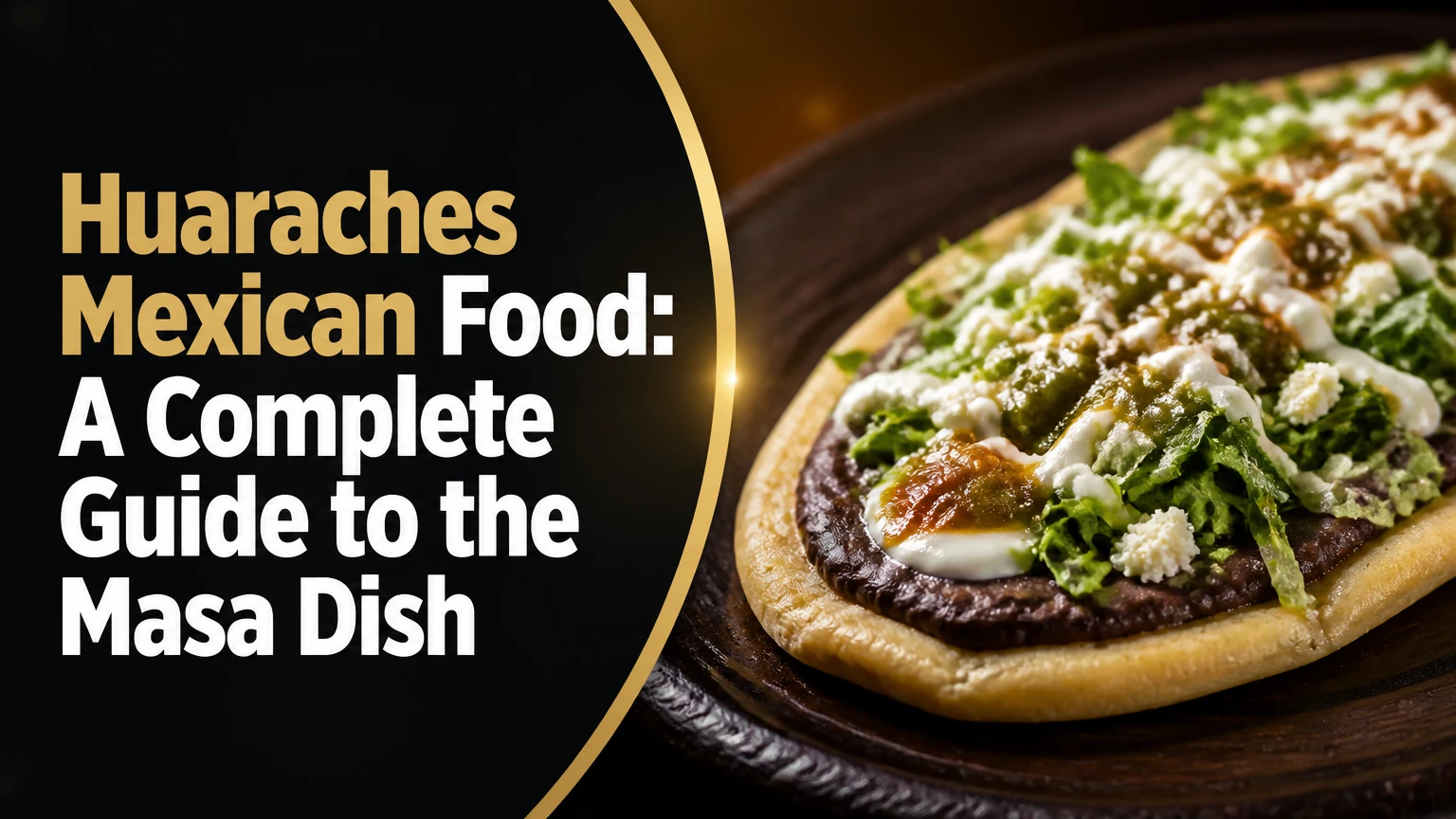
Huaraches Mexican food refers to a large, oblong masa dish shaped like a traditional Mexican sandal, cooked on a comal or shallow-fried, then finished with beans, salsa, meat, cheese, crema, and vegetables. The masa may hold beans inside or receive them as a spread, and the finished dish is usually eaten from a plate because its toppings make it substantial and messy.
Key Facts at a Glance
A huarache is typically 15-30 centimeters long and made from nixtamalized corn masa or masa harina.
The sandal-like shape gives the dish its name, although individual vendors use different proportions.
Refried beans may be stuffed into the masa or spread across the cooked surface.
A typical home preparation takes 30-45 minutes and produces a crisp-edged, tender-centered base.
Common toppings include salsa, seasoned beef, shredded chicken, cactus, cheese, crema, lettuce, and onion.
One large huarache usually functions as a full meal rather than a small snack.
Huaraches Mexican Food: What Is the Dish?
A huarache is a thick corn-masa base with an elongated oval shape, beans, and toppings. The base is broader and heavier than a taco tortilla, while its raised or firm surface resembles an edible sandal.
The name comes from the shape of the Mexican huarache sandal, not from a particular topping or cooking technique. Food historians and Mexican cooks commonly associate the modern street-stall form with Mexico City, although recipes and vendor traditions differ enough that a single inventor or exact origin story should not be treated as settled fact.
The dish belongs to the same broad family as sopes and tlacoyos, but each has a distinct construction. Huaraches emphasize length and topping capacity. Tlacoyos usually place the filling inside a thicker oval masa shell, while sopes are smaller and have a raised rim that contains wet toppings.
How does a huarache work as a meal?
A huarache combines a dense corn foundation, a creamy bean layer, a savory topping, acidic salsa, and fresh garnishes. The masa supplies structure and toasted corn flavor, beans add moisture and protein, and salsa prevents the dish from tasting heavy.
The order of assembly affects texture. A hot, firm base can carry warm toppings without collapsing, but a large amount of thin salsa applied too early will soften the masa within minutes. For that reason, experienced cooks drain wet fillings and add the final salsa immediately before serving.
What Is a Huarache Made Of?
Traditional huaraches use corn masa, water, salt, beans, cooking fat, salsa, and a topping selected by the cook or vendor. The ingredient list changes by region and stall, but the masa base, elongated shape, and substantial toppings define the dish more reliably than any single garnish.
Core ingredients and useful substitutions
| Component | Typical ingredient | Working quantity for 4 | Practical substitute |
|---|---|---|---|
| Masa | Masa harina or fresh corn masa | 300 g masa harina | 300 g fresh masa |
| Water | Warm water | 360-420 ml | Broth for extra seasoning |
| Beans | Pinto or black refried beans | 400-500 g | Mashed cooked beans |
| Cooking fat | Vegetable oil or lard | 30-60 ml | Avocado or canola oil |
| Salsa | Red or green salsa | 240-300 ml | Roasted tomato salsa |
| Cheese | Queso fresco | 100-150 g | Farmer cheese or feta |
| Crema | Mexican crema | 120 ml | Sour cream thinned with water |
| Garnishes | Lettuce, onion, cilantro | 250-350 g total | Cabbage and sliced radish |
Fresh masa produces a more aromatic, tender result, while masa harina offers consistent hydration and easier storage. A 300-gram batch of masa harina generally yields four medium bases, assuming each portion weighs about 180-200 grams after hydration.
Corn masa harina is naturally free of wheat gluten, but packaged products can be exposed to shared equipment. Anyone with celiac disease should check the manufacturer’s allergen statement rather than relying only on the word “corn.”
Is the bean filling inside or on top?
Both methods are established. Stuffing beans inside creates a thicker, softer center, while spreading beans on top gives the cook more control over crispness and makes the dish easier to shape.
For a filled huarache, flatten a masa portion, create a shallow channel, add 1-2 tablespoons of thick refried beans, seal the dough, and press it into an elongated form. For the topping method, cook the plain masa base first, then spread 2-3 tablespoons of warm beans over its surface.
How Do You Make Huaraches at Home?
A home cook can make four medium huaraches in about 40-50 minutes using 300 grams of masa harina, 400 grams of beans, and a hot comal or skillet. The most important factor is moisture control: hydrated dough prevents cracks, while a properly heated cooking surface sets the base without burning its exterior.
Before you start
| Item | Typical requirement | Why it matters |
|---|---|---|
| Total time | 40-50 minutes | Includes dough, cooking, and assembly |
| Yield | 4 medium huaraches | Each base measures about 18-22 cm |
| Masa harina | 300 g | Produces four substantial portions |
| Warm water | 360-420 ml | Add gradually because brands absorb differently |
| Beans | 400-500 g | Use thick refried beans, not watery purée |
| Cooking surface | 28-32 cm skillet or comal | Allows even contact and turning |
| Heat | Medium-high, about 200-230°C surface | Sets the masa before frying |
| Difficulty | Moderate | Shaping filled dough requires practice |
Step 1: Mix and rest the masa
Combine 300 grams of masa harina with 1 teaspoon of salt. Add 360 milliliters of warm water gradually, kneading for 2-3 minutes, then rest the dough for 10 minutes.
The finished masa should feel like soft modeling clay. If the edges crumble when pressed, knead in water one tablespoon at a time. If the dough sticks heavily to your hands, add masa harina in 1-teaspoon increments.
You will know the hydration is right when a pressed test piece forms a clean edge without splitting. The common mistake is adding all the water at once, because different masa harina brands require different amounts.
Step 2: Fill and shape each base
Divide the dough into four portions of approximately 180-200 grams. Shape each portion into a thick oval, place 1-2 tablespoons of dense beans in a center channel if using the stuffed method, seal the dough, and flatten it to 18-22 centimeters long and about 8-10 millimeters thick.
A tortilla press lined with plastic makes the shape more even, but hands work well when the dough is turned repeatedly during pressing. Keep the ends rounded rather than sharply pointed, because thin points dry out before the center cooks.
The success checkpoint is a symmetrical sandal-like oval with no visible seam. The main mistake is making the base too thin, which causes cracking during transfer and leaves insufficient structure for toppings.
Step 3: Set the masa on a dry comal
Heat a dry comal or heavy skillet over medium-high heat until a drop of water evaporates quickly. Cook each shaped base for 1-2 minutes per side, turning once, until the surface is firm enough to lift.
This first cooking stage sets the exterior and reduces the chance of tearing in the oil. A base that darkens immediately is meeting excessive heat, while a pale base that remains flexible after four minutes needs more surface heat.
The checkpoint is a firm surface with light brown contact marks and no raw, wet patches. Do not press down aggressively, because pressure can force out a stuffed bean center.
Step 4: Crisp the base
Add enough oil to coat the skillet, approximately 1-2 tablespoons per huarache, or use a shallow layer for a more pronounced crust. Cook each base for 2-3 minutes per side until the edges are crisp and the center remains tender.
Shallow frying is optional. Many cooks finish the base entirely on the comal, which produces a softer and less oily result. The fried method creates stronger support for wet toppings, but it also increases the dish’s fat content and can harden the exterior if left too long.
The checkpoint is a golden surface that bends slightly without folding. A blackened exterior with a soft, gummy center indicates excessive heat.
Step 5: Assemble and serve immediately
Spread 2-3 tablespoons of warm beans across the base if they were not stuffed inside. Add 60-90 grams of cooked topping, 2-3 tablespoons of salsa, 25-35 grams of queso fresco, a spoonful of crema, and fresh vegetables.
Add wet ingredients last. A huarache tastes best within 3-5 minutes of assembly, before salsa migrates into the masa and softens the crust.
Which Huarache Toppings Are Most Common?
The most common topping styles use seasoned beef, adobo-marinated spit-roasted meat, smoky shredded chicken, sausage-and-beef combinations, or vegetables such as nopales and squash blossoms. Topping names identify the principal filling, while beans, salsa, cheese, and garnishes remain flexible.
| Style | Main topping | Typical flavor profile | Useful pairing |
|---|---|---|---|
| Huarache de asada | Thin grilled beef | Charred, savory, moderately juicy | Green salsa and onion |
| Huarache de pastor | Adobo-marinated spit-roasted meat | Spiced, caramelized, mildly sweet | Pineapple and red salsa |
| Huarache de tinga | Shredded chicken in tomato and chipotle | Smoky, saucy, gently spicy | Lettuce and crema |
| Huarache campechano | Beef with longaniza sausage | Rich, salty, intensely savory | Raw onion and lime |
| Huarache de nopales | Grilled cactus paddles | Tart, vegetal, lightly smoky | Queso fresco and green salsa |
| Vegetarian huarache | Mushrooms, squash blossoms, or beans | Earthy, floral, or creamy | Roasted tomato salsa |
One correction matters: flor de calabaza means squash blossom, not hibiscus flower. Hibiscus is jamaica, a different ingredient with a tart, dark-red flavor. A vegetarian huarache can use either, but the names should not be treated as interchangeable.
How should you choose a topping?
Choose tinga when you want a moist, forgiving topping, as its sauce compensates for a slightly dry masa base. Choose asada for grilled flavor and a firmer bite, nopales for a lighter vegetable-centered meal, and campechano when you want the richest combination.
Topping choice also depends on moisture. Saucy chicken should be drained lightly before serving, while grilled beef benefits from salsa and crema because it provides less moisture on its own.
How Much Does a Huarache Cost?
A typical Mexican street-stall huarache costs about $4-$8 USD, while a sit-down restaurant version commonly costs $9-$16 USD in the United States. Prices vary by city, meat portion, restaurant format, and whether the dish includes premium ingredients or a side.
| Buying situation | Typical price | Portion size | Expected wait |
|---|---|---|---|
| Mexico City street stall | MXN 45-100 | 20-30 cm | 5-15 minutes |
| Mexican restaurant in the United States | $9-$16 | 18-25 cm | 15-25 minutes |
| Vegetarian restaurant version | $8-$14 | 18-24 cm | 10-20 minutes |
| Home-cooked serving | $2-$5 per person | 18-22 cm | 40-50 minutes |
| Premium beef version | $13-$20 | 20-28 cm | 20-30 minutes |
The Mexico City figures are typical menu ranges, not a universal price list. Exchange rates, neighborhood, and vendor size can change the total substantially, so a current local menu is more reliable than a national average.
A single medium huarache often weighs 350-550 grams after toppings. Plan one per adult, or divide one large restaurant portion between two people when ordering additional sides.
Huarache, Sope, Tlacoyo, or Taco: Which Is Different?
Huaraches are the best choice for a large, topping-heavy meal, while sopes suit smaller portions, tlacoyos favor a compact stuffed masa center, and tacos offer the most portability. The dishes share corn masa but differ in thickness, shape, filling placement, and how much moisture they can carry.
| Dish | Typical shape | Typical size | Bean placement | Best use |
|---|---|---|---|---|
| Huarache | Oblong sandal form | 15-30 cm | Inside or on top | Full plated meal |
| Sope | Round with raised rim | 8-12 cm | Usually on top | Small savory portion |
| Tlacoyo | Thick oval with pointed ends | 15-20 cm | Usually inside | Handheld stuffed masa |
| Taco | Thin round tortilla | 10-15 cm | Rarely central | Portable meal |
| Gordita | Thick round pocket | 10-15 cm | Inside or absent | Filled handheld dish |
The comparison is about construction, not quality. A crisp huarache is poorly suited to commuting because the toppings slide and the masa bends under its own weight. A tlacoyo is neater for walking, but its enclosed filling leaves less surface area for lettuce, salsa, crema, and multiple toppings.
What Problems Occur When Making Huaraches?
The most common huarache failures are cracked dough, a soggy base, a gummy center, and toppings that overwhelm the masa. Each problem has a measurable cause involving hydration, heat, thickness, or serving time.
| Problem | Likely cause | Immediate fix | Prevention |
|---|---|---|---|
| Cracked edges | Dough lacks water | Knead in 1 tablespoon water | Rest hydrated dough 10 minutes |
| Base tears during transfer | Shape is too thin | Press thicker and use plastic | Keep thickness near 8-10 mm |
| Soggy crust | Excess salsa or weak frying | Drain toppings and re-crisp | Add wet toppings last |
| Gummy center | Heat is too high | Lower heat and cook longer | Use medium-high, not maximum |
| Burned exterior | Pan exceeds about 230°C | Move pan off heat briefly | Test with a small dough piece |
| Collapsing base | Too many heavy toppings | Limit topping to 60-90 g | Use a firm fried crust |
Why does the masa crack?
Cracked masa usually contains too little water or has dried while waiting. Add warm water one tablespoon at a time, knead until smooth, and keep unused portions covered with a damp towel or sealed container.
A filled base can also crack when the beans are too loose. Reduce watery beans over medium heat until a spoon dragged across the pan leaves a visible line for about two seconds.
Why is the center raw and gummy?
A raw center usually means the surface browned before the thick masa cooked through. Lower the heat, extend the dry-comal stage by 1-2 minutes per side, and avoid increasing oil temperature to compensate.
Thicker huaraches need slower cooking. The center should feel firm when pressed, with no translucent or paste-like section visible at the edge.
How Should Huaraches Be Stored and Reheated?
Cooked huarache bases can be refrigerated for up to three days, but assembled huaraches should be eaten immediately because beans and salsa soften the masa. Store the base, topping, garnishes, and salsa separately in covered containers.
Cool the cooked bases within two hours, refrigerate them at 4°C or below, and reheat them on a dry skillet for 2-3 minutes per side. Add fresh toppings only after reheating. A microwave warms the center quickly but usually produces a softer crust.
Freezing is possible for plain bases. Wrap each cooled base separately, freeze for up to one month for best texture, and reheat from thawed or partially thawed on a skillet. Do not freeze lettuce, crema, or assembled salsa.
What Are the Best Huarache Choices for Different Diners?
Tinga is the most forgiving option for a first order, nopales or mushrooms work well for a vegetable-focused meal, and asada offers a balanced introduction to grilled toppings. Diners who dislike messy foods should choose a tlacoyo or taco instead.
- First-time diner: Order tinga with green salsa and crema because the saucy chicken balances the dense masa.
- Grilled-meat preference: Choose asada with roasted salsa and onion for charred flavor without an overly wet topping.
- Vegetarian meal: Select nopales, mushrooms, or squash blossoms with beans and queso fresco.
- Spice-sensitive diner: Request salsa on the side and choose beans with cheese and lettuce.
- Handheld meal: Choose a tlacoyo rather than a huarache because its enclosed filling travels more cleanly.
- Large appetite: Order campechano or asada and confirm the portion before adding side dishes.
A huarache is not ideal for a rushed lunch, a car ride, or a meal requiring precise portion control. Its strengths are texture contrast, customization, and fullness; its limitations are weight, mess, and rapid softening after assembly.
Regional and Ingredient Variations
Mexico City remains the setting most frequently associated with the modern street-stall huarache, but local cooks adapt the dish according to available masa, beans, salsa, and toppings. Some vendors use a plain masa base, while others make a filled version with beans sealed inside.
The word “traditional” therefore needs careful use. Bean-stuffed huaraches are traditional in some preparations, but spreading beans on top is also established. A meat-free huarache is not automatically less authentic, because nopales, mushrooms, squash blossoms, and additional beans fit the dish’s broader masa-and-topping structure.
Regional variation also appears in salsa. A roasted green tomatillo salsa tends to bring acidity and herbal sharpness, while a red tomato-and-chile salsa provides deeper sweetness and smoke. The best pairing depends on the topping’s fat, seasoning, and moisture.
Frequently Asked Questions
Are huaraches and tacos made from the same masa?
Huaraches and tacos can use the same basic corn masa, but their finished textures differ because the huarache base is thicker and larger. A taco tortilla is pressed thin and cooked for flexibility, while a huarache is shaped at roughly 8-10 millimeters and cooked to support beans and heavy toppings.
Are huaraches usually spicy?
Huaraches are not inherently spicy because the masa, beans, cheese, and meat contain little chile by themselves. Heat usually comes from the salsa, so diners can request mild salsa, salsa on the side, or a topping without chipotle and other hot chiles.
Can huaraches be made without frying?
Huaraches can be cooked entirely on a dry comal or skillet. Comal-only cooking produces a softer, less oily base, while shallow frying creates a firmer crust that resists wet toppings. Cook the masa slowly enough to prevent a browned exterior and gummy center.
Are huaraches suitable for a gluten-free diet?
Huaraches made from pure corn masa harina are generally gluten-free, but packaged masa products and restaurant kitchens may have cross-contact with wheat. People with celiac disease should verify the product label, ask about shared griddles, and avoid assuming that every Mexican restaurant preparation is safe.
How do you eat a huarache?
Most huaraches are eaten on a plate with a knife and fork because their elongated base carries beans, salsa, meat, cheese, and vegetables. A lightly topped version can be folded by hand, but a heavily dressed huarache becomes unstable and is easier to manage with utensils.
What is the closest substitute for a huarache?
A tlacoyo is the closest structural substitute because both use thick, oval masa and often include beans. Choose a sope when you want a smaller raised-rim base for wet toppings, or a taco when portability and a thin tortilla matter more than serving size.
The Bottom Line
Huaraches Mexican food is a substantial Mexican masa dish built around an oblong, sandal-shaped corn base, beans, salsa, and customizable toppings. The best home results come from soft hydrated dough, an 8-10-millimeter thickness, moderate heat, and immediate assembly. Choose tinga for a moist first experience, asada for grilled flavor, or nopales for a vegetable-centered plate.