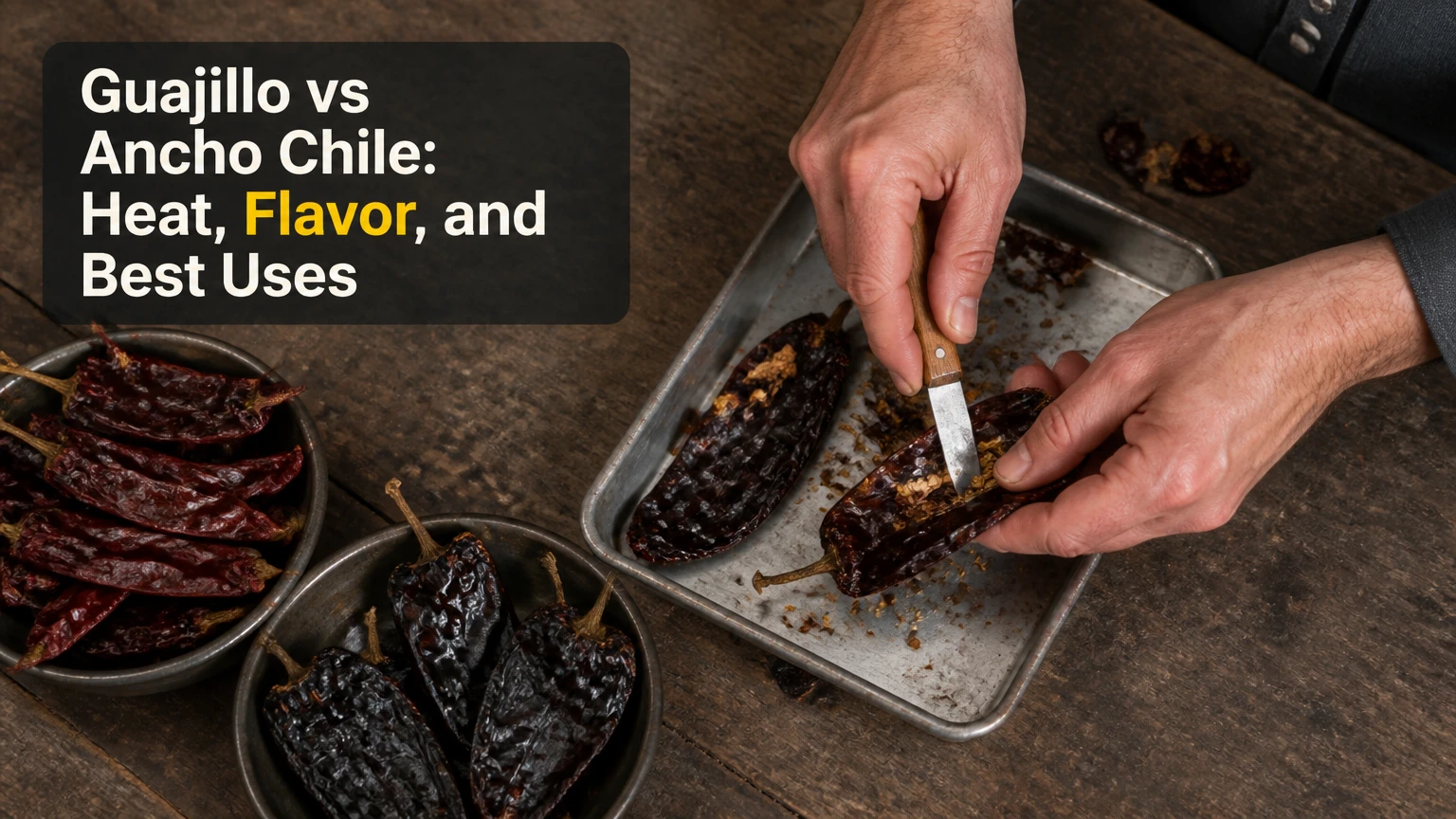
Guajillo chiles are brighter, fruitier, thinner-skinned, and moderately hotter, while ancho chiles are darker, sweeter, broader, and milder. Choose guajillo when a sauce needs red color and lively berry acidity; choose ancho when it needs raisin-like sweetness, earthy depth, and body. Many Mexican sauces use both because their strengths balance one another.
Key Facts at a Glance
- Guajillo is the dried form of the mature red Mirasol chile, while ancho is the dried form of a mature red poblano.
- Typical guajillo heat measures about 2,500-5,000 Scoville Heat Units, compared with roughly 1,000-1,500 SHU for ancho.
- Guajillo has a smooth burgundy skin and a long, narrow shape; ancho has a broad, heavily wrinkled, dark reddish-brown skin.
- Guajillo contributes berry, tea, tangy fruit, and red color; ancho contributes raisin, cocoa, mild earthiness, and thickness.
- Whole dried pods usually need cleaning, brief toasting, hydration, blending, and straining for a smooth sauce.
- A 1:1 guajillo-ancho blend is a dependable starting point for balanced red chile sauces.
What Are Guajillo and Ancho Chiles?
Guajillo and ancho chiles are dried Capsicum annuum varieties, but they come from different fresh peppers. Guajillo is the dried mature Mirasol, whose fresh pods traditionally point upward toward the sun. Ancho is the dried mature red poblano, a broad pepper named ancho, meaning “wide.”
A poblano dried before reaching a red stage is usually sold as a dried green chile only when the product and regional terminology make that distinction clear. A fully ripened poblano that dries dark brown rather than red is commonly called mulato, not ancho. Names can vary among markets, so shape, color, and aroma help confirm what is in the package.
The two chiles form two-thirds of the commonly cited Mexican dried-chile “Holy Trinity,” with pasilla supplying the third flavor direction. The trinity is a culinary grouping rather than a formal botanical classification. Its practical value is simple: ancho provides a sweet base, guajillo lifts the sauce, and pasilla adds darker, woodsy complexity.
Guajillo Identification
| Attribute | Typical guajillo value |
|---|---|
| Fresh-pepper origin | Mirasol chile |
| Dried length | 3-6 inches |
| Dried width | 1-2 inches |
| Skin | Smooth, glossy, tough, translucent |
| Color | Burgundy to deep maroon |
| Typical heat | 2,500-5,000 SHU |
| Main flavor | Berry, tea, tangy dried fruit |
| Sauce role | Brightness, red color, aromatic lift |
Guajillo pods should feel flexible rather than brittle. The skin often looks shiny and semi-translucent when held near light. A clean guajillo aroma resembles dried fruit and mild tea, not dust, mold, or burnt smoke.
Ancho Identification
| Attribute | Typical ancho value |
|---|---|
| Fresh-pepper origin | Mature red poblano |
| Dried length | 3-4 inches |
| Dried width | 2-3 inches |
| Skin | Thick, wrinkled, folded |
| Color | Dark red, brown, or purple-black |
| Typical heat | 1,000-1,500 SHU |
| Main flavor | Raisin, cocoa, earth, mild fruit |
| Sauce role | Sweetness, body, dark depth |
Freshness matters more than perfect color. A good ancho bends slightly and feels leathery, like a large dried fruit. A pod that shatters into dust may still be usable, but it has lost aromatic oils and will produce a flatter sauce.
How Do Guajillo and Ancho Chiles Differ in Flavor?
Guajillo chiles taste bright and tangy, with berry, dried cranberry, tea, and lightly herbal notes. Ancho chiles taste rounder and deeper, with raisin, cocoa, mild licorice, earth, and a gentle sweetness that remains after cooking.
The difference becomes clearest in a blended sauce. Guajillo tends to define the sauce’s upper aroma and color, whereas ancho occupies the palate’s middle and lower range. Guajillo can make a heavy dish feel sharper; ancho can make a thin sauce feel fuller.
Neither chile should automatically be described as smoky. Drying can create roasted or earthy notes, but smoke flavor usually comes from a smoked product, charred ingredients, or cooking technique. A standard ancho is sweet and earthy, not equivalent to a smoked chile.
| Flavor dimension | Guajillo | Ancho | Cooking consequence |
|---|---|---|---|
| Fruit character | Tart berry and red fruit | Raisin and dried plum | Guajillo lifts, ancho rounds |
| Sweetness | Moderate, cleaner | Higher, molasses-like | Ancho needs less added sweetener |
| Earthiness | Low to moderate | Moderate to high | Ancho suits long-cooked dishes |
| Cocoa note | Rare or faint | Common | Ancho supports dark sauces |
| Acidity impression | Bright and tangy | Soft and subdued | Guajillo reduces heaviness |
| Color | Clear red | Dark red-brown | Ancho can muddy pale sauces |
| Finish | Clean, lightly sharp | Long, warm, earthy | Blend them for balance |
A useful practitioner rule is to taste a sauce after salt and fat are adjusted, not before. Fat softens guajillo’s sharper edges, while salt can make ancho’s fruit and cocoa notes more apparent.
Which Is Hotter, Guajillo or Ancho?
Guajillo is usually hotter than ancho. Typical guajillo pods measure 2,500-5,000 SHU, while typical ancho pods measure about 1,000-1,500 SHU, although growing conditions, harvest maturity, storage, and supplier selection can shift those ranges.
Both are mild by the standards of very hot chiles. Guajillo can still create noticeable warmth when several pods are concentrated into a sauce, while ancho often supplies flavor with little obvious sting. Removing ribs generally reduces heat more effectively than removing seeds, because much of the capsaicin is concentrated in the internal membrane.
| Pepper | Typical SHU range | Relative kitchen impression | Useful comparison |
|---|---|---|---|
| Ancho | 1,000-1,500 | Very mild | Below a typical jalapeño |
| Guajillo | 2,500-5,000 | Mild to moderate | Near the lower jalapeño range |
| Guajillo puya | 5,000-10,000 | Noticeably hotter | Sharper than standard guajillo |
| California chile | 500-2,500 | Mild | Often gentler than guajillo |
| New Mexico chile | 500-2,500 | Mild to moderate | Similar role, variable heat |
| Pasilla negro | 1,000-2,500 | Mild | Darker and more woodsy |
Scoville values describe capsaicinoid concentration, not total flavor intensity. A sauce can taste powerful because of salt, acidity, toasted spices, or concentrated fruit even when its measured heat is low.
How Do They Compare Physically?
Guajillo chiles are long, narrow, smooth, and relatively thin-fleshed, while ancho chiles are short, wide, thick-fleshed, and heavily wrinkled. Guajillo skins commonly require fine straining after blending; ancho flesh softens more readily and usually creates a thicker purée.
Physical structure predicts kitchen behavior. A guajillo pod contributes color and aroma efficiently but can leave leathery fragments. An ancho pod contributes more pulp per piece, so it thickens a sauce with fewer pods.
| Physical feature | Guajillo | Ancho |
|---|---|---|
| Shape | Long and tapered | Broad and heart-shaped |
| Skin surface | Smooth and shiny | Wrinkled and folded |
| Flesh | Thin and leathery | Thick and flexible |
| Hydration speed | Usually 15-20 minutes | Usually 15-20 minutes |
| Blended texture | Light to medium body | Thick and velvety |
| Straining need | Strongly recommended | Optional but useful |
| Visual color | Burgundy red | Dark red-brown |
| Typical pod yield | Lower pulp per pod | Higher pulp per pod |
One counterintuitive point matters here: a darker pod is not automatically hotter or more strongly flavored. Dark color in ancho often signals its variety and drying state, while heat depends on capsaicinoid concentration.
Which Chile Fits Each Dish?
Guajillo is the better choice for pozole rojo, bright red salsa, birria-style chile bases, and marinades for grilled meats when the sauce needs color and lift. Ancho is better for mole, enchilada sauces, bean dishes, chili con carne, and beef stews that benefit from sweetness and body.
Dish names do not determine a single correct chile. Regional recipes use different combinations, and fresh ingredients alter the balance. The table below gives a decision starting point rather than a rigid authenticity test.
| Dish or application | First choice | Typical amount | Why it fits |
|---|---|---|---|
| Pozole rojo | Guajillo-led blend | 4-6 pods per quart | Red color and clean chile aroma |
| Birria-style sauce | Guajillo plus ancho | 2:1 ratio | Brightness cuts rich cooking juices |
| Mole | Ancho plus pasilla | 2-4 pods per quart | Sweet, dark, layered flavor |
| Enchilada sauce | 1:1 blend | 4-6 pods per quart | Balanced color, sweetness, and body |
| Fresh red salsa | Guajillo | 2-4 pods per quart | Tangy fruit and vivid red tone |
| Chili con carne | Ancho | 2-4 pods per quart | Mild cocoa, raisin, and thickness |
| Bean stew | Ancho-led blend | 2-3 pods per quart | Adds depth without dominating beans |
| Grilled-meat marinade | Guajillo-led blend | 4-6 pods per quart | Aromatic red chile flavor |
Quick Verdicts by Cook
- For a heat-sensitive household: Choose ancho, then add guajillo in a 1:2 ratio if more color is needed.
- For a red sauce maker: Choose guajillo, especially when the sauce contains tomatoes or tart fruit.
- For a rich stew cook: Choose ancho because its pulp thickens liquid and supports long cooking.
- For a balanced all-purpose base: Use equal weights of guajillo and ancho.
- For a hotter guajillo profile: Replace one standard guajillo with puya rather than adding large quantities of extra pods.
Should You Combine Guajillo and Ancho?
Combining guajillo and ancho is often better than using either chile alone when a sauce needs both brightness and body. Start with a 1:1 ratio by weight, use 2 parts guajillo to 1 part ancho for a brighter sauce, or use 1 part guajillo to 2 parts ancho for a sweeter, darker base.
Ratios should be measured by cleaned pod weight when possible because ancho pods vary substantially in size. If measuring by count, use similar-sized pods and adjust after blending.
| Desired result | Guajillo-to-ancho ratio | Additions that help |
|---|---|---|
| Bright red salsa | 2:1 | Tomato, garlic, mild acidity |
| Everyday enchilada sauce | 1:1 | Onion, cumin, stock |
| Dark stew base | 1:2 | Toasted spice, onion, broth |
| Mild family sauce | 1:3 | Extra ancho, no puya |
| More chile aroma | 3:1 | Guajillo, garlic, coriander seed |
| Holy Trinity base | 2:2:1 guajillo:ancho:pasilla | Adjust salt after blending |
The best blend is not always the hottest blend. Adding more guajillo increases aroma and warmth, but too much can make a sauce thin, sharp, or slightly astringent.
How Should You Prepare Them?
Prepare dried guajillo or ancho chiles in five stages: inspect, clean, toast briefly, hydrate, and blend. The typical process takes 25-35 minutes, and the most important quality control is preventing the skins from blackening during toasting.
Before You Start
| Requirement | Typical specification |
|---|---|
| Total time | 25-35 minutes |
| Active time | 8-12 minutes |
| Difficulty | Easy |
| Main tools | Comal or skillet, scissors, blender, fine sieve |
| Liquid | 2-3 cups hot water or unsalted stock |
| Sauce quantity | About 1 quart from 4-6 medium pods |
| Cost | Typically $1-$4 of whole chiles per batch |
Step 1: Inspect and Clean the Pods
Discard pods with fuzzy mold, wet decay, insect damage, or a strong chemical odor. Wipe sound pods with a slightly damp cloth, then let surface moisture evaporate before toasting.
Cut off the stems and split each chile lengthwise. Shake out loose seeds and remove most ribs for a smoother, milder sauce. Keep a small amount of seed only when the batch needs additional heat and the pods are clean.
Step 2: Toast Briefly
Heat a dry skillet or comal over medium heat. Press each flattened chile against the surface for about 10-20 seconds per side, turning as soon as the aroma becomes fragrant.
A successful toast smells fruity, nutty, and warm. Blackened patches indicate scorching, which creates bitterness that later ingredients cannot fully remove. Dark ancho skin makes this mistake harder to see, so rely on aroma and timing rather than color alone.
Step 3: Hydrate in Hot Water
Place toasted pieces in a heatproof bowl and cover them with boiling water. Weigh them down with a small plate and steep for 15-20 minutes, or up to 35 minutes for unusually dry pods.
The chiles are ready when the thickest section bends without cracking. Very old pods may need a gentle 10-minute simmer, but prolonged boiling can flatten their aroma and make the soaking liquid harsher.
Step 4: Blend with Fresh Liquid
Drain the pods and blend them with 1/2-1 cup of fresh water or unsalted stock, adding more only as needed. Taste the soaking liquid before using it; if it tastes bitter, metallic, or dirty, discard it.
Blend for 60-90 seconds, pause to scrape the container, then blend again until no large skin pieces remain. Add salt after the sauce is strained because concentration changes perceived saltiness.
Step 5: Strain and Cook
Pass the purée through a fine-mesh sieve, pressing with a spoon or flexible spatula. Straining is especially important for guajillo, whose tough skin can leave plastic-like fragments in a finished sauce.
Cook the strained purée for 10-15 minutes with aromatics or stock. You will know the texture is right when the sauce coats a spoon in an even layer and no dry skin particles remain.
What Are the Important Variants?
Guajillo fino is the standard long, thin guajillo type, while chile puya is smaller and generally hotter. Ancho is the dried red poblano, whereas mulato is a related dried poblano type with darker, more chocolate-like flavor.
| Product | Origin or relationship | Typical heat | Flavor direction | Best use |
|---|---|---|---|---|
| Guajillo fino | Mature Mirasol | 2,500-5,000 SHU | Berry, tea, tangy fruit | Red sauces |
| Chile puya | Smaller related chile | 5,000-10,000 SHU | Sharp, fruity, hot | Heat adjustment |
| Ancho | Mature red poblano | 1,000-1,500 SHU | Raisin, cocoa, earth | Mole and stews |
| Mulato | Dark-ripened poblano | Variable, usually mild | Chocolate, licorice, earth | Dark sauces |
| Ancho powder | Ground ancho | 1,000-1,500 SHU | Sweet, mild, earthy | Dry rubs and quick cooking |
| Guajillo powder | Ground guajillo | Variable | Red fruit and mild heat | Seasoning blends |
Powders are convenient but age faster because grinding exposes aromatic compounds to oxygen. For the clearest flavor, buy whole pods and grind only the amount needed for several weeks.
Can You Use Them Interchangeably?
Guajillo and ancho can substitute for one another in a sauce, but the result will change in heat, color, sweetness, and thickness. Replace guajillo with California or New Mexico chile when you need a mild red chile, and replace ancho with mulato or pasilla when you need darker depth.
| Missing chile | Practical substitute | Starting ratio | Expected change |
|---|---|---|---|
| Guajillo | California chile | 1:1 by count | Less heat and less tang |
| Guajillo | New Mexico chile | 1:1 by count | Similar red color, variable fruit |
| Guajillo | Ancho | 1:1 by weight | Darker, sweeter, thicker sauce |
| Ancho | Mulato | 1:1 by weight | More chocolate and earth |
| Ancho | Pasilla negro | 1:1 by weight | Woodier, less sweet flavor |
| Ancho | Guajillo | 1:1 by weight | Brighter, thinner, hotter sauce |
When replacing ancho with guajillo, add a little more liquid and consider a small amount of tomato or cooked onion to restore body. When replacing guajillo with ancho, add a modest acidic ingredient at the end if the sauce tastes heavy.
How Much Do They Cost and How Long Do They Keep?
Whole dried guajillo and ancho chiles typically cost about $4-$7 for a 4-ounce packet, with bulk prices often around $12-$20 per pound. Stored airtight in a cool, dark, dry pantry, whole pods are usually at their best for 6-12 months.
Prices vary by region, package size, organic certification, and whether the pods are cleaned or graded. Mexican grocery stores and spice markets often offer better value than small specialty packets, but inspect bulk bins carefully for dust and stale stock.
| Storage condition | Expected quality window | What to expect |
|---|---|---|
| Airtight jar, cool pantry | 6-12 months | Best aroma and flexibility |
| Vacuum-sealed, dark cupboard | 12-18 months | Slower aroma loss |
| Open plastic bag | 2-4 months | Faster drying and fading |
| Refrigerated airtight package | 9-18 months | Protect from condensation |
| Ground powder, airtight | 3-6 months | Aroma declines faster |
| Brittle but clean pods | Usable immediately | Longer soaking required |
Discard pods with fuzzy mold, damp rot, visible insect infestation, or a rancid smell. Hardness alone means staleness, not necessarily spoilage, but brittle pods produce less fragrant sauce.
How Do You Fix Common Problems?
The most common dried-chile failures are scorched pods, bitter soaking liquid, unstrained skin, and stale flesh. Each problem has a different remedy, so adding sugar to every bitter sauce is an unreliable approach.
| Problem | Likely cause | Immediate fix | Prevention |
|---|---|---|---|
| Bitter sauce | Burned chile skin | Dilute with fresh sauce or stock | Toast 10-20 seconds per side |
| Thin sauce | Too much liquid or mostly guajillo | Simmer, then add ancho purée | Measure liquid gradually |
| Tough flecks | Unstrained guajillo skin | Pass through a fine sieve | Blend longer and strain |
| Flat flavor | Old powder or overboiling | Add fresh toasted chile paste | Buy whole pods |
| Excess heat | Hot batch or retained ribs | Dilute with ancho, tomato, or stock | Remove ribs and taste early |
| Muddy color | Too much ancho or dark spices | Add guajillo purée gradually | Use a 1:1 starting blend |
A small amount of piloncillo or brown sugar can soften harshness, but sweetness should not conceal burnt chiles. A measured splash of lime juice or mild vinegar can restore balance after the sauce is diluted, though acidity will not remove acrid smoke.
What Should You Buy?
Buy whole, flexible pods with a clean dried-fruit aroma and intact skin. Choose guajillo when the pod is glossy burgundy and pliable; choose ancho when the pod is leathery, broad, aromatic, and free from pale mold-like growth.
Avoid packages containing mostly stems, powdery debris, or pods that crumble at a light touch. A slight natural bloom on a dried chile can occur, but fuzzy growth, damp spots, or a musty smell indicates a spoiled product.
Practitioner Rules That Improve Results
- Measure by weight for blends. An exceptionally large ancho can weigh several times more than a small guajillo, making count-based ratios inconsistent.
- Toast for aroma, not color. The correct endpoint arrives before black spots appear, especially with dark ancho skins.
- Strain before correcting seasoning. Skin particles can make a sauce seem bitter and gritty, leading cooks to add unnecessary sugar or salt.
- Taste the finished sauce after cooking. Toasting, hydration, blending, and simmering each change perceived heat and acidity.
- Keep the first batch conservative. Add more chile purée easily, but correcting an overly hot quart of sauce requires dilution.
FAQ
Are ancho and poblano the same pepper?
Ancho and poblano describe different stages or forms of the same general pepper lineage. Poblano usually refers to the fresh green pepper, while ancho refers to a mature red poblano that has been dried. A dark-ripened dried poblano may be sold as mulato, depending on regional naming and supplier practice.
Do guajillo chiles need to be seeded?
Guajillo chiles do not need to be completely seeded, but removing seeds and ribs makes the sauce smoother and usually reduces heat. Seeds contribute some bitterness through their attached membranes, so remove them when preparing a refined sauce. Keep a small amount only when the pods are clean and additional warmth is wanted.
Can you use dried chiles without soaking?
Dried chiles can be ground without soaking, but whole pods generally produce a smoother sauce after hydration. Dry grinding works for spice rubs and powders, while soaking softens the flesh for blending. Toast the pods briefly first, then grind them in a spice mill once fully cool.
How much dried chile makes one quart of sauce?
A typical quart of medium-bodied sauce uses 4-6 medium dried pods, or about 2-4 ounces depending on pod size and desired concentration. Use fewer pods for a thin table sauce and more for a concentrated cooking paste. Ancho adds more body per ounce than guajillo.
Is chile puya a hotter guajillo?
Chile puya is a smaller, narrower related chile that is usually hotter than standard guajillo, commonly reaching approximately 5,000-10,000 SHU. It offers a sharper fruity flavor but does not behave as a perfect one-for-one replacement by count because its pods contain less flesh.
Which chile is better for a mild red sauce?
Ancho is better when mildness and body matter most, while guajillo is better when red color and bright fruit matter most. For a mild sauce with clear color, combine one ancho with one-half guajillo, remove the ribs, and adjust heat only after blending.
The Bottom Line
Guajillo vs ancho chile is a choice between brightness and depth. Guajillo brings red color, berry-like tang, and more heat; ancho brings raisin sweetness, cocoa-like earthiness, and thicker texture. Choose guajillo for lively red sauces, ancho for rich mild bases, or combine them at 1:1 for a balanced starting point.