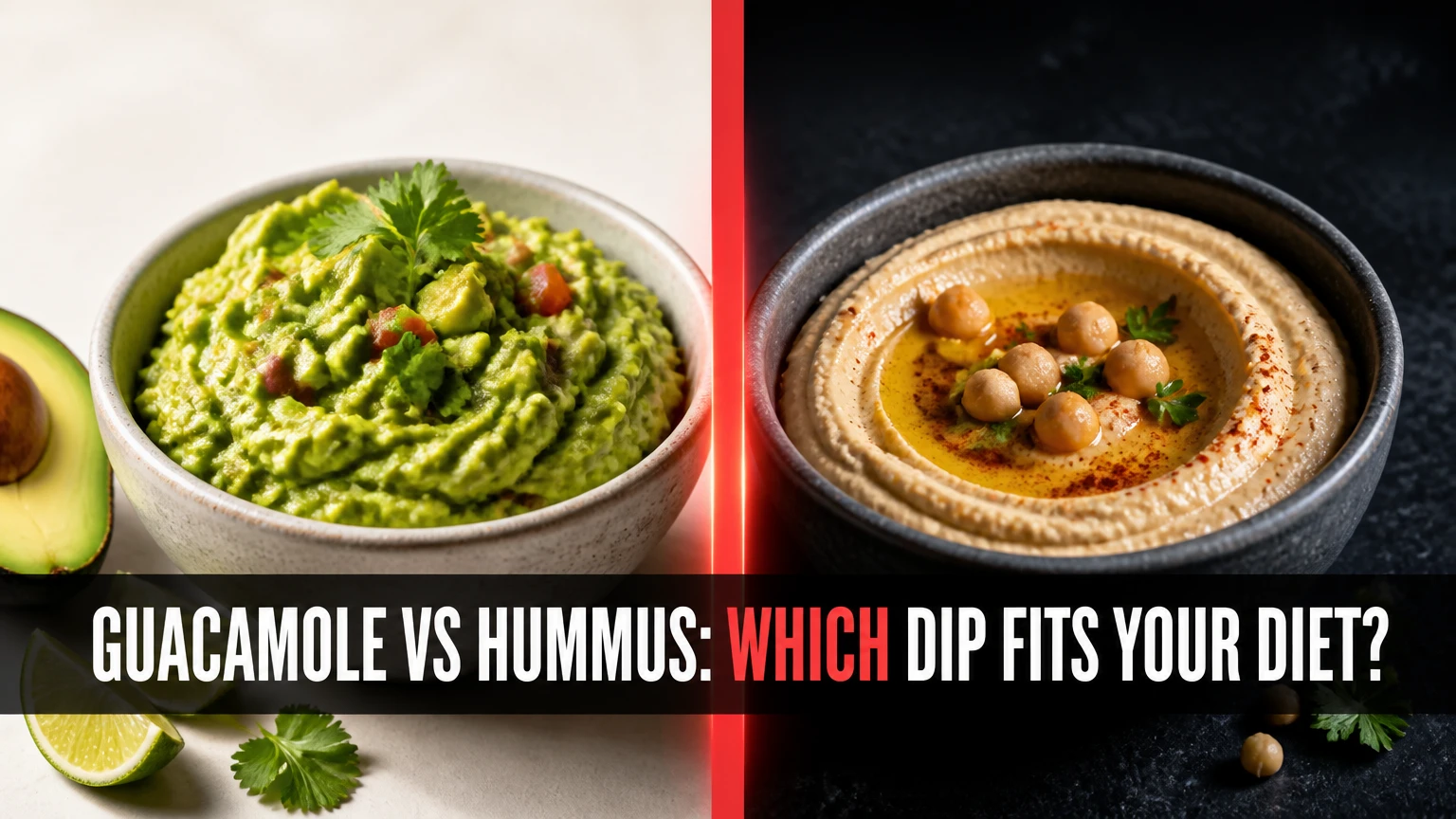
Guacamole and hummus fill the same broad role, but they are different foods with different strengths. Guacamole is a fresh Mexican avocado dip dominated by monounsaturated fat, while hummus is a Levantine chickpea and tahini spread with more protein and carbohydrate. Choose guacamole for low-carbohydrate richness and hummus for protein, value, and meal preparation.
Key Facts at a Glance
Guacamole is primarily mashed avocado, while hummus is primarily cooked chickpeas blended with tahini.
A typical 100-gram serving of guacamole has about 150-180 calories and 1.5-3 grams of protein.
A typical 100-gram serving of hummus has about 160-220 calories and 6-8 grams of protein.
Guacamole usually contains fewer total carbohydrates, while hummus supplies more complex carbohydrate and protein.
Fresh guacamole is best within 1-2 days, whereas opened commercial hummus commonly lasts 4-7 days when refrigerated.
Guacamole takes about 10 minutes to prepare; dried-chickpea hummus can take 12-15 hours, although canned chickpeas reduce active preparation to about 15 minutes.
Guacamole vs Hummus: What Is the Difference?
Guacamole is a raw avocado-based dip associated with Mexico, while hummus is a cooked chickpea spread associated with the Levant, especially countries such as Lebanon, Syria, Palestine, Jordan, and Israel. Guacamole gets its creamy texture from avocado flesh and its flavor from lime, onion, chile, cilantro, and salt; hummus gets its body from chickpeas, tahini, lemon, garlic, and water.
The two foods overlap as dips, sandwich spreads, vegetable accompaniments, and mezze or party foods. Their culinary foundations differ sharply, however. Avocado contributes oil, water, fiber, and a soft cellular matrix. Chickpeas contribute starch, protein, fiber, and a denser legume structure that must be cooked before blending.
| Attribute | Guacamole | Hummus |
|---|---|---|
| Primary ingredient | Hass avocado | Cooked chickpeas |
| Culinary origin | Mexico | Levant |
| Typical texture | Chunky, buttery, or smooth | Dense, whipped, or creamy |
| Main added acid | Lime juice | Lemon juice |
| Main fat source | Avocado oil within the flesh | Tahini and optional olive oil |
| Typical serving context | Tacos, tortilla chips, grilled foods | Pita, vegetables, bowls, sandwiches |
| Cooking requirement | None | Chickpeas must be cooked |
| Main storage concern | Oxidation and rapid quality loss | Refrigeration and microbial control |
Guacamole has no single universal formula. Mexican preparations vary by region and household, and tomatoes are common in some versions but absent from many traditional styles. Hummus also varies in tahini ratio, garlic intensity, acidity, garnish, and texture.
How Do Guacamole and Hummus Get Their Texture?
Guacamole becomes creamy when mashing breaks avocado cells and releases tiny oil droplets into a moist matrix of water, fiber, and plant tissue. Hummus becomes creamy when cooked chickpeas provide hydrated starch and protein, while tahini contributes sesame oil, proteins, and fine particles that disperse through the mixture.
Avocado is already soft and ready to mash when ripe. The fruit’s fat is mainly oleic acid, a monounsaturated fat also found in olive oil. Cutting and crushing expose phenolic compounds to oxygen, and polyphenol oxidase contributes to the familiar brown surface.
Chickpeas need more preparation because their dry seed structure is rigid. Soaking and boiling hydrate the cotyledon, soften the seed coat, and make the starch and proteins easier to shear in a food processor. Baking soda can speed softening by raising cooking-water alkalinity, but too much can create a soapy flavor and excessive mushiness.
Tahini does not make hummus permanently immune to separation. Poorly blended hummus can dry at the surface, and oil may pool during storage. Acid, water, chickpea solids, and tahini must be blended in a controlled sequence to create a smooth suspension.
Expert insight: Hummus texture depends more on chickpea tenderness than on processor power. A high-speed machine cannot fully remove the gritty sensation created by undercooked chickpea skins.
Which Is More Nutritious?
Hummus generally provides more protein and carbohydrate, while guacamole generally provides more monounsaturated fat and potassium. Neither dip is automatically healthier because the answer changes with serving size, recipe formulation, dietary goal, and what the dip replaces.
The table below uses typical plain preparations per 100 grams. USDA FoodData Central entries and commercial labels vary because guacamole may contain tomatoes or added oil, while hummus may contain different amounts of tahini and olive oil.
| Nutrient per 100 g | Guacamole, typical | Hummus, typical | Practical meaning |
|---|---|---|---|
| Calories | 150-180 kcal | 160-220 kcal | Similar range in many recipes |
| Protein | 1.5-3 g | 6-8 g | Hummus is usually higher |
| Total carbohydrate | 8-10 g | 14-20 g | Hummus is usually higher |
| Fiber | 5-7 g | 4-7 g | Both contribute useful fiber |
| Total fat | 13-17 g | 8-17 g | Recipe determines the gap |
| Saturated fat | 2-3 g | 1-3 g | Both are usually modest |
| Potassium | About 450-500 mg | About 200-300 mg | Guacamole is commonly higher |
| Sodium | 250-500 mg | 250-600 mg | Salt and packaging create variation |
The American Heart Association recommends replacing saturated fat with unsaturated fat where possible. Guacamole fits that principle because avocado supplies predominantly monounsaturated fat, but its health value can be reduced by a large portion served with highly salted chips.
Hummus is useful when a meal needs more plant protein, fiber, or carbohydrate. A standard 30-gram serving, about 2 tablespoons, usually contains only 2-3 grams of protein, so hummus is nutritious but not a concentrated protein food. Pairing chickpeas with sesame, grains, nuts, or other foods improves amino acid complementarity across the diet, but the serving itself does not function like a high-protein entrée.
Nutrition Per Typical Serving
| Serving measure | Guacamole | Hummus | Decision effect |
|---|---|---|---|
| 2 tablespoons, 30 g | 45-55 kcal | 50-65 kcal | Both are moderate additions |
| 1/4 cup, 60 g | 90-110 kcal | 100-130 kcal | Portion size becomes meaningful |
| 1/2 cup, 120 g | 180-215 kcal | 200-265 kcal | Dips can become a substantial snack |
| Protein at 2 tablespoons | 0.5-1 g | 2-3 g | Hummus has the advantage |
| Net carbohydrate at 2 tablespoons | About 1-2 g | About 3-5 g | Guacamole usually fits stricter keto plans |
Which Dip Is Better for Keto, Vegan, or Low-FODMAP Eating?
Guacamole is usually the better choice for ketogenic diets because avocado contains much less digestible carbohydrate per serving. Hummus is often the better choice for people seeking more plant protein, but portion size matters for keto and individuals sensitive to legumes or sesame.
Neither dip contains animal ingredients in its basic form, so both can fit vegan and vegetarian diets. Commercial products require label checks because flavored versions may contain dairy, sweeteners, or preservatives.
| Dietary situation | Better starting choice | Reason | Check before eating |
|---|---|---|---|
| Strict keto | Guacamole | About 1-2 g net carbohydrate per 30 g | Chips, added corn, and portion size |
| General low-carbohydrate eating | Guacamole | Lower carbohydrate density | Recipe additions and serving size |
| Vegan eating | Either | Basic recipes are plant-based | Dairy, honey, and flavor additives |
| Higher plant-protein target | Hummus | About 2-3 g protein per 30 g | Tahini quantity and sodium |
| Sesame allergy | Guacamole | Usually contains no sesame | Shared equipment and packaged labels |
| Legume sensitivity | Guacamole | Avoids chickpeas | Individual tolerance and cross-contact |
| Low-FODMAP planning | Small hummus portion or avocado portion | Both require portion awareness | Garlic, chickpeas, and personal tolerance |
Hummus is not automatically low-FODMAP. Chickpeas contain galacto-oligosaccharides, and garlic contains fructans. Monash University’s low-FODMAP guidance uses tested serving sizes, so a person following a clinical elimination diet should rely on current serving recommendations rather than assume that all hummus is suitable.
Guacamole can also create problems in large portions because avocado contains sorbitol and polyols. A small serving may be tolerated better than a large bowl, particularly for people with irritable bowel syndrome.
Which One Is Easier and Cheaper to Make?
Guacamole is faster to make, but hummus is cheaper per serving when prepared from dried chickpeas. Canned chickpeas change the time comparison: homemade hummus can be ready in about 15 minutes, while traditional dried-chickpea hummus requires soaking and cooking.
Typical United States grocery prices vary by region, brand, season, and package size. Fresh avocado prices rise when supply is tight, while dried chickpeas remain one of the least expensive ways to make a spread.
| Preparation route | Active time | Total time | Typical batch cost | Yield |
|---|---|---|---|---|
| Guacamole, 3 avocados | 10-15 minutes | 10-15 minutes | $4-$8 | 2-2.5 cups |
| Hummus, canned chickpeas | 15 minutes | 15-20 minutes | $3-$6 | 2-2.5 cups |
| Hummus, dried chickpeas | 20-30 minutes | 12-15 hours | $2.50-$5 | 3-4 cups |
| Store-bought guacamole | 0 minutes | 0 minutes | $4-$7 per 8 oz | 1 container |
| Store-bought hummus | 0 minutes | 0 minutes | $3-$6 per 10 oz | 1 container |
Hummus has a stronger batch-cooking advantage. One pound of dried chickpeas produces several cups after soaking and cooking, although tahini, lemon, garlic, and oil add to the final price.
Guacamole has a freshness advantage rather than a storage advantage. It is practical when the serving will be eaten immediately, but it is less efficient for a week of planned lunches.
How Do You Make Better Guacamole?
To make traditional-style guacamole, mash 2 ripe Hass avocados with 2 tablespoons finely minced white onion, 1 tablespoon chopped cilantro, 1 finely minced serrano chile, 1-2 tablespoons lime juice, and 1/2 teaspoon salt. Add tomato only if the intended style calls for it.
Step 1: Check the Avocados
Choose fruit that yields slightly to gentle palm pressure. An avocado that feels hard will remain fibrous and bland; one that feels very soft may contain gray or rancid flesh.
Success checkpoint: The flesh should be pale green to yellow-green with a buttery consistency.
Common mistake: Pressing the fruit with fingertips creates bruises that can be mistaken for ripeness.
Step 2: Grind the Aromatics
Crush onion, chile, cilantro, and salt in a molcajete, or mince them finely with a knife. This releases aromatic compounds and distributes salt before the avocado enters the mixture.
Success checkpoint: The aromatics should form a coarse, fragrant paste rather than large wet chunks.
Common mistake: Adding large pieces creates sharp bites and uneven seasoning.
Step 3: Mash and Season
Add avocado and mash with a fork or potato masher. Stir in lime juice immediately, then fold in the aromatics and adjust salt.
Success checkpoint: The finished dip should hold a soft mound while retaining small avocado pieces.
Common mistake: Overprocessing incorporates air and can make the texture loose and mousse-like.
Step 4: Serve or Protect the Surface
Serve guacamole immediately for the brightest color. For short storage, press plastic wrap directly onto the surface, use a shallow airtight container, and refrigerate at 4°C or below.
Water placed on top can reduce oxygen contact, but it does not make guacamole shelf-stable. Pour the water off before serving and discard the dip if it has been held at room temperature too long.
How Do You Make Smooth Hummus?
For smooth hummus, blend 2 cups of very soft cooked chickpeas with 1/2 cup tahini, 1/4 cup lemon juice, 1 small garlic clove, 1 teaspoon salt, and 1/4-1/2 cup cold water. The key checkpoint is tenderness: a cooked chickpea should collapse easily between two fingers.
Step 1: Soak or Choose Canned Chickpeas
For dried chickpeas, soak 1 cup in plenty of water for 8-12 hours. Add about 1/2 teaspoon baking soda if desired, then rinse thoroughly. Canned chickpeas save most of the elapsed time.
Success checkpoint: Soaked beans should be visibly swollen and have no hard center.
Common mistake: Using soaking water in the final hummus can carry excess salt or an unpleasant flavor.
Step 2: Cook Until Very Soft
Boil soaked chickpeas in fresh water for 45-90 minutes, depending on age and variety. A pinch of baking soda can soften skins, but excessive amounts may damage flavor.
Success checkpoint: The chickpea should smear easily instead of remaining firm or grainy.
Common mistake: Stopping at ordinary salad tenderness produces gritty hummus.
Step 3: Blend Acid, Garlic, Salt, and Tahini
Blend lemon juice, garlic, and salt first, then add tahini and process until pale. This distributes seasoning and helps prevent isolated pieces of raw garlic from dominating the batch.
Success checkpoint: The tahini mixture should look thick, smooth, and lighter in color.
Common mistake: Adding all the water at once can produce a thin mixture before the chickpea solids are incorporated.
Step 4: Add Chickpeas and Cold Water
Add warm chickpeas while the processor runs. Stream in cold water one tablespoon at a time until the hummus becomes smooth and spreadable.
Success checkpoint: A spoon dragged through the hummus should leave a clean groove that slowly relaxes.
Common mistake: Adding oil as the primary thinning liquid can make the spread heavy instead of light.
Step 5: Garnish and Store
Spread hummus into a shallow bowl and add olive oil, paprika, sumac, parsley, or whole chickpeas according to the style. Refrigerate promptly in a covered container.
Success checkpoint: The surface should remain moist without a thick dried skin.
Common mistake: Leaving a wide uncovered bowl in the refrigerator accelerates drying and odor absorption.
How Long Do Guacamole and Hummus Last?
Guacamole usually retains its best color and flavor for 1-2 days, while hummus commonly keeps 4-7 days after opening when continuously refrigerated. Food-safety time depends on temperature and handling, not only on whether the surface looks acceptable.
| Food and condition | Typical quality window | Storage requirement | Discard guidance |
|---|---|---|---|
| Fresh guacamole, sealed | 1-2 days | Refrigerator at 4°C or below | Discard for sour, fermented, or rancid odor |
| Fresh guacamole, exposed | Several hours for best color | Cover surface tightly | Brown color alone is not proof of spoilage |
| Homemade hummus | 3-5 days | Clean airtight container | Discard for mold, gas, or off odor |
| Commercial opened hummus | 4-7 days, follow label | Refrigerate after opening | Use the shorter package instruction |
| Either dip at room temperature | Maximum 2 hours | Keep cold during service | Maximum 1 hour above 32°C |
Brown guacamole often results from oxidation and may be safe beneath a thin discolored layer if it has been refrigerated properly and has no spoilage signs. Color cannot override temperature history. The United States Department of Agriculture recommends discarding perishable foods left in the danger zone beyond the stated time limits.
Freezing is possible but imperfect. Guacamole can freeze in an airtight container for about 1-2 months with some texture loss; hummus generally freezes more successfully, although thawed hummus may need vigorous stirring and a spoonful of water.
What Are the Biggest Mistakes?
The most common guacamole errors are poor avocado selection, delayed acidification, excessive processing, and weak surface protection. The most common hummus errors are undercooked chickpeas, inadequate blending, excessive tahini or oil, and uncontrolled garlic intensity.
| Problem | Likely cause | Immediate fix | Prevention |
|---|---|---|---|
| Watery guacamole | Overripe fruit, tomato juice, overprocessing | Drain excess liquid and fold gently | Dice tomato separately and use firm ripe avocados |
| Brown guacamole | Oxygen exposure | Scrape only the discolored surface if properly chilled | Press wrap directly onto the dip |
| Grainy hummus | Undercooked chickpeas or skins | Blend longer with cold water | Cook until chickpeas collapse |
| Bitter hummus | Excessive tahini, garlic, or baking soda | Add chickpeas, lemon, and water gradually | Measure strong ingredients |
| Hummus too thick | Insufficient water or blending | Stream in 1 tablespoon water at a time | Blend tahini before chickpeas |
| Harsh garlic flavor | Large quantity of raw garlic | Add more chickpeas and lemon | Blend garlic with lemon first |
Expert insight: The avocado pit does not create a special anti-browning barrier. Only the part of the surface physically covered by the pit is shielded from air; direct contact between plastic wrap and the entire dip works better.
Practitioner rule: Taste hummus after it cools. Refrigeration dulls acidity and salt perception, so a batch that tastes perfectly seasoned while warm may taste flat the next day.
Which Dip Works Better for Each Situation?
Guacamole is the stronger choice for immediate serving, low-carbohydrate meals, tacos, and grilled foods. Hummus is the stronger choice for packed lunches, economical batch cooking, vegetable platters, and meals that need more protein and staying power.
For Keto or Low-Carbohydrate Meals
Choose guacamole. A 30-gram portion generally contributes about 1-2 grams of net carbohydrate, while the same amount of hummus commonly contributes about 3-5 grams. Serve guacamole with cucumber, celery, radishes, or a low-carbohydrate entrée instead of assuming tortilla chips fit the same plan.
For Muscle-Building Meals
Choose hummus, but treat it as a supporting food rather than a protein shake substitute. Two tablespoons provide only a few grams of protein, so pair hummus with beans, tofu, yogurt if appropriate, eggs, fish, or another substantial protein source.
For Meal Prep
Choose hummus. It tolerates several refrigerated days and works in wraps, grain bowls, sandwiches, and snack boxes. Keep vegetables dry and store the dip separately to prevent dilution.
For a Party or Cookout
Choose guacamole when serving begins soon after preparation. Its color and flavor are best within hours, and the fresh acidity cuts through rich foods. Choose hummus when the platter must be assembled early or remain available for several hours under refrigeration.
For Allergy-Conscious Serving
Choose guacamole when sesame is a concern, but confirm the preparation area is free from tahini cross-contact. Choose hummus only after checking for sesame, and remember that flavored commercial products can introduce additional allergens.
What Are the Best Alternatives?
Baba ganoush is the closest savory alternative to hummus for a smoky, tahini-based spread, while mashed peas or white-bean dip can replace guacamole or hummus in specific dietary situations. Each substitute changes the dominant nutrient, texture, or allergen profile.
| Alternative | Main ingredient | Typical texture | Best replacement use | Main limitation |
|---|---|---|---|---|
| Baba ganoush | Roasted eggplant and tahini | Smoky and soft | Hummus on mezze plates | Usually less protein |
| White-bean dip | Cannellini or navy beans | Thick and creamy | Hummus in sandwiches | Can taste beanier |
| Pea and herb spread | Green peas, herbs, acid | Fresh and slightly sweet | Guacamole in low-fat meals | Less buttery |
| Avocado salsa | Avocado, tomato, onion, acid | Chunky and juicy | Guacamole with grilled foods | More watery |
| Edamame spread | Cooked soybeans | Dense and green | Hummus for higher protein | Soy allergen |
No alternative is universally superior. Choose based on the missing attribute: baba ganoush adds smoke, white-bean dip preserves creaminess without sesame, and edamame spread raises protein while introducing soy.
Frequently Asked Questions
Is guacamole healthier than hummus?
Neither dip wins for every diet. Guacamole usually provides more monounsaturated fat and potassium with fewer digestible carbohydrates, while hummus generally provides more protein and complex carbohydrate. The healthiest choice depends on portion size, ingredients, sodium, and whether the dip accompanies vegetables or a large serving of chips.
Can you eat hummus and guacamole together?
Yes. Combining hummus and guacamole creates a creamy dip with avocado fat, chickpea carbohydrate, tahini, and fiber. Keep portions measured because two calorie-dense dips can add up quickly, especially when paired with chips, pita, or crackers. A practical starting portion is 2 tablespoons of each.
Which dip has more protein?
Hummus has more protein. A typical 100-gram serving supplies about 6-8 grams, compared with roughly 1.5-3 grams in guacamole. Hummus still provides modest protein per normal 2-tablespoon serving, so it should complement, rather than replace, a principal protein food.
Is hummus more filling than guacamole?
Hummus may feel more filling for some people because chickpeas provide protein, starch, and fiber. Guacamole can also support satiety through fat and fiber, particularly when eaten with vegetables. Total meal composition matters more than the dip alone, including portion size, protein, hydration, and the food used for dipping.
Can guacamole replace hummus in a recipe?
Guacamole can replace hummus as a sandwich spread, vegetable dip, or bowl topping, but the flavor and storage behavior change. Guacamole is brighter, fattier, and more perishable, while hummus is earthier, denser, and usually more stable. Do not substitute guacamole where hummus provides a firm, neutral base for several days.
Which one should you buy?
Buy guacamole for immediate use when you want avocado flavor and a low-carbohydrate dip. Buy hummus for several days of lunches, a lower-cost batch, or a spread with more protein. Inspect labels for sodium, added oils, dairy, sesame, garlic, and preservatives, then compare serving sizes rather than package calories alone.
The Bottom Line
Guacamole vs hummus is a choice between fresh avocado richness and practical chickpea nourishment. Choose guacamole for keto-friendly meals, immediate serving, lime-forward flavor, and monounsaturated fat. Choose hummus for protein, batch preparation, lower-cost servings, and versatile refrigerated storage. Both are fiber-containing plant foods, but neither becomes healthy by default when served in oversized portions with salty snack foods.