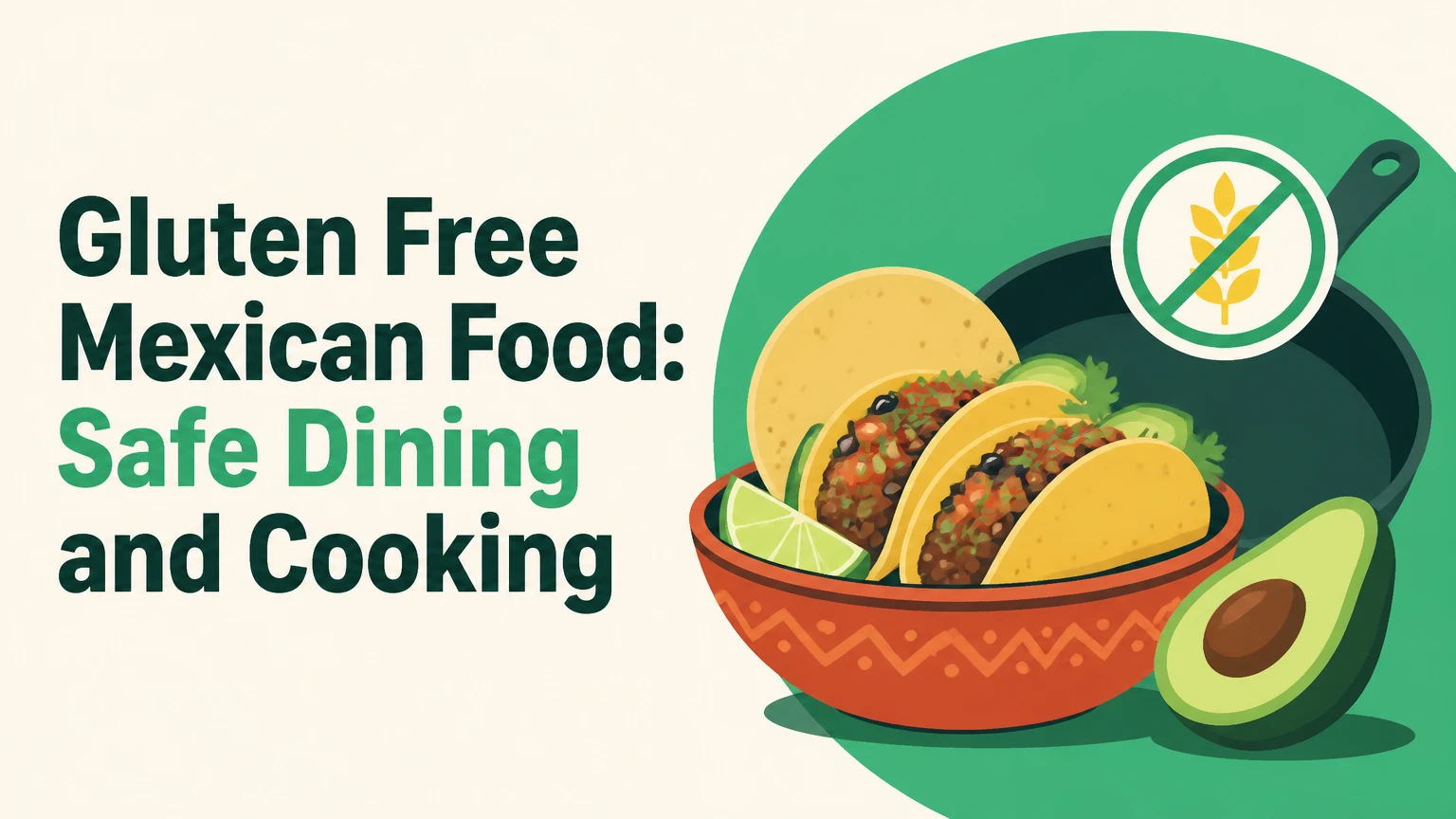
Gluten free Mexican food centers on corn masa, beans, rice, fresh produce, and simply seasoned proteins, but a dish is safe only when its ingredients and preparation avoid wheat, barley, rye, and cross-contact. For people with celiac disease, 100% corn tortillas are a useful starting point, not a complete safety guarantee.
Key Facts at a Glance
- The U.S. Food and Drug Administration defines “gluten-free” packaged food as containing fewer than 20 parts per million of gluten.
- Traditional masa harina is made from nixtamalized corn, while flour tortillas are made from wheat.
- Tacos, enchiladas, tamales, pozole, and sopes can be gluten-free when recipes and equipment are controlled.
- Shared fryers, flour-dusted griddles, wheat-containing sauces, and regular soy sauce create common restaurant risks.
- Corn chips are safe only when the fryer oil is dedicated or verified free from wheat products.
- A restaurant’s gluten-free menu label does not automatically prove that the kitchen prevents cross-contact.
What Is Gluten Free Mexican Food?
Gluten-free Mexican food is Mexican cuisine prepared without wheat, barley, rye, or their derivatives, with a final gluten level below 20 parts per million when the relevant labeling standard applies. The cuisine naturally offers many options because corn masa, beans, rice, chiles, tomatoes, herbs, and fresh meat form the base of many regional dishes.
The 20 ppm threshold comes from the FDA’s gluten-free labeling rule for packaged foods in the United States. That threshold does not mean every restaurant meal labeled GF has been laboratory tested. A restaurant may use safe ingredients while transferring flour from a shared tortilla press, griddle, fryer, knife, or serving surface.
Why is Mexican cuisine often suitable for gluten-free eating?
Mexican cuisine often suits gluten-free eating because corn replaces wheat in tortillas, tostadas, tamales, and many masa-based dishes. Nixtamalization cooks dried corn in an alkaline solution, then softens it for grinding into masa; masa harina is the dried form used to make dough.
Authentic regional cooking does not require flour tortillas in every dish. Wheat tortillas are especially common in northern Mexico, while central and southern regions rely heavily on corn tortillas and other masa preparations. “Authentic” therefore does not equal “automatically gluten-free,” because modern restaurants may add wheat flour, commercial stock, seasoning blends, or flour-based fillings.
Which Mexican Ingredients Are Naturally Gluten-Free?
Corn masa, plain rice, dried beans, fresh vegetables, unseasoned meat, poultry, seafood, eggs, avocado, chiles, citrus, and herbs are naturally gluten-free in their unprocessed forms. Packaged versions require label checks because broths, spice blends, sauces, and processed meats can introduce gluten-containing ingredients.
| Ingredient or food | Usual gluten status | Main verification point | Typical use |
|---|---|---|---|
| 100% corn masa | Naturally gluten-free | Confirm no wheat flour blend | Tortillas, tamales, sopes |
| Dried black beans | Naturally gluten-free | Check broth and seasoning | Side dish, enfrijoladas |
| Plain white rice | Naturally gluten-free | Check stock and shared cooker | Mexican rice |
| Fresh avocado | Naturally gluten-free | Check shared preparation tools | Guacamole |
| Corn tortillas | Usually gluten-free | Confirm 100% corn and clean griddle | Tacos, enchiladas |
| Wheat flour tortillas | Contains gluten | No substitution makes them safe | Burritos, quesadillas |
| Commercial bouillon | Variable | Read wheat, malt, and flavoring terms | Soups and rice |
| Bottled marinade | Variable | Check soy sauce and hydrolyzed ingredients | Carne asada, seafood |
A “corn tortilla” can still contain wheat if the manufacturer uses a corn-wheat blend. Small taquerias may also warm corn and flour tortillas on the same plancha, so ingredient safety and equipment safety must be checked separately.
Is masa harina gluten-free?
Plain masa harina made from corn is generally gluten-free, but the package should identify the ingredients and any allergen or facility information. Bob’s Red Mill, Maseca, and other brands can have different labeling and manufacturing practices, so celiac households should check the current package rather than rely on brand reputation.
Masa harina can become unsafe through shared scoops, flour-covered counters, or a tortilla press used for wheat dough. At home, store it sealed, measure it with clean utensils, and keep it away from wheat flour dust. The same rule applies to cornmeal and prepared masa sold from a market counter.
Which Mexican Dishes Can Be Gluten-Free?
The safest Mexican dishes are those built from verified corn masa, plain proteins, fresh toppings, and sauces thickened without wheat. Tacos, tamales, enchiladas, pozole, ceviche, sopes, and guacamole often qualify, but each dish needs a recipe and preparation check.
| Dish | Why it may be safe | Common gluten risk | Safer order or preparation |
|---|---|---|---|
| Street-style tacos | Corn tortillas, grilled filling, onion, cilantro | Shared griddle or seasoning | Ask for a clean surface and plain corn tortillas |
| Tamales | Corn masa and corn husks | Wheat in filling or prepared masa | Verify masa, broth, and filling ingredients |
| Enchiladas | Corn tortillas and chile sauce | Flour-thickened sauce | Confirm sauce uses masa, cornstarch, or no thickener |
| Sopes | Fried or griddled masa base | Shared fryer and wheat toppings | Use a dedicated fryer or griddle |
| Pozole | Hominy, meat, chiles, and broth | Bouillon or contaminated toppings | Verify broth and serve with clean garnishes |
| Ceviche | Seafood, lime, vegetables | Soy sauce, seasoning, shared chips | Order without sauces and verify corn chips |
| Albondigas | Meat, vegetables, and broth | Breadcrumb binder | Request rice or corn masa instead of breadcrumbs |
| Guacamole | Avocado, lime, onion, chile | Shared chip basket | Eat with a clean corn tortilla or vegetables |
Are tacos gluten-free?
Tacos are often gluten-free when made with verified corn tortillas, a plain grilled filling, and fresh toppings. Tacos become unsafe when a flour tortilla is substituted, a shared griddle transfers flour, the meat contains a wheat-based marinade, or the order arrives with contaminated chips.
Corn tortilla tacos also vary by style. Carnitas, grilled fish, chicken, mushrooms, and nopales may be suitable, but the cooking fat, marinade, and preparation surface still matter. Ask whether the filling is prepared separately from flour tortillas and whether the kitchen can use a clean pan.
Are tamales and enchiladas safe?
Tamales and enchiladas can be safe because both commonly use corn masa or corn tortillas, but sauces and fillings determine the final result. Tamale masa may contain broth or prepared seasoning, while enchilada sauce may use flour, wheat-containing bouillon, or a commercial base.
Red, green, and mole sauces need separate verification. Mole recipes vary widely; some use bread, crackers, or wheat-containing chocolate products, while others use corn tortillas, nuts, seeds, chiles, and spices. A restaurant that cannot identify the thickener cannot reliably confirm the sauce.
Which sides and soups usually work?
Plain beans, Mexican rice, pico de gallo, salsa, guacamole, nopales, and pozole are common starting points. Refried beans require more care because lard is gluten-free, but shared utensils, seasoning packets, and restaurant stock can still introduce gluten.
| Side or soup | Typical base | Check before eating | Practical substitute |
|---|---|---|---|
| Black beans | Beans, onion, chile, herbs | Broth and serving spoon | Plain beans from a clean pot |
| Refried beans | Beans and cooking fat | Seasoning and shared spoon | Whole beans |
| Mexican rice | Rice, tomato, onion | Chicken stock and cooker | Plain rice with salsa |
| Pico de gallo | Tomato, onion, cilantro, lime | Shared cutting board | Individually prepared salsa |
| Pozole | Hominy, meat, chile broth | Bouillon and garnish station | Verified broth-based soup |
| Elote | Corn, lime, cheese, chile | Toppings and preparation surface | Plain grilled corn |
Corn chips deserve special attention. A chip made from corn can still pick up gluten when fried in oil shared with flour tortilla strips, churros, breaded food, or flour-based tortilla bowls.
How Do You Check a Mexican Restaurant for Gluten?
Restaurant safety depends on direct ingredient questions and cross-contact controls, not on the color of a menu symbol. A celiac diner should confirm the tortilla type, cooking surface, fryer oil, sauces, broths, seasonings, and utensils before ordering.
Use this sequence:
- State the medical requirement clearly. Say, “I have celiac disease and need to avoid wheat, barley, rye, and cross-contact.”
- Ask about tortillas. Confirm that the tortillas are 100% corn and warmed separately from flour tortillas.
- Check the cooking surface. Ask whether the plancha, pan, or grill is cleaned and whether a separate surface is available.
- Check the fryer. Ask whether corn chips use dedicated oil separate from flour products.
- Audit sauces and marinades. Ask about soy sauce, Worcestershire sauce, bottled seasoning, bouillon, and flour thickeners.
- Protect the finished plate. Request clean tongs, a clean plate, and no shared garnish spoon.
- Escalate uncertainty. If staff cannot identify ingredients or procedures, choose a simpler meal or another restaurant.
A useful Spanish script is: “Tengo enfermedad celíaca. ¿La tortilla es cien por ciento de maíz? ¿Se cocina en una superficie separada de la harina? ¿Hay contaminación cruzada?” The word “harina” means flour, but staff may interpret a general allergy statement differently from a celiac requirement.
| Restaurant variable | Lower-risk answer | Higher-risk answer | Decision |
|---|---|---|---|
| Tortilla composition | 100% corn, labeled | Corn-wheat blend or unknown | Avoid unknown tortillas |
| Griddle | Separate clean pan | Shared flour-dusted plancha | Request another cooking surface |
| Fryer | Dedicated corn-chip oil | Shared oil with churros | Skip fried food |
| Marinade | Salt, citrus, chiles, herbs | Soy sauce or bottled blend | Choose plain grilled food |
| Broth | House-made and verified | Commercial bouillon, unknown label | Avoid soup or sauce |
| Staff response | Specific process explanation | “Probably safe” | Treat uncertainty as a warning |
What should celiac travelers order in Mexico?
Celiac travelers can often find suitable food in Mexico by choosing simple corn-based meals and asking about preparation in advance. Fresh corn tortillas, grilled meat, beans, rice, fruit, and salsa are easier to audit than fried snacks, complex moles, bakery items, or sauces made from commercial mixes.
Regional variation matters. Northern restaurants may rely more heavily on wheat flour tortillas, while central and southern menus commonly feature corn masa, but a regional assumption cannot replace a kitchen check. Markets and street stalls may have limited separation between flour and corn products, so a dedicated restaurant kitchen can offer better control.
Carry a translated restaurant card, packaged snacks for delays, and any prescribed medical supplies. If symptoms or suspected exposure occur, contact a clinician, especially when celiac disease, anaphylaxis, dehydration, or severe abdominal pain is involved.
How Can You Cook a Safe Meal at Home?
Home cooking provides the greatest control because the cook can separate ingredients, equipment, storage, and serving utensils. A practical four-serving meal can use 12 corn tortillas, 500-700 grams of plain protein, 2 cups of cooked beans, 2 cups of rice, and 2 cups of chopped toppings.
Step 1: Audit ingredients and equipment
Read every label on broth, spice blends, canned chiles, salsa, cheese, and prepared meat. Wash metal cookware thoroughly, remove flour dust from counters, and use a separate wooden cutting board if wheat has been prepared on the existing board.
Step 2: Prepare the protein simply
Season 500-700 grams of chicken, fish, beef, mushrooms, or tofu with salt, lime, garlic, cumin, and dried chile. Avoid unverified taco seasoning, marinades, and meat substitutes until their labels are checked.
Step 3: Build the sauce
Use 2 tablespoons of cornstarch or arrowroot mixed with 3 tablespoons of cold water for approximately 500 milliliters of sauce. Add the slurry near the end of cooking and simmer for 1-2 minutes; never add dry starch directly to hot liquid.
Step 4: Heat tortillas separately
Warm corn tortillas in a clean skillet for 20-30 seconds per side. Keep them covered in a clean towel, away from wheat tortillas and flour dust.
Step 5: Serve from clean containers
Use separate spoons for beans, salsa, cheese, and meat. A safe recipe can become unsafe when a wheat-exposed spoon enters the guacamole or when corn tortillas share a plate with flour tortillas.
You will know the process worked when each ingredient has a verified label or simple whole-food identity, and no utensil or surface has moved from wheat preparation into the meal. The main home-cooking mistake is assuming that a naturally gluten-free ingredient remains safe after shared handling.
How Much Does a Gluten-Free Mexican Meal Cost?
A typical homemade meal costs about $4-$9 per serving, while restaurant meals commonly cost $15-$35 before tax and tip in the United States. Prices vary by city, protein, service level, and whether a restaurant charges for specialty preparation.
| Preparation route | Typical cost per serving | Active time | Main safety advantage | Main limitation |
|---|---|---|---|---|
| Home cooking | $4-$9 | 35-75 minutes | Full ingredient control | Requires shopping and cleanup |
| Fast-casual restaurant | $12-$22 | 10-25 minutes | Simple custom ordering | Shared surfaces may remain |
| Full-service restaurant | $20-$40 | 60-100 minutes | Staff can explain recipes | Higher cost and variable procedures |
| Meal kit | $9-$16 | 30-50 minutes | Measured ingredients | Supplier labels need checking |
| Prepared meal service | $10-$25 | 3-8 minutes | Minimal preparation | Limited customization |
For a busy household, batch cooking beans, rice, salsa, and protein for four servings can reduce active work to about 20 minutes per meal after the first preparation session. Meal kits save measuring time but do not automatically meet celiac standards; the package and facility statements still require review.
Which Alternative Is Safer: Tacos, Bowls, or Fajitas?
For celiac diners, a grilled bowl or plate is usually easier to control than tacos with multiple tortilla types, while fajitas are suitable only when the skillet, seasoning, and tortillas are verified. The best choice is the format with the fewest uncertain ingredients and the cleanest preparation path.
| Meal format | Typical components | Main gluten exposure | Best modification |
|---|---|---|---|
| Corn-tortilla tacos | Tortillas, protein, salsa | Shared griddle | Clean pan and no chips |
| Rice-and-bean bowl | Rice, beans, protein, toppings | Seasoned rice or garnish tools | Plain rice and fresh toppings |
| Fajita plate | Grilled protein, vegetables, tortillas | Skillet, seasoning, flour tortillas | Dedicated skillet and corn tortillas |
| Enchiladas | Corn tortillas, filling, sauce | Flour-thickened sauce | Verified sauce or plain tacos |
| Salad plate | Greens, protein, salsa, avocado | Croutons, dressing, chips | Clean bowl and oil-lime dressing |
Bowls often offer better ingredient visibility, but they can carry more hidden risk if every topping comes from a shared line. A simple plate assembled in the kitchen may be safer than a highly customized counter order.
What Hidden Gluten Causes the Most Problems?
Hidden gluten most often enters Mexican food through commercial seasonings, bouillon, soy sauce, Worcestershire sauce, shared fryers, flour tortillas, and contaminated utensils. The risk is greatest when a restaurant cannot identify the contents of a marinade or uses one station for both corn and wheat products.
Common examples include:
- Taco seasoning: May contain wheat flour, malt flavoring, or an unverified anti-caking ingredient.
- Adobo and marinades: May include soy sauce or a wheat-containing seasoning base.
- Mole: Some recipes use bread, crackers, or commercial thickeners.
- Queso and cream sauces: Flour may be used to create a stable texture.
- Meatballs: Breadcrumbs are a frequent binder in albondigas.
- Chips and tostadas: Corn ingredients do not protect food fried in shared oil.
- Desserts: Churros, buñuelos, cookies, and cake contain wheat unless a dedicated recipe is confirmed.
A counterintuitive rule is that plain grilled meat is not automatically safer than a sauce-based dish. A restaurant may marinate the meat in a wheat-containing product, while a carefully verified chile sauce may be entirely corn-based.
What Are the Most Common Ordering Mistakes?
The most common mistake is saying “no flour” while failing to mention cross-contact. Flour can reach a meal through a griddle, fryer, tortilla press, cutting board, garnish spoon, or storage container even when the recipe contains no wheat.
| Mistake | Failure mechanism | Immediate correction | Prevention rule |
|---|---|---|---|
| Ordering corn chips automatically | Shared fryer oil | Replace chips with vegetables | Verify dedicated oil |
| Trusting a GF menu icon | Recipe may be safe, kitchen may not be | Ask about equipment | Treat labels as a starting point |
| Choosing rice without questions | Broth may contain wheat | Request plain rice | Verify stock and seasoning |
| Ordering mole by color | Red or green color says nothing about recipe | Ask about thickener | Confirm ingredients with kitchen |
| Sharing salsa | Wheat-exposed chips contaminate bowl | Use a fresh portion | Keep serving bowls separate |
| Accepting “allergy-safe” verbally | Staff may not understand celiac needs | Explain cross-contact | Ask for a manager or chef |
What if a restaurant cannot answer?
If staff cannot answer specific questions about tortillas, fryers, sauces, or cooking surfaces, choose a meal made from packaged ingredients you can inspect or leave the restaurant. Hunger, a busy service, and a reassuring but vague answer do not reduce cross-contact risk.
For a sensitive diner, the most reliable fallback is a verified packaged meal or a simple home-prepared option. This is a limitation of restaurant dining: even a conscientious kitchen may lack dedicated equipment, ingredient records, or staff training.
Which Options Fit Different Diners?
Celiac diners need the strictest controls, while people with non-celiac gluten sensitivity may make decisions based on personal tolerance and medical advice. A wheat allergy adds an immune-allergy concern, so the restaurant must address wheat specifically rather than discussing gluten alone.
| Diner situation | Recommended order | Avoid first | Control priority |
|---|---|---|---|
| Diagnosed celiac disease | Verified grilled protein, beans, rice, corn tortillas | Shared fryer and unknown sauces | Cross-contact prevention |
| Wheat allergy | Clearly wheat-free meal | Flour tortillas and wheat marinades | Wheat allergen communication |
| Non-celiac sensitivity | Simple corn-based meal | Personal trigger ingredients | Symptom tracking |
| Vegetarian celiac diner | Beans, rice, nopales, salsa, guacamole | Meat substitutes with wheat | Protein label checks |
| Family with mixed diets | Separate plated meals | Shared chip and tortilla baskets | Serving utensil separation |
| Traveler with limited language | Restaurant card and simple order | Complex market preparations | Translation and backup food |
Vegetarian Mexican food can be highly accessible, but meat substitutes and prepared beans need label checks. A bean-and-rice plate with fresh salsa is easier to verify than a packaged soy-based filling whose seasoning and binder are unknown.
How Should You Read Labels for Packaged Mexican Food?
Read the full ingredient list and allergen statement, then check the manufacturer’s gluten-free claim when available. Look for wheat, barley, rye, malt, brewer’s yeast, wheat starch, soy sauce, and ambiguous flavoring terms, while remembering that “may contain” and shared-facility statements have different meanings by product and jurisdiction.
The FDA requires a gluten-free packaged-food claim to meet the under-20-ppm standard, but certification logos can impose additional testing or facility requirements. A product without a certification logo is not automatically unsafe, and a certified product still needs correct storage and handling after opening.
Check these products especially carefully:
- Corn tortilla packages and refrigerated masa
- Taco shells, tostadas, and corn chips
- Enchilada, adobo, and mole sauces
- Bouillon, canned beans, and Mexican rice mixes
- Sausage, chorizo-style fillings, and meat substitutes
- Chocolate, cookies, churros, and dessert toppings
Gluten-Free Mexican Food FAQ
Are refried beans gluten-free?
Refried beans are often gluten-free when made from beans, cooking fat, onion, and spices, but recipes vary. Verify the broth, seasoning packet, and serving utensil, especially in restaurants that prepare beans beside flour tortillas or use a shared steam table.
Can people with celiac disease eat corn chips?
People with celiac disease can eat corn chips when the chips are made from verified corn ingredients and fried in dedicated oil. Shared fryer oil is the main restaurant risk, so ask specifically about flour tortillas, churros, breaded foods, and tortilla bowls.
Is Mexican rice gluten-free?
Mexican rice is usually based on rice, tomato, onion, garlic, and spices, but restaurant versions may use chicken bouillon or a commercial seasoning blend. Ask whether the stock is gluten-free, or request plain rice with verified toppings when the kitchen cannot answer.
Are corn tortillas healthier than flour tortillas?
Corn tortillas generally provide a gluten-free alternative and often contain fewer calories per small tortilla, but healthfulness depends on portion size, filling, cooking fat, and toppings. Corn tortillas are not automatically lower in sodium or calories when they are fried or loaded with cheese and sauces.
Can I eat mole on a gluten-free diet?
Mole may fit a gluten-free diet, but the recipe must be checked because some versions use bread, crackers, or wheat-containing commercial thickeners. Ask which ingredients thicken the sauce and whether the kitchen uses a shared ladle or contaminated serving container.
What is the safest first order at a Mexican restaurant?
A practical first order is plain grilled protein, whole beans, verified rice, fresh salsa, and 100% corn tortillas heated on a clean surface. Skip chips, complex sauces, and shared garnishes until the staff confirms fryer, griddle, broth, and seasoning procedures.
The Bottom Line
Gluten free Mexican food is widely available because corn masa, beans, rice, chiles, vegetables, and fresh proteins support many traditional dishes. The safest choice comes from matching a naturally gluten-free recipe with verified ingredients and controlled preparation, especially for tortillas, fryers, griddles, sauces, broths, and utensils.
For home cooks, separate equipment and labeled ingredients provide the most control. For restaurant diners, ask direct questions and prefer simple grilled or plated meals when answers are incomplete. The phrase gluten free Mexican food identifies a food style, but only the full ingredient and preparation chain determines whether a particular meal is safe.