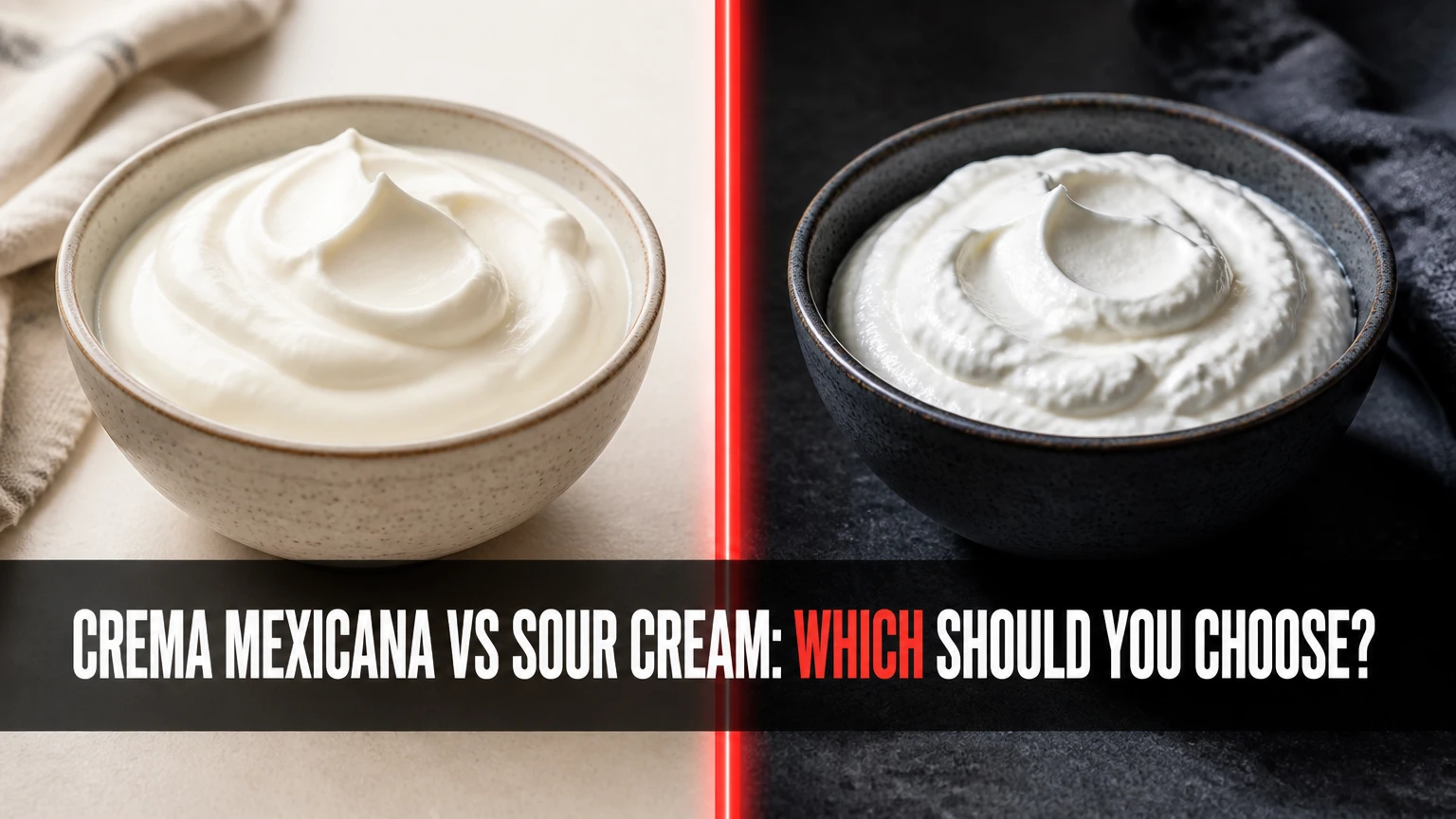
Crema Mexicana is a pourable, mild cultured cream, while sour cream is thicker, tangier, and usually more acidic. Choose crema Mexicana for drizzling over tacos, enchiladas, and soups, especially when you want a smooth finish. Choose full-fat sour cream for dips, baked goods, and recipes that depend on pronounced acidity and structure.
Key Facts at a Glance
- Crema Mexicana is generally thinner and milder than American sour cream.
- Full-fat sour cream contains at least 18% milkfat under the U.S. standard of identity.
- Crema Mexicana has no single universal fat percentage, pH, salt level, or thickness.
- Sour cream can curdle in high heat, while crema often performs more smoothly, but formulation matters.
- Sour cream is the more reliable choice when baking soda needs substantial acid.
- Crema Mexicana is usually the better finishing cream for tacos, chilaquiles, tostadas, and soups.
What Is the Difference Between Crema Mexicana and Sour Cream?
The main difference is functional: sour cream is a thick, acidic cultured cream, whereas crema Mexicana is commonly a looser, richer, milder cultured cream intended for pouring. Both products are fermented with lactic-acid-producing bacteria, but manufacturers use different cream bases, cultures, fermentation targets, salt levels, and stabilizers.
“Sour cream” is a regulated product name in the United States. The U.S. Food and Drug Administration standard specifies a minimum of 18% milkfat and limits the amount of acidity that can be developed during manufacture. Individual products still vary in thickness and tartness.
Crema Mexicana is a culinary category with more regional and commercial variation. Some products are salted, some are nearly neutral, and some resemble crème fraîche in thickness. A bottle labeled Mexican crema may contain cultured cream, stabilizers, salt, or a combination of those ingredients.
Is Crema Mexicana the Same as Sour Cream?
Crema Mexicana is not exactly the same as sour cream, although both are cultured dairy creams and can overlap in ingredients. Mexican crema usually has lower perceived acidity and a more fluid texture, while sour cream normally has a sharper tang and holds a spoonful in place.
The label matters more than the name alone. A thick, unsalted crema may substitute differently from a thin, salted crema sold in a squeeze bottle.
How Are the Two Creams Made?
Sour cream and crema Mexicana are made by inoculating pasteurized cream with lactic acid bacteria, allowing fermentation to lower the pH, then cooling and packaging the cultured product. The final differences come from the starting cream, culture blend, fermentation time, and desired consistency.
Sour cream production commonly targets a firm gel. Casein proteins aggregate as acidity rises, and the cream develops a spoonable body. Commercial sour cream may also contain modified starch, gums, gelatin, or other stabilizers, particularly in reduced-fat versions.
Crema Mexicana production often targets a milder acid profile and a pourable body. A higher-fat base can create a smoother mouthfeel, but high fat alone does not guarantee heat stability. Salt, stabilizers, homogenization, and the specific culture all influence how the product behaves in a pan.
| Attribute | Full-Fat Sour Cream | Crema Mexicana | Practical Meaning |
|---|---|---|---|
| Minimum U.S. milkfat standard | 18% | No single universal standard | Read the package label |
| Typical retail texture | 180-240 g per cup equivalent | 220-260 g per cup equivalent | Crema usually pours more easily |
| Typical perceived acidity | High, sharp tang | Low to moderate, gentle tang | Sour cream changes flavor more strongly |
| Common salt level | 0-20 mg sodium per tablespoon | 40-120 mg sodium per tablespoon | Salted crema can alter seasoning |
| Common serving size | 2 tablespoons | 2 tablespoons | Compare nutrition on the same portion |
| Typical unopened storage | About 2-4 weeks refrigerated | About 1-4 weeks refrigerated | Brand packaging controls the date |
The figures above are typical retail ranges, not universal specifications. Product labels take priority, especially for salt, fat, and storage.
Which One Has the Better Flavor and Texture?
Sour cream has the stronger flavor, with a clean acidic bite and a thick, cool texture. Crema Mexicana has a softer tang, a more buttery mouthfeel, and a fluid consistency that spreads across food instead of remaining in a mound.
That distinction changes the balance of a finished dish. A spoonful of sour cream can cut through chili, fried foods, and rich fillings. Crema Mexicana softens heat and adds dairy richness without dominating roasted chiles, corn, beans, or delicate sauces.
| Sensory Feature | Sour Cream | Crema Mexicana | Best Match |
|---|---|---|---|
| Acidity | Sharp, pronounced | Mild to moderate | Sour cream for contrast |
| Body | Thick and spoonable | Pourable or softly thick | Crema for drizzling |
| Mouthfeel | Cool, dense, creamy | Silky, rich, fluid | Crema for sauces |
| Salt | Usually unsalted | Often lightly salted | Sour cream for controlled seasoning |
| Finish | Tangy and lingering | Mild and buttery | Crema for subtle dishes |
Which Is Better for Tacos?
Crema Mexicana is usually better for tacos because its fluid texture distributes in a thin layer and its mild acidity does not overwhelm seasoned meat, beans, vegetables, or salsa. Sour cream works when you want a thicker, colder, tangier topping, but it may need thinning.
For a practical substitute, whisk 3 tablespoons full-fat sour cream with 1 tablespoon heavy cream or milk, then add salt only if the recipe needs it. The result will not reproduce every commercial crema, but it will drizzle more evenly.
Crema also suits chilaquiles, flautas, tostadas, sopes, enchiladas, elotes, and baked vegetable dishes. Sour cream is useful when the topping needs to remain visibly separate, such as on a bowl of chili or a layered dip.
Which Cream Handles Heat Better?
Crema Mexicana usually handles gentle to moderate heat better than sour cream, but neither product should be treated as completely boil-proof. Sour cream is more likely to split when exposed directly to boiling liquid because its acidity and lower fat structure encourage protein tightening and whey separation.
Fat is only part of the explanation. A high-fat, stabilized, homogenized crema may remain smooth, while a thin, low-fat, acidic crema can break. Temperature shock is also significant, so adding refrigerator-cold dairy to a boiling sauce creates unnecessary stress.
How Should You Add Cream to Hot Soup?
Temper sour cream before adding it to hot soup: whisk 1 cup sour cream with 1 cup warm broth, add the mixture gradually to the pot, and keep the soup below a simmer for 2-5 minutes. Crema Mexicana can often be stirred in directly at low heat, but tempering remains the safest method.
- Remove the pot from direct high heat.
- Put the cream in a separate bowl.
- Whisk in warm broth one tablespoon at a time.
- Add the tempered mixture to the soup.
- Reheat gently without boiling.
A practical kitchen rule is to finish with crema after the burner is lowered. This preserves its smooth appearance and prevents a thin dairy layer from separating over the surface.
| Dish | Preferred Cream | Heat Method | Failure Risk |
|---|---|---|---|
| Chicken tortilla soup | Crema Mexicana | Stir in below 85°C | Low to moderate |
| Potato soup | Sour cream or crema | Temper at 60-75°C | Moderate |
| Enchilada sauce | Crema Mexicana | Add after simmering | Low |
| Beef stroganoff-style sauce | Full-fat sour cream | Temper, then hold below simmer | Moderate to high |
| Hot bean dip | Sour cream | Fold in off heat | Moderate |
Which Is Better for Baking?
Full-fat sour cream is usually better for baking because its acidity, moisture, and thickness are predictable enough for cakes, muffins, biscuits, cheesecake, and quick breads. Crema Mexicana can work in some batters, but its lower acidity and variable water content may produce a flatter, softer, or greasier result.
Baking soda reacts with acids to produce carbon dioxide. Sour cream is not the only acid in a recipe, so the impact depends on the flour, leaveners, cocoa, buttermilk, fruit, and other ingredients. Replacing sour cream with mild crema without adjusting the formula can reduce that reaction.
Do not automatically add vinegar to every crema substitution. First check whether the recipe already contains buttermilk, yogurt, citrus, brown sugar, molasses, or natural cocoa. If sour cream is the main acid, add about 1 teaspoon lemon juice or white vinegar per cup of mild crema, then expect a looser batter.
| Baked Use | Sour Cream Result | Crema Mexicana Result | Better Choice |
|---|---|---|---|
| Pound cake | Dense moisture, clear tang | Possible loose batter | Sour cream |
| Cheesecake | Thick body, acidic balance | Softer filling | Sour cream |
| Biscuits | Tender crumb | Variable spread | Sour cream |
| Cornbread | Moist crumb | Rich but potentially thin | Depends on batter |
| Frosting | Thick and tangy | Smooth but loose | Sour cream |
Can You Replace Sour Cream With Crema in a Cake?
You can replace sour cream with crema Mexicana in a cake only after checking acidity and thickness. Use an equal volume if the crema is thick and cultured, but reduce another liquid by 1-2 tablespoons per cup if the crema pours freely. Add acid only when the recipe relies on sour cream for leavening.
What Are the Main Types of Each Product?
Sour cream varieties differ mainly by fat, stabilizers, and fermentation. Crema products differ more by region, salt, thickness, and whether they are cultured at all.
| Product Type | Cultured? | Texture | Typical Use |
|---|---|---|---|
| Full-fat sour cream | Yes | Thick, spoonable | Baking, dips, toppings |
| Light sour cream | Usually | Thick with stabilizers | Dips, baked potatoes |
| Fat-free sour cream | Usually | Starch-thickened | Low-fat cold applications |
| Crema Mexicana | Usually | Pourable, silky | Tacos, enchiladas, soups |
| Crema Centroamericana | Usually | Thick and salty | Beans, tortillas, stews |
| Crema Salvadoreña | Usually | Rich, salty, dense | Regional dishes and toppings |
| Media crema | Usually no | Pourable, shelf-stable | Sauces, desserts, soups |
Media crema deserves special attention. Shelf-stable media crema is commonly an uncultured table cream, so it lacks the tang that defines both sour cream and cultured crema. It can replace crema for richness, but not for acidity or traditional fermented flavor.
How Do Nutrition, Cost, and Storage Compare?
Nutrition depends on the brand, serving size, and fat percentage, so no universal claim that one product is healthier is reliable. Full-fat crema Mexicana can provide more calories per tablespoon than reduced-fat sour cream, while salted crema can provide substantially more sodium.
The most useful comparison is the package label. Check calories, total fat, saturated fat, sodium, added starches, and serving size. The U.S. Department of Agriculture FoodData Central lists dairy values by product rather than assigning one nutritional profile to every regional cream.
| Buying Factor | Sour Cream | Crema Mexicana | Decision Effect |
|---|---|---|---|
| Typical U.S. price, 16 oz | $2.50-$5.50 | $4.00-$8.00 | Sour cream is often cheaper |
| Typical serving | 2 tablespoons | 2 tablespoons | Use equal portions |
| Refrigerated after opening | Yes | Yes | Keep both at 4°C or below |
| Typical opened quality window | 7-14 days | 7-10 days | Follow the package first |
| Salt variability | Low to moderate | Moderate to high | Taste before salting |
| Availability | Mainstream supermarkets | Latin markets and larger grocers | Regional access varies |
Throw either product away if it develops mold, a swollen package, a rotten odor, unusual pink or orange discoloration, or a permanently watery, curdled texture unrelated to stirring. Do not taste questionable dairy to test safety.
Freezing is technically possible but usually damages texture. Thawed sour cream becomes grainy, and thawed crema may separate. Use frozen portions only in cooked sauces where the changed texture can be blended.
How Can You Substitute One for the Other?
Sour cream can replace crema Mexicana most successfully as a topping after thinning, while crema Mexicana can replace sour cream more successfully in sauces than in baking. The correct ratio depends on whether the recipe needs pourability, acidity, thickness, or controlled salt.
| Intended Use | Starting Substitute | Adjustment | Expected Result |
|---|---|---|---|
| Taco drizzle | 3 parts sour cream | 1 part heavy cream or milk | Thinner, mild topping |
| Cold dip | 1 part crema | Add 1-2 teaspoons lemon juice per cup | Looser, brighter dip |
| Hot soup finish | Equal volume crema | Add below simmer | Smooth dairy finish |
| Cake batter | Equal volume thick crema | Add acid only if needed | Variable crumb |
| Cheesecake | Equal volume sour cream | No extra liquid | More predictable set |
| Enchilada sauce | Equal volume crema | Thin with broth if needed | Rich, pourable sauce |
A chef’s shortcut is to combine 1 cup sour cream, 1/3 cup heavy cream, and 1/4 teaspoon salt for a quick crema-style topping. Chill the mixture for 30 minutes, then whisk before serving. The flavor will remain more acidic than many Mexican cremas.
What Is the Best Non-Dairy or Dairy Substitute?
Plain unsweetened cultured coconut cream provides the closest pourable dairy-free texture for toppings, while unsweetened soy yogurt gives better acidity for dips and baking. Coconut cream adds a noticeable coconut flavor, so it suits spicy or tropical dishes better than neutral pastry.
| Substitute | Texture | Acidity | Best Application |
|---|---|---|---|
| Crème fraîche | Thick and silky | Mild | Hot sauces and desserts |
| Greek yogurt | Thick and tangy | Moderate to high | Dips and toppings |
| Plain yogurt | Pourable | Moderate | Sauces and marinades |
| Cultured coconut cream | Pourable | Low to moderate | Dairy-free toppings |
| Mashed avocado with lime | Thick | Lime-based | Tacos and tostadas |
Crème fraîche is often a better heat-stable substitute than sour cream because it is richer and less acidic. It is not identical to crema Mexicana, but it performs well in pan sauces and soups.
What Common Mistakes Cause Poor Results?
The most common error is choosing by name instead of by function. A recipe that needs a thick, acidic ingredient cannot always accept a thin, mild cream at the same volume.
Adding Sour Cream to Boiling Liquid
Boiling soup can split sour cream into curds and watery whey. Temper the sour cream with warm broth and keep the finished soup below a simmer.
Assuming All Crema Is Unsalted
Many crema products contain enough sodium to change a sauce or topping. Taste the crema before adding salt, particularly when the dish already includes cheese, seasoned beans, or packaged broth.
Using Fat-Free Sour Cream in a Hot Sauce
Fat-free sour cream has less protection against heat and often depends on starches or gums for body. Use full-fat sour cream or add the low-fat product off heat.
Treating Media Crema as Cultured Crema
Media crema generally supplies richness without the fermented tang of crema Mexicana. Add lime juice, vinegar, or yogurt only when the dish needs extra acidity.
Using a Thin Crema in a Cold Dip
Thin crema can make onion dip, ranch-style dressing, or layered dip runny. Stir in strained yogurt, cream cheese, or a small amount of mayonnaise to restore body.
Which Cream Should You Choose?
Choose crema Mexicana for Mexican-style toppings, pourable sauces, mild dairy flavor, and dishes finished with heat. Choose full-fat sour cream for baking, thick dips, sharp acidity, and recipes where a spoonable texture must remain stable.
Choose Crema Mexicana If You Are Finishing Tacos
Crema Mexicana spreads across tortillas and fillings in a narrow stream. Its lower perceived acidity also leaves room for salsa, roasted chile, onion, cilantro, and citrus.
Choose Sour Cream If You Are Baking
Full-fat sour cream gives the most predictable acidity and body for cakes, biscuits, cheesecakes, and muffins. Use the recipe’s specified fat level when possible because reduced-fat products can alter moisture and crumb.
Choose Crème Fraîche If You Are Making a Hot Sauce
Crème fraîche offers a rich, mildly acidic profile and often tolerates gentle heat well. It costs more than sour cream in many markets, but it can be a dependable substitute when crema Mexicana is unavailable.
Choose Greek Yogurt If You Need More Protein
Plain Greek yogurt is thicker and more acidic than most crema Mexicana. Thin it with milk for toppings, and avoid boiling it because yogurt proteins can also separate under high heat.
Frequently Asked Questions
Is Mexican crema sweeter than sour cream?
Mexican crema often tastes sweeter than sour cream because it contains less lactic acidity, not necessarily because it contains added sugar. Sour cream’s sharper acid makes its natural dairy sweetness less noticeable. Check the ingredient list for sweeteners, especially in flavored or shelf-stable products.
Can you use crema Mexicana on baked potatoes?
You can use crema Mexicana on baked potatoes, but the result will be thinner and milder than sour cream. Crema works well with roasted garlic, scallions, chiles, and cheese. Use sour cream when you want a thick topping that stays on the potato.
Is crema Mexicana suitable for children?
Pasteurized crema Mexicana can fit a child’s diet when served in an age-appropriate portion and kept refrigerated. The main considerations are saturated fat, sodium, lactose, and food safety. Avoid unpasteurized dairy for young children and follow the product’s storage instructions.
Can you make crema Mexicana at home?
You can make a simple crema-style topping by combining 1 cup heavy cream with 2 tablespoons cultured buttermilk or plain yogurt, covering it loosely, and leaving it at room temperature for about 12-24 hours until thickened. Refrigerate immediately afterward and discard it if the aroma or appearance is abnormal.
Does crema Mexicana contain lactose?
Crema Mexicana usually contains lactose because it is made from milk cream, although fermentation may reduce some lactose. Lactose content varies by culture and brand. A lactose-free sour cream or crema-style product is the reliable choice for medically diagnosed lactose intolerance.
Can you use sour cream instead of crema in enchiladas?
You can use sour cream instead of crema in enchiladas after thinning it with milk, cream, or broth. Start with 3 parts sour cream to 1 part liquid, then season carefully. Add the mixture near the end of cooking so the sauce does not boil and separate.
The Bottom Line
The practical answer to crema mexicana vs sour cream is purpose-based: crema Mexicana wins for drizzling, mild acidity, and smooth finishes, while sour cream wins for thick dips, baking, and pronounced tang. Check the label for fat, salt, culture, stabilizers, and storage because regional and commercial products vary more than the names suggest.