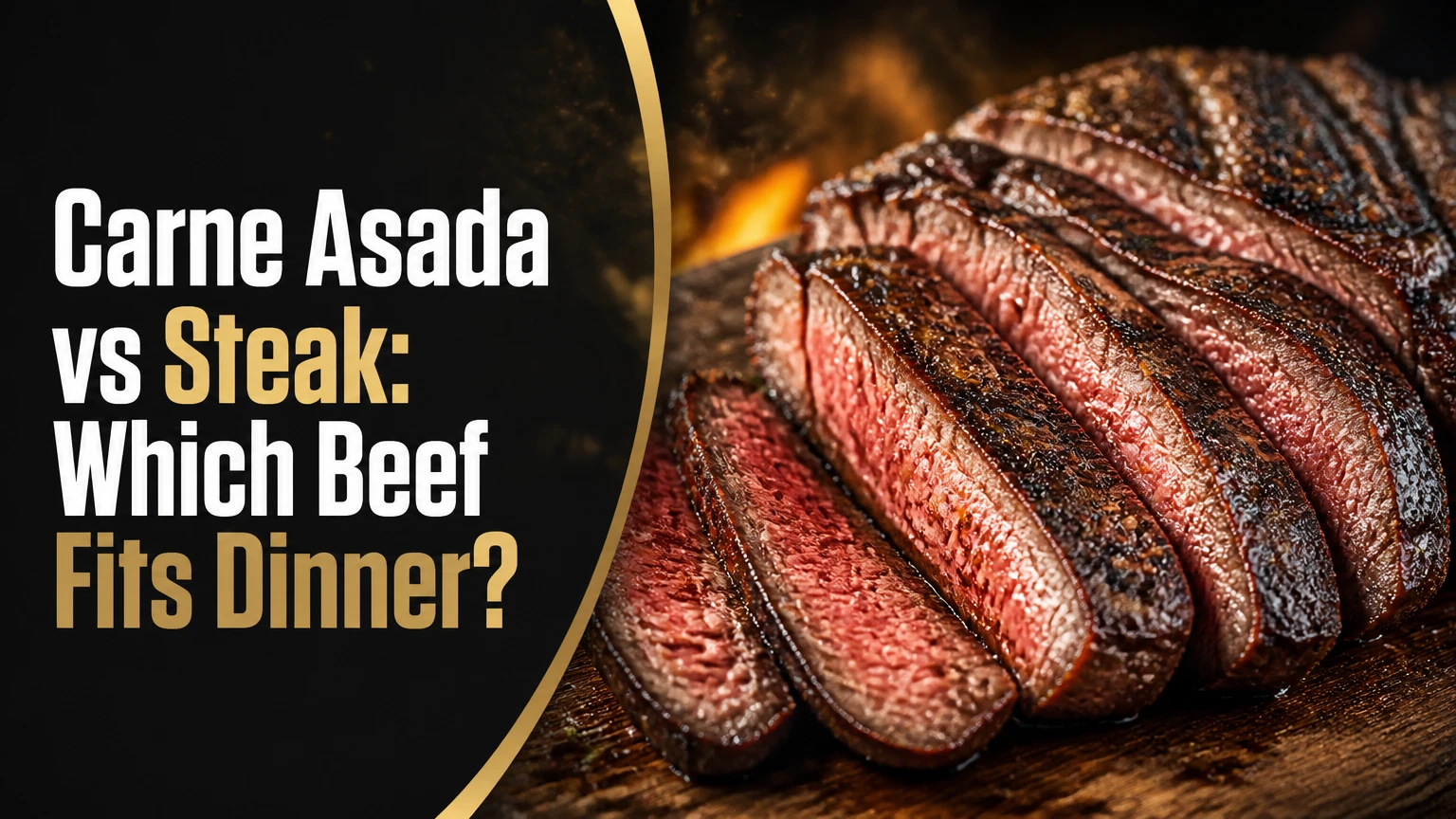
Carne asada is a Mexican grilled-beef preparation, while steak is a broad category of beef cuts that can be cooked in many styles. Carne asada usually means thin, marinated, high-heat-grilled beef sliced across the grain; steak usually means a cut whose thickness, marbling, and internal doneness receive individual attention.
Key Facts at a Glance
- Carne asada describes a preparation and serving style, not one mandatory beef cut.
- Steak describes a cut or portion of beef, so carne asada can technically be made from steak.
- Skirt, flank, flap, and chuck flap are common carne asada choices because they absorb seasoning and cook quickly.
- Ribeye, strip steak, and filet are usually thicker, less aggressively seasoned, and served in larger portions.
- Carne asada typically takes 2-4 hours to marinate and 4-8 minutes to grill.
- USDA guidance places the safe minimum internal temperature for whole beef cuts at 145°F, followed by a 3-minute rest.
What Is the Difference Between Carne Asada and Steak?
Carne asada is the finished culinary treatment; steak is usually the purchased beef portion. The distinction is similar to comparing “barbecue chicken” with “chicken breast”: one term emphasizes preparation, while the other identifies the ingredient or cut.
The Spanish phrase carne asada translates literally as “roasted” or “grilled meat,” but restaurant and home-cooking usage normally implies beef grilled over strong heat, often with a citrus-herb marinade. Thin slices are then cut across the grain for tacos, burritos, plates, or sandwiches.
Steak has a wider scope. A steak may be ribeye, strip, tenderloin, sirloin, flank, skirt, or another slice from the animal. It can be grilled, pan-seared, broiled, reverse-seared, or cooked by sous vide, with salt alone or a more elaborate seasoning blend.
The most useful answer is therefore simple: carne asada is a style, and steak is a category. A marinated skirt steak grilled and sliced for tacos is both steak and carne asada.
Master Comparison: Carne Asada vs Steak
| Decision criterion | Carne asada | Thick-cut steak |
|---|---|---|
| Primary identity | Mexican grilled-beef preparation | Beef cut or portion |
| Typical thickness | 1/4-1/2 inch | 1-2 inches |
| Common cuts | Skirt, flank, flap, chuck flap | Ribeye, strip, filet, sirloin |
| Typical seasoning | Citrus, garlic, herbs, chile, oil | Salt, pepper, beef fat, herbs |
| Cooking time | 4-8 minutes | 8-25 minutes, depending on method |
| Typical serving | 3-5 ounces cooked in tacos or plates | 8-16 ounces cooked as a main |
| Best equipment | Charcoal grill, gas grill, cast-iron griddle | Cast-iron pan, grill, oven, sous vide |
| Main texture goal | Charred edges and chewable slices | Browned crust and controlled center |
Which One Has More Flavor?
Carne asada usually has the more immediately noticeable flavor because its surface receives citrus, garlic, herbs, spices, smoke, and browning. Steak has a more concentrated beef flavor when the cut has substantial marbling and receives restrained seasoning.
Flavor depends on where the seasoning sits. A marinade mainly affects the surface and outer layers, especially on thin meat. Salt applied ahead of cooking can move farther into the beef, while garlic, citrus, and herbs remain largely surface flavors.
Ribeye produces rich, fatty bites because intramuscular fat melts during cooking. Skirt steak produces a strongly beefy, mineral flavor that becomes more aromatic after charring. Neither result is universally superior.
Winner: Carne asada wins for layered, taco-friendly seasoning; well-marbled steak wins for clean beef flavor.
Which One Is More Tender?
A thick tenderloin steak is generally more tender than skirt or flank carne asada, but correctly prepared carne asada can be tender enough for easy chewing. Cut choice, cooking temperature, and slicing direction matter more than the label alone.
Skirt steak contains long, coarse muscle fibers. Flank steak is leaner and has a pronounced grain. Both can seem tough when cooked too long or sliced parallel to the fibers. Cutting perpendicular to the grain shortens those fibers and changes the eating experience immediately.
Acid does not magically tenderize the center of a thick steak. Lime juice can weaken surface proteins, but excessive exposure can make the exterior soft or pasty rather than pleasantly tender.
Winner: Filet or well-prepared strip steak wins for inherent tenderness; sliced skirt or flank wins for value-adjusted tenderness.
Which One Is Faster?
Carne asada cooks faster after preparation because thin beef reaches serving temperature in roughly 2-4 minutes per side. Steak takes longer because heat must travel through a thicker center without burning the exterior.
Carne asada still requires planning. A 2-4 hour marinade, 15 minutes to light or preheat the grill, and 5 minutes of resting create a typical total timeline of about 3-5 hours from mixing marinade to serving.
A steak can be ready with only 15-30 minutes of active preparation, although a 12-24 hour dry brine improves seasoning and surface browning. Reverse-seared or very thick steaks require substantially more time.
Winner: Carne asada wins for fast cooking; un-marinated steak wins for spontaneous preparation.
Which One Costs Less?
Carne asada generally costs less per guest because economical cuts are sliced thinly and served with tortillas, beans, rice, onions, salsa, or vegetables. Premium steak costs more per pound and usually requires a larger portion of beef per person.
Typical United States retail prices vary by region, grade, store, and season. The ranges below are practical planning figures, not fixed national prices.
| Beef option | Typical retail price per pound | Cooked yield from 1 pound | Beef for four adults |
|---|---|---|---|
| Chuck flap or diesmillo | $7-$13 | 10-11 ounces | 1.5-2 pounds |
| Flank steak | $9-$17 | 10-11 ounces | 1.5-2 pounds |
| Skirt steak | $11-$22 | 9-11 ounces | 1.5-2 pounds |
| Sirloin steak | $9-$18 | 10-12 ounces | 2-2.5 pounds |
| New York strip | $16-$32 | 10-12 ounces | 2-2.5 pounds |
| Ribeye | $18-$40 or more | 10-12 ounces | 2-2.5 pounds |
| Filet mignon | $25-$55 or more | 10-12 ounces | 2-2.5 pounds |
Winner: Carne asada wins on cost per complete meal, especially when served taco-style.
How Do the Cooking Methods Differ?
Carne asada depends on a very hot surface, a thin cut, and rapid browning. Steak depends on controlling heat through a thicker piece while separating crust development from internal doneness.
The Maillard reaction creates browned, savory compounds when the surface becomes hot and dry enough. A wet steak or crowded grill loses heat to evaporation, so it steams instead of browning. Thin carne asada reaches a charred exterior quickly because its center is close to the cooking surface.
Thickness changes the task. A 1/4-inch skirt steak can overcook in seconds after it develops color, while a 1.5-inch ribeye may need a finishing phase in a 375°F oven after pan searing.
Carne Asada Method
Use 1.5-2 pounds of skirt, flank, flap, or chuck flap for four adults. A practical marinade contains 1/4 cup lime juice, 1/2 cup orange juice, 2 tablespoons oil, 3 minced garlic cloves, 1 teaspoon ground cumin, 1 teaspoon salt, and chopped cilantro or a mild chile.
- Marinate refrigerated for 2-4 hours. Pat the beef dry before grilling.
- Heat a charcoal or gas grill until the cooking surface reaches approximately 450-550°F.
- Grill 1/4-inch meat for 2-3 minutes per side, or thicker pieces for 3-5 minutes per side.
- Check the thickest section with an instant-read thermometer rather than relying on color.
- Rest the beef for 5 minutes, then identify the grain and slice perpendicular to it.
- Serve strips for plates or cut the slices into smaller pieces for tacos.
You will know the method worked when the outside has dark brown or blackened spots, the interior remains moist, and each slice separates the long fibers. A common mistake is placing wet marinated meat on a merely warm grill, which produces gray steaming and delayed cooking.
Thick-Cut Steak Method
For a 1.5-inch ribeye or strip steak, salt with approximately 1/2 teaspoon kosher salt per pound 12-24 hours ahead. Leave the steak uncovered on a rack in the refrigerator, then remove it while the pan heats.
- Dry the surface thoroughly and add black pepper immediately before cooking.
- Heat a cast-iron skillet until a drop of water evaporates quickly, then add 1-2 teaspoons of high-heat cooking oil.
- Sear the steak for 2 minutes on the first side and 2 minutes on the second side.
- Lower the heat and add 1 tablespoon butter, a crushed garlic clove, and a herb sprig if desired.
- Baste while turning every 30-60 seconds until the center reaches the selected pull temperature.
- Rest for 5-10 minutes before slicing or serving whole.
A thermometer is more reliable than a fixed cooking time because steak thickness, starting temperature, pan material, and marbling change heat transfer. The USDA Food Safety and Inspection Service states, “The only way to know if meat is cooked to a safe temperature is to use a food thermometer.”
| Doneness preference | Remove from heat at approximately | Final temperature after rest | Texture |
|---|---|---|---|
| Rare | 120-125°F | 125-130°F | Red, cool-to-warm center |
| Medium-rare | 125-130°F | 130-135°F | Warm red center |
| Medium | 135-140°F | 140-145°F | Pink center |
| USDA whole-beef minimum | 145°F | 145°F or higher | Medium or more cooked |
The USDA recommendation is 145°F with a 3-minute rest for whole beef cuts. Restaurant-style medium-rare targets are common, but they do not replace the federal safety guidance, particularly for people at higher risk from foodborne illness.
Which Cuts Work Best for Each Style?
Skirt steak is the classic high-flavor carne asada choice, while ribeye is the strongest thick-steak choice when marbling and a buttery texture matter. Flank, flap, sirloin, strip, and tenderloin each occupy different positions between price, tenderness, and flavor.
| Cut | Typical thickness or shape | Marbling and tenderness | Best preparation | Typical price position |
|---|---|---|---|---|
| Skirt steak | Long, thin, coarse grain | High flavor, moderate tenderness | Carne asada over intense heat | Mid to high |
| Flank steak | Broad, lean, 1/2-1 inch | Lean, firm, slices well | Marinade, grill, thin slicing | Mid |
| Flap steak | Loose grain, 1/2-1 inch | Flavorful, moderately tender | Marinade, grill, tacos | Low to mid |
| Chuck flap or diesmillo | Irregular, thin to medium | Beefy, variable tenderness | Carne asada marinade | Low |
| Sirloin | 1-1.5 inches | Moderate fat, moderate tenderness | Grill or pan sear | Mid |
| New York strip | 1-2 inches | Firm grain, fat cap | Grill or cast iron | High |
| Ribeye | 1.5-2 inches | High marbling, tender | Pan sear, grill, reverse sear | High |
| Filet mignon | 1.5-2 inches | Very tender, low flavor intensity | Pan sear or grill | Very high |
Can Any Steak Become Carne Asada?
Any beef steak can be prepared in a carne asada style, but not every cut is an efficient choice. Ribeye and filet can absorb the marinade, yet their high cost and delicate beef flavor make heavy citrus seasoning less practical.
Thinly sliced sirloin is a useful compromise for a supermarket cook. Chuck flap offers stronger beef flavor at a lower price, though it benefits from careful trimming and strict attention to slicing.
A thick ribeye can be grilled with a carne asada marinade, but it should not be treated like 1/4-inch skirt steak. Reduce the acid exposure, cook by internal temperature, and slice the finished steak rather than chopping it into tiny pieces.
What Should You Serve With Each Option?
Carne asada fits communal, high-volume meals because one grilled piece can become several tacos or bowls. Steak fits a plated meal where the beef remains the central portion and side dishes are secondary.
| Meal situation | Recommended beef | Portion per adult | Useful accompaniments | Equipment |
|---|---|---|---|---|
| Taco dinner | Flank, skirt, or flap carne asada | 4-6 ounces raw | Tortillas, onion, cilantro, salsa | Grill or griddle |
| Family rice bowls | Chuck flap or sirloin | 5-7 ounces raw | Rice, beans, peppers, avocado | Grill pan |
| Steakhouse-style dinner | Ribeye or strip | 10-14 ounces raw | Potatoes, greens, pan sauce | Cast iron |
| Lean plated meal | Filet or sirloin | 6-10 ounces raw | Vegetables, grains, salsa | Grill or oven |
| Crowd of eight | Flank or flap carne asada | 1/2 pound raw | Tortillas, beans, slaw, salsa | Large grill |
| Leftover lunch | Carne asada or sirloin | 4 ounces raw | Eggs, rice, salad, tortillas | Skillet |
Carne asada is especially effective when guests have different appetites. Smaller taco portions reduce waste, and toppings add volume without requiring another expensive cut of beef.
Steak is less suitable for large self-serve groups when guests want different doneness levels. Cooking several thick steaks to rare, medium, and well-done at once requires separate timing and careful temperature checks.
Is Carne Asada Healthier Than Steak?
Neither label determines nutrition because calories, protein, saturated fat, portion size, and preparation vary by cut. Lean flank or sirloin can provide less fat than a heavily marbled ribeye, while a large tortilla meal can contain more total calories than a simply served steak.
The main nutritional variables are cut and serving size. USDA FoodData Central entries show that beef cuts differ materially in fat and calorie content, so comparing “carne asada” with “steak” without naming the cut produces an incomplete answer.
Choose leaner flank, sirloin, or trimmed flap when fat intake matters. Keep marinade sugar modest, drain excess oil, and use vegetables, beans, or salsa to build the meal rather than increasing the beef portion.
Common Mistakes and How Do You Fix Them?
Why Does Carne Asada Become Chewy?
Carne asada becomes chewy when the cook overcooks a lean cut, leaves the grain intact, or uses a thick piece with insufficient cooking control. Mark the grain before grilling, remove the beef near the intended temperature, rest it briefly, and slice across the fibers.
Does Citrus Tenderize Carne Asada?
Citrus changes the surface texture more than the interior. Lime and orange juice contribute acidity and flavor, but a 2-4 hour refrigerated marinade is usually enough for thin beef; longer exposure can soften the exterior and make it feel pasty.
Why Does Steak Have a Gray Exterior?
A gray steak usually had excess surface moisture, insufficient pan heat, or too much crowding. Dry the surface, preheat the pan fully, use a thin film of oil, and cook one large steak at a time so evaporation does not overwhelm browning.
Should Steak Sit at Room Temperature?
A short 15-30 minute tempering period can reduce surface chilling, but it does not safely bring a thick steak fully to room temperature. Drying the surface and managing the heat matter more than leaving beef out for an hour.
Does Flipping Steak Ruin the Crust?
Frequent flipping does not automatically ruin a crust, and turning every 30-60 seconds can cook a steak evenly in a pan. The real problem is moving the steak before the surface has made firm contact or repeatedly disturbing it in a crowded skillet.
Why Are the Juices on the Cutting Board?
Juices appear when the meat is cut before its internal temperature stabilizes. Rest thin carne asada for about 5 minutes and thick steak for 5-10 minutes, then slice with a sharp knife rather than pressing down with a dull blade.
Which Should You Choose?
Choose Carne Asada for Tacos and Groups
Buy skirt, flank, flap, or chuck flap when the meal includes tortillas, salsa, onions, cilantro, beans, or rice. Carne asada stretches 1.5-2 pounds of raw beef across four adults more effectively than four large steak portions.
Choose Steak for a Centerpiece Dinner
Buy ribeye or New York strip when guests want an individual portion, a browned crust, and a distinct internal doneness. Select filet when tenderness matters more than intense beef flavor or marbling.
Choose Sirloin for a Middle Ground
Sirloin gives a steak-like presentation with a lower price than ribeye and enough structure for grilling or pan searing. It also works sliced into bowls when a household wants one cut for two meal formats.
Choose Carne Asada for Limited Cooking Time
Use pre-marinated or quickly mixed carne asada when the grill is already hot and dinner must cook in minutes. The advance marinade is the trade-off, so prepare it in the morning or the previous afternoon.
Choose Unmarinated Steak for Beef Purists
Use salt, pepper, and a hot pan when the cut is high quality and the goal is to taste its marbling. A marinade can hide subtle differences between dry-aged, grain-finished, and strongly flavored beef.
FAQ
Is carne asada always steak?
Carne asada is not always a specific steak cut, but it is commonly made from steak cuts such as skirt, flank, flap, or chuck flap. The term describes the marinade, grilling method, slicing, and serving style. A ribeye can be prepared as carne asada, although its cost makes that choice unusual.
Is carne asada the same as grilled steak?
Carne asada is a type of grilled beef, but ordinary grilled steak is a broader category. Carne asada usually includes Mexican-style seasoning, high-heat grilling, and slicing across the grain. A salted ribeye grilled whole is grilled steak without necessarily being carne asada.
Can I cook carne asada in a cast-iron pan?
A cast-iron pan cooks carne asada effectively when the beef is patted dry and the pan is fully preheated. Cook in batches if necessary, using approximately 2-3 minutes per side for thin pieces. Open a window or use ventilation because high-heat marinated beef can smoke heavily.
Which is better for meal prep, carne asada or steak?
Carne asada is usually better for meal prep because sliced beef reheats easily in tacos, bowls, eggs, and salads. Thick steak is best cooked close to serving time, although medium-rare leftovers can be sliced cold or gently rewarmed to avoid overcooking.
Can I marinate ribeye like carne asada?
You can marinate ribeye, but limit citrus exposure to about 30 minutes to 2 hours and avoid covering the cut with excessive seasoning. Ribeye already contains substantial flavor and fat, so salt, pepper, and high heat often produce a better return than a long acidic marinade.
What is the safest temperature for either preparation?
The USDA recommends cooking whole beef cuts to 145°F and resting them for at least 3 minutes. Ground beef has a different minimum of 160°F. Use a calibrated instant-read thermometer in the thickest part, and do not judge safety by color alone.
The Bottom Line
Carne asada is the better choice for tacos, crowds, bold citrus-herb flavor, and economical portions. Steak is the better choice for a plated centerpiece, precise doneness, and the natural flavor of a premium cut. The practical answer to carne asada vs steak is to choose the preparation that matches the meal, then match thickness, heat, and slicing to the beef you bought.