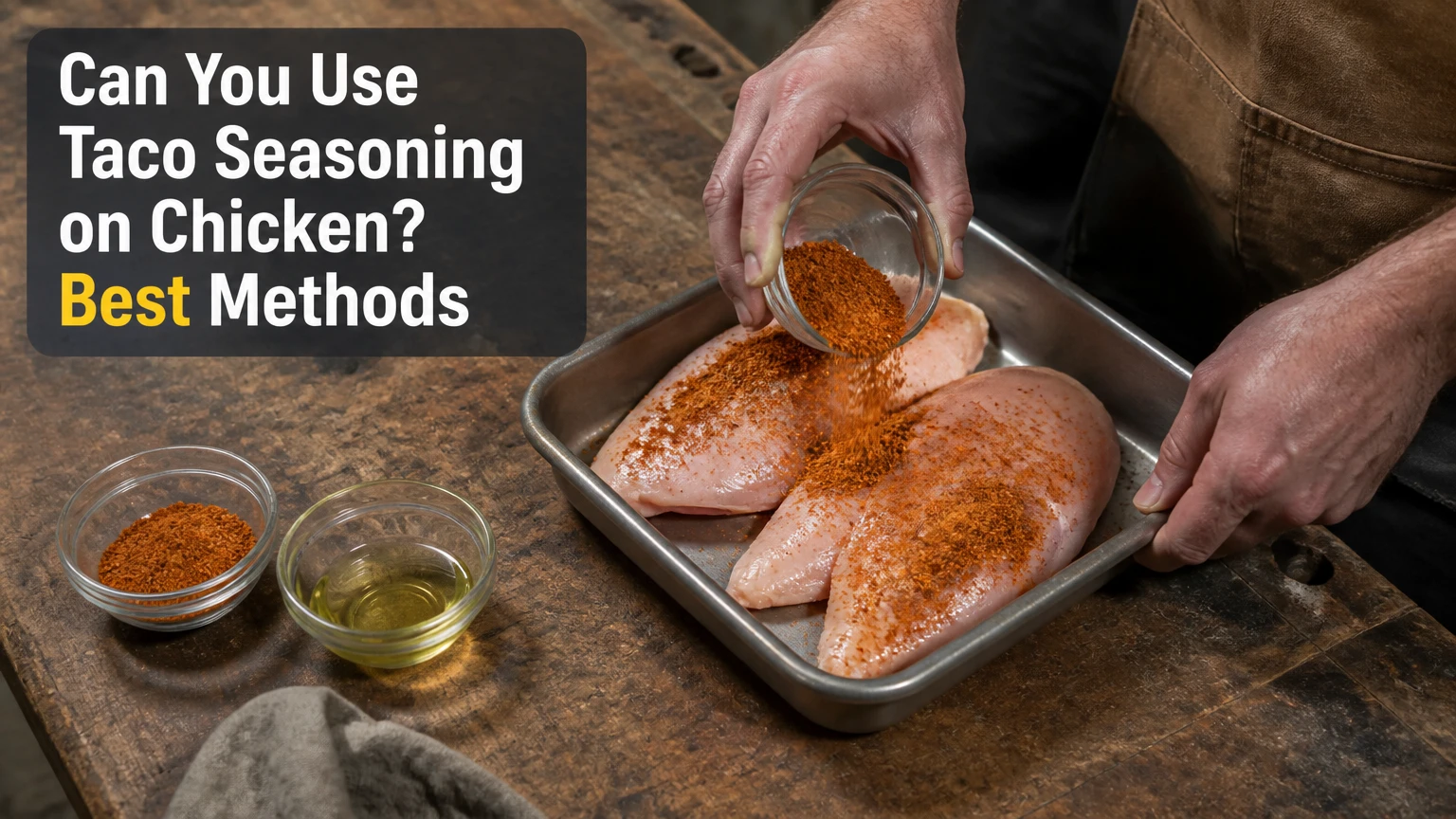
Yes, you can use taco seasoning on chicken, and the blend works especially well with breasts, thighs, wings, drumsticks, and shredded chicken. Taco seasoning adds chili, cumin, paprika, garlic, onion, oregano, salt, and sometimes starch. Use about 2 tablespoons per pound, then cook chicken to 165°F (74°C).
Key Facts at a Glance
- Taco seasoning is suitable for every common chicken cut, including breasts, thighs, wings, drumsticks, and ground chicken.
- Use 2 tablespoons per pound for a moderate flavor, or up to 3 tablespoons for an intense rub when the blend is low in salt.
- Chicken must reach 165°F (74°C) in the thickest part, measured with a food thermometer.
- Boneless thighs tolerate high heat better than breasts because their higher fat and connective tissue protect texture.
- Commercial packets can be salty, so check the sodium per serving before adding extra salt.
- Taco-seasoned chicken works in tacos, rice bowls, salads, quesadillas, soups, wraps, and meal-prep containers.
Can You Use Taco Seasoning on Chicken?
Taco seasoning gives chicken a savory, earthy, mildly spicy crust or sauce, so the combination is both practical and flavorful. Chicken has a relatively mild taste, which allows cumin, chili powder, paprika, garlic, onion, and oregano to remain distinct instead of competing with the meat.
The main adjustment involves salt. A packet designed for a pound of ground meat may already contain enough sodium for a pound of chicken, particularly when the chicken is lean and cooked without a sauce. Start with less seasoning, taste the finished pan juices, and add more only when needed.
Taco seasoning is especially useful when dinner needs a flexible protein. Sliced breast fits fajitas and salads, boneless thighs shred well for tacos, while wings and drumsticks develop a seasoned exterior as their skin cooks. The blend is less suitable when you want a delicate herb profile, a very mild dish, or a preparation where chili and cumin would dominate.
What Is in Taco Seasoning?
Taco seasoning usually combines chili powder, ground cumin, paprika, garlic powder, onion powder, dried oregano, salt, and black pepper. Commercial blends may also include cayenne, crushed red pepper, sugar, cornstarch, maltodextrin, or anti-caking agents.
Cumin provides an earthy aroma, chili powder supplies the main pepper flavor, and paprika contributes color with either mild sweetness or smoke. Garlic and onion powders create savory depth, while oregano adds a dry herbal note. Salt intensifies all of those flavors, which explains why a heavily salted packet can overwhelm chicken quickly.
Some packets contain starch. Cornstarch or potato starch helps spices cling to the meat and thickens liquid into a light coating when broth, water, salsa, or pan juices are added. Starch can scorch if exposed to a very hot, dry pan for too long, so lower the heat or add liquid when the coating darkens too quickly.
| Blend type | Typical salt level | Best chicken use | Main consideration |
|---|---|---|---|
| Standard packet | 300-400 mg sodium per stated serving | Skillet chicken with 1/4 cup liquid | Read serving size carefully |
| Low-sodium packet | 100-250 mg per serving | Breast, thigh, and meal prep | Add salt after cooking |
| Homemade blend | 0-300 mg per tablespoon | Any cut or cooking method | Salt can be measured separately |
| Chipotle or hot blend | 150-400 mg per serving | Thighs, wings, grilled strips | Heat varies by brand |
How Does Taco Seasoning Change Chicken?
Taco seasoning flavors chicken through surface contact, salt penetration, oil-assisted aroma release, and browning. Salt draws moisture to the surface, dissolves into that moisture, and begins seasoning the outer portion of the meat; a 15-30 minute rest gives the process time to work.
Oil helps fat-soluble flavor compounds from cumin, paprika, and chili distribute across the chicken. Oil also improves contact between the seasoning and the meat, although it does not make the chicken absorb every spice beneath the surface.
Browning creates roasted flavors when the chicken surface stays dry enough for the pan to exceed the boiling point of water. Garlic and onion powders can burn before the chicken finishes, so medium-high heat is preferable to maximum heat when using a thick spice coating. A small splash of broth during the last two minutes can turn the seasoning into a glossy coating and stop dark spices from scorching.
Which Chicken Cut Works Best?
Boneless, skinless chicken thighs are the easiest cut for taco seasoning because they remain moist during searing, grilling, and slow cooking. Chicken breasts deliver a leaner result but need even thickness and careful temperature control, while wings and drumsticks benefit from a dry-rub application that seasons the skin.
Bone-in pieces require more time because heat must travel around the bone. Skin-on pieces also need a lower starting heat so the skin renders without burning the spices. Ground chicken accepts taco seasoning evenly and works well in skillet fillings, but it needs enough moisture to prevent a crumbly, dry texture.
| Chicken cut | Typical portion size | Preferred cooking method | Texture target |
|---|---|---|---|
| Boneless breast | 6-8 oz each | Skillet or oven at 400°F | Sliceable and moist |
| Boneless thigh | 4-6 oz each | Skillet, grill, or slow cooker | Tender at 175°F-190°F |
| Wing | 2-3 oz each | Oven or grill | Crisp skin at 165°F minimum |
| Drumstick | 4-5 oz each | Oven or grill | Tender near 175°F-185°F |
| Ground chicken | 1 lb package | Skillet with 1/4 cup liquid | Moist, separated crumbles |
Chicken thighs are a better choice than breasts for unattended cooking. Chicken breasts are a better choice when calorie density and easy slicing matter more than tolerance to overcooking.
How Much Taco Seasoning Should You Use?
Use 2 tablespoons of taco seasoning per pound of chicken as a starting point. Increase to 3 tablespoons when the blend has little salt or when the chicken will be combined with unsalted rice, beans, or vegetables; use 1 tablespoon for a lightly seasoned preparation or a salty packet.
For a packet, follow the package directions first because packet sizes and salt levels differ. A typical 1-ounce packet is intended for approximately 1 pound of meat, but the actual seasoning volume may range from 2 to 3 tablespoons depending on the manufacturer.
Pat chicken dry, toss it with 1 tablespoon of neutral oil per pound, and coat it evenly. Rest it for 15-30 minutes if time allows. Do not add extra salt until the chicken has cooked and you have assessed the seasoning.
| Chicken amount | Moderate seasoning | Strong seasoning | Oil for coating |
|---|---|---|---|
| 8 oz | 1 tablespoon | 1 1/2 tablespoons | 1 1/2 teaspoons |
| 1 lb | 2 tablespoons | 3 tablespoons | 1 tablespoon |
| 2 lb | 4 tablespoons | 6 tablespoons | 2 tablespoons |
| 3 lb | 6 tablespoons | 9 tablespoons | 3 tablespoons |
How Do You Cook Taco-Seasoned Chicken in a Skillet?
Cook diced or sliced taco-seasoned chicken in a single layer over medium-high heat for 6-10 minutes total, turning once or twice, until the thickest piece reaches 165°F. The most reliable sequence is dry chicken, oil, seasoning, hot pan, undisturbed browning, then a brief covered finish if needed.
- Pat 1 pound of chicken dry and cut it into 1-inch pieces.
- Toss the pieces with 1 tablespoon oil and 2 tablespoons taco seasoning.
- Heat a heavy skillet for 2 minutes over medium-high heat.
- Add the chicken in one layer, leaving space between pieces.
- Cook undisturbed for 3-4 minutes, then turn and cook for 3-5 minutes.
- Check the thickest piece with a thermometer.
- Add 2-3 tablespoons broth or water if the spices darken before the chicken is done.
- Rest the chicken for 3 minutes before serving.
You will know the method worked when the chicken has browned edges, no translucent center, and a thin coating rather than loose powder. Overcrowding is the common failure point because released moisture lowers the pan temperature and causes steaming.
How Do You Bake Taco-Seasoned Chicken?
Bake taco-seasoned chicken at 400°F (204°C) until the thickest portion reaches 165°F, which typically takes 18-22 minutes for boneless breasts and 25-35 minutes for boneless thighs. Cooking time varies with thickness, so temperature is more dependable than the clock.
Pound breasts to an even 3/4-inch thickness or choose pieces with similar sizes. Coat 1 pound of chicken with 1 tablespoon oil and 2 tablespoons seasoning, place it on a lined baking sheet, and leave at least 1 inch between pieces.
A tablespoon of salsa, broth, or lime juice can add moisture, but excess liquid prevents surface browning. For skin-on pieces, begin skin-side up and avoid covering the pan. Rest cooked chicken for 5 minutes so juices redistribute before slicing.
The United States Department of Agriculture Food Safety and Inspection Service identifies 165°F as the safe minimum internal temperature for poultry. Check the center of the thickest piece, not the surface or the area beside a bone.
Can You Grill Chicken With Taco Seasoning?
You can grill taco-seasoned chicken, but moderate heat protects the powdered garlic, onion, paprika, and chili from burning. Use a two-zone grill, sear over direct heat for color, then move the chicken to indirect heat until it reaches 165°F.
For 1-inch strips, grill over medium-high heat for approximately 3-4 minutes per side. For boneless thighs, sear 4 minutes per side, then finish over indirect heat for another 4-8 minutes, depending on thickness. Bone-in drumsticks often need 25-35 minutes with frequent turning.
A thin oil coating helps the blend adhere, but avoid a wet paste with a large amount of seasoning. Thick paste burns against a grate. If the exterior darkens rapidly while the center remains under temperature, move the chicken away from direct heat and close the lid.
Is Slow-Cooker Taco Chicken a Good Choice?
Slow-cooker taco chicken is the best option for shredding and batch cooking because broth, salsa, or tomatoes protect the meat from dry surface heat. Use 2 pounds of chicken, 3 tablespoons seasoning, and 1/2 cup liquid, then cook on low until the center reaches 165°F.
Boneless thighs typically finish in 4-5 hours on low, while breasts may finish sooner and become dry if left for several additional hours. Remove the chicken when tender, shred it, and return it to the seasoned liquid for 10 minutes.
Do not use frozen chicken in a slow cooker because the meat can remain in an unsafe temperature range for too long. Thaw chicken in the refrigerator first, or use a pressure cooker according to its appliance instructions.
| Method | Chicken amount | Typical cooking time | Liquid requirement |
|---|---|---|---|
| Skillet pieces | 1 lb | 6-10 minutes | 2-3 tablespoons optional |
| Oven breasts | 1 lb | 18-22 minutes at 400°F | 1-2 tablespoons optional |
| Grill thighs | 1 lb | 12-20 minutes | None, use oil coating |
| Slow cooker | 2 lb | 4-5 hours on low | 1/2 cup broth or salsa |
Should You Use a Packet or Homemade Seasoning?
Use a commercial packet when speed and consistent flavor matter most; choose homemade taco seasoning when sodium, heat, sugar, starch, or dietary restrictions require control. Neither option is automatically better because the packet may provide useful thickening, while a homemade blend lets you adjust every ingredient.
A packet is convenient for a weeknight skillet meal, especially when its directions include water for a sauce. Homemade seasoning costs less per batch once the spices are available and avoids unnecessary salt or starch. A premium blend may offer fresher aroma, but its higher price does not guarantee a better match for chicken.
| Option | Typical cost | Preparation time | Best advantage |
|---|---|---|---|
| Standard packet | $1-$2 per 1-ounce packet | 1 minute | Fast, consistent seasoning |
| Bulk canister | $3-$5 per 3-4 ounces | 1 minute | Lower cost per serving |
| Premium blend | $2.50-$3.50 per packet | 1 minute | Specialty smoke or citrus notes |
| Homemade batch | $0.40-$0.60 per 3 tablespoons | 5 minutes | Sodium and heat control |
How Do You Make Taco Seasoning for Chicken?
A balanced homemade blend uses 1 tablespoon chili powder, 1 1/2 teaspoons cumin, 1 teaspoon smoked paprika, 1 teaspoon onion powder, 1 teaspoon garlic powder, 1/2 teaspoon oregano, 1/2 teaspoon salt, and 1/4 teaspoon black pepper or cayenne.
Whisk the ingredients in a small jar and use 2 tablespoons per pound of chicken. For children or heat-sensitive diners, omit cayenne and use mild chili powder. For low-sodium cooking, omit the salt entirely and season the cooked chicken gradually.
The blend keeps its best aroma for about 3 months in a sealed container stored away from heat and light. Ground spices remain usable longer, but their flavor weakens as volatile oils fade. Label the jar with the mixing date and salt amount.
What Should You Add to Taco-Seasoned Chicken?
Taco-seasoned chicken pairs with ingredients that add freshness, acidity, moisture, or contrasting texture. Serve it with tortillas, rice, black beans, corn, lettuce, tomato, avocado, plain yogurt, cheese, or a squeeze of lime.
Salsa works as both a finishing condiment and a slow-cooker liquid. Broth turns skillet seasoning into a light sauce, while unsalted canned tomatoes with green chilies add moisture and acidity. Use lime juice after cooking rather than before a long hot sear, because prolonged acid contact can soften the exterior unevenly.
| Serving format | Chicken preparation | Moisture addition | Typical finishing time |
|---|---|---|---|
| Tacos | Sliced thigh or breast | Salsa and lime | 5 minutes |
| Rice bowl | Diced skillet chicken | 2 tablespoons broth | 3 minutes |
| Salad | Chilled sliced breast | Yogurt-lime dressing | 10 minutes |
| Fajitas | Grilled strips | Sautéed peppers | 8-12 minutes |
| Shredded filling | Slow-cooked thighs | 1/2 cup salsa | 10 minutes after shredding |
What Are the Common Problems?
The most common taco-seasoned chicken problems are excessive salt, burned spices, dry breast meat, and seasoning that falls off. Each problem has a specific correction, and the best fix usually happens before the pan becomes hot.
Burned spices: Lower the heat, use a thinner oil coating, or add broth during the final minutes. Blackened seasoning with a bitter smell cannot be fully repaired, so remove the worst exterior before serving.
Dry chicken breast: Flatten thick portions, cook at 400°F rather than extreme heat, and use a thermometer. Pulling chicken before it reaches the safe target is not a substitute for accurate temperature control.
Overly salty chicken: Slice the meat and combine it with unsalted rice, beans, vegetables, or a plain yogurt sauce. For future batches, dilute 2 tablespoons of packet seasoning with 1 teaspoon chili powder, 1/2 teaspoon cumin, and 1/2 teaspoon paprika.
Loose seasoning: Dry the chicken before oiling it. Wet chicken creates puddles that dissolve seasoning and encourage steaming.
Uneven flavor: Cut chicken into similar sizes and distribute the seasoning in a bowl rather than sprinkling randomly over a crowded pan.
How Should You Handle Special Situations?
Low-sodium cooking requires a salt-free or homemade blend, because reducing the amount of a standard packet also reduces chili and cumin. Use unsalted broth and taste after cooking. For gluten-free meals, check the packet label for wheat-based thickeners or cross-contact statements instead of assuming every spice blend is gluten-free.
Skin-on chicken benefits from seasoning beneath the skin as well as over the surface. Gently loosen the skin, spread a small amount of oil and seasoning underneath, then cook skin-side up until the skin is browned and the meat reaches 165°F.
For meal prep, cool cooked chicken promptly in shallow containers and refrigerate it within 2 hours. Use refrigerated cooked chicken within 3-4 days, following USDA storage guidance, and reheat leftovers to 165°F. Add salsa or dressing after reheating to restore moisture.
What If You Only Have Chicken Tenderloins?
Chicken tenderloins need less time than whole breasts, usually 8-12 minutes in a skillet or 15-18 minutes at 400°F. Season with approximately 1 tablespoon per pound if the pieces are thin, because a large surface area makes salt and spice taste stronger.
What If You Have Bone-In Chicken?
Bone-in breasts, thighs, wings, and drumsticks need longer cooking than boneless pieces. Season the surface with oil and taco seasoning, cook with indirect heat or in a 400°F oven, and measure temperature near the bone without touching it.
FAQ
Can You Marinate Chicken in Taco Seasoning Overnight?
Yes, chicken can rest overnight with taco seasoning when the blend is mixed with oil and contains little or no acid. Keep the chicken refrigerated in a sealed container, and avoid adding a large quantity of lime juice for more than a few hours because acid can make the outer texture soft.
Can You Use Taco Seasoning on Frozen Chicken?
Apply taco seasoning after chicken has thawed, because frozen surfaces prevent even adhesion and make timing unpredictable. Thaw chicken in the refrigerator, pat it dry, season it, and cook it until the thickest section reaches 165°F.
Can You Put Taco Seasoning Directly on Chicken?
You can sprinkle taco seasoning directly on chicken, but a light oil coating makes the blend adhere more evenly and reduces dry spice loss. Pat the meat dry first, then use approximately 2 tablespoons of seasoning per pound.
Is Taco Seasoning Better With Chicken Breast or Thighs?
Chicken thighs are more forgiving and usually remain juicier, while chicken breasts provide a leaner, lower-fat result. Choose thighs for grilling, slow cooking, and shredding; choose breasts for sliced salads, bowls, and quick skillet meals where temperature can be monitored closely.
Can You Use Taco Seasoning on Chicken Without Oil?
Yes, but oil improves browning and helps fat-soluble spice aromas spread across the surface. For an oil-free approach, use a small amount of salsa or broth during cooking, or apply the seasoning to slightly damp chicken immediately before using a covered moist-heat method.
How Do You Reheat Taco-Seasoned Chicken Without Drying It?
Reheat sliced chicken in a covered skillet with 1-2 tablespoons of broth or salsa per serving over medium-low heat. Stop when the center reaches 165°F, then add lime, yogurt, or fresh salsa after heating to restore moisture and brightness.
The Bottom Line
Can you use taco seasoning on chicken? Yes. Use 2 tablespoons per pound, choose thighs for the most forgiving result or breasts for lean meal prep, and cook every piece to 165°F (74°C). Taco seasoning works in a skillet, oven, grill, or slow cooker, but packet salt levels and spice-burning risk require attention. Dry the chicken, coat it lightly with oil, control the heat, and add salsa or broth when you need a moist finish.