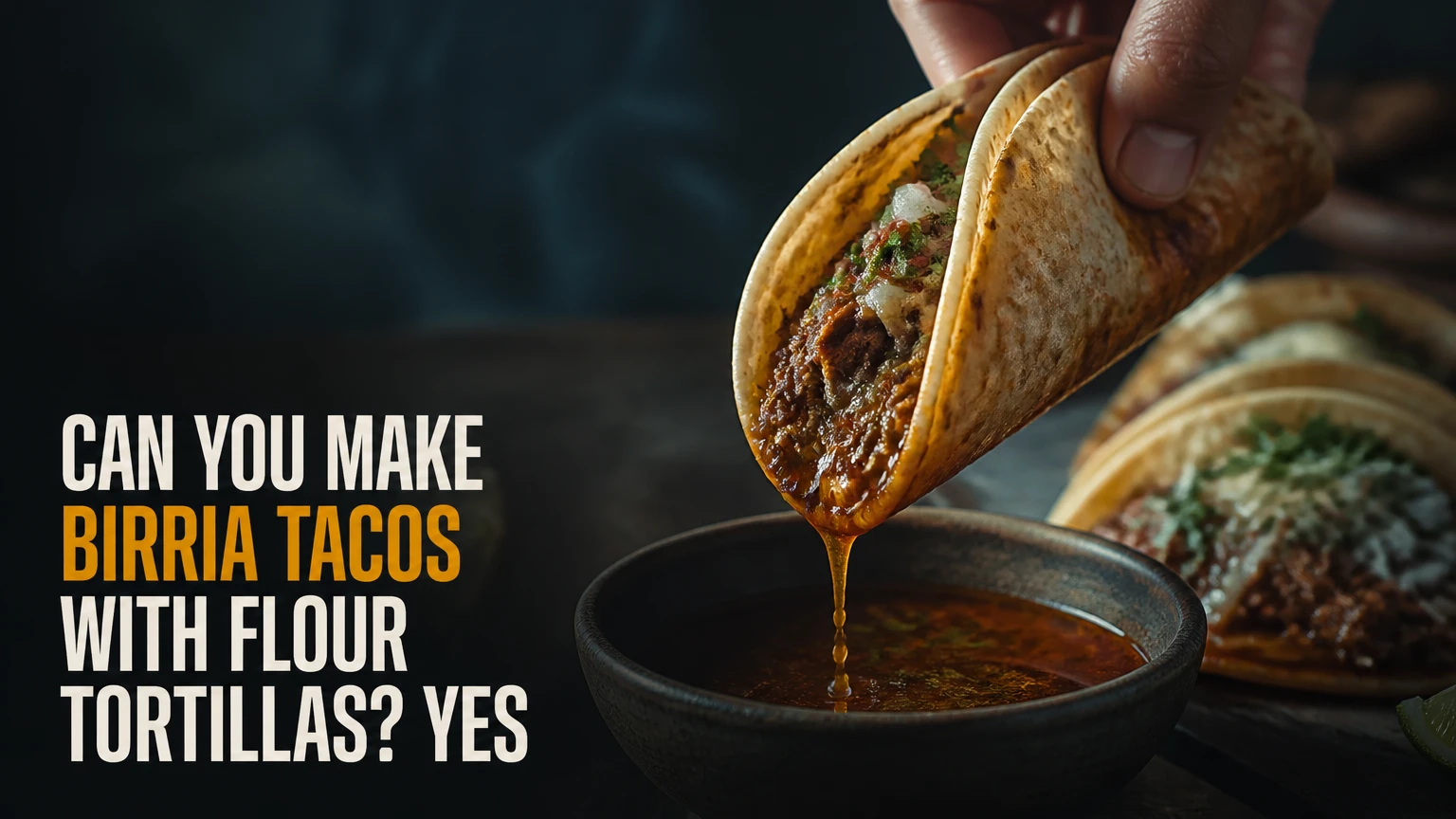
Yes, you can make birria tacos with flour tortillas, and they can become crisp, flexible, and richly browned when dipped in the seasoned fat from the consommé. Corn tortillas remain traditional in many birria preparations, but a thin flour tortilla is a practical choice for juicy fillings because gluten gives it more flexibility and tear resistance.
Key Facts at a Glance
- Flour tortillas work best when they are thin, 6-8 inches wide, and warmed before filling.
- Dip the tortilla in the red fat floating on the consommé, not in the watery broth.
- A typical flour birria taco uses 35-50 g shredded meat and 15-25 g cheese.
- Cook dipped flour tortillas over medium to medium-high heat for about 60-120 seconds per side.
- Birria usually needs 3-4 hours on the stovetop, 6-8 hours in a slow cooker, or 45-60 minutes under pressure.
- Flour tortillas produce a softer, chewier center than corn tortillas and lose crispness faster after cooking.
What Is a Birria Taco?
A birria taco is a tortilla filled with shredded meat from a chile-seasoned braise and served with the strained cooking broth, commonly called consommé. A taco containing melted cheese is usually called a quesabirria, although restaurant naming varies by region and business.
Birria de res commonly uses beef cuts with connective tissue and fat, such as chuck, beef shank, short rib, or brisket. Dried guajillo and ancho chiles provide color and depth, while garlic, onion, oregano, cumin, bay leaf, vinegar, and sometimes cinnamon build the braising sauce.
The taco itself is assembled after the meat becomes tender. The cook coats the tortilla with red seasoned fat, adds cheese and drained shredded meat, folds it, and fries it on a griddle. Chopped white onion, cilantro, lime, and hot consommé complete the serving.
Is Flour Tortilla Birria Traditional?
Flour tortilla birria is legitimate, but the answer depends on which regional tradition you mean. Corn tortillas have deep roots in central and western Mexican cooking, including Jalisco-style birria, while flour tortillas are strongly associated with northern Mexican foodways and later borderland and restaurant adaptations.
Traditional does not mean mandatory. A flour tortilla changes the texture and wheat flavor, but it does not stop the filling from being birria. Calling the cheese version a quesabirria also describes the preparation rather than requiring one specific tortilla.
Why Do Flour Tortillas Work for Birria?
Flour tortillas work because wheat dough is elastic and flexible, so it tolerates folding around moist shredded meat better than a dry or poorly heated corn tortilla. The tortilla also browns quickly because its wheat-based surface contains proteins and carbohydrates that develop toasted flavors under griddle heat.
Flour absorbs seasoned fat more readily than a firm corn tortilla. That creates a rich crust, but the same absorption can make a flour taco greasy if the tortilla is soaked or cooked over low heat. The best balance comes from a brief surface dip, a hot cooking surface, and a moderate filling.
Thin flour tortillas generally perform better than thick, fluffy varieties. Large burrito tortillas can hold more filling, but their higher flour content creates a heavier result and makes crisping the entire folded taco more difficult.
What Does the Red Fat Do?
The red layer is rendered meat fat mixed with chile oils and dissolved spices from the braise. It coats the tortilla with flavor and helps the surface fry, while the watery consommé supplies the dipping broth separately.
A settled pot may show a red-orange fat layer after several minutes of resting. If the liquid is too lean, skim fat from the surface and add only enough neutral cooking fat to coat the tortilla lightly. Do not pour broth into the skillet with the taco, because steam softens the flour and prevents browning.
Which Flour Tortilla Should You Use?
The best flour tortilla for birria is a thin, pliable 6-inch or 8-inch tortilla with enough strength to fold around 35-50 g of meat. A standard store-bought tortilla is convenient, while a thin homemade tortilla offers a more layered texture but can become overly rich when combined with beef fat.
| Tortilla type | Typical size | Best use | Main limitation |
|---|---|---|---|
| Thin street-style flour | 5-6 inches | Small party tacos | Holds 25-35 g meat |
| Standard flour tortilla | 6-8 inches | Everyday quesabirria | Can become greasy |
| Large burrito tortilla | 10-12 inches | Folded large taco | Requires more heat and filling |
| Thin homemade flour | 6-8 inches | Fresh, flaky texture | Needs even rolling |
Avoid refrigerated tortillas that are stiff, cracked, or heavily dusted with flour. Warm them in a dry skillet for 10-15 seconds per side or stack them under a clean towel. A warm tortilla bends without splitting and makes a tighter fold.
Should You Use Cheese?
Cheese is optional. A birria taco without cheese is still a birria taco, while a cheese-filled version is commonly called a quesabirria.
Oaxaca cheese melts smoothly and stretches well. Low-moisture mozzarella is an accessible substitute with reliable melting behavior. Chihuahua cheese, Monterey Jack, and mild asadero also work. Use 15-25 g per taco, because excessive cheese releases oil and can overpower the consommé.
For a dairy-free taco, omit the cheese and add a smaller amount of meat with finely chopped onion and cilantro. The tortilla still crisps from the seasoned fat.
Flour or Corn: Which Is Better?
Flour tortillas are the better choice for overloaded, juicy tacos and for cooks who want a flexible shell that rarely cracks. Corn tortillas are the better choice when earthy maize flavor, a firmer bite, and a more traditional central Mexican profile matter most.
| Decision factor | Flour tortilla | Corn tortilla |
|---|---|---|
| Typical usable size | 5-12 inches | 5-6 inches |
| Texture after frying | Crisp edge, chewy center | Crisp, firm, toasted |
| Filling tolerance | 35-60 g meat | 25-45 g meat |
| Common failure | Greasy or soft | Cracking or splitting |
| Flavor | Mild wheat, sometimes buttery | Toasted maize |
| Best heat approach | Medium-high, 60-120 seconds | Medium-high, 60-90 seconds |
Corn tortillas need proper warming before folding. A dry tortilla can crack even when the filling is perfectly prepared, so heat corn tortillas in a covered skillet, on a griddle, or between damp towels before dipping.
Flour tortillas are not automatically superior. They are less suitable when you want a delicate corn aroma or a very small, crisp taco with minimal dough. The choice is a texture and flavor decision, not a test of authenticity.
How Do You Make Birria for Flour Tacos?
A practical batch makes approximately 18-24 small tacos from 1.5 kg beef chuck plus 1 kg beef shank. Use enough liquid to braise the meat, but keep the finished broth concentrated so the tortilla receives flavor without excess water.
| Ingredient | Typical quantity | Function |
|---|---|---|
| Beef chuck | 1.5 kg | Main shredded meat |
| Beef shank | 1 kg | Gelatin and body |
| Guajillo chiles | 4-6 | Red color and mild chile flavor |
| Ancho chiles | 2-4 | Dried-fruit depth |
| Chile de árbol | 1-3 | Heat adjustment |
| White onion | 1 medium | Sweetness and aroma |
| Garlic | 6 cloves | Savory depth |
| Apple cider vinegar | 2 tbsp | Acidity |
| Beef stock or water | 1.5-2.5 L | Braising liquid |
| Oregano and cumin | 1 tsp each | Herbal and warm notes |
| Bay leaves | 2-3 | Braising aroma |
Step 1: Build the Chile Sauce
Remove stems and most seeds from the dried chiles. Toast them in a dry skillet for 20-30 seconds per side, then soak them in hot water for 15-20 minutes until pliable.
Blend the softened chiles with garlic, onion, vinegar, oregano, cumin, a small piece of cinnamon if desired, and 250 ml soaking liquid. Strain the sauce through a fine sieve when a smooth consommé matters.
You will know the sauce is ready when it pours in a thick stream and contains no large chile fragments. Burned chiles taste bitter, so discard any that turn black during toasting.
Step 2: Sear and Braise the Meat
Salt the beef before searing. Brown the pieces in a Dutch oven over medium-high heat, working in batches so the surface develops a dark crust instead of steaming.
Add the strained chile sauce and enough stock or water to come about two-thirds up the meat. Cover the pot and maintain a gentle simmer for 3-4 hours, turning the pieces once or twice.
The meat is ready when a fork slides into the thickest piece with little resistance and the connective tissue pulls apart easily. The United States Department of Agriculture recommends heating whole beef cuts to a safe internal temperature and using tenderness as a practical braising endpoint; a long moist cook matters here because collagen must convert into gelatin.
Step 3: Strain, Shred, and Reserve the Consommé
Lift the meat from the pot and remove bones, gristle, and large pieces of excess fat. Shred the meat into strands rather than pulverizing it, because small strands retain enough texture for taco filling.
Strain the broth if you want a smooth dipping liquid. Let it stand for 5-10 minutes, then skim the red fat into a shallow bowl. Keep the consommé hot for serving, but do not boil it aggressively after straining because prolonged boiling can make the surface greasy and muddy.
Step 4: Assemble the Flour Tacos
Heat a cast-iron skillet, carbon-steel pan, or flat griddle over medium to medium-high heat. Dip one side of a warm flour tortilla briefly into the reserved red fat, allowing excess fat to drip back into the bowl.
Place the tortilla fat-side down. Sprinkle cheese over one half or across the center, then add 35-50 g drained shredded meat. Fold the tortilla and press gently with a spatula.
Cook for 60-120 seconds per side. The taco is ready when the outside has browned patches, the cheese has melted, and the folded edge holds its shape. A wet filling is the usual reason the lower surface stays soft.
Which Cooking Method Fits Your Schedule?
Stovetop braising gives the most direct control over liquid reduction and tenderness. A slow cooker is convenient for a hands-off batch, while a pressure cooker reduces the braising time but may produce a thinner broth that needs reduction afterward.
| Cooking method | Active prep | Cooking time | Best adjustment |
|---|---|---|---|
| Dutch oven stovetop | 30-45 minutes | 3-4 hours | Simmer gently |
| Covered oven pot | 30-45 minutes | 3.5-4.5 hours at 160°C | Check liquid halfway |
| Slow cooker | 25-35 minutes | 6-8 hours on low | Sear meat first |
| Pressure cooker | 30-40 minutes | 45-60 minutes at pressure | Reduce broth after |
| Refrigerated leftover batch | 10 minutes | 15-20 minutes reheating | Skim solidified fat |
For pressure cooking, do not fill the pot beyond its recommended limit. Release pressure according to the appliance instructions, then simmer the strained consommé uncovered for 10-20 minutes if the flavor tastes diluted.
How Do You Griddle Flour Birria Tacos Correctly?
Use a short dip, a moderate filling, and enough heat to brown the tortilla before moisture softens it. The most reliable sequence is fat-side down, cheese first, drained meat second, fold, then flip once.
- Warm the tortilla for 10-15 seconds per side.
- Dip one surface lightly into the red fat.
- Place the tortilla fat-side down on the hot skillet.
- Add 15-25 g cheese and 35-50 g meat.
- Fold and press gently.
- Cook 60-120 seconds per side.
- Serve immediately with hot consommé.
You will know the taco worked when the surface has crisp brown patches, the center remains flexible, and no liquid leaks when the taco is lifted. If the tortilla darkens before the cheese melts, lower the heat and cover the skillet for 20-30 seconds.
Do not dip the tortilla into the full consommé. Watery broth penetrates the flour quickly, producing a sticky surface that cannot develop a crisp crust.
How Much Meat and Cheese Belong in Each Taco?
A 5-6 inch flour tortilla holds approximately 25-35 g meat, while an 8-inch tortilla holds about 35-50 g. A large 10-12 inch tortilla can hold 60-90 g, but that portion produces a heavier taco and needs longer cooking.
| Taco size | Meat amount | Cheese amount | Finished use |
|---|---|---|---|
| 5-inch | 25-30 g | 10-15 g | Appetizer or party service |
| 6-inch | 30-40 g | 15-20 g | Street-style portion |
| 8-inch | 40-50 g | 20-25 g | Main-course taco |
| 10-inch | 60-75 g | 25-35 g | Large folded taco |
Drain the meat with tongs before filling. Do not squeeze it completely dry, because a small amount of consommé keeps the filling tender and carries the chile flavor.
What Should You Serve With Flour Birria Tacos?
Serve each taco with 120-180 ml hot consommé in a small bowl. Add finely chopped white onion, cilantro, lime, and a chile condiment according to the desired heat level.
A thinly sliced radish, cucumber, or simple cabbage salad can cut through the richness of flour and beef. Rice and beans create a larger meal, but they are unnecessary when the tacos already contain cheese and a generous meat portion.
Keep garnishes separate until serving. Wet onion or cilantro placed inside the taco releases moisture and shortens the crisp window.
What Are the Common Problems?
Most flour birria failures come from excess water, excessive fat, low heat, or an oversized filling. Each problem has a specific correction.
| Problem | Likely cause | Immediate fix | Prevention |
|---|---|---|---|
| Soggy underside | Wet meat or broth dip | Return to hot skillet 30-60 seconds | Drain meat and dip fat only |
| Greasy tortilla | Long soak or low heat | Rest on a rack briefly | Use a thin surface coating |
| Burned exterior | Heat above medium-high | Reduce heat and wipe pan | Cook in smaller batches |
| Torn fold | Cold or dry tortilla | Warm a replacement tortilla | Heat before filling |
| Tough meat | Braise ended early | Continue cooking 30-60 minutes | Test with a fork |
| Weak consommé | Excess water | Reduce uncovered 10-20 minutes | Add liquid gradually |
Why Do Flour Tacos Turn Soggy?
Flour tacos turn soggy when moisture from the meat, broth, or garnish reaches the tortilla faster than heat can evaporate it. A light fat coating cannot compensate for meat that is dripping wet or a skillet that is too cool.
Spread shredded meat on a plate for 2-3 minutes, or drain it in a fine sieve before assembly. Cook no more than two or three tacos at once unless the griddle is large enough to maintain its temperature.
Why Do Flour Tacos Burn?
Flour tacos burn when the pan is too hot or when the same surface receives accumulated oil from several tacos. Flour tortillas usually brown faster than corn tortillas, especially when they contain added fat.
Use medium heat for thick tortillas and medium-high heat for thin tortillas. Wipe excess oil from the pan between batches, then adjust the burner if dark spots appear in less than 45 seconds.
Can You Prepare Them for a Crowd?
For a group, use 5-6 inch tortillas and cook tacos in batches on a large griddle. Assemble the meat, cheese, and tortillas in advance, but dip each tortilla immediately before it reaches the pan.
Hold finished tacos on a wire rack set over a sheet pan in a 95°C oven for no more than 20-30 minutes. A flat surface traps steam underneath and softens the crust.
Keep consommé in a covered pot above 60°C during service, using a thermometer rather than judging temperature by appearance. The USDA identifies 60°C as the hot-holding threshold for cooked foods, while reheated broth should reach a full simmer before serving.
Can You Store and Reheat Flour Birria Tacos?
Store meat and consommé separately in the refrigerator for up to 3-4 days, and refrigerate them within 2 hours of cooking. Store assembled tacos only when necessary, because the filling quickly hydrates the tortilla.
To reheat, warm the meat in a small pan with 1-2 tablespoons consommé, then assemble and griddle a fresh tortilla. An air fryer at approximately 190°C for 3-5 minutes can restore surface crispness, but a skillet gives better control over the cheese and fat.
Freeze cooked meat and consommé separately for about 2-3 months for best quality. Thaw in the refrigerator overnight, reheat the filling thoroughly, and make fresh tacos rather than freezing assembled flour tortillas.
Can You Make Other Versions?
Chicken, lamb, and mushroom versions can use the same flour-tortilla method, but each filling changes the fat level and cooking time. Chicken needs less braising time, lamb can produce abundant surface fat, and mushrooms require aggressive moisture removal before griddling.
| Filling | Typical cook time | Tortilla adjustment | Main concern |
|---|---|---|---|
| Beef chuck and shank | 3-4 hours | Standard 6-8 inch flour | Remove bones and gristle |
| Boneless chicken thighs | 45-75 minutes | Use 5-6 inch flour | Avoid overcooking |
| Lamb shoulder | 3-4 hours | Skim extra surface fat | Stronger flavor |
| Oyster mushrooms | 20-30 minutes | Use thin flour | Brown before filling |
For a gluten-free preparation, use certified gluten-free tortillas and verify that the packaged ingredients contain no wheat. For a vegetarian preparation, replace the meat with browned mushrooms, jackfruit, or beans, but expect less natural fat and add a small amount of cooking oil to the tortilla.
Frequently Asked Questions
Can I use large burrito tortillas for birria tacos?
Yes, but large burrito tortillas are better for one oversized folded taco than several street-style tacos. Use 60-75 g meat, 25-35 g cheese, and a wide griddle. Cook over medium heat so the tortilla browns before the thick filling becomes hot.
Do flour tortillas need to be dipped in consommé?
Flour tortillas do not need a dip, but dipping one side briefly in the red fat gives the characteristic color and fried chile flavor. Avoid dipping into watery broth, which makes flour dough soft and difficult to crisp.
Are birria tacos better with cheese?
Cheese adds richness and helps bind the filling, but it is optional. A birria taco without cheese remains a birria taco. Use Oaxaca, Chihuahua, asadero, Monterey Jack, or low-moisture mozzarella when making quesabirria.
How do I make flour tortillas crisp without extra oil?
Use the fat already floating on the consommé, dip only one surface, and cook on a preheated cast-iron or steel pan. Drain the meat well and avoid crowding the pan, because released steam prevents browning.
Can I use flour tortillas straight from the refrigerator?
You can, but cold tortillas are more likely to split and cook unevenly. Warm each tortilla for 10-15 seconds per side, or heat a stack under a clean towel until flexible before dipping and filling.
How many birria tacos does one kilogram of meat make?
One kilogram of cooked, boneless shredded meat usually provides approximately 20-28 small tacos, depending on portion size and cooking loss. Plan on 30-40 g meat per 6-inch taco, with extra tortillas available because some may tear during assembly.
The Bottom Line
Can you make birria tacos with flour tortillas? Yes. Choose thin 5-8 inch tortillas, warm them first, coat them lightly with the red consommé fat, drain the meat, and cook each folded taco over medium to medium-high heat until browned. Flour delivers flexibility and a chewy crisp texture, while corn delivers a firmer maize flavor and a more traditional profile. Both work when the braise is concentrated and the filling is controlled.