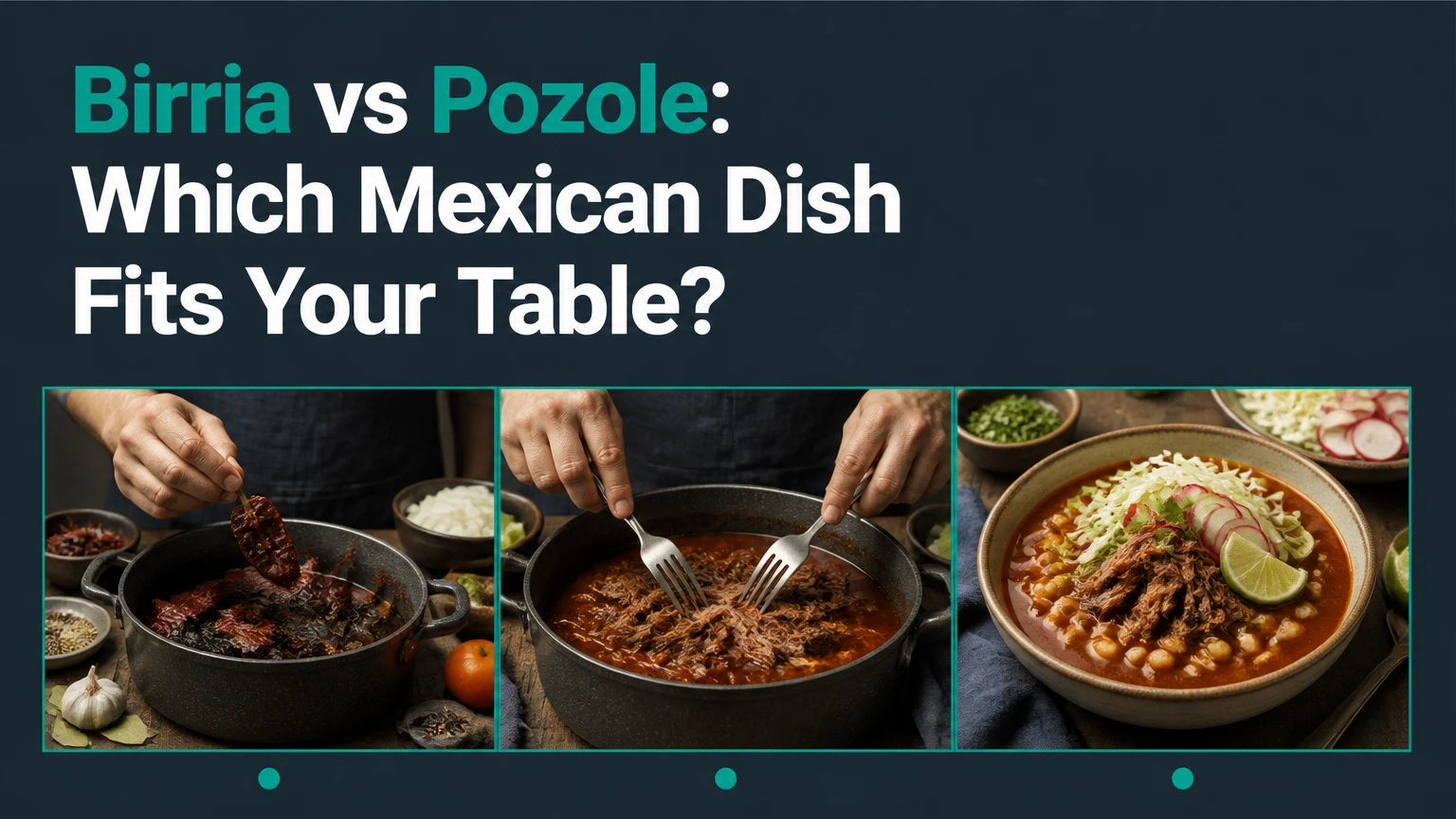
Birria is a chili-marinated meat braise with a concentrated consomé, while pozole is a hominy-based soup built around nixtamalized corn and an aromatic broth. Choose birria for rich shredded meat and dipping tacos; choose pozole for a lighter bowl with chewy corn, fresh toppings, and customizable heat.
Key Facts at a Glance
- Birria gets its identity from seasoned meat, dried chiles, and a collagen-rich cooking liquid.
- Pozole gets its identity from nixtamalized hominy, which gives the soup large, chewy corn kernels.
- Birria usually tastes richer and more intensely spiced than pozole.
- Pozole commonly appears as blanco, rojo, or verde, while birria commonly appears as goat, beef, or quesabirria.
- Typical home-cooking cost is about $4-$9 per serving for pozole and $6-$14 for birria.
- Both dishes improve after resting, but birria fat should be separated before reheating or taco assembly.
Birria vs Pozole: The Core Difference
Birria is a meat-centered preparation from Jalisco, traditionally associated with goat and now widely made with beef. Pozole is a soup centered on hominy, a form of nixtamalized corn, with meat and a seasoned broth supporting the corn rather than replacing it.
The distinction is mechanical as well as cultural. Birria begins with an adobo made from dried chiles, aromatics, acid, and spices; the meat cooks slowly until it shreds, and the liquid becomes a dipping broth. Pozole begins with broth and hominy, then gains its final identity from the chosen chile or herb base and the raw garnishes added at the table.
The names also carry historical clues. The word pozole is commonly linked to the Nahuatl potzolli, meaning “foamy,” a reference to corn kernels opening during cooking. Food historian Jeffrey M. Pilcher describes Mexican food history through the central role of maize, beans, and chiles, a useful frame for understanding why pozole’s corn is structural rather than decorative.
| Comparison point | Birria | Pozole |
|---|---|---|
| Defining ingredient | Goat or beef cooked in chile adobo | Nixtamalized hominy |
| Broth character | Concentrated, fatty, spiced consomé | Aromatic soup broth with chile or herb variation |
| Texture | Shreddable meat, soft connective tissue | Chewy corn, tender meat, pourable broth |
| Common service | Bowl of consomé or tacos with dipping broth | Large bowl with fresh garnishes |
| Regional association | Jalisco, especially western Mexico | Central and southern Mexico |
| Typical flavor balance | Dried chile, spice, acid, roasted meat | Corn, chile or herbs, citrus, onion, fresh greens |
What Meat and Corn Define Each Dish?
Pozole requires hominy for its defining identity, while birria requires a heavily seasoned braised meat preparation. Meat can vary in both dishes, but replacing hominy removes pozole’s central feature, and serving plain stewed meat without adobo and consomé produces a different dish from birria.
Pozole often uses cuts that add flavor to a long-simmered broth, including shoulder, leg, ribs, or poultry. Birria benefits from beef shank, chuck, short ribs, or goat cuts with bone and connective tissue because gelatin gives the broth body after several hours of cooking.
Hominy may be canned, dried, or freshly prepared. Canned hominy is convenient and already nixtamalized, while dried hominy needs soaking and substantially longer cooking. Home cooks should check the label because “white corn” and “hominy” are not interchangeable ingredients.
| Ingredient role | Pozole | Birria |
|---|---|---|
| Starch | 2-3 cups hominy per 4 servings | Usually none in the braise |
| Main protein | 1.5-2.5 lb meat for 4-6 servings | 2.5-4 lb meat for 4-6 servings |
| Chile base | Guajillo for rojo, tomatillo and green chiles for verde | Guajillo, ancho, or similar dried chiles |
| Acid | Lime at service, sometimes mild tomatillo acidity | Vinegar or another acidic marinade ingredient |
| Aromatics | Onion, garlic, oregano, herbs | Onion, garlic, cumin, clove, cinnamon, oregano |
| Finishing ingredients | Cabbage, radish, onion, lime | Onion, cilantro, lime, tortillas, cheese for quesabirria |
How Do the Cooking Methods Differ?
Pozole is usually a staged soup: cooks prepare the meat broth, add hominy at the appropriate time, then incorporate a chile or herb sauce. Birria uses a marinade and a sealed low-temperature braise, followed by shredding the meat and separating the red surface fat from the darker consomé.
The most important timing difference concerns canned hominy. It is already cooked enough to eat, so adding it during the final 45-60 minutes preserves its chew. Dried hominy may require several hours before the meat is added, depending on soaking and kernel size.
Birria rewards patience before the braise. A 12-hour marinade is typical, although a 4-hour marinade still adds flavor when time is limited. The adobo should be strained if a smooth consomé is desired, and dried chiles should be toasted briefly rather than blackened.
| Stage | Pozole workflow | Birria workflow |
|---|---|---|
| Initial preparation | Rinse hominy; trim meat | Toast chiles; remove stems and seeds |
| Flavor construction | Simmer meat with onion and garlic | Blend chiles, acid, spices, tomato, and aromatics |
| Resting period | Usually unnecessary | 4-24 hours for marinated meat |
| Main cooking | 2.5-5 hours, depending on meat and corn | 4-8 hours, depending on cut and method |
| Final assembly | Add hominy, sauce, and garnishes | Shred meat; skim fat; reserve consomé |
| Texture checkpoint | Kernels are swollen but still chewy | Meat separates easily with a fork |
Which Method Is More Forgiving?
Pozole is generally easier for a beginner because the broth can be corrected with salt, chile sauce, water, or additional simmering. Birria is less forgiving when chiles scorch, the marinade lacks salt, or the meat is too lean to produce a full-bodied broth.
A practical rule is to taste pozole twice: once before adding the final sauce and again after the hominy has absorbed salt. Taste birria after straining and again after fat separation because the fat carries chile flavor but can mute acidity and salt.
Which Dish Has the Richer Broth?
Birria has the richer broth because slow-cooked meat, connective tissue, chile adobo, and rendered fat concentrate in the same vessel. Pozole can be deeply savory, but its broth is usually more open and lighter because hominy, water, herbs, and garnishes balance the meat.
Birria’s red surface layer is not automatically a sign of poor preparation. The color often comes from chile-infused fat, and cooks can use that fat to fry tortillas for quesabirria. Removing every trace of fat produces a cleaner bowl but sacrifices the traditional taco texture and some roasted chile character.
Pozole’s body comes from broth, gelatin, and starch released by hominy rather than from a large fat layer. Blanco leaves the chile heat at the table, rojo integrates dried chile into the soup, and verde adds acidity and herbal freshness.
| Sensory attribute | Birria | Pozole |
|---|---|---|
| Fat level | Typically 1-3 tablespoons visible per serving before skimming | Usually 0.5-1.5 tablespoons visible per serving |
| Broth body | Thickened by gelatin and fat | Medium body from broth and hominy |
| Heat placement | Mostly inside the braise | In broth, sauce, or table garnishes |
| Acid source | Marinade vinegar plus lime at service | Lime and sometimes tomatillo |
| Best texture contrast | Crisp tortilla, tender meat, liquid consomé | Chewy hominy, crisp cabbage, creamy avocado |
| Resting effect | Fat separates more clearly after chilling | Salt and chile flavors integrate overnight |
Which Pozole Style Should You Choose?
Pozole rojo is the best starting point for diners who want dried-chile depth, pozole blanco suits mild customization, and pozole verde fits people who prefer a tangy, herb-forward soup. The three styles share hominy but differ in the sauce added to the broth.
Pozole blanco often reveals the quality of the stock most clearly because no red or green sauce covers the base. Pozole rojo gains color and earthy sweetness from dried chiles such as guajillo and ancho. Pozole verde commonly uses tomatillo, fresh green chiles, cilantro, pumpkin seeds, or regional herbs, although recipes vary significantly by household and state.
| Style | Broth color | Main flavor drivers | Best situation |
|---|---|---|---|
| Blanco | Pale gold or clear | Meat stock, garlic, oregano, lime | Mild meal with table-side customization |
| Rojo | Brick red | Guajillo, ancho, garlic, dried spices | Cold-weather dinner or red-chile preference |
| Verde | Green | Tomatillo, fresh chile, herbs, seeds | Bright flavor and lighter perceived richness |
| Regional seafood versions | Pale, red, or green | Seafood stock and local chile blend | Coastal menus and non-meat variation |
Which Birria Style Should You Choose?
Birria de chivo offers the most traditional goat-centered profile, birria de res provides a milder and more accessible beef version, and quesabirria changes the format by placing the meat in a crisp, cheese-filled tortilla served with consomé.
Goat birria can have a pronounced gamey flavor, especially when made with older goat or strong bone cuts. Beef birria is easier to find in Mexican-American restaurants and usually gives a generous amount of collagen when chuck, shank, or short ribs are combined.
Quesabirria is not a separate animal or broth style. It is an assembly method that uses cooked birria meat, tortillas dipped in chile fat, melted cheese, and a cup of consomé. The cheese and fried tortilla make it heavier than a bowl of birria.
| Birria style | Typical protein | Texture | Typical service |
|---|---|---|---|
| Birria de chivo | 3-4 lb goat shoulder or leg | Firm, shreddable, slightly gamey | Bowl with tortillas and onion |
| Birria de res | 3-4 lb chuck, shank, or short rib | Soft, gelatinous, rich | Bowl, tacos, or tostadas |
| Quesabirria | 2-3 cups shredded beef birria | Crisp tortilla, melted cheese, tender filling | 3 tacos with 4-6 oz consomé |
| Birria ramen adaptation | Beef birria plus noodles | Soft noodles and shredded meat | Restaurant fusion bowl |
Which Dish Costs Less?
Pozole generally costs less because hominy stretches a moderate amount of meat across more servings, while birria needs a larger quantity of collagen-rich meat and often includes tortillas, cheese, and extra garnishes. Typical U.S. home-cooking costs range from $4-$9 per pozole serving and $6-$14 per birria serving.
Prices depend on region, butcher cuts, canned versus dried hominy, and whether a recipe uses premium short ribs. The following figures are practical grocery estimates for four to six servings, not fixed restaurant prices.
| Cost category | Pozole typical range | Birria typical range |
|---|---|---|
| Main protein | $12-$24 | $24-$48 |
| Hominy or tortillas | $3-$7 | $3-$10 |
| Chiles and aromatics | $5-$10 | $7-$15 |
| Garnishes and cheese | $6-$14 | $8-$22 |
| Total batch cost | $26-$55 | $42-$95 |
| Approximate serving cost | $4-$9 | $6-$14 |
Pozole is also better suited to stretching leftovers. Adding broth and another can of hominy can extend a batch, whereas adding liquid to birria can dilute its adobo and leave the meat flavor unbalanced.
Which Dish Is Easier to Cook?
Pozole is easier for most home cooks because it needs fewer precision-sensitive stages and does not require a long marinade or fat-management step. Birria is manageable with a Dutch oven or pressure cooker, but the cook must control chile roasting, meat tenderness, seasoning, and fat separation.
For a beginner, canned hominy and boneless meat reduce preparation time. A 4-6 quart pot can produce four to six servings in approximately 3-5 hours, including simmering. Birria usually requires 30-45 minutes of active preparation, 4-8 hours of cooking, and optional overnight marination.
An electric pressure cooker shortens birria’s braising stage to roughly 60-90 minutes at high pressure, followed by natural release, although the flavor may be less integrated than a long oven braise. Pressure-cooked pozole can finish in about 45-60 minutes when using canned hominy and suitable meat.
How Do They Differ Nutritionally?
Pozole usually provides more carbohydrate and a lower fat load per bowl because hominy makes up a substantial portion of the serving. Birria usually provides more fat and protein per serving, especially when the consomé includes surface fat and the dish becomes quesabirria with cheese.
Neither dish has a fixed nutritional profile. A lean chicken pozole differs substantially from a beef short-rib birria, and restaurant portions often contain more sodium than home versions because stock, chile paste, cheese, and prepared tortillas add salt.
| Typical serving basis | Pozole bowl | Birria bowl |
|---|---|---|
| Serving size | 16-24 oz | 12-18 oz meat and consomé |
| Main carbohydrate source | 35-60 g hominy carbohydrate | 10-30 g from tortillas, if included |
| Protein range | 25-40 g | 30-50 g |
| Fat range | 8-22 g | 20-45 g before skimming |
| Main sodium variables | Stock, salt, canned hominy | Adobo, stock, tortillas, cheese |
The most effective adjustment is portion design. Skim birria fat, use a moderate tortilla portion, and increase onion and lime; for pozole, control sodium in canned hominy and prepared stock.
Which Dish Fits Your Situation?
Pozole fits a large, customizable meal, while birria fits a richer occasion where shredded meat, tacos, and dipping broth are the main attraction. The right choice depends on serving format, preparation time, budget, and how much richness the diners want.
Choose Pozole for a Beginner Dinner
Choose pozole rojo with canned hominy when you want a forgiving one-pot meal. The broth can be diluted, the heat can be adjusted at the table, and cabbage, radish, onion, lime, and herbs create contrast without additional cooking.
Choose Birria for a Dinner Party
Choose beef birria when presentation matters and the group enjoys interactive food. Prepare the meat one day ahead, chill the broth overnight, remove excess fat, then reheat the meat in consomé and fry tortillas shortly before serving.
Choose Pozole for Budget Meal Prep
Choose pozole blanco when six or more portions must come from an affordable batch. Hominy increases volume, the broth remains usable for several days, and the toppings can be stored separately to preserve crunch.
Choose Birria for Tacos
Choose birria when the desired result is crisp tortillas, melted cheese, shredded meat, and a concentrated dipping broth. Keep the meat relatively dry during tortilla assembly so the taco crisps instead of steaming.
How Should You Store and Reheat Them?
Pozole and birria keep for 3-4 days in a refrigerator at 40°F or below, and both can be frozen for approximately 2-3 months in airtight containers. Store garnishes, tortillas, cabbage, radish, cheese, and lime separately because freezing or reheating damages their texture.
Cool a large batch in shallow containers rather than leaving a deep pot at room temperature. Reheat soup or consomé until steaming throughout, and reheat shredded birria gently with enough broth to prevent drying.
| Storage task | Pozole | Birria |
|---|---|---|
| Refrigerator window | 3-4 days | 3-4 days |
| Freezer window | 2-3 months | 2-3 months |
| Best container | 2-cup airtight portions | Meat and consomé stored separately |
| Reheating method | Stovetop, 10-20 minutes | Stovetop, 15-25 minutes |
| Garnish handling | Add fresh after reheating | Fry tortillas only at service |
| Main quality risk | Hominy softens over time | Meat dries or fat becomes excessive |
What Common Problems Should You Fix?
The most common pozole problem is mushy hominy, while the most common birria problems are bitter chile flavor, dry meat, and an overly greasy consomé. Prevention is easier than rescue, but each failure has a practical correction.
- Mushy hominy: Add canned hominy during the final 45-60 minutes. If it has already broken down, add a fresh can near service and use the damaged kernels to thicken the broth.
- Bitter birria broth: Scorched chiles create harsh bitterness. Strain the liquid, dilute with unsalted stock, add a small amount of tomato, and correct acidity gradually rather than adding large amounts of sweetener.
- Dry birria meat: Use chuck, shank, short rib, or goat with connective tissue. Return shredded meat to hot consomé for 10-15 minutes before serving.
- Flat pozole: Add salt in stages, then adjust with lime, oregano, chile sauce, or fresh onion. Salt alone cannot replace acidity and aromatic contrast.
- Greasy birria: Chill the broth and lift the solidified fat, or skim warm liquid with a shallow spoon. Keep some red fat for tortilla frying.
- Thin broth: Simmer uncovered after the meat is removed. Do not reduce aggressively before tasting because chile concentration can intensify bitterness.
What Is Each Dish Not Good For?
Pozole is not the best choice when the goal is crisp tacos or a concentrated dipping broth. Hominy releases starch and water into the pot, so it does not provide the same meat-to-fat ratio required for classic quesabirria assembly.
Birria is not ideal when diners want a very light meal, a quick weeknight soup, or a large number of inexpensive portions. The meat, marinade, cooking time, and fat management increase both labor and cost.
Authenticity also needs context. Goat birria is historically important, but beef birria is now a legitimate contemporary form with its own restaurant and home-cooking presence. Pozole rojo may be familiar internationally, but blanco and verde are not secondary versions; they represent distinct flavor traditions.
The Bottom Line
Birria is the better choice for rich shredded meat, dried-chile depth, consomé, and crisp dipping tacos. Pozole is the better choice for chewy hominy, customizable toppings, lower typical cost, and a lighter soup format. For a first attempt, make pozole rojo with canned hominy; for a special taco meal, make beef birria and prepare it one day ahead.
FAQ
Is pozole healthier than birria?
Pozole is often lighter because hominy supplies volume and carbohydrate while the broth can contain less fat than birria. The comparison changes with ingredients: chicken pozole may be lean, while a short-rib birria bowl can be much richer. Sodium, tortilla portions, cheese, and toppings also affect the final meal.
Can birria meat be used in pozole?
Birria meat can be added to pozole, but the result becomes a fusion preparation rather than a standard version of either dish. Use a restrained amount of birria meat and dilute the consomé with unsalted stock so the chile and spice profile does not overwhelm the hominy.
Is birria always made with goat?
Birria is traditionally associated with goat in Jalisco, but beef is now widespread and common in restaurants outside Mexico. Beef chuck, shank, and short ribs provide the collagen needed for a rich broth, while goat gives a more distinctive flavor and firmer texture.
Does pozole always contain meat?
Traditional pozole commonly contains meat, but vegetarian versions replace it with mushrooms, beans, jackfruit, or additional vegetables. Hominy and the seasoned broth remain the defining components. A meat-free bowl can still be pozole when the corn and preparation retain the dish’s essential structure.
Why is birria red?
Birria becomes red primarily from dried chiles blended into the adobo, especially red varieties such as guajillo or ancho. The broth may appear darker or brighter depending on chile quantity, toasted aromatics, tomato, and the amount of red fat left on the surface.
What should you order at a Mexican restaurant?
Order pozole when you want a soup with hominy and fresh garnishes, and order birria when you want shredded meat with consomé or tacos. Ask whether the restaurant uses goat or beef, whether the pozole is blanco, rojo, or verde, and whether the birria broth is served separately.