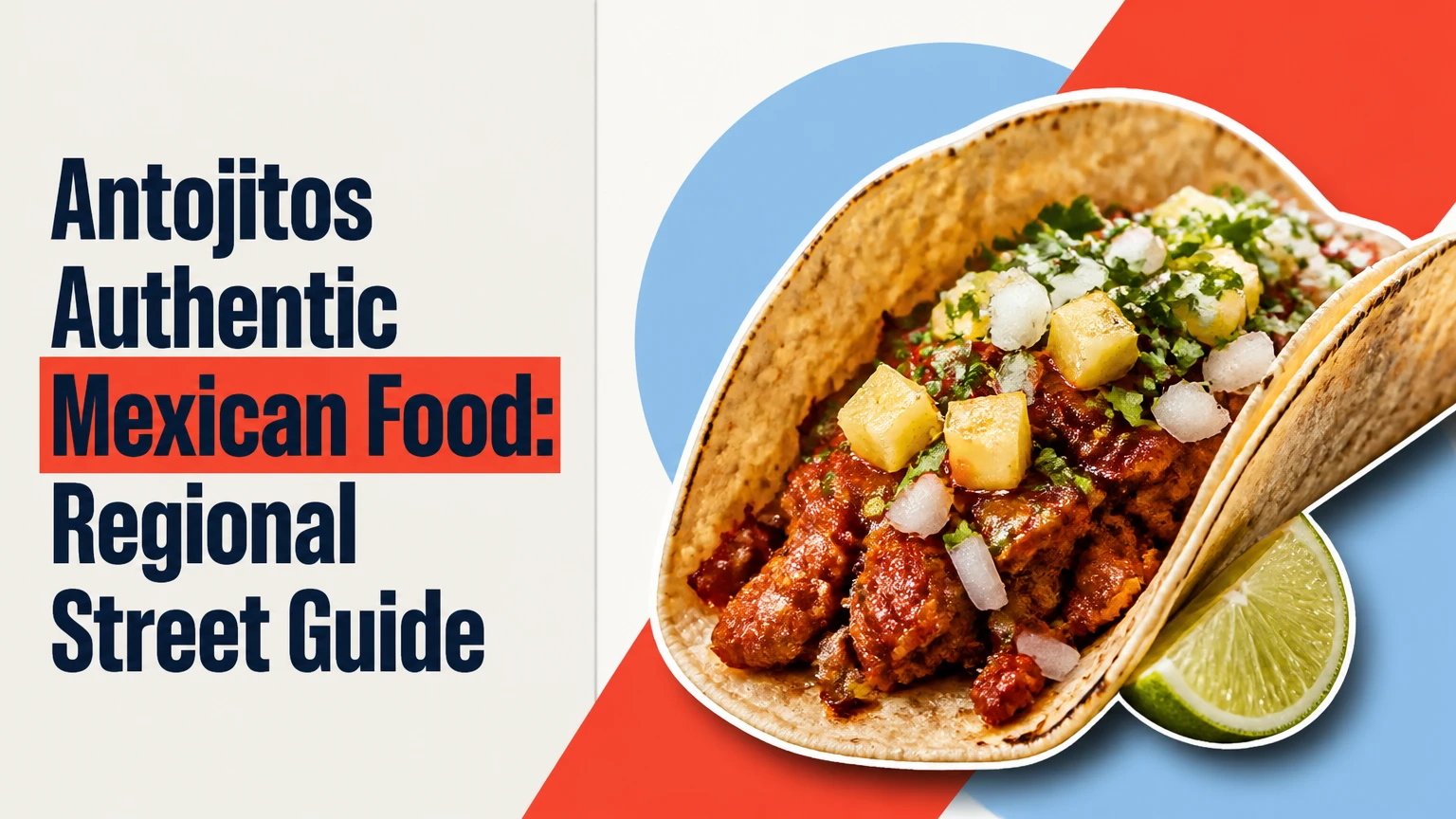
Antojitos authentic Mexican food are traditional Mexican snacks and small meals built mainly from nixtamalized corn masa, cooked on a comal, fried, or steamed, then finished with fillings and salsa. The category includes tacos, sopes, tlacoyos, gorditas, tamales, tostadas, pambazos, elotes, and esquites, with recipes and names changing across Mexico.
Key Facts at a Glance
- Antojito means “little craving,” but antojitos authentic Mexican food can function as breakfast, lunch, dinner, or a complete street-food meal.
- Nixtamalized masa gives many antojitos their flexible structure, mineral character, and distinctive corn aroma.
- A comal produces a soft or lightly toasted surface, while frying creates a crisp shell and steaming creates a moist, tender crumb.
- A typical street order takes approximately 1-3 minutes when fillings have been prepared in advance.
- Typical Mexico prices range from 15-30 MXN for a simple taco and 40-60 MXN for many larger masa-based pieces, although tourist zones and major cities cost more.
- Regional vocabulary matters: a quesadilla may include cheese automatically in one place and require the phrase con queso in another.
What Are Antojitos Authentic Mexican Food?
Antojitos authentic Mexican food are Mexico’s traditional small-format dishes, usually sold at street stands, public markets, neighborhood kitchens, and informal restaurants. They are defined less by serving size than by preparation style: masa, tortillas, bread, corn, vegetables, stews, and salsa are assembled into inexpensive foods designed for immediate eating.
The Spanish word antojito comes from antojo, meaning a craving or sudden desire for something tasty. The term does not identify one recipe. It describes a broad culinary family whose members differ by state, city, indigenous tradition, available ingredients, and cooking equipment.
Mexico’s traditional cuisine was added to UNESCO’s Representative List of the Intangible Cultural Heritage of Humanity in 2010. UNESCO specifically describes the cuisine as a cultural model involving farming, ritual practices, skills, and community customs, which helps explain why antojitos are more than generic snacks. They connect local agriculture, labor, trade, and social eating.
Where Are Antojitos Served?
Antojitos appear in several types of food businesses, and the setting changes the experience.
| Setting | Typical service | Common dishes | Typical eating pattern |
|---|---|---|---|
| Puesto de calle | Counter or standing service | Tacos, sopes, quesadillas | One to four pieces per person |
| Mercado | Shared market seating | Tostadas, tamales, tlacoyos | Breakfast or midday meal |
| Tianguis | Temporary open-air market | Gorditas, pambazos, elotes | Portable daytime eating |
| Fonda | Small neighborhood kitchen | Enchiladas, tamales, antojito plates | Seated meal with a drink |
| Taquería | Specialized evening counter | Tacos, gringas, quesadillas | Fast dinner or late-night meal |
Antojitos are often associated with street food because vendors can prepare components ahead of service and finish each order over high heat. A busy stand may have masa, beans, cooked vegetables, sauces, and stewed fillings ready before customers arrive.
How Does Masa Become an Antojito?
Masa becomes an antojito through five linked stages: nixtamalization, grinding, hydration, shaping, and cooking. The same corn dough can become a thin tortilla, a thick rimmed base, a filled oval, a pocket, or a steamed parcel because shape and heat change how moisture and starch behave.
1. Nixtamalize the Corn
Dried maize is cooked and soaked in water containing food-grade calcium hydroxide, commonly called lime in this culinary context. The alkaline solution loosens the outer skin, changes the corn’s aroma, improves dough formation, and increases the bioavailability of niacin.
The Food and Agriculture Organization has documented nixtamalization as a process that improves the nutritional quality and processing characteristics of maize. The length of cooking and soaking varies with corn type, altitude, and local practice.
2. Grind the Nixtamal
The softened kernels are washed and ground into masa. Commercial tortillerías often use mechanical mills, while traditional kitchens may use stone grinding equipment. Freshly ground masa usually has more fragrance and elasticity than dry instant flour, although high-quality masa harina can produce useful results at home when hydrated correctly.
3. Shape the Dough
A cook presses or pats the masa into a specific form. Thin tortillas need even thickness, while sopes require a thicker center and raised edge. Tlacoyos are filled before cooking, and gorditas may be opened after puffing to create a pocket.
4. Apply Heat
| Cooking method | Surface temperature pattern | Texture result | Representative dishes |
|---|---|---|---|
| Dry comal | Direct, moderate-to-high heat | Soft, toasted, flexible | Tacos, tlacoyos, tortillas |
| Light frying | Hot fat around 160-180°C | Crisp exterior, tender center | Sopes, some quesadillas |
| Deep frying | Fat around 175-185°C | Brittle, shattering crust | Tostadas, fried gorditas |
| Steaming | Moist heat near 100°C | Soft, humid, cohesive | Tamales |
| Sauce frying | Comal plus chile coating | Crisp surface, red chile flavor | Pambazos |
5. Add Fillings and Garnishes
The final layer usually combines a hot base with contrasting toppings. Common additions include refried beans, shredded or chopped meat, mushrooms, squash blossoms, roasted poblano strips, fresh cheese, crema, lettuce, onion, cilantro, lime, and salsa.
A practical rule governs assembly: wet ingredients should be added immediately before eating. Tostadas lose their crunch quickly under watery salsa, while tacos become easier to handle when juicy fillings are balanced with a warm tortilla and restrained sauce.
Which Antojitos Should You Try First?
Beginners should start with tacos, a chicken sope, or a bean-filled tlacoyo because these dishes reveal the central ingredients without requiring unfamiliar textures. Diners who prefer crunch should choose tostadas, while diners who want a substantial enclosed meal should choose gorditas or filled quesadillas.
| Antojito | Shape and base | Common filling or topping | Texture | Best first use |
|---|---|---|---|---|
| Taco | Thin folded tortilla | Marinated meat, vegetables, beans | Soft and pliable | Sampling several flavors |
| Sope | Thick round with raised rim | Beans, chicken, cheese, salsa | Tender center, firm edge | Layered toppings |
| Gordita | Thick round pocket | Stew, beans, rajas, chicharrón | Pillowy and dense | A filling single item |
| Tlacoyo | Long oval, filled inside | Fava bean, black bean, requesón | Toasted and chewy | Traditional masa flavor |
| Huarache | Large oblong masa base | Beans, meat, cheese, salsa | Chewy and substantial | A full meal |
| Tostada | Flat crisp tortilla | Chicken, seafood, beans, lettuce | Brittle and crunchy | Contrast and freshness |
| Tamal | Masa wrapped in husk or leaf | Savory stew, chile, vegetables | Moist and soft | Breakfast or portable eating |
| Pambazo | Chile-coated bread | Potato and seasoned sausage | Crisp outside, soft inside | Rich evening meal |
Tacos
Tacos are thin tortillas folded around a filling and finished with ingredients such as onion, cilantro, lime, or salsa. Styles vary widely, from grilled meat tacos to tacos filled with stewed vegetables, beans, seafood, or cactus.
A taco is often the best entry point because the tortilla-to-filling ratio lets diners compare several preparations without committing to one large portion. Order two or three different fillings rather than adding every available topping to one taco.
Sopes and Picaditas
Sopes are thick masa discs with pinched edges that retain beans, sauce, cheese, and other toppings. In some regions, similar preparations are called picaditas, particularly when the masa is pressed, lightly toasted, and finished with salsa and fat.
The raised rim is functional. It slows leakage and gives a soft dough base enough strength to support wet toppings.
Gorditas
Gorditas are thick corn cakes that may be cooked on a comal or fried, then opened and filled. Common fillings include beans, stews, roasted chile strips, cheese, and seasoned vegetable mixtures.
Gorditas are denser than tacos, so one may equal two or three small tacos in satiety. Their enclosed structure also makes them easier to carry, although excessive filling can split the dough.
Tlacoyos and Huaraches
Tlacoyos are elongated masa cakes stuffed before cooking, often with fava beans, black beans, or requesón. Huaraches are larger and longer, shaped somewhat like a sandal, and usually topped rather than opened.
These dishes are especially useful for comparing masa texture. Tlacoyos emphasize a filled, chewy interior; huaraches emphasize a broad griddled surface that supports beans, vegetables, salsa, and a protein topping.
Tostadas, Tamales, and Pambazos
Tostadas use a crisp tortilla as a platform for beans, chicken, seafood, vegetables, crema, lettuce, or avocado. Tamales wrap seasoned masa and filling in corn husks or banana leaves before steaming. Pambazos use bread soaked in chile sauce, griddled, and filled with potato and seasoned sausage.
These items do not share one texture or cooking method, which illustrates why antojito is a cultural category rather than a single technical recipe.
Elotes and Esquites
Elotes are corn cobs served whole, while esquites are corn kernels served in a cup or bowl. Both may include creamy dressing, lime, chile, and aged crumbly cheese, although recipes vary by vendor.
Elotes are better for outdoor eating when a napkin is available. Esquites are easier to portion and often include broth or seasoning that makes them more spoon-friendly.
Where Do Different Antojitos Come From?
Antojitos are regional foods, so the same name can describe different shapes, fillings, or serving customs in separate parts of Mexico. The table below gives broad associations rather than exclusive origins, since migration and restaurant menus have carried these dishes far beyond their home regions.
| Region | Representative antojitos | Distinctive ingredient or method | Ordering clue |
|---|---|---|---|
| Mexico City | Tlacoyos, quesadillas, pambazos | Blue-corn masa, broad street selection | Ask whether cheese is included |
| Puebla | Chalupas, cemitas, antojito plates | Red or green salsa, regional bread | Expect small sauced portions |
| Oaxaca | Tlayudas, memelas, tamales | Large toasted tortilla, local cheese | Ask about charcoal or comal preparation |
| Veracruz | Gorditas, tamales, seafood tostadas | Coastal produce and masa dishes | Look for breakfast stalls |
| Yucatán | Salbutes, panuchos | Fried tortilla, seasoned regional fillings | Expect a distinct citrus-chile profile |
| Central Mexico | Sopes, tlacoyos, quesadillas | Bean fillings and comal cooking | Choose markets for wider variety |
A dish’s regional identity may come from its masa color, salsa, filling, garnish, or serving time. Tlayudas, for example, are strongly associated with Oaxaca, but an individual vendor may adapt toppings to local demand.
How Do Masa Textures Compare?
Tacos are the lightest and most flexible masa option, tostadas provide the strongest crunch, sopes support wet toppings, and gorditas offer the most enclosed and filling format. The best choice depends on whether the diner values portability, crispness, sauce capacity, or a substantial meal.
| Dish | Cooking method | Approximate thickness | Texture | Main limitation |
|---|---|---|---|---|
| Taco | Dry comal | 1-2 mm | Soft and foldable | Tears under excessive filling |
| Sope | Comal plus light fry | 8-12 mm | Tender middle, firm rim | Can retain too much fat |
| Tostada | Frying or baking | 2-4 mm | Brittle and shattering | Becomes soggy quickly |
| Gordita | Comal or frying | 12-20 mm | Dense, pillowy interior | Heavy for small appetites |
| Tlacoyo | Filled and griddled | 10-15 mm | Chewy with a soft center | Cracks if masa is dry |
| Huarache | Comal | 8-15 mm | Broad, chewy base | Difficult to eat while walking |
What Is the Difference Between a Sope and a Tostada?
A sope is thick, soft, and rimmed, while a tostada is flat and crisp. Sopes are designed to carry moist layers such as beans, crema, and salsa; tostadas prioritize a brittle tortilla and are best eaten immediately after assembly.
That distinction helps diners order more accurately. Choose a sope when structure and warmth matter. Choose a tostada when crunch, chilled toppings, or seafood is the main attraction.
How Much Do Authentic Antojitos Cost?
Typical street prices in Mexico range from 15-30 MXN for a simple taco, 40-60 MXN for a sope or gordita, and 200-350 MXN for a casual meal for two. Prices rise in airports, resort areas, upscale neighborhoods, and restaurants with table service.
| Purchase | Typical Mexico price | Typical serving time | Cost variable |
|---|---|---|---|
| Simple street taco | 15-30 MXN | 1-3 minutes | Filling and city |
| Sope or gordita | 40-60 MXN | 3-6 minutes | Size and toppings |
| Tostada | 35-75 MXN | 2-5 minutes | Seafood costs more |
| Tamal | 20-45 MXN | 1-2 minutes | Filling and market |
| Elote or esquites | 25-60 MXN | 2-4 minutes | Portion and garnish |
| Meal for two | 200-350 MXN | 10-20 minutes | Venue and drinks |
These are typical planning ranges, not universal prices. Mexico City, Cancún, Oaxaca City, and small towns can differ substantially, and vendors may charge separately for premium fillings or extra cheese.
How Should You Order at a Mexican Food Stall?
Order by naming the dish, filling, cheese preference, and any dietary restriction. At a busy stand, a short Spanish phrase reduces ambiguity more effectively than describing the dish in English.
Useful phrases include:
- Una quesadilla de flor de calabaza con queso, por favor.
One squash-blossom quesadilla with cheese, please. - Un tlacoyo de haba, sin crema.
One fava-bean tlacoyo without crema. - Sin manteca, por favor.
Without animal cooking fat, please. - ¿Qué salsa pica más?
Which salsa is hotter? - ¿Es de hoy?
Was it made today? - Para comer aquí.
For eating here. - Para llevar.
To take away.
Cheese terminology varies by location. In parts of Mexico City, a quesadilla may be served without cheese unless the customer requests con queso. That practice is regional rather than a nationwide rule.
Which Antojitos Work for Vegetarian Diners?
Vegetarian diners can choose squash blossoms, mushrooms, roasted poblano strips, cactus, beans, huitlacoche, cheese, or seasonal vegetables, but they should verify the cooking fat and broth. A masa dish can appear meat-free while its beans, fillings, or griddle contain animal fat.
| Vegetarian filling | Flavor profile | Common formats | Verification question |
|---|---|---|---|
| Flor de calabaza | Delicate, herbal | Quesadilla, tamal | Is it cooked with animal fat? |
| Hongos | Earthy, savory | Taco, quesadilla, sope | Is the broth vegetarian? |
| Rajas poblanas | Smoky, mildly hot | Gordita, taco | Does the cream contain additives? |
| Huitlacoche | Earthy, mineral | Quesadilla, tamal | Is the filling cooked separately? |
| Nopales | Tart, vegetal | Tlacoyo, taco, sope | Are they cooked with shared meat? |
| Beans | Creamy, earthy | Tostada, tlacoyo, sope | Are they made without animal fat? |
For a fully plant-based order, specify sin manteca, sin crema, sin queso. Vendors may use the same comal or utensils for different fillings, so diners with severe allergies need a more detailed conversation.
How Can You Choose a Safer Food Stall?
Choose a busy stall with visible cooking, covered ingredients, clean utensils, and rapid turnover. Crowd size alone is not a guarantee, but a steady line usually means cooked food is replaced frequently rather than held for long periods at room temperature.
Check these practical signals:
- Observe the hot surface. Meat, masa, and filled items should spend visible time on the comal or in active cooking.
- Check ingredient protection. Fresh garnishes should be covered or handled with dedicated utensils.
- Notice water practices. Bottled water and purified ice are safer choices where municipal water quality is uncertain.
- Prefer high turnover. A stall serving several customers per hour generally cycles food faster than an empty display.
- Watch hand separation. Money handling should not be followed immediately by garnish handling without utensil use or hand cleaning.
Mexico’s Federal Commission for the Protection against Sanitary Risk, COFEPRIS, publishes food-safety guidance for food establishments and handlers. Travelers should also follow current local health advice, because water and sanitation conditions vary by destination.
What Mistakes Do First-Time Diners Make?
First-time diners often judge authenticity by toppings or price, but preparation, regional context, and ingredient freshness matter more. The most common avoidable errors involve ordering too much salsa, confusing dish names, and assuming every vendor prepares masa or beans the same way.
Mistake 1: Treating Tex-Mex Substitutions as Universal
Yellow shredded cheese, hard packaged shells, and thick commercial sour cream do not represent the standard format for many Mexican antojitos. Fresh queso fresco, cotija, Mexican crema, chopped herbs, and regional salsas produce different moisture and salt levels.
Mistake 2: Overloading a Tostada
A tostada needs a dry enough base to remain crisp. Add beans first, then a modest amount of filling, followed by salsa just before the bite.
Mistake 3: Ignoring Dry Masa
Cracked edges indicate insufficient hydration or excessive handling. Knead in warm water one teaspoon at a time until the masa resembles soft modeling dough and the edge remains smooth when pressed.
Mistake 4: Assuming Every Salsa Is Mild
Salsa heat varies by chile, roasting method, and vendor. Taste a small amount first, especially with smoky red sauces and fresh green sauces.
Mistake 5: Ordering Too Many Large Items
A huarache, gordita, or loaded tostada can be filling enough for a full meal. Start with one substantial item and add a smaller taco or esquite after assessing portion size.
Frequently Asked Questions
Are antojitos the same as Mexican appetizers?
Antojitos can function as appetizers, but the category is broader. A tamal, huarache, or large gordita may serve as breakfast or a complete meal, while a small taco or esquite may be eaten between meals. The Spanish term describes a craving-sized traditional food, not a fixed course.
What is the healthiest Mexican antojito?
A single grilled taco with vegetables, beans, or lean meat is usually lighter than a fried tostada stack or heavily filled gordita. Preparation matters more than the name: choose comal-cooked masa, moderate crema, fresh vegetables, and a portion suited to your appetite.
Can I make authentic antojitos with masa harina?
Masa harina can produce authentic-style antojitos when mixed with the correct amount of warm water and rested before shaping. Freshly ground masa usually has a stronger aroma, but hydration, heat control, and ingredient quality affect the final texture more than the flour’s packaging.
Why does Mexican street food use so much salsa?
Salsa adds acidity, heat, moisture, and roasted or raw chile flavor to a neutral masa base. Vendors use several salsa styles because different antojitos need different moisture levels: a tostada benefits from restrained sauce, while a sope can support a wetter topping.
What drink pairs with antojitos?
Agua de jamaica, horchata, citrus-based aguas frescas, and bottled water are common nonalcoholic choices. Choose purified water or sealed drinks when local water quality is uncertain, and select a less sweet option when the antojito already contains rich fillings or creamy toppings.
How many antojitos should one person order?
A typical starting point is two or three small tacos, one large gordita or huarache, or one substantial item plus a side of esquites. Portion size varies by vendor, so ordering incrementally protects texture and prevents unnecessary waste.
The Bottom Line
Antojitos authentic Mexican food are traditional masa-based and corn-centered dishes shaped by region, ingredient availability, cooking method, and local eating customs. Start with a taco, sope, tlacoyo, gordita, tostada, tamal, elote, or esquites, then compare the texture created by the comal, frying, or steaming. The best order depends on appetite, crunch preference, dietary needs, and the vendor’s regional style.