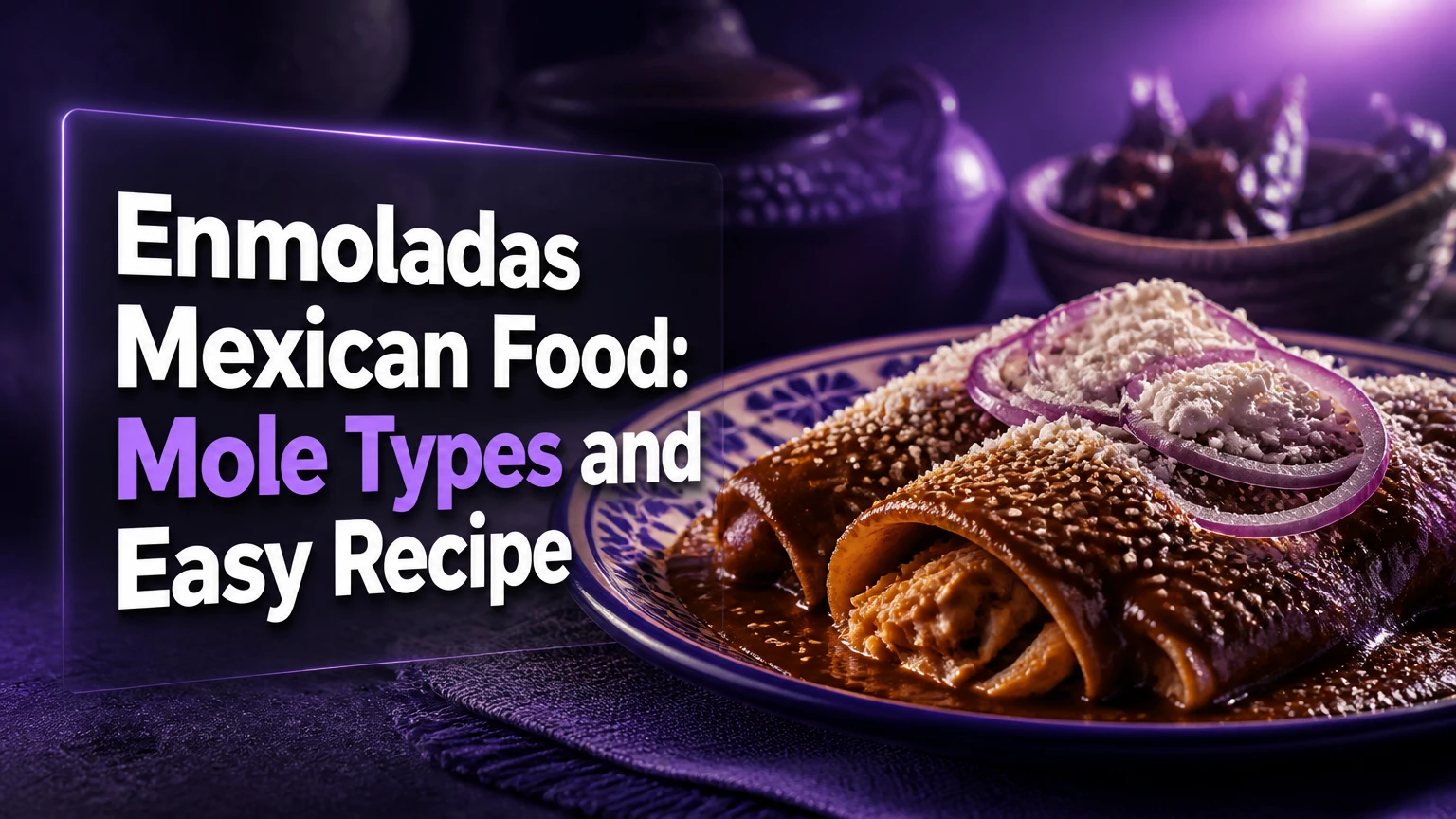
Enmoladas are Mexican corn tortillas filled with chicken, cheese, beans, or vegetables, coated completely in warm mole sauce, and folded or rolled before garnishing. They resemble enchiladas, but mole defines the dish: the sauce contributes dried chiles, spices, seeds, nuts, fruit, and sometimes Mexican chocolate rather than a simple red or green chile base.
Key Facts at a Glance
Enmoladas use corn tortillas and mole sauce as their defining ingredients.
A typical plate contains three enmoladas and takes 45-60 minutes with prepared mole paste.
Tortillas need brief heating or flash-frying so they remain flexible without dissolving in sauce.
Chicken is traditional, but queso fresco, beans, potatoes, mushrooms, and nopales work well.
Mole should coat like thin cream or a loose gravy, not sit as a stiff paste.
Assemble enmoladas immediately and serve within about 3-5 minutes for the best texture.
What Are Enmoladas?
Enmoladas are filled corn tortillas dipped in mole, then rolled or folded and finished with toppings such as onion, fresh cheese, crema, and sesame seeds. The name combines enmolada, meaning covered with mole, with the same preparation family as enchiladas and enfrijoladas.
The defining feature is full sauce coverage. A tortilla with a small spoonful of mole inside is not usually what cooks mean by an enmolada; the exterior should carry enough sauce to deliver the dish’s characteristic earthy, chile-based flavor in every bite.
Mole recipes vary widely by region and household. Common components include dried ancho, pasilla, or mulato chiles; toasted seeds; nuts; spices; aromatics; fruit; tomatoes; and a small amount of Mexican chocolate in some styles. Chocolate adds bitterness, aroma, and body. It does not turn a balanced mole into a dessert sauce.
What Do Enmoladas Taste Like?
Enmoladas taste deeply savory, earthy, toasted, and mildly sweet, although the exact profile depends on the mole variety. The tortilla contributes roasted corn, while the filling supplies protein or creaminess and the garnishes add salt, freshness, acidity, and crunch.
A mild mole poblano may taste round and gently sweet. Oaxacan mole negro tends toward smoke, roasted chile, and bitterness. Coloradito often tastes fruitier because tomato and plantain can contribute body and sweetness.
Why Do Enmoladas Use Fried or Heated Tortillas?
Briefly frying or heating tortillas limits how quickly mole penetrates the corn structure, so the tortilla stays intact during dipping and serving. The goal is pliability, not crispness: 3-5 seconds per side in oil at approximately 175°C or 350°F is typically enough.
Traditional cooks often pass tortillas through hot oil, while some home cooks warm them on a comal or skillet. Dry heating reduces added fat but provides less of the protective oil layer, so those tortillas should spend less time in the sauce and should be assembled immediately.
How Do You Choose the Right Tortilla?
Choose fresh, flexible corn tortillas measuring about 14-15 cm, or 5.5-6 inches, across. Tortillas made with nixtamalized corn generally provide better aroma and elasticity than thin, stale tortillas, which crack during rolling and absorb mole unevenly.
| Tortilla condition | Preparation | Expected result | Best correction |
|---|---|---|---|
| Fresh and flexible | 3 seconds per side in oil | Soft, cohesive shell | Drain briefly |
| Fresh but dry | 10-15 seconds per side on skillet | Flexible with low added fat | Cover in a towel |
| Refrigerated | 20-30 seconds per side, covered | Usable after steaming | Separate carefully |
| Cracked or stale | Steam 2-3 minutes first | Partial recovery | Use folded presentation |
Which Mole Works Best for Enmoladas?
Mole poblano is the most adaptable choice for chicken enmoladas because its dried chile, spice, seed, and chocolate notes pair with both mild and salty fillings. Mole negro suits cooks who want a darker, smokier flavor, while coloradito or rojo works better when a lighter, fruitier sauce is preferred.
Prepared mole paste varies in salt, sweetness, chile intensity, and thickness. Start with less broth than the package suggests, then adjust gradually. A sauce that is too thin soaks tortillas rapidly; a sauce that is too thick clings in lumps instead of forming an even coating.
| Mole style | Typical flavor | Best filling | Typical adjustment |
|---|---|---|---|
| Poblano | Toasted, earthy, gently sweet | Chicken or queso fresco | Add unsalted broth |
| Negro | Smoky, bitter, chile-forward | Chicken or mushrooms | Add broth before sweetener |
| Coloradito | Fruity, red, moderately sweet | Cheese or vegetables | Add tomato broth carefully |
| Rojo | Chile-rich, savory, brighter | Beans or shredded chicken | Add a little toasted spice |
| Homemade mixed mole | Layered and highly variable | Filling matched to recipe | Adjust salt last |
How Should You Thin Prepared Mole Paste?
For three servings, begin with 120-150 g of prepared paste and 350-450 ml of warm unsalted chicken or vegetable broth. Whisk over low heat for 8-12 minutes, adding broth in 30 ml increments until the sauce coats a spoon and flows in a continuous ribbon.
Mexican cooking references, including recipes from Pati Jinich and Mexico in My Kitchen, commonly treat mole as a sauce that is loosened with broth and simmered before tortilla assembly. Package directions remain the final authority because commercial pastes differ substantially in concentration.
Chicken Enmoladas Recipe
This chicken enmoladas recipe makes 12 small enmoladas, or four plates of three, in about 45-60 minutes when prepared mole paste and cooked chicken are available. The main success factor is coordination: keep the mole warm, tortillas flexible, filling ready, and garnishes within reach before dipping the first tortilla.
Ingredients and Equipment
| Ingredient or tool | Quantity for 4 servings | Purpose | Typical cost |
|---|---|---|---|
| Corn tortillas | 12, plus 2 extra | Enmolada shells | $2-$4 |
| Cooked shredded chicken | 450 g | Main filling | $5-$9 |
| Prepared mole paste | 120-150 g | Sauce base | $4-$8 |
| Unsalted broth | 400 ml | Dilution | $1-$3 |
| Vegetable oil | 120 ml | Flash-frying | $1-$2 |
| Queso fresco | 100 g | Salty topping | $3-$5 |
| White onion | 1 small | Fresh garnish | $1 |
| Mexican crema | 60 ml | Cooling contrast | $2-$4 |
| Sesame seeds | 2 tablespoons | Toasted garnish | $1-$2 |
Prepare the Filling
Season 450 g of cooked shredded chicken with 2-3 tablespoons of broth, a pinch of salt, and 1-2 tablespoons of the prepared mole. The small amount of sauce prevents a dry center without making the tortilla collapse from the inside.
Refried black beans, mashed potatoes, sautéed mushrooms, roasted vegetables, or crumbled queso fresco can replace chicken. Keep the filling relatively dry and limit each tortilla to 30-40 g, or about 2 tablespoons.
Warm and Adjust the Mole
Combine the mole paste and 350 ml of warm broth in a heavy saucepan. Whisk over low heat for 8-12 minutes, then add the remaining broth only if the sauce does not flow from a spoon.
Taste after dilution. Adjust salt first, chile heat second, and sweetness last. Mole often tastes overly intense before it is served with tortillas and filling, so avoid correcting aggressively during the first few minutes.
Flash-Fry the Tortillas
Heat oil to approximately 175°C or 350°F. Pass each tortilla through the oil for 3-5 seconds per side, then drain on paper towels or a rack.
You will know the tortilla is ready when it bends without cracking and remains soft rather than crisp. If the edges harden, lower the oil temperature or shorten the frying time.
Dip, Fill, and Fold
Hold one warm tortilla with tongs and submerge both sides in the warm mole. Lift it immediately, place it on a plate, add 2 tablespoons of filling, and roll into a cylinder or fold into quarters.
A shallow, wide pan makes dipping easier than a narrow saucepan. Work with one tortilla at a time because stacked coated tortillas fuse together and become difficult to separate cleanly.
Garnish and Serve
Spoon 1-2 tablespoons of additional mole over each finished portion. Add crumbled queso fresco, thinly sliced white onion, crema, and toasted sesame seeds immediately before serving.
The best service window is about 3-5 minutes after assembly. Longer holding makes even well-prepared tortillas soft because mole continues moving into the corn.
What Fillings and Toppings Pair With Mole?
Chicken provides the most neutral, widely accepted filling because shredded thigh or breast absorbs sauce without competing with its toasted spices. Salty cheese, beans, potatoes, mushrooms, and nopales offer practical alternatives, but each changes the balance of richness and moisture.
Mole needs contrast. Sharp onion, crumbly cheese, crema, radish, pickled vegetables, or a small squeeze of lime can make a heavy sauce feel more focused, although excessive acidity can mask delicate spice notes.
| Filling | Quantity for 12 tortillas | Texture | Mole pairing |
|---|---|---|---|
| Shredded chicken | 450 g | Tender and fibrous | Poblano or negro |
| Queso fresco | 350 g | Soft and crumbly | Coloradito or poblano |
| Refried black beans | 500 g | Creamy and dense | Rojo or negro |
| Mashed potatoes | 500 g | Soft and mild | Poblano or coloradito |
| Mushrooms and onion | 450 g | Savory and juicy | Negro or rojo |
| Nopales and potatoes | 500 g | Firm and vegetal | Coloradito or mild poblano |
What Should You Serve With Enmoladas?
Serve enmoladas with light, crisp, or acidic side dishes because mole already supplies concentrated flavor and body. A small salad of lettuce and radish, cucumber with lime, steamed vegetables, or plain rice works better than another heavy, creamy side.
For a standard plate, serve three enmoladas with 100-150 g of rice or beans and a modest garnish. A breakfast-style portion may contain two enmoladas with fruit, while a larger dinner plate can contain four when the filling is light.
Can Enmoladas Be Vegetarian or Vegan?
Enmoladas can be vegetarian or vegan when the mole contains no animal-derived broth, lard, or seasoning powder. Use vegetable broth and fill the tortillas with black beans, potatoes, mushrooms, roasted squash, nopales, or seasoned vegetables.
Check the ingredient label on prepared mole paste. Some products include chicken bouillon or animal fat, and the same brand can offer different formulations in different markets. Vegan garnishes include avocado, toasted sesame, onion, radish, and plant-based crema.
Enmoladas Compared With Enchiladas and Enfrijoladas
Enmoladas differ from enchiladas primarily through the sauce, while enfrijoladas use a seasoned bean purée instead of mole. All three dishes commonly use corn tortillas, fillings, garnishes, and a brief tortilla-softening step, but their flavor density, cost, and preparation time are different.
| Dish | Main sauce | Typical flavor | Typical prep time |
|---|---|---|---|
| Enmoladas | Mole | Earthy, toasted, complex | 45-60 minutes |
| Red enchiladas | Dried chile sauce | Savory, chile-forward | 35-50 minutes |
| Green enchiladas | Tomatillo sauce | Tangy, herbal, bright | 35-50 minutes |
| Enfrijoladas | Seasoned bean purée | Creamy, mild, savory | 25-40 minutes |
| Entomatadas | Tomato-chile sauce | Mild, acidic, fresh | 30-45 minutes |
Enmoladas are the strongest choice for a celebratory meal or when leftover mole is available. Enfrijoladas are more economical and faster, while green or red enchiladas suit diners who prefer sharper acidity over sweetness and toasted spice.
Are Mole Enchiladas Always Sweet?
Mole enchiladas are not always sweet. Mexican chocolate, plantain, raisins, or fruit may add restrained sweetness, but dried chiles, toasted seeds, spices, salt, and bitterness remain equally important in a balanced sauce.
A sweet-tasting result usually comes from excessive sugar, too much fruit, or an under-seasoned sauce. Add unsalted broth, salt in small increments, or a little chile puree before adding more sweetener.
How Much Do Enmoladas Cost?
A four-serving home batch typically costs $20-$38 in the United States when using prepared paste, chicken, tortillas, broth, cheese, and garnishes. Restaurant prices commonly range from approximately $14-$22 per plate in the United States, while Mexican restaurant pricing varies by city, venue, and portion.
These figures are typical planning ranges rather than fixed prices. Imported mole paste, specialty cheese, organic chicken, and restaurant labor raise the total, while beans, potatoes, homemade broth, and seasonal vegetables reduce it.
| Setting | Portion | Typical price | Main cost driver |
|---|---|---|---|
| Home, chicken | 3-4 servings | $20-$38 total | Chicken and mole paste |
| Home, vegetarian | 4 servings | $14-$26 total | Cheese and prepared mole |
| Mexican restaurant in USA | 3 enmoladas | $14-$22 per plate | Labor and location |
| Mexican restaurant in Mexico | 3 enmoladas | $90-$180 MXN | Venue and region |
| Catering or premium venue | 3-4 enmoladas | $24-$40 per plate | Handmade mole and service |
How Many Calories Are in Enmoladas?
A plate of three chicken enmoladas commonly contains about 650-850 calories, although the recipe can fall outside that range. Mole paste, oil, nuts, seeds, cheese, crema, tortilla size, and filling quantity create most of the variation.
A lower-energy version uses lightly heated tortillas, skinless chicken, less crema, and a vegetable filling, but removing all oil can make the tortillas crack or disintegrate. Portion control is more reliable than eliminating one ingredient entirely.
Common Problems and How to Fix Them
Enmolada failures usually come from temperature, moisture, or timing rather than from an incorrect filling. The most useful practitioner rule is to treat the tortilla, mole, and filling as a coordinated production line instead of preparing each component and letting it sit.
| Problem | Likely cause | Immediate fix | Prevention |
|---|---|---|---|
| Tortilla tears | Stale or cold tortilla | Steam briefly and fold | Use fresh tortillas |
| Tortilla turns mushy | Long sauce contact | Serve immediately | Flash-fry and dip quickly |
| Mole burns | High heat or no stirring | Transfer to a cool pan | Use low heat |
| Sauce tastes chalky | Poorly dissolved paste | Whisk and strain | Add broth gradually |
| Filling leaks | Excess filling | Reduce to 2 tablespoons | Keep filling dry |
| Sauce tastes flat | Under-seasoning | Add salt and broth balance | Taste after dilution |
Why Does Mole Burn So Easily?
Mole burns easily because concentrated chile solids, sugars, nuts, seeds, and starches settle against a hot pan. Keep the sauce over low heat, stir the bottom every 30-60 seconds, and use a heavy saucepan rather than a thin skillet.
Never leave reduced mole unattended on medium-high heat. If scorching begins, pour the unburned upper sauce into a clean pan without scraping the bottom, because burnt particles spread bitterness quickly.
How Do You Prevent Soggy Tortillas?
Prevent soggy tortillas by flash-frying or thoroughly warming them, keeping the mole at a pourable temperature, and dipping each tortilla for only the time needed to coat both sides. Assemble no more than 10 minutes before eating.
For a buffet, keep mole and tortillas separate and let guests assemble portions individually. Fully assembled enmoladas do not hold well under heat because steam and sauce soften the corn continuously.
How Should You Store and Reheat Enmoladas?
Store mole, tortillas, filling, and garnishes separately for up to three days in a refrigerator at 4°C or below. Fully assembled enmoladas can be refrigerated, but their tortillas will soften and are unlikely to regain the original texture.
Reheat mole gently in a saucepan with 1-2 tablespoons of broth per cup. Warm tortillas separately on a skillet, then assemble fresh. Freeze the mole and filling separately for up to two months; do not freeze assembled tortillas if texture matters.
The Bottom Line
Enmoladas are Mexican corn tortillas filled and completely covered with warm mole, then finished with contrasting garnishes. Prepared mole paste makes a reliable batch in 45-60 minutes, but success depends on sauce consistency, flexible tortillas, modest filling, and immediate service.
Use mole poblano for the most adaptable chicken version, mole negro for a smoky and bitter profile, or coloradito for a fruitier plate. Enmoladas Mexican food is not simply an enchilada with a different topping: mole controls the dish’s flavor, texture, timing, and ideal accompaniments.
Frequently Asked Questions
Are enmoladas authentic Mexican food?
Yes. Enmoladas are a recognized Mexican preparation within the broader enchilada family, especially associated with mole traditions in central and southern Mexico. Recipes differ by household and region, so authenticity does not require one fixed filling, garnish, or mole formula.
Do enmoladas contain chocolate?
Some enmoladas contain Mexican chocolate because certain mole recipes use chocolate for bitterness, aroma, and body. Chocolate is optional and should not dominate the sauce. Mole negro, coloradito, and regional family recipes may contain little or none.
Can I make enmoladas without frying the tortillas?
You can make enmoladas without frying by warming tortillas on a comal or skillet until flexible. The texture will be lighter and the tortillas may absorb sauce faster, so dip briefly, limit the sauce on the plate, and serve immediately.
Why did my enmoladas taste bitter?
Bitter enmoladas usually result from scorched chiles, burned mole, excessive charred seeds, or too much unsweetened chocolate. Transfer unburned sauce to a clean pan, dilute with broth, and correct gradually with salt and a small amount of natural sweetness.
How many enmoladas should one person eat?
Three small enmoladas make a typical restaurant portion and a moderate main meal. Serve two with rice, beans, or vegetables for a lighter meal, or four when the filling is lean and the dish is the principal course.
What is the difference between enmoladas and chicken mole enchiladas?
The terms often describe the same practical dish in English, but enmoladas specifically emphasizes tortillas covered in mole. Chicken mole enchiladas may use the broader enchilada format, including less sauce, different assembly, or a nontraditional filling, depending on the cook or restaurant.