Norte Mexican food, more commonly called Comida Norteña or Northern Mexican cuisine, is a regional food tradition built around wheat flour tortillas, grilled beef, goat, preserved meats, aged cheeses, green chiles, and direct-fire cooking. Sonora, Chihuahua, Coahuila, Nuevo León, Durango, and Baja California share broad patterns, but each state has distinct ingredients, dishes, and serving customs.
Key Facts at a Glance
Northern Mexican cuisine developed around dry climates, cattle ranching, wheat cultivation, and long-distance food preservation.
Sonora is especially known for large flour tortillas, carne asada, wheat-based preparations, and chiltepín chile.
Nuevo León is strongly associated with cabrito, a young goat roasted beside or over coals.
Machaca is salted, dried meat rehydrated with eggs, onion, tomato, or chile.
Norteño cooking favors mesquite fire, griddles, cast-iron pans, and restrained seasoning over elaborate sauces.
Typical restaurant prices vary by city, cut, and venue; a taco may cost about MX$25-MX$70, while a cabrito plate commonly costs MX$400-MX$900.
What Is Norte Mexican Food?
Norte Mexican food is the cuisine of Mexico’s northern frontier, where wheat, beef, goat, dairy, preserved meat, and open-fire cooking became unusually important. The cuisine is rustic in technique but not simplistic: flavor depends on flour quality, beef selection, chile freshness, smoke, acidity, and the timing of service.
The term covers several food cultures rather than one standardized menu. Sonora’s tortilla tradition differs from Nuevo León’s goat cookery, while Baja California adds seafood, Chinese-Mexican border influences, and modern wine-country ingredients. Chihuahua contributes Mennonite-influenced dairy and wheat traditions, and Coahuila is associated with regional breads, stews, and cattle-country cooking.
Northern cuisine also includes corn dishes, beans, vegetables, and seafood. The common contrast with southern Mexico is useful only as a broad orientation. Northern cooks do not reject corn, complex sauces, or slow cooking; they simply place greater emphasis on wheat, meat, dairy, and dry-heat techniques.
Where Does Northern Mexican Cuisine Come From?
Northern Mexican cuisine comes primarily from Sonora, Chihuahua, Coahuila, Nuevo León, Durango, and Baja California, with related traditions extending through Sinaloa, Tamaulipas, Zacatecas, and parts of San Luis Potosí. State borders do not define culinary borders, because ranching routes, Indigenous foodways, migration, and trade cross them.
| Region | Signature preparation | Defining ingredient | Common serving context |
|---|---|---|---|
| Sonora | Carne asada and sobaqueras | Wheat flour and chiltepín | Family grilling and taco stands |
| Nuevo León | Cabrito al pastor | Young goat and mesquite | Weekend restaurant meal |
| Chihuahua | Asadero cheese and stews | Dairy, beef, and wheat | Home cooking and markets |
| Coahuila | Discada and regional breads | Beef, cured sausage, and flour | Large outdoor gatherings |
| Durango | Caldillos and dried meat dishes | Beef, chile, and preserved meat | Rural home meals |
| Baja California | Grilled seafood and carne asada | Pacific seafood and beef | Border restaurants and coastal meals |
The regional label has Indigenous roots as well as colonial and modern influences. Yaqui, Mayo, Rarámuri, and other communities contributed local plants, chiles, beans, preservation methods, and cooking knowledge. Cattle, wheat, and dairy became more prominent after colonial settlement, but the resulting cuisine was shaped by adaptation rather than replacement.
Why Are Flour Tortillas So Important?
Flour tortillas became central in northern Mexico because wheat grew more reliably than maize in several irrigated and frontier regions, while ranching communities needed portable, filling bread for workdays and travel. The result is a tortilla culture based on wheat flour, water, salt, and fat, with regional differences in diameter, thickness, and elasticity.
Sonora is famous for very large, thin tortillas called tortillas sobaqueras. The name refers to their size, traditionally large enough to approach the span of the forearm. Smaller flour tortillas are common for tacos, burritos, quesadillas, and breakfast dishes across the north.
| Tortilla style | Typical diameter | Texture | Best use |
|---|---|---|---|
| Sonoran sobaquera | 35-50 cm | Thin and flexible | Carne asada, folded wraps |
| Standard flour taco tortilla | 12-16 cm | Soft and pliable | Tacos and breakfast fillings |
| Gordita de harina | 12-15 cm | Thick and tender | Stuffed griddled snack |
| Commercial flour tortilla | 15-25 cm | Uniform, sometimes waxy | Fast home meals |
Fresh flour tortillas should smell lightly toasted and bend without cracking. A dough ball, called a testal, usually benefits from a 20-40 minute rest before rolling or stretching. Resting relaxes gluten and makes a thinner tortilla possible without tearing.
What Goes Into an Authentic Flour Tortilla?
A basic northern-style flour tortilla contains wheat flour, water, salt, and a fat such as lard or vegetable shortening. Some cooks use oil, baking powder, or warm milk, but these additions change tenderness and flavor rather than defining authenticity.
A practical home ratio is 500 grams flour, 8 grams salt, 60-80 grams fat, and approximately 275-310 milliliters warm water. The exact water amount depends on flour absorption. Cook each tortilla on a hot comal for roughly 30-60 seconds per side, turning when bubbles form and pale brown spots appear.
Which Norteño Dishes Should You Try First?
The best introduction is carne asada with fresh flour tortillas, grilled onions, salsa, and beans. Visitors who want a broader survey should add machaca con huevo, caldo de queso, queso fundido, and cabrito when available.
| Dish | Main components | Typical method | Flavor profile |
|---|---|---|---|
| Carne asada | Beef, salt, flour tortilla, onion | Mesquite grilling | Beefy, smoky, lightly acidic |
| Cabrito al pastor | Young goat, salt, herbs | Slow roasting near coals | Delicate, savory, lightly smoky |
| Machaca con huevo | Dried beef, eggs, onion, tomato | Rehydrating and skillet cooking | Salty, rich, gently spicy |
| Discada | Mixed meats, onion, chile, vegetables | Layered cooking on steel disc | Smoky, browned, savory |
| Caldo de queso | Potato, cheese, green chile, broth | Simmering | Creamy, salty, roasted |
| Queso fundido | Melted regional cheese, chorizo, chile | Gentle skillet melting | Rich, stretchy, spicy |
| Chilorio | Shredded meat and dried chile sauce | Slow cooking and frying | Mildly spiced, savory |
Chilorio deserves a geographic qualification. It is strongly identified with Sinaloa, which is often grouped with northwestern Mexican food, but it should not be presented as a defining dish of every northern state. Regional cuisines overlap, and a restaurant in Sonora may serve foods from neighboring states.
Machaca began as a preservation method. Meat was salted, dried, and later pounded or shredded before rehydration. Modern machaca may be made with beef, eggs, vegetables, and chile, and restaurant versions can range from dry and fibrous to moist and saucy.
Which Meat Dish Fits Your Meal?
Choose carne asada for a quick grilled meal, cabrito for a slow celebratory meal, machaca for breakfast, and discada for a group. The distinctions involve more than flavor because each dish requires a different cooking time, cut, and serving format.
| Dish | Serving size | Typical preparation time | Best occasion |
|---|---|---|---|
| Carne asada | 150-250 g beef per person | 20-35 minutes including fire | Fast family grilling |
| Cabrito | 250-400 g bone-in portion | 2-3 hours | Long weekend meal |
| Machaca con huevo | 2 eggs plus 50-75 g meat | 15-25 minutes | Breakfast or brunch |
| Discada | 250-350 g mixed meat per person | 45-75 minutes | Group outdoor gathering |
Cabrito has a milder flavor than many diners expect when the goat is young and properly cooked. The meat should separate from the bone but retain moisture. Dry, strongly gamey meat usually indicates an older animal, excessive heat, or poor holding time.
How Do You Cook Carne Asada the Norteño Way?
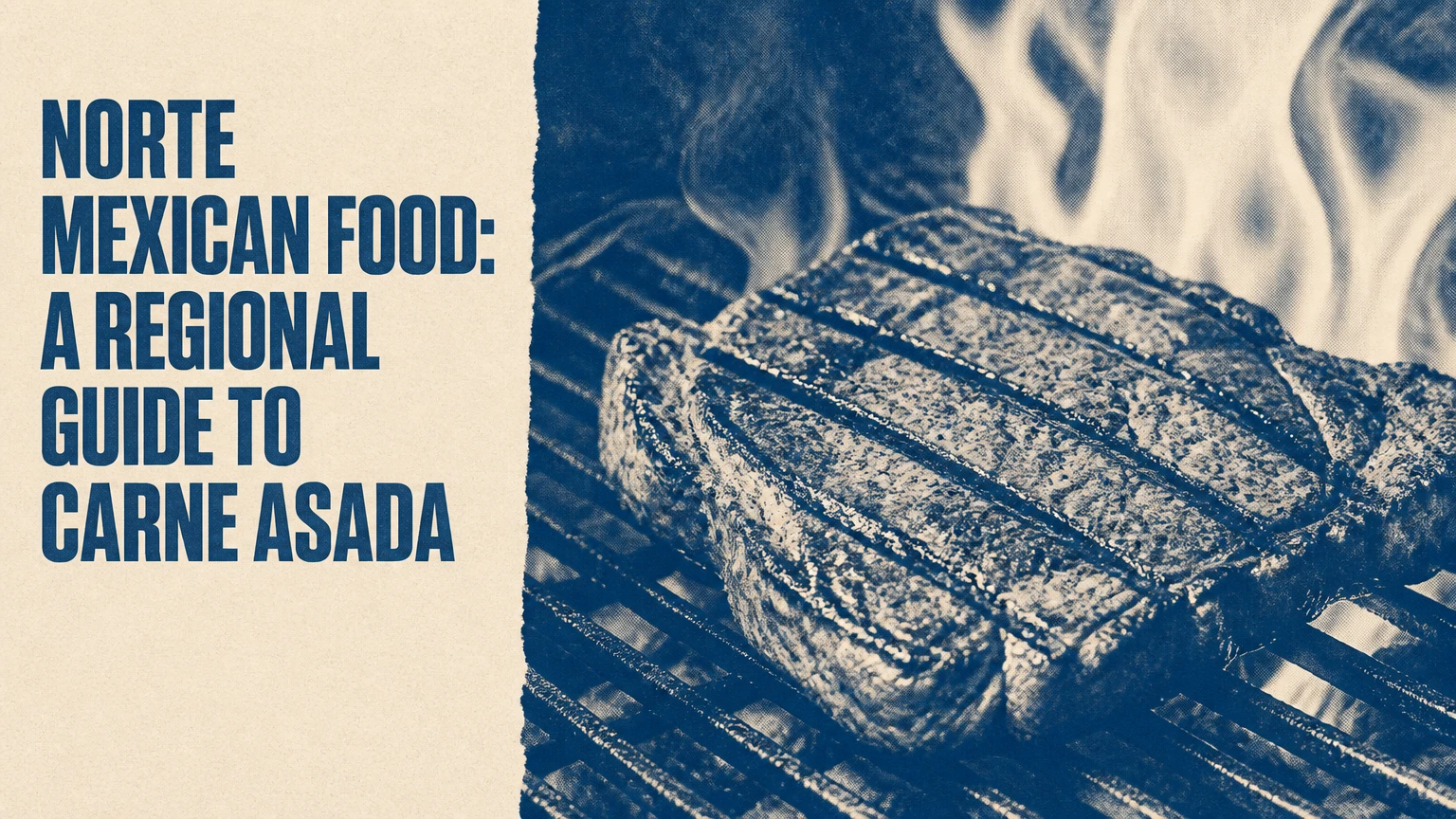
Cook Norteño carne asada over a fully heated mesquite or hardwood fire, season the beef simply, sear it quickly, and serve it immediately with warm flour tortillas. A 2-3 centimeter steak generally reaches medium-rare in about 4-8 minutes over high heat, but thickness and fire intensity matter more than a fixed clock.
Before You Start
| Requirement | Typical specification |
|---|---|
| Beef | 180-250 g skirt, flank, flap, or ribeye per person |
| Fire | 2-3 kg hardwood charcoal or mesquite |
| Seasoning | 8-10 g coarse salt per kilogram of beef |
| Cooking surface | Clean steel grate, 5-10 cm above coals |
| Total time | 30-45 minutes, including fire preparation |
| Target temperature | 52-54°C before resting for medium-rare |
Step 1: Build a Two-Zone Fire
Light the charcoal and wait until most pieces are covered with gray ash, usually 20-30 minutes. Push about two-thirds of the coals beneath one side of the grate and leave the other side cooler.
You will know the fire is ready when a hand held carefully above the grate detects strong heat after about 3-4 seconds. Do not cook over tall flames, because dripping fat creates bitter soot and uneven browning.
Step 2: Prepare and Salt the Beef
Pat the beef dry, trim only thick surface fat, and apply salt immediately before grilling. A premium cut rarely needs a long acidic marinade, and lime juice left on the surface for more than 20-30 minutes can soften the exterior and obscure the beef’s flavor.
Place thicker cuts on the cooler side first, then move them over direct heat for browning. Thin skirt or flap steak can go directly over high heat from the beginning.
Step 3: Sear, Turn, and Check
Sear each side until a browned crust forms, turning once or twice rather than repeatedly moving the meat. Use an instant-read thermometer when possible, removing medium-rare beef at 52-54°C and allowing a 5-minute rest.
The success checkpoint is a browned exterior with a moist center and clear grain direction. The common mistake is leaving thin steak over the fire until the center reaches well-done, which produces dry edges and a chewy texture.
Step 4: Warm the Tortillas and Garnishes
Heat fresh flour tortillas on the cooler part of the grate or on a comal for 15-30 seconds per side. Grill cebollitas, the small green onions commonly served with carne asada, until the outer layers char and the centers soften.
Warm tortillas immediately before serving. A tortilla that sits uncovered for ten minutes loses flexibility faster than freshly cooked beef loses heat.
Step 5: Slice Against the Grain
Rest the meat for 5 minutes, identify the muscle fibers, and slice across them into thin pieces. Serve with flour tortillas, grilled onions, salsa, lime, beans, and perhaps roasted green chile.
How Spicy Is Norteño Food?
Norteño food ranges from mild and savory to sharply hot, but the core dishes are not automatically fiery. Heat commonly comes from chiltepín, serrano, jalapeño, or roasted green chile, while beef, cheese, salt, smoke, and toasted flour provide much of the cuisine’s identity.
Chiltepín is a small wild chile associated with Sonora and the wider northwest. It delivers rapid heat with a clean, brief finish, so a small amount can season a bowl of salsa. Roasted green chile offers a deeper vegetal flavor and often contributes more aroma than heat.
Diners who avoid intense spice can order carne asada with salt, grilled onions, and salsa served separately. Diners seeking heat should ask whether the salsa uses chiltepín, since the same dish may arrive with a mild tomato salsa or a much hotter chile preparation.
How Does Norteño Food Compare With Southern Mexican Food?
Northern Mexican cuisine generally emphasizes wheat flour, grilled meat, dairy, and direct heat, while southern Mexican cuisines more often emphasize maize, beans, slow-cooked sauces, Indigenous greens, and steamed or braised preparations. The comparison describes dominant patterns, not rigid rules.
| Attribute | Northern Mexican pattern | Southern Mexican pattern | Practical consequence |
|---|---|---|---|
| Main grain | Wheat flour tortillas | Maize tortillas and masa | Flour feels softer and more elastic |
| Main proteins | Beef, goat, dried meat | Turkey, chicken, seafood, legumes | Northern menus often grill faster |
| Signature heat | Chiltepín and roasted green chile | Dried chile blends and fresh herbs | Northern salsa tastes sharper |
| Main techniques | Grilling, griddling, drying | Braising, steaming, stone grinding | Southern sauces take longer |
| Dairy role | Asadero, Chihuahua cheese | Fresh cheese in selected regions | Northern dishes melt readily |
| Common meal format | Taco platter or grilled spread | Stew, tamal, mole, or tortilla meal | Northern meals suit group grilling |
Southern Mexican cuisine is not uniformly more complex, and Norteño food is not merely plain. A Sonoran tortilla requires practiced stretching, while a well-made machaca depends on controlled dehydration and rehydration. The difference is culinary emphasis, not a hierarchy of technique.
What Do Norteño Meals Cost and How Long Do They Take?
Typical prices range from MX$25-MX$70 for a street taco, MX$180-MX$450 for a substantial grilled-meat plate, and MX$400-MX$900 for a cabrito plate in a sit-down restaurant. Prices shift sharply by city, beef grade, tourism demand, portion size, and whether service and side dishes are included.
| Item | Typical price in Mexico | Typical preparation time | Portion reference |
|---|---|---|---|
| Carne asada taco | MX$25-MX$70 | 5-10 minutes | 40-70 g meat |
| Flour tortilla order | MX$20-MX$60 | 10-20 minutes | 4-8 tortillas |
| Machaca breakfast | MX$120-MX$260 | 15-25 minutes | 2 eggs, 50-75 g meat |
| Carne asada plate | MX$180-MX$450 | 20-35 minutes | 180-300 g meat |
| Queso fundido | MX$120-MX$280 | 10-15 minutes | 150-250 g cheese |
| Cabrito plate | MX$400-MX$900 | 2-3 hours | 250-400 g bone-in meat |
| Discada for a group | MX$700-MX$1,800 | 45-75 minutes | 4-8 diners |
These are typical planning ranges, not national price statistics. A premium restaurant in Monterrey or a border city can exceed them, while a neighborhood market can cost less.
How Do You Order Norteño Food at a Restaurant?
Order carne asada when the restaurant advertises a live grill, fresh flour tortillas, and a short menu of salsas and sides. Ask whether the meat is served by taco, plate, or weight, whether tortillas are made in-house, and whether the listed price includes beans, onions, and salsa.
For a first meal, choose one grilled beef item, one breakfast or preserved-meat item, and one cheese or soup dish if the group is sharing. Cabrito is worth ordering when the restaurant specializes in it and serves it during a busy meal period, because high turnover improves freshness.
Useful questions include:
- ¿Las tortillas son hechas a mano?
- ¿Qué corte usan para la carne asada?
- ¿El cabrito es al pastor o al horno?
- ¿La salsa lleva chiltepín?
- ¿El precio es por taco, plato o kilo?
- ¿El queso es Chihuahua o asadero?
A restaurant that cannot identify its tortilla style or meat cut may still serve enjoyable food, but those details help distinguish a regional preparation from a generic menu.
What Are the Best Ingredient Substitutions?
Use a hot cast-iron griddle for mesquite when indoor cooking is necessary, skirt or flap steak for a close beef substitute, and Monterey Jack or Oaxaca cheese when queso Chihuahua is unavailable. Substitutions preserve function, although they cannot reproduce every regional flavor.
| Original ingredient | Practical substitute | Quantity adjustment | Result |
|---|---|---|---|
| Queso Chihuahua | Monterey Jack | 1:1 by weight | Similar melt, milder flavor |
| Queso asadero | Oaxaca cheese | 1:1 by weight | Stretchier texture |
| Chiltepín | Crushed red chile | Start at 25% of amount | Less citrusy heat |
| Mesquite charcoal | Hardwood charcoal | Same weight | Less distinctive smoke |
| Machaca | Finely shredded roast beef | Use 1.5 times fresh weight | Softer, less concentrated |
| Sobaquera tortilla | Large thin flour tortilla | 1 per serving | Smaller diameter |
Do not substitute corn tortillas automatically when the dish depends on a flour tortilla’s elasticity. For a taco, corn may work; for a large Sonoran wrap, the structure, flavor, and eating experience change substantially.
Common Mistakes and How to Fix Them
Stiff Flour Tortillas
Stiff tortillas usually result from low hydration, insufficient resting, or overheating. Add water gradually to a dough that feels dry, rest testales for at least 20 minutes, and cook until pale spots appear rather than until the surface becomes rigid.
Over-Marinating Beef
Acidic marinades can make the exterior mushy after 30 minutes or longer, particularly on thin cuts. For high-quality beef, salt immediately before grilling; if using lime, apply it at the table or for a brief 10-20 minute marinade.
Burning the Salsa
Chiles and tomatoes can turn bitter when blackened throughout rather than blistered in spots. Roast until the skins char and the flesh softens, then remove heavily burned fragments before grinding.
Breaking Queso Fundido
Cheese becomes oily and rubbery when heated too aggressively or held too long. Shred a block of Chihuahua, asadero, or Monterey Jack, melt it over low heat, and serve within several minutes.
Dry Machaca
Dry machaca needs moisture during reheating, not merely more oil. Add a few tablespoons of broth, tomato, or beaten egg, cover the pan for 2-3 minutes, and stop cooking as soon as the meat softens.
Overcooking Cabrito
Cabrito loses its delicate texture when exposed to fierce direct heat for the entire cook. Roast it beside hot coals, monitor the thickest portion, and protect lean sections with indirect heat or foil during the final stage.
Who Should Choose Norteño Food?
Norteño food suits diners who enjoy grilled beef, soft wheat tortillas, smoky chiles, melted cheese, and meals built around shared platters. It is less suitable for diners seeking vegetarian variety, low-fat cooking, or dishes centered on complex chile sauces.
A meat-focused diner should start with carne asada and compare skirt, flap, and ribeye cuts. A breakfast diner should choose machaca con huevo, while a soup-oriented diner should order caldo de queso with roasted green chile. A group should order discada because the format scales naturally and offers several browned textures.
People avoiding gluten need to ask about flour tortillas, breading, shared griddles, and cross-contact. People limiting dairy should request cheese-free beans and grilled meat, but should confirm that marinades and side dishes contain no dairy.
FAQ
Is Norteño Food Always Made With Beef?
No. Beef is highly visible because cattle ranching shaped northern food, but Norteño cuisine also includes goat, chicken, dried meat, beans, cheese, vegetables, and seafood in Baja California and the northwest. Beef is the signature protein for many restaurant menus, not an ingredient requirement for every regional dish.
Are Flour Tortillas Healthier Than Corn Tortillas?
Neither tortilla is automatically healthier. A typical flour tortilla contains more wheat-based calories and may contain added fat, while a corn tortilla is often smaller and provides a different fiber and mineral profile. Portion size, filling, cooking fat, and the rest of the meal matter more than regional identity.
What Is the Difference Between Machaca and Carne Seca?
Machaca is prepared dried meat that has been shredded or pounded and commonly cooked again with eggs, onion, tomato, or chile. Carne seca refers more broadly to dried meat, including pieces that may remain whole or be used in other preparations. Terminology varies by state and household.
Can Norteño Food Be Vegetarian?
Yes, although meat-centered restaurants may offer fewer choices. Look for flour quesadillas, calabacitas, beans, roasted chiles, grilled onions, cheese soups, and vegetable tacos. Ask whether beans contain animal fat and whether the grill is shared with meat before ordering.
What Should I Serve With Carne Asada?
Serve carne asada with fresh flour tortillas, grilled cebollitas, salsa, lime, beans, and roasted green chile. A simple side is usually better than a heavily seasoned one because salt, smoke, and beef carry the main flavor. Add avocado or a crisp salad when the meal needs freshness.
Can I Make Northern Mexican Food Without a Grill?
Yes. Use a cast-iron skillet, carbon-steel griddle, or broiler and heat the cooking surface thoroughly before adding the meat. You will lose some mesquite aroma, but high surface heat still produces browning. A small amount of smoked chile can add aroma, although it cannot duplicate live-fire flavor.
The Bottom Line for Norte Mexican Food
Norte Mexican food is a broad northern Mexican culinary tradition defined by wheat flour tortillas, grilled beef, goat, preserved meats, regional cheeses, green chiles, and direct-fire cooking. Sonora is the essential starting point for tortillas and carne asada, Nuevo León for cabrito, and the wider northern region for machaca, discada, stews, and cheese-based dishes. Start with fresh tortillas and simply seasoned grilled meat, then explore the state-specific preparations that make Comida Norteña more varied than its rustic reputation suggests.