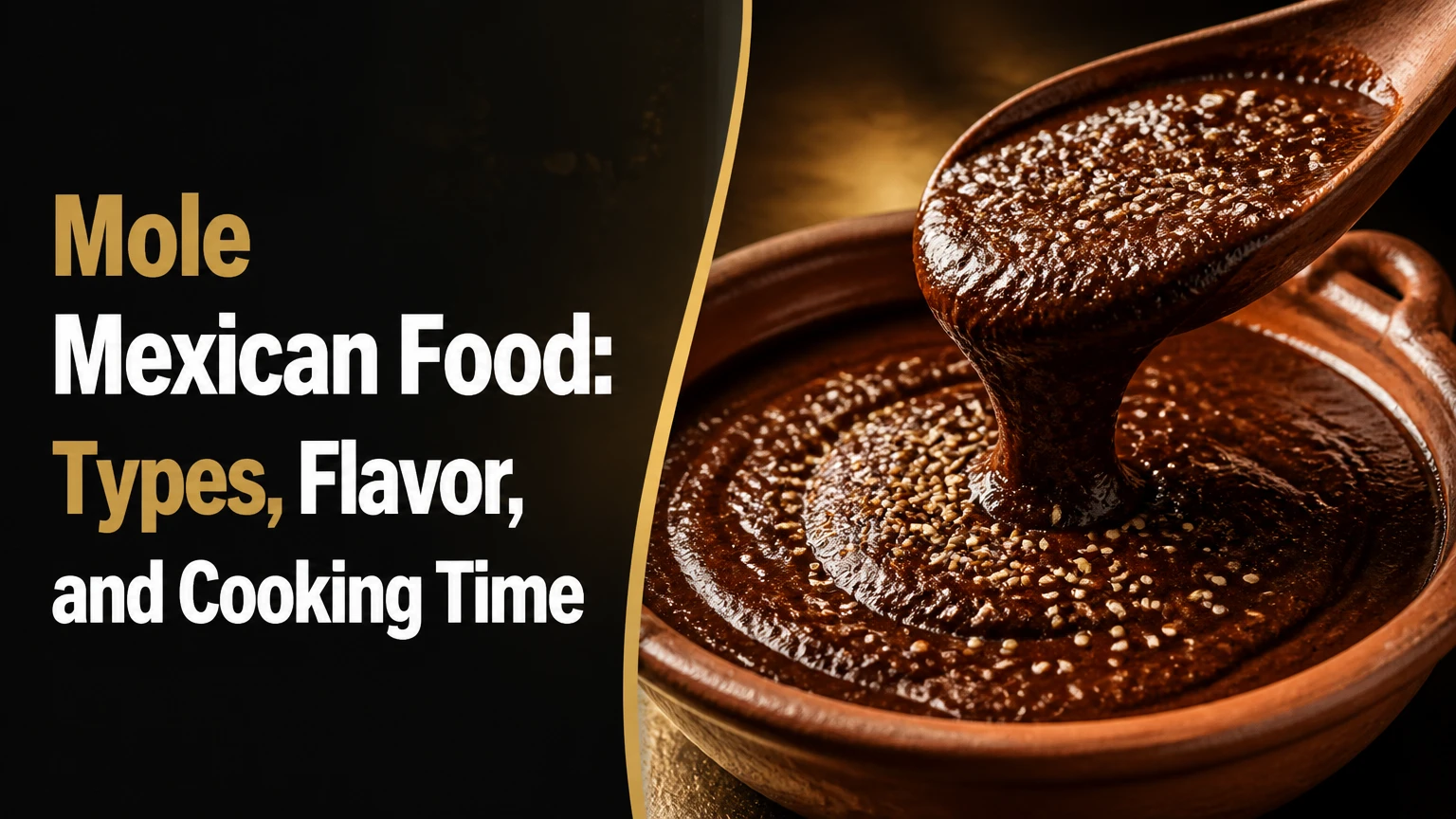
Mole Mexican food refers to a broad family of Mexican sauces made by combining transformed chiles, seeds, spices, aromatics, fruits, grains, or chocolate into a smooth, deeply seasoned sauce. Mole is pronounced moh-leh, comes from the Nahuatl word mōlli, meaning sauce or concoction, and varies substantially by region, household, and occasion.
Key Facts at a Glance
- Mole is a sauce family, not one standardized recipe; Mexican cooks make hundreds of regional versions.
- Mole poblano comes from Puebla, while Oaxaca is associated with a commonly cited group of seven mole styles.
- Dark mole often contains dried chiles, toasted seeds, nuts, spices, bread or tortillas, and sometimes Mexican chocolate.
- A scratch mole commonly takes 4-8 hours, although prepared paste can produce a finished sauce in 20-30 minutes.
- Most dark moles taste more complex than hot because toasted, dried chiles contribute aroma, fruit, bitterness, and color.
- Mole usually accompanies chicken, turkey, vegetables, enchiladas, tamales, rice, and corn tortillas.
What Is Mole Mexican Food?
Mole is a Mexican sauce built through flavor layering rather than through a single dominant ingredient. Cooks toast, fry, char, soak, grind, strain, and simmer separate components so that chiles, seeds, spices, fruit, starch, and broth become one cohesive sauce.
The word mole identifies a culinary category. Mole negro, mole verde, mole amarillo, and mole poblano are distinct preparations with different ingredients and techniques. A restaurant menu that says “chicken mole” usually describes a cooked chicken dish covered with one of these sauces, not a separate species of food.
The best-known traditions developed in central and southern Mexico, especially Puebla and Oaxaca, but important moles also come from Veracruz, Guerrero, Tlaxcala, Chiapas, and other regions. A family may reserve one mole for weddings, another for religious celebrations, and a simpler version for weekday meals.
Where Did Mole Originate?
Mole has Indigenous roots, but its modern forms also contain ingredients and methods introduced during Spanish colonial rule. Corn, chiles, tomatoes, seeds, herbs, and local fruits belong to older foodways, while ingredients such as wheat bread, sesame, almonds, and certain spices entered later through global trade.
The popular story that one convent invented mole poblano is widely repeated, yet historians and cooks treat it as a founding legend rather than a complete historical record. Mole developed through accumulated regional practices. No single origin story explains every mole.
Why Does Mole Taste So Complex?
Mole tastes complex because cooks transform each ingredient separately before combining it. Toasting develops roasted aromas, frying changes texture and extracts flavor into fat, soaking softens chile skins, and long simmering integrates bitterness, sweetness, spice, and savory broth.
Mole is not defined by chocolate. Mexican chocolate appears in some dark moles, particularly recipes labeled mole poblano or mole negro, but many moles contain no chocolate and remain fully traditional. A mole’s identity depends on its regional ingredient pattern and cooking method.
| Mole component | Typical ingredients | Main contribution | Common control point |
|---|---|---|---|
| Dried or fresh chiles | Ancho, mulato, pasilla, guajillo, serrano, jalapeño | Fruit, color, smoke, heat | Toast briefly; burned skins create harsh bitterness |
| Seeds and nuts | Sesame, pumpkin seeds, almonds, peanuts | Fat, body, roasted depth | Toast separately because small seeds scorch quickly |
| Aromatics | Onion, garlic, cinnamon, clove, allspice, oregano | Fragrance and high notes | Use whole spices for easier blending and straining |
| Sweet or acidic elements | Raisins, plantain, tomato, tomatillo, piloncillo, fruit | Balance and length | Add gradually because sweetness cannot be removed |
| Thickeners | Corn tortilla, bolillo, masa, crackers | Viscosity and emulsification | Fry or toast before blending for a fuller flavor |
| Liquid and fat | Chicken broth, vegetable broth, lard, neutral oil | Extraction and texture | Add broth gradually to prevent a watery sauce |
A useful practitioner rule is to taste the blended base before adding sweetener. If the bitterness comes from scorched chiles, sugar can disguise the defect but cannot restore the sauce’s aroma. Prevention is more effective than correction.
What Are the Main Types of Mole?
The main mole types differ in color, dominant ingredients, texture, sweetness, and customary pairings. Oaxaca’s “seven moles” label commonly includes negro, coloradito, amarillo, verde, chichilo, manchamanteles, and rojo; lists vary, and mole poblano belongs to Puebla rather than being one of Oaxaca’s seven.
| Mole style | Typical color | Dominant flavor | Common ingredients | Typical pairing |
|---|---|---|---|---|
| Mole negro | Nearly black-brown | Toasted, earthy, bittersweet | Mulato, pasilla, ancho, seeds, spices, tortilla, optional chocolate | Turkey, chicken, rice |
| Mole poblano | Dark red-brown | Toasted, gently sweet, savory | Dried chiles, sesame, spices, fruit, bread, chocolate in many recipes | Chicken, turkey, festive meals |
| Coloradito | Brick red | Mildly sweet, fruity, savory | Red chiles, tomato, plantain, raisins, bread | Chicken, turkey, enchiladas |
| Mole verde | Green | Herbal, fresh, nutty, tart | Pumpkin seeds, tomatillo, herbs, fresh chiles | Chicken, vegetables, fish |
| Mole amarillo | Yellow-orange | Earthy, chile-forward, aromatic | Yellow chiles, masa, herbs, vegetables | Chicken, beef, vegetables |
| Manchamanteles | Red | Fruity, sweet-savory, gently spicy | Chiles, pineapple, plantain, apple, tomato | Poultry and festive stews |
| Chichilo | Very dark brown | Roasted, savory, unsweetened | Dark chiles, toasted tortilla, avocado leaves, broth | Beef, beans, tortillas |
Mole verde should not be treated as a single fixed formula. Some versions use fresh herbs and pumpkin seeds without frying the sauce, while others include toasted ingredients or dried chiles. The phrase “green mole” describes a family resemblance, not a mandatory ingredient list.
Chichilo is less common outside Oaxaca because several traditional ingredients are difficult to source, including avocado leaves and particular local chiles. Mole amarillo also varies by locality, so a restaurant’s version may be thinner, hotter, or more herbaceous than another cook’s preparation.
How Is Traditional Mole Made?
Traditional mole is made in a sequence of separate preparations followed by blending, frying, and simmering. A realistic home batch uses 25-45 ingredients and takes 4-8 hours when every component is prepared from the beginning.
Before You Start
| Requirement | Typical home specification |
|---|---|
| Finished quantity | 6-8 cups of sauce |
| Servings | 10-14 portions at 1/2 cup each |
| Active work | 2-4 hours |
| Total elapsed time | 4-8 hours |
| Equipment | 6-quart pot, skillet, blender, fine sieve |
| Liquid | 6-8 cups unsalted chicken or vegetable broth |
| Fat | 1/2-1 cup lard or neutral oil |
| Cost | $35-$90, depending on chiles and nuts |
Use a powerful blender, but do not fill it with hot liquid. Cool the mixture first, remove the center cap, cover the opening with a folded towel, and blend in small batches. Steam pressure can force the lid upward and cause serious burns.
Step 1: Prepare and Toast the Chiles
Remove stems from the dried chiles and shake out loose seeds. Reserve some seeds only when the recipe specifically uses them, because chile seeds can add bitterness as well as heat.
Toast chiles in a dry skillet over medium heat for roughly 10-20 seconds per side. Stop when the skins become pliable and aromatic. Black spots are a warning, not a sign of success.
Step 2: Toast, Char, and Fry Separate Ingredients
Toast sesame seeds, pumpkin seeds, nuts, spices, onion, and garlic in separate batches. Fry raisins, plantain slices, bread, and tortilla pieces in a small amount of fat until each develops color.
Separate cooking matters because ingredients reach their ideal point at different speeds. Sesame seeds may burn before almonds warm through, while tortillas can go from toasted to acrid within seconds.
Step 3: Rehydrate the Chiles
Cover the toasted chiles with hot water or warm broth for 20-30 minutes. Drain them, then blend them with enough fresh broth to create a pourable paste.
Discard soaking liquid if it tastes sharply bitter. Some cooks reuse it, but the liquid can carry harsh compounds from over-toasted chiles. Taste before deciding.
Step 4: Blend and Strain the Paste
Blend chiles, nuts, seeds, aromatics, spices, fruit, thickeners, and broth in batches until smooth. Pass the mixture through a fine-mesh sieve if the blender leaves chile skin, seed fragments, or spice grit.
The sauce may look thinner than expected before frying. That is normal. Frying removes moisture, develops color, and changes the paste from a raw blended mixture into a cooked sauce base.
Step 5: Fry the Mole Base
Heat 1/2 cup of fat in a heavy pot, then add the strained paste carefully. The mixture should sizzle immediately, but it should not spit violently or smoke.
Cook the paste for 15-25 minutes, stirring often, until the color deepens and the raw chile aroma fades. Use medium-low heat if the bottom begins to catch. A scorched layer can contaminate the entire batch.
Step 6: Add Broth and Simmer
Whisk in broth one cup at a time until the sauce reaches a thick soup consistency. Add chocolate or piloncillo only if the selected style calls for it, then simmer uncovered for 1.5-3 hours.
Stir every 10-15 minutes during the first hour and more frequently as the sauce thickens. Mole is ready when a spoon leaves a brief trail, the sauce coats the back of the spoon, and a thin sheen of fat appears at the surface.
Expert insight: visible fat separation is not automatically failure. A small amount of separated fat often signals that the sauce has cooked sufficiently; a heavy greasy layer usually means excess fat or insufficient blending.
How Long Does Mole Take and Cost?
Scratch mole usually takes 4-8 hours and costs approximately $35-$90 for a household batch in the United States. Prepared paste reduces active cooking to 15-30 minutes, while artisan powders generally need 20-40 minutes after broth and other liquids are added.
| Preparation format | Total time | Typical home cost | Yield | Best use |
|---|---|---|---|---|
| Scratch mole negro | 4-8 hours | $35-$90 | 6-8 cups | Celebrations and controlled flavor |
| Commercial paste | 15-30 minutes | $4-$12 per jar | 4-8 cups | Weeknight chicken or enchiladas |
| Artisan powder | 20-40 minutes | $8-$20 per pouch | 3-6 cups | Faster preparation with customization |
| Restaurant serving | 10-25 minutes after ordering | $18-$35 per entrée | 1 plated portion | Comparing regional styles |
Ingredient count is a poor measure of quality. A carefully toasted 15-ingredient mole can taste more balanced than a rushed 40-ingredient batch. Time spent controlling heat and texture matters more than reaching a particular number of ingredients.
Scratch Mole, Paste, or Powder: Which Should You Choose?
Scratch mole offers the greatest control over sweetness, chile heat, allergens, and texture, while prepared paste offers the most reliable convenience. Artisan powder occupies the middle ground, but its final flavor depends heavily on freshness and the quality of the broth used to reconstitute it.
| Decision factor | Scratch-made | Commercial paste | Artisan powder |
|---|---|---|---|
| Active preparation | 2-4 hours | 10-20 minutes | 15-30 minutes |
| Total cooking time | 4-8 hours | 15-30 minutes | 20-40 minutes |
| Flavor control | High, with individual ingredients adjustable | Moderate, mostly adjusted by dilution | Moderate-high, adjusted during cooking |
| Texture | Smoothest when strained | Usually smooth, sometimes oily | Can be fine or slightly grainy |
| Ingredient transparency | Fully controlled | Brand-dependent | Brand-dependent |
| Typical cost per batch | $35-$90 | $4-$12 | $8-$20 |
| Storage life | 4 days refrigerated, 3 months frozen | Follow package date unopened | Follow package instructions |
When Is Prepared Paste the Better Choice?
Prepared mole paste is the better choice for a weeknight meal, a first trial, or a cook who cannot source several dried chiles. Start with a 1:1 ratio of paste to warm broth, then adjust until the sauce coats a spoon.
Some commercial pastes contain added sugar, hydrogenated fat, peanuts, sesame, or wheat-based thickeners. Read the label before serving guests with allergies. A paste can be improved with fresh broth, a small amount of unsweetened tomato, toasted sesame, or a squeeze of citrus added at the end.
Prepared paste is not ideal when the goal is to study a particular regional style. Commercial products often blend traditions, increase sweetness for broad appeal, and reduce the roasted variation that makes household mole distinctive.
What Should You Serve With Mole?
Mole is traditionally served over chicken or turkey with rice and corn tortillas, but the sauce also works with roasted vegetables, beans, enchiladas, tamales, and grilled mushrooms. The best pairing balances the sauce’s richness with plain starch, fresh acidity, or lightly seasoned vegetables.
| Mole style | Protein or centerpiece | Starch | Useful contrast |
|---|---|---|---|
| Mole negro | Turkey or chicken | White rice, corn tortillas | Radish, avocado, fresh lime |
| Mole poblano | Chicken breast or thigh | Rice, warm tortillas | Plain cabbage slaw |
| Coloradito | Chicken, turkey, or enchiladas | Rice or tortillas | Pickled onion |
| Mole verde | Chicken, vegetables, or beans | Rice, tortillas, tamales | Fresh herbs and lime |
| Mole amarillo | Beef, chicken, or vegetables | Masa dumplings, tortillas | Cucumber or cabbage |
| Manchamanteles | Chicken or turkey | Rice | Unsweetened greens |
| Chichilo | Beef or beans | Tortillas | Simple beans and herbs |
Use approximately 1/2 cup of mole sauce per entrée portion. Thin the sauce with broth rather than water when reheating, because water can flatten the chile and spice profile.
Can Mole Be Vegetarian or Gluten-Free?
Mole can be vegetarian or gluten-free, but the answer depends on the recipe and the prepared product. Replace chicken broth with vegetable broth, use beans, mushrooms, squash, cauliflower, or roasted eggplant as the centerpiece, and verify whether bread, crackers, or commercial thickeners are present.
| Dietary concern | Possible source | Safer adjustment |
|---|---|---|
| Gluten | Bolillo, wheat crackers, flour | Use corn tortilla, masa, or certified gluten-free crackers |
| Peanuts | Peanut paste or mixed nuts | Omit peanuts and increase pumpkin seeds |
| Sesame | Sesame seeds or tahini-like mixtures | Use pumpkin seeds or sunflower seeds |
| Dairy | Occasional packaged sauce additives | Choose a dairy-free label and inspect ingredients |
| Animal broth | Chicken or turkey stock | Use vegetable or mushroom broth |
| Excess sweetness | Raisins, plantain, sugar, chocolate | Add sweeteners gradually and taste repeatedly |
Chocolate in mole is usually a small seasoning component rather than a dessert-like addition. Mexican table chocolate often contains sugar and cinnamon, while unsweetened cacao produces a more bitter result. Never assume that every dark mole contains it.
How Should Mole Be Stored and Reheated?
Cooked mole keeps for about 4 days in a refrigerator at 40°F or below and freezes well for approximately 3 months in airtight containers. Cool the sauce promptly in shallow containers, refrigerate it within 2 hours, and reheat only the portion needed.
| Storage method | Maximum practical period | Container | Reheating method |
|---|---|---|---|
| Refrigerator | 4 days | Covered shallow container | Low heat with broth |
| Freezer, portioned | 3 months | Airtight 1-2 cup containers | Thaw overnight, then simmer |
| Freezer, flat bag | 2-3 months | Heavy freezer bag | Break into pieces in a saucepan |
| Prepared unopened paste | Package date | Original sealed container | Dilute after opening |
Mole thickens significantly when cold. Add broth one tablespoon at a time over low heat and whisk until the sauce becomes glossy. Avoid boiling hard, which can split the emulsion and scorch the solids at the bottom.
Why Is Mole Bitter, Gritty, Thin, or Greasy?
Bitter mole usually contains burned chiles, seeds, garlic, or spices; gritty mole usually contains incompletely blended skins, nuts, or seeds. Thin mole needs reduction, while greasy mole needs less added fat and more controlled simmering.
| Problem | Most likely cause | Corrective action | Prevention |
|---|---|---|---|
| Bitter flavor | Burned chile or seed | Dilute with broth, then add tiny amounts of chocolate or piloncillo | Toast briefly and remove blackened pieces |
| Gritty texture | Weak blending or no straining | Blend smaller batches and pass through a fine sieve | Soak chiles fully and toast nuts evenly |
| Thin sauce | Too much broth | Simmer uncovered 20-40 minutes | Add liquid gradually |
| Excess grease | Too much fat | Skim surface fat and continue gentle simmering | Begin with 1/2 cup fat per large batch |
| Flat flavor | Under-toasted ingredients or weak broth | Add salt, broth, or a small acid component carefully | Season each stage and use unsalted broth |
| Overly sweet flavor | Too much fruit or sugar | Dilute with unsweetened mole base or broth, then add chile | Add sweetener in teaspoon increments |
A small piece of chocolate may soften bitterness, but it cannot repair smoke from badly burned chiles. If the sauce tastes acrid after dilution, the most honest solution is to make a fresh chile base and combine only a small amount of the damaged batch.
How Hot Is Mole?
Mole ranges from mild to hot, but many familiar dark moles emphasize aroma and depth rather than aggressive heat. A recipe using ancho, mulato, and pasilla can taste rich with modest heat, while a mole containing arbol, costeño, or fresh serrano may be substantially hotter.
Published Scoville figures describe individual peppers, not finished mole, because broth, fat, seeds, sugar, and serving size dilute the result. A restaurant’s “mild” mole may still taste intense through bitterness, smoke, clove, or toasted chile aroma.
Ask for a sample when ordering at a restaurant. Heat can vary between batches, especially when cooks substitute locally available chiles for scarce regional varieties.
How Do You Order Mole at a Restaurant?
Ask which regional style the kitchen serves, whether the sauce contains chocolate, what protein accompanies it, and how sweet or spicy the current batch tastes. Family-owned Oaxacan and Pueblan restaurants are often better places to compare styles than generic menus listing one undifferentiated “mole sauce.”
Useful questions include:
- Is the mole negro, poblano, coloradito, verde, or another style?
- Is the sauce made in-house or reconstituted from paste?
- Does the dish contain peanuts, sesame, wheat, or other allergens?
- Can the kitchen serve the sauce separately?
- Is chicken, turkey, beef, vegetables, or beans available?
- What starch and garnish come with the plate?
Order mole with rice or tortillas when tasting it for the first time. Plain starch reveals whether the sauce is balanced, while strongly seasoned sides can conceal excessive sweetness, salt, or bitterness.
Mole FAQ
Is mole a curry?
Mole is not a Mexican version of curry. Both categories can use toasted spices and complex sauces, but mole developed within Mexican culinary traditions and commonly relies on chiles, corn, seeds, local herbs, tortillas, and regional fruits.
Does mole always contain chocolate?
Mole does not always contain chocolate. Chocolate appears in many mole poblano and some mole negro recipes, while mole verde, mole amarillo, chichilo, and numerous household preparations may contain no cacao at all.
Is mole sauce spicy?
Mole sauce can be mild, medium, or hot. Dark mole often tastes more smoky and aromatic than fiery, but the final heat depends on the chile varieties, quantities, seeds, and local recipe.
Can I make mole without a blender?
Mole can be made without a blender by using a food mill, mortar, metate, or repeated chopping and grinding. A blender saves substantial labor, but straining remains useful because dried chile skins and seed fragments can survive mechanical blending.
What is the best mole for a beginner?
Mole poblano or coloradito is often the easiest starting point because both commonly combine moderate chile heat with familiar sweet-savory flavors. Prepared paste also lowers the technical risk while allowing a beginner to practice dilution and reheating.
Can mole be used beyond chicken?
Mole works with turkey, beef, beans, mushrooms, roasted squash, cauliflower, enchiladas, tamales, and rice. Choose a lighter green mole for delicate vegetables and a dark, savory mole for sturdy proteins or earthy ingredients.
The Bottom Line
Mole Mexican food is a regional family of sauces whose flavor comes from controlled transformation, not from chocolate alone or from a fixed ingredient count. Choose mole poblano or coloradito for a familiar introduction, mole verde for herbal freshness, mole negro for deep roasted flavor, and prepared paste when time matters; choose scratch preparation when texture, sweetness, heat, and dietary ingredients must be fully controlled.