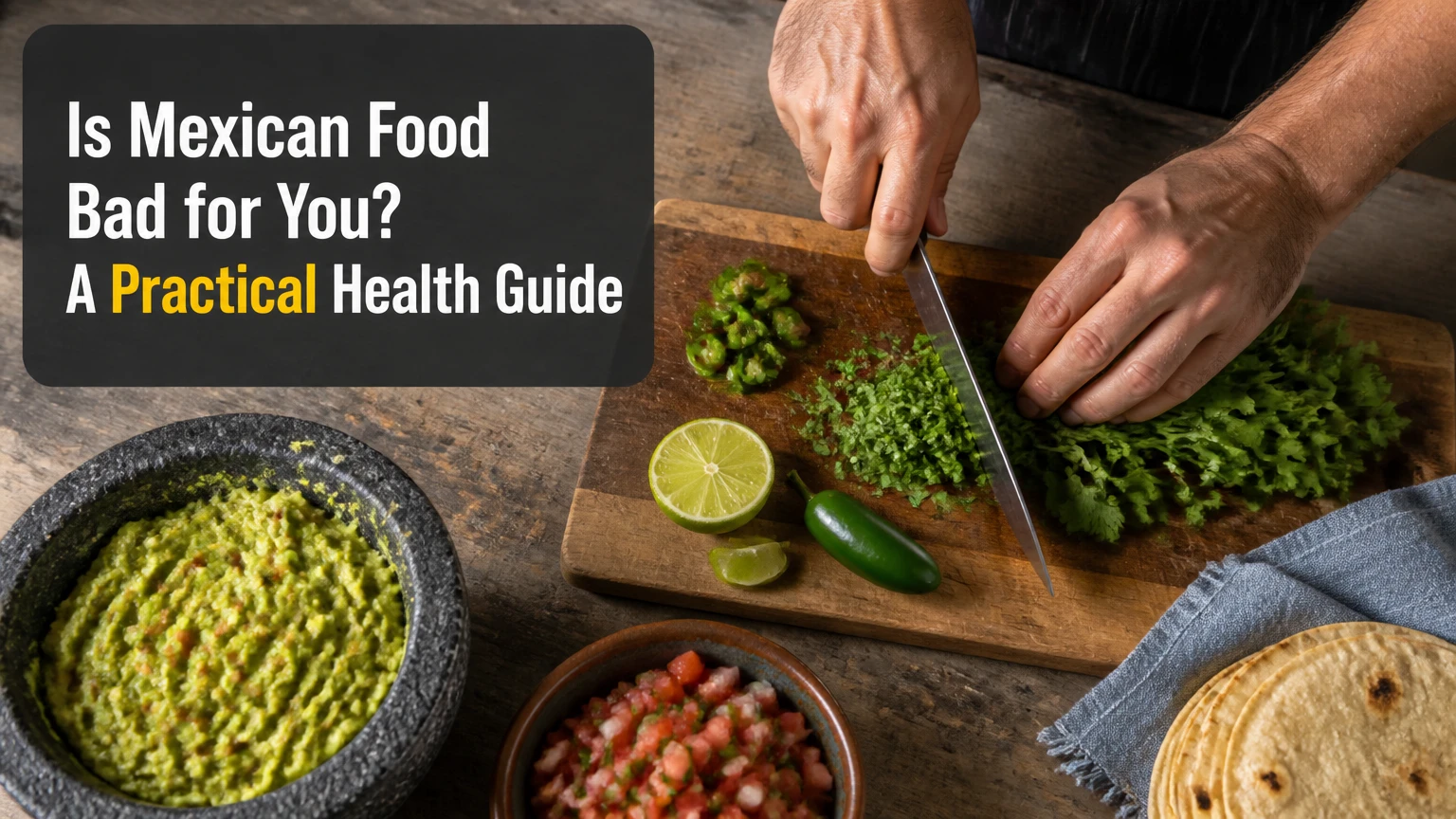
Mexican food is not inherently bad for you. Traditional Mexican cuisine can provide fiber, plant protein, whole-food carbohydrates, vegetables, and unsaturated fats, while restaurant versions may become less healthy through large portions, excess sodium, frying, refined flour, cheese, and creamy toppings. The dish, preparation, serving size, and eating pattern determine the effect.
Key Facts at a Glance
- Beans, corn, vegetables, fruit, chili, herbs, and lean proteins can form a nutrient-dense Mexican meal.
- A large restaurant burrito commonly contains more calories and sodium than a balanced taco or fajita plate.
- Corn tortillas are often smaller and lower in calories than flour tortillas, but they are not automatically whole grain.
- Chips, queso, cheese, sour cream, and salty fillings can add more sodium and calories than the main dish.
- Beans provide fiber and plant protein, while avocado supplies mostly monounsaturated fat.
- Ceviche can be lean and protein-rich, but citrus does not reliably destroy every foodborne pathogen.
Is Mexican Food Bad for You?
Mexican food becomes a health concern mainly when restaurant preparation combines large portions, fried components, processed fillings, salty sauces, and several calorie-dense toppings. A home-cooked bowl of beans, vegetables, corn, salsa, and grilled fish has a different nutritional profile from a deep-fried entrée served with chips, queso, and a large sweetened drink.
Traditional Mexican cuisine is also broad. A coastal seafood dish, a bean-based meal from central Mexico, and a northern flour-tortilla dish cannot be judged by one label. UNESCO recognized traditional Mexican cuisine as Intangible Cultural Heritage in 2010 because of its agricultural practices, preparation methods, and cultural continuity, not because every recipe meets a modern dietary target.
The most useful question is therefore not whether Mexican food is good or bad. Ask which ingredients supply fiber and protein, how much oil and salt were used, whether the portion matches your needs, and what comes with the meal.
What Makes Traditional Mexican Food Nutritious?
Traditional Mexican food can be nutritious because its core ingredients contribute distinct nutrients. Beans supply fiber, folate, potassium, and plant protein; corn tortillas provide carbohydrate; vegetables and salsa add vitamins and volume; and avocado contributes mostly monounsaturated fat.
The nutritional result depends on the cooking method. Beans simmered with modest salt differ from refried beans prepared with a generous amount of added fat. Grilled chicken differs from a breaded, fried filling. Fresh salsa differs from a packaged sauce containing substantial sodium.
Michael Pollan’s concise dietary rule is, “Eat food. Not too much. Mostly plants.” The principle fits many Mexican meals when beans, vegetables, corn, and fresh toppings remain visible on the plate. It does not mean every traditional dish is low-calorie, low-sodium, or appropriate for every medical diet.
How do the main ingredients affect the body?
Beans and vegetables increase dietary fiber, which supports bowel regularity and can improve fullness. Corn tortillas and rice provide carbohydrate for energy, but blood glucose response depends on portion size, processing, the rest of the meal, and individual physiology.
Avocado, nuts, and seeds provide unsaturated fats, while cheese, fatty meat, cream, and added cooking fats can raise saturated fat. Chili peppers contain capsaicin, but the amount used in a meal is not a substitute for overall calorie, sodium, or fiber management.
| Ingredient | Typical serving | Main contribution | Main watchpoint |
|---|---|---|---|
| Black beans | 1/2 cup cooked | 7-8 g protein, 6-8 g fiber | Sodium in canned or restaurant beans |
| Corn tortillas | 2 small tortillas | 100-130 kcal, 20-26 g carbohydrate | Size, added fat, and refined masa |
| Avocado | 1/4 medium fruit | 5-7 g mostly unsaturated fat | Calories rise with large portions |
| Pico de gallo | 1/2 cup | 20-40 kcal, vegetables, vitamin C | Added salt |
| Grilled chicken | 3-4 oz cooked | 25-35 g protein | Marinade and surface sodium |
| Cooked rice | 1/2 cup | 100-130 kcal, 22-28 g carbohydrate | Oversized portions and added fat |
Which Mexican Dishes Are Healthier Choices?
Fajitas, grilled tacos, bean-based plates, vegetable-forward bowls, and broth-based soups are usually easier to balance than fried combination platters. The strongest choices contain a recognizable protein source, one measured carbohydrate portion, vegetables, and a fresh topping.
Dish names alone do not guarantee a nutrition profile. A taco can contain fried shell, fatty filling, cheese, and creamy sauce, while a burrito bowl can contain beans, vegetables, salsa, and a modest rice portion. Ask how the restaurant prepares the specific item.
| Dish or format | Typical calories | Typical sodium | Typical fiber | Practical assessment |
|---|---|---|---|---|
| Two grilled street-style tacos | 300-550 kcal | 600-1,200 mg | 4-8 g | Strong option when fillings are grilled |
| Chicken or vegetable fajitas | 450-750 kcal | 900-1,800 mg | 6-12 g | Customizable; oil and tortillas matter |
| Burrito bowl | 650-1,100 kcal | 1,200-2,400 mg | 8-16 g | Better portion control without a large tortilla |
| Large burrito | 900-1,500 kcal | 1,800-3,200 mg | 8-15 g | Easy to oversize through stacked fillings |
| Enchiladas with cheese | 600-1,000 kcal | 1,200-2,500 mg | 4-9 g | Sauce, cheese, and filling determine the result |
| Ceviche with tostadas | 300-700 kcal | 700-1,600 mg | 2-7 g | Lean seafood, but toppings and food safety matter |
| Pozole or chicken broth soup | 350-750 kcal | 900-2,000 mg | 5-10 g | Broth can make sodium high |
| Fried shell or fried entrée | 800-1,400 kcal | 1,200-2,800 mg | 2-7 g | Frying increases energy density |
These are typical restaurant ranges, not universal values. Recipes, serving sizes, oil absorption, brand ingredients, and regional customs can shift results substantially.
Why Can Restaurant Mexican Food Be High in Calories?
Restaurant Mexican meals become calorie-dense when several moderate additions accumulate in one order. A large flour tortilla, rice, beans, cheese, creamy topping, fried filling, chips, and sweetened beverage can produce a meal exceeding 1,500 calories without any single ingredient appearing extreme.
Sodium often accumulates in tortillas, seasoned meat, canned beans, cheese, salsa, broth, and packaged spice blends. The American Heart Association recommends no more than 2,300 milligrams of sodium daily for most adults, with an ideal limit of 1,500 milligrams for many adults with high blood pressure. A single restaurant meal can approach or exceed those amounts.
| Meal component | Typical added calories | Typical sodium | Better control |
|---|---|---|---|
| Tortilla chips, 2 oz | 280-320 kcal | 250-450 mg | Skip or portion 8-10 chips |
| Queso, 1/4 cup | 150-250 kcal | 400-700 mg | Use salsa or measured avocado |
| Sour cream, 2 tbsp | 50-70 kcal | 25-50 mg | Request a small side |
| Shredded cheese, 1 oz | 100-120 kcal | 150-250 mg | Use half portion |
| Large flour tortilla | 250-400 kcal | 500-900 mg | Choose two small corn tortillas |
| Refried beans, 1/2 cup | 140-220 kcal | 400-800 mg | Request plain or lightly seasoned beans |
| Fried filling | 250-500 added kcal | 200-600 mg | Choose grilled preparation |
A practical ordering rule is to choose one main calorie-dense addition, not all of them. For example, avocado can remain while queso and sour cream are omitted, or rice can remain while chips are skipped.
Are Tacos Healthier Than Burritos?
Tacos are often easier to portion than burritos because two or three small tortillas expose the amount of filling, whereas a large burrito conceals rice, beans, cheese, sauces, and meat inside one oversized package. Tacos are not automatically healthier when their shells are fried or fillings are heavily topped.
A balanced taco order usually includes grilled fish, chicken, lean beef, beans, or vegetables; two or three small corn tortillas; salsa; onion; cilantro; and a vegetable side. A burrito can also fit a balanced diet when ordered with a smaller tortilla, one rice portion, beans, grilled protein, vegetables, and salsa.
| Decision factor | Two to three tacos | Large burrito | Better default |
|---|---|---|---|
| Tortilla calories | 100-195 kcal | 250-400 kcal | Tacos |
| Portion visibility | 2-3 separated units | Ingredients concealed | Tacos |
| Typical total calories | 300-700 kcal | 900-1,500 kcal | Tacos |
| Sodium range | 600-1,500 mg | 1,800-3,200 mg | Tacos |
| Leftover control | Moderate | High if half saved | Burrito when divided |
| Customization | High | High, but dense | Equal |
The better choice depends on the order, not the food’s name. A bean-and-vegetable burrito divided into two meals may be more suitable than three tacos with fried fillings and salty cheese.
What Should You Order at a Mexican Restaurant?
Choose a grilled or bean-based main dish, add vegetables, select one starch portion, and request sauces or cheese separately. This five-step formula usually lowers calorie and sodium exposure without removing the defining flavors of Mexican cooking.
- Choose the cooking method. Select grilled, baked, steamed, or broth-based food instead of fried food.
- Choose protein or legumes. Use beans, lentils, grilled chicken, fish, shrimp, eggs, or lean beef.
- Add vegetables. Request fajita peppers, onions, cabbage, nopales, tomatoes, or a side salad.
- Select one main starch. Choose rice, beans, tortillas, or chips as the primary carbohydrate rather than full portions of all four.
- Control toppings. Use salsa, pico de gallo, lime, cilantro, or a measured avocado portion, and request cheese or creamy sauces on the side.
You will know the order is balanced when the plate contains a visible protein or bean portion, at least one substantial vegetable serving, and a carbohydrate amount you can identify. The common mistake is treating “healthy” toppings as unlimited; avocado and fried tortilla chips still contribute significant energy.
Which swaps make the largest difference?
The largest practical improvement usually comes from removing fried items and reducing portion size, not from debating corn against flour tortillas in isolation. A large flour tortilla may contain 250-400 calories, but a small serving of chips, cheese, and added oil can exceed that difference.
| Original order | More controlled order | Typical calorie change | Main benefit |
|---|---|---|---|
| Fried entrée with rice and beans | Grilled plate with vegetables | 250-600 fewer | Lower energy density |
| Large burrito with queso | Bowl with salsa and half rice | 250-500 fewer | Lower portion and sodium |
| Chips before the meal | No chips or 8-10 chips | 250-300 fewer | Prevents unplanned calories |
| Three flour tortillas | Two to three small corn tortillas | 100-250 fewer | Smaller carbohydrate serving |
| Full cheese and cream | Half cheese, cream on side | 100-250 fewer | Lower saturated fat |
| Salty bottled sauce | Fresh pico and lime | 100-300 mg less sodium | More flavor with less salt |
Is Mexican Food Suitable for Weight Loss?
Mexican food can support weight loss when the meal supplies protein and fiber without allowing tortillas, rice, chips, cheese, and sauces to stack into an oversized calorie load. Weight loss depends on sustained energy balance, so a cuisine label cannot determine the result.
A useful order is a burrito bowl with half rice, full beans, grilled protein, vegetables, salsa, and a measured avocado portion. Another option is two grilled tacos with beans or vegetables and no chip basket. Restaurant portions can exceed one meal’s needs, making half-now and half-later a practical strategy.
Can Mexican food support exercise and muscle gain?
Mexican meals can support training when carbohydrate and protein amounts match activity. Beans, rice, corn tortillas, potatoes, fruit, and hominy provide carbohydrate, while grilled meat, seafood, eggs, dairy, and legumes contribute protein.
The phrase “clean glycogen” is misleading because muscle stores glucose from many carbohydrate foods, not from a special category of tortillas. A post-training meal containing roughly 25-40 grams of protein and a suitable carbohydrate portion is a more useful target than choosing a specific cuisine.
| Goal | Practical order | Approximate protein | Main adjustment |
|---|---|---|---|
| Weight loss | Two grilled tacos, beans, salsa | 25-35 g | Skip chips and creamy toppings |
| Maintenance | Fajita plate, rice, beans, two tortillas | 30-45 g | Match portions to hunger |
| Muscle gain | Double grilled protein, rice, beans, tortillas | 45-70 g | Add calories deliberately |
| Vegetarian training | Beans, lentils, cheese, vegetables, tortillas | 25-40 g | Combine legumes and dairy if suitable |
Is Mexican Food Safe for Diabetes or High Blood Pressure?
People with diabetes or high blood pressure can often eat Mexican food, but they should manage carbohydrate portions, sodium, saturated fat, and medication-related dietary instructions. Fajitas, grilled seafood, beans, vegetables, and salsa are flexible choices, while large refined portions, salty sauces, and fried combinations require more caution.
Mexican food is not “zero glycemic impact” without tortillas. Beans, vegetables, dairy, sauces, and meat-containing dishes can still contain carbohydrate, and blood glucose responses vary. People using insulin or glucose-lowering medication should follow an individualized plan from a qualified clinician.
For high blood pressure, request no added salt when possible, choose fresh salsa in a small amount, skip salty chips, and avoid stacking broth, cheese, seasoned meat, and packaged sauces. The American Heart Association’s sodium targets provide a useful reference, but restaurant nutrition information remains incomplete.
What works for vegetarian, gluten-free, and sensitive diners?
Vegetarian diners can build meals around black beans, pinto beans, lentils, grilled vegetables, nopales, corn tortillas, salsa, and avocado. Protein may be lower if dairy, eggs, or legumes are omitted, so the order should include a deliberate protein source rather than only rice and vegetables.
Corn tortillas are naturally gluten-free when made solely from masa harina, water, and lime, but cross-contact can occur on shared griddles or fryers. People with celiac disease should ask about preparation surfaces, seasoning blends, and packaged ingredients instead of assuming a corn tortilla is safe.
| Dietary need | Usually suitable | Verify before ordering | Common problem |
|---|---|---|---|
| Vegetarian | Beans, lentils, nopales, vegetables | Broth, beans, cheese preparation | Hidden animal-derived stock |
| Gluten-free | Corn tortillas, rice, beans | Shared griddle, flour cross-contact | Contaminated fryer or sauces |
| Low-sodium | Fresh vegetables, unsalted grilled protein | Marinades, broth, salsa, cheese | Sodium stacking |
| Dairy-free | Beans, salsa, guacamole, corn tortillas | Refried beans and sauces | Cheese or cream in fillings |
| Lower-carb | Grilled protein, vegetables, avocado | Marinades and sauces | Rice, beans, tortillas together |
Is Ceviche a Healthy Choice?
Ceviche is often lean and protein-rich because seafood is cured in citrus rather than cooked with substantial added fat, but ceviche is not automatically low-sodium or risk-free. Tostadas, crackers, avocado, sauces, and large portions can raise calories, while raw seafood requires reliable cold storage and careful handling.
Citrus changes the texture of seafood and reduces some microbes, but acid does not provide the same pathogen-control assurance as heat cooking. Pregnant people, older adults, young children, and immunocompromised people should follow public-health guidance about raw or undercooked seafood.
How Much Mexican Food Is Too Much?
There is no universal weekly limit for Mexican food because health effects depend on the meal composition and the person’s total diet. A vegetable-rich, bean-based home meal can fit frequently, while a high-sodium fried restaurant combination is better treated as an occasional meal.
Use a simple frequency framework: eat minimally processed Mexican meals as often as they fit your diet, choose restaurant meals with deliberate portions, and reserve heavily fried or topping-heavy combinations for less frequent occasions. The framework measures preparation and pattern, not cultural authenticity.
What are the most common ordering mistakes?
The most common mistake is counting only the entrée while ignoring chips, sauces, drinks, and shared appetizers. A second mistake is choosing a “bowl” and assuming it is light, even when the bowl contains full portions of rice, beans, cheese, creamy dressing, and avocado.
Three practitioner rules help:
- Count the extras first. Decide on chips, cheese, cream, and avocado before ordering the main dish.
- Keep sodium from stacking. Pair one salty item with fresh, unsalted foods.
- Separate appetite from portion size. Save half of a large burrito before eating if the restaurant serving is oversized.
Restaurant nutrition estimates are imperfect because cooks vary oil, salt, and serving size. Home cooking offers more control, but packaged tortillas, canned beans, bottled sauces, and seasoning packets can still carry substantial sodium.
How Does Home-Cooked Mexican Food Compare With Restaurant Food?
Home-cooked Mexican food usually provides better control over oil, salt, portions, and vegetable quantity, while restaurant food offers convenience and more varied preparation. The cost difference is often modest when beans, tortillas, seasonal vegetables, and batch-cooked grains form the meal.
Typical United States costs vary by region and store. A home plate may cost $2-$5 per serving, while a fast-casual meal often costs $10-$18 and a sit-down entrée commonly costs $15-$30 before beverages and gratuity.
| Setting | Typical cost per serving | Preparation time | Sodium control | Portion control |
|---|---|---|---|---|
| Home bean and vegetable bowl | $2-$5 | 25-45 minutes | High | High |
| Home grilled taco meal | $4-$8 | 20-35 minutes | High | High |
| Fast-casual burrito bowl | $10-$18 | 5-15 minutes | Moderate | Moderate |
| Sit-down fajita plate | $15-$30 | 30-60 minutes including service | Low-moderate | Low-moderate |
| Food-truck taco order | $8-$16 | 5-20 minutes | Low-moderate | Moderate |
The Bottom Line
Is Mexican food bad for you? No. Mexican food can be a nutritious eating pattern when meals emphasize beans, vegetables, corn, fresh salsa, lean or plant proteins, and measured unsaturated fats; restaurant versions become less favorable when frying, sodium, refined portions, and multiple toppings dominate.
Choose grilled or bean-based dishes, make vegetables visible, select one main starch, and request calorie-dense toppings separately. Mexican food is not a health category with one fixed outcome, so judge the ingredients, preparation, portion, and frequency of the specific meal.
Frequently Asked Questions
Are beans and rice healthy in Mexican food?
Beans and rice can form a nutritious combination because beans provide fiber and plant protein while rice provides carbohydrate. A typical balanced serving is about 1/2 cup of each, adjusted for appetite and health goals. Restaurant versions may contain added fat or salt, so preparation and portion size still matter.
Are corn tortillas healthier than flour tortillas?
Small corn tortillas are often lower in calories and sodium than large flour tortillas, making portion control easier. Corn tortillas are not automatically whole grain, and flour tortillas vary widely by size and recipe. People with celiac disease must also verify cross-contact and ingredient labels.
Is salsa healthy?
Fresh salsa is usually low in calories and can add vegetables, herbs, acidity, and chili flavor. Sodium varies by recipe, especially in restaurant and packaged salsa. Salsa remains a useful alternative to creamy sauces, but people limiting sodium should request a small portion or check the label.
Are chips and guacamole unhealthy?
Chips are energy-dense because they are fried and easy to eat quickly, while guacamole supplies fiber and mostly unsaturated fat. The combination can fit a meal when portioned, but a large shared basket may add several hundred calories before the entrée arrives. Request a small side or share a measured portion.
Can I eat Mexican food every day?
You can eat Mexican-style meals frequently when the pattern includes varied vegetables, beans, appropriate portions, and limited heavily fried or highly salted ingredients. Daily restaurant meals are harder to manage because sodium, oil, and portions vary. Home cooking makes frequent consumption easier to align with individual nutrition needs.
What is the healthiest Mexican restaurant meal?
A grilled fajita plate, bean-and-vegetable bowl, or two grilled tacos with salsa is usually among the easiest options to balance. Request modest rice or tortillas, limit fried sides, and keep cheese or creamy toppings separate. The healthiest choice changes with sodium, carbohydrate, calorie, and allergy requirements.