Mexican food is not universally spicy. Mexican cuisine uses chiles for aroma, color, sweetness, smokiness, acidity, and complexity, while many dishes contain little or no intrinsic heat. Restaurants often serve salsa separately, so diners can choose whether to add capsaicin according to their tolerance.
Key Facts
Mexican cuisine includes mild dishes such as carnitas, quesadillas, and many versions of tacos al pastor.
Fresh serrano and habanero chiles usually create more immediate heat than dried ancho or guajillo chiles.
The white inner membrane, called the placenta, usually contains more capsaicin than the seed itself.
Green salsa is not automatically mild; a raw serrano salsa can be hotter than a cooked red salsa.
Regional cooking traditions differ, but no single heat scale accurately represents all of Mexico.
Whole milk, yogurt, or another dairy food usually reduces capsaicin discomfort more effectively than water.
What Does “Spicy” Mean in Mexican Food?
“Spicy” can mean hot, aromatic, strongly seasoned, or intensely flavored, but Mexican food terminology usually needs a distinction between chile flavor and chile heat. A sauce can contain several dried chiles and taste deep, fruity, or smoky without producing a strong burning sensation.
Mexican cooks use fresh and dried chiles as ingredients with individual identities. Ancho contributes raisin-like sweetness, guajillo adds tang and red-fruit notes, and chipotle contributes smoke. Serrano supplies a clean, sharp burn, while habanero brings intense heat with tropical fruit character.
Heat comes primarily from capsaicinoids, especially capsaicin. The National Institutes of Health describes capsaicin as an agonist of TRPV1, a receptor involved in detecting noxious heat. In practical terms, capsaicin activates heat and pain pathways even though the food is not physically hot.
The body can release endorphins in response to that sensation, but the experience varies with genetics, previous exposure, serving size, and whether the chile is eaten alone or diluted through a sauce. A person who finds jalapeño mild may still find raw habanero unpleasant.
Is chile flavor the same as chile heat?
Chile flavor and chile heat are separate properties. Drying, roasting, soaking, deseeding, blending, and dilution can alter the final sensation without removing a chile’s aroma.
That distinction explains why mole can taste intensely “chile-forward” while remaining comfortable for a heat-sensitive diner. It also explains why a small spoonful of raw salsa may feel hotter than a larger serving of a cooked chile sauce.
How Hot Are Common Mexican Chiles?
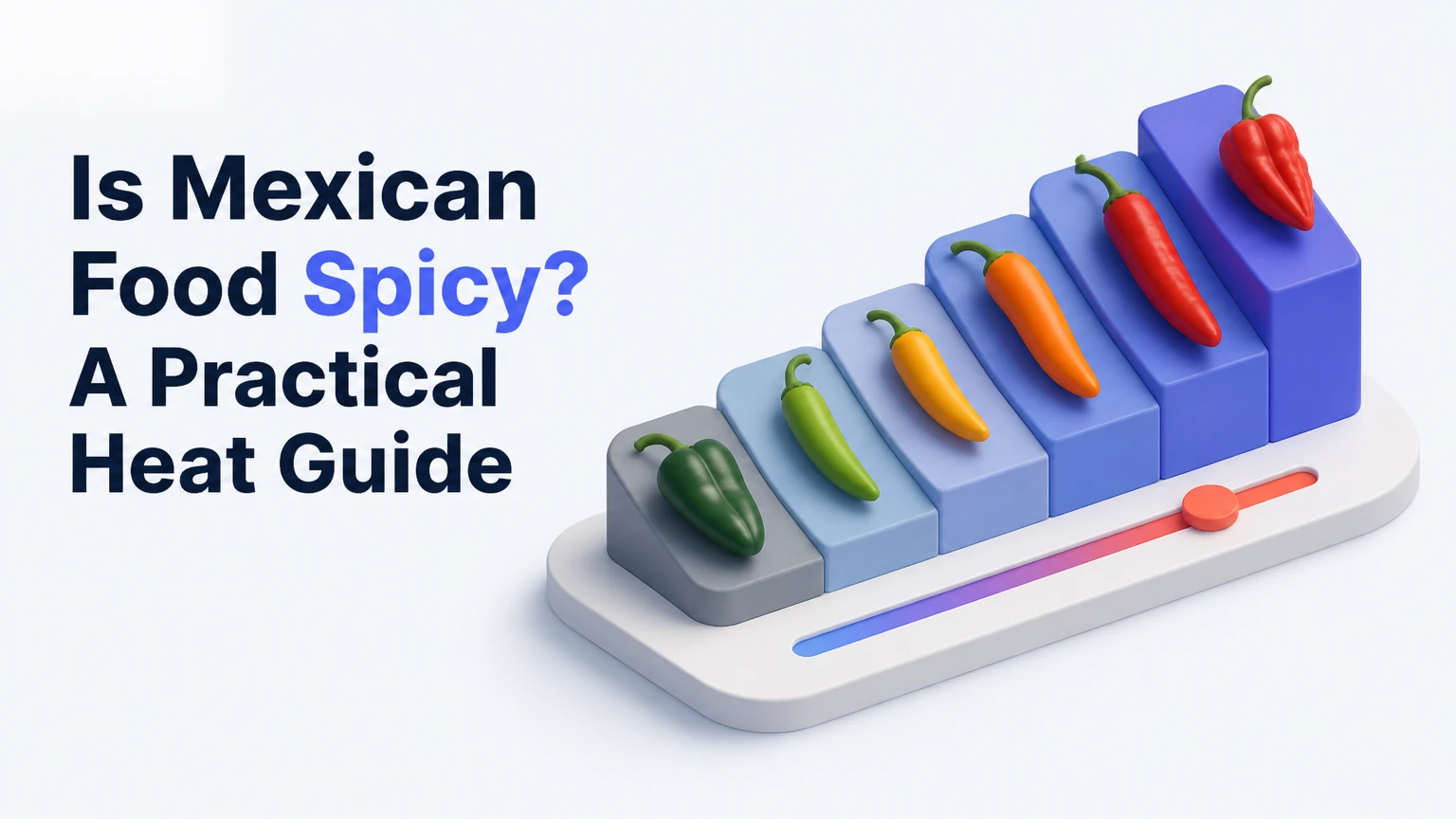
Mexican chiles range from 0 Scoville Heat Units for a sweet pepper to more than 100,000 SHU for some habaneros. Scoville values are approximate because variety, ripeness, growing conditions, and testing method change the result.
| Chile or pepper | Typical Scoville range | Common Mexican use |
|---|---|---|
| Bell pepper | 0 SHU | Stuffed vegetables, salads, mild fillings |
| Poblano | 1,000-1,500 SHU | Chiles rellenos, roasted strips, rajas |
| Ancho, dried poblano | 1,000-1,500 SHU | Mole, marinades, blended sauces |
| Guajillo | 2,500-5,000 SHU | Adobo, birria-style sauces, red chile bases |
| Jalapeño | 2,500-8,000 SHU | Pickles, toppings, cooked salsa |
| Serrano | 10,000-23,000 SHU | Pico de gallo, green salsa, garnishes |
| Habanero | 100,000-350,000 SHU | Yucatecan salsas, pickles, citrus chile sauces |
Scoville numbers describe the pepper, not the finished dish. A sauce made with one serrano, tomatoes, onion, and a large quantity of broth may taste moderately hot, while a concentrated habanero paste can remain severe in a tiny portion.
Practitioner insight: The fastest way to predict a dish’s heat is to identify whether it contains fresh chile paste or a diluted dried-chile sauce. The menu label alone is less reliable than the preparation method.
Does removing seeds make a dish mild?
Removing the inner membrane usually reduces heat more reliably than removing seeds. Capsaicin is concentrated in the placenta, the pale membrane attached to the inside wall, while seeds can become hot because capsaicin-rich oils coat them during cutting.
Removing the membrane and seeds can lower the perceived heat, but it cannot guarantee a mild result. Some heat remains in the flesh, and blending distributes residual capsaicin throughout the dish.
Which Mexican Dishes Are Usually Mild?
Many familiar Mexican dishes are mild when served without hot salsa. The key distinction is whether the base dish contains a hot fresh chile or whether diners add salsa afterward.
| Dish | Typical intrinsic heat | Main flavor source | Ordering note |
|---|---|---|---|
| Carnitas tacos | 0-1,000 SHU | Citrus, salt, herbs, slow cooking | Request salsa separately |
| Tacos al pastor | 0-1,500 SHU | Achiote, chile flavor, pineapple, seasoning | Marinade varies by taquería |
| Quesadilla | 0-1,500 SHU | Cheese, tortilla, optional filling | Ask whether salsa is inside |
| Chiles en nogada | 0-1,500 SHU | Poblano, fruit, nut sauce, spices | Poblano may retain mild warmth |
| Mole poblano | 500-2,500 SHU | Dried chiles, nuts, spices, cacao | Rich flavor does not imply high heat |
| Pozole | 0-1,500 SHU | Broth, hominy, herbs, meat | Chile toppings are often separate |
| Enchiladas rojas | 500-3,000 SHU | Dried red chiles, tomato, seasoning | Ask whether the sauce is hot |
| Chicken tamales | 0-2,500 SHU | Masa, filling, sauce | Green filling can raise heat |
These ranges are practical estimates for typical restaurant portions, not laboratory measurements. Recipes differ substantially, and a dish labeled mild may still contain enough chile to bother someone with zero tolerance.
Carnitas and quesadillas are useful first orders because their primary flavors come from cooking technique, tortilla, filling, or cheese rather than a concentrated hot pepper. Tacos al pastor often use chile-containing marinade, but the finished meat is commonly flavorful rather than fiery.
Mole requires more explanation. The word refers to a family of sauces, not one fixed recipe. Mole negro, mole poblano, pipián, and regional variations can use different chiles and quantities, so diners should ask about heat rather than assume every mole is mild.
Which Mexican foods are usually hot?
Aguachile, raw serrano salsa, habanero salsa, and some versions of chilaquiles verdes are among the more reliably hot choices. Heat is especially likely when a dish uses fresh chile juice, raw chile puree, or a pepper-based topping added immediately before service.
| Dish or preparation | Typical heat range | Why it can be hot | Safer adjustment |
|---|---|---|---|
| Aguachile with serrano | 5,000-20,000 SHU effect | Raw chile blended into lime liquid | Request jalapeño or no chile |
| Habanero salsa | 25,000-100,000+ SHU effect | Concentrated fresh habanero | Use a few drops first |
| Chilaquiles verdes | 1,000-8,000 SHU effect | Chips absorb cooked green salsa | Request salsa on the side |
| Salsa macha | 1,000-10,000 SHU effect | Chile oil remains concentrated | Add by teaspoon |
| Pickled jalapeños | 1,000-5,000 SHU effect | Pepper flesh remains intact | Remove slices before eating |
| Raw pico de gallo | 500-5,000 SHU effect | Serrano or jalapeño is uncooked | Request no fresh chile |
A dish’s name does not always identify its heat. Cochinita pibil, for example, is usually not extremely hot by itself, but it is commonly paired with pickled onions and habanero in Yucatán-style service. The topping can change the entire experience.
Does Mexican Food Vary by Region?
Mexican regional cuisine varies by ingredient availability, climate, history, and local tradition, but a simple map that labels one region mild and another hot is too broad. Yucatán cooking is associated with habanero, the Pacific coast with fresh chile and seafood preparations, and central Mexico with many dried-chile sauces, yet each region contains mild and hot dishes.
| Region or food tradition | Common chile profile | Representative preparation | Practical heat expectation |
|---|---|---|---|
| Yucatán Peninsula | Habanero, annatto, citrus | Xnipec, habanero pickles, cochinita accompaniments | Mild base dishes, hot condiments |
| Oaxaca | Dried chiles, pasilla, chilhuacle varieties | Mole negro, coloradito, roasted salsas | Mild to medium, recipe-dependent |
| Puebla and central Mexico | Ancho, mulato, chipotle, poblano | Mole poblano, chiles en nogada | Often aromatic and moderate |
| Northern Mexico | Jalapeño, serrano, dried red chile | Carne asada, flour-tortilla tacos, chile sauces | Mild to medium, salsa can be hot |
| Sinaloa and Nayarit | Serrano, chiltepin, fresh green chile | Aguachile, seafood salsas, ceviche | Medium to high in raw preparations |
| Veracruz and Gulf regions | Fresh and dried chiles, herbs | Seafood stews, adobos, table salsas | Mild to medium, with hot toppings |
Regional identity is a better predictor of flavor combinations than of a fixed heat level. A Yucatecan restaurant may serve a completely mild citrus-marinated entrée beside a very hot habanero condiment, while an Oaxacan menu can include both delicate soups and concentrated chile sauces.
Practitioner insight: Ask whether the chile is cooked into the dish or provided as a condiment. That single question often predicts your experience better than the state or city listed on the menu.
How Does Mexican Food Compare With Tex-Mex?
Mexican food and Tex-Mex overlap, but they are not interchangeable categories. Tex-Mex commonly features flour tortillas, seasoned ground meat, melted cheese, cumin-forward spice blends, and standardized restaurant sauces, while regional Mexican food includes a wider range of masa preparations, fresh vegetables, native chiles, seafood, herbs, and local cooking methods.
| Feature | Regional Mexican cuisine | Tex-Mex cuisine | Heat implication |
|---|---|---|---|
| Tortilla pattern | Corn common across many regions | Flour common for burritos and fajitas | Tortilla type predicts little heat |
| Sauce model | Fresh, dried, roasted, or fermented chile sauces | Chili gravy, cheese sauces, bottled hot sauce | Both categories range from mild to hot |
| Common chile use | Chile as flavor, garnish, paste, or condiment | Jalapeño, green chile, chili powder | Fresh toppings can raise immediate heat |
| Restaurant service | Salsa bar or side condiments common | Salsa, pico, and hot sauce often separate | Diners can usually control additions |
| Typical seasoning | Regional herbs, toasted chiles, spices | Cumin, chili powder, oregano, cheese | Seasoning intensity is not the same as heat |
| Dish examples | Mole, tamales, pozole, tlayudas | Burritos, nachos, fajitas, chili con queso | Names do not establish one heat level |
Neither category is automatically hotter. A mild Tex-Mex cheese dish may contain less capsaicin than a regional Mexican salsa, while a heavily peppered Tex-Mex plate can be hotter than a mild Mexican stew.
How Can You Order Mild Mexican Food?
To order mild Mexican food, choose a dish with a non-chile-centered base, request all salsa separately, and ask whether fresh serrano or habanero is included. The Spanish phrase “sin chile, por favor” means “without chile, please,” and “¿Pica este platillo?” asks whether the dish is hot.
Use this sequence at a restaurant:
- Identify the base. Choose a quesadilla, carnitas taco, plain rice and beans, tamal, or pozole before adding sauces.
- Ask about hidden chile. Say, “¿Lleva chile?” which means “Does it contain chile?”
- Separate the condiment. Request “la salsa aparte,” meaning “the salsa on the side.”
- Test a tiny amount. Place a drop on a tortilla or chip, wait about 30 seconds, and then decide.
- Control toppings. Fresh serrano, jalapeño, habanero, chile oil, and spicy pickled vegetables can add more heat than the entrée.
- State the tolerance clearly. “No como picante” communicates that you do not eat spicy food.
Restaurant labels are imperfect. “Mild” may mean mild to a cook accustomed to chiles, not mild to a person who reacts to small amounts of capsaicin.
What should children and spice-sensitive diners order?
Children and spice-sensitive diners should begin with plain quesadillas, rice, beans, simple tacos without salsa, or a cheese-based dish whose ingredients the server can confirm. Avoid shared sauces when possible because a spoon used in hot salsa can transfer capsaicin to an otherwise mild plate.
People with a serious pepper allergy should not rely on “no chile” alone. They should explain the allergy, ask about shared cooking surfaces, and confirm ingredients with restaurant staff. Capsaicin sensitivity and an immune-mediated food allergy are different problems.
How Can You Make Mexican Food Less Spicy?
You can make Mexican food less spicy by diluting the sauce, increasing the non-spicy ingredients, removing visible chile pieces, and adding a dairy component when the recipe allows. Do not rely on water, because capsaicin is fat-soluble and water usually spreads it rather than dissolving it.
For a soup or stew, add unsalted broth, vegetables, beans, or the main protein in small increments, tasting after each addition. For a salsa, blend in tomato, tomatillo, onion, or avocado, depending on the recipe. Add salt and acid only after dilution because lime juice may sharpen flavor without removing much capsaicin.
Dairy can reduce the mouth burn because casein helps dislodge capsaicin from oral surfaces. Whole milk, plain yogurt, crema, sour cream, and cheese are more useful than water. Sugar can soften perceived heat in some sauces, but it does not chemically remove capsaicin.
What should you do if a chile burns your mouth?
If a chile burns your mouth, stop eating the hot food, wipe away concentrated sauce, and take small amounts of whole milk, yogurt, or another dairy food. Starchy foods such as rice, tortillas, and bread can also physically remove some residue, although they are less effective than casein.
Avoid rinsing repeatedly with plain water. Water can distribute capsaicin across the mouth and provide only brief cooling. Seek medical help for breathing difficulty, swelling, persistent vomiting, chest pain, or symptoms suggesting an allergic reaction rather than ordinary chile irritation.
If chile oil reaches your hands, wash with dish soap and cool water, then repeat before touching your eyes or face. Cooking oil alone may loosen capsaicin but can spread it, so soap is the more reliable cleanup step.
Can You Build Tolerance to Spicy Mexican Food?
Many people can increase tolerance through small, regular servings over several weeks, but tolerance is not guaranteed and does not prevent an allergy. A practical approach is to start with a few bites of a mild jalapeño-containing dish once or twice weekly, then increase gradually if no concerning symptoms occur.
Tolerance changes perception rather than eliminating capsaicin. Repeated exposure can make the burning sensation feel less intense, allowing more attention to the chile’s aroma. Genetics, digestive sensitivity, medication, and personal preference still influence the result.
Do not train through severe pain, wheezing, swelling, vomiting, or stomach distress. Those symptoms are reasons to stop and obtain medical advice, not signs that a person needs more exposure.
What Common Assumptions About Mexican Food Get Wrong?
Several common assumptions produce bad ordering decisions. Green salsa is not necessarily mild, seeds are not the main source of capsaicin, and a dish’s traditional name does not guarantee one fixed recipe.
| Assumption | More accurate explanation | Better decision rule |
|---|---|---|
| Green salsa is mild | Serrano or habanero may be raw and concentrated | Ask which chile is inside |
| Red salsa is always hot | Dried ancho or guajillo can create color with limited heat | Ask about the pepper and preparation |
| Seeds contain all the heat | Placenta usually holds more capsaicin; seeds carry residue | Remove membrane and seeds when cooking |
| Chocolate makes mole sweet | Cacao adds bitterness and depth, not dessert sweetness | Ask about chile quantity |
| Lime neutralizes heat | Acid changes flavor but does not remove capsaicin | Use dairy or starch for relief |
| A dish called “spicy” is extremely hot | Menus use inconsistent labels | Request a sample or salsa separately |
The most important cooking variable is concentration. A single chile diluted across six servings may be gentle, while the same chile blended into a cup of salsa can dominate every bite.
Frequently Asked Questions
Is authentic Mexican food always made with chiles?
Authentic Mexican food often uses chiles, but chile presence does not mean high heat. Chiles may provide color, smoke, sweetness, or aroma, and many dishes are served with the hot component separately. Traditional recipes also vary by household, region, season, and available pepper variety.
What is the mildest Mexican dish to order?
A plain quesadilla, simple carnitas taco without salsa, rice and beans, or a basic tamal is usually among the mildest choices. Ask whether the filling, cooking fat, and accompanying sauce contain fresh serrano, jalapeño, or habanero before ordering.
Are enchiladas spicy?
Enchiladas can be mild, medium, or hot because the tortilla filling and chile sauce are separate variables. Enchiladas made with ancho or guajillo may taste rich without severe heat, while green enchiladas made with serrano can be sharper. Request the sauce on the side when uncertain.
Is salsa verde hotter than salsa roja?
Salsa verde is not inherently hotter than salsa roja. Green salsa often uses fresh serrano, which can create a sharp burn, while red salsa may use roasted tomato and mild dried chiles. The chile variety, amount, and cooking method matter more than the sauce color.
Can Mexican food be made without chile?
Mexican food can be prepared without hot chile, although removing chile may change a recipe’s traditional flavor and color. Cooks can preserve complexity with roasted tomato, tomatillo, onion, garlic, herbs, spices, citrus, achiote, cacao, or toasted seeds, depending on the dish.
The Bottom Line
Is Mexican food spicy? Sometimes, but Mexican food is not a single heat level or one standardized cuisine. Mild dishes such as quesadillas, carnitas, many tamales, and some moles coexist with hot aguachile, serrano salsa, and habanero condiments. Ask which chile is used, request salsa separately, and judge the preparation rather than the dish name alone.