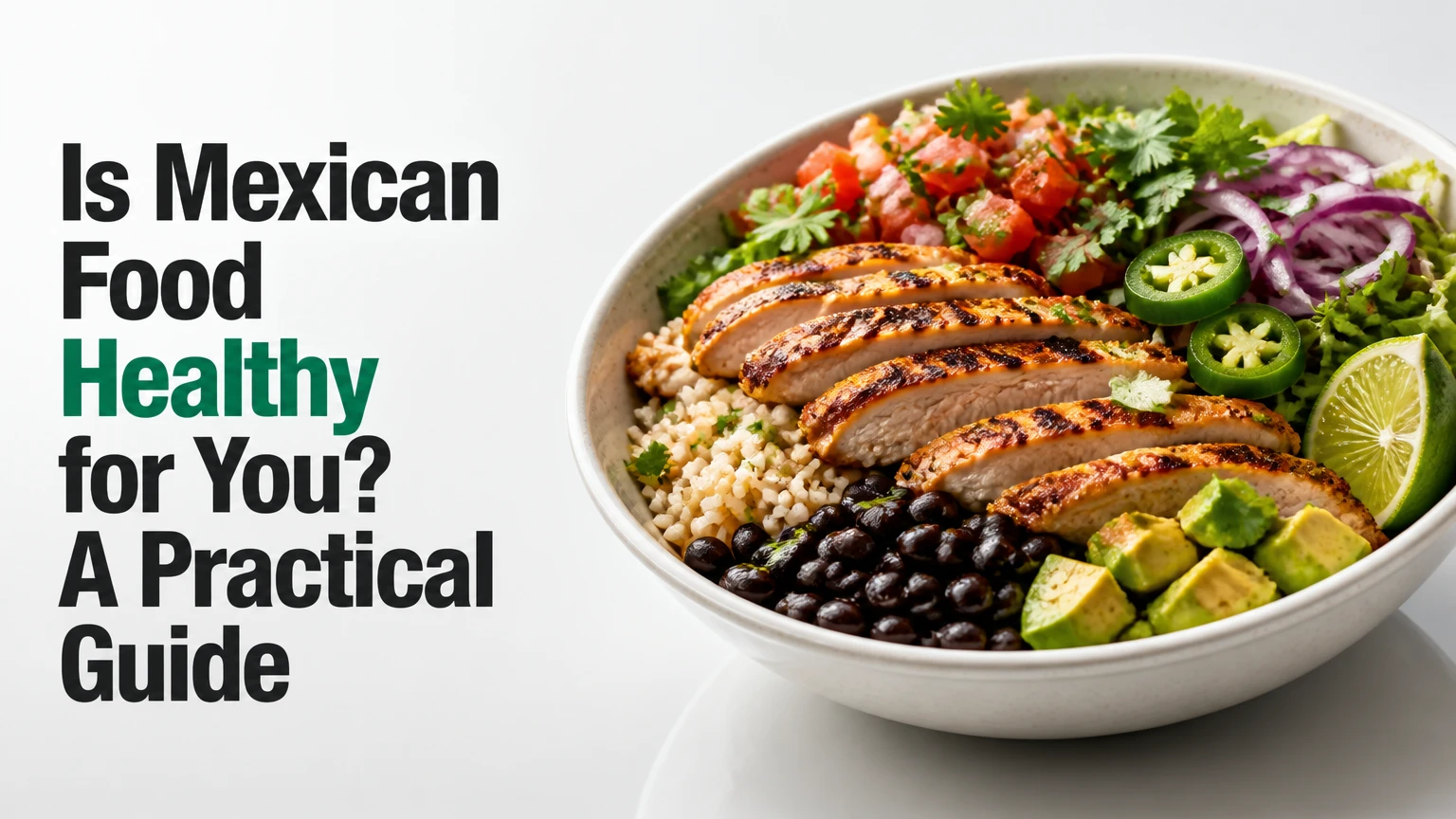
Mexican food can be healthy for you when meals center on beans, corn tortillas, vegetables, salsa, fruit, and grilled or simmered proteins. Restaurant versions can become less nutritious when large flour tortillas, fried shells, processed meats, cheese, creamy toppings, oversized portions, and salty sauces dominate the plate.
Key Facts at a Glance
- Traditional Mexican meals often combine legumes, corn, vegetables, herbs, chilies, and modest portions of animal or plant protein.
- A corn tortilla typically contains fewer calories and less fat than a large flour tortilla, although brands and sizes vary.
- Beans provide fiber, folate, potassium, and plant protein, while salsa adds flavor with relatively few calories.
- A restaurant burrito can exceed 1,000 calories because its tortilla, rice, cheese, creamy toppings, and filling are counted together.
- The American Heart Association recommends no more than 2,300 milligrams of sodium daily for most adults, with an ideal limit of 1,500 milligrams for many adults, especially those with high blood pressure.
- Fried preparation and portion size usually affect healthfulness more than whether a dish has a Mexican name.
What Makes Mexican Food Healthy or Unhealthy?
Mexican food is healthy when its basic ingredients remain visible and portions are appropriate; Mexican restaurant food is less healthy when frying, refined starches, salty fillings, and rich toppings displace beans and vegetables. The cuisine itself is not a single nutritional category because regional Mexican cooking includes seafood, soups, stews, fresh produce, grains, legumes, fried foods, and sweetened drinks.
The strongest nutritional pattern resembles a high-fiber eating pattern. Black beans and pinto beans contribute soluble and insoluble fiber, corn tortillas provide carbohydrate and, depending on processing, some calcium, while tomatoes, tomatillos, peppers, onions, cilantro, and lime expand flavor without requiring much added fat.
Preparation changes the result substantially. A grilled fish taco with cabbage and salsa differs nutritionally from a deep-fried taco covered in cheese and cream, even though both may appear on the same menu. A bowl with beans, vegetables, and a moderate rice portion can also be more balanced than a burrito containing the same ingredients because the oversized flour tortilla is removed.
Why Do Corn and Beans Work Well Together?
Corn and beans complement one another because corn is relatively lower in lysine, while beans supply lysine and other amino acids that corn provides in smaller amounts. Eating both across the same day supports a broader amino-acid profile, although people do not need to combine them in one bite to obtain adequate protein.
Nixtamalization, the traditional process of soaking or cooking maize in an alkaline solution such as lime water, improves the availability of niacin and changes the tortilla’s mineral profile. The calcium increase depends on the lime used and processing method, so claims that every corn tortilla contains a large amount of absorbable calcium are too broad.
Avocado can help absorb fat-soluble carotenoids from vegetables because dietary fat supports absorption. That benefit does not make unlimited guacamole low-calorie: one-half avocado commonly contributes about 140-170 calories, depending on size.
Which Mexican Ingredients Offer the Most Nutrition?
Beans, vegetables, corn tortillas, seafood, and fresh salsas usually provide the best nutrient density per calorie. Mexican cooking also uses ingredients such as pumpkin seeds, cactus paddles, amaranth, squash, mushrooms, and fresh fruit, which are often overlooked when people judge the cuisine only by combination plates.
| Ingredient or dish component | Typical serving | Main nutrients | Practical limitation |
|---|---|---|---|
| Black beans, cooked | 1/2 cup, about 85 g | 7-8 g protein, 6-8 g fiber, folate, potassium | Refried versions may contain added fat and salt |
| Corn tortilla | 6-inch tortilla, about 25 g | 50-65 calories, 1-2 g protein, calcium if nixtamalized | Three or four tortillas increase total carbohydrate |
| Avocado | 1/2 medium fruit, about 75 g | 140-170 calories, monounsaturated fat, potassium | Energy-dense despite favorable fat quality |
| Pico de gallo | 1/2 cup, about 100 g | Vitamin C, carotenoids, hydration, 20-35 calories | Packaged versions may contain substantial sodium |
| Cooked nopales | 1 cup, about 150 g | Fiber, vitamin C, low energy density | Texture and preparation vary by recipe |
| Pumpkin seeds | 1 ounce, about 28 g | 8-9 g protein, magnesium, unsaturated fat | About 150-170 calories per ounce |
Are Corn Tortillas Healthier Than Flour Tortillas?
Corn tortillas are usually the better choice for calorie control and gluten avoidance, while flour tortillas can fit a healthy meal when the size and ingredient list are reasonable. A small flour tortilla may contain fewer calories than a large corn tortilla stack, so diameter and quantity matter more than the label alone.
| Base | Typical portion | Typical calories | Main consideration |
|---|---|---|---|
| Corn tortilla | 6 inches, 1 tortilla | 50-65 | Usually low in fat and naturally gluten-free |
| Flour tortilla | 8 inches, 1 tortilla | 140-220 | Larger size increases calories before fillings |
| Burrito flour tortilla | 10-12 inches, 1 tortilla | 250-400 | Can equal a substantial meal by itself |
| Brown rice | 1/2 cup cooked | 105-120 | Adds fiber and carbohydrate |
| White rice | 1/2 cup cooked | 100-130 | Similar calories, generally less fiber |
| Chips | 2 ounces, restaurant portion | 280-350 | Frying and salt make portions easy to underestimate |
Rice is not automatically unhealthy. Brown rice offers more fiber, but a modest serving of white rice can be appropriate when the meal already contains beans, vegetables, and protein. The more consequential mistake is often ordering both a large tortilla and a full rice portion.
Which Mexican Proteins Are Healthier?
Grilled fish, shrimp, chicken, beans, and modest portions of lean beef are generally the most favorable protein choices. Fatty cuts, processed sausage, fried fillings, and meat cooked in large amounts of added fat can raise saturated fat, calories, and sodium without improving meal balance.
| Protein choice | Typical restaurant portion | Protein estimate | Main trade-off |
|---|---|---|---|
| Grilled chicken | 3-4 ounces | 25-35 g | Watch marinades and salty seasoning |
| Grilled fish | 3-4 ounces | 20-30 g | Fried coating changes the calorie profile |
| Shrimp | 3-4 ounces | 20-25 g | Sauces may add sodium and saturated fat |
| Lean steak | 3-4 ounces | 22-30 g | Cut and visible fat determine saturated fat |
| Beans | 1/2-1 cup | 7-15 g | Excellent fiber, but canned versions need rinsing |
| Sausage-style filling | 3-4 ounces | 15-25 g | Often higher in sodium and saturated fat |
For plant-based meals, beans, lentils, tofu, mushrooms, and pumpkin seeds can replace meat. A vegan order becomes more complete when it includes beans or another substantial protein rather than only rice, guacamole, lettuce, and salsa.
How Does a Typical Mexican Meal Compare With a Restaurant Burrito?
A balanced taco plate can provide roughly 400-700 calories, while a large restaurant burrito commonly reaches 900-1,500 calories before chips and a sweetened drink. Exact values depend on tortilla diameter, cooking fat, filling weight, cheese, sauces, and whether the restaurant publishes nutrition information.
| Meal example | Typical calories | Protein | Fiber | Sodium |
|---|---|---|---|---|
| Two grilled chicken tacos, corn tortillas, salsa | 300-500 | 25-35 g | 4-8 g | 600-1,200 mg |
| Bean and vegetable bowl, moderate rice, salsa | 450-700 | 15-25 g | 10-16 g | 700-1,400 mg |
| Large burrito with rice, beans, cheese, cream, meat | 900-1,500 | 35-65 g | 8-15 g | 1,500-2,800 mg |
| Fried taco plate with rice and beans | 800-1,300 | 25-45 g | 6-12 g | 1,200-2,400 mg |
| Chicken fajitas with tortillas and vegetables | 600-1,000 | 35-55 g | 6-12 g | 900-2,000 mg |
These are typical planning ranges, not laboratory values. The USDA FoodData Central database shows that nutrition can vary considerably among brands and recipes, so a restaurant’s published nutrition facts take priority over generic estimates.
Is Mexican Food Healthy for Weight Loss?
Mexican food can support weight loss when the meal provides protein and fiber without stacking several calorie-dense components. A practical order is grilled chicken or beans, fajita vegetables, salsa, one serving of rice or two corn tortillas, and either a small amount of avocado or cheese.
Use a simple portion formula:
- Fill about half the plate with vegetables, cabbage, lettuce, peppers, onions, tomatoes, or nopales.
- Add a palm-sized portion of grilled protein or 3/4-1 cup of beans.
- Choose one main starch, such as two corn tortillas, 1/2-1 cup rice, or a small potato.
- Add one measured rich topping, such as 2 tablespoons cream, 1/4 cup guacamole, or 1 ounce cheese.
- Drink water or an unsweetened beverage.
A burrito bowl is not automatically lighter than a burrito. A bowl with double rice, cheese, guacamole, cream, and a large meat portion can exceed the tortilla-based version.
Can Mexican Food Fit a High-Protein Diet?
Mexican food fits muscle-building diets when the order supplies approximately 25-40 grams of protein and enough carbohydrate to support training. Choose grilled chicken, fish, shrimp, lean steak, tofu, or a combination of meat and beans, then keep cheese and creamy toppings measured rather than unlimited.
A useful meal might include 4 ounces grilled chicken, 1/2 cup black beans, two corn tortillas, grilled peppers, salsa, and fruit. That combination commonly provides about 35-45 grams of protein, 8-12 grams of fiber, and 550-750 calories, although restaurant recipes vary.
Protein quality improves through variety rather than a rigid food-combining rule. The body maintains an amino-acid pool, so beans and corn consumed at different meals can still contribute to overall protein adequacy.
What Should You Order at a Mexican Restaurant?
The healthiest Mexican restaurant order usually prioritizes grilled, baked, steamed, or simmered foods, then controls the tortilla, rice, salty sauces, cheese, and creamy toppings. Requesting modifications works best when you make one or two specific changes rather than trying to redesign the entire menu.
| Goal | Better order | Ask for | Limit |
|---|---|---|---|
| Lower calories | Fajita bowl with chicken or beans | Half rice, extra vegetables, salsa | Large tortilla, chips, cream |
| Higher protein | Grilled chicken or fish tacos | Extra protein, beans, cabbage | Fried fillings and oversized cheese portions |
| Lower sodium | Unsalted grilled protein and vegetables | Sauces on the side, no added salt | Processed meat, queso, packaged chips |
| Gluten-free | Corn-tortilla tacos or bowl | Confirm shared fryer and ingredients | Flour tortillas, flour-thickened sauces |
| Vegan | Bean, vegetable, and corn-tortilla plate | No dairy, no animal-based cooking fat | Cheese, cream, hidden meat broth |
| Diabetes-conscious | Protein, vegetables, beans, modest starch | Two tortillas or 1/2 cup rice | Sugary drinks and large rice portions |
A free chip basket can add roughly 280-600 calories, depending on portion size and restaurant preparation. Ask for no chips, split them with the table, or eat a measured handful with salsa before the entrée arrives.
Cheese and cream are not forbidden foods, but they can quietly add 100-300 calories and substantial saturated fat. Guacamole supplies unsaturated fat and fiber, yet a restaurant scoop may contain 200-400 calories, so “healthy fat” still requires a portion.
Is Salsa Healthy?
Fresh salsa is usually a nutrient-dense topping because tomatoes, tomatillos, onions, chilies, cilantro, and lime provide flavor with approximately 15-40 calories per half cup. Sodium becomes the main concern in jarred salsa, restaurant salsa, and bottled sauces, where a small serving can contain several hundred milligrams.
Salsa also makes a useful substitution for cheese-based dips and creamy dressings. People with reflux, irritable bowel symptoms, or chili sensitivity may need mild salsa or a smaller portion because nutritious ingredients can still trigger symptoms.
What Are the Main Health Risks of Mexican Restaurant Food?
The main risks are excessive sodium, oversized portions, frequent deep-frying, high saturated fat, and sugar-sweetened beverages. These risks belong mainly to particular preparation and ordering patterns, not to Mexican ingredients as a whole.
Sodium
Restaurant Mexican meals can reach 1,500-2,800 milligrams of sodium through seasoned meat, canned beans, cheese, tortillas, chips, salsa, and sauces. The American Heart Association lists 2,300 milligrams as the daily upper limit for most adults and 1,500 milligrams as an ideal target for many adults with hypertension.
People managing blood pressure should prioritize fresh grilled foods, ask for sauces on the side, avoid processed fillings, and treat chips as optional. Rinsing canned beans at home can reduce some surface sodium, although it does not remove all salt.
Frying
Chimichangas, flautas, fried shells, and heavily fried tortilla chips absorb added oil during cooking. Baked enchiladas, soft tacos, grilled fajitas, soups, and bean-based plates generally provide better control over added fat.
Frying is not the only issue. A lightly fried item with a modest portion may fit an otherwise balanced diet, while a grilled entrée paired with a giant chip basket, creamy dip, and sweetened drink can produce more calories overall.
Saturated Fat and Refined Carbohydrate
Large amounts of cheese, cream, fatty meat, and fried fillings increase saturated fat, while oversized flour tortillas and multiple servings of rice increase refined carbohydrate intake. The nutrition consequence depends on the whole meal and the frequency of the pattern.
Michael Pollan summarizes a useful general rule in In Defense of Food (2008): “Eat food. Not too much. Mostly plants.” Mexican meals follow that principle most closely when beans, vegetables, corn, and fresh toppings occupy more space than fried or heavily processed additions.
Does Mexican Food Work for Diabetes, Celiac Disease, or High Blood Pressure?
Mexican food can fit diabetes, celiac disease, and high-blood-pressure meal plans, but each condition requires a different control point. Diabetes management emphasizes carbohydrate quantity and distribution, celiac disease requires strict gluten avoidance and cross-contact checks, while hypertension management focuses heavily on sodium.
| Situation | Best starting choices | Main question to ask | Common hidden problem |
|---|---|---|---|
| Diabetes | Beans, grilled protein, vegetables, two tortillas | How much rice or tortilla is included? | Sweetened beverages and oversized starch portions |
| Celiac disease | Plain corn tortillas, rice, beans, fresh salsa | Is the fryer shared with flour items? | Cross-contact and flour in sauces |
| Hypertension | Fresh grilled foods, unsalted beans, salsa | Can the kitchen reduce added salt? | Cheese, chips, sauces, processed fillings |
| Kidney disease | Individualized protein and sodium plan | What potassium and phosphorus limits apply? | Beans, avocado, tomatoes, and dairy may need adjustment |
| Irritable bowel symptoms | Simple portions, cooked vegetables, mild salsa | Which ingredients trigger symptoms? | Large bean, onion, chili, or high-fat portions |
People with kidney disease should not assume that a high-bean, avocado, and tomato meal is automatically suitable. Potassium, phosphorus, protein, and sodium limits differ by diagnosis, medication, and laboratory results, so a renal dietitian should guide substitutions.
How Can You Make Mexican Food Healthier at Home?
Home cooking usually makes Mexican food healthier by giving you control over salt, oil, portion size, and protein selection. A balanced meal can be prepared in about 30-60 minutes using beans, corn tortillas, vegetables, salsa, and one simply cooked protein.
Start with a base of 1/2-1 cup beans or a palm-sized protein portion. Add at least 1-2 cups vegetables, then choose two corn tortillas or 1/2-1 cup cooked rice. Finish with 1/4 avocado, fresh salsa, lime, and herbs instead of automatically adding large quantities of cheese or cream.
For canned beans, drain and rinse them, then season with onion, garlic, cumin, and chili rather than relying only on salt. For meat or seafood, grill or pan-cook with a measured teaspoon of oil per serving and check that the center reaches a safe cooking temperature.
A Practical Home Meal Template
| Component | Portion | Example | Typical preparation time |
|---|---|---|---|
| Protein | 3-4 ounces or 3/4 cup beans | Fish, chicken, tofu, black beans | 10-20 minutes |
| Vegetables | 1-2 cups | Peppers, onions, squash, nopales | 8-15 minutes |
| Starch | Two 6-inch tortillas or 1/2 cup rice | Corn tortillas or brown rice | 5-25 minutes |
| Flavor | 1/2 cup salsa and lime | Pico de gallo or tomatillo salsa | 5-10 minutes |
| Fat | 1 teaspoon oil or 1/4 avocado | Olive oil or avocado | 1-3 minutes |
What Are the Most Common Ordering Mistakes?
The most common mistake is treating every component as a small add-on when the tortilla, rice, beans, cheese, cream, meat, chips, and drink together form several servings. A second mistake is assuming that grilled food is automatically low-sodium, because marinades, seasoning blends, and sauces can remain salt-heavy.
- Ordering a full starch stack: Choose a tortilla, rice, or chips as the main starch instead of automatically taking all three.
- Underestimating toppings: Request cheese, cream, guacamole, and dressing in separate containers so portions remain visible.
- Ignoring beverages: A 20-ounce sugar-sweetened drink can add roughly 200-300 calories without fiber or protein.
- Choosing “light” fried food: Fried shells and chips can add more energy than the filling.
- Assuming beans are always low-fat: Refried beans may contain added cooking fat, so ask whether whole beans are available.
- Forgetting cross-contact: Corn tortillas may be gluten-free by ingredient but unsafe for celiac diners if cooked on a shared surface.
The practitioner rule is simple: remove one calorie-dense item, add one high-volume vegetable, and keep the protein visible. That approach preserves flavor while producing a measurable improvement.
Traditional Mexican Food Versus Tex-Mex Restaurant Food
Traditional Mexican food and commercial Tex-Mex cannot be separated by authenticity alone because both categories contain nutritious and indulgent dishes. The more useful comparison examines tortilla size, cooking technique, vegetable quantity, protein type, sodium, and portion scale.
| Attribute | Home-style Mexican meal | Commercial Tex-Mex entrée | Health implication |
|---|---|---|---|
| Tortilla | Two 6-inch corn tortillas | One 10-12-inch flour tortilla | Flour size can add 200-400 calories |
| Protein | 3-4 ounces grilled fish or chicken | 5-8 ounces seasoned meat | Larger portions raise calories and sodium |
| Beans | 1/2-1 cup whole beans | 1/2 cup refried beans | Whole beans usually provide more visible fiber |
| Vegetables | 1-2 cups cooked or raw produce | 1/4-1/2 cup garnish | More vegetables improve volume and micronutrient density |
| Toppings | 1/4 avocado, salsa, lime | Cheese, cream, queso, guacamole | Multiple toppings can add 300-600 calories |
| Sodium | About 500-1,200 mg typical | About 1,500-2,800 mg typical | Commercial meals can use most of a daily limit |
Authentic cuisine is not automatically superior, and Tex-Mex is not automatically unhealthy. Regional dishes differ in oil, grains, seafood, vegetables, and portion size; the preparation details matter more than the cuisine label.
What Is Mexican Food Not Good For?
Mexican food is not automatically suitable for unrestricted low-sodium eating, very low-carbohydrate diets, strict renal diets, or people with specific food allergies. Beans, corn, rice, avocado, and tortillas can all fit many diets, but medical restrictions may require individualized amounts and ingredient verification.
People following ketogenic diets may find traditional portions of beans, corn, and rice difficult to fit within a very low carbohydrate limit. People with severe dairy allergies must check cheese, cream, queso, and shared utensils. People with sesame, peanut, or tree-nut allergies should ask about mole-style sauces, garnishes, and kitchen cross-contact.
Nutrition estimates also have limits. Restaurant serving sizes are inconsistent, recipes change, and generic database entries cannot reliably predict the sodium in a particular kitchen’s salsa or marinade.
Frequently Asked Questions
Are tacos healthy for you?
Tacos can be healthy when made with corn tortillas, grilled fish, chicken, beans, vegetables, and salsa. Two tacos prepared this way often provide about 300-500 calories and 25-35 grams of protein, while fried shells, large cheese portions, creamy sauces, and chips can substantially increase calories, saturated fat, and sodium.
Is Mexican rice healthy?
Mexican rice can fit a balanced diet, especially at a 1/2-1 cup portion alongside beans and vegetables. Restaurant rice may contain added oil and salt, but white rice is not inherently harmful. Choose the smaller serving when the meal also includes tortillas, chips, or a large flour wrapper.
Are refried beans healthy?
Refried beans can be nutritious because they retain protein, fiber, folate, and minerals, but recipes vary in added fat and sodium. Ask for whole beans when available, or choose refried beans in a modest portion. Home-cooked beans allow better control over oil and salt.
Can I eat Mexican food every day?
You can eat Mexican food frequently when meals vary among beans, vegetables, corn, seafood, poultry, fruit, and modest amounts of rice or tortillas. Daily restaurant combination plates may create excessive sodium and calories, so home preparation and rotating protein and vegetable choices offer better control.
Is guacamole healthier than sour cream?
Guacamole generally provides more fiber, potassium, and unsaturated fat than sour cream, but guacamole is also more calorie-dense per typical restaurant scoop. A practical portion is about 2-4 tablespoons. The healthier choice depends on quantity, the rest of the meal, and the person’s calorie needs.
What is the healthiest Mexican dish to order?
A grilled fish, chicken, or bean plate with vegetables, salsa, beans, and either two corn tortillas or a moderate rice portion is usually among the healthiest choices. Request sauces on the side, skip the chip basket, and choose water or an unsweetened drink to control sodium and calories.
The Bottom Line
Is Mexican food healthy for you? Often, yes, when beans, corn tortillas, vegetables, salsa, and grilled or simmered proteins form the meal. Mexican food becomes less favorable when large portions, fried shells, oversized flour tortillas, processed fillings, cheese, cream, chips, and salty sauces accumulate. Choose the cooking method, portion, and toppings deliberately, and the cuisine can support weight management, protein intake, fiber goals, and a varied diet.