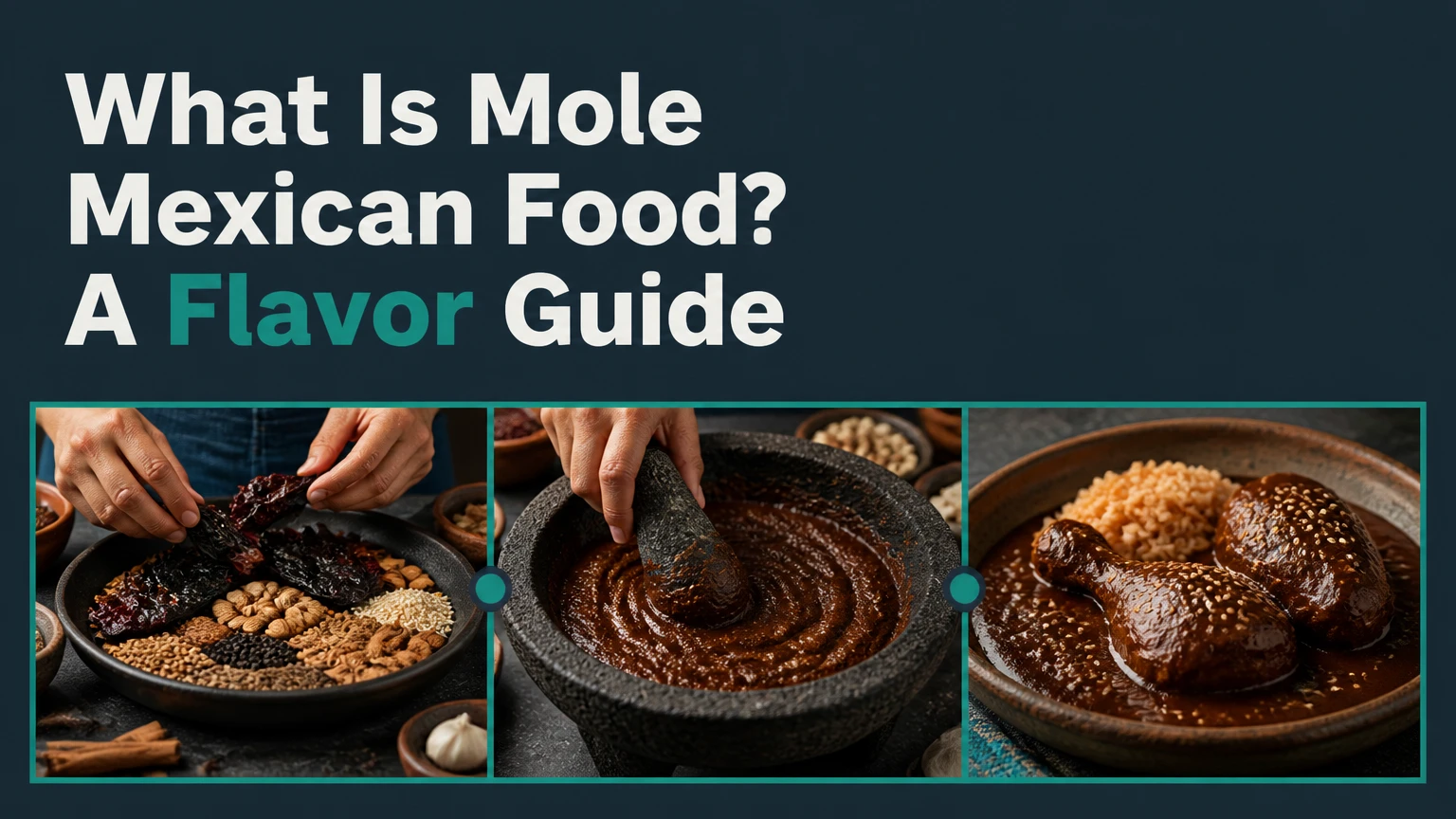
Mole is a family of traditional Mexican sauces made by combining dried or fresh chiles with ingredients such as spices, seeds, nuts, fruit, aromatics, and sometimes Mexican chocolate. Pronounced MOH-lay, mole ranges from dark, earthy, and bittersweet to bright, tart, and herbaceous, and is commonly served over chicken, turkey, vegetables, eggs, or tortillas.
Mole at a Glance
- Mole is a sauce family, not one standardized Mexican recipe.
- The word comes from Nahuatl mōlli, meaning sauce or concoction.
- Mole flavor comes from layered roasting, frying, grinding, seasoning, and simmering.
- Mexican chocolate can appear in some dark moles, but chocolate does not define every mole.
- Oaxacan and Pueblan moles differ substantially in chile varieties, color, thickness, and sweetness.
- A restaurant serving usually contains finished sauce over a separate food, rather than mole being the complete dish itself.
Mole belongs to Mexico’s broad mestizo culinary tradition, where Indigenous ingredients and methods meet ingredients introduced during Spanish colonial rule. Chiles, tomatoes, maize, squash seeds, and cacao have Indigenous histories; ingredients such as certain spices, nuts, dried fruit, and wheat-based thickeners arrived through later exchange.
The popular story that a single convent accidentally invented mole is memorable, but it should not be treated as the complete history. Mole developed through regional cooking traditions, household adaptation, market ingredients, and generations of cooks. Recipes vary by community, family, season, and intended use.
What Does Mole Taste Like?
Mole tastes layered rather than uniformly hot or sweet. A dark mole may begin with dried-fruit sweetness, move into roasted chile and spice, and finish with mild bitterness, while a green mole usually tastes tart, herbal, grassy, and fresher.
The sauce should taste integrated. Individual ingredients may be recognizable, but no single component should dominate unless the recipe intentionally emphasizes it. Mexican chocolate normally adds roasted cacao bitterness, aroma, and body rather than a dessert-like sweetness.
How Hot Is Mole?
Mole heat usually ranges from mild to medium, although the result depends on chile variety, seed use, quantity, and preparation. Dried ancho and mulato chiles tend to contribute color, fruit, and depth; hotter chiles can raise the heat considerably.
A restaurant may describe mole as mild while still serving a sauce with noticeable chile warmth. Ask whether the kitchen makes the sauce in-house and whether a hotter salsa is served separately, because mole itself is not automatically a high-heat dish.
| Flavor dimension | Typical mole expression | Main contributors | What the diner notices |
|---|---|---|---|
| Heat | Mild to medium, 1-5 on a 10-point scale | Ancho, mulato, pasilla, guajillo, regional hot chiles | Warmth that builds gradually |
| Sweetness | Low to moderate, 2-5 on a 10-point scale | Plantain, raisins, fruit, toasted seeds, sugar | Rounded finish rather than candy flavor |
| Bitterness | Low to moderate, 1-4 on a 10-point scale | Cacao, charred chiles, toasted seeds | Dark roasted finish |
| Acidity | Low to high, 1-6 on a 10-point scale | Tomatillo, tomato, fruit, regional herbs | Brightness that prevents heaviness |
| Texture | Smooth, thick, spoon-coating | Seeds, nuts, maize, tortillas, plantain | Velvety sauce that clings to food |
What Is Mole Made Of?
Mole is made from a roasted and ground base whose ingredients vary by region and recipe. A complex mole may contain 15-30 ingredients, but ingredient count alone does not determine authenticity or quality.
Most recipes build flavor in component groups. Chiles provide color and dried-fruit notes, aromatics create savory depth, seeds and nuts thicken the sauce, and spices connect the roasted flavors. Stock then hydrates the paste and turns it into a pourable sauce.
| Ingredient group | Examples | Primary function | Typical quantity in a home batch |
|---|---|---|---|
| Dried chiles | Mulato, ancho, pasilla, guajillo | Heat, color, fruit, roasted depth | 4-10 whole chiles |
| Seeds and nuts | Sesame, pumpkin seed, almond, peanut | Body, fat, toasted flavor | 60-150 grams |
| Aromatics | Onion, garlic, tomato, tomatillo | Savory foundation and acidity | 150-400 grams |
| Fruit and sweeteners | Raisin, plantain, apple, pineapple | Balance for chile bitterness | 30-200 grams |
| Spices | Cumin, cinnamon, clove, allspice | Aroma and warmth | 1-10 grams per spice |
| Thickeners | Maize dough, tortilla, bread, plantain | Viscosity and emulsion stability | 1-4 pieces or 30-100 grams |
| Liquid and fat | Stock, water, lard, vegetable oil | Hydration, frying, mouthfeel | 750 milliliters to 2 liters |
Is Chocolate Always in Mole?
Chocolate is not always in mole. Mole negro and many mole poblanos may include Mexican chocolate or cacao, while mole verde, mole amarillo, pipián, and numerous regional sauces may contain no chocolate at all.
Mexican chocolate often includes cacao, sugar, and cinnamon, but the amount used in a savory mole remains modest. Adding a large quantity can make the sauce muddy, overly sweet, or dessert-like. The correct amount depends on the chile base and the cook’s desired bitterness.
How Is Mole Prepared?
Traditional mole preparation involves cleaning chiles, toasting or frying ingredients separately, grinding them into a paste, frying the paste, and simmering it with stock. A home batch commonly takes 4-8 hours of active and passive work, while a more elaborate preparation may continue over two days.
The sequence matters because ingredients burn at different rates. Chiles need brief heating, seeds need controlled toasting, and nuts or fruit require separate treatment. Combining everything in one pan usually produces uneven bitterness and a less distinct flavor profile.
The Five Core Preparation Stages
- Prepare the chiles. Remove stems and, when appropriate, seeds and veins. Wipe away dust, then briefly toast the chiles until fragrant, usually 10-30 seconds per side.
- Toast or fry components separately. Cook seeds, nuts, aromatics, fruit, spices, and thickeners according to their individual heat tolerance. Use moderate heat for spices.
- Grind the ingredients. Blend with stock or water until smooth. Traditional cooks may use a metate; modern kitchens commonly use a blender followed by a fine sieve.
- Fry the paste. Cook the blended mixture in fat for 10-30 minutes, stirring frequently. This refrying stage deepens flavor and removes a raw, watery quality.
- Simmer and adjust. Add stock gradually and cook uncovered over low heat for 1-4 hours. Adjust salt, acidity, sweetness, chile warmth, and thickness near the end.
You will know the sauce is ready when mole coats a spoon, looks glossy, and leaves a temporary track when the spoon moves through the pot. A separated layer of fat can occur during long cooking, but visible separation is not a universal quality test because recipes differ in fat content and emulsion structure.
Main Types of Mexican Mole
The main mole types differ by region, chile base, color, acidity, texture, and usual accompaniments. The names are useful regional signposts, but they do not guarantee one fixed ingredient list because individual recipes change from town to town.
| Mole type | Common region | Color and texture | Typical flavor | Common serving |
|---|---|---|---|---|
| Mole poblano | Puebla | Dark reddish-brown, thick | Roasted, gently sweet, mildly spicy | Chicken or turkey |
| Mole negro | Oaxaca | Nearly black, dense | Deeply roasted, earthy, bittersweet | Turkey, chicken, tamales |
| Mole coloradito | Oaxaca | Brick red, medium-thick | Fruity, mellow, lightly sweet | Chicken, enchiladas |
| Mole verde | Oaxaca and central Mexico | Green, smooth or coarse | Tart, herbal, fresh | Chicken, vegetables, fish |
| Mole amarillo | Oaxaca | Golden yellow, thickened | Aromatic, savory, mildly hot | Chicken, vegetables, tortillas |
| Manchamanteles | Oaxaca and central Mexico | Red, glossy, lighter-bodied | Fruity, tart, chile-forward | Chicken or turkey |
| Pipián | Central and southern Mexico | Green, red, or brown, seed-thick | Nutty, earthy, roasted | Chicken, vegetables, enchiladas |
Mole Poblano Versus Mole Negro
Mole poblano is generally reddish-brown, moderately sweet, and associated with Puebla, while mole negro is darker, more intensely roasted, and associated especially with Oaxaca. Mole negro often has a stronger bitter-roasted character and may use distinctive Oaxacan chiles that are difficult to source outside Mexico.
Neither style is automatically hotter. The perceived difference comes more from roasting, cacao, charred ingredients, fruit, and spice balance than from color alone. A mild mole negro can taste darker than a hotter mole poblano.
Green Mole and Pipián
Mole verde gets its color and freshness from ingredients such as tomatillo, pumpkin seed, green chile, herbs, and hoja santa. Pipián is defined more strongly by its seed-thickened structure and may be green, red, or brown depending on the chile and herb base.
These styles are often better starting points for diners who dislike pronounced chocolate or dark roasted flavors. Their brighter acidity also pairs well with vegetables and lighter foods.
How Mole Is Served
Mole is usually served as a finished sauce over cooked food, especially chicken or turkey, with rice, tortillas, beans, or pickled vegetables alongside. The sauce is warmed separately and spooned over the main ingredient shortly before serving so its aroma and texture remain distinct.
Mole also appears in enchiladas, tamales, eggs, roasted vegetables, mushrooms, and occasional seafood preparations. The best pairing depends on the sauce’s weight: a dense mole negro can overwhelm delicate food, while mole verde can suit vegetables or lighter proteins.
| Serving format | Typical portion | Suitable mole styles | Typical accompaniment |
|---|---|---|---|
| Mole over chicken | 120-180 ml sauce | Poblano, negro, coloradito | Rice and corn tortillas |
| Enmoladas | 3-4 tortillas | Poblano, negro, coloradito | Onion, sesame, crema |
| Mole over vegetables | 90-150 ml sauce | Verde, amarillo, pipián | Beans or rice |
| Mole with eggs | 75-120 ml sauce | Verde, amarillo, poblano | Tortillas and avocado |
| Tamales with mole | 60-100 ml sauce | Negro, poblano, coloradito | Pickled onion or greens |
A useful ordering question is, “Is the mole made in-house, and is it more sweet, smoky, or herbal?” The answer reveals more than the menu label. Ask for a small taste when available, particularly when choosing between a dark mole and a green one.
What Does Mole Cost and How Long Does It Take?
A typical homemade batch costs $25-$60 in the United States when specialty chiles, seeds, spices, and chocolate must be purchased, and the process takes 4-8 hours. Restaurant portions commonly cost $18-$45, while prepared market paste may cost $10-$25 per kilogram depending on region and production method.
Prices vary with ingredient quality, labor, location, and whether the product is concentrated paste or ready-to-serve sauce. A jarred paste may appear inexpensive, but stock, fresh aromatics, added fat, and garnish increase the final cost.
| Mole format | Typical US cost | Active time | Ready-to-eat time | Typical yield |
|---|---|---|---|---|
| Homemade from scratch | $25-$60 | 2-4 hours | 4-8 hours | 1.5-3 liters |
| Artisanal market paste | $10-$25 per kilogram | 20-45 minutes | 30-60 minutes | 1-2 liters after dilution |
| Commercial jarred paste | $3-$8 per 235-250 gram jar | 10-20 minutes | 20-35 minutes | 500-900 milliliters |
| Restaurant serving | $18-$45 per plate | 0 minutes | 10-20 minutes after ordering | 90-180 milliliters sauce |
Mole often tastes better after 12-24 hours of refrigeration because the spice, chile, and fat components settle into a more unified profile. Reheat it gently with stock, stirring often, because high heat can scorch the solids at the bottom of the pan.
Which Mole Option Should You Buy?
For a first attempt, a reputable market paste is usually the strongest compromise between flavor and labor. Jarred paste is practical and shelf-stable, but it benefits from fresh stock, a small amount of added fat, and adjustment with salt or acidity.
| Buying option | Best for | Main advantage | Main limitation |
|---|---|---|---|
| Homemade paste | Experienced cooks with 4-8 hours | Maximum control over heat and sweetness | Many ingredients and multiple cooking stages |
| Artisanal market paste | First-time cooks seeking regional flavor | Less labor with stronger character | Storage life and availability vary |
| Commercial jarred paste | Weeknight meals and pantry storage | Low cost and broad availability | Often needs dilution and seasoning |
| Restaurant mole | Tasting unfamiliar styles | Immediate regional reference point | Recipe, freshness, and price are outside your control |
Prepared paste should be loosened with unsalted chicken stock rather than plain water when possible. Fry the paste briefly before adding liquid, then simmer it for at least 15 minutes so the added stock becomes part of the sauce instead of leaving a raw paste flavor.
What Can Replace Mole?
No single substitute reproduces mole because mole combines chile, spice, seed, fruit, and thickener in one preparation. For a quick approximation, combine a mild chile-based sauce with toasted seed butter, unsweetened cacao, stock, and a small amount of fruit or sugar.
The substitute should match the intended use. A seed-thickened green sauce can replace pipián more plausibly than a tomato salsa can replace mole negro. A simple chile gravy may work for enchiladas, but it will lack mole’s roasted complexity.
Is Mole Gluten-Free, Vegetarian, or Dairy-Free?
Mole may be gluten-free, vegetarian, or dairy-free, but the status depends on the recipe and preparation. Corn tortillas, maize dough, chiles, seeds, vegetables, and stock can form a gluten-free base, while bread, wheat tortillas, commercial broth, or shared equipment can introduce gluten.
Vegetarian mole is common when the sauce uses vegetable stock, although restaurant versions may use chicken stock. Dairy is not fundamental to mole, but a garnish such as crema can change the finished dish. Ask about stock, thickeners, shared equipment, and toppings when dietary safety matters.
| Dietary question | Often compatible ingredients | Common hidden issue | Best question to ask |
|---|---|---|---|
| Gluten-free | Chiles, maize, seeds, vegetables | Bread, wheat tortilla, packaged stock | “Does the paste contain wheat or bread?” |
| Vegetarian | Vegetable stock, seeds, fruit | Chicken stock or meat-based cooking liquid | “Is the mole made with vegetable stock?” |
| Dairy-free | Chiles, cacao, spices, stock | Crema, cheese, butter-based garnish | “Can the mole arrive without dairy garnish?” |
| Nut-free | Pumpkin seed, sesame, maize | Almond, peanut, mixed kitchen equipment | “Which seeds and nuts are in the sauce?” |
| Lower-sugar | Chiles, tomato, spices, stock | Raisin, plantain, fruit, added sugar | “Is this mole on the sweeter side?” |
Common Mole Problems and Fixes
The most common mole failures are burnt chile bitterness, gritty texture, excessive sweetness, and a sauce that is too thick after cooling. Each problem has a different remedy, so adding sugar to every unpleasant mole can conceal the cause without restoring balance.
| Problem | Likely cause | Immediate fix | Prevention |
|---|---|---|---|
| Acrid bitterness | Chiles or seeds overheated | Dilute with unsalted stock and fresh paste | Toast briefly and remove burnt pieces |
| Gritty texture | Incomplete blending or unsieved seeds | Blend with hot stock and strain | Blend in small batches, then sieve |
| Excess sweetness | Too much fruit, sugar, or chocolate | Add salt, chile, acidity, and stock gradually | Add sweet ingredients in measured amounts |
| Watery sauce | Excess stock or insufficient reduction | Simmer uncovered 20-45 minutes | Add liquid gradually |
| Heavy oily mouthfeel | Too much fat or poor dispersion | Skim excess fat and whisk in stock | Fry paste with measured fat |
| Scorched bottom | High heat during reduction | Transfer unburned sauce to a clean pot | Use low heat and stir the base regularly |
A bitter mole cannot always be rescued. If the entire batch tastes like burnt ash, dilution may produce a larger but still unpleasant sauce; discard the scorched portion and rebuild a smaller batch instead.
A gritty sauce is more recoverable. Blend hot sauce carefully in batches, loosen with stock, and pass it through a fine-mesh sieve. Do not blend a sealed container of hot liquid, because expanding steam can force the lid off.
How Should Mole Be Stored?
Cooked mole keeps for about 4 days in a refrigerator at 4°C or below when cooled promptly and stored in a covered container. Freeze mole in 250-500 milliliter portions for approximately 2-3 months, then thaw it in the refrigerator and reheat it slowly.
Market paste follows the producer’s label because moisture and preservatives differ. Opened commercial paste should be refrigerated, and the jar’s date should override generic storage estimates. Never judge safety by aroma alone when a product has been stored improperly.
Expert cooks often freeze mole without its final thinning liquid. The concentrated paste occupies less space, and adding fresh stock during reheating restores the intended serving consistency more effectively than freezing a thin sauce.
The Bottom Line
Mole is a Mexican sauce family built from layered chiles, spices, aromatics, seeds, fruit, thickeners, and sometimes cacao. Mole poblano is generally reddish and gently sweet, mole negro is darker and more intensely roasted, and mole verde is brighter and herbaceous. The best choice depends on heat tolerance, sweetness preference, available time, and whether you want a ready-made paste or a from-scratch project.
For a first taste, order mole over chicken with rice and tortillas, then compare a dark style with a green or seed-based one. For home cooking, begin with a quality paste and unsalted stock before attempting a multi-stage mole from raw ingredients. What is mole Mexican food? It is a regional, adaptable sauce tradition whose identity comes from process and balance rather than one mandatory ingredient.
Frequently Asked Questions
Does mole taste like chocolate?
Mole does not usually taste like a chocolate dessert. Dark varieties may contain Mexican chocolate or cacao, but the dominant impression should come from roasted chiles, spices, seeds, aromatics, and stock. Chocolate contributes bitterness, aroma, and depth, while fruit or sugar balances the sauce in measured amounts.
Is mole a soup or a stew?
Mole is a sauce, not a soup or stew. The finished preparation is thick enough to coat chicken, vegetables, tortillas, or rice, although some regional dishes use a thinner mole consistency. Mole de olla is a separate brothy Mexican stew category whose name includes mole but whose format differs from poured mole sauces.
Can children eat mole?
Children can eat mole when the recipe is mild and the portion contains no unsuitable allergens. Heat varies widely, so choose a mild poblano, coloradito, or green mole and serve a small amount first. Check for nuts, seeds, dairy garnishes, and stock ingredients when feeding a child with allergies.
Why is mole served with sesame seeds?
Sesame seeds provide a traditional garnish and reinforce the sauce’s toasted, nutty flavor. They may also echo sesame already ground into the mole. The garnish is optional, but it adds texture and visual contrast to a smooth dark sauce served over chicken or turkey.
Can mole be made without a blender?
Mole can be made without a blender by grinding toasted ingredients with a mortar, food mill, or traditional metate, but achieving a perfectly smooth texture takes substantially longer. A fine sieve remains useful because chile skins and seed particles can stay coarse even after thorough hand grinding.