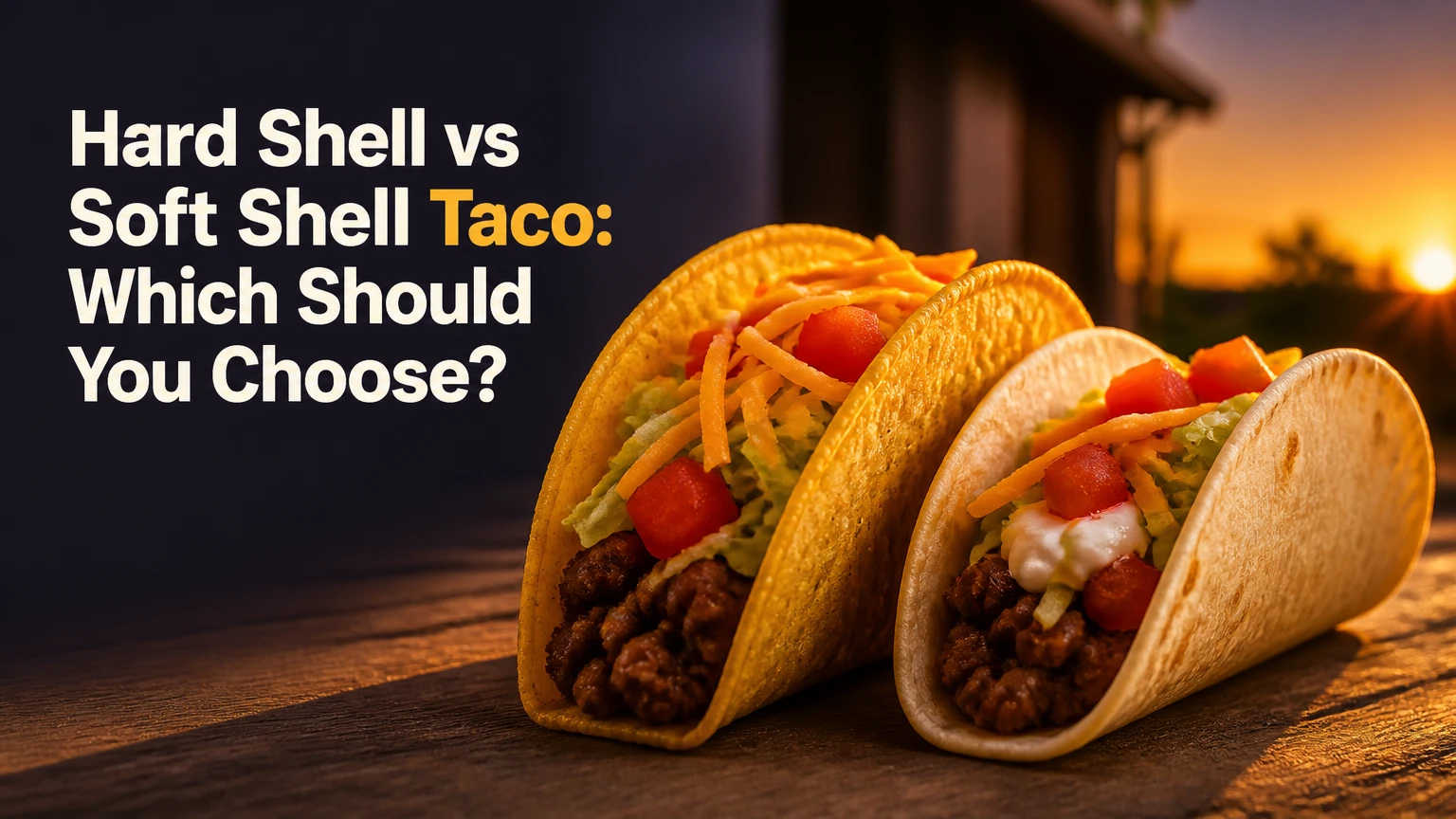
A hard shell taco uses a rigid, fried corn tortilla that delivers a brittle crunch, while a soft shell taco uses a pliable corn or flour tortilla that folds around the filling. Hard shells suit drier fillings and immediate eating; soft tortillas handle juicy ingredients, heavier portions, travel, and traditional street-taco formats better.
Key Facts
A hard taco shell is usually a corn tortilla fried into a U-shape, not a separate bread made from wheat.
A soft taco may use a nixtamalized corn tortilla or a wheat-flour tortilla, and the two behave differently.
Soft tortillas usually tolerate wet fillings longer because they bend instead of fracturing.
Hard shells provide the strongest crunch but can crack during filling, transport, and the first bite.
A double layer of warm corn tortillas improves strength without changing the taco into a hard-shell format.
Typical grocery and restaurant prices vary by location, brand, size, and filling, so price comparisons should be treated as ranges.
What Is the Difference Between a Hard Shell and Soft Shell Taco?
The defining difference is structural: a hard shell is fried until rigid, while a soft tortilla is heated only enough to become flexible. That processing choice changes the taco’s texture, moisture tolerance, portability, and ideal filling.
A hard shell taco normally begins as a round corn tortilla. Frying removes moisture and fixes the tortilla into a U-shaped vessel. Commercial shells are often fried and packaged for shelf stability, although their crispness can decline after exposure to humidity.
A soft shell taco is assembled with a warm tortilla that remains bendable. Corn tortillas are made from nixtamalized maize, while flour tortillas use wheat flour and usually contain added fat. Soft flour tortillas stretch more easily, whereas corn tortillas provide a stronger toasted-corn aroma and a more delicate fold.
The terms also describe different culinary traditions. The crisp U-shaped shell is strongly associated with Mexican-American restaurant food and packaged taco kits. Soft corn tacos are common across Mexico, but preparation, diameter, thickness, and toppings vary by region. Neither format is automatically more authentic, nutritious, or flavorful.
How Does Each Taco Shell Work?
A hard taco shell resists bending until force exceeds its brittle structure; a soft tortilla distributes force through flexibility and moisture. The result is a clear trade-off between independent shape and resistance to fracture.
Hard shell structure
Frying causes water in the tortilla to evaporate rapidly. The remaining starch-rich matrix becomes rigid, and the curved form acts like a small retaining wall around the filling. The shell stays upright on a plate without hand support, but cracks can spread quickly from one weak point.
Moisture is the main enemy of crispness. Salsa, juicy meat, beans, and steam migrate into the shell and soften the fried matrix. A shell can remain crisp at the upper rim while the bottom has already become fragile.
Soft tortilla structure
A warm tortilla retains enough moisture for starches to remain flexible. Flour tortillas also gain stretch from wheat proteins, while corn tortillas depend more on moisture, heat, and the quality of the masa.
Corn tortillas are less forgiving when cold. They may split along the fold because the tortilla has lost flexibility during cooling. Heating restores pliability, but reheating cannot repair a tortilla that is already dry or cracked.
Diana Kennedy described the tortilla as “the plate, the fork and the spoon” in The Cuisines of Mexico. That description explains why soft tortillas function as both wrapper and utensil, while a hard shell functions more like a brittle serving container.
Which Shell and Tortilla Types Matter?
Hard shells are generally fried corn tortillas, while soft shells include nixtamalized corn, standard flour, and thin northern-style flour tortillas. Selecting the base matters more than the label “hard” or “soft,” because corn and flour produce different flavors, strengths, and dietary constraints.
| Tortilla or shell type | Typical material and size | Texture and flavor | Best practical use |
|---|---|---|---|
| Fried yellow corn shell | Corn tortilla, 5-6 inches | Crisp, toasted, pronounced corn taste | Immediate serving with dry fillings |
| Fried white corn shell | White maize tortilla, 5-6 inches | Mild, delicate, brittle crunch | Lightly seasoned fillings |
| Blue corn tortilla | Blue maize tortilla, usually 5-6 inches | Earthy, nutty, dense corn flavor | Grilled vegetables or strongly seasoned fillings |
| Soft corn tortilla | Nixtamalized maize, 4-6 inches | Tender, aromatic, flexible when warm | Street-style tacos and juicy fillings |
| Standard flour tortilla | Wheat flour, 6-8 inches | Mild, supple, stretchy | Large portions and packed meals |
| Thin northern-style flour | Wheat flour with added fat, often 6-8 inches | Soft, thin, elastic | Grilled meats and folded tacos |
Corn versus flour
Corn tortillas are naturally gluten-free when made without wheat contamination, but packaged products can have shared-facility warnings. Flour tortillas contain wheat gluten and are unsuitable for people with celiac disease unless a verified gluten-free product is used.
Corn offers a more assertive flavor and usually less stretch. Flour provides a wider margin for overfilling because its gluten structure allows the tortilla to expand around the contents.
Size and thickness
A 4-inch tortilla suits a small street taco, while a 6-inch tortilla gives more room for toppings. An 8-inch flour tortilla can carry a substantially larger portion, although it begins to resemble a burrito-sized wrapper when heavily filled.
The often-quoted thickness and filling capacities for taco shells are not universal standards. Brand molds, tortilla diameter, oil temperature, moisture, and filling density produce large differences, so household measurements should be treated as typical ranges rather than specifications.
How Are Hard and Soft Taco Shells Prepared?
Hard shells are usually fried or oven-shaped, while soft tortillas are heated briefly and kept covered. The hard-shell process takes several minutes; warming a soft tortilla generally takes less than one minute per batch.
| Preparation method | Typical temperature or heat | Typical time | Result |
|---|---|---|---|
| Fry a corn tortilla | Oil at 175-190°C, 350-375°F | 30-60 seconds | Crisp shell shaped with tongs |
| Oven-shape a tortilla | Oven at about 200°C, 400°F | 8-12 minutes | Drier, lighter shell with less fried flavor |
| Warm corn tortillas on a comal | Medium-high dry heat | 15-30 seconds per side | Flexible tortilla with toasted aroma |
| Steam flour tortillas | Covered pan or steamer | 20-40 seconds | Soft, elastic tortilla |
| Microwave a wrapped stack | Damp towel, high power | 20-40 seconds for 4-6 | Quick warming with moderate softness |
Making hard shells at home
Heat neutral cooking oil to approximately 175-190°C. Lower one tortilla into the oil, then use tongs to hold the center down while bending the sides upward; fry until the shell feels rigid and lightly golden, usually 30-60 seconds.
Drain the shell upside down or on a rack so excess oil does not pool in the base. Cool it for several minutes before filling, because residual heat can soften crisp toppings and make handling awkward.
Oven shaping avoids a pan of hot oil. Drape tortillas over two oven-rack bars or use a baking rack, then bake at about 200°C for 8-12 minutes, checking frequently because thin tortillas scorch quickly.
Warming soft tortillas
Heat a comal, skillet, or flat-top over medium-high heat. Warm corn tortillas for roughly 15-30 seconds per side, or warm flour tortillas until flexible and lightly blistered.
Place heated tortillas inside a covered warmer, clean towel, or lidded container. Trapped steam prevents the edges from drying while the remaining tortillas heat. Cold corn tortillas should never be folded forcefully.
Double-stack small corn tortillas when the filling is wet or the tortilla is thin. The two layers improve handling, but they do not create the same brittle crunch as a fried shell.
Which Performs Better With Different Fillings?
Soft tortillas perform better with juicy, saucy, or heavy fillings, while hard shells perform better with relatively dry mixtures added shortly before eating. The right choice depends on moisture, portion weight, temperature, and how long the taco must sit before consumption.
| Filling situation | Recommended format | Assembly order | Main reason |
|---|---|---|---|
| Seasoned minced beef with shredded lettuce | Hard corn shell | Meat, cheese, lettuce, salsa last | Dry toppings protect the shell |
| Braised beef with broth or rich sauce | Double corn tortilla | Tortilla, filling, onions, herbs | Flexible layers resist liquid |
| Grilled fish with slaw | Soft corn or flour | Fish, slaw, sauce, garnish | Soft surface tolerates moisture |
| Refried beans and melted cheese | Soft flour or double corn | Beans, cheese, vegetables | Dense filling needs flexibility |
| Roasted vegetables | Either format | Dry vegetables first, salsa last | Low moisture gives both formats room |
| Takeout or delivery | Soft flour | Sauce separately when possible | Steam and movement damage crisp shells |
Hard shells are excellent when sound matters. The audible crack is part of the eating experience, and shredded cheese, lettuce, diced vegetables, and seasoned minced beef can remain distinct against the crisp surface.
Soft tortillas win when the filling contains broth, crema, citrus juice, or a generous salsa portion. A warm tortilla also makes it easier to lift a taco without losing small ingredients through a fracture.
Does a hard shell hold more filling?
A standard 5-6 inch hard shell typically holds less usable filling than a 6-8 inch flour tortilla because the rigid sides limit expansion. A practical household range is about 45-75 grams for a small hard shell and 75-140 grams for a larger soft tortilla, depending on density and packing.
Overfilling is the most common hard-shell failure. Fill the base with a modest portion, leave the top edge visible, and add wet salsa only after the taco reaches the table.
Which Is Better for Storage and Delivery?
Soft tacos are more reliable for storage and delivery because they tolerate compression and humidity, while hard shells lose crispness when exposed to steam. For best results, package crisp shells separately from hot fillings and sauce.
A hard shell can soften within minutes when placed beside steaming food in a sealed container. The exact time depends on shell thickness, ambient humidity, filling temperature, and packaging ventilation. A printed five-to-ten-minute lifespan is not a universal food standard.
Soft tortillas also have limits. They can become gummy when trapped against very wet fillings, and a single corn tortilla may tear under a dense portion. Separate sauce, use a double corn layer, or choose flour when the meal will travel.
For packed lunches, assemble soft tacos shortly before eating or pack tortillas and fillings separately. For a crisp-shell meal, carry shells in a rigid, dry container and heat the filling independently.
How Can You Prevent Cracks, Sogginess, and Splitting?
Dry the filling, warm the tortilla, and control assembly order. Most taco failures occur because a cold tortilla is folded, a wet filling touches a crisp shell too early, or a portion exceeds the shell’s usable capacity.
Hard shell fixes
- Drain meat, beans, or vegetables before filling.
- Add a dry barrier such as shredded cheese or a thin layer of well-drained filling.
- Keep salsa, chopped tomato, and sour cream near the top.
- Fill immediately before serving.
- Support finished tacos upright so the base does not bear sideways pressure.
Reheating packaged shells in a 175°C, 350°F oven for 3-5 minutes can restore some crispness after mild humidity exposure. It cannot reverse staleness caused by rancid oil, damaged packaging, or prolonged moisture.
Soft tortilla fixes
Warm corn tortillas before folding and keep them covered. If the tortilla still cracks, use two layers or switch to a larger, fresher tortilla.
Avoid soaking the center with sauce. Place dense fillings in a narrow line rather than a mound, leaving approximately 2-3 centimeters of margin at each side for folding and handling.
A flour tortilla that feels stiff may need brief steam rather than prolonged direct heat. Excessive heating dries the surface and can make the tortilla leathery after cooling.
Practitioner rule: For a crisp shell, put wet ingredients on top. For a soft tortilla, put wet ingredients in the middle but keep the portion narrow. The same salsa placement does not work for both formats.
What Are the Nutrition and Dietary Differences?
Neither taco format is automatically healthier because nutrition comes mainly from the tortilla ingredients, cooking fat, filling, cheese, and portion size. A fried corn shell adds cooking oil, while a flour tortilla may provide more total carbohydrate and contain wheat.
| Dietary concern | Hard corn shell | Soft corn tortilla | Soft flour tortilla |
|---|---|---|---|
| Gluten | Usually absent, verify label | Usually absent, verify label | Contains wheat gluten |
| Added cooking fat | Usually present from frying | None if dry-heated | Often contains shortening or oil |
| Portion control | Smaller rigid vessel | Small shell, often double-layered | Larger size encourages more filling |
| Fiber variation | Brand-dependent corn content | Brand-dependent corn content | Whole-wheat versions contain more fiber |
| Main allergen issue | Corn or shared equipment | Corn or shared equipment | Wheat, sometimes dairy or soy additives |
For calorie comparisons, compare equivalent tortilla weights rather than one small hard shell with one large flour tortilla. Restaurant portions can differ by more than the shell format itself.
People avoiding gluten should verify manufacturing labels, especially for flavored shells and restaurant kitchens. People avoiding corn need a wheat-flour tortilla, while people avoiding wheat need certified gluten-free corn products or a verified alternative.
What Is a Double-Decker Taco?
A double-decker taco combines a soft flour tortilla, a thin layer of refried beans, and a hard taco shell inside it. The outer tortilla cushions the brittle shell, adds flexibility, and gives the diner a larger hand-held portion.
The bean layer also creates separation between the outer tortilla and the hard shell. That layer can reduce movement and help prevent fragments from falling during the first bite.
A double-decker taco is useful when diners want crunch without accepting the portability problems of a standalone hard shell. It is less suitable when a light meal is the goal, because the format adds a second tortilla and a dense spread.
Which Should You Choose?
Choose a hard shell for maximum crunch and immediate serving, or choose a soft tortilla for wet fillings, large portions, portability, and easier handling. The best decision follows the meal’s moisture and timing rather than a general preference for one texture.
Choose a hard shell if you value crunch
Hard yellow corn shells suit diners who want a brittle, toasted texture and a visually structured taco. Use a moderate amount of drained filling, add shredded cheese and lettuce early, and reserve salsa for the final stage.
Hard shells are less suitable for slow meals, children who need a forgiving wrapper, or fillings that release liquid quickly. A fractured shell can scatter hot ingredients and create more mess than a soft tortilla.
Choose soft corn for a traditional tortilla flavor
Soft corn tortillas are a strong choice for small tacos with grilled or braised fillings, chopped onion, herbs, and a controlled amount of salsa. Their flavor is more pronounced than flour, but they require warming and often benefit from double stacking.
Freshness matters. A stale corn tortilla can crack even when heated correctly.
Choose flour for portability and large portions
Soft flour tortillas suit packed lunches, family meals, large fillings, and diners who prefer a neutral wrapper. Their elasticity makes them easier to fold around beans, grilled vegetables, cheese, or saucy fillings.
Flour is the wrong choice for anyone avoiding wheat or seeking a pronounced nixtamalized-corn flavor. A large flour tortilla can also encourage oversized portions.
Choose a double-decker format for mixed texture
A double-decker taco fits diners who want a crisp center with a flexible outer layer. The format is especially practical for serving a group because the outer tortilla reduces breakage during plating and transport.
Storage, Reheating, and Leftovers
Hard shells should remain sealed in a dry package at room temperature, while soft tortillas should remain sealed to preserve moisture. Refrigeration can dry tortillas and introduce condensation into crisp shells, so storage conditions should match the product.
| Product | Storage location | Typical quality window after opening | Best reheating method |
|---|---|---|---|
| Packaged hard shells | Dry pantry, sealed container | 3-7 days for best crunch | 175°C oven for 3-5 minutes |
| Fresh corn tortillas | Sealed bag, refrigerator if needed | 3-7 days, brand-dependent | Comal for 15-30 seconds per side |
| Fresh flour tortillas | Sealed bag, refrigerator if needed | 5-14 days, brand-dependent | Covered skillet or brief steam |
| Assembled hard tacos | Not recommended for storage | Best within 5-10 minutes | Rebuild rather than reheat |
| Filled soft tacos | Refrigerated, wrapped tightly | Best within 24 hours | Covered skillet until warm |
Do not store assembled tacos with wet salsa if texture matters. Separate components and rebuild the meal after reheating.
Common Mistakes That Change the Result
The largest mistakes are using the wrong tortilla size, folding corn while cold, adding sauce too early, and judging value by unit price alone. Each error changes texture or portion performance more than small differences between brands.
- Filling a hard shell with hot, watery food: Drain the filling and add salsa at the table.
- Folding cold corn tortillas: Heat the entire stack, then keep it covered.
- Using a single thin corn tortilla for a heavy portion: Double-stack it or select flour.
- Overheating flour tortillas: Stop when pliable; prolonged dry heat produces a stiff edge.
- Comparing a 5-inch shell with an 8-inch tortilla: Compare diameter and tortilla weight before judging capacity.
- Packing crisp shells beside steaming fillings: Vent the container or transport components separately.
Practitioner rule: The shell is not the only structural component. Filling temperature, sauce quantity, tortilla freshness, and time between assembly and eating determine whether the taco succeeds.
Hard Shell vs Soft Shell Taco: Quick Comparison
| Decision factor | Hard shell taco | Soft corn taco | Soft flour taco |
|---|---|---|---|
| Signature texture | Brittle crunch | Tender, lightly chewy | Supple, stretchy |
| Typical diameter | 5-6 inches | 4-6 inches | 6-8 inches |
| Wet-filling tolerance | Low | Moderate, higher when double-layered | High |
| Hand support needed | Low before breakage | Moderate | Low |
| Gluten status | Usually gluten-free | Usually gluten-free | Contains wheat |
| Best serving time | Immediately after filling | Within about 15-30 minutes | Within about 15-30 minutes |
| Main failure | Shattering or sogginess | Splitting when cold | Tearing when overloaded |
| Strongest use case | Crunch-focused dinner | Small traditional-style tacos | Portable, substantial meal |
The table shows why no universal winner exists. Hard shells win on immediate crunch, soft corn wins on corn flavor and traditional flexibility, and flour tortillas win on capacity and handling.
FAQ
Are soft tacos healthier than hard tacos?
Soft tacos are not automatically healthier. A fried corn shell contains added cooking fat, but a large flour tortilla may weigh more and carry a larger portion. Compare tortilla size, preparation, filling, cheese, and sauce together; a small soft corn taco and a large flour taco are not equivalent servings.
Can you make a hard taco shell from a soft tortilla?
Yes. Fry a corn tortilla in oil at approximately 175-190°C, shaping it with tongs until rigid, or drape it over an oven rack and bake at about 200°C until crisp. Flour tortillas can become crisp, but they produce a different texture and are less typical for U-shaped shells.
Why do my corn tortillas break when I make soft tacos?
Cold, dry, or stale corn tortillas break because their starch structure has lost flexibility. Heat them for 15-30 seconds per side, keep them covered, and use two tortillas for wet or heavy fillings. If cracks remain after warming, replace the tortillas rather than forcing the fold.
Which taco shell is best for children?
A soft flour tortilla is usually easiest for children because it bends around the filling and produces fewer sharp fragments. Use a small diameter, moderate filling, and mild ingredients. A soft corn tortilla also works when warmed and double-stacked, but it may split more readily.
Can hard and soft taco shells be served together?
Yes. A double-decker taco places a hard shell inside a soft flour tortilla with a thin bean layer between them. The outer tortilla reduces breakage and improves portability, while the inner shell preserves crunch. Assemble it immediately before serving so the beans do not soften the crisp shell.
How long do taco shells stay crisp?
A hard shell is best eaten immediately after filling. In typical home service, the lower shell can begin softening within 5-10 minutes when exposed to hot or wet ingredients, while an unfilled shell may stay crisp for days in a sealed, dry package. Humidity and packaging determine the actual window.
The Bottom Line
Hard shell vs soft shell taco is a choice between brittle crunch and flexible performance. Pick a hard corn shell for a dry filling served immediately, soft corn for warm tortilla flavor and smaller traditional-style tacos, or soft flour for wet fillings, larger portions, portability, and delivery. Reheat tortillas, control moisture, and match shell size to the filling.