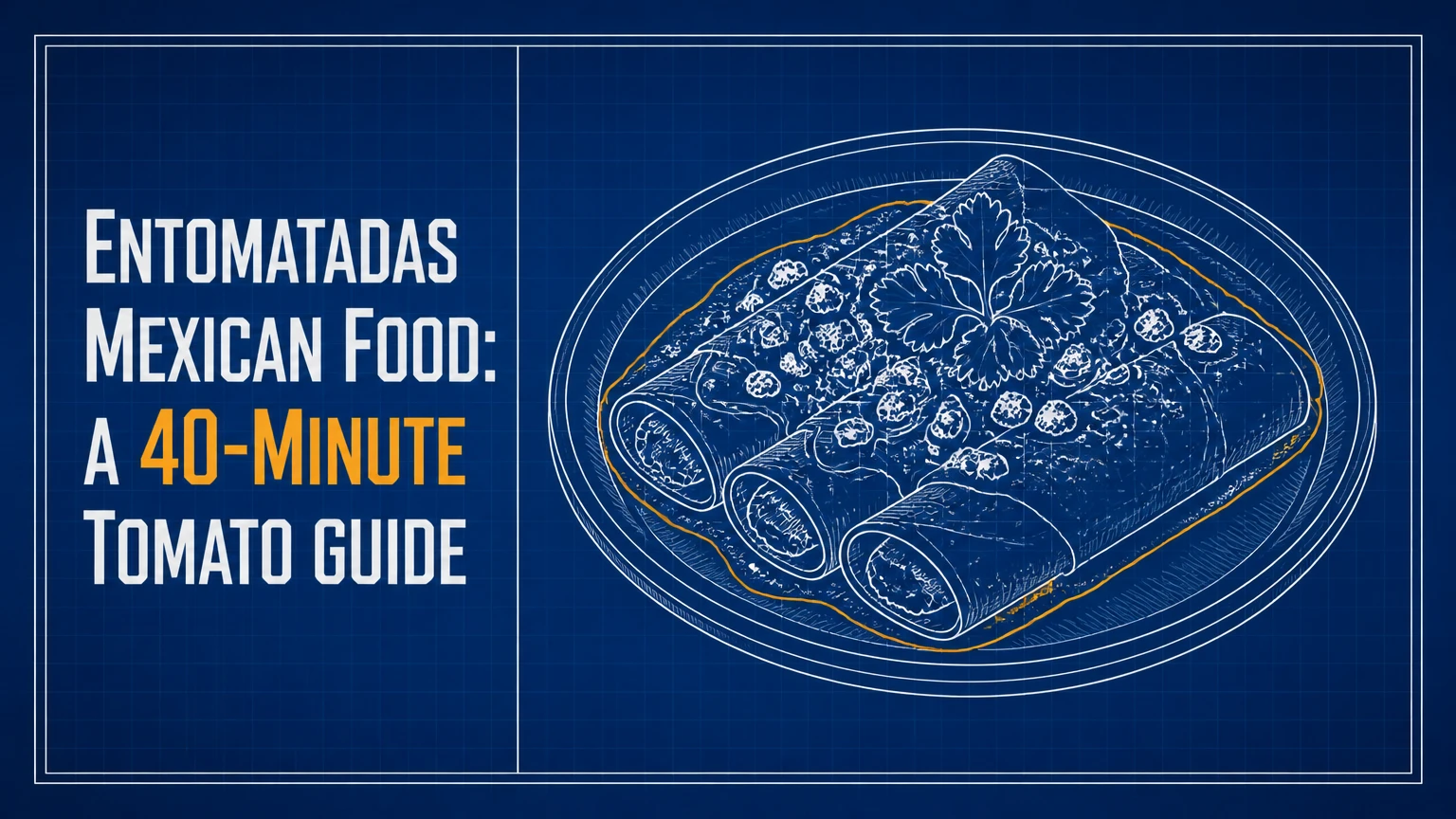
Entomatadas are a traditional Mexican dish made from briefly fried corn tortillas coated in a smooth, seasoned tomato sauce, then folded around cheese, chicken, eggs, or another filling. They resemble enchiladas, but their defining sauce is tomato-forward and usually mild rather than dominated by dried chiles.
Key Facts at a Glance
- A standard batch uses 12 corn tortillas and serves four people at three entomatadas each.
- The tomato sauce typically contains ripe tomatoes, white onion, garlic, salt, and epazote or oregano.
- Tortillas need brief frying, usually 5-10 seconds per side, so they stay flexible instead of becoming crisp.
- A practical homemade batch takes 35-45 minutes and costs approximately $1.50-$3.00 per serving.
- Queso fresco with sliced onion is the simplest traditional filling; shredded chicken and scrambled eggs are common variations.
- Entomatadas are assembled immediately because prolonged contact with sauce softens the tortilla structure.
What Are Entomatadas Mexican Food?
Entomatadas are sauced corn tortillas whose name comes from jitomate, the Spanish term commonly used in Mexico for red tomato. The tortilla is lightly fried, dipped in cooked tomato salsa, filled, folded, and covered with more sauce before serving.
The dish belongs to the broad family of Mexican tortilla preparations that includes enchiladas, enfrijoladas, and enmoladas. The important distinction is the sauce base. Entomatadas use a tomato purée, while enchiladas generally use chile-based salsa, enfrijoladas use beans, and enmoladas use mole.
Entomatadas are usually mild, economical, and adaptable to leftovers. A cheese version works as a meatless lunch, scrambled eggs make a substantial breakfast, and shredded chicken turns the same sauce into a larger evening meal.
Are Entomatadas Spicy?
Traditional entomatadas are usually mild because ripe tomatoes provide the main flavor rather than dried chiles. A serrano pepper can add fresh heat, but it is optional, and removing its seeds reduces intensity without changing the sauce’s basic character.
Tomato sauce does not automatically mean sweetness. Ripe tomatoes produce balanced acidity, garlic contributes sharpness, and frying the blended salsa in oil develops a deeper cooked flavor. If the tomatoes taste flat, a roasted serrano, a pinch of oregano, or a small amount of onion usually improves the sauce more effectively than extra salt.
What Goes Into an Entomatada Sauce?
A reliable sauce combines ripe tomatoes, aromatics, cooking liquid, seasoning, and a small amount of oil for frying. Four large Roma tomatoes, half a white onion, two garlic cloves, and 1-2 serrano peppers make enough salsa for 12 tortillas when blended with approximately half a cup of water.
| Ingredient | Typical quantity | Function | Practical substitute |
|---|---|---|---|
| Roma tomatoes | 4 large, about 680 g | Body, color, acidity | 680 g canned whole tomatoes |
| White onion | 1/2 medium, about 90 g | Sweetness and aroma | Yellow onion, 90 g |
| Garlic | 2 cloves, 6-8 g | Savory depth | 1/2 tsp granulated garlic |
| Serrano pepper | 0-2 peppers | Fresh heat | Jalapeño, 0-1 pepper |
| Epazote | 1 fresh sprig | Herbal Mexican character | 1 tsp dried oregano |
| Cooking water | 1/2 cup, 120 ml | Blending and thinning | Unsalted vegetable stock |
| Vegetable oil | 1 tbsp, 15 ml | Sauce frying | Avocado or neutral oil |
| Salt or bouillon | 1/2-1 tsp | Final seasoning | Fine sea salt |
Boiling the vegetables produces a clean, soft sauce. Charring tomatoes, onion, and garlic on a comal creates a smokier version, but charred garlic can become bitter if left against the hot surface too long. For a first batch, boiling offers more control and makes the sauce easier to reproduce.
Epazote has a distinctive herbal aroma that some cooks associate strongly with home-style Mexican cooking. Dried oregano gives a more familiar, slightly warmer flavor. Use one or the other rather than combining both heavily, because their aromas can compete in a small amount of sauce.
Can Canned Tomatoes Replace Fresh Tomatoes?
Canned whole tomatoes can replace fresh tomatoes at a one-to-one weight ratio, but the sauce usually needs less blending liquid. Choose unsalted tomatoes when possible, simmer for 12-15 minutes, and taste before adding sugar because canned products vary substantially in acidity.
Fresh Roma tomatoes are preferable when they are deeply red and fragrant. Pale, firm tomatoes often create a thin sauce with pronounced sourness. A small pinch of sugar, generally 1/8 teaspoon, can correct excessive acidity, but reducing the sauce and adding enough salt should come first.
How Does Entomatadas Mexican Food Work?
Entomatadas depend on three linked actions: lightly frying the corn tortilla, coating it in warm sauce, and filling it immediately. Brief frying strengthens the tortilla and improves flexibility, while overfrying removes the flexibility needed for folding.
Why Fry the Tortillas First?
Brief frying changes the tortilla’s surface and gives it enough strength to tolerate wet sauce. The process does not aim to make a tostada; the tortilla should remain soft, bendable, and warm.
Heat 1/4 cup of neutral oil in a small skillet over medium to medium-high heat. Fry each tortilla for approximately 5-8 seconds on one side and 5 seconds on the other, then drain briefly. If a tortilla becomes rigid, it was fried too long or the oil was not hot enough to cook the surface quickly.
A practical kitchen checkpoint is flexibility. The tortilla should fold without cracking, and the oil should produce gentle bubbling when the tortilla enters. Excessive smoking indicates overheated oil and can give the finished dish a bitter flavor.
How Do You Make Entomatadas?
This recipe makes 12 entomatadas, serves four people, and takes approximately 35-45 minutes. The most important control point is assembly speed: keep the sauce hot, fry tortillas in small batches, and fill each tortilla immediately after dipping.
Before You Start
| Item | Specification |
|---|---|
| Yield | 12 entomatadas, 4 servings |
| Total time | 35-45 minutes |
| Active time | 30-35 minutes |
| Difficulty | Moderate, because timing affects texture |
| Sauce pan | 10-12 inch skillet or saucepan |
| Blender | Standard countertop blender |
| Tortilla oil | 1/4 cup, about 60 ml |
| Sauce oil | 1 tbsp, about 15 ml |
| Tortillas | 12 fresh or one-day-old corn tortillas |
| Filling | 1 cup queso fresco, or 2 cups shredded chicken |
Step 1: Cook the Tomato Vegetables
Place the tomatoes, onion chunk, garlic, and optional serrano peppers in a saucepan. Add enough water to cover them and simmer for 8-10 minutes, until the tomato skins split and the vegetables soften.
Drain the vegetables, reserving 1/2 cup of the cooking water. Remove the serrano seeds if you want a milder sauce. You will know the vegetables are ready when a knife slides easily into the tomato flesh.
The common mistake is boiling until the tomatoes collapse into excessive water. Extended boiling dilutes flavor and makes the later reduction longer.
Step 2: Blend the Salsa Smooth
Blend the cooked tomatoes, onion, garlic, and peppers with 1/2 cup reserved water until smooth. For a thinner salsa, add water 1 tablespoon at a time; for a thicker salsa, begin with only 1/3 cup.
Strain the sauce if the tomato skins or pepper fibers remain noticeable. A smooth sauce coats the tortilla evenly and produces the characteristic soft texture. A rough sauce is still edible, but it will not cling as consistently.
Use caution when blending hot ingredients. Remove the blender’s center cap, cover the opening with a folded towel, and pulse briefly before running the blender continuously. Steam pressure can force hot liquid through the lid.
Step 3: Fry and Season the Sauce
Heat 1 tablespoon of oil in a deep skillet over medium heat. Pour in the blended salsa carefully, because the liquid may splatter when it contacts the oil.
Add the epazote sprig or dried oregano, season with 1/2 teaspoon salt, and bring the sauce to a gentle boil. Reduce the heat and simmer uncovered for 10 minutes, stirring twice, until the color deepens and the sauce lightly coats a spoon.
The sauce is ready when it no longer tastes raw and a spoon dragged across the pan leaves a visible path for one second. Add water if it becomes too thick to dip. Add salt only after reduction, because evaporation concentrates seasoning.
Step 4: Warm the Tortillas
Warm the tortillas in a covered skillet, microwave, or clean towel for 30-60 seconds. Warm tortillas are less likely to split during frying and require less time in the oil.
Do not skip this step when tortillas have been refrigerated. Cold tortillas often crack at the edge before the surface has time to soften.
Step 5: Briefly Fry Each Tortilla
Heat 1/4 cup oil in a small skillet. Fry each tortilla for 5-8 seconds per side, then drain for no more than a few seconds.
The target texture is pliable rather than crisp. If the tortilla bends into a taco shape without cracking, the frying time is appropriate. If it snaps, reduce the heat slightly and warm the next tortillas before frying.
A lower-oil method is possible. Brush both sides lightly with oil and heat the tortillas on a comal or in a 400°F oven for 2-3 minutes, turning once. This method reduces oil but can dry the edges, so cover the tortillas until assembly.
Step 6: Dip, Fill, and Fold
Dip one warm tortilla into the sauce, coating both sides. Place it on a plate, add about 1 tablespoon queso fresco or 2-3 tablespoons shredded chicken, then fold it in half.
Repeat with three tortillas per serving. Spoon additional sauce over the top and garnish with crema, crumbled cheese, and thin raw onion rings.
The best checkpoint is a tortilla that folds cleanly while retaining a soft center. The most common mistake is saucing every tortilla at once. The first tortillas then become fragile before the filling is ready.
Which Fillings Work Best?
Queso fresco is the classic first choice because its mild, crumbly texture contrasts with the smooth sauce. Chicken, egg, beef, beans, and vegetables work well when they are relatively dry; wet fillings make the tortillas deteriorate faster.
| Filling | Quantity for 12 | Preparation | Best use |
|---|---|---|---|
| Queso fresco | 1 cup, 115 g | Crumble directly | Traditional meatless meal |
| Shredded chicken | 2 cups, 280 g | Season and drain | Dinner or leftovers |
| Scrambled eggs | 6 large eggs | Cook softly | Breakfast with beans |
| Shredded beef | 2 cups, 280 g | Remove excess liquid | Hearty dinner |
| Refried beans | 1 1/2 cups, 360 g | Spread thinly | Vegetarian, high-satiety plate |
| Sautéed mushrooms | 2 cups, 150 g | Cook until dry | Dairy-free or vegetarian |
| Roasted zucchini | 2 cups, 250 g | Roast and drain | Vegetable-focused variation |
Keep the filling warm but not steaming wet. Shredded chicken should be seasoned with salt, onion, and a small amount of sauce rather than swimming in broth. Scrambled eggs should remain softly set because dry egg crumbles when the tortilla folds.
Northern Mexican and Tex-Mex versions may use melting cheeses such as Monterey Jack. That creates a richer, stretchier filling, but queso fresco better preserves the traditional contrast between crumbly cheese and tomato sauce.
What Sides and Garnishes Belong With Entomatadas?
Entomatadas pair well with refried beans, Mexican rice, avocado, crema, queso fresco, and raw onion. A serving of three entomatadas with 1/2 cup beans and a small salad makes a balanced, filling plate without requiring a second main dish.
| Side or garnish | Typical amount per person | Flavor role | Preparation time |
|---|---|---|---|
| Refried beans | 1/2 cup, 120 g | Creamy, savory contrast | 5-10 minutes |
| Mexican rice | 1/2 cup, 100 g | Absorbs extra sauce | 25-30 minutes |
| Queso fresco | 2 tbsp, 15 g | Salty, crumbly finish | 1 minute |
| Mexican crema | 1 tbsp, 15 ml | Tangy richness | 1 minute |
| Sliced onion | 2 tbsp, 20 g | Crisp sharpness | 2 minutes |
| Avocado | 1/4 fruit, 50 g | Soft, fresh richness | 3 minutes |
| Cabbage salad | 1/2 cup, 50 g | Crunch and acidity | 5 minutes |
Use crema sparingly when the tomato sauce is already mild. Too much dairy can flatten the sauce’s acidity and make the plate taste heavy. A few onion rings or a crisp cabbage salad provide more useful contrast than a large quantity of topping.
How Do Entomatadas Compare With Similar Mexican Dishes?
Entomatadas differ from related tortilla dishes primarily by sauce base, heat, flavor profile, and typical assembly. Enchiladas use chile-based sauces, enfrijoladas use blended beans, and enmoladas use mole, which contains a broader mixture of chiles, spices, seeds, and other ingredients.
| Dish | Main sauce | Typical heat | Common filling | Texture profile |
|---|---|---|---|---|
| Entomatadas | Cooked tomato purée | 0-3/10 | Queso fresco, chicken, egg | Soft and lightly coated |
| Enchiladas | Guajillo, ancho, or other chiles | 2-8/10 | Chicken, cheese, vegetables | Soft with chile aroma |
| Enfrijoladas | Pinto or black beans | 0-4/10 | Cheese, egg, chicken | Creamy and earthy |
| Enmoladas | Mole sauce | 2-6/10 | Chicken, turkey, cheese | Dense, spiced, glossy |
| Enchiladas suizas | Green salsa with dairy | 2-5/10 | Chicken or cheese | Creamy and tangy |
Are Entomatadas Healthier Than Enchiladas?
Entomatadas can contain less concentrated chile and cheese than many enchiladas, but neither dish has a fixed nutrition profile. The meaningful variables are tortilla count, frying oil, filling, crema, cheese, and side dishes.
A three-tortilla cheese plate typically uses 3 tortillas, 1/4 cup cheese, and 1-2 tablespoons crema. A chicken version can use the same tortilla count with approximately 140 g chicken and less cheese. Baking or lightly warming the tortillas reduces added oil, although the texture becomes less supple.
Entomatadas are not a strong choice when you need a low-carbohydrate meal unless you change the tortilla base. Lettuce wraps do not reproduce the traditional structure, and flour tortillas become softer and heavier in tomato sauce. A better compromise is a smaller portion with beans and a vegetable side.
How Much Do Entomatadas Cost and How Long Do They Take?
A homemade batch of 12 entomatadas typically costs $6-$12 total, or about $1.50-$3.00 per serving, depending on tomato prices, cheese, and protein. Restaurant portions commonly cost approximately $10-$16 in the United States and 75-180 Mexican pesos in Mexico, with location and filling causing substantial variation.
| Scenario | Yield | Typical total cost | Time |
|---|---|---|---|
| Cheese at home | 12 pieces | $6-$8 | 35-40 minutes |
| Chicken at home | 12 pieces | $9-$12 | 40-50 minutes |
| Restaurant cheese plate | 3-4 pieces | $10-$13 | 10-20 minutes wait |
| Restaurant meat plate | 3-4 pieces | $13-$16 | 10-25 minutes wait |
| Batch sauce only | 6 servings | $3-$6 | 25 minutes |
| Breakfast egg version | 12 pieces | $7-$10 | 35-45 minutes |
These are typical planning ranges rather than national price statistics. Local markets, imported cheese, seasonal tomatoes, and restaurant location can move the final amount outside the range.
A restaurant menu may list entomatadas sencillas, entomatadas de pollo, or entomatadas con huevo. Asking whether the tortillas are fried and whether the sauce is spicy clarifies the preparation before ordering.
How Can You Make Entomatadas Ahead?
Make the tomato sauce up to three days ahead and refrigerate it in a sealed container after rapid cooling. Prepare fillings one day ahead, but fry, dip, fill, and garnish the tortillas immediately before serving for the best texture.
| Component | Refrigerator limit | Freezer limit | Reheating method |
|---|---|---|---|
| Tomato sauce | 3-4 days | 2-3 months | Simmer to steaming |
| Cooked chicken | 3-4 days | 2-3 months | Skillet with 1 tbsp water |
| Scrambled egg filling | 2 days | Not preferred | Low skillet heat |
| Fried tortillas | Same day | Not preferred | Rewarm briefly |
| Fully assembled dish | Same day | Not preferred | Covered oven, 325°F |
Cool sauce and fillings in shallow containers rather than leaving them at room temperature for extended periods. Reheat sauce until steaming, but do not repeatedly boil it, because reduction can make the salsa overly salty and thick.
For a weeknight workflow, blend and simmer the sauce on the weekend, portion the filling, and refrigerate both. Dinner assembly then takes approximately 15 minutes, with most of that time spent warming sauce and frying tortillas.
What Causes Soggy or Broken Entomatadas?
Soggy entomatadas usually result from raw tortillas, watery sauce, excessive soaking, or delayed assembly. Broken entomatadas usually result from stale tortillas, overfrying, cold tortillas, or filling them beyond their structural capacity.
| Failure | Likely cause | Immediate fix | Prevention |
|---|---|---|---|
| Tortilla dissolves | No pre-frying | Use fresh warmed tortillas | Fry 5-10 seconds per side |
| Tortilla cracks | Cold or stale tortilla | Steam briefly before frying | Keep tortillas covered |
| Tortilla turns hard | Excessive frying | Replace with pliable tortilla | Stop when flexible |
| Sauce runs off | Too watery | Simmer 5-10 minutes longer | Measure blending water |
| Sauce tastes sour | Unripe tomatoes | Add salt, reduce, then tiny sugar pinch | Select red, fragrant tomatoes |
| Filling leaks | Overfilled tortilla | Use 1-2 tbsp filling | Keep filling relatively dry |
The flash fry is a texture control, not a decorative step. Raw corn tortillas absorb water quickly and can tear during dipping, while hard-fried tortillas resist folding and split at the crease.
If the sauce is thin, do not compensate by frying the tortillas harder. Reduce the sauce separately until it coats a spoon, because a crisp tortilla cannot recover its flexibility once overcooked.
Which Variations Suit Different Situations?
Cheese entomatadas suit a fast meatless meal, egg entomatadas suit breakfast, chicken entomatadas suit dinner, and bean or vegetable versions suit vegetarian households. The core sauce remains unchanged, so one batch can support several fillings.
For a Mild Family Dinner
Omit serrano peppers, use queso fresco or shredded chicken, and serve sauce on the side for children who prefer less. Keep onion rings and crema separate so each person can adjust the plate.
For Breakfast
Prepare six softly scrambled eggs for 12 tortillas, adding salt only after the eggs set. Serve two or three egg entomatadas with 1/2 cup refried beans per person and use a small amount of crema.
For a Vegetarian Plate
Use queso fresco, refried beans, mushrooms, or roasted zucchini. Cook vegetables until their surface moisture evaporates, because wet vegetables weaken the tortilla faster than cheese or dry beans.
For Lower Added Oil
Brush tortillas lightly and warm them on a comal or in a 400°F oven for 2-3 minutes. The result is less rich and somewhat more prone to cracking, but it preserves the tomato flavor and lowers the frying step.
What Is the Bottom Line on Entomatadas Mexican Food?
Entomatadas Mexican food is a mild, tomato-based tortilla dish built around a precise texture sequence: briefly fry corn tortillas, simmer a smooth tomato salsa, dip and fill each tortilla immediately, then finish with cheese, crema, and onion. The best results come from ripe tomatoes, flexible tortillas, a sauce thick enough to coat a spoon, and fast assembly.
Entomatadas are especially useful when you need an economical meal that adapts to cheese, chicken, eggs, beans, or vegetables. They are less suitable for advance assembly or long buffet holding, because sauce continues softening the tortillas after plating.
Frequently Asked Questions
Can I use flour tortillas for entomatadas?
Corn tortillas are the traditional choice because their toasted corn flavor and firm starch structure suit tomato sauce. Flour tortillas can work, but they become heavier and softer, especially after prolonged soaking. If using flour tortillas, warm them without frying and dip them briefly rather than leaving them in the salsa.
Should entomatadas be rolled or folded?
Entomatadas may be folded in half, folded into quarters, or rolled, depending on the cook and filling. Folding is more common for soft cheese fillings because it reduces handling. Rolling works better with shredded chicken, provided the tortilla is flexible and the filling is kept near the lower third.
Can I make entomatadas without cheese?
Yes. Chicken, scrambled eggs, refried beans, mushrooms, zucchini, and shredded beef can replace cheese. A dairy-free version benefits from avocado, toasted pumpkin seeds, or a crisp cabbage garnish, which restore richness and texture without changing the tomato sauce.
Why does my tomato sauce taste bitter?
Bitter tomato sauce usually comes from scorched garlic, excessive charring, burnt oil, or an overcooked pepper. Blend in a small amount of water, simmer gently, and adjust salt. If the bitterness remains strong, make a fresh small batch of tomato sauce rather than masking it with large amounts of sugar.
How many entomatadas should one person eat?
Three entomatadas is a typical serving, while four suits a larger appetite or a plate without beans or rice. For a meal with refried beans, rice, and avocado, two or three pieces usually provide a practical portion. Children often begin with one or two and add more if desired.