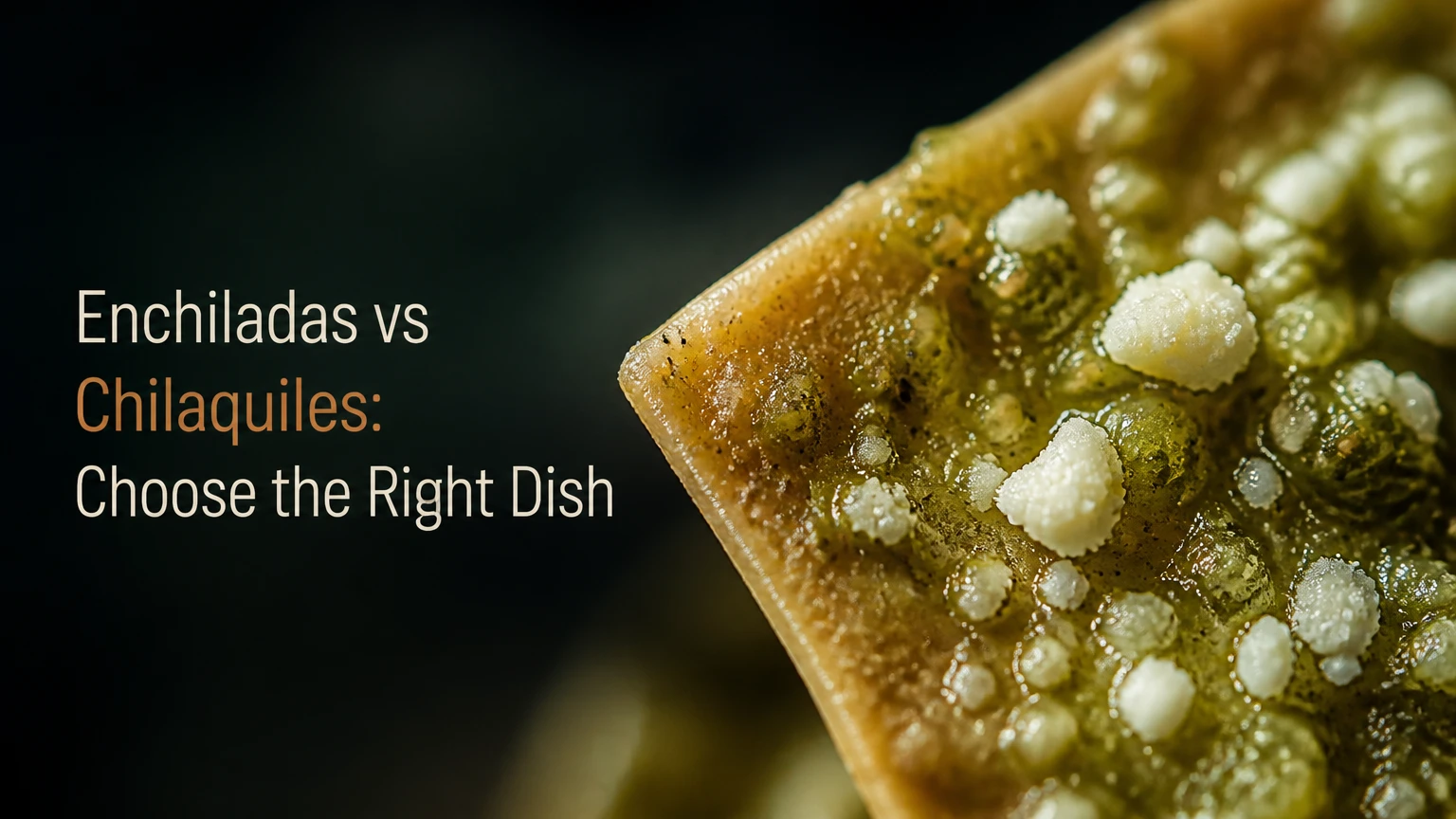
Enchiladas and chilaquiles share corn tortillas and chili sauce, but they are built for different results. Enchiladas use softened tortillas as wrappers around a filling, while chilaquiles use fried tortilla pieces briefly coated in salsa. Choose enchiladas for a composed, filling-centered meal and chilaquiles for a fast dish with tender-crisp edges.
Key Facts at a Glance
Enchiladas are filled tortillas that are rolled, folded, stacked, or baked in sauce.
Chilaquiles are fried tortilla pieces tossed with hot salsa shortly before serving.
Enchiladas usually take 45-65 minutes from preparation to table; chilaquiles typically take 15-25 minutes.
Enchiladas hold their structure better for groups and planned meals.
Chilaquiles deliver the best texture within approximately 5-10 minutes of saucing.
Both dishes can use red salsa, green salsa, beans, cheese, eggs, or shredded chicken.
What Is the Difference Between Enchiladas and Chilaquiles?
Enchiladas are an assembled tortilla dish, whereas chilaquiles are a skillet or platter dish. The decisive difference is structural: an enchilada remains a recognizable tortilla package after sauce is added, while a chilaquile intentionally allows salsa to penetrate fried tortilla pieces.
The two dishes overlap in ingredients, which causes much of the confusion. A cook can use the same roasted chile sauce, shredded chicken, queso fresco, crema, and sliced onion for both. The technique changes the outcome. Enchiladas receive sauce before or during assembly and often finish in an oven. Chilaquiles receive salsa at the end, and the chips spend only a short time absorbing liquid.
| Attribute | Enchiladas | Chilaquiles | Practical consequence |
|---|---|---|---|
| Tortilla format | Whole corn tortilla | Triangles or irregular chips | Wrapper versus bite-sized pieces |
| Structural goal | Holds filling together | Softens while retaining some bite | Composed serving versus loose skillet dish |
| Sauce contact | Dipped, layered, or baked | Tossed or simmered briefly | Longer contact is acceptable for enchiladas |
| Typical meal | Lunch or dinner | Breakfast or brunch | Different planning requirements |
| Serving style | Individual rolls or casserole | Immediate skillet-to-plate service | Chilaquiles need faster plating |
The word enchilada relates to adding chile, but the modern dish has many regional forms. Chilaquiles are also not one fixed recipe. Mexico City-style versions, for example, may use green or red salsa, crema, cheese, onion, and eggs, while home cooks adapt the dish to leftover tortillas and available sauce.
How Do Texture and Structure Differ?
Enchiladas are soft, cohesive, and filling-centered; chilaquiles are sauce-coated, irregular, and texture-centered. Tortilla frying creates the main technical distinction because oil firms the corn surface before sauce exposure, delaying collapse in both dishes.
For enchiladas, lightly frying a tortilla for roughly 5-10 seconds per side makes it flexible and adds a thin fat barrier. The tortilla can then pass through warm sauce without tearing as easily. A filled enchilada should bend under a fork but still retain a continuous outer layer.
For chilaquiles, the tortilla must begin crisp. Hot salsa hydrates the fried starch rapidly, so a 30-90 second toss can produce a range from crunchy edges to almost spoon-soft pieces. The correct endpoint depends on preference, but the chips should remain separate rather than forming a paste.
Expert insight: Sauce temperature matters more than many recipes imply. Cold salsa cools the pan and wets chips slowly, creating uneven texture. A fully heated salsa coats quickly, so the cook can stop softening at the desired point.
| Texture target | Enchilada technique | Chilaquile technique | Approximate timing |
|---|---|---|---|
| Firm tortilla | Light frying, limited sauce | Thick chips, rapid toss | 20-40 seconds for chips |
| Tender tortilla | Warm sauce, covered bake | Salsa simmer, longer contact | 60-90 seconds for chips |
| Crisp contrast | Fresh toppings after baking | Add chips in batches | Plate within 5 minutes |
| Soft, cohesive bite | Extra sauce and cheese | Avoid thin chips | Serve immediately |
Chilaquiles should not be judged by the standard of a dry tortilla chip. Their appeal comes from a changing bite: the exterior absorbs salsa while the thicker center can retain resistance. Enchiladas have a more stable texture because the tortilla is protected by filling and often supported by adjacent rolls.
Which Dish Takes Less Time?
Chilaquiles take less time in nearly every home kitchen because the cook heats salsa and coats prepared chips instead of making and assembling filled tortillas. Enchiladas usually require 45-65 minutes, while quick chilaquiles can reach the table in 15-25 minutes.
The shortest chilaquile route uses prepared tortilla chips, jarred salsa, eggs, and garnishes. Homemade chips add approximately 15-20 minutes. Enchiladas become faster when the sauce and filling are prepared in advance, but rolling, arranging, topping, and baking still add labor.
| Task | Enchiladas | Chilaquiles |
|---|---|---|
| Sauce preparation | 15-30 minutes | 5-15 minutes |
| Tortilla preparation | 10-15 minutes | 0-20 minutes |
| Assembly or tossing | 10-15 minutes | 2-4 minutes |
| Final cooking | 15-20 minutes | 2-5 minutes |
| Typical total | 45-65 minutes | 15-25 minutes |
Typical home costs vary by location, protein, cheese, and whether tortillas are already available. In a United States supermarket, a vegetarian batch may cost approximately $2-$4 per serving for either dish, while chicken, specialty cheese, and homemade sauce can raise enchiladas to $4-$7 per serving. These are planning ranges, not universal restaurant prices.
Which Sauces and Toppings Fit Each Dish?
Red chile sauce and green tomatillo salsa work with both dishes, but chilaquiles need a sauce that coats quickly and enchiladas benefit from a sauce with enough body to cover a baking dish. Sauce thickness, acidity, heat, and salt affect the final balance more than color alone.
Enchilada sauces often begin with dried chiles such as guajillo or ancho, aromatics, stock, and spices. Some versions use tomato, while mole-based enchiladas add a more layered, earthy profile. Green enchilada sauces commonly use tomatillos, green chiles, onion, garlic, and cilantro.
Chilaquiles often use salsa roja or salsa verde with a brighter, more immediate flavor. The salsa should be slightly looser than a dipping sauce because the chips absorb liquid rapidly. A sauce that tastes perfectly seasoned in the pan may taste milder after it hydrates the tortillas.
| Variation | Main sauce base | Common finish | Best structural match |
|---|---|---|---|
| Enchiladas rojas | Guajillo, ancho, tomato, stock | Cheese, onion, crema | Rolled or folded tortillas |
| Enchiladas verdes | Tomatillo, green chile, cilantro | Sour cream, cheese, onion | Rolled tortillas or casserole |
| Enmoladas | Mole sauce, spices, seeds, dried chiles | Sesame, onion, cheese | Filled tortillas |
| Encremadas | Creamy chile or tomato sauce | Mild cheese, crema | Soft baked tortillas |
| Chilaquiles rojos | Red salsa, tomato, dried or fresh chile | Eggs, queso fresco, onion | Fried tortilla pieces |
| Chilaquiles verdes | Tomatillo salsa, green chile | Crema, cilantro, avocado | Fried tortilla pieces |
| Chilaquiles divorciados | Red salsa and green salsa | Beans, eggs, cheese | Split platter |
The dish called enfrijoladas uses tortillas dipped in bean sauce, while entomatadas use tomato-based sauce without the defining chile-forward profile of many enchiladas. These related dishes may look similar on a plate, but the sauce base changes their culinary identity.
How Do Fillings and Toppings Change the Meal?
Enchiladas place the filling inside the tortilla, so protein, beans, cheese, vegetables, or combinations of these determine the center of each bite. Chilaquiles place most additions on top, making eggs, shredded chicken, beans, and avocado more visible and easier to vary per serving.
A typical enchilada filling uses approximately 60-90 grams of cooked filling per person, depending on tortilla size and side dishes. Three medium enchiladas can make a substantial meal with beans or rice. Chilaquiles often use 70-100 grams of tortilla chips per person, plus one or two eggs and selected toppings.
Vegetarian cooks can fill enchiladas with black beans, refried beans, roasted squash, mushrooms, spinach, or cheese. Chilaquiles can use beans, scrambled eggs, avocado, sautéed vegetables, or a fried egg without requiring a separate filling assembly.
| Meal design | Enchilada arrangement | Chilaquile arrangement | Typical portion |
|---|---|---|---|
| Vegetarian | 3 tortillas with beans and vegetables | 70-90 g chips with beans and egg | 1 person |
| Chicken-based | 3 tortillas with 60-90 g chicken | 80-100 g chips with 75 g chicken | 1 person |
| Cheese-forward | 3 tortillas with 30-45 g cheese | 75 g chips with 30 g cheese | 1 person |
| Large gathering | 12-18 rolled tortillas in a baking dish | Chips sauced in 2-3 skillet batches | 4-6 people |
Chilaquiles are easier to personalize after cooking. One diner can receive extra salsa, while another receives more crisp chips or a mild topping. Enchiladas are less flexible once rolled and baked, although separate sauces can create a mixed platter.
When Is Each Dish Usually Served?
Chilaquiles are most strongly associated with breakfast and brunch, while enchiladas more commonly appear at lunch or dinner. Neither category is absolute, but the serving traditions reflect preparation speed, toppings, and meal composition.
Eggs, crema, cheese, onion, and beans make chilaquiles a natural morning meal. The dish also has a practical home-cooking role because it uses leftover tortillas or chips and remaining salsa. The short cooking time suits a household cooking one or two portions.
Enchiladas fit planned meals because the cook can prepare a tray, add a side dish, and serve several people together. A casserole of 12 enchiladas can remain hot for approximately 15-20 minutes after baking, although the tortillas continue to soften during that time.
| Situation | Better choice | Reason | Service window |
|---|---|---|---|
| Weekday breakfast | Chilaquiles | Fast salsa and egg preparation | 5-10 minutes |
| Family dinner | Enchiladas | Portions assemble in one dish | 15-20 minutes |
| Weekend brunch | Chilaquiles | Flexible toppings and fast cooking | Immediate |
| Dinner party | Enchiladas | Batch baking and easier portion control | 15-20 minutes |
| Solo leftover meal | Chilaquiles | Uses small amounts of salsa and chips | 10-15 minutes |
Which Dish Is Better for Meal Prep?
Enchiladas are better for meal preparation because assembled tortillas can be refrigerated or frozen before baking, whereas sauced chilaquiles lose their intended texture quickly. Keep chilaquile components separate until the final two minutes of cooking.
For enchiladas, cool the filling before assembly, use enough sauce to cover the tortillas, and store the covered dish in the refrigerator for up to two days. A frozen assembled dish can generally be baked after thawing, although extra cooking time may be necessary. Use a freezer-safe dish and leave room for expansion.
Chilaquiles can be partially prepared. Fry or portion the chips, refrigerate the salsa, prepare toppings, and cook eggs separately. Combining those components in advance creates soft, swollen tortillas with little textural contrast.
Expert insight: For make-ahead enchiladas, sauce the bottom of the dish and the top of the rolls, but avoid flooding the pan. Excess liquid collects underneath and turns the lowest tortillas fragile before the center becomes hot.
| Storage plan | Enchiladas | Chilaquiles | Recommended action |
|---|---|---|---|
| Refrigerated components | 2 days assembled | 2-3 days separated | Combine chilaquiles at service |
| Frozen preparation | Up to 2-3 months for best quality | Chips only, not sauced | Thaw enchiladas before baking |
| Reheating | Oven at 175-190°C | Skillet for salsa, fresh chips | Add toppings after reheating |
| Leftover texture | Soft but serviceable | Rapidly becomes mushy | Rebuild with fresh chips |
Enchiladas are not ideal when the goal is a crisp tortilla. Baking deliberately softens the tortilla. Chilaquiles are not ideal for packed lunches or long buffet holding because the salsa continues to migrate through the chips.
How Do You Prevent Cracking, Dryness, or Sogginess?
Prevent enchilada cracking by warming and lightly frying the tortillas, and prevent chilaquile sogginess by using thick chips, fully heated salsa, and a short coating time. Each failure begins when tortilla strength and liquid exposure are mismatched.
Cold corn tortillas often split during rolling because refrigeration reduces flexibility. Warm them in a covered skillet, microwave them under a damp towel, or pass them briefly through oil. If a tortilla still tears, use the damaged side underneath and support it with neighboring rolls.
Chilaquiles become wet porridge when thin chips meet watery salsa for too long. They remain dry when the salsa is cold, insufficient, or added after plating. Toss in a wide skillet so every chip contacts sauce, then transfer immediately.
| Problem | Likely cause | Immediate fix | Prevention |
|---|---|---|---|
| Enchilada cracks | Cold or dry tortilla | Warm, patch, and place seam-side down | Steam or fry briefly |
| Enchilada turns watery | Excess sauce or weak tortilla | Rest uncovered 5 minutes | Use a moderate sauce layer |
| Chilaquiles collapse | Thin chips or 90+ seconds in salsa | Add fresh chips before plating | Use thick chips, stop early |
| Chilaquiles stay dry | Cold or insufficient salsa | Add hot salsa by spoonful | Heat 120-180 ml salsa per serving |
| Sauce tastes flat | Low salt or weak acidity | Adjust salt and lime or tomatillo | Season sauce before combining |
Do not rely on baking to repair a weak tortilla. Heat melts cheese and warms filling, but it cannot restore structural strength after the tortilla has dissolved.
What Are the Main Regional and Recipe Variations?
Enchilada and chilaquile names describe broad families rather than single standardized formulas. Regional chile choices, garnishes, tortilla treatment, and sauce consistency can change the dish substantially without violating its basic identity.
Enchiladas Potosinas are a notable example from San Luis Potosí because chile is incorporated into the masa before the tortilla is cooked. They are not simply ordinary tortillas dipped in sauce. Enchiladas suizas use a creamy green sauce in many restaurant interpretations, while enmoladas use mole.
Chilaquiles vary through salsa and topping combinations. Divorciados use red and green sauces on the same plate, often separated by beans. Some cooks fry tortilla triangles from day-old tortillas, while others use sturdy prepared chips for convenience.
| Name | Defining feature | Sauce or base | Common service |
|---|---|---|---|
| Enchiladas Potosinas | Chile mixed into masa | Chile-seasoned dough | Filled and folded |
| Enmoladas | Tortillas covered in mole | Mole | Lunch or dinner |
| Enchiladas suizas | Creamy green preparation | Green chile and dairy | Baked or plated |
| Chilaquiles divorciados | Two sauces on one plate | Red plus green salsa | Breakfast or brunch |
| Chilaquiles con huevo | Egg as primary topping | Red or green salsa | Morning meal |
| Chilaquiles con pollo | Shredded chicken topping | Red or green salsa | Brunch or light dinner |
Which Dish Should You Choose?
Choose enchiladas when you need a filling-centered meal, reliable portions, advance preparation, or a dish for several diners. Choose chilaquiles when you need speed, want contrasting textures, or have leftover salsa and tortillas to use immediately.
Choose Chilaquiles for a Fast Breakfast
Chilaquiles are the better choice for a 10-20 minute breakfast because salsa, chips, eggs, and garnishes can cook in parallel. Use 80-100 grams of thick chips and approximately 120-180 milliliters of hot salsa per serving, then plate as soon as the chips are coated.
Choose Enchiladas for Meal Planning
Enchiladas suit a planned family dinner because a tray can be assembled before guests arrive. Three medium enchiladas per adult usually provide a substantial portion when served with beans, salad, or rice.
Choose Enchiladas for a Crowd
Enchiladas offer more predictable portion control than chilaquiles. A 9-by-13-inch baking dish commonly holds 12 medium rolls, while chilaquiles require careful batch timing to prevent the first servings from softening before the last batch is ready.
Choose Chilaquiles for Texture Contrast
Chilaquiles win when the desired experience includes crisp edges, soft centers, hot salsa, cool crema, and fresh onion in one bite. Add toppings only after saucing so they do not lose their temperature or texture in the skillet.
Choose Beans or Vegetables for a Meat-Free Meal
Both dishes adapt well to meat-free cooking. Enchiladas provide a more substantial bean or vegetable filling, while chilaquiles allow eggs, avocado, cheese, and beans to be adjusted individually at the table.
Can You Make Either Dish With Store-Bought Ingredients?
Store-bought salsa and tortilla chips can produce good chilaquiles if the chips are thick and the salsa is heated and seasoned first. Enchiladas also accept prepared sauce, but tortillas still need warming and the filling should contain enough moisture to remain tender after baking.
For quick chilaquiles, choose restaurant-style corn chips rather than thin snack chips. Taste the salsa before adding tortillas, then adjust salt, acidity, and heat. For quick enchiladas, use prepared red or green sauce, rotisserie-style shredded chicken, canned beans, and freshly warmed corn tortillas.
Prepared ingredients reduce labor but can increase sodium. A practical correction is to dilute a strongly salted sauce with unsalted stock or puréed tomato, then restore acidity with a small amount of lime juice or tomatillo.
How Should You Serve and Portion Them?
Serve enchiladas with sauce beneath and over the tortillas, then add cheese, onion, crema, or herbs after baking. Serve chilaquiles in shallow bowls or plates immediately after tossing so the sauce does not pool beneath the chips.
For enchiladas, plan two to three medium tortillas per adult, 60-90 grams of filling per person, and approximately 180-240 milliliters of sauce for a four-person pan. For chilaquiles, plan 70-100 grams of chips, 120-180 milliliters of salsa, and one or two eggs per person.
Keep toppings balanced. Rich cheese and crema need acidity from salsa or lime, while a very hot sauce benefits from cooling dairy and avocado. Excess garnish can obscure the tortilla, which remains the defining ingredient in both dishes.
Frequently Asked Questions
Are chilaquiles the same as nachos?
No. Chilaquiles are tortilla pieces cooked briefly in salsa, while nachos are usually crisp chips topped with ingredients and served without deliberately softening the chips. Melted cheese may appear in both dishes, but the sauce-cooked tortilla is the defining chilaquile technique.
Can enchiladas be made without frying the tortillas?
Yes, but the tortillas are more likely to crack or become fragile. Steaming, microwaving under a damp towel, or warming on a dry skillet can improve flexibility, although a brief oil pass provides the strongest barrier against sauce absorption during assembly and baking.
Can chilaquiles use flour tortillas?
Corn tortillas are traditional and provide the expected toasted maize flavor and starch structure. Flour tortillas can become chewy and gummy in salsa, so they are a poor substitute when the goal is classic chilaquile texture. Use thick corn chips for the closest practical result.
Are enchiladas healthier than chilaquiles?
Neither dish has a fixed nutritional profile because oil, cheese, crema, filling, and portion size vary widely. Enchiladas may contain more filling and cheese per serving, while chilaquiles can absorb substantial oil through fried chips. Beans, vegetables, moderate toppings, and baked tortillas can improve either meal.
Can I use the same sauce for enchiladas and chilaquiles?
Yes, provided the sauce has enough flavor and the right consistency for each method. Thin the sauce slightly for chilaquiles so it coats quickly, and reserve enough thick sauce to cover enchiladas without flooding the baking dish.
Which dish is easier for a beginner?
Chilaquiles are easier because they require fewer assembly steps and provide immediate visual feedback. Enchiladas demand more control over tortilla flexibility, filling quantity, seam placement, and sauce volume, but warming the tortillas first removes the most common beginner failure.
The Bottom Line
Enchiladas vs chilaquiles is a choice between structure and immediacy. Enchiladas deliver soft filled tortillas, predictable portions, and better advance preparation, while chilaquiles deliver fast cooking, flexible toppings, and a tender-crisp tortilla experience that must be eaten soon after saucing. Choose the dish according to the meal’s timing, serving size, and desired texture.