Poblano and Anaheim peppers are both mild green chiles, but poblano is broader, meatier, and better for stuffing, while Anaheim is longer, thinner, crisper, and usually easier to slice or use fresh. Their Scoville ranges overlap, so the best choice depends on the dish, cooking method, desired texture, and tolerance for variable heat.
Key Facts at a Glance
A fresh poblano usually measures 1,000-2,000 Scoville Heat Units, while Anaheim peppers commonly range from 500-2,500 SHU.
Poblano peppers are broad with thick walls; Anaheim peppers are long with thinner walls.
Poblano is the traditional choice for chiles rellenos, rajas con crema, and roasted fillings.
Anaheim peppers retain a cleaner crunch in raw salsa, tacos, sandwiches, and quick sautés.
Ancho is a dried ripe poblano; Hatch chile is a regional type of New Mexico chile related to Anaheim.
Pepper heat varies with genetics, growing conditions, maturity, and the amount of inner rib left attached.
Poblano vs Anaheim Pepper: What Is the Difference?
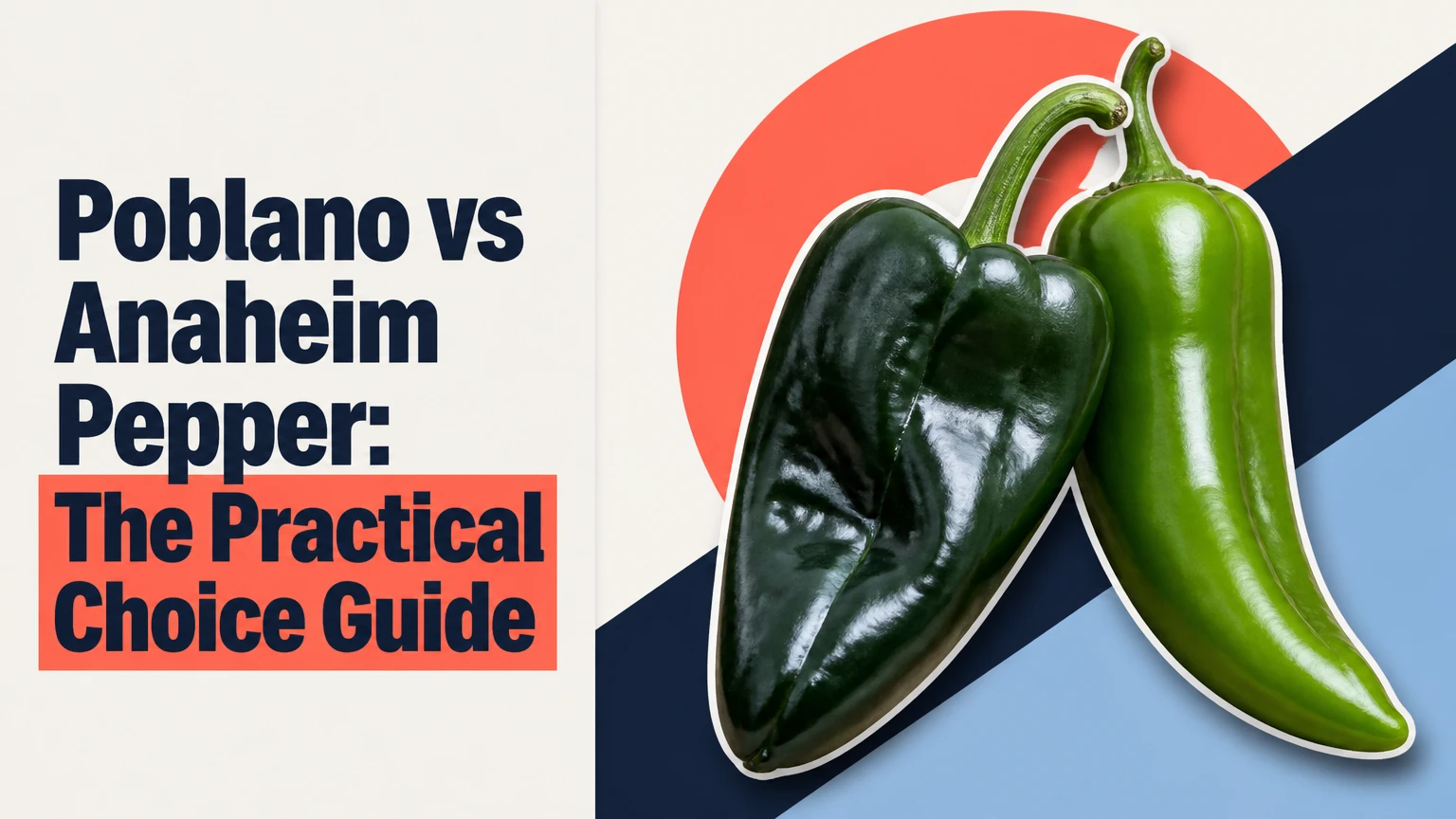
Poblano peppers are dark-green, heart-shaped Mexican chiles associated with Puebla, Mexico. Anaheim peppers are elongated green chiles named after Anaheim, California, where an early commercial strain became widely known in the United States.
The physical difference predicts much of the cooking difference. Poblano walls commonly measure about 5-8 millimeters in thick specimens, giving the pepper enough structure to carry cheese, beans, vegetables, or meat-free fillings. Anaheim walls are often closer to 2-4 millimeters, so they soften faster and can split when heavily stuffed.
Both peppers belong to Capsicum annuum. Neither is reliably “the mild one” in every market. A mild poblano can taste gentler than a hot Anaheim, while another crop can reverse that result.
How do the peppers look at the market?
| Attribute | Poblano pepper | Anaheim pepper | Cooking consequence |
|---|---|---|---|
| Typical length | 3-6 inches | 6-10 inches | Anaheim yields longer strips |
| Typical width | 2-3 inches | 1-2 inches | Poblano creates a wider cavity |
| Green color | Deep green to nearly black-green | Pale to medium green | Poblano looks darker when fresh |
| Shape | Broad, tapered, heart-like | Long, narrow, slightly curved | Anaheim slices more uniformly |
| Wall thickness | About 5-8 mm in thick specimens | About 2-4 mm in typical specimens | Poblano tolerates longer roasting |
| Seed cavity | Compact, broad | Narrow, elongated | Anaheim is faster to deseed |
Produce size varies by cultivar and harvest stage, so these are practical market ranges rather than botanical limits. A large Anaheim can resemble a small green chile, and a narrow poblano can be mistaken for another mild Mexican pepper.
Which Pepper Is Hotter?
Poblano and Anaheim peppers overlap in heat, but Anaheim peppers have the wider commonly reported range. Poblano peppers generally fall near 1,000-2,000 SHU, while Anaheim peppers are often listed around 500-2,500 SHU.
The Scoville scale measures capsaicinoid heat through laboratory analysis, not a guaranteed experience from one pepper. The Chile Pepper Institute at New Mexico State University emphasizes that cultivar, environment, and maturity affect chile pungency, which explains why market peppers can differ substantially.
The hottest sensation usually comes from the pale inner ribs and membranes, not the seeds themselves. Removing those membranes reduces heat, although it does not make either pepper chemically heat-free. A practical kitchen rule is to taste a small trimmed piece before committing the whole batch.
| Heat factor | Poblano effect | Anaheim effect | Practical response |
|---|---|---|---|
| Typical green range | 1,000-2,000 SHU | 500-2,500 SHU | Taste before adding several peppers |
| Inner ribs retained | Noticeably hotter | Noticeably hotter | Remove ribs for a milder filling |
| Red maturity | Usually sweeter and fruitier | Usually sweeter and more aromatic | Use red versions in sauces |
| Drought stress | May intensify pungency | May intensify pungency | Do not assume a fixed heat level |
| Individual crop variation | Moderate to high | Moderate to high | Buy one extra pepper for testing |
| Dried form | Concentrated flavor and heat | Concentrated flavor and heat | Rehydrate before blending |
A red mature pepper is often sweeter because sugars and aromatic compounds increase as the fruit ripens. Red maturity does not guarantee lower heat, however. Capsaicin production depends mainly on genetics and growing conditions, so “red means mild” is an unreliable rule.
How Do Flavor and Texture Compare?
Poblano peppers deliver an earthy, vegetal flavor with a fuller roasted character, while Anaheim peppers taste brighter, grassier, and slightly sweeter when mild. Roasting deepens both peppers, but poblano’s thicker flesh produces a softer, more substantial bite.
Raw Anaheim is usually the better choice when crispness matters. It works in chopped salsa, sandwiches, salads, fajita-style strips, and quick skillet dishes where a thin wall cooks before the rest of the ingredients over-soften.
Poblano is stronger for roasting, braising, pureeing, and stuffing. Its flesh retains enough body to carry a filling and develops a smoky, almost raisin-like note when thoroughly blistered. The flavor is less sharp than raw Anaheim after cooking.
| Use case | Better choice | Typical quantity | Reason |
|---|---|---|---|
| Raw salsa | Anaheim | 1 pepper per 2 cups salsa | Thin wall gives a clean crunch |
| Chiles rellenos | Poblano | 1 pepper per serving | Broad cavity and thick flesh |
| Rajas con crema | Poblano | 2 peppers per 3 servings | Roasted strips remain substantial |
| Quick taco topping | Anaheim | 1-2 peppers per 4 tacos | Slices cook in 3-5 minutes |
| Roasted soup | Poblano | 2 peppers per 4 cups soup | More roasted flesh per pepper |
| Fresh sandwich slices | Anaheim | 1 pepper per 2 sandwiches | Long, even strips |
| Slow braise | Poblano | 2 peppers per 4 servings | Walls resist complete collapse |
Which Pepper Works Better for Stuffing?
Poblano peppers work better for heavy stuffing because their broad shape and thick walls resist tearing during roasting, filling, and frying. Anaheim peppers can be stuffed successfully, but they suit smaller, lighter fillings and require gentler handling.
For chiles rellenos, choose poblano when the filling includes dense cheese, beans, or a substantial vegetable mixture. Roast until the skin blisters, steam briefly, peel without rinsing, and make one controlled slit along the side. Anaheim can replace poblano in a pinch, but its thin wall may split during battering.
Anaheim is useful for open-faced fillings, boats, or grilled peppers cut lengthwise. Keep the filling below the rim and secure the pepper with a toothpick if it will be moved into a pan.
The practitioner rule is simple: use poblano for structural support and Anaheim when the pepper itself should remain a thin, quick-cooking component.
How Do You Roast Poblano and Anaheim Peppers?
Roast either pepper under a broiler, over a gas flame, or on a hot grill until the skin blisters across most of the surface. The complete process usually takes 15-25 minutes, including steaming, and the decisive factor is full blistering rather than a specific color of char.
Step 1: Prepare the peppers
Wash the peppers, dry them thoroughly, and leave them whole. Moisture on the skin slows blistering and can cause hot oil or grill surfaces to spit.
Step 2: Apply high heat
Place poblano peppers 3-5 inches beneath a broiler, or set either pepper on a gas flame or grill grate. Turn every 60-90 seconds so the skin blackens in patches without burning the flesh.
Step 3: Check the blistering
Roast for about 5-8 minutes under a broiler or 6-10 minutes over a flame. The pepper is ready when the skin has loose black and brown blisters over most of its surface, while the flesh still feels intact.
Step 4: Steam the peppers
Transfer the hot peppers to a covered bowl for 10 minutes. A heatproof container with a plate works better than a thin plastic bag, and it avoids melted plastic contacting the food.
Step 5: Peel without rinsing
Rub away the loosened skin with fingers or a paper towel. Do not rinse roasted peppers under running water because water removes flavorful oils and softens the surface.
Step 6: Remove ribs and seeds
Cut a slit, remove the seed pod, and scrape out the inner ribs when a milder result is wanted. Use gloves if handling several chiles or if capsaicin irritates your skin.
| Roasting method | Heat setting | Typical time | Best result |
|---|---|---|---|
| Broiler | High, 3-5 inches away | 5-8 minutes | Even blistering on a sheet pan |
| Gas flame | Medium-high | 6-10 minutes | Fast char and smoky aroma |
| Grill | 450-550°F | 8-12 minutes | Charred skin with grilled flavor |
| Oven roast | 450°F | 20-30 minutes | Softer pepper, less direct char |
| Air fryer | 400°F | 10-14 minutes | Convenient small-batch roasting |
A common mistake is peeling too early. If the skin resists, return the pepper to the covered bowl for another 5 minutes. A second steaming period usually fixes the problem more effectively than scraping harder.
What Are Ancho, Mulato, Hatch, and California Chiles?
Ancho is the dried ripe form of a poblano, while Hatch chile refers to New Mexico-grown chile from the Hatch Valley rather than one single universally identical cultivar. California chile commonly describes an Anaheim-type pepper grown in California, although regional naming is inconsistent.
Mulato is a related dried poblano type, usually darker and sweeter than ancho, with deeper cocoa-like and dried-fruit notes. Dried peppers are more concentrated than fresh peppers, so direct one-for-one substitution changes both flavor intensity and recipe moisture.
“Seco” means dried in Spanish and can describe a dried chile, but it is not a universally standardized commercial name for every dried Anaheim. Package labels and regional usage determine the exact pepper.
| Name | Fresh or dried | Related pepper | Flavor direction | Common use |
|---|---|---|---|---|
| Ancho | Dried | Ripe poblano | Raisin, earth, mild fruit | Mole, enchilada sauce |
| Mulato | Dried | Poblano type | Cocoa, prune, earth | Dark chile sauces |
| Hatch green chile | Fresh or roasted | New Mexico chile group | Green, earthy, aromatic | Stew, burgers, casseroles |
| California chile | Fresh | Anaheim type | Mild, grassy, clean | Salsa, strips, relishes |
| Seco | Dried | Regional usage varies | Concentrated, variable | Sauces and braises |
Hatch and Anaheim should not be treated as identical in every recipe. Hatch-grown chiles can have a stronger regional flavor and may use cultivars with different heat levels, while “Anaheim” describes a broader market category.
Can You Substitute Anaheim for Poblano?
Anaheim can replace poblano in cooked strips, soups, casseroles, and mild sauces, but it is a weaker substitute for large stuffed peppers. Poblano can replace Anaheim in most cooked dishes, although its thicker wall requires longer cooking and produces a softer, heavier texture.
Use the following adjustment rather than swapping blindly:
| Original ingredient | Substitute | Quantity adjustment | Cooking adjustment |
|---|---|---|---|
| 1 poblano in salsa | 1 large Anaheim | 1:1 by pepper | Dice immediately |
| 1 poblano for stuffing | 1 large Anaheim | Use 1 per serving | Reduce filling by 15-25% |
| 2 Anaheims in a skillet | 1 large poblano | 1 poblano for 2 medium peppers | Cook 3-5 minutes longer |
| Fresh Anaheim strips | Poblano | Equal sliced volume | Roast or sauté first |
| Fresh poblano in soup | Anaheim | Equal chopped volume | Add Anaheim later |
| Ancho powder | Dried Anaheim | Start with 75% of amount | Add tomato or stock as needed |
For a recipe where pepper shape matters, buy the specified variety. For a sauce or soup, flavor and heat matter more than geometry, making substitution much easier.
What Are the Nutrition, Cost, and Storage Differences?
Fresh poblano and Anaheim peppers are low-calorie vegetables that provide vitamin C, fiber, and small amounts of vitamin A, but their exact nutrient values depend on size, maturity, and whether the database records raw or cooked weight. USDA FoodData Central is the appropriate reference for label-level nutrient comparisons.
Claims that either pepper automatically supplies more than 100% of the daily value of vitamin C per 100 grams are too broad for dependable use. Nutrient content varies, and a pepper’s edible weight is rarely exactly 100 grams.
| Measure | Poblano | Anaheim | Practical note |
|---|---|---|---|
| Typical retail price | $1.50-$3.50/lb | $1.50-$3.50/lb | Seasonal and regional variation is substantial |
| Refrigerated life | 1-2 weeks | 1-2 weeks | Store dry in a breathable produce bag |
| Fresh yield | 1 pepper, about 1/2-3/4 cup chopped | 1 pepper, about 3/4-1 cup chopped | Size changes the yield |
| Calories | Typically under 40 per 100 g | Typically under 40 per 100 g | Raw vegetable values vary by database |
| Main nutrient contribution | Vitamin C and fiber | Vitamin C and fiber | Use USDA data for exact logging |
| Green harvest timing | About 75-80 days after transplanting | About 75-80 days after transplanting | Cultivar and weather change timing |
Do not store fresh chiles wet. Condensation accelerates soft spots and mold, while a breathable bag limits moisture buildup. For longer storage, roast, peel, and freeze peppers in recipe-sized portions for approximately 6-9 months of best quality.
What Problems Occur With Each Pepper?
Poblano problems usually involve unpredictable heat, incomplete blistering, or a thick wall that remains firm when a recipe expects a quick sauté. Anaheim problems more often involve tearing, overcooking, and insufficient pepper volume after the thin flesh softens.
| Problem | Likely cause | Recovery | Prevention |
|---|---|---|---|
| Skin will not peel | Insufficient steaming | Cover 5 more minutes | Seal immediately after roasting |
| Pepper tastes too hot | Ribs remained attached | Remove ribs and dilute dish | Taste a trimmed sample first |
| Roasted flesh tastes watery | Pepper was rinsed | Pat dry and cook briefly | Peel with a towel |
| Stuffing leaks | Thin Anaheim wall or overfilled cavity | Secure with toothpicks | Use poblano for dense fillings |
| Slices disappear in skillet | Anaheim cooked too long | Add a fresh portion at the end | Sauté 3-5 minutes |
| Poblano remains tough | Large wall and low heat | Cover and cook 5-10 minutes longer | Roast or slice thinner |
Avoid soaking peeled peppers in water to remove heat. Water can wash away flavor without reliably removing capsaicin, which is fat-soluble. A better correction is removing more membrane, adding more unseasoned ingredients, or balancing the dish with fat and acidity.
Which Should You Choose?
Choose poblano for stuffing, roasting, creamy pepper strips, hearty soups, and recipes where a broad cavity or substantial flesh matters. Choose Anaheim for raw slicing, quick sautés, everyday salsa, sandwiches, and recipes that need mild chile flavor without a thick, soft texture.
Which pepper suits a weeknight cook?
Anaheim is the easier weeknight option when preparation speed matters. Its long shape makes deseeding and slicing fast, and its thinner wall reaches tenderness in roughly 3-5 minutes over medium-high heat.
Which pepper suits traditional Mexican dishes?
Poblano is the more appropriate choice for chiles rellenos, rajas con crema, and many roasted poblano preparations. Ancho and mulato also connect directly to the dried poblano family used in complex sauces.
Which pepper suits a mild-palate household?
Choose a mild Anaheim when the pepper will be served raw or in a lightly cooked dish, but test one first because Anaheim heat varies widely. Remove all inner ribs from either pepper when minimizing heat is the priority.
Which pepper suits grilling and outdoor cooking?
Choose Hatch or another New Mexico green chile when regional flavor is the goal, and choose Anaheim when availability and predictable shape matter more. Both can be grilled, although thicker poblano flesh better withstands extended heat.
The Bottom Line
For most stuffed or roasted dishes, poblano is the better pepper because its thick walls, broad cavity, and earthy flavor provide structure. For fresh salsa, quick skillet cooking, and long clean strips, Anaheim is the more efficient choice. The best answer to poblano vs anaheim pepper depends on whether the recipe needs body or speed.
Neither pepper offers a guaranteed heat level. Buy based on shape and cooking purpose, remove the inner ribs for less heat, and taste a small piece before seasoning the full dish.
Frequently Asked Questions
Are poblano and Anaheim peppers the same plant?
Poblano and Anaheim peppers are different named chile types within the species Capsicum annuum. They share a botanical family and similar mild-green uses, but poblano is typically broader and thicker, while Anaheim is longer and thinner. Their heat ranges overlap, so appearance and cooking behavior are more reliable distinctions than heat alone.
Can I eat poblano peppers raw?
You can eat poblano peppers raw, although their thicker walls and earthy flavor often make them more appealing after roasting or sautéing. Raw poblano works in finely diced salsa, salads, and fresh relishes. Remove the ribs if the pepper tastes too hot, then use a small amount before adding more.
Why are some Anaheim peppers much hotter than expected?
Anaheim heat varies because genetics, sunlight, water stress, maturity, and growing region affect capsaicinoid production. The commonly reported 500-2,500 SHU range is broad for that reason. Taste a small trimmed piece before using several peppers, especially when the label does not identify the cultivar or growing region.
Is an ancho hotter than a fresh poblano?
Ancho is a dried ripe poblano, so its flavor is more concentrated and its heat can seem stronger by weight. Drying removes water rather than creating capsaicin. A whole ancho may taste richer and more intense than one fresh poblano, but the actual heat depends on the original pepper and how much is used.
How many poblano or Anaheim peppers equal one cup?
One average poblano usually produces about one-half to three-quarters cup chopped after removing the stem, seeds, and ribs. One average Anaheim often produces about three-quarters to one cup. Measure by prepared volume when precision matters because market size varies substantially between individual peppers.