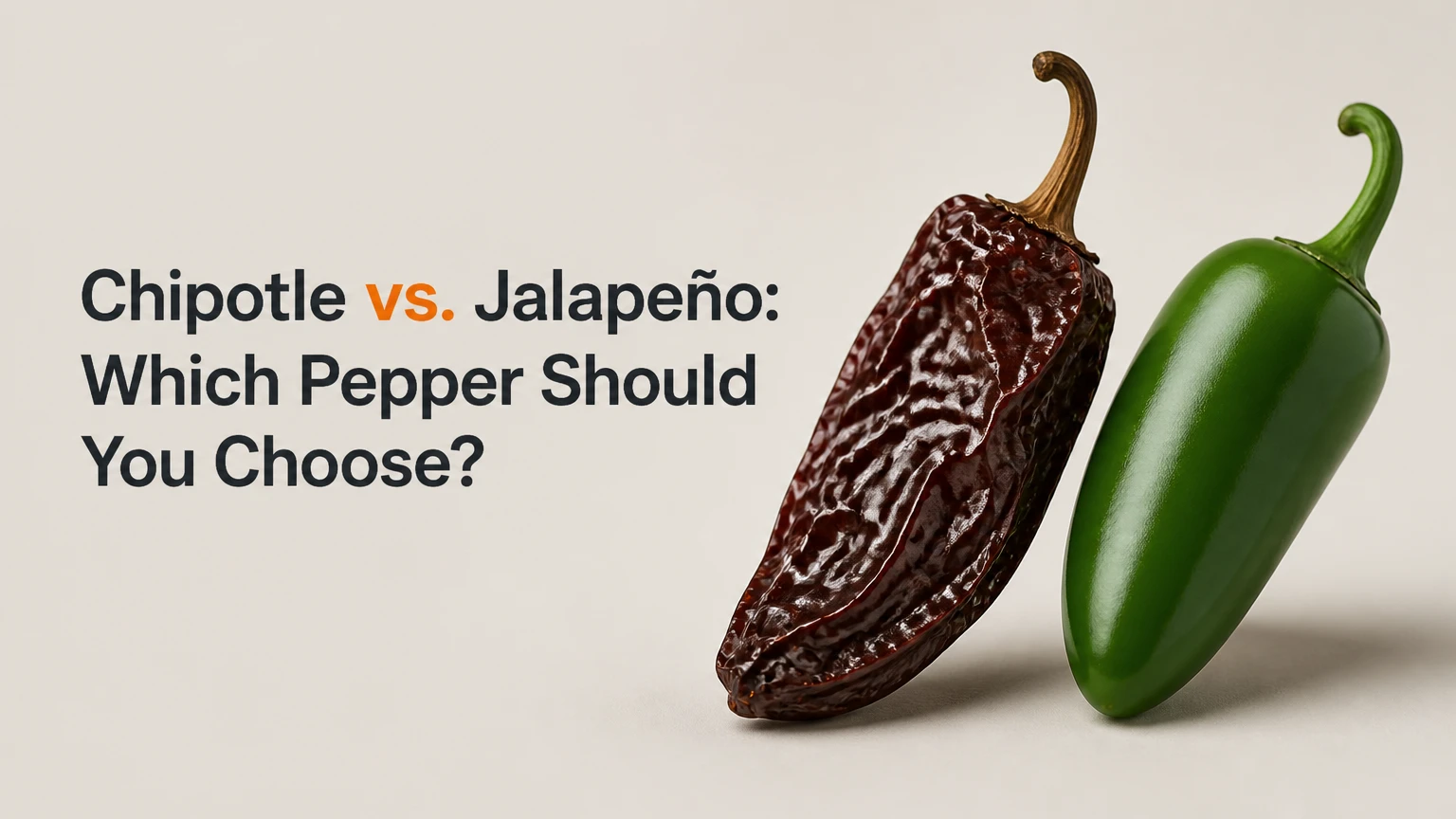
Chipotle and jalapeño are the same species, Capsicum annuum, but they are not interchangeable in every recipe. A fresh jalapeño is usually harvested green for crisp texture and bright vegetal heat, while a chipotle is a ripe red jalapeño that has been smoked and dried, producing concentrated sweetness, earthiness, and smoke.
Key Facts at a Glance
- A chipotle is a smoked and dried ripe jalapeño, not a separate pepper species.
- Green jalapeños usually measure about 2,500-8,000 Scoville Heat Units, although individual peppers vary substantially.
- Drying reduces water and weight, but it does not automatically multiply the pepper’s intrinsic capsaicin concentration.
- Fresh jalapeño adds crunch and green flavor; chipotle adds smoke, dried-fruit notes, and a slower-feeling burn.
- Morita is usually dark, reddish, pliable, and fruitier; Meco is generally larger, paler, drier, and more intensely smoky.
- One fresh jalapeño cannot replace one dried chipotle by volume without changing texture and flavor.
What Is the Difference Between Chipotle and Jalapeño?
The primary difference is processing. A jalapeño describes the fresh fruit, while chipotle describes a ripe jalapeño that has been smoked and dehydrated.
Most commercial jalapeños are picked while green, when the pod is firm and crisp. If the fruit remains on the plant, it commonly ripens to red, develops more sugar, loses some moisture, and becomes softer. Producers then smoke and dry the red pods, traditionally using wood smoke, to create chipotle.
The botanical identity remains the same. The culinary identity changes because ripening, smoke exposure, and dehydration alter aroma, texture, weight, and how heat is delivered. A fresh jalapeño releases moisture and capsaicin quickly when bitten. A dried chipotle releases flavor more slowly and often tastes hotter because its solids and smoke compounds are concentrated.
The word chipotle comes from Nahuatl roots commonly translated as smoked chile. The ingredient has a long association with Mexican cooking, especially sauces, stews, marinades, and dried chile preparations.
Chipotle and Jalapeño Compared
| Attribute | Green jalapeño | Red jalapeño | Chipotle Morita | Chipotle Meco |
|---|---|---|---|---|
| Botanical species | Capsicum annuum | Capsicum annuum | Capsicum annuum | Capsicum annuum |
| Typical color | Green | Red | Dark red to purple | Tan, brown, or gray |
| Main process | Fresh harvest | Vine ripening | Shorter smoke and drying | Longer smoke and drying |
| Texture | Firm and juicy | Softer and sweeter | Pliable or leathery | Drier and stiffer |
| Dominant flavor | Grassy, crisp | Fruity, sweet | Fruity, smoky | Deeply smoky, earthy |
| Common form sold | Fresh pod, pickle | Fresh pod, dried pod | Dried pod, canned | Dried pod |
| Best applications | Salsa, garnish, poppers | Roasting, sauces | Adobo, marinades, salsa | Braises, chile pastes, stews |
How Does a Jalapeño Become a Chipotle?
A jalapeño becomes a chipotle through four linked stages: vine ripening, selection, wood smoking, and dehydration. The producer starts with mature red pods rather than the green pods most supermarkets sell fresh.
- Vine-ripen the pepper. The pod remains on the plant until it turns red and begins to soften. This stage usually adds sweetness and fruitiness.
- Harvest sound pods. Firm, undamaged peppers are selected because bruising and decay become more pronounced during drying.
- Smoke the ripe pods. Producers expose the peppers to wood smoke in a controlled chamber or traditional smoking pit. Wood species, airflow, temperature, and duration vary by producer.
- Dry the peppers. Continued low-temperature smoking and dehydration remove most water, leaving wrinkled, leathery pods that can be stored or rehydrated.
The process is not identical everywhere. Traditional Mexican production may use dedicated smoking structures and local wood, while commercial processors may use controlled industrial dryers with smoke flavor or a shorter smoking phase. Claims that every chipotle is smoked for a precise number of days or at one universal temperature are too broad.
Morita Versus Meco
Morita and Meco are the two names shoppers most often encounter. The distinction is practical, but regional labeling is not perfectly standardized.
| Type | Appearance | Texture | Flavor profile | Best use |
|---|---|---|---|---|
| Morita | Dark red, purple, or glossy brown | Flexible, leathery | Sweet, fruity, raisin-like smoke | Adobo, marinades, blended sauces |
| Meco | Gray, tan, or light brown | Stiffer and drier | Strong smoke, earth, dried wood | Long-simmered sauces and stews |
| Ground chipotle | Red-brown powder | Fine powder | Smoke varies by brand | Rubs, beans, eggs, vegetables |
| Chipotle in adobo | Dark red pepper in sauce | Soft and spoonable | Smoke, tomato, vinegar, garlic | Quick sauces and sandwich spreads |
Morita is often easier to use in modern home kitchens because it blends smoothly after soaking. Meco can deliver a more pronounced smoke profile, but it may need longer soaking or simmering to soften fully.
Which Has More Heat, Chipotle or Jalapeño?
A chipotle does not automatically contain more capsaicin than a fresh jalapeño, but chipotle often tastes hotter because drying removes water and concentrates the pepper’s solids. Published Scoville ranges overlap, and the actual heat depends on cultivar, maturity, growing conditions, pod position, and processing.
The commonly cited range for jalapeños is approximately 2,500-8,000 SHU. Chipotle products are often listed around 2,500-8,000 SHU as well, although some commercial references place particular products higher. Those figures should be treated as broad category estimates rather than a reliable prediction for one pod.
Capsaicin is concentrated mainly in the placenta, the pale inner tissue attached to the ribs. Seeds can carry capsaicin on their surfaces, but the seeds themselves are not the primary source. Removing seeds alone therefore produces a less predictable reduction in heat than removing the inner ribs and placenta.
| Heat factor | Fresh jalapeño effect | Chipotle effect | Practical consequence |
|---|---|---|---|
| Water content | High, roughly 90% in fresh produce | Greatly reduced by drying | Chipotle flavor feels denser |
| Placenta and ribs | Fresh capsaicin-bearing tissue | Concentrated after drying | Remove or limit for less heat |
| Green versus red maturity | Green flavor, variable heat | Ripe red base, sweeter profile | Sweetness can soften perceived heat |
| Smoke exposure | None unless separately cooked | Adds aromatic intensity | Smoke may be mistaken for extra heat |
| Recipe dilution | Juice disperses quickly | Solids disperse slowly | Chipotle can build over time |
Expert rule: taste the recipe after five minutes, then again after ten. Dried chile flavor continues to extract, especially in warm fat or simmering liquid, so adding a full amount at the beginning can make a sauce difficult to correct.
How Do They Taste Different?
Green jalapeño tastes fresh, grassy, vegetal, and sharply peppery. Chipotle tastes smoky, earthy, fruity, and moderately sweet, with dried-fruit notes that may resemble raisin or prune and a warm aftertaste that remains after swallowing.
Red jalapeño sits between them. It retains the recognizable jalapeño identity but loses some green sharpness as sugars increase during ripening. Smoking then adds phenolic aromas associated with wood smoke, while dehydration intensifies the pod’s natural flavor.
The difference matters more than the nominal heat number. A dish can have equal SHU from either ingredient but taste entirely different because jalapeño contributes fresh green aroma and chipotle contributes smoke and dried-fruit character.
| Sensory attribute | Jalapeño | Chipotle |
|---|---|---|
| Aroma | Fresh grass, green pepper | Wood smoke, dried fruit, earth |
| First taste | Crisp and vegetal | Sweet, smoky, savory |
| Heat timing | Immediate and sharp | Slower and lingering |
| Texture | Juicy and crunchy | Chewy unless soaked or ground |
| Color contribution | Green flecks | Red-brown to dark brown |
| Risk in delicate dishes | Raw bite can dominate | Smoke can dominate |
A chipotle is a poor choice when the recipe depends on clean cucumber, fresh corn, delicate fish, or bright uncooked herbs. A jalapeño is a poor choice when the intended flavor is a smoky braise or a deep chile sauce and no other smoke source is present.
Which Pepper Works Better for Common Dishes?
Fresh jalapeño is better for raw preparations and dishes where texture matters. Chipotle is better for cooked preparations that benefit from smoke, concentrated chile flavor, and gradual extraction.
| Dish or application | Recommended pepper | Typical quantity | Why it fits |
|---|---|---|---|
| Pico de gallo | Fresh green jalapeño | 1 pod per 3 cups | Adds crunch and immediate heat |
| Guacamole | Fresh green jalapeño | 1/2-1 pod per 3 avocados | Keeps the flavor bright |
| Pickled rings | Fresh green jalapeño | 250 g per 500 ml brine | Holds shape and acidity |
| Chile or bean stew | Dried chipotle | 1-2 pods per 4 servings | Adds smoke during simmering |
| Chicken marinade | Chipotle in adobo | 1 pepper per 500 g chicken | Blends quickly with sauce |
| Burger or sandwich spread | Adobo sauce | 1-2 teaspoons per 120 g mayonnaise | Adds smoke without tough solids |
| Roasted vegetables | Ground chipotle | 1/4-1/2 teaspoon per 500 g | Distributes evenly |
| Stuffed poppers | Fresh jalapeño | 8-12 whole pods | Provides structure for filling |
For a fresh salsa, chipotle can make the mixture muddy and smoky unless used in a very small amount. For a slow-cooked bean dish, raw jalapeño may fade into the background, while chipotle retains a recognizable aroma after extended heating.
Which Should You Choose for a Specific Cooking Goal?
| Cooking goal | Best choice | Second choice | Avoid when |
|---|---|---|---|
| Fresh crunch | Green jalapeño | Red jalapeño | You need smoke |
| Sweet pepper flavor | Red jalapeño | Morita | You need a crisp texture |
| Strong smoke | Meco chipotle | Morita chipotle | Ingredients are delicate |
| Balanced smoky sauce | Morita chipotle | Chipotle in adobo | You need raw pepper pieces |
| Precise low heat | TAM mild jalapeño | Seeded green jalapeño | You want concentrated smoke |
| Long pantry storage | Dried chipotle | Ground chipotle | You need immediate crunch |
Can You Substitute Jalapeño for Chipotle?
Fresh jalapeño can replace chipotle when the recipe needs chile heat but can tolerate losing smoke and dried-fruit flavor. For every one dried chipotle, start with one fresh jalapeño plus 1/4 teaspoon smoked paprika, then adjust after cooking.
The substitution is a flavor approximation, not an exact equivalence. One dried chipotle weighs roughly 2-4 grams, while a fresh jalapeño commonly weighs about 15-25 grams. Weight alone therefore gives a misleading result because the fresh pod contains far more water and less concentrated dry matter.
For chipotle in adobo, use a fresh jalapeño with smoked paprika and a small amount of tomato paste, vinegar, garlic, or lime according to the recipe. The sauce component matters as much as the pepper because adobo contributes acidity, salt, tomato, and aromatics.
| Original ingredient | Starting substitute | Adjustment needed |
|---|---|---|
| 1 dried chipotle | 1 fresh jalapeño | Add 1/4 teaspoon smoked paprika |
| 1 tablespoon chipotle powder | 1 fresh jalapeño, minced | Add 1/2 teaspoon smoked paprika |
| 1 chipotle in adobo | 1 fresh jalapeño | Add 1 teaspoon tomato paste and 1/2 teaspoon vinegar |
| 1 tablespoon adobo sauce | 1 teaspoon smoked paprika | Add acidity and salt separately |
| 2 fresh jalapeños | 1 dried chipotle, soaked and minced | Expect more smoke and less crunch |
The reverse substitution also requires care. Dried chipotle can replace fresh jalapeño in cooked sauces, but it cannot reproduce fresh crunch. Add a small amount first, allow ten minutes of simmering, and taste before adding more.
How Should You Prepare Dried Chipotle?
Dried chipotle should usually be softened before use unless the pepper will simmer for at least 30 minutes in abundant liquid. Soaking improves texture and makes blending more even, while direct simmering extracts flavor gradually.
To rehydrate, place the pods in hot water for 20-30 minutes. Remove the stems, scrape out some placenta if lower heat is needed, and blend or mince the softened flesh with a little soaking liquid. Use clean water for a neutral result, or use stock when the recipe already contains savory ingredients.
Do not assume soaking removes meaningful heat. Capsaicin is fat-soluble, so water softens the pod but does not reliably pull out the heat. Wear gloves when handling several pods, and avoid touching eyes or other sensitive skin.
A Practical Preparation Method
- Inspect the pods and discard any with mold or a fermented odor.
- Toast them briefly in a dry pan for 10-15 seconds per side if the aroma seems flat.
- Cover with hot water and soak for 20-30 minutes.
- Remove stems and adjust the placenta to control heat.
- Blend with 1-2 tablespoons soaking liquid at a time.
- Simmer the resulting paste for at least 5 minutes before tasting.
Success checkpoint: properly rehydrated chipotle bends without cracking and blends into a paste without large leathery fragments.
Common mistake: boiling dried chipotle aggressively for a long period can produce harsh bitterness. Gentle soaking followed by controlled simmering gives a cleaner result.
What Is Chipotle in Adobo?
Chipotle in adobo is a prepared product containing smoked dried jalapeños in a seasoned tomato-based sauce, commonly with vinegar, garlic, onion, salt, and spices. It is softer, saltier, and more acidic than plain dried chipotle.
The can contains two useful ingredients: the pepper and the surrounding sauce. Use the pepper when you want visible chile flavor and texture, and use the sauce when you need a fast smoky seasoning that disperses through mayonnaise, beans, marinades, or vegetable dishes.
A standard small can commonly contains around 200 grams of product, although package sizes vary by country and brand. One pepper may be enough for a small batch of sauce, so adding the entire can often overwhelms the dish with smoke, salt, and acidity.
After opening, refrigerate the unused contents in a sealed container and use them within the period stated on the label. Freezing individual peppers with small spoonfuls of sauce makes portioning easier.
How Much Do Chipotle and Jalapeño Cost?
Fresh jalapeños typically cost about $1.50-$3.00 per pound in United States grocery stores, while a 7-ounce can of chipotle in adobo commonly costs about $2.00-$3.50. Prices vary by region, season, brand, package size, and whether the chipotle is whole, powdered, or specialty-grown.
Dried chipotle appears more expensive by weight because producers remove water and discard damaged pods during processing. Comparing price per finished serving is more useful than comparing price per pound.
| Product | Typical retail range | Typical package | Approximate usable life |
|---|---|---|---|
| Fresh green jalapeño | $1.50-$3.00 per lb | 8-16 oz | 1-2 weeks refrigerated |
| Dried chipotle | $5-$15 per 100 g | 50-100 g bag | 12-24 months for best quality |
| Chipotle powder | $4-$10 per 2 oz | 1.5-2.5 oz jar | 6-12 months for strongest aroma |
| Chipotle in adobo | $2-$3.50 per can | About 7 oz | Refrigerate after opening |
| Pickled jalapeño | $2-$5 per jar | 12-16 oz jar | Months unopened, label dependent |
Fresh jalapeño is usually the economical choice for large-volume salsa or garnish. Dried chipotle is economical for occasional use because a single pod can season several portions.
How Should You Store Each Pepper?
Fresh jalapeños keep best in a breathable bag in the refrigerator and generally retain good texture for one to two weeks. Dried chipotle lasts much longer in a cool, dark, airtight container, although smoke aroma gradually weakens.
Avoid washing fresh pods until use because surface moisture accelerates soft spots and mold. A pod with one small soft area may be trimmed only if the remaining flesh is firm and odor-free. Discard moldy or slimy peppers.
| Form | Storage location | Typical quality window | Main failure sign |
|---|---|---|---|
| Fresh green jalapeño | Refrigerator crisper | 7-14 days | Wrinkling, slime, soft spots |
| Fresh red jalapeño | Refrigerator crisper | 5-10 days | Mold or collapsing flesh |
| Dried whole chipotle | Airtight pantry container | 12-24 months | Faded aroma or mold |
| Ground chipotle | Cool dark cupboard | 6-12 months | Flat smell and color loss |
| Opened adobo | Refrigerator, sealed | Label guidance, commonly 5-7 days | Mold, gas, sour off-odor |
| Frozen fresh jalapeño | Freezer bag | 6-12 months | Freezer burn and limp texture |
Frozen fresh jalapeños work well in cooked dishes but lose their crunch after thawing. Use them in sauces, soups, and sautés rather than raw salsa.
What Problems Do Cooks Commonly Encounter?
Most failures come from confusing heat with flavor, using the wrong form, or adding concentrated chipotle before the dish has had time to develop. Correcting the ingredient form usually works better than simply adding sugar or dairy.
- The salsa tastes smoky and dull. Replace some chipotle with fresh jalapeño, lime, cilantro, or tomatillo. Smoke should support the fresh ingredients rather than erase them.
- The dried pod stays tough. Soak it for 20-30 minutes, remove the stem, and blend it. A short soak is insufficient for thick-skinned pods.
- The dish became too hot. Increase the total volume with unsalted beans, tomato, stock, or vegetables, then balance with fat and acidity.
- The adobo sauce dominates. Remove some sauce before adding liquid. Salt and vinegar can rise quickly even when the heat seems manageable.
- The jalapeño tastes bitter. Remove the inner ribs, add acid gradually, and check whether the pod is old or underripe.
- The heat seems inconsistent. Taste a small trimmed piece first. Jalapeño heat varies by plant stress, maturity, growing environment, and individual pod.
A common kitchen myth says that scraping seeds removes most heat. The more reliable method is removing the pale placenta and ribs, then tasting a small amount before committing the whole pepper.
Which Should You Choose?
The best choice depends on whether the dish needs freshness, smoke, texture, storage life, or fast preparation. Green jalapeño wins for raw food and crunch, Morita chipotle wins for balanced smoky sauces, and Meco chipotle wins when a long-cooked dish can absorb a stronger wood-smoke profile.
Choose Green Jalapeño for Fresh Food
Choose green jalapeño for pico de gallo, guacamole, pickled rings, salads, and stuffed poppers. The firm wall withstands slicing and provides a clean, immediate bite that dried chile cannot reproduce.
Choose Red Jalapeño for Sweet Freshness
Choose red jalapeño when you want a fruitier fresh pepper with less grassy character. Red pods work well in roasted salsas, relishes, and sauces where sweetness can complement tomato or fruit.
Choose Morita Chipotle for Flexible Smoky Flavor
Choose Morita chipotle for blended sauces, marinades, bean dishes, and quick braises. Its pliable texture and fruity smoke generally integrate more easily than the stiffer Meco form.
Choose Meco Chipotle for Deep Smoke
Choose Meco chipotle for long-simmered sauces, robust chile pastes, and recipes where smoke is a primary flavor. Use less at first because its drier, more intensely smoked profile can dominate.
Choose Chipotle in Adobo for Speed
Choose canned chipotle in adobo when you need a ready-to-blend ingredient within minutes. Use one pepper or one teaspoon of sauce at a time, then adjust salt and acidity separately.
FAQ
Is a chipotle a jalapeño or a different pepper?
A chipotle is a ripe jalapeño that has been smoked and dried. Both belong to Capsicum annuum, but the processing creates a different culinary ingredient. Green jalapeños are fresh and crisp, while chipotles are concentrated, leathery, smoky, and usually sweeter.
Can I use chipotle in fresh salsa?
You can, but use a small quantity because smoke quickly changes the salsa’s identity. Start with one-quarter of a rehydrated chipotle for about three cups of salsa, then add fresh jalapeño if the mixture needs brighter heat and crunch.
Are red jalapeños hotter than green jalapeños?
Red jalapeños may contain somewhat more capsaicin because they remain on the plant longer, but color does not reliably predict heat. Growing conditions and individual pods create substantial variation, and sweetness in red peppers can make the heat feel less sharp.
Is chipotle powder the same as dried chipotle?
Chipotle powder is ground dried chipotle, but processing and freshness affect its strength. Whole dried pods usually retain aroma longer because less surface area is exposed to air. Use powder when even distribution matters, and use whole pods when you want to control texture and intensity.
Can I make chipotle from any jalapeño?
You can smoke and dry ripe red jalapeños, but the result depends on maturity, smoke exposure, drying conditions, and sanitation. Green jalapeños can be smoked, but they lack the sweetness and developed fruit character associated with traditionally prepared chipotle.
Which is healthier, jalapeño or chipotle?
Neither ingredient is automatically healthier in every dish. Fresh jalapeño contributes water and little sodium, while chipotle products may be more concentrated and canned adobo can contain substantial salt. The overall recipe, serving size, and preparation determine the dietary difference.
The Bottom Line
Chipotle vs. jalapeño is a choice between transformation and freshness. Select green jalapeño for crisp texture, bright vegetal flavor, and raw applications; select red jalapeño for sweeter fresh pepper character; and select Morita or Meco chipotle when smoke, dried-fruit depth, and concentrated chile flavor matter. For most quick smoky sauces, chipotle in adobo is the easiest option, while dried chipotle offers the greatest pantry flexibility.